John Scofield: Blue Matter 30 Years On

scofield

Occasionally a musician appears out of nowhere, ‘fully-formed’, or at least it can seem that way during one’s formative years.

In my lifetime, there have been a few: Lewis Taylor, Omar Hakim, Trilok Gurtu, and probably a few more. Drummer Dennis Chambers, who plays brilliantly throughout Blue Matter, would definitely be one too.

My muso schoolmate Jem Godfrey had lent me John Scofield’s superb Still Warm album sometime around 1986. Before then, I knew John’s playing mainly from Miles Davis’s Star People, one of my mid-’80s favourites.

So when the Steve Swallow-produced Blue Matter dropped in early ’87, I was primed and ready – and instantly gripped.

The presence of Hiram Bullock’s rhythm guitar on three tracks gives a good indication of Scofield’s approach on this album – it’s R’n’B/funk-based jazz/rock, with great grooves, neat chord changes and no gratuitious displays of instrumental technique for technique’s sake – though Scofield and Chambers were of course quite capable of some serious chops, evident on the killin’ ‘Trim’.

The dynamic title track is clearly influenced by Miles/Marcus Miller’s ‘Tutu’ with its half-time groove, walking synth bass and enigmatic chords, but Chambers’ brilliant contribution (closely monitored by the excellent Gary Grainger on bass) transforms it into something totally new.

In the first minute of the tune, he achieves a novel ‘bouncing ball’ snare drum effect and then unleashes some of the most kick-ass kick-drum playing in music history.

Chambers had already turned some heads playing with George Clinton, but, even if he had never picked up the sticks again after 1987, ‘Blue Matter’ would probably have put him right up in the drum pantheon.

‘Heaven Hill’ – named for Sco’s favourite brand of bourbon – a slow blues with surprising chord changes and tasty gospel-tinged piano playing by Mitch Forman, influenced a whole host of ‘fusion’ guitarist/composers such as Robben Ford, Scott Henderson and Frank Gambale (compare it to Henderson’s ‘Slidin’ Into Charlisa’).

‘Now She’s Blonde’, ‘Time Marches On’, ‘The Nag’ and ‘So You Say’ manage to be both funky and catchy while retaining enough harmonic interest and ‘dirt’ to go way beyond the smooth jazz tag.

The Blue Matter band got quite a live following around this time, with good reason. They were somewhat of an antidote to the Chick Corea Elektric Bands and Al Di Meolas of this world, as musically jaw-dropping as those artists were/are. Scofield himself acknowledged as much during an interview with Howard Mandel in 1988:

‘What I hate about fusion music is the gymnastics. We are often playing to audiences who want to hear fast and loud and I have to watch myself. I’ve never been that good at doing fast stuff. Luckily, it doesn’t come easy to me. Now, Dennis Chambers is a chops phenomenon. On his solos, he destroys the drums. But he also has inbred musicianship, so it’s exciting and not so calculated…’

Wayne Shorter: Phantom Navigator 30 Years Old Today

wayne sh

In the late-’80s, Wayne was seemingly about as far away from ‘jazz’ as it’s possible for a jazz legend to get.

His music hadn’t featured any tinging ride cymbals or walking acoustic basses for decades. Even Miles thought Wayne was getting a bit too ‘far-out’ – he reportedly told the saxophonist as much when they met backstage during Miles’s Paris tribute show in July 1991.

Which must have come as quite a shock to Wayne – after all, his ’80s music featured strong, ‘funky’ grooves and attractive, happy melodies. On the face of it, albums like ’87’s Phantom Navigator (apparently inspired by the ‘Other Worlds’ sci-fi comic series he drew in his teenage years) weren’t that different from Miles’s Tutu and Amandla.

But of course they were completely different, and Phantom Navigator is probably the most ‘far-out’ collection of Wayne’s solo career.


Many critics couldn’t see beyond the drum machines, bass vamps and synths, missing the complexity of the arrangements and incredible care and attention that went into making the album, though maybe Wayne was asking for trouble by recruiting legendary NY beat-maker Jimmy Bralower, who had recently featured on Steve Winwood’s ‘Higher Love’ and Nile Rodgers’ B Movie Matinee.

wayne-shorter_in_amsterdam_1980

But these elements were just ‘sweeteners’ – Phantom Navigator was designed to be lived with, devoured in long stretches as one would a classical piece.

There were so many good melodic ideas packed into every tune but it wasn’t an album for short attention spans – not ideal in the MTV-flavoured, thrill-a-minute late-’80s.

‘Condition Red’ fairly bursts out of the speakers, with Wayne’s hair-raising soprano (I’d posit that Phantom Navigator features the best soprano tone of his career), sublime harmonies and witty scat vocals.

Chick Corea’s crystalline piano features strongly on the intricate, beguiling ‘Mahogany Bird’, while ‘Remote Control’ taps into a go-go groove (though Bralower’s snare is way too big – where was Ricky Wellman when Wayne needed him?) underpinning rich, endlessly-flowing soprano harmonies.

Side two’s triptych of ‘Yamanja’ (named for a sea goddess of Brazilian legend), ‘Forbidden – Plan-It!’ and ‘Flagships’ are nothing less than mini concertos for soprano sax, electric bass and synths. All would work fine with a symphony orchestra with their endlessly intertwining lines and countermelodies.

Wayne toured a lot during this period (I think I saw him three times in London between ’85 and ’88) and to a certain extent the music was a hard sell, both for audiences and the musicians. His sci-fi fusion stuck out like a sore thumb during the late-’80s London jazz/rare-groove revival when he was sometimes put on the same bill as people like The James Taylor Quartet and Gilles Peterson! I remember a really weird such gig at the old Town & Country Club in the late ’80s.

It’s the same old story – the problem of marketing music that goes way beyond category. But, in the final analysis, Wayne doesn’t play jazz, rock, go-go, funk or soul on Phantom Navigator – he plays life.

Bill Bruford’s Earthworks: 30 Years On

earthworks

Some musicians have a unique touch – you can identify them within a few notes.

In Bill Bruford’s case, his snare drum is his main audio imprint. But he also always had a highly-original composing style before his retirement in 2009, and both are very much in evidence on the excellent Earthworks album.

Bruford had spent the mid-’80s winding down Crimson and duetting with ex-Yes keyboardist Patrick Moraz, mostly in spontaneous improvisation mode, but now a new musical approach was called for.

He had based his career on defying expectations and he did it again in 1986, forming a quartet made up two young jazz tyros best known for their work in big-band-extraordinaire Loose Tubes (keys man Django Bates and saxist Iain Ballamy) plus acoustic bassist Mick Hutton.

bruford-inside

Bruford chose well: Bates and Ballamy were excellent and prolific composers too. Also key to this new band was Bruford’s development of a very advanced electric/acoustic kit whereby he could play chords and melodic ideas alongside a ‘standard’ jazz setup.

This approach also chimed well with Bates’ propensity on both acoustic piano and synth. On the latter instrument, he was fast becoming almost as recognisable as Jan Hammer, Joe Zawinul, Chick Corea or George Duke.

All the ingredients add up to one of the key British jazz albums of the ’80s, showcasing a band equally at home playing Weather Report-style fusion, Eastern themes and odd-time prog as they were with ECM-flavoured chamber jazz of the type played by obvious heroes Kenny Wheeler and John Taylor.

Ballamy’s opener ‘Thud’ (inspired by the Rosenhan psychology experiment?) almost has a ska feel – if Madness had tried their hand at quirky instrumental jazz/rock, they might come up with something like this. ‘Pressure’ is possibly the album’s standout, a superb mini-suite featuring some classic odd-time Bruford mischief and lyrical piano playing from Bates.

Ballamy’s ballad ‘It Needn’t End In Tears’ still sounds like a jazz-standard-in-waiting to this writer, though its possibly a bit saccharine for some. Bruford unleashes a fine drum solo on ‘My Heart Declares a Holiday’ while Bates’ ‘Emotional Shirt’ veers humourously between an early hip-hop groove and free-jazz freakout. ‘Bridge Of Inhibition’ fuses Turkish modes with high-speed bebop.

Buoyed by state-of-the-art production (maybe a bit too state-of-the-art) and stylish packaging, Earthworks was a palpable hit by ‘jazz’ standards, selling well and turning up in several ‘best of 1987’ lists. Some critics were of course suspicious of Bruford’s jazz credentials, but he probably couldn’t have cared less; he had always considered himself a jazz drummer anyway and knew he was onto a winner with Bates, Ballamy and Hutton.

The latter wouldn’t last beyond this first album, but Earthworks (the band) would continue to make some excellent music throughout the rest of the ’80s and for two decades beyond that. Bruford had successfully defied expectations yet again.

Hiram Bullock’s From All Sides: 30 Years Old Today

hiramIn the mid-’80s, London seemed to be Hiram Bullock’s second home.

The late great New York-based guitarist was in David Sanborn’s band at the Wembley Arena in November ’84 (alongside Marcus Miller, Don Grolnick and Steve Gadd, one of my first ever gigs) and also appeared in town regularly with Carla Bley and Gil Evans during this period.

At a Sanborn Hammersmith Odeon gig in February 1987 (see the comments section below), Hiram embarked on a solo, and, with the aid of a wireless unit, promptly jumped off the stage to serenade the stalls.

He then vacated the auditorium, soloing all the while, and a few minutes later appeared in the front row of the balcony, still blazing away, illuminated by a single spot. Such shenanigans would earn himself column inches in the jazz magazines and a cult following but sometimes overshadow the fact that he was one of the great guitarists of the ’80s or any other decade, effortlessly mixing up the blues, funk, bebop and rock. You might even call him the Jaco of guitar.

By mid-1986, he had enjoyed ten years as a first-call session player (Steely Dan, Chaka Khan, Brecker Brothers et al) as well as being part of the famous ‘Saturday Night Live’ and ‘Late Night With Letterman’ bands.

He had also recently hooked up with his one-time bass student Jaco in the PDB trio (with drummer Kenwood Dennard) and produced Mike Stern’s excellent Upside Downside (guitar-wise, they have a lot in common).

In short, he had paid his dues. It was time for a solo album. Though From All Sides is in many ways a classic ‘journeyman’ record, covering all the bases from funky fusion (‘Window Shoppin’, ‘Cactus’, written by Randy Brecker) through R’n’B (‘Funky Broadway’) to smooth Sinatra-influenced balladry (‘Really Wish I Could Love You’), it’s never boring, helped also by some good guest spots – Kenny Kirkland supplies a classy solo to ‘Window Shoppin’ while Sanborn lights up ‘Say Goodnight, Gracie’.

On the witty ‘state of the world’ blues ‘Mad Dog Daze’, Bullock even comes over a bit like a Johnny Guitar Watson for the ’80s. The album also benefits greatly from mostly sticking to the same excellent rhythm section – Charley Drayton on drums, Will Lee on bass, Clifford Carter on keys – which gives some consistency from tune to tune.

Hiram plays some brilliant solos, even on somewhat cheesy material such as ‘When The Passion Is Played’ and ‘Until I Do’. The production is state-of-the-art for ’86, ie. extremely high on treble and compression but short on low-end.

But From All Sides is still mostly a blast, driven on by Hiram’s irrepressible energy and good vibes, though the followup Give It What U Got was a big improvement – more on that later.

Terje Rypdal: The Singles Collection

terje

It can’t hurt a record label to have a USP, a recognisable visual concept and/or sound. It has certainly stood Blue Note, Impulse and 4AD in good stead.

When one thinks of ECM, images of fjords, mountains or trees probably come to mind, alongside a certain sonic quality, a kind of rarefied ambience (producer/owner Manfred Eicher and his house engineers’ choice of reverb units are apparently almost as ‘secret’ as Colonel Sanders’ chicken recipe…).

The ECM formula worked for two decades. But then along came Terje Rypdal’s The Singles Collection in 1989 to throw a spanner in the works. Though the title is a joke – there are no ‘singles’ on the album – you wish more pop music was as bold as this collection which explores hard rock, early-’60s-style balladry, techno-fusion and even Prince-influenced funk to exciting and sometimes amusing effect.

The shorter tracks start out sounding a bit like Living In A Box jamming with Jeff Beck, before completely changing gear a minute in and turning into dark, introspective mood pieces with Messiaen chords and ethereal fretless bass.

Rypdal chucks in the whole kitchen sink, as if desperate to avoid a boring listening experience. The ploy works. Yes, this is the ECM album whose first track is titled ‘There Is A Hot Lady In My Bedroom And I Need A Drink’… It’s Lovesexy meets Ligeti.

The Singles Collection was the third album in a row where Rypdal hooked up with The Chasers, a cracking bass and drums team comprising of Bjorn Kjellemyr and Audun Kleive. The latter is thinking more Manu Katche and Stewart Copeland than Jon Christensen on this album, and the music is much better for it (no disrespect to the excellent Jon).

But a vital ingredient is the addition of keyboardist Allan Dangerfield who contributes three compositions and all manner of weird textures, Synclavier drum/sequencer patterns and unhinged, hysterical Hammond organ solos very much in the Prince style.

‘Sprøtt’ (Norwegian for ‘crazy’) sounds like an outtake from Jeff Beck’s Guitar Shop album with its chugging rockabilly rhythms and blistering lead guitar. Luscious noir ballad ‘Mystery Man’ will be familiar to fans of the Michael Mann movie ‘Heat’. If Mann hadn’t bagged it, you can bet David Lynch wouldn’t have been far behind. Maybe Dave can still put the gorgeous, glacial ‘Somehow, Somewhere’ to good use.

Elsewhere, ‘U’n’I’ fuses rockabilly and free-jazz beats with fusion bass, Ligeti chords and Van Halen guitar styles to thrilling effect. ‘Steady’ features some serious funk/rock riffing and another nutty Dangerfield solo. All in all, a striking, fascinating album.

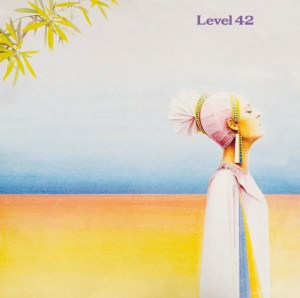
‘Level 42’: 35 Years Old Today

levelHere’s another key exhibit to support the motion ‘1981: The Greatest Ever Pop Year’.

When three caulkheads – bassist/vocalist Mark King and brothers Phil (drums) and Boon Gould (guitar) – hooked up with keyboardist/vocalist Mike Lindup in London, they were fairly speedily signed to indie label Elite Records.

After adding their ‘fifth member’ Wally Badarou – who had just begun his epochal keyboard work with Grace Jones – they released the ‘Love Meeting Love’ 12” single in the summer of 1980.

It got the attention of Polydor, who speedily re-released it and then the follow-up ‘Flying On The Wings Of Love’. Both stalled outside the UK top 40 but there was suddenly a massive industry buzz about this band.

At this stage in their career, Level 42 were very much lumped in with the new wave of Brit-funk and jazz/funk bands, leading to an instant following, lots of noisy club gigs and many a provincial Soul Weekender alongside ‘Funk Mafia’ DJs with nicknames like Froggie and Wolfie.

None of this harmed Level’s popularity, though in truth they had little in common with the dancefloor scene – their sound was a much edgier proposition, with more guitar, a distinct jazz/rock influence and a punky energy.

As one fan apparently commented to Boon after a November 1980 all-dayer supporting Shakatak: ‘We didn’t expect Status Quo’. No matter – Polydor signed them to a five-year deal soon after that gig.

Legendary Bluesbreakers/Fleetwood Mac producer Mike Vernon was chosen to helm their debut album – Mark King was apparently most impressed that he had worked on Focus’s Moving Waves. Vernon turned out to be a superb choice.

They all convened first at the very haunted Vineyard Studios in South-East London (later owned by Stock, Aitken and Waterman) to record ‘Love Games’. It gave them their first hit in March 1981, scraping into the UK singles chart at number 39, and leading to their first appearance on ‘Top Of The Pops’.

But these guys lived and breathed music. Though songwriting didn’t come particularly easy early on in their career, there was an infectious, thrilling, percussive propulsion to their sound. It helped that they were all drummers (with the exception of Boon Gould).

Obvious influences such as Return To Forever, Herbie Hancock, John McLaughlin and Stanley Clarke merged with less obvious ones like Yes and Fairport Convention (mainly Phil Gould’s passions) to produce a very tasty brew, naturally easy on the ear. And after barely a year of singing, Mark King’s vocals were even starting to match his prodigious talent on the bass.

Level 42 presents a great variety of material littered with intricate, memorable arrangements. Wally Badarou’s mastery shines through throughout the album but especially on ’43’ – on the right channel, he sprinkles in shards of Prophet 5 synth, almost taking on the role of rhythm guitarist.

‘Why Are You Leaving’ is a superb quiet-storm ballad, not unlike something George Benson might have come up with in the Breezin’ era. Stanley Clarke is a towering influence – ‘Heathrow’ nicks the ‘Lopsy Lu’ shuffle (and also features a fantastic Gary Barnacle electric sax solo) while ‘Dune Tune’ paraphrases ‘Desert Song’ from Clarke’s classic School Days album. Phil Gould’s sparkling glockenspiel solo on ‘Starchild’ emphasises how versatile the band really were.

slipstream

Level 42 is also a decidedly more lush and expensive-sounding album than any other ‘Brit-funk’ band managed to produce.

The evidence is Slipstream, a compilation which featured the band’s ‘Turn It On’ alongside other contemporary bands such as Light Of The World, Freeez, Morrissey Mullen and Incognito. The Level track sticks out a mile.

Level 42 reached #20 in the UK album chart, apparently a pleasant surprise to Polydor. Two UK tours followed in quick succession before they embarked on a seven-date German trip supporting The Police, which, by all accounts, didn’t go particularly well.

During one gig, a firecracker was hurled in the general direction of Mark King, lodging itself between his bass and elbow. Looking down, he recoiled from the mic in horror, believing he had been shot.

Despite Level 42‘s solid chart placing, there was still uncertainty about the future of the band – King was headhunted by Jeff Beck for a possible power trio with Simon Phillips on drums, and a few jam sessions ensued. Also, Barnacle’s band Leisure Process had recruited Mark and Phil for their upcoming album and there was talk of the them making the permanent switch.

Thankfully, neither project materialised – one of the great bands of the 1980s were back in business.

Stanley Clarke: If This Bass Could Only Talk

stanley_clarke-1988-if_this_bass_could_only_talk

This album was a substantial breath of fresh air when it came out in 1988.

I remember walking into Our Price and hearing Wayne Shorter’s majestic soprano sax over some swooning chord changes and thinking: ‘What the hell is this?!’

It was a relief and total surprise when it turned out to be Stanley’s cover of Mingus’s ‘Goodbye Pork Pie Hat’ (and what a brave choice of track to play in the shop…).

It wasn’t just the Baby Boom rockers who struggled a bit during the 1980s. Stanley started the decade very well with Rocks Pebbles & Sand but then there were a few middling collaborations with George Duke and a very patchy run of albums: Let Me Know You, Time Exposure and Hideaway. 1985’s Find Out had some brilliant moments though.

But ITBCOT put Stanley back on the jazz map. Its full-on playing – with admittedly a few late-’80s production values in tow – brought to mind classic ’70s albums Journey To Love and School Days. Drum machines were out: drummers were back in (Ndugu Chancler, John Robinson, Gerry Brown and Stewart Copeland, all of whom play beautifully).

The album also emphasised how much of a singular voice Clarke had now developed on piccolo bass, as distinctive on his instrument as Parker, Miles, Monk or Rollins were on theirs.

‘Working Man’ is an update of ‘Lopsu Lu’ from Stanley’s classic first album and features some ridiculously brilliant soloing leaning very heavily towards John Coltrane’s ‘sheets of sound’ approach.

Gerry Brown stays toe-to-toe with Stanley, providing some spectacularly-unhinged drums, though maybe with a bit too much ’80s ‘gated’ snare for some ears.

My cassette copy of ITBCOT didn’t have any personnel listed on it, so when I first heard ‘Stories To Tell’ I didn’t realise I was getting my first exposure to the extraordinary guitar playing of Allan Holdsworth.

I’m very thankful that Stanley unleashed Holdsworth onto my sensibilities. He delivers some remarkably-fluid playing with a shrill, almost reedy tone. The first and last four bars of his solo are really special. Copeland plays superbly too, with more restraint than usual.

Freddie Hubbard shines on a fine cover of Janet Jackson/Jam and Lewis’s ‘Funny How Time Flies (When You’re Having Fun)’ while Stanley brings the funk with a great take-off of Zapp’s Roger Troutman on ‘I Want To Play For You’.

Elsewhere there are two fun but rather dispensable duets with tapdancer Gregory Hines but they don’t outstay their welcome. Finally, ‘Tradition’ may feature Stanley’s finest recorded playing bar none and highlights a strong John McLaughlin influence (via Coltrane, of course).

In a much-maligned genre of music, ’80s fusion, ITBCOT is a minor classic that deserves critical reappraisal. It also led to a really good period for Stanley – he joined Shorter in Lenny White’s short-lived but intriguing Manhattan Project, and also toured as part of a supergroup with Herbie Hancock, Shorter and Omar Hakim.

Stanley was back, back, back!

Steps Ahead: Magnetic 30 Years On

steps

Some improvised music hits you at just the right age, to the extent that 30 years later you can still hum along to all the solos.

Baby boomers were lucky enough to have Kind Of Blue, Time Out or Mingus Ah Um but jazz fans brought up on Weather Report and 1980s Miles had albums like Magnetic.

In 1986, recording and instrument technology was moving quickly, maybe too quickly. This development influenced all kinds of music, from rock to fusion, and, in the wrong hands, led to a lot of grossly-overproduced, unmemorable stuff that barely holds up today. As a few people have said, 1986 may be the worst music year of the decade.

But that year also somehow produced some memorable fusion music. Smooth Jazz (AKA The Wave) was just a twinkle in some bored record exec’s eye and the ever-reliable Japanese market was keeping quality electric jazz alive; Lyle Mays, Mike Stern, Wayne Shorter, John Abercrombie, Miles, Bireli Lagrene, John Scofield, Bill Frisell and John McLaughlin were going strong.

Though Steps Ahead’s Magnetic album embraces technology to a full extent, even more so than on ’84’s Modern Times, given the writing and playing talent (Michael Brecker, Peter Erskine, Mike Mainieri) it’s no great surprise that they pull it off with so much aplomb, aided by formidable ex-Weather Report bassist Victor Bailey.

A timeless classic it ain’t, but Magnetic isn’t any old ‘what does this button do?’ mid-’80s studio creation. Though the sound and mastering are superb, emphasised by the presence of Brothers In Arms producer Neil Dorfsman on engineering duties alongside future back-room stars James Farber and Tom Lord-Alge (fresh from Steve Winwood’s Back In The High Life), the compositions very definitely come first and the audio ‘experiments’ second.

Despite all this, Magnetic is definitely the least-heralded Steps Ahead album amongst jazz critics, probably because it’s a real onslaught of styles and sounds, closer to a ‘pop’ album in concept. The melodic themes are strong without ever getting too sugary and each track has a unique flavour.

It’s hard to believe the same band can come up with ‘Something I Said’ (featuring one of Brecker’s great ballad performances) and also the coruscating avant-fusion of ‘Beirut’ (developed from a band jam session).

Hiram Bullock plays one of his many classic solos on ‘Trains’, adding some much-needed grit, while George Duke co-produces the weird but exciting contemporary R’n’B of ‘Magnetic Love’ featuring some outrageous sampled Brecker tenor lines and killer Dianne Reeves lead vocals (and great backups from Jocelyn Brown, Janice Pendarvis and Diva Gray).

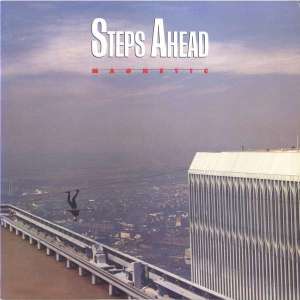
A synthesized cover of Ellington’s ‘In A Sentimental Mood’ proves Steps’ link to the past masters and features some astonishing EWI (an electronic instrument with the same fingering as a sax that looks like an elongated metal lollipop) from Brecker. There’s even time for some banjo-playing on ‘Cajun’, powered along by Erskine’s superb ride cymbal work. Yellowjackets were definitely listening to that. Oh, and is that Philippe Petit on the sneakily-doctored album cover?

It’s weird seeing Steps Ahead playing this material live. They had obviously worked a bit on their stage ‘presentation’ between 1984 and 1986, maybe influenced by Chick Corea’s shenanigans. Peter Erskine and Victor Bailey had left to join Joe Zawinul’s Weather Update tour, so ex-Journey drummer Steve Smith, Sting/Miles bassman Darryl Jones and Stern came in, adding some big-name clout and a much tougher sound.

Magnetic was the last major-label action for Steps Ahead. Brecker and Erskine jumped ship but Mike Mainieri would continue with the name over the next few decades fronting a multitude of line-ups. He even fronted a ‘reunion’ tour in 2016 with a formidable band including pianist Eliane Elias and sax player Donny McCaslin.

My Mahavishnu Moment

South-West London, 1986: after a short apprenticeship playing pots and pans, I had been given a very cheap kit by my parents and was taking my first steps towards the world of ‘serious’ drumming (yeah, right… Ed).

I was also fast becoming a major jazz/rock fan, buying the new Weather Report, Mike Stern, Billy Cobham, Lyle Mays, John Scofield and Steps Ahead cassettes from HMV on Oxford Street or my local Our Price in Richmond.

mahavishnu

One evening, my dad had my uncle round for one of their regular music-listening sessions. I gatecrashed. They cranked up the Plastic Ono Band, Santana, Monk and Miles while I sat in on a knackered Spanish guitar.

And then this other tune came on. A massively-distorted, strangely exotic riff crawled out of the speakers. All the conversation abruptly stopped. My adolescent, ‘muso’ brain kicked in – was it Hendrix? Miles? Zappa?

The riff moved through various modes, ascending into a wailing, chromatic guitar and violin crescendo, and then dropped dramatically to the main theme again. And then that drum groove…

Already being a huge major Billy Cobham fan, I had heard bits of Mahavishnu, mainly the mid-80s incarnation featuring ex-Miles sax player Bill Evans and bassist Jonas Hellborg. I was also aware of John McLaughlin’s playing due to his guest spot on Stanley Clarke’s incredible Journey To Love album (though didn’t know it was him on ‘Song To John’ until years later).

But this was different; striking, unhinged, dangerous, downright perverse. ‘The Dance Of Maya’ blew my mind and its otherness hits me just as hard today as it did 30 years ago. Cobham’s 6/8-flavoured groove sounds just as hip and surprising as ever.

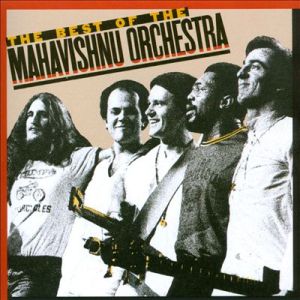
Anyway, I was in: I came across a Mahavishnu Best-Of on cassette at my local Our Price, and a whole new world of music opened up. It was time to go back and explore the roots.

Steve Khan: The Eyewitness Trilogy

51jiJqsP8ML._SX425_I’ve just had the absolute pleasure of writing the liner notes for a brand new Steve Khan 2-CD reissue featuring his three classic albums of the early ’80s, Eyewitness, Modern Times and Casa Loco, just released on BGO Records.

It was an honour to work with Steve on this project. He couldn’t have been more generous with his time/memories and hopefully the package does justice to the quality of the music.

Here’s an excerpt from the liner notes, giving some background to the three albums and also the legendary Eyewitness band:

Acclaimed guitarist/composer Steve Khan’s three classic albums of the early ’80s – Eyewitness, Modern Times and Casa Loco – came about seemingly against all the odds. By the end of the 1970s, the jazz/rock boom had come to an end, and the record industry was entering a major post-Punk/post-Disco recession.

Khan’s tenure with Columbia Records – which had produced three well-received solo albums, and a ‘Best Of’ compilation – ended in early 1980. Acts such as Weather Report, John McLaughlin, Return To Forever and Herbie Hancock, all of whom had been signed to Columbia before Khan, were no longer selling the same quantities of records, and the ‘Young Lions’, Neo-Bop boom of the early ’80s was just around the corner.

Khan’s response was to go back to basics. The stripped-down masterpiece Evidence (1980) was a one-man-band project featuring an arsenal of multi-tracked acoustic guitars; the album showcased excellent takes on Lee Morgan, Joe Zawinul, Wayne Shorter and Horace Silver as well as the famous ‘Thelonious Monk Medley’.

The purity of the acoustic guitar sound on the album inspired a new approach to his electric playing too: “In 1981, I was still searching for a direction on the electric guitar, and it led me to go back to the most basic sound, the one I began with when I was 19 years old at UCLA: just plug into an amp with a Gibson, dial in a little reverb, and play!”

The time was also right to move away from classic song-form and branch out into more improvised music-making. “I was ready to surround myself with a totally different group of players in conjunction with a new spirit of making music, something much looser, something not so married to having everything perfectly placed and played. Phone calls were made to three special and very unique players. We got together and the experiment began.”

Drummer Steve Jordan and bassist Anthony Jackson were two of the most in-demand musicians on the New York scene and first-call rhythm section on numerous high-profile sessions including John Scofield’s Who’s Who album. Jackson had also recently joined Khan on the recording of Steely Dan’s Gaucho while Jordan had been busy working with a huge variety of world-class artists as part of David Letterman’s ‘World’s Most Dangerous Band’.

And when Khan hooked up with ex-Weather Report percussionist Manolo Badrena during the recording of Mike Mainieri’s Wanderlust album, the final piece of the jigsaw clicked into place. Khan, Jackson, Jordan and Badrena began to jam regularly at Steve Jordan’s Chelsea loft.

It was quickly clear to Khan that something very significant was happening during those informal get-togethers. “I’m still not certain just what to call what we did”, he says today. “We would begin to play ideas that didn’t seem to have a place in any other musical setting. Here you had four very distinct perspectives on music-making, and four of the most stubborn maniacs one could gather in a room, but somehow it was working. It was magical!”

Khan recorded the sessions on a cheap cassette player and, listening back to them at home, quickly realised that the music should be recorded, “before we actually figured out what it was that we were doing!”

In the experimental era of King Crimson’s Discipline, Japan’s Tin Drum and Peter Gabriel’s Melt, the Eyewitness band began with very basic sounds and concepts but over the course of its existence came to use some fairly unique instrumentation to produce music that was complex but always accessible.

Jordan’s hybrid drum set included a cowbell, a broken splash cymbal, two hi-hats, two snare drums (tuned slightly differently) and a Simmons bass drum. Jackson developed, designed and played a state-of-the-art six-string bass, while Badrena’s constantly-mutating percussion kit included a turtle shell, timbales, congas and eventually Pearl’s Syncussion synthesizer. He also employed a multitude of eerie vocal effects. This clearly was not your standard ‘fusion’ band.

Co-produced by Khan and Doug Epstein, Eyewitness was recorded at Mediasound Studios over a single weekend in November 1981. It has the spontaneity of a great jazz album and the high production values of a contemporary pop album…

To hear the three albums and read the full article, check out the 2-CD reissue.