The Cult Movie Club: The Shining and Shelley Duvall

It was fascinating watching the long American cut of ‘The Shining’ recently with a packed, young crowd at the BFI Southbank.

They clapped and cheered at the end, and many flinched and jumped out of their seats during Jack’s manic outbursts. It was also fascinating to re-evaluate Shelley Duvall’s performance after her sad recent death (and re-watching her superbly odd turn in Robert Altman’s ‘3 Women’ in the same venue recently).

But, despite the doc ‘Room 237’ and terrific work by Rob Ager (most of it on his Collative Learning YT channel), what surprised me was how many aspects of the film still mystified and enthralled after numerous viewings. Here are some of my jottings (with spoilers):

The Gold Room
It’s not in Stephen King’s book. Ager has investigated the possible motivations for Kubrick including it. But unless I’m very mistaken Ager doesn’t discuss the strange photos on the sign by the entrance. What are they? The look suspiciously like late-1970s singer-songwriters rather than crooners of a 1920s vintage…

The lighting
There’s weird lighting everywhere. Lamps, blazing sun through windows, fluorescent beams. Lucifer – bringer of light?

Madness, misogyny and suggestions of child sexual abuse
The idea that a father could have malicious thoughts about his wife and son is terrifying and probably hits home to most general viewers. Plus Jack’s pure rage aimed at his wife. But possibly the film goes very much further than that – Ager’s excellent video explores even more troubling aspects. As for the misogyny, the Sunday Times recently reported that Duvall was shown the baseball bat scene during a 2016 interview, and broke down in tears, saying: ‘I can only imagine how many women go through this kind of thing.’

The shape in the river of blood
What the hell is it? A body? An octopus?

The sound design
It’s NOT perfect. During Danny’s pedal-car rides on the rugs/floors, the sound still doesn’t seem correctly sync’d…

People walking backwards
Once you first notice it, it’s quite funny clocking how many characters walk backwards during the movie…

Danny and ‘Tony’
Did Kubrick watch the 1977 BBC documentary about the Enfield Poltergeist?

Shelley Duvall
Hers is a thankless role in a way and you can be sure it was cut to shreds in the edit. She told Roger Ebert that her experience on the film was ‘unbearable’ and claimed that she had to cry for 12 hours a day for nine months straight to get what Stanley was after. But it was worth it. Watch the scene where she brings Jack lunch at his typewriter and finally realises what she’s up against. Apparently a sweetheart too if this interview is anything to go by.

Influences of ‘The Amityville Horror’ and ‘The Exorcist’?
In ‘Amityville’, a family man goes mad with an axe. And it only came out a year before ‘The Shining’. As for ‘The Exorcist’, ‘Tony’ and Captain Howdy? Then there’s the fade to black and the ‘open your eyes’ in the long US version of ‘The Shining’ – there’s an almost identical cut in ‘The Exorcist’.

Mirrors
Jack only sees ‘ghosts’ when he’s opposite a mirror. Check it out. Even his ‘rant’ as he walks down the corridor towards the Gold Room seems to be ‘activated’ by mirrors.

Two Jacks and two Gradys?
Is Jack crazy from the start? Is he the ‘chosen’ man to get the ghosts going or is he driven crazy by the hotel? Also note that during his job interview, his boss Ullman says Jack has come ‘well recommended by our people in Denver’. Sounds dodgy and taps into the strange mythology that has grown up since around Denver… And why is Grady given two names – Charles and Delbert?

Hallorann
Seeing as he’s an absolute expert ‘shiner’, why would he work at such an evil place as The Overlook? You’d think he would avoid it like the plague. Is this a piece of social commentary by King/Kubrick?

Vivian Kubrick
Stanley’s daughter was reportedly an almost daily presence on the set, helming her making-of documentary and helping out in the production office. She also has an uncredited cameo in the film and it’s a doozy. She even ‘toasts’ the camera. She’s sitting on the sofa nearest Jack when Delbert Grady spills advocaat on him.

Jack Daniel’s
Kubrick was a genius. In the first Gold Room scene, Jack asks Lloyd for a bourbon – but he doesn’t get one. He gets a Jack Daniel’s: Jack and Daniel (Danny). Geddit? Also see the baseball bat Wendy brandishes, a Louisville Slugger. What’s the symbolism of that? You can bet Kubrick didn’t include it by chance.

Working with children
What an amazing performance by Danny Lloyd as young Danny (big credit to Leon Vitali – check out ‘Filmworker’). He doesn’t blink. The troubling themes are a lot to pin on the young boy but he seems to have turned out OK.

Jack Nicholson
He wasn’t nominated for an Oscar. Why the hell not? Someone (Stanley Donen? Nicholas Ray? Jean-Luc Godard?) once said a good movie only needs three or four great scenes on which to hang its hat – Jack’s in all of them.

The Cult Movie Club: The Exorcist @ 50

William Friedkin and William Peter Blatty’s horror masterpiece received its premiere 50 years ago today – Boxing Day, 1973.

I’ll never forget my first viewing of the film. My dad suggested we go to a late-night Friday screening at a nightclub-cum-cinema called Options in deepest Kingston-upon-Thames sometime during late summer 1988.

I was 15 years old. I didn’t have a clue what lay in store for me. I’d seen ‘The Fog’, ‘Halloween’ and ‘An American Werewolf In London’ but this was a completely different kettle of fish.

The house was absolutely packed and the print was awful – this was years before ‘The Exorcist’ got a posh Warner Bros. re-release. But the graininess of the picture actually suited this truly ‘forbidden’ movie; it was still banned on video in 1988 and had the cache of a lost cult classic.

If memory serves, I spent most of the film completely terrified while my dad frequently laughed at it, possibly to mitigate my reactions and make me realise ‘it’s only a movie’ – or because he was scared too.

I still vividly recall the hideous demon face (which haunted my dreams for a few weeks afterwards) and the scraping/scratching soundtrack. And then the panic of the penultimate scene followed by moving/disturbing denouement, with Regan’s very visible facial scars, before being cut loose from the film, battered and bleeding, and hearing Salt-N-Pepa’s ‘Push It’ incongruously booming out from the nightclub below as we left the cinema. It also wouldn’t be an exaggeration to say that the movie got me thinking seriously about spiritual matters for the first time.

Watching ‘The Exorcist’ recently for the first time in five years or so, I was again mesmerised by the masterful first hour, with Friedkin’s documentary-style brilliance, fast pacing and wonderful performances from Jason Miller, Ellen Burstyn, Linda Blair and Lee J Cobb. It still makes the likes of ‘The Omen’ and ‘Rosemary’s Baby’ look fairly ridiculous.

But a few things rankled – the abuse of Regan by various male ‘authority’ figures. And, speaking from experience, in my view it would still be madness to show this film to under-18s.
Also where were the press/paparazzi at the McNeil house while all of this hooey was going on? After all, Ellen Burstyn is supposed to be playing a world-famous actress.

And take your pick of the scenes controversially excised by Friedkin to trim the film down to two hours, but I really could have done with the so-called ‘Casablanca’ ending. But the power of ‘The Exorcist’ is undiminished after 50 years. Happy birthday to a classic and RIP director William Friedkin.

Michael Jackson’s ‘Thriller’ Video Premiere: 40 Years Ago Today

“‘Thriller’ made MTV. ‘Thriller’ created the home video business. ‘Thriller’ created so many things.”
John Landis

It’s hard to overestimate the cultural impact of the ‘Thriller’ video. Frequently parodied and ripped-off but still powerful, it premiered on Channel 4 and MTV 40 years ago today.

In the UK, it was shown (without any end credits) during a special late-night edition of ‘The Tube’ just before midnight on Friday 2 December 1983. I recall being allowed to stay up and watch it. It was one of the most exciting things I’d ever seen on TV, and also one of the scariest… Here’s how the special ended:

Let’s rewind to July 1983. The Police’s Synchronicity had just bumped Jackson’s Thriller album off the top of the Billboard charts. Jackson’s label Epic quickly formulated a plan to reinstate Thriller, reluctantly suggesting that its title track be released as a single (executives reportedly believed it to be a ‘novelty’ record!).

The catalyst for the groundbreaking video, which was part-financed by MTV, was Jackson phoning director John Landis in August 1983. He professed his love for Landis’s ‘An American Werewolf In London’, told him about the impending single release of ‘Thriller’ and then uttered the immortal words: ‘Can I turn into a monster?’

The rest is history. The video helped double Thriller’s album sales almost overnight, arguably broke down racial barriers in popular entertainment and helped raised the music-video format into a serious art-form. It also has to be said: it’s probably the last time Michael seemed relatively ‘normal’ (though his line ‘I’m not like other guys’ still raises a titter…).

“The only video we ever paid for was ‘Thriller’. We were playing it every hour, and announcing when it would next air. It brought people to MTV for the first time, and it made them stay and watch it again and again. Now everybody was into MTV.”
Bob Pittman, MTV executive

“When MTV started, it wanted nothing to do with Black artists. I thought, Wow, are we gonna miss out on this? But then I gave them ‘All Night Long’ after Michael had broken down the door. And from then on I was on MTV.”
Lionel Richie

“Michael Jackson had taken hold of the video form and shown everyone what you’re supposed to do with it. We all thought: Oh, OK – dancing!
Rick Springfield

Let us know your memories of watching ‘Thriller’ for the first time.

All quotes are taken from the excellent book ‘I Want My MTV’.

Check out Anthony Marinelli’s YouTube channel for lots of great muso stuff on the making of the Thriller album.

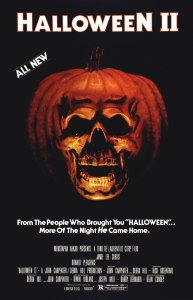
The Cult Movie Club: Halloween II (1981) 40 Years On

A babysitting uncle (later reprimanded by my mum!) showed my brother and I John Carpenter’s classic 1978 film ‘Halloween’, recorded from TV after its first (edited) UK showing, sometime in 1982 or early 1983.

I loved it but it scared the bejesus out of me. Well, I guess everyone’s entitled to one good scare on Halloween. But Rick Rosenthal’s 1981 sequel, released 40 years ago this weekend, was a definite no-no. My parents wouldn’t let my brother and I watch it, though I distinctly remember us creeping along the upstairs corridor and spying on them watching the rented video with friends.

‘Halloween’ has of course been through numerous/confusing sequels and reboots. The new ‘Halloween Kills’ is supposedly a ‘proper’ sequel to the rebooted ‘original’ of 2018 (which I tried to watch recently, but didn’t last beyond the first five minutes…).

But back to John Carpenter’s original 1978 classic. It was a huge hit. Once the money started rolling in, a sequel was on the cards, one that Carpenter was unable to veto due to his original contract (he also allegedly missed out on a huge amount of royalties too).

So he reluctantly hooked up again with Debra Hill to write the screenplay and co-produce. The result was one of the last big ‘slasher’ hits, outside of the endless ‘Friday The 13th’ sequels, earning around $25 million worldwide against a $2.5 million budget. And this was in the days when sequels were not commonplace.

But how does ‘Halloween II’ stand up today? First, the good stuff:

The camerawork
Director of photography Dean Cundey was lured back from the original, passing up the opportunity to work on Spielberg’s ‘Poltergeist’, and his original angles and Panaglide compositions elevate the film way beyond the standard slasher fare.

The hospital setting
It’s a great idea to set the film in a suburban hospital, and gives a claustrophobic sense of isolation, of course a descendant of Carpenter’s ‘Assault On Precinct 13′ (via, originally, Howard Hawks’ ‘Rio Bravo’ and George Romero’s ‘Night Of The Living Dead’).

Continuity
It’s a neat concept to start the film right where the original ‘Halloween’ ended.

Donald Pleasence
Once again he fully embraces the role of Dr Sam Loomis. He takes it seriously and does a stand-up job, complete with a few memorable line readings.

The Chordettes’ ‘Mr Sandman’ intro and end credits
A very creepy choice, possibly influenced by the use of music in ‘The Shining’.

But then there’s the bad stuff:

Lack of Jamie Lee Curtis
She spends most of the movie either in a hospital bed or limping/crawling around (wearing a very odd wig). As good a performance as she gives, the film suffers from her inertia.

Too much dialogue/exposition
There are way too many slow, boring plot/dialogue longeurs.

Lack of engaging/likable characters
As workmanlike as the mostly young cast are, they can’t replicate the natural rapport that existed between Jamie Lee, Nancy Loomis, PJ Soles etc. in the original film.

Dick Warlock as The Shape
The original film mostly used Nick Castle as The Shape, but experienced Hollywood stuntman Warlock got the role here, and he moves way too slowly and stiffly (and the William Shatner mask doesn’t quite fit…). And the closing fire stunt may have won him some brownie points in the industry but looks absurd now.

Gratuitous gore
Carpenter took a look at the first assembly of ‘Halloween II’ and decided it was too long and not scary enough. He shot a few additional scenes, adding some gore and spikes. Sadly this resulted in too many nods to standard slasher movies, and resulted in a lot of dodgy reviews. Carpenter was also fairly disgusted with himself for ‘messing’ with another director’s work – ‘I did something I don’t believe in. I did something I would hate for anybody to do with me. It was an evil thing to do and I didn’t enjoy any of it,’ he told biographer Gilles Boulenger.

Music
Alan Howarth overdubbed onto Carpenter’s original 16-track tapes, adding copious synths and and drum machines – there’s a lot of bluster but unfortunately Howarth adds little to the original soundtrack.

In conclusion: I’d argue it’s a decent-enough sequel, despite the obvious problems. The last 15 minutes offer creeps, shocks and thrills, and the hospital setting works excellently.

The movingtheriver.com rating: 6/10.

Now, I must go and answer that door. Damn kids…

The Cult Movie Club: The Dead Zone (1983)

What’s the ‘accepted’, untouchable shortlist of ‘successful’ Stephen King screen adaptations? ‘Misery’, ‘The Shawshank Redemption’, ‘It’, ‘Carrie’, ‘Stand By Me’, ‘Salem’s Lot’.

But David Cronenberg’s ‘The Dead Zone’ seldom appears in that top tier. Why? Possibly because it is seemingly part of the early-‘80s big-budget horror era, when the studios were trying to cash in on ‘slasher’ hits like ‘Halloween’ and ‘Friday 13th’ (see also ‘Omen III: The Final Conflict’, ‘Halloween III: Season Of The Witch’, ‘Psycho II’, ‘Christine’).

Cronenberg had just completed sci-fi/horror shocker ‘Videodrome’ when he was invited onto the project by Debra Hill, producer of ‘Halloween’/’The Fog’ and ex-wife of John Carpenter (‘The Dead Zone’ had apparently previously been earmarked for Stanley Donen, director of ‘Singin’ In The Rain’!).

King himself supplied the first draft of the script. According to Cronenberg, it was a ghastly, serial-killer-on-the-loose gore fest. Jeffrey Boam and Cronenberg worked on it and built the story around Johnny Smith, played by Christopher Walken, who develops second sight after five years in a coma following a devastating car crash.

So how does ‘The Dead Zone’ stand up today? Exceptionally well. It’s Cronenberg’s first film about ‘God-fearing’ people, and also his first warm-hearted picture. It takes place in King’s fictional town of Castle Rock, supposedly a combination of various real locations in Maine – all very Norman Rockwell.

These are the first Cronenberg characters we care for (he has described it as ‘a lost-love story’). Brooke Adams, Herbert Lom, Tom Skerritt and Walken are excellent, playing it completely straight, and there’s a terrific, terrifying performance by Martin Sheen as the Jim Jones-like Greg Stillson.

But finally it’s Walken’s film (Cronenberg described his face as the ‘subject of the movie’), another brilliant performance. We totally accept Johnny’s story and want him to succeed. He’s a good man in pain who has lost the love of his life.

The movie is relentlessly downbeat with no ironic escape route. It’s totally Cronenberg’s milieu – a snowy, crisp mise-en-scene (shot in and around Toronto), with a typically great car crash.

He casts his cold, clinical eye over some pretty preposterous material, but it’s stark and chilling, with the director’s customarily-abrasive cutting and editing style. It’s NOT a film for kids…

Importantly, Johnny’s visions are genuinely scary. But is he God or Lucifer? (There may be minor similarities of the film with John Landis’s opening segment of ‘Twilight Zone: The Movie’, released three months before ‘The Dead Zone’). Walken plays with this dichotomy perfectly.

Like King’s ‘Misery’, ‘The Dead Zone’ takes a none too fond look at the ‘great unwashed’, with Johnny getting endless pleading/begging letters from people with ‘lost dogs, lost lives’.

And it’s also unfailingly negative about the US political process during the early 1980s (Boam reportedly delivered his first draft the day of Ronald Reagan’s inauguration).

There’s a lush, superb score by Michael Kamen. Its main five-note motif is almost as memorable as anything John Williams wrote for Spielberg, speaking to Johnny’s tragic dilemma.

Of course there are some bum notes: the poor performances of a few minor characters; a very gratuitous, unpleasant sexual assault/murder scene (apparently not in King’s book); and the constant dilemma of second-guessing his physical contact with others.

What is Johnny withholding from us/the other characters when he shakes their hand or embraces them? Also the film rather lurches from one section to another, with Johnny basically inert and ‘in hiding’ until he is called on to act by the townsfolk.

‘The Dead Zone’ did pretty good business at the box office, earning double its costs and ushering in Cronenberg’s brief flirtation with the mainstream (he was offered – but turned down – ‘Flashdance’, ‘Beverly Hills Cop’ and ‘Top Gun’ during this period): next up was ‘The Fly’, a huge hit.

You could make the case that he was one of the key directors of the 1980s. From the landmark sci-fi/horrors ‘Scanners’, ‘Videodrome’ and ‘The Fly’ to the ice-cold ‘Dead Ringers’, he consistently pushed the envelope.

Further reading: ‘Cronenberg On Cronenberg’ (ed. Chris Rodley)

The Cult Movie Club: John Carpenter’s ‘The Fog’ 40 Years On

What with ‘The Lighthouse’ and ‘Bait’, you can’t move for nautically-themed movies at the moment.

But it’s arguable whether either are as effective as John Carpenter’s ‘The Fog’, released 40 years ago today.

But then I’m biased: aside from Carpenter’s ‘Halloween’ and ‘American Werewolf In London’, it was one of the first scary movies I was allowed to watch in my teenage years, and subsequently inspired a dodgy short horror novel of my own (‘The Ghost Of The Drowned Sailor’…).

Revisiting it this week for the first time in ages, it delivered all sorts of treats though these days is scarcely mentioned alongside ‘Halloween’, ‘Assault On Precinct 13’ and ‘The Thing’ in the list of bona fide Carpenter classics.

Shot mainly in coastal California around Point Reyes, Bodega Bay and Inverness, ‘The Fog’ was a brave move on Carpenter and producer/co-writer Debra Hill’s part, following up ‘Halloween’ by mostly eschewing the slasher format (it’s interesting to note that both ‘The Shining’ and ‘Friday The 13th’ were released two months later, in May 1980) in favour of a seemingly old-fashioned ghost story inspired by a trip to Stonehenge and the writings of Edgar Allan Poe.

This attempt at a different kind of movie caused problems when Carpenter’s original cut was deemed too moody and not supplying the requisite scares for post-‘Halloween’ sensibilities.

Many scenes were re-shot and some new ones added just a few months before release, including the opening ghost story, ‘Close Encounters’-style scene-setting and top-of-the-lighthouse finale. The music and sound effects were also reworked.

Watching the 2002 DVD edition, the first thing I noticed is the gorgeous lighting and camerawork. Its sharp, crisp colours and composition are a great testament to the lab technicians (heralded by Carpenter on his DVD commentary) and director of photographer Dean Cundey, who has since gone on to be one of the premier DPs in Hollywood.

The impressive miniature/model work, widescreen lenses and evocative coastal locations give a lot of bang for relatively little buck (‘The Fog’ was eventually brought in at just over $1 million). ‘The Fog’ also benefits from an excellent central performance from Adrienne Barbeau as the Hawksian, Bacall-voiced DJ Stevie Wayne (and spinner of Steely Dan-approved big-band and light jazz/fusion tunes).

She and co-writer Debra Hill manage to root the hokum in a credible, sympathetic, rounded character. It’s also great fun to see Janet Leigh appearing in the same movie as her daughter Jamie Lee Curtis, and Nancy Loomis delivers her usual amusingly insouciant line readings.

Effects man extraordinaire Rob Bottin features as head ghost Blake, heading up a very rock’n’roll-looking bunch of ghouls, though arguably the movie would have benefitted from a little less ‘show’ and a little more ‘tell’ in the last 20 minutes. Seeing Blake in plain sight at the end is always a bit of a disappointment, despite the glowing red eyes.

But editors Charles Bornstein and Tommy Lee Wallace deserve much credit for building tension in the last third with shrewd, snappy cutting (sometimes seamlessly between studio/location shots). Carpenter’s excellent soundtrack cribs a little from Michel Legrand’s famous score for ‘The Go-Between’ but has some marvellous sections, particularly during Barbeau’s ‘look for the fog’ closing speech (obviously very influenced by a similar ending to Howard Hawks’ ‘The Thing’).

‘The Fog’ was a hit (despite Siskel and Ebert’s stinking review, see below), earning around $20 million against its $1 million budget. It was a lot of fun to revisit it again, and looks like just the low-budget horror classic I always remembered it to be, with more imagination and storytelling elan than 99% of other genre offerings.

Happy birthday to a true cult classic. Now, what’s that sound? Who’s rapping on my door at this hour? Goddamn kids… They won’t like finding me at home…

The Cult Movie Club: ‘Psycho’ Revisited

My dad was a huge Alfred Hitchcock fan.

He liked the ‘minor’ Hitch as much as the ‘major’ Hitch. As a war baby, maybe he relished the director’s trademark mixture of dread and humour. Dad certainly didn’t sneer at ‘Psycho’; in fact, he would have put it firmly in the ‘major’ category.

We probably first watched the film together sometime around 1989. Revisiting it again recently, it struck me as a curiously – and defiantly – ‘modern’ movie.

Even as the ghastliness of America’s modern serial killers was becoming public knowledge towards the end of the 1950s, the kind of seediness ‘Psycho’ portrayed had still not been shown on screen (though David Thomson’s superb book ‘The Moment Of Psycho’ notes that a few figures – James Dean, Jerry Lewis, Elvis, Brando and Jack Nicholson, by way of Roger Corman, were ushering in a new, youthful edginess. Thomson also asks us to imagine Elvis as Norman Bates…).

Hitchcock and screenwriter Joseph Stefano really decided to let American audiences have it with their fairly loyal interpretation of Robert Bloch’s 1959 novel. Thomson describes the film as Hitch’s ‘revenge’ on Hollywood, a Hollywood that had never granted the director an Oscar and whose mixture of humour and dread had never been fully accepted.

These factors also particularly struck me when revisiting ‘Psycho’:

7. Hitchcock/Stefano’s skewering of America’s sacred cows

The family unit, marriage, the home, sanity, the bathroom (never before in an American film had there been the shot of a toilet flushing), heterosexuality, the shower stall. And the way he gleefully starts the movie tracking into a fairly seedy motel room to eavesdrop on a post-coital tryst. It all seems run-of-the-mill now but all of this must have been an incredible shock for contemporary audiences. Hitch wanted to show how modern, urban people were living their lives.

6. Joseph Stefano’s dialogue

Speed-reading Robert Bloch’s novel again, it struck me that screenwriter Stefano deserves huge praise for reworking the dialogue. He puts some pep in its step, fashions some brilliant lines for Norman (the whole mental illness speech during dinner with Marion in his den) and turns the scenes between Norman/Sam Loomis (John Gavin) and Norman/Arbogast (Martin Balsam) into mini masterpieces. He also adds some good, hip stuff featuring the traffic cop (who doesn’t feature in the novel) and car salesman (who does).

5. The shower murder

Hitchcock’s ‘pride’ at the slickness of the first murder scene belies its brutality. If there’s a more shocking death in the movies, I haven’t seen it. A troubling thought: to what extent does Hitchcock/Norman/’Mother’/Bloch/the audience ‘punish’ Marion for stealing (even though at the time of her murder she has made the decision to return the money)? But of course modern audiences would be primed for Janet Leigh’s early exit, since the opening credits say ‘…And Janet Leigh as Marion Crane’. It’s clear now she’s not going to last the whole movie, but audiences in 1960 wouldn’t have twigged.

4. The sexual politics of the first 40 minutes

Marion strikes us as an incredibly ‘modern’ character, strong, determined, troubled, independent, defiantly single (though willing to give Sam a try… Or is she? Why doesn’t she ring him to tell him she’s on her way with the money?). She passes through the first half of the film encountering men in scenes that somehow ‘mirror’ each other – her lover, the creepy, predatory client at work, traffic cop, car salesman, and finally Norman.

3. The concept of ‘doubles’

Of course, Norman ‘is’ Norma Bates, mother and son combined. Then there are the – on first viewing – strange matching shots of characters leaving rooms; first Marion, then ‘Mother’. Then there’s the remarkable physical likeness between Sam Loomis (John Gavin) and Norman (who, of course, in many ways seems far more pleasantly disposed towards Marion than Sam ever is).

2. The brilliance of Anthony Perkins’ performance

Hitchcock apparently instructed Stefano to write for Perkins once the teen heart-throb had signed on very early in proceedings. The novel has Norman as an overweight, alcoholic, 40-year-old schlub, but Perkins’ leading-man looks, disarming smile and gentleness are the movie’s masterstrokes. He delivers a classic performance, possibly influenced by Dennis Weaver’s panic-stricken ‘night man’ in Orson Welles’s ‘Touch Of Evil’.

1. The flatness of the second half

Hitchcock barely seems interested in any characters other than Marion and Norman, fatally unhinging the second half of the movie. It’s pretty boring apart from the above terrific scene between Norman and Arbogast (which apparently earned lengthy applause from the crew), the Arbogast murder, the ‘Mother’ reveal in the basement and the closing Norman/Mother ‘monologue’, featuring more fantastic work from Perkins.

Halloween Special: 11 Memorable VHS Covers

Back in those early days of VHS fever at the beginning of the ’80s, my parents would occasionally invite friends round to watch a scary movie. 

I remember tip-toeing out of my bedroom very late at night, creeping along the corridor and trying to snatch a peek at ‘Halloween II’ or ‘Straw Dogs’.

I wasn’t allowed to watch those kind of movies, though later was granted a bit of license with regards to ‘The Fog’, ‘Creepshow’, ‘The Island’ and ‘American Werewolf In London’.

The Video Masheen shop on Sheen Lane was a treasure trove of interesting VHS covers, a weird showroom advertising movies I’d never get to see. What kind of deranged mind could conceive of these images? The mind boggled. Some surely qualify as genuinely surreal pieces of art, though the #MeToo movement would probably put pay to a few more these days.

Here are some VHS covers of the era that stuck in the mind. Straight from the shelf of Video Masheen. Happy Halloween…

11. ‘An American Werewolf In London’ (1981)

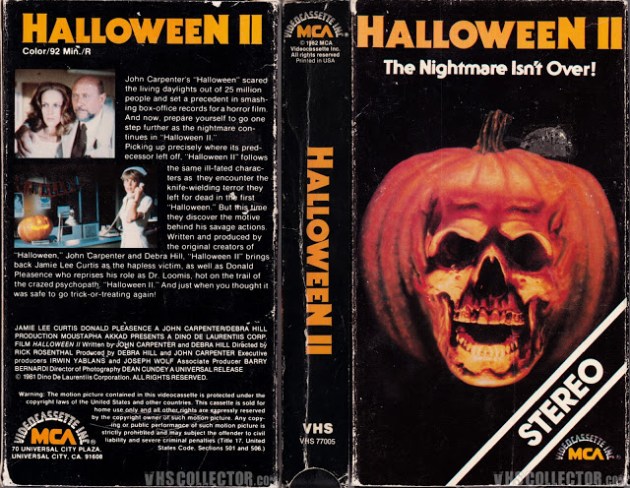
10. ‘Halloween II’ (1981)

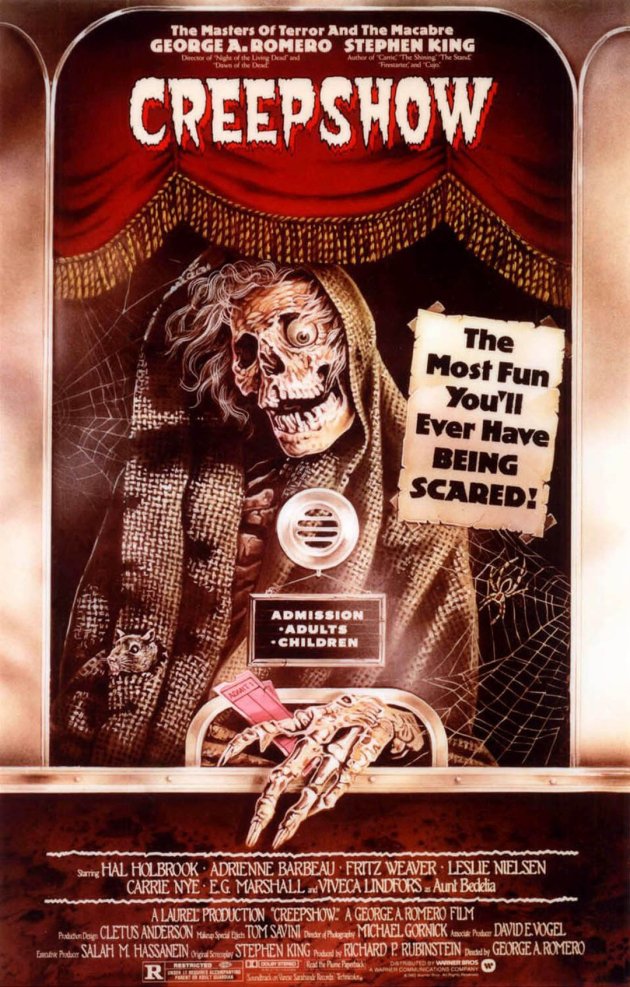
9. ‘Creepshow’ (1982)

8. ‘The Island’ (1980)

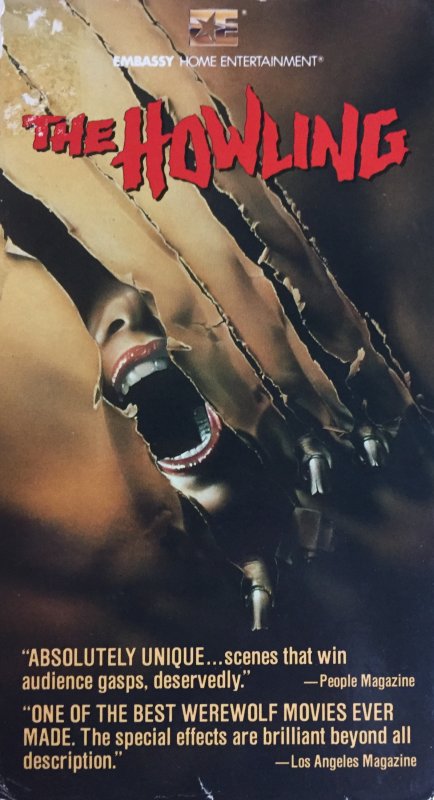
7. ‘The Howling’ (1980)

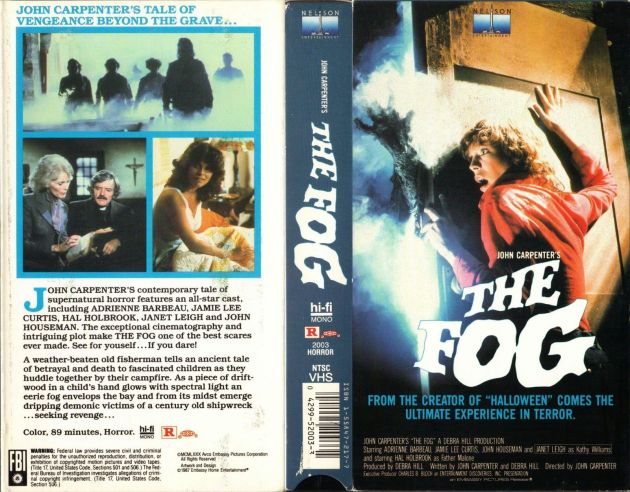
6. ‘The Fog’ (1980)

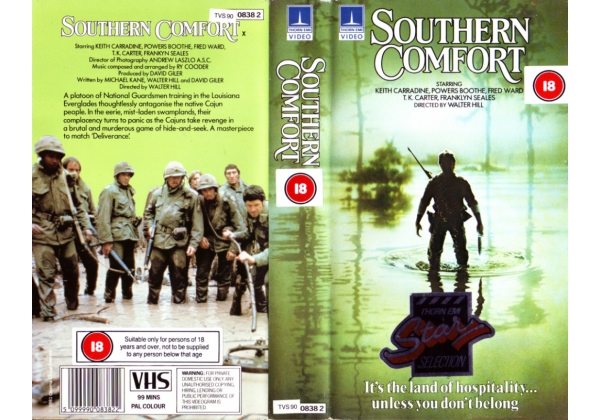
5. ‘Southern Comfort’ (1981)

4. ‘The Exterminator’ (1980)

3. ‘Scanners’ (1980)

2. ‘Christine’ (1983)

1. ‘The Thing’ (1982)