The Crap Movie Club: Mannequin (1987)

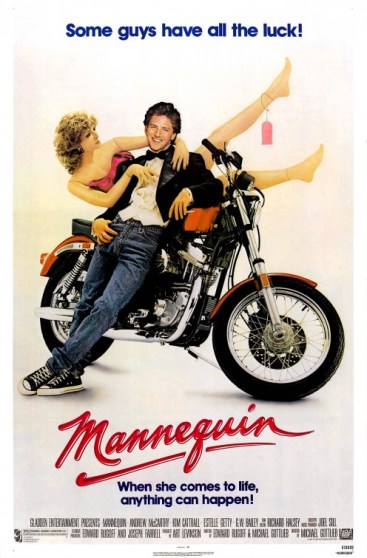
mannequinYou know the drill – it’s a few days after Christmas and the house is finally quiet.

You sink into the sofa with a deep wish to indulge in some comfort viewing.

A guilty pleasure would be perfect, maybe a light Hollywood comedy, late-’80s style, something along the lines of ‘Vice Versa’, ‘Baby Boom’, ‘Innerspace’ or ‘The Money Pit’.

‘Mannequin’, starring Andrew McCarthy, James Spader and Kim Cattrall, would appear to fit the bill.

You haven’t heard of the director (Michael Gottlieb) but surely he can’t fail with that kind of ammo.

So you settle in expectantly. But after a few minutes it’s pretty clear that ‘Mannequin’ is sub-‘Splash’, high-concept dross, and it becomes hard to take your eyes off a bona fide turkey…

McCarthy plays a ‘quirky’ department-store window dresser who falls in love with a showroom dummy (Cattrall). The kicker is that she ‘comes alive’ at night only for him, a state of affairs closely monitored by the shop’s prissy vice president (Spader) and Rambo-obsessed security guard (GW Bailey).

Spader – one of my all-time favourite actors – gets top marks for effort but is hideously miscast. He usually has the ability to rise above apparently ‘unsuitable’ material (see ‘The Rachel Papers’ and ‘The Music Of Chance’) but not here.

James Spader

James Spader

Ditto McCarthy. As an actor, on the evidence of ‘Class’, ‘Pretty In Pink’ and ‘St Elmo’s Fire’, he definitely had something, even if often ‘helplessly sucked down by the undertow of female desire’ with ‘a pair of panicked eyes that bulge out like those of a deer caught in headlights and a mouth stuck in the permanent pucker of a cat’s asshole’, in the memorable words of Jonathan Bernstein.
statement-necklace-4

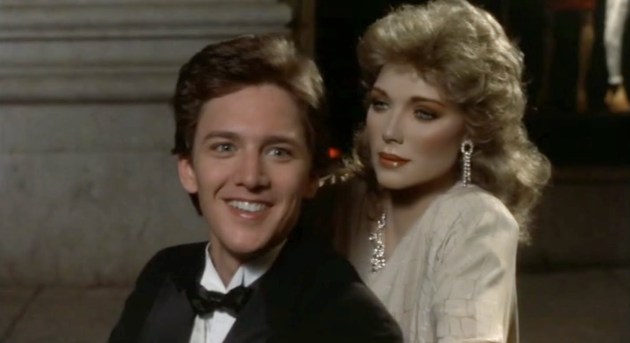
Andrew McCarthy and dummy. The dummy is on the right.

But here he (quite understandably) fails to decipher any character motivations, ending up either gazing ‘soulfully’ into the middle distance or yelping nonsensically. Not helped by a horrendous script, his line-readings barely make sense.

Poor Cattrall has a completely thankless role as an oppressed Ancient Egyptian who is put under a spell and then reincarnated as a mannequin (don’t ask). Elsewhere, Steve Vinovich makes for a terrible baddie, his performance barely exceeding am-dram level.

Gay and black stereotypes are hurled around willy-nilly and there’s even a large dose of weird corporate sexism thrown in for ‘comedy’ purposes. The director and editor conspire to extend every shot just too long, killing any potential giggles.

The score is awful too, with blaring sub-Harold-Faltermeyer synths and over-loud drum machines throughout (though there have been many worse movie themes than the Albert Hammond/Dianne Warren-composed, Narada Michael Walden-produced ‘Nothing’s Gonna Stop Us Now’, the UK’s second-biggest-selling single of 1987).

But, in its own way, ‘Mannequin’ laid down a marker in Hollywood, arguably influencing the crap/ infamous ‘caper’ movies of the early ’90s such as ‘The Adventures Of Ford Farlaine’ and ‘Hudson Hawk’ etc. So we have that to ‘thank’ it for…
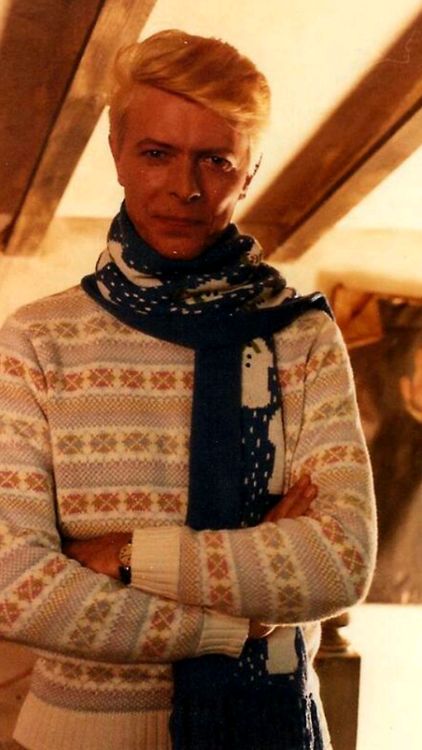
David Bowie & The Snowman

bowieDavid Bowie’s 1977-1985 period was one of his most fascinating and contradictory.

On the one hand, there were the ‘adult’ themes embedded in Heroes, Lodger, Scary Monsters, ‘The Elephant Man’, ‘Christiane F’, ‘Cat People’, ‘Merry Christmas Mr Lawrence’, ‘Baal’ and ‘The Hunger’.

But then there were the projects that were, on the face of it, more typical of a well-respected, part-of-the-furniture ‘family entertainer’; the 1977 Bing Crosby TV duet, the 1978 recording of Prokofiev’s children’s classic ‘Peter And The Wolf’, the ‘unthreatening’ pure pop of Let’s Dance and Tonight, the ‘Labyrinth’ movie and soundtrack, the huge investment of time and effort in various Band Aid/Live Aid ventures.

Were these karmic ‘atonements’ for those bleak Los Angeles and Berlin periods of the mid-’70s? Possibly, though his work had always touched on childhood themes, and he was apparently also very keen, whenever possible, to take on projects his young son could enjoy.

snowman

So, in early December 1983, when Bowie was – albeit briefly – probably the biggest ‘rock’ star on the planet, he found time to contribute a touching, heartfelt introduction to Dianne Jackson’s film of Raymond Briggs’ ‘The Snowman’.

First shown on British TV 33 years ago today (I can remember how much of an event it was in my house), it’s yet another fascinating piece of early-’80s Bowie ephemera, and his involvement was surely quite a coup for the film-makers.

Though ‘The Snowman’ has become a perennial Christmas favourite, it is often transmitted without the introduction. So here it is in all its glory. Merry Christmas.

The Cult Movie Club: Round Midnight (1986)

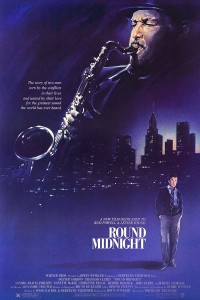
round_midnight_xlg‘Round Midnight’ turns 30 today, and its status as one of the great jazz movies was confirmed at a birthday screening last night at the Cine Lumiere in South Kensington.
Whilst the recent ‘Whiplash’ and ‘Miles Ahead’ were moderate commercial successes, they were subject to withering criticism in some quarters – I was with the naysayers regarding the former but, after watching the trailer, couldn’t even drag myself to the latter.

So until Woody Allen makes his long-promised big-budget ‘birth of jazz’ film, ‘Round Midnight’ is probably the best we’re gonna get. Its success even ushered in a short-lived Hollywood jazz revival – Clint Eastwood produced the wonderful ‘Thelonious Monk: Straight No Chaser’ (1987) and directed the Charlie Parker biopic ‘Bird’ (1988), followed by Bruce Weber’s acclaimed Chet Baker documentary ‘Let’s Get Lost’ (1988) and Spike Lee’s ‘Mo Better Blues’ (1990).

‘Round Midnight’ is loosely based on the memoir/biography ‘Dance Of The Infidels’ by Francis Paudras, a Parisian graphic designer who befriended legendary bebop pianist Bud Powell – and became his carer, business manager and confidante – during Bud’s expat period. The film focuses mainly on the relationship between Francis and Dale Turner, a fictional mash-up of Powell and saxophonist Lester Young.

Put simply, the film ‘gets’ jazz; it’s immediately obvious that almost everyone involved loves the music and its players. Despite an incredibly slow, dark (as in: you can’t really see what’s going on) opening 20 minutes, ‘Round Midnight’ finally delivers the grandeur, romance and tragedy of America’s classical music.

Dexter Gordon’s Oscar-nominated lead performance still thrills, 30 years on. Though his character mainly spends the first half of the film trying to get wasted, we can forgive him anything, especially when we hear of the beatings and racist abuse regularly doled out during his time in the army (this dialogue, according to director/co-writer Bertrand Tavernier, was pure autobiography on Gordon’s part).

Elsewhere, Martin Scorsese has some fun with his portrayal of the fairly sleazy New York booking agent Goodley, while Francois Cluzet gives a strong, touching performance as the quick-tempered though loyal Francis.

Tavernier has finally found a way to represent jazz on screen, and it couldn’t be simpler – just round up the best players available (including Tony Williams, Bobby Hutcherson, Billy Higgins, Wayne Shorter, Herbie Hancock, Ron Carter, Freddie Hubbard, most of whom also have speaking parts), get them to play live and capture a performance in one take if possible.

It’s no great surprise that Herbie’s soundtrack won the Academy Award for Best Original Score in 1987, though the film’s original music arguably never quite evokes the high-energy rush of prime late-’50s bebop-tinged jazz. No matter: both ‘Round Midnight’ and its score have aged pretty damn well.

UB40: Promises & Lies

Scene of the band's first Birmingham gig

Scene of the band’s first Birmingham gig

Sometimes a decent music documentary can really open up a subject like a good book or movie.

The Dexys/KeRowland film ‘Nowhere Is Home’ did the job recently, and last weekend’s ‘Promises & Lies’ does it superbly too.

It lets the protagonists speak for themselves purely in interview format without any ‘I’m-going-on-a-journey’, narrator-led BBC guff.

Like Simply Red, Madness or The Beautiful South, UB40 are so much part of the ’80s UK chart furniture (39 Top 40 singles including three number ones to date – surely only Shakin’ Stevens and Madness bettered them during the decade?) that it’s quite hard to listen to their music objectively these days.

By the mid-1980s, they had essentially become a stadium reggae band, exemplified by their joyous Nelson Mandela 70th birthday duet with early mentor Chrissie Hynde (she headhunted them at a London Rock Garden gig in 1980 for a big US tour

UB40’s huge success has possibly obscured their great passion for the music – singer/guitarist Ali Campbell claims several times in the film that they were always promoting reggae rather than seeking fame, and the claim rings true.

But their amazing hit-rate was somewhat of a smokescreen for some serious inter-band issues, culminating in a disastrous schism between vocalist/guitarist brothers Ali and Robin in 2008 that makes the Gallagher boys’ break-up look like a petty family tiff.

It was arguably always on the cards. A very tight-knit bunch of Brummies in their early days, UB40 had always split all their performance and songwriting royalties eight ways, a decision which created financial ‘situations’ (millions missing) that would have given even Billy Joel and Leonard Cohen serious cause for concern.

The resentments, claims and counterclaims piled up, and now in 2016 there are two bands gigging as UB40, one almost unbelievably fronted by another Campbell brother, Duncan.

James 'Jimmy' Brown

James ‘Jimmy’ Brown

‘Promises & Lies’ gleans strikingly honest interviews from everyone involved – no punches are pulled. And despite lots of fascinatingly-grim stuff, the documentary shows all band members to be an incredibly resilient, exceptionally talented, somewhat stubborn bunch.

Drummer James ‘Jimmy’ Brown gets an especially bad ride in the film, apparently the chief social-media ‘Ali-hater’, but his playing sounds great throughout (no less an ’80s pop personage than The Police’s Stewart Copeland once named him as his favourite rock drummer), as do almost all of UB40’s classic ’80s anthems.

I’ll be looking more closely into a band I’d mainly ‘dismissed’ as a singles act. Catch ‘Promises & Lies’ while you can on the BBC iPlayer.

Gig Review: John Carpenter @ The Troxy, 1 November 2016

carpenter-halloween

Carpenter (centre) and band overseen by Jamie Lee Curtis and Nancy Loomis in ‘Halloween’

It’s surprising that John Carpenter has taken so long to perform his own music in concert.

The director of ‘Halloween’, ‘Assault On Precinct 13’, ‘The Fog’ and ‘The Thing’ is well-known for his incredibly effective, synth-laden soundtracks, and he’s also been known to let his hair down in after-hours rock band The Coupe De Villes with movie biz friends Nick Castle and Tommy Lee Wallace.

But it’s actually a perfect time for him to be fronting his own band. Watching Adam Curtis’s impressive ‘HyperNormalisation’ documentary last week, I was struck how many current bands are clearly influenced by Carpenter’s music (which has also frequently turned up in Curtis’s docs). The dark, pulsing synthscapes of worriedaboutsatan and Pye Corner Audio particularly owe him a large debt.

Though apparently not in tip-top health (it’s hard to resist quoting that great line from ‘Assault’: ‘He don’t stand up as good as he used to…’), Carpenter was clearly having a ball on this short UK tour, bopping around behind his keyboard and booming out pre-rehearsed lines like ‘Good evening, London, I’m John Carpenter!’ and ‘Horror movies will live forever!’.

The beautiful Art-Deco Troxy venue was specially decked out like the ‘Escape From New York’ set, while a large screen behind the stage projected key scenes from his many classic movies.

carpenter-they-live

Carpenter mixed up tracks from his soundtrack work with some from recent non-soundtrack albums Lost Themes 1 and 2. The theme from ‘The Fog’, embellished with some baroque church organ, sent a chill down the spine while ‘They Live’ and ‘In The Mouth Of Madness’ were graced with some great, sleazy noir lead guitar from Daniel Davies.

‘Halloween’ and ‘Escape From New York’ were greeted like hit singles by the near-sold-out crowd. Newer track ‘Vortex’ showed how distinctive a musician Carpenter really is, the opening piano chords instantly recognisable as his soundworld. Other tracks had hints of Metallica, The Knack and even The Police at their rockiest.

A couple of bum notes: the venue sound was not great and the band were a bit brittle at times – you occasionally wanted a bit of double-bass-pedal mayhem from drummer Scott Seiver. There was also a bit too much DX7 and not enough booming Moog in the synth department. And where was the video for ‘Night’?

But all in all this was a great way to pay one’s respects to a master of mood and texture and a damn good musician to boot. Go ahead, John. We await the Coupe De Ville’s debut London gig with anticipation.

The Crap Movie Club: One-Trick Pony (1980)

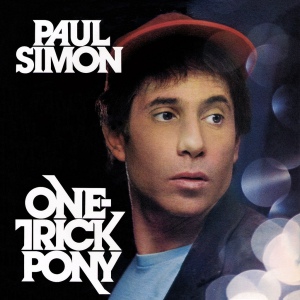
paul simonBy his own admission, Paul Simon had some very lean years between his 1975 classic Still Crazy After All These Years and 1986’s multi-million selling, multi-Grammy-winning Graceland.

His 1983 album Hearts And Bones was a major flop despite featuring some fine songs and great musicianship.

But the real nadir was ‘One-Trick Pony’. I stumbled across it very late at night on British TV in the late ’90s and was instantly gripped. It’s that special kind of crap movie – the ‘rock star’ vanity project with a gallon of overreaching ambition.

To say it hasn’t aged well would be a huge understatement, though, as with most genuinely bad films, it features a myriad of guilty pleasures too…

In 1980, Simon clearly wanted to celebrate his new Warner Bros record contract with a bang (he’d just jumped ship from CBS) but who persuaded him that a self-written, autobiographical movie was the answer? His screen persona was hitherto based pretty much on one (admittedly superb) cameo in Woody Allen’s ‘Annie Hall’.

But in ‘One-Trick Pony’ he tried to carry an entire movie with just two default settings: he’s either bopping around the stage, sweaty and somewhat bug-eyed, trying desperately to ‘rock’ (in Joe Queenan’s memorably cruel words, Simon is ‘too short to rock’n’roll, too young to die’), or he’s sulky and morose, peering doe-eyed into the middle distance, desperately trying to be adorable.

Simon plays Jonah Levin, a once-popular folk-rock artist who has fallen on hard times (see what he did there?) and now reduced to hawking his band (Steve Gadd, Tony Levin, Richard Tee and Eric Gale) around the Midwest, supporting bands like the B-52’s (who are held up as an example of the ‘hideous’ way the recording industry is going, but whose schtick is so much more vital and life-affirming than Simon’s supposedly ‘raw’ music…).

Jonah’s relationship with his estranged wife – Blair Brown in a completely thankless role – is terminally dull, with undramatic longueurs and clunking one-liners. There’s also some excruciating stuff with Jonah’s ‘cute’ son. You know the kind of thing – lots of ‘whatever happens, Daddy loves you, OK?’, cloying shenanigans with baseball mitts and copying Daddy shaving at the mirror.

From a muso perspective, you might well ask how a movie so heavily featuring superstar players such as Gadd, Gale, Tee and Levin can be outright crap. Well, the novelty effect lasts a few minutes but after that you can only feel for these gents – they’re given pretty thankless roles, playing a fairly tasteless ‘dead pop stars’ quiz in the car, reading out gig reviews and endlessly checking into dodgy hotels. Poor Richard Tee and Eric Gale look the most uncomfortable.

Jonah’s dealings with the record-biz ‘suits’ in ‘One-Trick Pony’ are presumably based on Simon’s disagreements with his previous employers CBS Records, and they produce the only enjoyable sections of the film.

Rip Torn is reliably gruff though resolutely uncomical in his impersonation of legendary CBS hatchet man Walter Yetnikoff, but Lou Reed clearly relishes his cameo as a jobsworth producer; he’s desperate to add strings, horns and backing vocals to Jonah’s stripped-down tracks. Cue a lingering close-up of David Sanborn letting rip on alto, though we’re never sure if this is meant to be a Bad Thing or even a joke – to this viewer, it seemed like the first bit of decent music in the movie.

Oh yeah, the music. The soundtrack of course did a hell of a lot better than the movie – great single ‘Late In The Evening’ featured a Steve Gadd groove almost as influential as ’50 Ways To Leave Your Lover’ and even made the top 10 in the States.

To be fair to Simon, he had sorted out his screen persona by the time of the ‘You Can Call Me Al’ video in 1986, settling on a kind of faux-naif ‘everyman’ figure with some aplomb. He was also pretty funny in Steve Martin’s ‘Homage To Steve’ short from the same year. But let’s just rejoice that he hasn’t returned to the world of feature films since…

Why I Can’t Throw My Cassettes Away

compact-cassette-157537_960_720‘We’re not in the music space – we’re in the moment space.’
Daniel Ek, CEO/Founder of Spotify, quoted in ‘The Song Factory’ by John Seabrook

Spotify undoubtedly has many things going for it, but its boss’s comment might make many a true music fan take pause. It definitely goes some way to explaining why I’ll be hanging on to my cassettes.

They are anti-moment, demanding patience and time-investment. The famous soliloquy in Nick Hornby’s ‘High Fidelity’ explains the gentle art of compilation construction. Who didn’t try to woo someone with a well-crafted comp?

I’ve still got mutant compilation tapes made 20 years ago which mix up tracks from all kinds of sources: albums hired from the library, albums borrowed from friends, tracks taped from the radio and maybe even a bit of homemade Zappa-style spoken-word weirdness by myself or a few friends.

Then there are the teenage band rehearsals recorded on a brilliant Philips boombox. Wish I still had that. I swear it made better recordings than a lot of digital four-tracks I’ve heard since. And then there’s the cache of gig tapes recorded directly from the sound desk of various London venues. I barely listen to them but there’s no way I’m gonna chuck ’em.

s-l225

Then there are the official album releases. I like the way they sound slightly different on every player. My favourites are probably the grey and black Warner Bros ones of the late-’70s/early-’80s: to this day, Little Feat’s Time Loves A Hero, The Doobie Brothers’ Livin’ On The Fault Line and John Martyn’s Glorious Fool sound so much better on cassette than on CD, with improved dynamics and top-end.

Cassettes were always subtly subversive too – Malcolm McLaren masterminded his band Bow Wow Wow’s (cassette-only, of course) release of 1980 mini-album Your Cassette Pet as a reaction to the ‘Home Taping Is Killing Music’ protest. He also named their debut single ‘C-30 C-60 C-90 Go!’ in tribute to the humble tape.

And the ‘punk’ element of cassettes has also definitely been picked on by Zack Taylor, director of a new documentary called ‘Cassette’, showing later this month at London’s East End Film Festival. It features the likes of Henry Rollins, Thurston Moore and Ian McKaye waxing lyrical about the format which seems to be enjoying a resurgence in the US – cassette sales are on the up and there are reportedly more cassette-only labels than ever before.

This is all great news. Long live the cassette.

The Cult Movie Club: The Rachel Papers (1989)

rachel papersHere’s a late, almost completely forgotten contender for the pretty short ‘film better than the book’ list.

Writer/director (and son of Richard) Damian Harris’s ‘The Rachel Papers’, based on Martin Amis’s 1973 debut novel, crept out in May 1989 to mediocre reviews and underwhelming business.

At the time, the post-‘Mission’, pre-‘Four Weddings’ British film industry was in its latest rut, unsure of its place in the global marketplace and reeling from massive government cuts.

But somehow ‘The Rachel Papers’ movie remains true to Amis’s irreverent, adolescent, sweary, very ‘London’ vision, while understandably playing down the overt racism, sexism and druggier aspects of the novel.

The plot centres around Charles Highway, a precocious, upper-middle-class tyke on the cusp of his 20th birthday. He’s no virgin (the title alludes to the secret ‘research files’ he keeps on all his previous conquests) but is desperate to sleep with an older woman before he hits his twenties.

The lovely, intelligent, well-bred Rachel seems to fit the bill perfectly, but Charles gets a lot more than he bargains for when he pursues her. Falling in love wasn’t part of the plan, etc, etc… He also has to contend with Rachel’s on/off American boyfriend DeForest. Charles does a fair bit of learning and ‘growing’, but with an agreeable lightness of touch. Most importantly, the movie rattles along at a good lick.

rachel papers

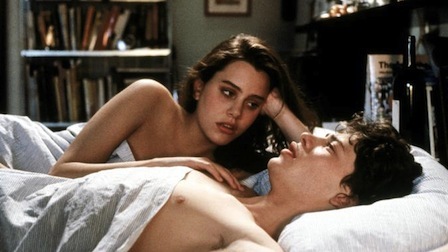
Ione Skye and Dexter Fletcher

I came across ‘The Rachel Papers’ completely by chance in the early ’90s when I was almost exactly Charles’s age, and it rang a lot of bells. Watching it again recently, I was pleased how well it stands up whilst obviously being very much of its time. The movie lives or dies by the casting of the Charles character – Dexter Fletcher does his best but wouldn’t seem a natural fit for the role. For a start, he looks barely older than 15. Where was Hugh Grant when Harris needed him?

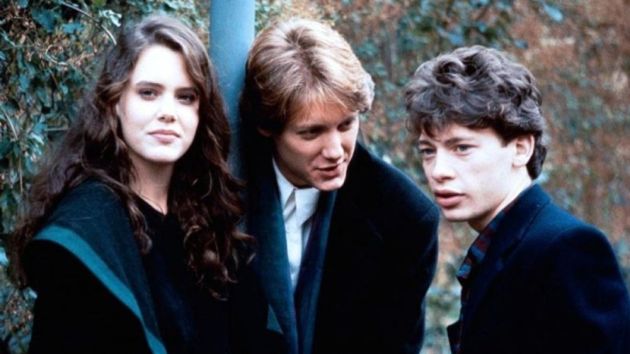
Often breaking the fourth wall and speaking directly to camera, Charles is a fusion of Ferris Bueller and Alfie, basically a cocky, rather spoilt little prick with, as it turns out, a few deep-rooted insecurities. In Amis’s book, Rachel isn’t American – the casting of Ione Skye was apparently a studio-imposed decision, but it doesn’t upset the balance of the film at all. She does a great job in an underwritten role. She’s a fresh, natural, uplifting presence, carrying on from where she left off in the classic ‘Say Anything’. James Spader delivers a typically superb performance as DeForest, mining the same smarmy, condescending schtick he so memorably employed in ‘Pretty In Pink’.

rachel

Skye, Spader, Fletcher

The film is also chock-a-block with other memorable character turns – Jonathan Pryce, Michael Gambon, Lesley Sharp, Aubrey Morris, Gina McKee and Claire Skinner do some great work, particularly Gambon as an amusingly-off-hand university interviewer. Ian Dury’s right-hand-man Chaz Jankel does a decent job with the soundtrack on top of some choice contributions from Shakespears Sister and John Martyn.

pryce

Jonathan Pryce in ‘Rachel’

In the final analysis, ‘The Rachel Papers’ is the only Brit romcom I’ve seen that approaches something like ‘The Sure Thing’.

It’s irreverent and unpretentious but certainly not dumb, a fairly accurate portrait of late-’80s London, bringing an appealing cheerfulness to the city without resorting to picture-postcard clichés (there’s not a shot of Big Ben or Trafalgar Square in sight). The sexual politics and shenanigans are also refreshingly upfront.

It’s surely due a remake – the recent ‘Don John’ seems to touch on similar areas but looks like somewhat of a disaster area if the trailer is anything to go by. Don’t judge ‘The Rachel Papers’ by the trailer either, though, by the way…

From Diva To De Palma: Seven Soundtrack Moments

withnail

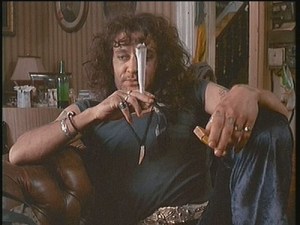
Ralph Brown as Danny in ‘Withnail & I’

When it comes to the marriage of sound and vision, there’s a particular kind of ’80s cliché probably originating from the work of directors like Ridley/Tony Scott, Adrian Lyne, Hugh Hudson and Alan Parker (interestingly, all Brits who ended up in Hollywood).

It’s basically a slick, beautifully-shot montage of images usually accompanied by vaguely ‘New Age’ kind of music which probably features some Satie-esque piano, possibly some strings (synthesized or real) and/or a bit of acoustic guitar or sax.

Well, I’m here to tell you that this combo is pure comfort food for me in these troubled times. It must be another of those ‘blokes of a certain age’ things. And it turns out that some of those directors also produced some of my favourite movie soundtrack moments of the ’80s:

7. Diva (1981)
Composer Vladimir Cosma channels Erik Satie, Peter Gabriel and Tangerine Dream to create a beguiling mix of solo piano, bleak new-wave rock and classic minimalism. I don’t ‘do’ opera but the two versions of Catalani’s ‘La Wally’ which bookend this superb album get me every time.

6. Angel Heart (1987)
A bleak synth swells in the distance, De Niro (?) whispers ‘Johnny… Johnny…’ and we’re off. Courtney Pine blows impressively over Trevor Jones’ ambient backing and the rest of the album features some excellent crooner tunes and R’n’B too.

5. Blow Out (1981)
Melody-maestro Pino Donaggio pulls out all the stops for this rather beautiful theme which accompanies director Brian De Palma’s most ’emotional’ movie slaying…

4. Betty Blue (1986)
Gabriel Yared’s haunting soundtrack for this famously-overrated art-house melodrama gives me an instant nostalgia rush. Very influential too, particularly on the next choice.

3. Withnail & I (1987)
David Dundas and Rick Wentworth’s music perfectly evokes some of the film’s themes darker themes, though the blues guitar licks were perhaps best left out of the final mix.

2. 9 1/2 Weeks (1986)
The bizarre, chameleon-like career of pianist/composer Jack Nitzsche is one for another time, but his ‘love theme’ from Adrian Lyne’s guilty pleasure is sentimental, hokey and clichéd, and gets me every time. There are other crackers by Jean-Michel Jarre, Brian Eno and The Eurythmics on the quite-hard-to-find soundtrack album.

1. Mrs Soffel (1984)
A confession – I’ve never seen this movie. And I’m really not sure I ever will. But Mark Isham’s majestic theme never fails to beguile, originally heard on a mid-’80s Windham Hill Records taster cassette.