Blitz: The Club That Shaped The 80s @ Design Museum, 27 September 2025

England, 1979: punk is out, sus laws and Thatcher are in. Nightclubs are closing down and youth violence and political unrest are on the rise (as are movements like Rock Against Racism).

But, in a curious echo of punk five years before, something is stirring in the London suburbs. Young Roxy, Bowie and Kraftwerk fans from Bromley, Burnt Oak and Basildon are dressing up in style (Zoot and toy-soldier suits, cummerbunds, bolero hats, geometric haircuts) and flocking to clubs like Covent Garden’s famous Blitz, now the subject of an engaging exhibition running until 29 March 2026 at the Design Museum

It was the apex of a scene which encompassed fashion, graphic design, journalism, electronic dance music, squatting and a New Pop sensibility which would soon sweep the charts. In short, it’s arguably the best of the 1980s, and this fascinating exhibition neatly incorporates most of it.
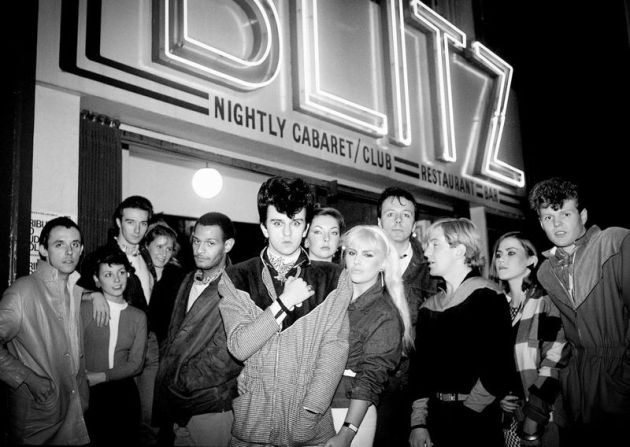
Blitz Kids including Midge Ure, Steve Strange, Billy Currie and Rusty Egan

We see the original flyers and posters which wittily and stylishly trailed the Blitz club nights, and there are many items of vintage clothing. The rarely-seen photos are worth the price of admission alone, many contributed by original scenesters like Boy George, Siobahn Fahey, Robert Elms and Marilyn, including a priceless shot of David Bowie with Toni Basil (we also get the full story of Bowie’s recruitment of Strange et al for the ‘Ashes To Ashes’ video).

But the jewel in the exhibition’s crown is probably the recreation of the Blitz itself, with an AI Rusty Egan on the decks and Spandau Ballet performing ‘To Cut A Long Story Short’ on the ‘live stage’ (elsewhere Elms has donated his embarrassing handwritten poem which he used to announce their debut gig at the club).

Rusty Egan, Gary Kemp, Fiona Dealey and Robert Elms in the exhibition’s recreated Blitz. Photo by PA Media

The exhibition widens out to encompass other fascinating early 1980s artefacts, like the posters advertising Sade’s pre-fame Ronnie Scott’s gigs – well over a year before Diamond Life was released – and evidence of the media’s generally condescending attitude towards The Cult With No Name/New Romantics/Blitz Kids.

Then there are the textiles, hats and magazines galore (the exhibition dovetails slightly with the Portrait Gallery’s recent Face exhibition), and even the first all-electronic drum set, a Simmons SDS-V, as used by Kajagoogoo, Flock Of Seagulls, Ultravox etc.

This is an engaging, fun exhibition curated by people who were there and/or obviously care about this stuff. And there’s just enough social/political context for it to be educational too – it was good to see so many youngsters enjoying it with their parents. Highly recommended.
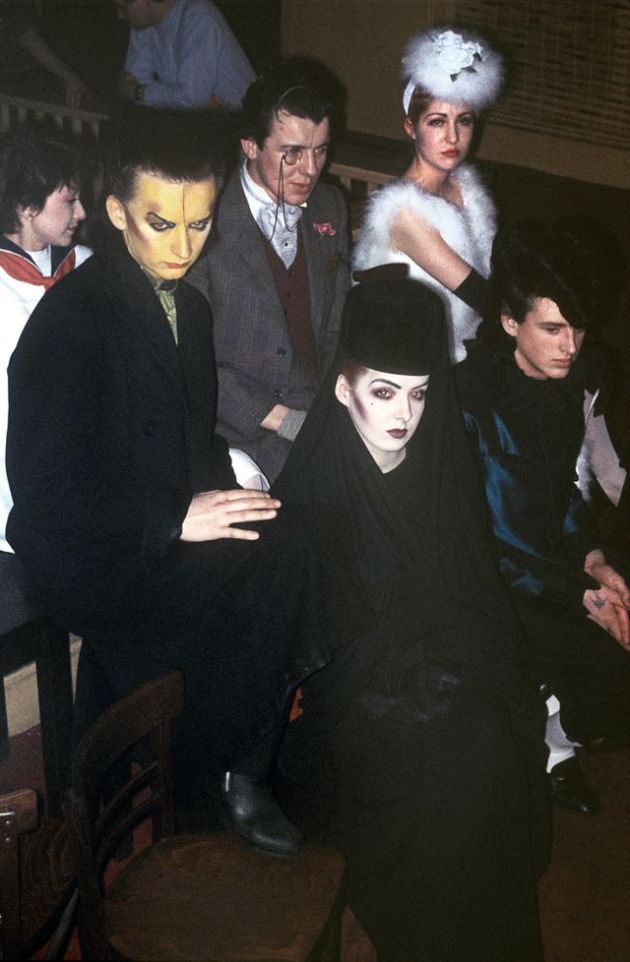
The Blitz in 1980, with Boy George (left)

1980s Rock/Pop Acts I Should Like But Don’t

Everyone knows a few: those acts that got great reviews, named some of your favourite bands as influences and sold a few records in the process, but there was just something about their music that you couldn’t hack.
Maybe it was their vocals, their outlook, their politics, their songwriting, or a mixture of all four.

Well I know some too. Here’s a totally subjective, wildly judgemental – no offence intended – list of 1980s pop and rock artists who leave me cold, despite most being critical and commercial successes. Believe me, I’ve tried. Like they could care less…

King’s X
My muso mates waxed lyrical about their tricky riffs and tight musicianship but I’ve never got beyond the guy’s not very good singing, their weirdly unmemorable songs and rather naff pomp-rock tendencies.

World Party
Perpetually spoken about in hushed tones of reverence when I was at college but their music singularly failed to grab, despite the Beatles/XTC/Prince influences, possibly due to Karl Wallinger’s rather wimpy voice. See also: Crowded House, REM, Waterboys

The Blow Monkeys
Somehow got filed under the ‘sophistipop’ banner courtesy of their flirtation with ‘slinky’ grooves and soul influences, but for me Dr Robert’s absurd voice and the lack of songwriting imagination never got them past first base. See also: Kane Gang, Simply Red, Johnny Hates Jazz, Black, The Big Dish.

Marillion
Decade-ending Season’s End had some brilliant moments but for me most of the Fish era was a succession of quite badly-played/badly-sung rip-offs of Gabriel-era Genesis. It Bites did it better and added some much-needed pizzazz and groove. See also: IQ, Jadis, Tony Banks/Chris Squire/Mike Rutherford solo albums…

Deacon Blue
I liked the soppier/poppier elements of their debut album Raintown but the game was up when the truly irritating ‘Wages Day’ and ‘Real Gone Kid’ swept the airwaves at the end of the decade. They took Prefab Sprout’s basic concept to the bank whilst shaving off the weird edges.

Paul McCartney
Sheer melodic brilliance time and time again of course, but for me his 1980s work generally flatters to deceive, outside of a few random favourites (‘Pipes Of Peace’, ‘Once Upon A Long Ago’). Yes, even the album he did with Elvis Costello (of whom more below…).

The Style Council
Only a musical moron would deny the power of ‘You’re The Best Thing’ and ‘Walls Come Tumbling Down’ and you have to admire Paul Weller’s songcraft, politics, guitar playing and ability to laugh at himself, but generally it was hard to shake off the naffness. Mick Talbot must take a lot of the blame…

Mick Jagger
He employed some of my favourite producers and musicians (Jeff Beck, Sakamoto, Bill Laswell, Herbie Hancock, Doug Wimbish, Simon Phillips etc. etc.) but failed to produce even one memorable or interesting single or album track during the 1980s. See also: Pete Townshend, Eric Clapton, Nick Heyward, Jerry Harrison

Pages
This yacht rock supergroup had a great singer (Richard Page) and sh*t-hot musicians (Vinnie Colaiuta, Jay Graydon, Jeff Porcaro, Steve Lukather etc.) but the songs weren’t strong or memorable enough. See also: most of Toto, Mr Mister

Elvis Costello
Weirdly his ‘Less Than Zero’ was one of the first singles I loved as a kid, but his desperation to be a serious ’80s ‘artist’ fell on deaf ears despite the fact that he obviously knew a lot of chords and retained some of that new-wave angst (but even I couldn’t resist his fine run of 1990s form, from the superb ‘London’s Brilliant Parade’ to Bacharach). See also: The Cars, The The, Squeeze.

Van Morrison
To my ears his 1980s music is like Joni Mitchell and John Martyn without the melodic/harmonic/lyrical depth, apart from the sublime ‘Rave On John Donne’. People tell me he always uses great bands though, but they often barely register…

Todd Rundgren
I’m more of a fan of his 1980s producing work (Pursuit Of Happiness, XTC etc) than his solo music. Never bought into this whole ‘he’s a genius’ thing, save the wonderful ‘The Verb To Love’ – but that’s from the 1970s, innit…? See also: Lenny Kravitz.

Depeche Mode
Yes they’ve got a few pop hooks, the Mute Records cred and ‘edgy’ image but never been able to shake off an ineffable naffness for me. And despite being ‘synth pioneers’, they didn’t seem to push the sonic envelope much in the 1980s at all. ‘Everything Counts’ was superb though and I got on board later with Ultra. See also: Kraftwerk, New Musik, Visage, Ultravox, New Order, Howard Jones

Pink Floyd
If you want to put me to sleep, put on any of Pink Floyd’s 1980s work. Bring back Syd. See also: Fleetwood Mac, Pink Floyd solo projects, except Nick Mason’s Fictitious Sports, which is brilliant…

Bad Brains
Dub/thrash/funk pioneers and a huge influence on bands I really like such as Living Colour, Fishbone and 24-7 Spyz, but their music seems a little amateurish to me and, again, their singer was not blessed with a great set of pipes (unlike the singers of bands above).

Housemartins
Fondly remembered until you actually hear those singles again – ‘Build’, ‘Happy Hour’, ‘Caravan Of Love’. Annoying, a bit puny, and apparently the more irritating side of the C-86 generation.

The Jesus and Mary Chain
Bowie summed them up well for me: ‘I tried the Jesus and Mary Chain but I just couldn’t believe it. It’s awful! It was so sophomoric – like the Velvets without Lou. I just know that they’re kids from Croydon! I just can’t buy it…’

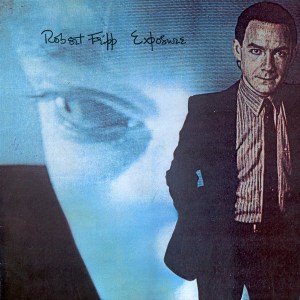
Robert Fripp: Exposure (The Definitive Edition) @ 40

Fripp’s debut solo album, originally recorded at New York’s Hit Factory between January 1978 and January 1979, has endured endless tinkering from the artist including various remixes/reversions.
But his 1985 (or should that be 1983?) remix, carried out at London’s Marcus Studios alongside Brad Davies, is the best.

But calling Fripp completists: is this version of Exposure even available on any format apart from the original cassette? (Thank goodness I still have my copy, signed by Fripp at the Virgin Megastore circa 1988, because I bought the noughties CD version to find that it featured completely different vocal takes, and the current streaming version is just as obtuse…).

The 1985 version of Exposure adds some sonic wallop to the drums, pushes Barry Andrews’ keyboards way back in the mix, comps the best of Daryl Hall and Peter Hammill’s vocals and features arguably Peter Gabriel’s best ever version of ‘Here Comes The Flood’ (with Frippertronics prelude).

It’s also a completely personal album, Fripp’s Face Value, the musings of an uptight Englishman in NYC, a prog/fusion version of ‘Annie Hall’. There are funny vocal interjections/indiscretions from his mother (‘You never remember happy things’), Fripp himself (‘Incredibly dismal, pathetic chord sequence’) and Eno (‘Can I play you some new things that I think could be commercial?’).

Gabriel fluffs the opening of ‘Here Comes The Flood’, Hall layers his vocals in strikingly avant-garde fashion, JG Bennett’s words are often layered in (with permission from his widow), arguments are eavesdropped upon and there are striking ‘audio verite’ sections. And lots of Frippertronics.

Fripp also uses silence to great effect. Don’t play this album too loud. But then there are the gorgeous ballads, ‘North Star’, featuring delightful pedal steel from Sid McGinnis and wonderful Hall vocals, and ‘Mary’, featuring Terre Roche (she also screams away on the cool reversion of Gabriel/Fripp’s title track).

And drummers: you gotta hear this album. Forget Narada Michael Walden’s playing with Weather Report, Jeff Beck, Tommy Bolin and the Mahavishnu Orchestra – this is his most outrageously brilliant drumming on record. Phil Collins plays well too, as do Allan Schwartzberg and Jerry Marotta.

1985 was a good year for Fripp. Alongside this fantastic Exposure remix, he met future wife Toyah, recorded some brilliant stuff with David Sylvian and also set up his ‘study group’ The League Of Crafty Guitarists.

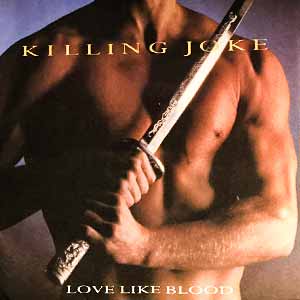
Killing Joke: Love Like Blood @ 40

Look up ‘intense’ in the dictionary and you might just see a photo of Jaz Coleman.

One of the best bits of post-Lockdown ‘normality’ was walking into Fopp in Covent Garden and quite by chance seeing the erstwhile Killing Joke frontman/keyboardist doing a signing session in full make-up.

His band’s ‘Love Like Blood’ hit its peak position of #16 in the singles chart 40 years ago this month. It was their sole top 40 single of the 1980s and biggest hit to date, a brilliant highlight of that Goth/ post-punk sound/attitude.

But, in a decade full of literary pop music, the song has an interesting and surprising genesis. Recently, Coleman told Songfacts:

That was inspired by the author Yukio Mishima… It was his views on writing with your blood as an artist that really inspired me. It’s a metaphor for the commitment an artist must take to his art form. When I was reading ‘Spring Snow’, one of Mishima’s novels, I really couldn’t speak for 24 hours after reading that book – it hit me so hard. The song itself was a distillation of everything that we hold dear, and one must aspire to walk and talk what you write about in your songs – actually live it. That’s the other part of art, isn’t it? You can’t just be conceptual, writing songs. It’s the way you live your life as well. It’s as important as the way you play your instruments or the music you create…

Musically, it’s fascinating too, the late great Kevin ‘Geordie’ Walker’s doom-laden guitar (with a very odd tuning), scary keyboards (played by Coleman) and a powerful, influential groove – apparently no click track here. Attendant album Night Time was a hit too, featuring the single ‘Eighties’ which Nirvana ripped off for ‘Come As You Are’.

The real corker though was this live performance of ‘Love Like Blood’ from ‘The Tube’. Makes you hanker for a time when bands really meant it… No mucking about. Audiences too. Like to have been there.


John Lennon/Yoko Ono: Milk and Honey @ 40

Milk and Honey – planned as the followup to Double Fantasy long before John Lennon’s death on 8 December 1980 – was finally released 40 years ago this weekend, on 27 January 1984.

I believe it was the second vinyl album owned by movingtheriver – the first was The Beatles’ Magical Mystery Tour soundtrack.

Polydor did John and Yoko proud, with striking front/back photos and a gatefold sleeve complete with Ono’s liner notes, Lennon’s ‘Grow Old With Me’ lyrics and some Robert/Elizabeth Barrett Browning poetry.

But Milk and Honey was somewhat of a commercial disappointment, reaching #3 in the UK and just #11 in the US. And it seems one of the least remembered Lennon-related albums these days. Why? Listening again after a few years this weekend was a pleasurable experience, with a few exceptions, and the breadth of musical styles (reggae, calypso, new-wave, piano balladry, rock’n’roll) is impressive.

Six John solo tracks recorded during and before the Double Fantasy sessions made it onto the album. They’re all pretty good, a few classic, mostly tougher than the previous material. John sounds on great form. His spoken-word moments and count-ins are amusing and he’s frequently heard ‘coaching’ the band (and studio staff) through the songs, Prince-style, with various instructions: ‘Boogie!’, ‘Hold it down’, ‘Groove!’, ‘All right, you can get out now’ etc.

The Lennon tracks also showcase a great band playing pretty much live in the studio. John plays lots of guitar – in that famous Jann Wenner interview, he said ‘I can make a guitar speak’, and you can hear it here. Drummer Andy Newmark lays off the hi-hat most of the time, letting the rhythm guitars fill in the top end.

Three UK singles were released from the album, with diminishing returns: ‘Nobody Told Me’ got to #6, ‘Borrowed Time’ (studio sessions reveal that John used an interesting reference source for the song) #32 and ‘I’m Stepping Out’ #88.

Yoko recorded her tracks during 1982 and 1983, mostly with a very good NYC rhythm section (Neil Jason on bass, Yogi Horton on drums), and they range from the intriguing to extremely corny. ‘Don’t Be Scared’ possibly influenced David Bowie, particularly the title track of Tonight, recorded three months after Milk and Honey was released:

Yoko also enlisted some ‘remix engineers’ who apparently added a lot of post-production effects to John’s vocals, the drums and guitars (she had fallen out with Double Fantasy producer Jack Douglas over unpaid royalties and refused to credit him on the album).

Revisiting Milk and Honey was certainly a bittersweet experience, but it’s an easy album to recommend, and it only makes you miss John all the more. The dunderheaded/ill-informed contemporary critical reactions are explored in this very good video:

Women In Revolt (Art And Activism In The UK 1970-1990) @ Tate Britain

Behind the shiny, fun, tabloid version of the 1980s, there was an undercurrent of protest, upheaval and misogyny.

In the latter camp, how about the following astonishing UK laws still enshrined at the dawn of the decade: men had a right to have sex with their wives without consent. Welfare benefits were paid to married women via their husbands.

A fascinating new exhibition at London’s Tate Britain investigates the woman artists and activists whose work was a reaction to these and other issues. There’s a strong presence for punk, post-punk and industrial musicians: Gina Birch of The Raincoats, Throbbing Gristle’s Cosey Fanni Tutti and Poly Styrene of X-Ray Spex. We see fanzines, posters, gig excerpts.

There’s groundbreaking video art – Vivienne Dick’s ‘Two Little Pigeons’ and Birch’s scream are particularly memorable. We see banners, collages, sculptures and newsletters produced by the women who marched from Cardiff to Greenham Common in September 1981, challenging the decision to house 96 nuclear missiles on the site.

There’s a focus on the British Black Arts Movement, a group of artists who gathered in the wake of various uprisings in the early 1980s, from Toxteth to Brixton, and also Four Indian Women Artists, the first UK exhibition organised by and exclusively featuring women of colour.

Margaret Thatcher cut arts funding drastically in the mid-’80s, a decision which ushered in corporate sponsorship and prompted a backlash from many woman artists who began to show their work in local spaces, community centres, libraries, cafes and homes. We see much of this material and learn about its contexts.

And then of course there are the famous sexist advertising billboards, wittily defaced.

The exhibition constantly undermines Thatcher’s comment to Woman’s Own magazine in 1987 that ‘there’s no such thing as society’. And there’s a surprise around every corner. It’s moving, amusing, disturbing and educational in equal measures, and a reminder that protest and assemblage can create change. But the exhibition is also very large and probably takes two visits to really appreciate.

Women In Revolt! runs at the Tate Britain until 7 April 2024. A new podcast interviews some of the key artists.

Mark Stewart (1960-2023)

‘I think a paranoid is someone who’s in possession of all the facts.’ Mark Stewart, 1996

In another terrible year for musician deaths, one of 2023’s most surprising and least welcome was the passing of post-punk pioneer Mark Stewart in April, of undisclosed causes.

Indeed it is almost uncanny, considering how full of life he seemed onstage last year during On-U Sound Records’ 40th anniversary rave-up at London’s Forum. And the fact that 2022 also saw one of his best ever collaborations, with KK Null.

His music and friendship helped pave the way for his Bristol mates Tricky, Gary Clail and Massive Attack, and his influence is detectable in such acts as Sleaford Mods and LCD Soundsystem.

I saw Mark live five or six times. His presentation was sometimes hilarious, sometimes disturbing, always thrilling. He would shamble onstage, often with a shopping bag of beers in tow, before exploding into action, a man with a lot on his mind. The fact that he was often playing with one of the slickest/funkiest American rhythm sections in history (Skip McDonald/Doug Wimbish/Keith LeBlanc) was a brilliant dichotomy.

He was interested in everything from the Dead Sea Scrolls to CIA Mind Control to the Gemstone Files and Operation Gladio. His thing was information – who controls it and how/why they conceal it.

The teenage, beanpole, 6’6” Mark – resplendent in zoot suit and brothel creepers – was a regular sight at clubs and gigs in mid-1970s Bristol as part of the Funk Army. After his first band The Pop Group split up, he pursued mad mash-ups of sound, sometimes using Walkmans to create his collages, plundering scary ‘50s sci-fi voices and even TV ads.

He gave good album title: Learning To Cope With Cowardice. As The Veneer Of Democracy Starts To Fade. He was never interested in slick, ‘funky’ beats – even his ‘band’ album, 1990’s Metatron, with Wimbish, McDonald and LeBlanc, is distinctly uneasy listening.

By 1996’s Control Data, the music world had finally caught up with him, the album’s mix of techno, dub and house more commercial than usual. But the extraordinary ‘Simulacra’, ‘Red Zone’ and ‘Digital Justice’ to this day sound unlike anything else. This trend continued through his occasional records of the noughties, particularly the excellent Edit (2009).

His vocals were generally low in the mix. You had to strain to hear his lyrics. Why? He claimed it was the influence of dub and funk. ‘So it’s not like making a f**king speech’, he told Simon Reynolds. But his words were often brilliant, as funny and peculiar as Mark E Smith or Morrissey. Check out ‘The Lunatics Have Taken Over The Asylum’, ‘Low Life, High Places’ or The Pop Group’s ‘Citizen Zombie’ (You’ve got that brainwashed look of an alien abductee/Maybe your mind has been wiped clean’).

Mark also made a lot of impact writing for other acts – Tackhead, Gary Clail, Living Colour (‘Sacred Ground’), Audio Active (‘Happy Shopper’). But I’ll always remember him passing the time of day with my brother in the audience immediately after the Forum gig last April. He always said his fans were just as interesting as the musicians onstage – another legacy of punk.

Farewell to a brilliant one-off.

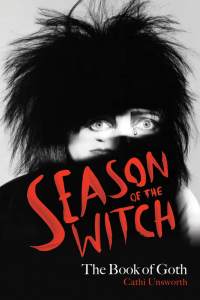
Book Review: Season Of The Witch (The Book Of Goth) by Cathi Unsworth

Goth is back. Siouxsie Sioux is reforming The Banshees and appearing on the cover of MOJO. An old-school Tim Burton TV series is imminent.

The tabloid image of the 1980s is one of glamour, fun and money, but Goth was just as much of a phenomenon during the decade, the dark underbelly of late-20th century pop culture, music and fashion.

And now novelist and esteemed music journalist Cathi Unsworth has put together a fulsome tribute, following Goth from its roots in the novels of Charlotte Bronte and Bram Stoker to the bands and artists who created a hugely popular music genre in its own right.

A labour of love, ‘Season Of The Witch’ features vivid depictions of growing up in late-1970s arable Norfolk with Sid and Nancy, hunger strikes, Thatcher’s rise (Unsworth is convinced she’s the antichrist!), National Front/anti-Nazi marches and the Yorkshire Ripper on the telly, and local ghost stories providing the village gossip.

It’s hardly surprising that she, along with legions of other young people, looked to the dark side and specifically those harbingers of doom, Dennis Wheatley, Nico, Juliette Greco, Jim Morrison, Alesteir Crowley, The Stooges, Black Sabbath, Robert Smith, Siouxsie, Howard Devoto, Nick Cave and the three Ians of Goth: Curtis, McCulloch and Astbury.

What emerges is essentially a timeline of Goth, with particular emphasis on the key music acts and outliers. Unsworth posits some remarkable theories – for example, aligning Killing Joke’s debut album with disenfranchised London Black youth of the early 1980s – but somehow pulls them off, and there’s also a great section on Psychobilly’s birth in a sweaty Victorian pub in Hammersmith.

The musical analysis is sound (though arguably a book like Simon Reynolds’ ‘Rip It Up’ covered similar territory and with a lot more brevity/impact) and there are the occasional revelatory factoids about a recording session or songwriting inspiration.

But ‘Season Of The Witch’ is at its best when filtering the music through the prism of current affairs, whether the miners strike, Falklands War, Brighton Tory Conference bombing or Rupert Murdoch’s rise and rise. Prescient and enjoyable as it is, I wanted much more personal stuff – there was the opportunity for this to be the Goth version of Sylvia Patterson’s ‘I’m Not With The Band’.

The enjoyable, pithy ‘Season Of The Witch’ ends with key depictions of Goths in literature and movies – a glaring omission from the latter is Katrin Cartlidge’s remarkable performance as Sophie in Mike Leigh’s 1993 film ‘Naked’, surely the ultimate Goth of British cinema.

Unsworth talks about the book in this recent WORD podcast.

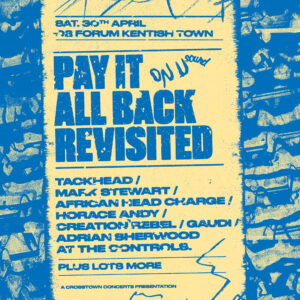
Gig Review: Mark Stewart & The Maffia/Tackhead @ The Forum, 30 April 2022

This was a twice-rescheduled London gig, initially designed to celebrate the 40th anniversary of On-U Sound Records.

And what a line-up was brought together to celebrate mixmaster general (and birthday boy) Adrian Sherwood’s iconic dub/funk/post-punk/industrial indie label (motto: ‘disturbing the comfortable, comforting the disturbed’): Creation Rebel, African Head Charge, Tackhead and Mark Stewart & The Maffia.

And what a pleasure to hear this music in a big hall, in front of a near-sell-out crowd. There were no half-measures here – this was an ageless performance from all the artists, and, refreshingly, also bone-crunchingly loud. Club gigs are all well and good but sometimes you need to hear this stuff in full effect.

Augmented by a striking set of projected visuals, taking in everything from Malcolm X to 1980s CND marches (On-U always championed agents of protest), Creation Rebel and Head Charge fused slow dubs and occasional bursts of metal guitar.

But the real draw was the return of Tackhead, their first London date for 14 years, and they didn’t disappoint – drummer Keith LeBlanc always swings even when tied to drum machines and loops, playing with dynamics and a killer right foot.

If there’s a greater contemporary rhythm section than him, bassist Doug Wimbish and guitarist Skip McDonald, I haven’t heard it – and these guys are not young any more. Joined by sermonising vocalist Bernard Fowler, they unleashed tracks taken mainly from their 1989 Friendly As A Hand Grenade album, excellent versions of ‘Stealing’, ‘Tell Me The Hurt’, ‘Mind At The End Of The Tether’, ‘Ticking Time Bomb’, and a brilliant take on ‘White Lines (Don’t Do It)’.

Mark Stewart, skulking around at the back of the stage for most of the Tackhead set, then took the mic, seriously pissed off with the state of the world – and who can blame him? He laid into ‘Hysteria’, ‘Liberty City’, ‘Passcivecation Program’ and ‘Resistance Of The Cell’ with the intensity of a man who knows everything he predicted 40 years ago has come to pass, but also found time to lead the crowd in a verse of ‘Happy Birthday’ for Sherwood.

Then, gig over and job done, Stewart was soon spotted in the stalls, chinwagging with fellow travellers. As he once said, the On-U audience is just as interesting as those on stage. Great gig.

The Movers & Shakers Of 1980s Music: Their Real Names Revealed

Captain Sensible, AKA…

During the punk era, musicians often chose stage names so that the dole office wouldn’t identify them from album covers or gigs.

One wonders how much of an issue that was for Gordon Sumner, Paul Hewson and David Evans, AKA Sting, Bono and The Edge, but you never know.

But as the 1980s wore on and the post-punk era became the hip-hop era, a whole new generation of rappers, DJs, producers and musicians felt the need to create pseudonyms.

But what did their mums call them? Here, for your dubious pleasure, are some of the most intriguing real names. It’s fair to assume that most probably don’t like being reminded of these, for various reasons. YOU go taunting Ice-T with his real name (Tracy Marrow). But, on the other hand, kudos to The Cure’s Robert Smith for not using a pseudonym…

Terminator X (Public Enemy DJ): Norman Rogers

Jet Black (Stranglers drummer): Brian Duffy

W. Axl Rose: William Bruce Rose Jr.

Divine: Glenn Milstead

MC Lyte: Lana Moorer

Kate Bush: Catherine Bush

Sun Ra: Herman Blount

Sade: Helen Folasade Adu

Adam Ant: Stuart Goddard

Ozzy Osbourne: John Michael Osbourne

Genesis P-Orridge (Throbbing Gristle/Psychic TV frontperson): Neil Megson

Cosey Fanni Tutti (Throbbing Gristle co-founder): Christine Newby

Jamaaladeen Tacuma (Ornette Coleman bassist): Rudy McDaniel

Howard Devoto (Magazine singer/solo artist): Howard Trafford

Wilko Johnson: John Wilkinson

Jah Wobble: John Wardle (named by a drunken Sid Vicious, whose real name is John Ritchie…)

Prairie Prince (Tubes/XTC drummer): Charles Lempriere Prince

Sydney Youngblood (‘If Only I Could’ singer): Sydney Ford

Yazz (‘The Only Way Is Up’): Yasmin Evans

Belouis Some (‘Imagination’ singer): Neville Keighley

Hollywood Beyond (‘What’s The Colour Of Money’ singer): Mark Rogers

Tommy Vance (legendary DJ): Richard Anthony Crispian Francis Prew Hope-Weston

Melle Mel: Melvin Glover

John Martyn: Iain McGeachy

Tom Verlaine (Television frontman): Thomas Miller

Johnnie Walker (DJ): Peter Dingley

Kim Wilde: Kim Smith

Midge Ure: James Ure

Elvis Costello: Declan MacManus

Adrian Belew: Robert Steven Belew

Princess (London soul singer of ‘Say I’m Your Number One’ fame): Desiree Heslop

Dweezil Zappa: Ian Donald Calvin Euclid Zappa (The LA hospital nurse wouldn’t let Gail and Frank name him ‘Dweezil’ so FZ named him after his early collaborators Ian Underwood, Captain Beefheart, Carl Schenkel and ‘Motorhead’ Sherwood. Dweezil’s name was legally changed when he was five years old.)

Mick Mars (Motley Crue guitarist): Robert Alan Deal

John Foxx: Dennis Leigh

Trugoy (De La Soul rapper): David Jolicoeur

Cheryl Baker (Bucks Fizz vocalist): Rita Crudgington

Grandmaster Flash: Joseph Saddler

Kidd Creole (Furious Five rapper): Nathaniel Glover

KRS-One: Lawrence Parker

Pauline Black (Selecter singer): Belinda Magnus

Siouxsie Sioux: Susan Ballion

Geddy Lee: Gershon Eliezer Weinrib

Sebastian Bach (Skid Row singer): Sebastian Bierk

Marilyn (‘Calling Your Name’ singer): Peter Robinson

Don Was (Was Not Was co-founder/superstar producer): Don Fagenson

Falco (‘Rock Me Amadeus’ one-hit wonder): Johann Holzel

Steve Severin (Siouxsie and the Banshees bassist): John Bailey

Budgie (Siouxsie drummer): Peter Clarke

Dave Vanian (Damned singer): David Lett

Lydia Lunch: Lydia Koch

Flavor Flav: William Drayton

LL Cool J: James Smith

Tone Loc: Anthony Smith

Bonnie Tyler: Gaynor Hopkins

Yngwie Malmsteen: Lars Lannerback

Young MC: Marvin Young

Ice Cube: O’Shea Jackson Sr.

Shakin’ Stevens: Michael Barratt

Donna Summer: LaDonna Gaines

Captain Sensible: Raymond Burns

Rat Scabies (Damned drummer): Christopher Millar

Vanilla Ice: Matthew Van Winkle

MC Hammer: Stanley Burrell

DJ Kool Herc (hip-hop pioneer): Clive Campbell

Duke Bootee (hip-hop pioneer): Edward Fletcher

Afrika Bambaataa: Lance Taylor

Nikki Sixx (Motley Crue bassist): Franklin Ferrana

Skip McDonald (On-U Records/Sugar Hill guitarist): Bernard Alexander

Billy Idol: William Broad

Bill Wyman: William Perks

Fish: Derek Dick

Fee Waybill (Tubes vocalist): John Waldo

Billy Ocean: Leslie Charles

Posdnuous (De La Soul rapper): Kelvin Mercer

Maseo (De La Soul rapper): Vincent Mason Jr.

Chris De Burgh: Christopher Davidson

Kool Moe Dee: Mohandas Dewese

Dee C Lee (Style Council vocalist/’See The Day’ solo artist): Diane Sealey

Steve Strange (Visage frontman/Blitz pioneer): Stephen John Harrington

Youth (Killing Joke bassist/superstar producer): Martin Glover

Geordie (Killing Joke guitarist): Kevin Walker

Doug E Fresh: Douglas Davis