In 1981, when jazz, pop and R’n’B were fusing to create a very agreeable kind of high-gloss yacht rock, us Brits went for the WEA gang (David Sanborn, Patrice Rushen, Manhattan Transfer, George Benson, Al Jarreau et al) in a big way.
But Georgia-born Randy Crawford probably sold the most records. In her own modest way, she was one of the great stars of 1980s soul, and her beautiful, flawless voice and joyful presence added a lot to the decade.
‘Street Life’, her collaboration with The Crusaders, went top 5 in autumn 1979, and movingtheriver will never forget first hearing her version of ‘Imagine’ on the radio a few years later.
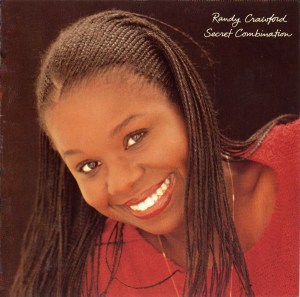
But Secret Combination, released 45 years ago this month and produced by Tommy LiPuma, was Crawford’s biggest album success here, hitting #2 (though weirdly it didn’t cross over in the US, only making #12 on the Billboard R’n’B chart).
This writer’s dad didn’t buy much 1980s soul but Secret Combination was around all the time early in the decade. It seemed so lush and exotic, sheer luxury soul/pop with gorgeous arrangements/electric piano by Leon Pendarvis and the slinky Abe Laboriel/Jeff Porcaro/Dean Parks/Lenny Castro rhythm section.
But listening back today, it does seem overshadowed by three all-time classics (‘You Might Need Somebody’, ‘Rainy Night In Georgia’, ‘Rio De Janeiro Blue’), with too much filler and too many ballads (a clue is the huge amount of credited songwriters).
But even the most humdrum tracks are enlivened by striking bits of arrangement, like the superb strings/flutes and unexpected post-chorus key change on ‘That’s How Heartaches Are Made’ (also listen out for a rare Porcaro flub – wonder why they left it in…).
Crawford was a star of the 1981 Montreux Jazz Festival, documented on the classic Casino Lights live album, and then she toured the UK in early 1982 including a famous televised gig at the Theatre Royal Drury Lane (sadly currently missing from BBC iPlayer).
Her next two albums – Windsong and Nightline – repeated the Secret Combination formula (with similar issues in the songwriting department) and were fairly successful in the UK too, and then she had that freak (self-penned) massive hit ‘Almaz’ in 1986.
Anthony during the recording session for Steve Khan’s ‘Eyewitness’ in 1981. Photo by David Tan
The brilliant Anthony Jackson, who has died aged 73, was a vital part of the early-1970s electric bass revolution, but arguably never got the same attention as contemporaries Stanley Clarke, Jaco Pastorius, Bootsy Collins, Louis Johnson and Alphonso Johnson (Chuck Rainey, Steve Swallow and Larry Graham are a bit older).
In a music world beset by fly-by-night chancers and one-trick ponies, he was a player of principle, something like the Allan Holdsworth of bass.
It was Anthony’s playing on Steve Khan’s ‘Guy Lafleur’ that first completely hooked movingtheriver – I remember thinking: who the hell is THAT?!
In two major ways, he changed the instrument as much as Jaco (though, in later years, pointedly called himself a ‘guitarist who plays a variation called the contrabass guitar’).
First there was his stretching of the instrument’s range below the standard low E (inspired by his love of Jimmy Smith’s Hammond organ playing) and above the standard top G, via his pioneering use of six-string basses, which he started playing exclusively in 1982 (Steve Khan thinks his superb ‘Casa Loco’ may have featured the debut of Anthony’s six-string).
Before that, Jackson had regularly detuned the low E string on his trusty Fender Precision, producing strikingly rich, deep timbres on work with Grover Washington Jr., Quincy Jones, Steely Dan, Chaka Khan and Earl Klugh, amongst hundreds of others (he prided himself on playing all kinds of music, working with everyone from Judy Collins and Peter, Paul & Mary to George Benson and Will Downing).
Then there was his use of effects, particularly the trademark flanger, often accompanied by the use of a pick, best heard on The O’Jays’ ‘For The Love Of Money’ and ‘Give The People What They Want’, and on his work with Al Di Meola. Oh, and then there’s a third factor – he ALWAYS sat down whilst playing, claiming that sitting down and wearing no strap was the way to go for bassists.
Jackson started playing music after seeing The Beatles on The Ed Sullivan Show in 1964, then became obsessed with other Brit invasion bands, Motown (via James Jamerson) and Jefferson Airplane’s Jack Casady, plus classical composers Olivier Messiaen and Paul Hindemith.
Regarding the latter two, their influence on Anthony’s playing is particularly noticeable on the live version of Khan’s ‘The Suitcase’, from 1994. Steve described this brilliant performance on his website.
One of Jackson’s first major gigs was in 1973, playing for a year in Buddy Rich’s sextet. He later called the drummer the only bona fide genius with which he had played. But then Anthony loved drummers. He enjoyed brilliant hook-ups with Steve Gadd, Buddy Williams, Steve Jordan, Harvey Mason, Simon Phillips, Steve Ferrone, Yogi Horton, Earl Young and many others.
But he lost work by refusing to ‘slap’ his bass during the disco era, and also very rarely solo’d unless he had something specific to say (to Steve Khan’s great annoyance!). Some of these concepts were laid down in his famously stern columns for Bass Player magazine.
But even Jackson wasn’t immune to some of the ‘proclivities’ of other great artists – for example, his performance was wiped from the title track of Steely Dan’s Gaucho! (Chuck Rainey’s pass got the nod instead.) But he played epochal stuff on ‘Glamour Profession’ and ‘My Rival’ from the same album, and excelled on Donald Fagen’s ‘IGY’ and ‘Ruby Baby’.
He was also fiercely loyal to artists he respected, enjoying long associations with Hiromi, Michel Camilo, Al Di Meola, Sadao Watanabe, Lee Ritenour, Grover Washington, Chick Corea, Khan and Michel Petrucciani.
In one of his rare interviews, he expressed a wish to play with Phil Collins, Ringo and Charlie Watts. Sadly it seems he didn’t achieve those ambitions. Farewell to a true pioneer and personal musical hero. Check out this playlist which brings together movingtheriver’s favourite Anthony performances.
Anthony Claiborne Jackson (23 June 1952 – 19 October 2025)
We’ve looked before at the celebrated 1980s rock and pop acts whose output somehow leaves this writer cold.
But how about the decade’s jazz, soul and fusion artists who always seem to get the props but inexplicably fail to float movingtheriver’s boat?
Rick James
Frequently mentioned in dispatches as a funk pioneer and influence on Prince etc. (and also mentor of Teena Marie?) but for this listener his music is generally coarse and one-dimensional, and his voice nothing to write home about.
Bill Connors
The guitarist made some excellent music for ECM Records in the 1970s both as solo artist and sideman (Jan Garbarek/Stanley Clarke/Return To Forever/Julian Priester etc.) but his 1980s work disappoints. He apparently developed a fixation on Allan Holdsworth’s sound/technique which hampered his progress. Somewhat regrouped in the 1990s and new millennium though.
Kazumi Watanabe
The guitarist employed some fantastic musicians (Jeff Berlin, Steve Jordan, Marcus Miller, Bill Bruford) in the 1980s but, outside of one or two half-decent riffs, seemingly failed to generate much memorable music.
Stanley Jordan
Bassist Anthony Jackson called him a ‘genius’, and he should know, but technical feats notwithstanding (he famously played the guitar exclusively by ‘tapping’ the strings with the fingers of both hands), he seemingly failed to develop his music beyond smoochy smooth jazz during the 1980s.
Chick Corea
Obviously a genius-level musical brain and maker of some memorable material in the 1970s but generally his ‘80s music and stage presentation was a bit embarrassing (though I have a penchant for the Light Years and Eye Of The Beholderalbums). A great mentor though (Dave Weckl, John Patitucci, Frank Gambale, Scott Henderson etc.).
Al Di Meola
See above.
Howard Hewett
Owner of some fantastic pipes and a stellar career co-fronting Shalamar, but for this writer his solo career generally seems like over-produced, underwhelming mush, and he doesn’t seem much of a songwriter. (He did an unforgettable take on Marvin Gaye in the 1990s though.)
Narada Michael Walden
One of the great drummers (Jeff Beck, Weather Report, McLaughlin etc.) and producers (Whitney, Aretha etc.) ended the 1980s with a half-decent album (Divine Emotions) but, to these ears, the rest of the decade’s solo career was unmemorable disco/funk…
Brand X
Often touted as a kind of British Weather Report – fugedaboudit. Their musicianship was competent at best and their compositions somehow didn’t stick in the brain, despite the occasional drumming contributions of a Mr P Collins. Bill Bruford did it much better with a far superior bunch of players (Jeff Berlin, Allan Holdsworth, Jon Clark, Dave Stewart). See also: Pierre Moerlen’s Gong.
Pat Metheny
This writer dug his stereo-chorus sound and musical approach at the dawn of the decade (80/81, American Garage, Travels) but, as the 1980s went on, he seemed to embrace a mushy new-age sensibility and indistinct jazz guitar sound that generally underwhelmed. And his stage presentation is one of the least savoury in music history… (Gary Giddins: ‘intoning plush melodies with excessive sobriety, as though the notes were transmitted directly from God…’). Liked his collaborations with Ornette Coleman and Bowie though.
Jean-Luc Ponty
Valued sideman for ’70s behemoths (Zappa, McLaughlin) but his solo career has generally disappointed this writer (but generally not other jazz/rock fans, who inexplicably seem to love his stuff…), outside of the fact that he doesn’t seem to possess a particularly pleasant violin tone with an annoying penchant for the phaser pedal. He employed some superb players in the ‘80s (Scott Henderson, Rayford Griffin, Baron Browne etc.) but never convinced that he’s much of a composer. Always quite liked this though…
Joe Meek isn’t often compared to Stock, Aitken and Waterman but here’s an associate of the former speaking after his untimely death: ‘He was being ganged up on by the establishment. Nobody with any power in the business liked him because he was independent and successful.’
The same could be said for Mike Stock, Matt Aitken and Pete Waterman. The always-deeply-unfashionable songwriting/production/mixing/A&R team, who had over 100 UK Top 40 hits and sold over 40 million singles in the UK (35 million worldwide in 1987 alone), found their feet in the hi-NRG scene, then detoured into classy soul before emerging with a late-‘80s formula that combined both approaches and made superstars out of Kylie, Jason and Rick Astley.
Everyone from Sigue Sigue Sputnik to Donna Summer sought SAW’s hit-making fairy dust. But many ’80s pop fans hated them. You could argue that was more down to the procedural limitations of their later work – ie. refusal to use a real rhythm section – and formulaic productions than the songwriting (reportedly mostly by Stock, with the other two supplying lyric ideas and Waterman the final mix and marketing) which often adroitely mined Motown and Philly soul and featured some of the weirdest harmonic modulations this side of Nik Kershaw.
But have their best tracks stood the test of time? Here are eight SAW singles that are not routinely turned off by movingtheriver when they come on the radio:
8. Dead Or Alive: ‘You Spin Me Round (Like A Record)’
Waterman boasted about making difficult records early in the trio’s career and this is one of their weirdest. Apparently their trick was to remove most of the bass from the mix and boost the cowbells, handclaps and sequencers to ‘trigger’ the interactive light shows, especially at ‘gay’ venues. It’s also interesting how long they wait before unleashing the first chorus…
7. Princess: ‘Say I’m Your Number One’
South London soul singer Princess – born Desiree Heslop – was a member of Osibisa before going solo in 1985. This tasty single, with its bizarre but brilliant harmonic hike into the chorus, settled at #7 as well as going top 20 in the US R&B charts.
6. Brother Beyond: ‘The Harder I Try’
Weirdly, this fine Motown pastiche was the FIFTH single released from their second album, but still made #2 in the UK.
5. The Three Degrees: ‘The Heaven I Need’
Yes it’s somewhat of a rip-off of Mai Tai’s ‘History’ (or is it? Which came out first?!) but this was the Prince Charles-approved trio’s groovy comeback after a five-year hiatus. Not much of a success though: it limped to #42.
4. Sonia: ‘You’ll Never Stop Me From Loving You’
Bear with me here. Under the house-by-numbers groove lurks a cool take on Philly soul, the verses reminiscent of both ‘Stop Look Listen’ and ‘Betcha By Golly Wow’. 18-year-old Scouser Sonia Evans was a complete unknown when she recorded this. Maybe people assumed it was Kylie. Interestingly it was SAW’s final #1 single in the UK.
3. Rick Astley: ‘Whenever You Need Somebody’
Just a brilliantly weird sequence of melodic hooks, and another strange key change going into the chorus. Astley’s vocal phrasing is a treat too.
2. Donna Summer: ‘Love’s About To Change My Heart’
Reportedly, this is SAW’s favourite of their singles and Summer’s beautiful vocal is surely a big reason why. It completely bombed in her homeland but made the UK top 20.
1. Brilliant: ‘Love Is War’
Killing Joke’s Youth and future KLF man Jimmy Cauty were involved with this great bit of post-Cupid & Psyche pop/soul, but it still stiffed in the UK.
Any other good SAW tracks? Deep cuts from Kylie albums? It’s unlikely but you never know (and no, ‘Roadblock’ is NOT a great single…).
Further reading: ‘Good Vibrations: The History Of Record Production’ by Mark Cunningham
It’s always a nice surprise when a classic 1980s track suddenly appears on streaming services out of the blue.
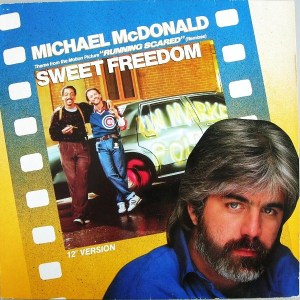
Michael McDonald’s ‘Sweet Freedom’, written by Rod Temperton and co-produced by Temperton, Bruce Swedien and Dick Rudolph, is one such single, but the only version currently available is the superb seven-minute extended mix.
It was a good period for McDonald (weird that he wasn’t involved with ‘We Are The World’?). Despite a now-very-dated 1985 album No Lookin’ Back, he had recorded fine duets with James Ingram, Patti Labelle and Joni Mitchell.
As for Temperton, hot off the back of Thriller he had worked on Steven Spielberg’s ‘The Color Purple’ soundtrack, then ‘Running Scared’, nowadays a pretty-much-forgotten Billy Crystal/Gregory Hines vehicle. Recorded at Westlake in Los Angeles, where most of Thriller was laid down, ‘Sweet Freedom’ was the movie’s key song and arguably Temperton’s final masterpiece. The verses owe a little to Lionel Richie’s ‘All Night Long’ and Temperton finally gets his ‘starlight’ motif into the middle eight (‘Starlight’ was an early title for the song ‘Thriller’).
The extended version is a brilliant little pop/soul symphony, with every performer getting a feature. Greg Phillinganes adds his special sauce on keys and there are some beautiful backing vocals from Siedah Garrett. The horn section (Bill Reichenbach, Chuck Findley, Jerry Hey, Larry Williams) contribute brief solos as does guitarist Paul Jackson Jr.
It would have been nice to have heard a real rhythm section (JR Robinson and Nathan East?) let loose on this but no matter. And people who say McDonald isn’t a soulful singer need to hear his performance in the second half of this extended version.
Released in June 1986, ‘Sweet Freedom’ reached #7 in the US and #12 in the UK.
‘”Thriller” made MTV. “Thriller” created the home video business. “Thriller” created so many things.’ John Landis
It’s hard to overestimate the cultural impact of the ‘Thriller’ video. Frequently parodied but still an entertaining, powerful watch today, it premiered on Channel 4 in the UK during a special late-night edition of ‘The Tube’ just before midnight on Friday 2 December 1983.
This writer was reluctantly given permission to stay up and watch it. It was one of the most exciting things I’d ever seen on TV, and also one of the scariest… Here’s how the special ended:
But let’s rewind to July 1983. The Police’s Synchronicity had just bumped Jackson’s Thriller album off the top of the Billboard charts.
Jackson’s label Epic quickly formulated a plan to reinstate Thriller, reluctantly suggesting that its title track be released as a single (executives reportedly believed it to be a ‘novelty’ record!).
The catalyst for the groundbreaking video, which was part-financed by MTV, was Jackson phoning director John Landis in August 1983.
He professed his love for Landis’s ‘An American Werewolf In London’, told him about the impending single release of ‘Thriller’ and then uttered the immortal words: ‘Can I turn into a monster?’
The rest is history. The video helped double Thriller’s album sales almost overnight, arguably broke down racial barriers in popular entertainment and helped raised the music-video format into a serious art-form.
It also has to be said: it’s probably the last time Michael seemed relatively ‘normal’ (though his line ‘I’m not like other guys’ still raises a titter…).
‘The only video we ever paid for was ‘Thriller’. We were playing it every hour, and announcing when it would next air. It brought people to MTV for the first time, and it made them stay and watch it again and again. Now everybody was into MTV.’ Bob Pittman, MTV executive
‘When MTV started, it wanted nothing to do with Black artists. I thought, Wow, are we gonna miss out on this? But then I gave them ‘All Night Long’ after Michael had broken down the door. And from then on I was on MTV.’ Lionel Richie
‘Michael Jackson had taken hold of the video form and shown everyone what you’re supposed to do with it. We all thought: Oh, OK – dancing!’ Rick Springfield
It’s possible that ‘Sign “O” The Times’ (the single) had the same effect on one generation of music lovers as ‘Waterloo Sunset’, ‘Arnold Layne’, ‘Purple Haze’ or ‘Penny Lane/Strawberry Fields’ (all released between March and May 1967) did on another.
Released on 13 March 1987, it’s hard to think of another top 10 single of the 1980s with as much as space in it (and uncharacteristically deep reverb on Prince’s vocals, presumably utilising the famous Sunset Sound echo chamber). Apart from his guitar and voice, it was all performed on a Fairlight synth/sampler.
Adorned with a back cover featuring Cat Glover, the single drew lyrical inspiration from various news items read in The LA Times during the week of Monday 14 July 1986: Reagan’s ‘Star Wars’ program, the AIDS crisis, the investigation into January’s space shuttle disaster and the inner-city drug wars.
Lisa Coleman reports that she heard Prince’s amazing programmed drum groove blasting out of the venue speakers during a soundcheck in Denver in early July 1986.
Famously barred from releasing a three-album set by Warner Bros. – a process outlined in detail in Duane Tudahl’s wonderful recent book – Prince regrouped, quickly creating new material and then making the title track his new double album’s centrepiece.
Signbecame the sound of summer 1987 in my corner of west London. Prince had been on my radar before – Parade was a definite sleeper – but this was it. And yet it still seems one of those ‘classic’ albums that gets talked about more than listened to.
So I listened to it. In one sitting. Probably for the first time in about five years. It’s probably even better than I remembered it. Has anyone ever captured a ‘party in the studio’ vibe better than Prince on ‘Housequake’ and ‘Play In The Sunshine’? And usually he only had Susannah Melvoin and engineer Susan Rogers for company. Of course this was in a sense a throwback to classic Little Richard and Chuck Berry, as well as James Brown tracks such as ‘Get Up Offa That Thing’.
He begins each side with groundbreaking tracks for him that took a while to record. We’ve discussed ‘Sign’. Then there was ‘It’, actually his first song exclusively using the Fairlight (apart from his guitar and vocals). Then ‘U Got The Look’, which was drastically sped up at the eleventh hour, ratcheted up a few semitones. Then ‘The Cross’, written and recorded the day after the infamous Los Angeles earthquake of 12 July 1986. Prince’s drums on this track speed up a lot – Rogers reportedly noticed but decided not to point it out.
Rogers also reports that she occasionally badgered Prince about the seemingly ‘lo-fi’ nature of these recordings, but he didn’t budge, and the album benefits from that ‘unfinished’ quality, even if it features a lot less bass than most modern music.
Sign features probably Prince’s greatest music, but we could all debate which tracks could have been left off. I could do without ‘It’, ‘Forever In My Life’, ‘Slow Love’, ‘The Cross’, ‘Adore’ (and would have preferred ‘Power Fantastic’, ‘Dream Factory’, ‘Crucial’, ‘Sexual Suicide’ and ‘Good Love’, but Prince had long jettisoned them by early 1987…).
Also why does the superb album design get short shrift? It’s a key part of the package. Hail photographer Jeff Katz and graphic designer Laura (niece of Tommy) LiPuma.
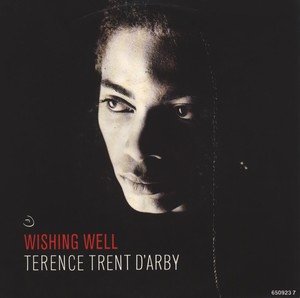
Of the four hits from Terence Trent D’Arby’s superb debut album Introducing The Hardline According To…, it comes as somewhat of a surprise to report that only ‘Wishing Well’ got to #1 on the US singles chart.
Co-written by Terence and former Rip Rig + Panic bassist Sean Oliver, it reached the top spot 35 years ago today after a remarkable 17-week climb (only Eurythmics’ ‘Sweet Dreams’ endured a longer run to US #1 during the 1980s).
Not bad for a song without a proper chorus. But it hardly matters – it’s such an infectious groove with a fine vocal performance.
The album, all but one track co-produced by Terence and Heaven 17’s Martyn Ware, also reached its peak US position of #4 on this date in 1988. It’s still one of the most consistent, exciting debut collections of the decade, well worth revisiting.
Equally impressively, Terence also won a Best Male R&B Vocal Grammy award at the 1988 ceremony, beating off some very heavy company (though he lost out in the Best New Artist category to Jody Watley).
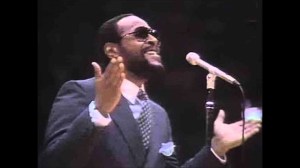
In February 1983, Marvin Gaye was apparently at the top of his game, enjoying his miraculous comeback and selling a lot of Midnight Love albums.
But he also had a lot of money worries courtesy of his divorce with Jan Hunter. And then Father moved back to the family home on Gramercy Place, Los Angeles, after a spell in Washington DC. Marvin’s short spell as ‘head of the household’ was over.
So he found himself spending a lot of time at the Olympia Boulevard apartment of his younger sister Zoela (AKA Sweetsie), and it was there on the evening of 12 February that he worked with MD Gordon Banks on a new arrangement of ‘The Star-Spangled Banner’ to perform before the next day’s NBA All-Star game at The Forum in Inglewood.
Accompanied by just a minimal drum-machine groove and a few keyboard pads, Marvin’s spellbinding performance was one of the greatest moments of his last five years. (Intriguingly, he also changed the words slightly, singing: ‘O say, does thy star-spangled banner’). Reportedly he loved performing for some of America’s greatest athletes, and it’s pretty clear that they loved it too.
Postscript: Ten days later, on 23 February 1983, Marvin won the only two Grammy Awards of his career: Best Male R’n’B Vocal and Best R’n’B Instrumental Performance, both for ‘Sexual Healing’.
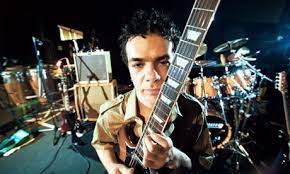
Lewis Taylor has never troubled the BRIT, MOBO or Grammy awards and never had a top 40 single or album but may be the most musically talented British solo artist of the last 30 years.
Over six studio albums – including last year’s unexpected NUMB, his first record for 18 years – Taylor’s work has embraced neo-soul, old-school R’n’B, prog, psych and yacht rock, influenced legions of blue-eyed-soul wannabes and been publicly lauded by David Bowie, Aaliyah, Paul Weller, Amy Winehouse, Leon Ware, Elton John, D’Angelo and Daryl Hall.
His classic self-titled debut album dropped on Island Records in 1996 and stunned the musical cognescenti. Who was this guy from Barnet who sung a bit like Marvin, played guitar like Ernie Isley, bass like James Jamerson and keyboards like Billy Preston, and created his extraordinary angst-ridden compositions in a North London flat on two digital reel-to-reel tape machines?
His second album – 2000’s Lewis II – was possibly even better, but sadly there were various reasons for its lack of commercial success. Lewis parted company with Island and recorded two further studio albums in the 2000s, Stoned Parts 1 and Part 2, and also issued The Lost Album and Limited Edition 2004. But what most fans didn’t know was that Lewis had a ‘secret’ 1980s history as purveyor of weird psychedelic pop/rock under the name Sheriff Jack and also as a touring guitarist in The Edgar Broughton Band.
It all adds up to a truly singular career, and Lewis is one of the most gifted artists working in music today. movingtheriver caught up with him as his new album NUMB was being released to rave reviews.
MTR: I gather you grew up in North London and were somewhat of a piano and guitar prodigy – can you tell me about your early experiences of seeing live music in the capital? Who would have been some artists you saw live/listened to?
LT: Ooh no, I wouldn’t say I was anything near a prodigy. My Dad was a wannabe musician who’d played percussion in a couple of jazz bands – Bongo Bernie they used to call him – so the real interest in music sort of came from being around him and I became obsessed with records. As a result live music has never interested me and it still doesn’t really, it’s all about the records. My dad liked a lot of big-band jazz – Stan Kenton was a fave of his, and he liked Latin stuff like Tito Puente. I also remember an album of Maya Angelou songs he liked as well cos it was sort of dark calypso. That was his thing – he liked anything that had that sort of exotic, syncopated rhythmic thing going on, but he liked some pop of the day too. He loved Mungo Jerry’s ‘In The Summertime’, it used to make him laugh, and I can remember him in the car singing along to the end choruses of TRex’s ‘Hot Love’. He was quite a strange man.
On the keyboards side, would you say you were ‘classically’ trained? I only ask because I hear little bits of ‘classical’ harmony on some of your stuff, like ‘Satisfied’ and ‘The Final Hour’.
I would say I had a bit of classical training. But because the guitar had taken over I’d stopped paying attention to my piano lessons, but some of it must have still seeped through so I do have a good grasp of music theory, but I still can’t read music. I used to cheat in my lessons. I would learn whatever piece I was given to learn by ear and pretend I was reading it. Because I had a precocious taste in rock music as a pre-teen, the fact that the lessons were all based around classical piano music only served to distance me from it even more. So it very quickly started to feel like an extension of school. I did eventually manage to splutter out: ‘Mum, I hate this – I’m only doing it cos you told me to’, and that was the end of it.
Which guitarists/bassists/keys players do you/did you idolise? Re. the former, I hear Ernie Isley, Eddie Hazel, maybe Richie Blackmore, and I detect a John McLaughlin influence too?
One of my biggest bass influences is Chris Squire. I first heard Yessongs in 1975 and all I could hear was this clicky-clang of his bass but he would also be going places melodically where someone like James Jamerson went and the combination was so unusual and inspiring. On guitar, Pete Townshend, just for his rhythmic thing he has going on, I definitely got my strong right-hand attack from listening to him. For soloing, yeah a bit of Blackmore, but when I really started trying to play lead Van Halen had just come out so apart from the finger-tapping aspect which I’m not really into, the way he interpreted the blues scale influenced me a hell of a lot. Michael Schenker was another one. And of course Jimi. I do like players like John McLaughlin and John Scofield, Allan Holdsworth as well, but I’m not lofty enough to go there!
Tell me about joining/touring with the Edgar Broughton Band.
It was a weird coincidental thing, one of the albums I’d borrowed from my cousin was an Edgar Broughton Band album so I’d first heard of them when I was 9 or 10. Ten years later my brother had got a job working at Steve Broughton’s studio. When Steve told him they were going to reform and were looking for a guitarist, he said: ‘Get my brother in, he already knows all your stuff’ so it went from there. I loved it. The dysfunctionality of their music and of the band itself sat very well with my own dysfunction! We toured round Germany, Switzerland and particularly Norway a lot, we played a huge stadium in East Berlin three years before the wall came down. Every tour was an experience of some kind, not always good, but even that was good! The one which really shone for me was an outdoor festival on a Norwegian island called Karlsoy. We played at midnight but it was daylight, really strange daylight. I’ll always remember the walk down to the stage and turning round to see this wonderfully eerie vision of Edgar waking behind me, his Lennon shades on, his long white mane of hair and this really odd, cold light from the midnight sun shining behind him. We played a blazing set that night. Love Edgar, love those guys!
Sheriff Jack – what are you memories of that period?
Steve Burgess was a bit of a character who had a shop in Crouch End called English Weather. He saw himself as a sort of record-shop guru and I suppose he was, to me at least, the imploding 19-year-old I was back then. It coincided with the Paisley Underground thing that was starting at the time so his shop specialised in that along with 60’s garage and psychedelia, and so I quickly became a regular customer there and we became friends. He’d also been involved somehow with The Soft Boys and Robyn Hitchcock and I went through a period of listening to them quite a bit. I probably misread a lot of what Hitchcock was doing as just silly nonsense and tried to do the same thing with the Sheriff Jack stuff. The name came from a track on a Red Krayola album called God Bless The Red Krayola And All Who Sail With It. Again, a very bizarre album to some that seemed to make perfect sense to me. On this song I think they’d deliberately recorded the drums without being able to hear the song so they would go out in and out of time with the rest of the music. I used to play that track over and over on so I thought it was fitting to name myself after that song. I wasn’t serious or ambitious about it and I’m still not quite sure why I did it to be honest, but I did.
When signing with Island, did you have any direct dealings with Chris Blackwell?
No I never met him. I wouldn’t be surprised if he didn’t even know I was signed to his label, let alone who I was!
Is it true that you worked quite a lot on that first Island album at their studios in St Peter’s Square, Hammersmith, with more of a ‘band’ vibe, before recording the album essentially by yourself?
Not really, no. I was still trying to find a direction and hadn’t found it at that point. So there was a lot of early material that was fairly dodgy. I’d gone in there with the multi-tracks to overdub a drummer to get a live feel. But even then everything else had been done at home. I used to have some bad habits – I would sometimes record the effects onto tape as opposed to sending the tracks to effects during the mixing stage, so I would just use a reverb unit, then compress the reverb so it really sort of sucked in, then record it with the dry signal. The album was actually mixed at that studio though, so I’m sure the notorious echo chamber is on there somewhere.
What was it like appearing on ‘The National Lottery’ show? And ‘Later…With Jools’? Did you enjoy that aspect of promotion?
Some of it I did, yeah. I actually was on ‘Later’ three times you know – oh yes. Once as Lewis, once on keys with Finley Quaye, and once as keyboardist with some rappers called Spooks.
Do you ever wonder how different your life would have been if ‘Lucky’ had been a big hit? (and btw, I’m stunned that ‘Whoever’ didn’t even chart – that sounds like a hit to me, even today…).
Oh thanks. I actually have a pretty good idea how I would have turned out had I been more successful – I’ve always had a few loose screws at the best of times but a successful career in music, and particularly the fame aspect of it, would’ve turned me into a complete basket case!
Is it true that it was completely your decision to scrap the second album for Island, before starting over and recording Lewis II? I do recall a comment at the Hanover Grand gig where you alluded to Island being responsible…
Not exactly, I pushed in such an extreme direction the other way with what eventually became The Lost Album, it was a knee-jerk reaction to a perceived ‘trapped in R&B’ feeling I was going through at the time and some people around me were in favour of it and others weren’t. In the end I think I lost confidence in it and did Lewis II instead.
It is mystifying to me why no singles were released from Lewis II. Do you regret that ‘You Make Me Wanna’ wasn’t released as a single? I might have gone for ‘My Aching Heart’ too…
I don’t know. I think things were fairly fragmented by then and really my heart wasn’t in it anymore, but I wasn’t aware of that so I was sort of on autopilot. Also a lot of the people who were at Island when I signed with them had left so a few things definitely sort of contributed to the way things went there.
That Hanover Grand gig around that time felt so positive and it was a thrill seeing an English artist making such patently world-class music, and starting with ‘Track’… Do you feel that that momentum wasn’t maintained? And how much do you lay at Island’s door?
Hmm, not much really, but I did at the time. In hindsight I don’t think I would have been an easy artist to work with, I was a guy who sounded like that but looked like this and I wouldn’t play ‘the game’. I’m surprised that they were as supportive as they were! I do remember it being a pretty good gig though.
Amy Winehouse was quoted as saying she wanted to work with Paul Staveley O’Duffy only because he’d worked with you – did you know Amy? Did she seek you out? She was obviously a big fan. I thought ‘Take The Box’ had more than a bit of your influence.
No, I didn’t know Amy and I wasn’t aware that she was a fan. She was a great singer though. Very sad what happened.
Did you record a whole Trout Mask Replica covers album? I remember hearing ‘Ella Guru’ and being knocked out by it.
Oh cool, I’m glad you liked that! No I didn’t do the whole album, it was a bit of an anal job. You can’t learn those songs that easily cos there isn’t a straight line going through them, well there is but it’s very, very bent. So the only way was to get the instrumental version of each song, record it onto a stereo track cos Beefheart always had two guitars panned hard left and right, then I would just drop in and overdub it phrase by phrase, erase the original then try and sing on it. I gave up after 13 tracks, couldn’t be bothered! LOL…
How do you feel Universal have treated your Island catalogue since you left the company? Do such things bother you?
No, not really. It’s a shame that they didn’t contact me when they did the expanded reissue thing but other than that it’s all cool.
Did you know beforehand that the 2006 Bowery Ballroom gig in NYC was going to be your last for a long while?
No I didn’t as such, but I had started looking at myself from a personal point of view by then and I was trying to figure out where I ended and where the musician began. Unfortunately that process coincided with the involvement of the US guys so I was on a different page to them and it was the wrong page to be doing what I was doing. I didn’t have a clue about that at the time though so my behaviour may have been a bit baffling to them!
Famously you withdrew much of your online presence in 2006 – what has driven you to ‘switch it on’ again? And how do you feel about being a solo artist now with all the social media marketing etc. that goes along with it?
I dunno really, up until about two years ago I still wasn’t bothered, if somebody told me I’d be putting an album out in 2022 I’d have laughed at them. It feels a bit like it came out of nowhere but at the same time it doesn’t feel like one of those ‘I just have to create again and now is the time’ scenarios either. There was always a part of me that was pretty cynical about that way of thinking, and coming back to it now I still think like that, but in less of a cynical way if that makes any sense. The whole social media thing is just another thing – ‘new skin for the old ceremony’ – it has its pros and cons just like everything else that came before it.
You used to make music using a digital reel-to-reel tape machine in your home – is that still the case?
No, it’s all on a Mac now.
What do you think of the streaming revolution and its effect on album listening? Do you miss the physical product (and is NUMB going to appear on vinyl?)
I don’t really miss the physical format, I actually like mp3s, I like the convenience of them. Yes NUMB is definitely getting a vinyl release some time next year. Be With Records are doing it, the guys who did the vinyl of the first album. I’ve heard the test pressing and it sounds great.
B-sides – you created some brilliant music. Personal favourites: ‘Lewis III’, ‘Pie In Electric Sky/If I Lay Down’, ‘Asleep When You Come’. Is there anything more in the vaults? What’s the favourite of your B-sides?
Oh cool, thanks! No I don’t think there is anything left over, each set of B-sides was written and recorded specifically for each ‘single’ release. My favourite has always been’ I Dream The Better Dream’. In my fantasy it’s what early Soft Machine would’ve sounded like if Marvin Gaye was their lead singer.
I enjoyed your collaborations with Deborah Bond and The Vicar’s ‘The Girl With Sunshine’ (please tell me more about that). Did you consider any other duets/collaborations in a similar vein just before your ‘retirement’? Or is there anything in the pipeline for the future?
Both of those things were done at a time when I was starting to back away and shut up shop so it was all done via email. The Deborah Bond thing was a nice little job, cute little song. The Vicar thing was a guy called David Singleton who was somehow attached to Robert Fripp, I’m not sure exactly how. I think he’d heard a tune from The Lost Album which was featured on a compilation that came free with one the mags and so he sent an email asking if I’d like to sing on this funny album he was doing. Why did I do it? Good question. Looking back I think I was probably just flattered that someone was still interested at that stage.
You were involved as a ‘sideman’ capacity with Gnarls Barkley and Finley Quaye – was there ever any possibility of you just becoming an ‘anonymous’ sideman post-2006? Could you have carried on as a session player?
No I don’t think so. I definitely needed a total break from everything. I was approached with a couple more MD jobs after the Gnarls thing but as soon as I started thinking about the possibility of doing them it just felt wrong. I did reconnect with The Edgar Broughton Band though and we did a few more tours over the course of about four years, but that doesn’t count cos they were mates and it was away from Lewis Taylor and the mainstream industry. We toured the same places as they had always done, Norway, Germany and Switzerland. I think a few gigs were recorded but not for a record, although we did do a German Rockpalast show which had a DVD and CD release, and there are a few fan-made clips of some Norway shows on YouTube.
Listening to NUMB, it’s striking how much lower your vocals are in the mix as opposed to say on Lewis II. There’s a ‘horn-like’ feel to your vocals now too. I gather you particularly love Johnny Hodges’ playing?
That’s interesting, it didn’t occur to me that I sounded like that! I do remember saying I liked Johnny Hodges but I love all the classic alto and tenor players. The Hodges reference was probably from when I was listening to a Charlie Parker Jam Session album and Johnny Hodges was one of the many players on it, and compared to everyone else’s blazing solos his playing was so small and sly in a wink-wink kind of way and I remember being very entertained by it at the time. But then I discovered Albert Ayler and everything changed.
Who’s that on backing vocals on ‘Apathy’? And are there are any other guest appearances on the album?
Well that’s Sabina (Smyth) of course! And she is by no means a guest, any female vocals you hear are her! She’s on all the albums. We write, produce and mix all the albums together – it’s all us.
Is that a Syd Barrett interview reference on ‘Feel So Good’? (‘I even think I ought to be’…)
Of course! God bless Syd. I love him.
‘Nearer’ is extremely complex. Any memories of how that tune came about?
It’s strange cos while it does sound complex it was actually one of those tracks the just seemed to write itself.
NUMB is generally downbeat but also uplifting, kind of a modern blues. A key theme seems to be having the courage to be yourself, faults and all, and the problems that go along with that. ‘Braveheart’ says it all.
That is a key theme, yes. Self-awareness and trying to be more authentic than you may have been in the past. All that shite. Yeah, I love ‘Braveheart’.
It’s a beautiful mixing and mastering job on NUMB. It’s really easy on the ear. Do you enjoy that aspect of music-making?
Thanks man. I think I enjoy that and the programming more than anything. Using a program like Logic is so much fun. You’re only limited by yourself. Logic will do anything you want it to and having those tools accessible is a great thing.
I think NUMB is really original (and, for what it’s worth, your best album since Lewis II…), but what music do you listen to for enjoyment now?
Thank you so much and I’m so glad you like it. I listen to a lot of opera these days. Totally away from anything I do as a musician.
How do you feel about people covering your stuff? Anything you particularly like? I’ve heard a few – Taylor Dayne, Peter Cox, Beverley Knight. Jarrod Lawson plays a great live version of ‘Right’. And of course Robbie. Presumably the latter has been absolutely vital for your income stream.
I think it’s cool and I think Robbie did a great job on ‘Lovelight’. I was watching some footage of him the other day and he’s such a powerhouse as a performer.
Do you miss playing live at all? Personally I found the last few years of your live stuff in the mid noughties a little ‘perfect’ with great players but maybe a little too slick… Do you agree? And any chance you might play live behind NUMB?
I actually thought that last band, myself, Ash Soan, Lee Pomeroy and Gary Sanctuary was the best band I ever had. I heard some tapes of us when we were over in NYC and we were so fierce.
Finally, how would you sum up your career in music thus far?
Hmm, probably with a small ‘c’…
Thank you, Lewis…
Further reading: An edited/updated version of this interview appears in the April 2023 issue of Record Collector magazine.

 In 1981, when jazz, pop and R’n’B were fusing to create a very agreeable kind of high-gloss yacht rock, us Brits went for the WEA gang (David Sanborn, Patrice Rushen, Manhattan Transfer, George Benson, Al Jarreau et al) in a big way.

 Joe Meek isn’t often compared to Stock, Aitken and Waterman but here’s an associate of the former speaking after his untimely death: ‘He was being ganged up on by the establishment. Nobody with any power in the business liked him because he was independent and successful.’
 It’s always a nice surprise when a classic 1980s track suddenly appears on streaming services out of the blue.
 ‘”Thriller” made MTV. “Thriller” created the home video business. “Thriller” created so many things.’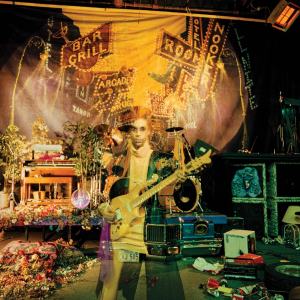

 Of the four hits from Terence Trent D’Arby’s superb debut album Introducing The Hardline According To…, it comes as somewhat of a surprise to report that only ‘Wishing Well’ got to #1 on the US singles chart.
 In February 1983, Marvin Gaye was apparently at the top of his game, enjoying his miraculous comeback and selling a lot of
  Lewis Taylor has never troubled the BRIT, MOBO or Grammy awards and never had a top 40 single or album but may be the most musically talented British solo artist of the last 30 years.
 movingtheriver.com