40 years ago, I was a young football-and-music-mad whippersnapper living a relative life of Riley out on the South Coast of England, but my hometown of London was catching hell.
Not that I was particularly aware. For most sections of the media, summer 1981 was all about Prince Charles’ marriage to Lady Di and Ian Botham’s Ashes (his crushing 149 not out at Headingley, 40 years ago this month, was the first time I remember being totally gripped by live cricket).
But of course there was a whole other side to 1981, a world brilliantly evoked by The Specials on their epochal #1 ‘Ghost Town’, and by directors Steve McQueen and James Rogan in their important, sadly still-relevant ‘Uprising’ series of new BBC documentaries.
The gripping but shattering films show how the St Pauls riots in Bristol, New Cross Fire tragedy of January 1981 and policing policies during the Black Peoples Day of Action in March (and throughout the late-1970s and early-80s) sparked uprisings all over the country, from Brixton to Toxteth, 35 years before the formation of Black Lives Matter.
Co-opting footage from the late, groundbreaking London filmmaker Menelik Shabazz’s 1981 film ‘Blood Ah Go Run’ and featuring interviews with most of the survivors of the New Cross fire, plus Linton Kwesi Johnson and various activists, ‘Uprising’ is a vital – at times devastating – piece of social history. And of course it’s a brilliant London film.
It’s also a grave warning to governments about the tragic pitfalls of acquiescing to racists. Don’t miss – ‘Uprising’ is on iPlayer until July 2022 if you’re in the UK.
Could Prince have thrived in this current age of the ‘bedroom’ musician?
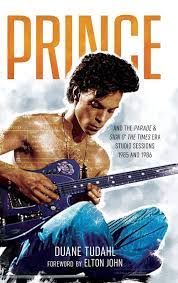
On the evidence of Duane Tudahl’s superb new book – documenting every single studio session that produced the classic albums Parade and Sign ‘O’ The Times, plus countless others too – the answer would be a resounding ‘no’.
As Tudahl points out in his wonderful follow-up to ‘The Purple Rain Studio Sessions’, Prince’s genius very much depended on a coterie of talented, fiercely committed back-room staff, particularly Susan Rogers, Peggy ‘Mac’ Leonard, Coke Johnson and David Rivkin (brother of Revolution drummer Bobby), not to mention the constantly-on-call band mainstays Eric Leeds, Matt Blistan, Wendy Melvoin and Lisa Coleman, all of whom are interviewed at great length.
But there’s absolutely no doubt who’s the boss and the book doesn’t shy away from uncomfortable truths about Prince’s methods and manners. However, it’s an embarrassment of riches for the fan and valuable historical document, not to mention a great, gossipy read.
We join the book at the beginning of 1985, smack bang in the middle of the Purple Rain tour. We learn how he quickly tired of its routine and looked ever forward, taking particular inspiration from Sheila E and other collaborators, ducking into studios around the country often straight after a gig, usually recording between 2am and 6am (Sheila’s album Romance 1600 was almost exclusively put together in this fashion).
We also learn that there were three huge equipment trucks on the tour – one that contained reels of tape, one with the stage gear and one that contained only Prince’s instruments, so that he could record anywhere, anytime.
Tudahl tells the whole story of the fascinating Los Angeles night of 28 January 1985, when Prince won three awards at the American Music Awards but then failed to repair to A&M Studios for the ‘We Are The World’ session (he offered a guitar solo to Quincy Jones but was turned down!), instead going out to party at Carlos ‘N Charlie’s Mexican restaurant.
The evening had huge repercussions and began a period of press barracking – he was even lampooned on ‘Saturday Night Live’, with Billy Crystal blacking up and singing ‘I Am The World’. Tudahl has access to a huge number of candid interviewees who provide a kind of making-of guide to other key side projects from the period: St Paul Peterson talks in detail about the recording of The Family and his subsequent fall-out with Prince; Jill Jones describes the painful, hugely drawn-out period working on her underrated 1987 solo record; Eric Leeds describes how the Madhouse albums came about.
Then there are the fascinating details: we learn the full story of how ‘Kiss’ came together, with Prince getting inspiration while playing basketball on the Sunset Sound court; how the expansion of The Revolution in February 1986 was somewhat of a result of Prince’s fascination with ‘twins’, probably inspired by his fiancée Susannah Melvoin’s relationship with her sister Wendy.
We get a real sense of Prince’s incredible progression as a musician, especially through the early days of 1986, and learn all of the relevant details about his collaboration with Miles Davis. We read how the US bombing of Libya on 14 April 1986 affected Prince, inspiring a talk with Jill Jones, the viewing of a film about Nostradamus called ‘The Man Who Saw Tomorrow’ and subsequent removal of some of the more frivolous material on Jill’s album. We also learn how the LA earthquake of 12 July 1986 inspired the classic song ‘The Cross’.
And there are fascinating nuggets about how he saw his own work – he reportedly told Eric Leeds and Susan Rogers on 29 July 1986 that he thought his lyrics to ‘Adonis And Bathsheba’ were possibly his best, though Leeds and Rogers certainly didn’t agree… Both reasoned that Prince protested too much only when he was unsure of himself.
There are also the fascinating machinations of how the Sign ‘O’ The Times album finally came together, after numerous false starts, tracklist changes and the Warner Bros. top brass – led by Lenny Waronker – refusing him a triple album. No detail is spared in the section on the ‘sacking’ of Wendy and Lisa, subsequent hiring of Cat Glover and reformatting of Prince’s live unit.
The period is an absolute whirlwind, and the mind boggles how much all of this studio time cost Prince and Warners. But finally the impression we are left with is that this book gets as close to the ‘real’ Prince as we are ever going to get – it’s not for the faint-hearted fan, but a fascinating, rewarding journey if you can take it.
As someone who regularly worked on a completely one-to-one basis with him, Susan Rogers often had the best seat in the house, and she offers rich insights into his family background and psychology. The section on Prince’s lonely recording session of Christmas Day 1985 will linger long in the memory.
But all of this is only scratching the surface. We haven’t even mentioned the making of ‘Under The Cherry Moon’. It’s another wonderful book and enormous achievement by Tudahl. We await ‘The Lovesexy/Batman Studio Sessions’ with baited breath.
Its similarity to (groan) ‘Fifty Shades Of Grey’ and ‘Last Tango In Paris’ – plus rumours of lead actress Kim Basinger’s shabby on-set treatment by director Adrian Lyne and co-star Mickey Rourke – mean that ‘Nine ½ Weeks’ is generally denied a fair shake these days.
So why do I return to it every few years, always finding something new to enjoy (no sniggering at the back there)?
The NYC-set tale of a torrid, co-dependent affair between successful, attractive couple Elizabeth (Basinger) and John (Rourke) was based on Ingeborg Day’s (writing as Elizabeth McNeill) controversial 1978 memoir of the same name.
Despite its risqué subject matter, it’s hardly surprising the film – released 35 years ago today – was given a green light. Lyne was fresh from ‘Flashdance’, an enormous hit, while Basinger (beating off competition for the role from Kathleen Turner, Isabella Rossellini and Teri Garr) and Rourke were red-hot and highly in-demand.
But finally, it’s quite a downbeat, subtle, adult film, revealing layers of meaning with repeated viewings, possibly why I recall it as pretty boring (I was wrong…) when first seeing it with mates during my thrill-seeking late teens.
Essentially it’s about two attractive but somewhat alienated people – we frequently see them both ‘lonely in a crowd’. But repeated viewings of the film show them to be well-rounded, fully-formed characters, not just show-ponies in a second-rate soft-porn movie.
Basinger is the star of the movie, and she’s excellent. The demands of the role and lengths to which she was pushed by both Rourke and Lyne reportedly led her to some psychological trauma and even marital problems for up to a year after the film wrapped, as reported by New York Times writer Nina Darnton. Rourke’s first marriage also reportedly hit the skids during the shoot’s slipstream.
The film was shot in sequence, and Lyne encouraged the leads to stay in character off the set, so that their ‘real’ relationship echoed the screen relationship. Whatever was going on behind the scenes, the results speak for themselves – there’s palpable chemistry between Basinger and Rourke.
Sparks fly when they first meet in that Chinese deli (with a great cameo from Kim Chan, so memorable in Scorsese’s ‘King Of Comedy’) and there are elements of fun and light-heartedness in their relationship which can still raise a smile today.
Though the sexual politics of the movie may disturb these days, it’s interesting to note that the screenplay is credited to two women – Patricia Louisianna Klopp and Sarah Kernochan – alongside the dreaded Zalman King…
Elizabeth is completely ‘in control’ at her workplace, but totally out of control in her personal life. This contrasts with John, a total control freak – at least on the surface – in both facets of his life. So she seems a highly intelligent, though somewhat lonely figure (indeed, loneliness is a big theme of the movie), sometimes even prudish, at least compared to her workmate Molly (played by the excellent Margaret Whitton).
Lyne’s direction and Peter Biziou’s camerawork are impressive with scrupulous attention to detail – every shot is designed to create the utmost visual impact, with recurring motifs and interesting subtexts.
A few years before ‘American Psycho’, the film also offers a truly fetishized view of ‘80s tech – John’s wardrobe, his state-of-the-art hi-fi, the emphasis on surfaces and image. This article sums up the film’s style concerns beautifully.
New York looks wonderful, with resplendent locations like the Chelsea and Algonquin hotels, Spring Street Gallery and Cafe Des Artistes. Lyne shrewdly places non-actors into the mix to give some local color, as he would for his next films ‘Fatal Attraction’ and ‘Jacob’s Ladder’.
There’s a remarkable section where Elizabeth clicks through a succession of modern-art slides, and you can bet that every single one has been placed for a very specific purpose (and brings to mind the use of Francis Bacon’s artwork in ‘Last Tango’).
There are so many quintessential, memorable 1980s moments, most with very shrewd use of music (which lead many rather dunderheaded reviewers to describe the film as a full-length MTV pop video): the food orgy; the striptease to Joe Cocker’s ‘You Can Leave Your Hat On’; the moment when Rourke and Basinger enter underpinned by Corey Hart’s ‘Eurasian Eyes’ (though Rourke reported that the ‘blue stuff’ sprayed into the room to add the perfect visual aura Lyne was after did a terrible number on his throat and eyes for weeks afterwards); the use of Jean-Michel Jarre’s ‘Arpeggiator’, Roger Eno’s ‘Voices’ and Eurythmics’ ‘This City Never Sleeps’.
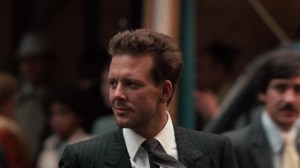
Rourke has never looked better and his performance is fascinating, very much living up to the ‘Brando for the 1980s’ tag. This film catapulted him into the Hollywood A-list, albeit very briefly (to his great credit, he resisted appearing in a lot of crud – at least for a few years – delaying a follow-up until ‘Angel Heart’).
Elizabeth and John’s final parting – featuring a rather stunning bit of Rourke business when a tearful John finally tries to reveal his ‘true’ self in order to keep hold of Elizabeth – again can’t help but bring ‘Last Tango’ to mind.
Devastated, Elizabeth leaves for the last time. But she’s full of ‘what ifs’ – should she have waited a little longer, given him a chance to atone? Could they have had a chance at a happy, ‘healthy’ relationship?
Out on the street, heartbroken, she looks over her shoulder in yet another beautiful shot, perhaps hoping John will be running after her. Sadly, he is rooted at his apartment, begging her to come back, albeit under his breath, soundtracked by Jack Nitzsche’s beguiling piano/synth theme.
The film’s shoot was long and troubled, and it reportedly went through various versions with some of the more risqué scenes (including one where the couple seem – at John’s behest – to enter into a suicide pact, only for it to be revealed as another one of his ‘tests’) removed after preview screenings.
There were a few other key excisions, apparently including one scene where they lay down the rules of their relationship ‘game’ – which might have helped explain why Elizabeth sticks around for so long in the face of such abusive treatment.
The release date was postponed a few times but when the movie was finally unleashed in the USA during March 1986, it underperformed. But there were a few unexpected celebrants, including Roger Ebert. In extended/uncut form, it found a big audience in Europe, particularly France, going on to gross around $100 million against a $17 million budget. It also became a huge success when released on home video (and was certainly the first-choice rental for a lot of us teens in the late 1980s).
So, forget ‘Fifty Shades’: happy 35th birthday to a fascinating – if potentially ‘troublesome’ – cult classic.
You’d be hard pressed to find a musician less likely to thrive in the 1980s, but hey – it’s a great pleasure to feature Mose Allison on this site.
A big influence on artists as varied as The Who, Bonnie Raitt, Randy Newman and Frank Black, the Tennessee-born pianist and songsmith, who died in 2016, wrote witty, brilliant standards such as ‘Parchman Farm’, ‘Your Mind’s On Vacation’, ‘Feel So Good’ and ‘Everybody’s Cryin’ Mercy’.
His speciality was the medium-fast blues/jazz groove, with an extra bar or two thrown in and/or an unexpected modulation. He found endless interesting variations on this theme and his self-mocking, occasionally profound lyrics made one chuckle or think – sometimes both.
Mose toured relentlessly, mostly eschewing festivals in favour of nightclubs (the first time I saw him was during a long run at Pizza On The Park in Knightsbridge – don’t look for it, it’s not there any more…), and had a cadre of pick-up bassists and drummers all over the world who had to adhere to some pretty exacting rules – no egos, backbeats, cymbal crashes or excessive use of the kick drum.
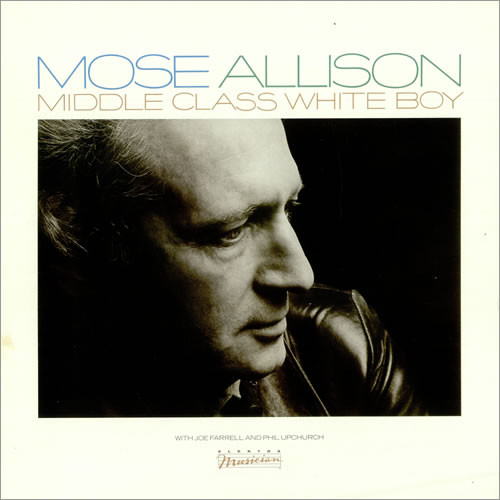
1982’s Middle Class White Boy was Mose’s comeback album, his first for six years and debut for legendary jazz impresario Bruce Lundvall’s burgeoning Elektra Musician jazz label.
But it’s probably fair to say that neither Mose nor Lundvall got an album they were happy with. The terrible cover doesn’t bode well. It was recorded in just two days and sounds like it. Then there’s the fact that for some reason Mose mainly opted to use a tinny, badly-recorded electric piano on the date.
Also he arguably didn’t have enough decent original material – there are five cover versions, only Muddy Waters’ ‘Rolling Stone’ emerging with much distinction.
But on the plus side he’s helped by two formidable sidemen – Chess/George Benson legend Phil Upchurch on guitar and ex-Return To Forever man Joe Farrell on saxes and flute, both of whom get a lot of solo space and play excellently.
And the album benefits from not one but two absolute Mose classics: the title track and a new version of ‘Hello There Universe’. But otherwise it’s not a comfortable listen. It’s a big relief when he breaks out the acoustic piano on ‘When My Dreamboat Comes Home’, even if the song isn’t anything to write home about.
The Middle Class White Boy experience didn’t exactly make Mose rush back into a studio; he released one further album for Elektra, a live record from the 1982 Montreux Jazz Festival featuring none other than Billy Cobham on drums (they had occasionally recorded together on Mose’s Atlantic sides).
Then there was another five-year hiatus before his 1987 Blue Note Records (where he rejoined Lundvall) debutEver Since The World Ended (with its remarkably prescient title track, given these current times), a return to form.
Perhaps predictably, the 1980s were not particularly kind to Mose but there are still some gems to seek out.
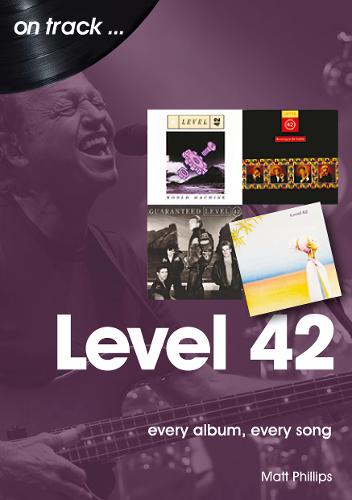
‘Level 42: Every Album, Every Song’ has been available in the UK since April and just been published in the USA, Europe, Australia and Japan.
The book has just been reprinted and is onto its second edition, so if you can’t find it in your favourite local bookstore, demand it! (Or check out the links below.)
Praise for ‘Level 42: Every Album, Every Song’:
“Phillips’ concise, forensic analyses opened my eyes and ears to new facets of the band’s music.”
George Cole, Jazzwise magazine
“Bloody brilliant!”
Jem Godfrey, *Frost/Joe Satriani keyboardist, songwriter and podcaster
“It’s excellent, it really is.”
Paul Waller, Level 42 expert and author of ‘Level 42: The Worldwide Visual Discography’
“Brilliant.”
John Hannam, Isle Of Wight County Press
“To me, Level 42 are not the answer to the ultimate questions of life, yet Phillips’ engaging narrative certainly makes a strong case for it. It’s filled with knowledgeable wisdom, and he speaks his affection for the band brilliantly.”
“This book is enhanced by contributions from both Mark King and Lindup whilst Phillips also provides a musician’s insight to the track by track breakdown. A worthy and welcome re-assessment. ****
What a sad, strange bit of news to hear that Nick Kamen has died at the age of just 59.
It suddenly makes one feel very old. The singer, songwriter and model was such a quintessential 1980s figure, famously first appearing on the cover of The Face magazine in early 1984.
I remember seeing Nick and a few pals walking down London’s iconic King’s Road circa 1987. He looked great, wearing chinos, black polo neck and dark blue blazer. He literally stopped the traffic! It was a perfect late-80s moment.
His much-parodied 1985 Levi’s 501 ad might not have done much for jeans sales but it had the opposite effect on boxer shorts and also gave Marvin Gaye’s ‘I Heard It Through The Grapevine’ a new lease of life.
He gave a great, outrageously flirtatious interview to Paula Yates on ‘The Tube’ on the eve of his first single ‘Each Time You Break My Heart’, written and co-produced (with Stephen Bray) by Madonna. It was a hit.
Nick’s brother Chester was in the meantime carving out a successful career as session guitarist and Bryan Ferry’s go-to axeman – you can watch him in action with Bryan at Live Aid.
Nick may have not enjoyed the rigmarole of the pop business but he did it pretty well. Though the UK press mocked (see below), he actually had two further UK top 40s, ‘Loving You Is Sweeter Than Ever’ and ‘Tell Me’, also featuring Madonna on backing vox, which spent nine weeks at #1 in Italy during 1988.
Esteemed producer and Madonna/Stanley Clarke collaborator Patrick Leonard helmed Nick’s second album Us. Nick had several further hits all over Europe – ‘I Promised Myself’ was one of 1990’s best selling singles in Europe (#1 in Austria and Sweden, top 5 in Germany, Holland, Belgium and Switzerland) but just missed the UK top 40.
By 1993, though, Nick was sick of the pop game. He died of bone cancer at his Notting Hill home. Madonna and Boy George led the heartfelt tributes. RIP to a bona fide 1980s star.
Ivor Neville ‘Nick’ Kamen (15 April 1962 – 5 May 2021)
‘A game of two halves’ is a common expression in football, but it can apply to albums too.
We all know albums which have one good side and one bad one (I’ll throw in The Seeds Of Love, Fulfingness’ First Finale, Music Of My Mind, The Colour Of Spring for your consideration…).
The Cult Of Metheny has ensnared many, and puzzled just as many. But As Falls Wichita fell smack bang in my favourite era of Pat’s music (between American Garage and Song X), and represented a real change of scene.
Side one’s 20-minute title track delivered a full-on prog/fusion masterwork, ably assisted by Lyle Mays in classic-synth heaven (Prophet 5, various Oberheims, Roland CR-78 and Linn LM-1 drum machines), always totally recognisable, and at a time when polyphonic playing had just become possible. He was rapidly becoming a Joe Zawinul for the 1980s.
‘As Falls Wichita’ may be the most ‘rock’ music released on the ECM label during the 1980s, with the possible exception of David Torn’s 1987 record Cloud About Mercury. It also seems dangerously ambitious. Then again, the whole album was recorded in just three days! Lesser musicians could have taken a month to record this track alone.
Apparently chiefly written to play over the PA system before Metheny Group concerts, it’s pure headphone music. The enigmatic title (apparently nicked, with permission, from an unreleased Steve Swallow composition) and superb album cover certainly help.
The track plays out like a good movie (its working title was ‘Apocalypse When’). It’s more John Carpenter than Keith Jarrett. You might even describe it as cathartic, dammit.
(Another reason for its success may be the complete lack of instrumental solos. Pat doesn’t get any solo space at all – he just plays some unobtrusive bass, chiming 12-string electric and a little six-string. All sounds are textural and in the service of the whole piece.)
A superb live version was featured on the 1983 Metheny Group album Travels. And those who remember the Christian Dior ‘Fahrenheit’ adverts in the late 1980s may be familiar with a small excerpt of the track:
But back to that ‘album of two halves’ thing. Sadly, side two of As Falls Wichita is New-Age sludge. Ponderous and flabby, it’s fuel to Pat detractors, but probably loved by acolytes.
‘September Fifteenth’, a tribute to Bill Evans (named for the date of the great jazz pianist’s death in 1980) is the chief culprit. A closing, out-of-tune version of ‘Amazing Grace’ doesn’t help. It’s music for tired Apple executives, and sounds like it was recorded in the last afternoon of the three days.
But As Falls Wichita was an unexpected smash by ‘jazz’ standards: the album got to #1 on the Billboard Jazz Charts and quickly became Metheny’s biggest seller to date.
So happy 40th birthday to the classic title track. Pour yourself something tall, tune in, drop out, get the headphones on, lie on the floor and crank it up. It’s a trip, man…
Most football fans have a ‘worst misses of all time’ list.
In my lifetime, a few are memorable, mainly because I watched them live on TV: Ronnie Rosenthal’s botched tap-in for Liverpool v Aston Villa in 1992 and Geoff Thomas’s awful chip for England v France in the same year particularly come to mind.
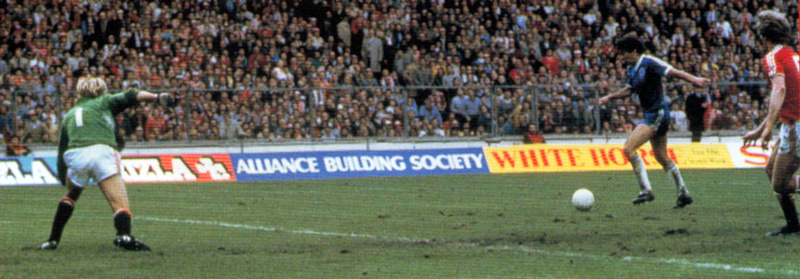
But Gordon Smith’s last-minute miss for Brighton v Manchester United during the classic 1983 FA Cup Final at Wembley Stadium, taking place 38 years ago today, always seems to get a mention too.
If he’d slotted the ball home, it would have given his club their first (and, to date, only) major competition win. Brighton lost 4-0 in the replay five days later.
The match holds a special place for me: I was there. I think it was the second time I’d visited the grand old stadium. My dad was a proud Brighton fan, and the sight of a packed Wembley and deafening chants of ‘Seaweed! Seaweed!’ from the Man United fans will linger long in the memory. It was also a tremendous game, one of the great Cup Finals.
But back to Gordon Smith. Is it one of the worst misses? BBC radio commentator Peter Jones certainly thought so: his famous ‘And Smith must score!’ commentary gave a title to a Brighton FC fanzine and is oft quoted to this day. Smith apparently frequently thinks about the moment, but has retained a very dignified outlook.
Decide for yourself. You could argue that he went with his wrong foot – maybe he should have hit it first time with his left – but you could also praise Gary Bailey’s fast narrowing of the angle and take into account the awful state of the pitch. But still… if only…
This excellent podcast also revisits the game with players from both sides.
Nightclubbing, which turns 40 this week, would be iconic even if it was only half as good, thanks to Jean-Paul Goude’s fantastic cover painting.
But drop the needle anywhere and it’s an all-time classic, one of the jewels in Island Records’ crown and hugely influential.
Arguably its mashup of new wave, reggae, synth pop, disco and Caribbean flavours blueprinted the sound all the key New Pop acts of 1982/1983 (Talking Heads, Kid Creole, Spandau Ballet, Duran Duran, ABC, The Associates, Simple Minds, Thompson Twins et al) sought.
Some, of course, went route one and employed Nightclubbing co-producer and movingtheriver.com favourite Alex Sadkin. But you might also call Nightclubbing Grace’s covers album – it features not one but six classics, if you count ‘Libertango’ and the Marianne Faithfull’s previously-co-written-but-never-recorded ‘I’ve Done It Again’ (Sting lent her ‘Demolition Man’ before laying it down with The Police).
She revolutionises Flash & The Pan’s ‘Walking In The Rain’ (her androgynous alto freaked me out when I first heard it as kid, there was just no reference point…) and compare her funky, succinct ‘DM’ to The Police’s ponderous, overblown version.
On a good system Nightclubbing‘s sonic details delight: the tambourine commentary throughout ‘Use Me’, Sly Dunbar’s dub-delay cross-sticks on ‘Walking In The Rain’, Grace’s whispered chorus on ‘Art Groupie’. The Compass Point All Stars, particularly man-of-the-match Wally Badarou on keys, are perfectly poised to provide such moments.
But there is a weird quirk – the mastering. The album seems to get quieter as it goes along, at least on the original CD version. ‘Demolition Man’ requires some serious crankage. I’m not sure if subsequent reissues have rectified that.
Nightclubbing was NME’s album of the year for 1981 and it got to #32 on the US Billboard chart, a certified crossover hit. You might even say that the 1980s Proper started here, and it helped make 1981 one of the greatest ever pop years.
And we haven’t even mentioned Grace’s electrifying One-Man-Show that accompanied the album, directed by Goude, taking place at London’s Drury Lane Theatre and New York City’s Savoy. It was surely a huge influence on everyone from Laurie Anderson to Annie Lennox.
Harry’s Records, right next to the bus stop on my way home from sixth-form college, was a real institution in the late 1980s (I’ve recently discovered that it was actually a UK-wide chain of music stores).
Many a trip home was enlivened by inspecting the covers of Jeff Beck’s Guitar Shop, It Bites’ Eat Me In St Louis, Steve Vai’s Flex-Able or Anderson Bruford Wakeman Howe.
And Van Halen, the superb 1978 debut album. From the opening backwards car horns and Michael Anthony’s fuzzy bass to the manic closer ‘On Fire’, it was a stunner, with some of the most amazing guitar playing ever captured on record.
It’s a brilliant mix of Cream, Led Zep, The Sex Pistols, Kinks and Who, featuring a talented vocals/guitar/bass/drums lineup with a striking audio imprint (producer Ted Templeman’s mastery of the famous Sunset Sound echo chamber, with Eddie’s guitar flying across the stereo spectrum: Rick Beato and Warren Huart have put together superb musical analyses of the album).
The band ‘breathed’ and grooved, and it sounded like they played live in the studio (they did, pretty much). It certainly wasn’t ‘perfect’. Perfection is an interesting concept for rock, one of the legacies of the post-Nirvana 1990s. Everyone recorded with a click track, and everyone seemingly looked for ‘perfection’.
The 1970s were different. So it’s a great jolt to hear VH’s ‘Running With The Devil’ quantized and placed on ‘the grid’ by this wacky music surgeon below. Judge for yourself if you prefer the ‘perfect’ version or original, ‘wrong’ version – it’s a fascinating, sometimes amusing project:
P.S. Check out this amazing soundboard recording of VH’s Hammersmith Odeon support show with Black Sabbath in June 1978.


 Its similarity to (groan) ‘Fifty Shades Of Grey’ and ‘Last Tango In Paris’ – plus rumours of lead actress Kim Basinger’s shabby on-set treatment by director Adrian Lyne and co-star Mickey Rourke – mean that ‘Nine ½ Weeks’ is generally denied a fair shake these days.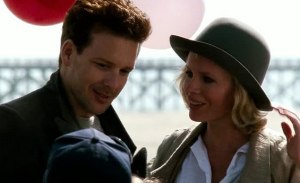




 movingtheriver.com