They say that if you want to understand why an instrumentalist plays the way he or she plays, listen to them speak.
That makes total sense when hearing Wayne Shorter or Ornette Coleman being interviewed. And now, courtesy of Ben Sidran, there’s never been a better chance to hear other examples of this.
Sidran is a renowned pianist/composer and author of three excellent music books: ‘Black Talk’, ‘The Ballad Of Tommy LiPuma’ and ‘Talking Jazz’. The latter was based on a series of interviews broadcast on USA’s National Public Radio between 1984 and 1990. And now we can hear them in their entirety.
What a fascinating collection it is. Many interviewees go against type: those with a reputation for being somewhat ‘taciturn’ (Paul Motian, Donald Fagen, Tony Williams, Miles) are open, light-hearted and often giggly.
Some have their axes with them – we hear modern masters Chick Corea, McCoy Tyner, John Scofield, John Patitucci, David Sanborn and Steve Khan demonstrate their harmonic hallmarks. I asked the latter for his recollections of the ‘Talking Jazz’ interview:
It was done on23 October 1984 at Roxy Recording, located at 648 Broadway, NYC – which was downtown, near Soho. It was conducted from 1-3pm! How about THAT?!
Elsewhere, Art Blakey talks touchingly about his appeal to a young, eager London crowd, Carla Bley is amusingly honest and Kevin Eubanks sounds 30 years ahead of his time, discussing global warming and environmental disasters.
It’s also fascinating to hear lost masters’ voices on tape, speaking with such candour: Gil Evans, Johnny Griffin, Chick Corea, Dizzy Gillespie, Freddie Hubbard, and many more. Sidran is a great host/interviewer, friendly and hip to the artists’ work but not scared to ask the tough questions.
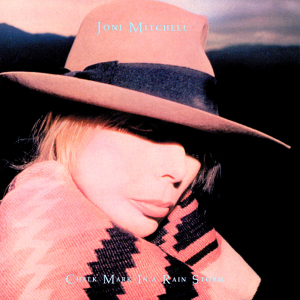
Intelligent pop was alive and well in summer 1988 with key albums from Prefab Sprout, It Bites, Scritti Politti, Prince, Thomas Dolby…and, would you believe it, Joni.
Chalk Mark In A Rainstorm was a few years in the making after the underperforming (but excellent) Dog Eat Dog, and she was feeling the pressure. ‘I could use a hit’, she confessed to Q magazine in a long interview (they also gave the album a glowing four-star review).
She also granted a long interview to the NME, and was rewarded with her highest charting album (#26) in the UK since Mingus, almost ten years earlier. Stateside, off the back of a stinking, poorly-written Rolling Stone review, it reached a disappointing #45.
Released on 23 March 1988, Chalk Mark is based around a core band of Joni on keys, guitars and vocals, Larry Klein on bass and keys, Mike Landau on guitars and Manu Katche on drums. Larry and Joni co-produce.
There’s a real consistency to the sound, but, with its hermetically sealed nature, it seems almost critic-proof. There’s nothing to compare it too, apart from Joni’s own work.
Reviewers were generally confused by her choice to use the latest synth/sampling technology to illuminate anti-war, anti-advertising, anti-‘toxic crap’ (Joni’s words), pro-Native American songs. Well, that’s what’s known as ‘irony’…
Gorgeous opener and first single ‘My Secret Place’ was mostly recorded at Peter Gabriel’s Ashcombe House studio (he also offered her free studio time to make the demos for the album).
PG guests on vocals (though Joni plays all keyboards, including the memorable piano motif) while Katche delivers a superb, subtly-building performance with hints of Steve Gadd’s famous ’50 Ways To Leave Your Lover’ groove.
As usual, musicians and singers were queuing up to appear on a Joni record. Steve Stevens, Billy idol and Tom Petty combine to memorable effect on ‘Dancin’ Clown’ (apparently one of Bob Dylan’s favourites), while Wendy & Lisa add their gossamer back-ups to sumptuous ‘The Tea Leaf Prophecy (Study War No More)’.
‘The Reoccurring Dream’ is a collage of advertising cliches over richly-chorded Joni vocals. The standout is possibly ‘Beat Of Black Wings’, a furious anti-war song with a stately, orchestral theme in an unusual 6/4 time.
Less effective are the plodding ‘Number One’, ‘Snakes And Ladders’ and ‘Cool Water’, despite some welcome guest vocals by Willie Nelson on the latter. All would probably have been more effective as solo, acoustic songs (she often promoted the album with solo versions of the former).
The album ends with Wayne Shorter’s hearty chuckle after his multi-tracked, soprano sax deluge on ‘A Bird That Whistles’ (apparently Joni’s only instruction to him in the studio was: ‘You’re the bird’!).
Joni was in a group of one in 1988, feeling no particular kinship with the female singer-songwriters making their way towards the end of the decade, the likes of Suzanne Vega, Julia Fordham, Jane Siberry, Mary Margaret O’Hara, Louise Goffin, Toni Childs and Tracy Chapman (the latter beating Joni to a Best Pop Vocal Performance Grammy in 1989).
She was still far ahead of the competition, but also painting herself into a corner. It was the end of an era. The acoustic guitar and ‘folky’ forms would re-emerge in time for the next album Night Ride Home; a logical, commercially-led move, but the end of a fascinating progression of sounds and styles during the ‘80s.
Read a great interview with Joni, Larry Klein, Billy Idol, Tom Petty and Willie Nelson about the making of the album here.
In the late 1980s, some ‘long-lost’ cult tracks took on almost mythical status amongst my musician friends and I.
There was Frank Zappa’s ‘The Black Page’, Rush’s ‘YYZ’ and ‘La Villa Strangiato’, UK’s ‘In The Dead Of Night’ and Bill Bruford’s ‘Five G’ and ‘Travels With Myself And Someone Else’.
Guitarist Allan Holdsworth, who died four years ago today, of course featured on the latter three tracks (he originally came to my attention when It Bites’ Francis Dunnery waxed lyrical about him in a 1989 Guitarist magazine interview).
Pre-YouTube and Spotify, the problem was that you just couldn’t get hold of this stuff (even though it was barely ten years old!). So it was a thrill when I finally tracked down a copy of Bruford’s One Of A Kind album – featuring ‘Five G’ and ‘Travels With Myself’ – sometime in the mid-1990s.
And now this landmark collection has received the posh reissue treatment, as part of a box set or as a double CD set featuring a new stereo remix, carried out by Bruford and Level 42/King Crimson guitarist Jakko Jakszyk, and a DVD containing the remastered original mix and a new surround-sound mix.
You could argue that the album is the most complete work by all of the participants. Recorded at Soho’s Trident Studios, One Of A Kind was released on the cusp of the 1980s and pointed to where all the four members’ music would take them in the new decade.
There’s no quantizing here – it’s music that breathes (check out the ‘bendy’ time on ‘Hells Bells’, ‘Travels’ and the title track) played by empathetic, truly virtuosic musicians. But is it rock, jazz, prog or fusion? Who knows, but it’s some of the greatest British instrumental music of all time.
Bruford stuns with one of the tightest drum sounds on record – whipcrack snare, cutting Rototoms – with great phrasing and ideas, some fantastic tuned percussion (marimba, xylophone) and excellent compositions. Bassist Jeff Berlin is an astonishing talent – logical, inventive, technically perfect but never boring.
Dave Stewart (not to be confused with David A Stewart of Eurythmics) is a revelation, layering superbly with his new Prophet 5 synth and adding some effective solos. The liner notes report Holdsworth returning to the studio after a break, hearing Stewart overdubbing on ‘Travels With Myself’ and finding himself in tears.
For his part, Allan was by all accounts rather unhappy during the recording, but delivers brilliant, moving solos, particularly on ‘Travels’ and ‘Sahara Of Snow Part 2’. He also contributes the excellent composition ‘The Abingdon Chasp’, apparently named for a beloved brand of real ale.
Then there’s the resplendent ‘Fainting In Coils’, complete with the ‘Alice In Wonderland’ excerpts and tricky time signature which sounds completely natural in Bruford’s hands. But how does the new remix sound? First, the good news: the title track, ‘Fainting In Coils’ and ‘Hells Bells’ sound fresh and thrilling; it’s like hearing them for the first time.
But now the bad news: ‘Travels’ inserts some new Stewart solo licks, inaccurately mutes some of his synth pads and then inexplicably mixes his acoustic piano way down and drenches it in muddy reverb (though Holdsworth’s comping is brought forward in the mix).
Then there’s ‘Five G’ – it’s mixed totally dry, with all reverb removed, again with Stewart’s keys too low and Berlin’s bass too high and too ‘middly’. And the packaging? Sid Smith’s liner notes are excellent, with some lovely, previously-unpublished photos from rehearsal rooms and pub gardens (both in Kingston, Surrey!).
But there’s no sign of the tracklisting or song/composer credits on the digipack – you have to search around for the inner pamphlet to find the details printed in the middle, so quick reference while listening is not easy.
Still – even if the remix is patchy (I can’t comment on the surround mix), the whole package is well worth getting. Any excuse to celebrate a classic album and brilliant band, and a rich voyage of discovery if you don’t know this music.
One Of A Kind Expanded & Remixed is available at Burning Shed.
Maybe it was the lockdown popcorn, maybe a great recent piece in Empire magazine initiated by director Edgar Wright, but this time away from the cinema has got me waxing all nostalgic.
Will the big screen ever regain its mojo? The alternative is a crushing thought.
So, if it’s all over – and I hope it’s not – here are some memorable movie moments of the last 40 years (all in London cinemas unless otherwise stated), from the sublime to the shocking (with spoilers…). I hope they inspire some recollections of your own.
Seeing ‘The Exorcist’ at a cinema above a nightclub in Kingston circa 1989, me absolutely terrified as Salt-N-Pepa’s ‘Push It’ was heard pulsating through the floorboards… The entire audience laughing throughout ‘Prince Of Darkness’ (it’s supposed to be a horror movie…) at the Hammersmith ABC circa 1987… A late-night screening of ‘Carrie’ at the Prince Charles circa 2012, the young, hip crowd jumping three feet out of their seats upon the famous finale…
At the same venue circa 1994, a ‘lone white male’ saying very loudly, apropros of nothing: ‘What a f***ing bitch’ as the credits rolled at the end of ‘The Last Seduction’ (it’s a female-fronted, neo-noir)… Almost having an out-of-body experience as Jeff Bridges walked through the plane at the end of ‘Fearless’ at the Prince Charles circa 1994… The ripples of hilarity echoing around the cinema during Michael Wincott’s cracking cameo as Kent in ‘Talk Radio’ at the Riverside Hammersmith circa 1988…
Spooked amongst the drinking/smoking audience during ‘The Blair Witch Project’ at the Notting Hill Coronet in 1998… The quietest, most rapt audience ever for Orson Welles’ ‘The Trial’ at the BFI (formerly NFT) in 2019… Audience hilarity during Hugh Grant’s performance in ‘Bitter Moon’ at the Prince Charles circa 1994… Early cinema revelations seeing ‘Jaws’, ‘Close Encounters Of The Third Kind’, ‘Airplane’ and ‘Raiders Of The Lost Ark’ between 1980-1982… Seeing ‘Rain Man’ two nights in a row at the Richmond Odeon in 1988… The ‘Star Wars’ triple bill at the same venue circa 1985… A Laurel & Hardy all-dayer at The Kings Cross Scala circa 1988… Terrified watching ‘Scream 2’ alone in a huge moviehouse on Times Square, NYC, the only other paying customer deciding to sit directly behind me… Meeting David Lynch – and getting his very odd autograph – after a screening of ‘The Straight Story’ at the NFT in 1999… Seeing ‘Fame’ at a huge, almost completely empty Hammersmith Odeon circa 1983…
Not hearing one line of dialogue during ‘Fletch’ as the assembled teens screamed/laughed/threw food at the screen, Putney Odeon, 1985… Panic and nausea at the finale of ‘The Vanishing’ at a late-night screening at the Ultimate Picture Palace in Oxford circa 1991… Watching JG Ballard and David Cronenberg chatting amiably onstage after the controversial London premiere of ‘Crash’ at the NFT, 1996… Sitting behind a constantly laughing Jimmy Page at a screening of ‘Beware Of Mr Baker’, the Riverside Hammersmith circa 2012… Seeing ‘Heathers’ at the same venue in 1989 and thinking: well, that’s almost the perfect film… Feeling the whole packed house take an inward breath as the body crawled out of the TV set during ‘Ringu’ at the ICA, 1998…and…and…?
Yes, they’re back, those undesirable, middle-aged, ‘legendary’ white males, with more songs that you probably couldn’t release on a major label today, more’s the pity… Check out the first six mid-lifers out of the traps here.
Lou Reed: ‘The Gun’ (1981)
39 at the time of recording, Lou brings the white heat of a Scorsese or Tarantino movie right to your door, taking on the character of a gun-wielding psychopath – maybe not that much of a stretch… But this shocking, seemingly stream-of-consciousness piece expunges a lot of bile that seems to have built up in Lou over the 1970s, fuelled by alcoholism, drug addiction and…everything, really. Key moment: the terrifyingly blank ‘Watch your wife…’. Quite brilliant, if totally unacceptable these days.
John Martyn: ‘Never Say Never’ (1981)
If Grace And Danger generally portrayed Martyn’s more tender/wistful feelings about his marriage breakup, the following year’s Glorious Fool was decidedly more barbed. ‘Never Say Never’ is Exhibit A, with a 32-year-old John opening up with ‘Shut up! Close your mouth!’. Things get weirder/more intense from there, propelled by Phil Collins’ battering drums reverberating mightily off the Townhouse studio’s stone walls.
Neil Young: ‘Don’t Cry’ (1989)
Neil (43 at the time of recording) surveys the detritus of a relationship breakup from a scarily blanked-out perspective, though his real feelings about the matter are maybe revealed by some of his most extreme guitar tones on record. Exciting, life-affirming stuff, even if the lyric suggests otherwise.
Robert Fripp/Peter Hammill: ’Disengage’ (recorded 1978, released 1985)
Fripp, 32 at the time of recording, lets it all hang out with his pals Peter Hammill on vocals and Mr P Collins on drums, a seriously paranoid tale of a relationship schism from a certain ‘Mrs Marion’ with Hammill delivering a deranged, brilliant vocal over a mixed-meter groove and exciting modal riffs. Funny, scary and pretty warped.
Frank Zappa: ‘We’re Turning Again’ (1982)
42 at the time of recording, Uncle Frank skewers 1960s heroes Donovan, Jimi Hendrix, Jim Morrison, Mama Cass, Janis Joplin, Keith Moon and The Byrds, and the piano motif may take the mickey out of Harry Nilsson’s ‘Everybody’s Talkin’’. Ike Willis even pops up with an impersonation of legendary newscaster Walter Cronkite. Apparently guitarist Steve Vai was so offended by ‘We’re Turning Again’ that he refused to play it live, though Frank later said he was just making fun of the whole sixties media circus. For FZ-haters, it probably contains everything they despise in one song, but for fans it’s a typically provocative mix of ‘happy’ music and uncompromising lyrics.
Randy Newman: ‘My Life Is Good’ (1983)
39 at the time of recording, Randy’s track came from 1983’s Trouble In Paradise, the thesis of which seemed to be that there was something very rotten inside The American Dream. The ‘beauty spots’ of LA and Miami were struggling, and toxic celebrity was the true currency of Reagan’s America. But in this song he’s completely complicit in the whole thing, totally part of the scene, and he hates himself for it. Luckily for us…
1986 was a watershed year for the so-called ‘Jazz Revival’.
Style magazines like The Face were on board and DJs such as Baz Fe Jazz, Patrick Forge, Gilles Peterson and Paul Murphy were spinning Blue Note sides for a young, energetic dancefloor crowd at The Wag and Dingwalls. Courtney Pine and Miles Davis even got into the pop album charts.
Later in the year, the Soho Jazz Festival (later to morph into the hugely successful London Jazz Festival) took place to great acclaim, spawning a great documentary called ’10 Days That Shook Soho’.
On 21 March 1986, Blue Note legend Art Blakey appeared at the Shaw Theatre as part of the Camden Jazz Week with the London-based dance crew IDJ (I Dance Jazz). It was one of the drummer’s final London gigs. He was amazed to discover that his 1960s music had been adopted by a hip, young crowd, dancing to tracks such as ‘Ping Pong’ and ‘Cubano Chant’.
I was taken along by my dad, and the gig was a mind-blower. During this version of Jackie McLean’s ‘Dr Jekyll’, made famous by Miles Davis, what you don’t see is the audience going crazy, dancing, whooping it up. Things were never quite the same again for the London jazz scene, and sadly Blakey passed away just a few years later.
It’s something to do with the way the best players always give every note its full value, and never sound rushed.
The term is usually reserved for American musicians. But, to paraphrase jazz saxophonist Joe Harriott, we had a few who could play some aces too.
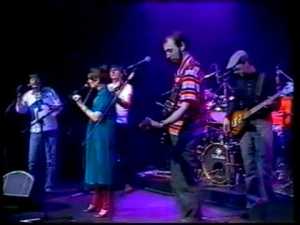
Apparently folk/rock pioneers Fairport Convention had long split up when they reconvened for a one-off Granada TV special in August 1981. They delivered a beguiling version of ‘Sloth’, originally from their 1970 album Full House.
It’s a killer performance from drummer Dave Mattacks, adding to some classic tracks of the 1980s and early 1990s such as Chris Rea’s ‘On The Beach’ and XTC’s ‘Books Are Burning’ (Andy Partridge discussed Mattacks and XTC’s other drummers in this great interview). There’s also a whiff of US players Andy Newmark, Richie Hayward and Jim Keltner, not to mention Ringo.
Despite the slow tempo, the whole performance is kind of raw and ‘post-punk’, with some spikey Richard Thompson solos and excellent, ‘artless’ vocals from Linda. It easily transcends the folk-rock cliches.
Another band this writer needs to investigate further. And, despite the serious faces, maybe it was a relatively happy reunion – Fairport reformed properly four years later.
One of the most memorable music documentaries broadcast in Britain during the late 1980s was ‘Speaking In Tongues’, directed by Doug Harris for German TV and originally shown in 1982.
It began with John Coltrane’s funeral on 21 July 1967, featuring music from drummer Milford Graves, trumpeter Donald Ayler and saxophonists Ornette Coleman and Albert Ayler, then mused on the mysterious death of the latter before opening up to focus on Graves’ extraordinary life and some coruscating duets with saxophonist David Murray.
Born 20 August 1941 in South Jamaica, Queens, New York, Milford Graves was a ‘drummer’, but, equally importantly, a truly evolved human being, a strict vegetarian, herbologist, acupuncturist, teacher and trained martial artist. He was famous locally for his backyard dojo and basement laboratory.
He began his career playing bongos and timbales, including a short-lived Latin-jazz band with a very young Chick Corea. At the urging of superstar percussionist Don Alias, he moved over to the drum kit in 1963 and found his true metier.
Alongside Sunny Murray, Andrew Cyrille, Ronald Shannon Jackson and a few others, he freed the drummer from purely a timekeeping role, introducing new melodic and tonal textures for the kit. But this wasn’t a po-faced, technical endeavour – it led to some of the most intense, high-volume work of the last 50 years. He described each of his limbs as playing ‘a different feeling’ (see below).
Legendary jazz writer Nat Hentoff apparently made a prediction in the late 1960s that the greats of the avant-garde jazz movement would eventually get lecturing jobs in universities, such was the importance and rigour of their conceptual flow.
It was true. Since 1973, Graves had been teaching at Bennington College in Vermont, a variety of courses including those touching on the healing aspect of music. He performed regularly across the world, including at a school for autistic children in Japan. From the late 1960s on, he eschewed nightclub and club gigs, restricting his live performances to festivals, community centres and outdoor shows.
He recorded astonishing duets with pianist Don Pullen, Andrew Cyrille (Dialogue Of The Drums) and David Murray on the classic 1991 album The Real Deal. He worked with Albert Ayler on various albums including Love Cry. He toured extensively during the 1980s, producing a sound as heavy as anything Black Flag or Metallica came up with.
Tragically, though he had studied the heartbeat as a source of rhythm since the 1970s, Milford died of congestive heart failure on 12 February. ‘It turns out, I was studying the heart to prepare for treating myself,’ he told The New York Times last year.
Last autumn, his life and work had just been subject to a residency at the ICA in Philadelphia, including a screening of ‘Speaking Of Tongues’ and a wide-ranging interview with Jason Moran.
RIP to a true one-off. To paraphrase Art Blakey, if jazz was about washing away the dust of everyday life, Milford Graves did it.
Milford Graves (20 August 1941 – 12 February 2021)
Putting together movingtheriver.com has been a real blast over the last six years or so.
We’ve spaffed reviews, interviews, lists, theories, trivia, jokes and all kinds of gubbins up the wall, to get us through this thing called…life. And it’s always been fun chewing the fat with readers and fellow bloggers alike.
But now, in somewhat of a crunch time, it would be hugely appreciated if you would consider supporting the site, either with a one-off or regular donation. It’ll take just a minute and can be done here.
It’s tough for a lot of people in the music world at the moment, and not much different for your correspondent.
What’s in it for you, I hear you ask. Any donations will go towards reducing ads on the site and starting a movingtheriver podcast. You’ll also make an old man very happy and garner his undying gratitude. But hey, I’ll carry on producing three or four articles/podcasts a month, come what may!
What’s the ‘accepted’, untouchable shortlist of ‘successful’ Stephen King screen adaptations? ‘Misery’, ‘The Shawshank Redemption’, ‘It’, ‘Carrie’, ‘Stand By Me’, ‘Salem’s Lot’.
But David Cronenberg’s ‘The Dead Zone’ seldom appears in that top tier. Why? Possibly because it is seemingly part of the early-‘80s big-budget horror era, when the studios were trying to cash in on ‘slasher’ hits like ‘Halloween’ and ‘Friday 13th’ (see also ‘Omen III: The Final Conflict’, ‘Halloween III: Season Of The Witch’, ‘Psycho II’, ‘Christine’).
Cronenberg had just completed sci-fi/horror shocker ‘Videodrome’ when he was invited onto the project by Debra Hill, producer of ‘Halloween’/’The Fog’ and ex-wife of John Carpenter (‘The Dead Zone’ had apparently previously been earmarked for Stanley Donen, director of ‘Singin’ In The Rain’!).
King himself supplied the first draft of the script. According to Cronenberg, it was a ghastly, serial-killer-on-the-loose gore fest. Jeffrey Boam and Cronenberg worked on it and built the story around Johnny Smith, played by Christopher Walken, who develops second sight after five years in a coma following a devastating car crash.
So how does ‘The Dead Zone’ stand up today? Exceptionally well. It’s Cronenberg’s first film about ‘God-fearing’ people, and also his first warm-hearted picture. It takes place in King’s fictional town of Castle Rock, supposedly a combination of various real locations in Maine – all very Norman Rockwell.
These are the first Cronenberg characters we care for (he has described it as ‘a lost-love story’). Brooke Adams, Herbert Lom, Tom Skerritt and Walken are excellent, playing it completely straight, and there’s a terrific, terrifying performance by Martin Sheen as the Jim Jones-like Greg Stillson.
But finally it’s Walken’s film (Cronenberg described his face as the ‘subject of the movie’), another brilliant performance. We totally accept Johnny’s story and want him to succeed. He’s a good man in pain who has lost the love of his life.
The movie is relentlessly downbeat with no ironic escape route. It’s totally Cronenberg’s milieu – a snowy, crisp mise-en-scene (shot in and around Toronto), with a typically great car crash.
He casts his cold, clinical eye over some pretty preposterous material, but it’s stark and chilling, with the director’s customarily-abrasive cutting and editing style. It’s NOT a film for kids…
Importantly, Johnny’s visions are genuinely scary. But is he God or Lucifer? (There may be minor similarities of the film with John Landis’s opening segment of ‘Twilight Zone: The Movie’, released three months before ‘The Dead Zone’). Walken plays with this dichotomy perfectly.
Like King’s ‘Misery’, ‘The Dead Zone’ takes a none too fond look at the ‘great unwashed’, with Johnny getting endless pleading/begging letters from people with ‘lost dogs, lost lives’.
And it’s also unfailingly negative about the US political process during the early 1980s (Boam reportedly delivered his first draft the day of Ronald Reagan’s inauguration).
There’s a lush, superb score by Michael Kamen. Its main five-note motif is almost as memorable as anything John Williams wrote for Spielberg, speaking to Johnny’s tragic dilemma.
Of course there are some bum notes: the poor performances of a few minor characters; a very gratuitous, unpleasant sexual assault/murder scene (apparently not in King’s book); and the constant dilemma of second-guessing his physical contact with others.
What is Johnny withholding from us/the other characters when he shakes their hand or embraces them? Also the film rather lurches from one section to another, with Johnny basically inert and ‘in hiding’ until he is called on to act by the townsfolk.
‘The Dead Zone’ did pretty good business at the box office, earning double its costs and ushering in Cronenberg’s brief flirtation with the mainstream (he was offered – but turned down – ‘Flashdance’, ‘Beverly Hills Cop’ and ‘Top Gun’ during this period): next up was ‘The Fly’, a huge hit.
You could make the case that he was one of the key directors of the 1980s. From the landmark sci-fi/horrors ‘Scanners’, ‘Videodrome’ and ‘The Fly’ to the ice-cold ‘Dead Ringers’, he consistently pushed the envelope.
Further reading: ‘Cronenberg On Cronenberg’ (ed. Chris Rodley)




 What is ‘feel’, in terms of musicianship?
 Putting together movingtheriver.com has been a real blast over the last six years or so.
 What’s the ‘accepted’, untouchable shortlist of ‘successful’ Stephen King screen adaptations? ‘Misery’, ‘The Shawshank Redemption’, ‘It’, ‘Carrie’, ‘Stand By Me’, ‘Salem’s Lot’.
 movingtheriver.com