One thing you could never say about the man born Seymour Steinbigle: he’s led a dull life. And his new autobiography ‘Siren Song’ is anything but a dull book.
Born in a down-at-heel corner of Brooklyn, he did his time at Billboard, Tin Pan Alley, CBGB and Studio 54 and either discovered or nurtured Madonna, Talking Heads, k.d. lang (who calls him ‘the man with the golden ears’), Ramones, Depeche Mode, Erasure, Ice-T, Soft Cell, Squeeze, The Smiths, The Cult (by now you’ll be gleaning that he’s somewhat of an Anglophile), Lou Reed and Brian Wilson, all via his imprint Sire Records (which he co-founded with Richard Gottehrer).
So far, so common Rock Snob knowledge. And there’s no question that ‘Siren Song’ is a great resource for those who want to know about the making of and/or music-biz machinations behind some of the great modern pop/rock albums: Fear Of Music, Like A Virgin (complete with fascinating gossip about Nile Rodgers’ business dealings), My Life In The Bush Of Ghosts, The Queen Is Dead, Ramones, New York.
And then there are the fascinating tales of Stein signing Madonna from his hospital bed, visiting Talking Heads’ weird Long Island City loft and stalking Jethro Tull. He also writes superbly about the early ’80s music scene, when electro, hip-hop, Afro-beat, indie, new wave, reggae and post-disco combined to produce arguably the greatest ever pop period.
But two aspects separate ‘Siren Song’ from other similar tomes: Stein’s sheer love of music and his penchant for a pithy – but seldom tawdry – one-liner. On his lack of musical knowledge: ‘It’s usually better not to know the disgusting secrets of how the sausage got made.’
On David Byrne’s quirkiness: ‘He was someone I’d always support even if he wanted to make a concept album about toothpicks.’ On seeing Depeche Mode live for the first time: ‘They were four kids poking synths in a dump in the English suburbs.’ On the future of music: ‘Labels will always be needed, because only maniacs like me are insane enough to roam the globe, trawling through miles and miles of sh*t to just every now and then pick out a tiny diamond.’
Stein writes powerfully about the AIDS epidemic and the ramifications of being a gay man living a ‘straight’ life in the ’70s and ’80s (he had a wife and two daughters during the period). He superbly explains the timeless appeal of English guitar bands to Americans.
The prologue is also a classic, describing what it means to love music and the joys, perils and sacrifices involved (especially if you’re coming from a working-class family) with seeking a career in A&R (artist and repertoire, or, in Stein-speak, people and songs).
‘Siren Songs’ is an unexpected gem and highly recommended.
‘Siren Song’ by Seymour Stein and Gareth Murphy is published by St Martin’s Press.
Studio technology was blossoming fast and there was constant temptation (and pressure?) to come up with new sounds. Fairlights, Emulators, Synclaviers, gated snare drums: there had never been more ways to skin a cat.
But woe betide the ’80s popster who neglected the basic tenets of songcraft; the trick was coming up with memorable bits that fitted seamlessly into a track and bore repeated listening.
Thankfully, for every what-does-this-button-do novelty, there was a genuinely innovative, memorable pop moment, and some great instrumental solos to boot. So here’s a compendium of good bits from the 1980s, details that mark the decade out as a unique musical era. The rules: one artist per slot and every song has to have made the UK or US top 40 singles chart, or both…
41. Ian Dury’s ‘…and!’ during his monologue/introduction at the start of ‘I Wanna Be Straight’
40. Helen Terry’s backing vocals on Culture Club’s 1984 hit ‘It’s A Miracle’.
39. The spoken word bit in SOS Band’s ‘Weekend Girl’.
38. Nigel Kennedy’s violin solo on Paul McCartney’s ‘Once Upon A Long Ago’.
37. Greg Phillinganes’ synth bass on Donna Summer’s ‘Love Is In Control (Finger On The Trigger)’, especially the ‘squelch’ at 2:53 below:
36. Lee Thompson’s sax in the second verse of Madness’s ‘My Girl’
35. Marc Almond’s spoken-word line in Soft Cell’s ‘Say Hello Wave Goodbye’
34. Mel Gaynor’s volcanic snare-drum fill after the breakdown in Simple Minds’ ‘Alive And Kicking’
There’s a similar eruption in ‘Don’t You Forget About Me’, but this one wins out for sheer audacity. I wonder what ‘anti-muso’ co-producer Jimmy Iovine had to say about it…
33. The fade of The Police’s ‘Every Little Thing She Does Is Magic’
32. The Middle Eastern synth riff in Blancmange’s ‘Living On The Ceiling’
31. Steve Jansen’s marimba solo on Japan’s ‘Ghosts’
30. Mark Knopfler’s lead guitar at the tail end of Dire Straits’ ‘Romeo And Juliet’
29. Martin Drover’s trumpet riff on Adam Ant’s ‘Goody Two Shoes’
28. The bassline enters at 0:20 of The Cure’s ‘Love Cats’
Phil Thornalley is a veritable Zelig figure in ’80s pop, but even he couldn’t have imagined that his superbly simple-yet-complex bassline (try playing along) could have had such an impact on this stand-alone UK top 5 single.
27. Martin Fry’s hysterical ‘You think you’re smart/That’s stupid/Right from the start/When you knew we would part!‘ at the tail end of ABC’s ‘Poison Ivy’
Pointing the way forward for similar outbursts from Jarvis Cocker et al.
26. The weird coda of Stephen Tin Tin Duffy’s ‘Kiss Me’
Just when you thought this slightly-annoying-but-effective UK top 10 single was all done and dusted, there’s that menacing little DX7 kiss-off…
25. Melle Mel’s laugh-rap on Grandmaster Flash’s ‘The Message’
24. The guitar riff on The Pretenders’ ‘Back On The Chain Gang’
The jury seems to be out on whether Billy Bremner or Robbie McIntosh played this (answers on a postcard please).
23. Pino Palladino’s opening bass salvo at 0:04 of Paul Young’s ‘I’m Gonna Tear Your Playhouse Down’
22. David Williams’ guitar break on Michael Jackson’s ‘Wanna Be Startin’ Somethin”
21. The jangling piano motif of Associates’ ‘Party Fears Two’
Who came up with this weird brilliance? For a generation of listeners, it’ll always be the theme to BBC radio’s ‘Week Ending’.
20. The post-chorus drum fills on It Bites’ ‘Calling All The Heroes’
Deceptively simple (leading with the left hand is not easy for a right-handed drummer), tasty fills from Bob Dalton, the Cumbrian four-piece’s sticksman.
19. The backing vocals at 1:45 of Quincy Jones’ ‘Razzamatazz’
Patti Austin’s kaleidoscopic overdubs on the Rod Temperton-penned single which reached #11 in the UK chart.
18. ‘Heeeere’s Grace!‘ on ‘Slave To The Rhythm’
17. ‘Science!’
Dr Magnus Pyke’s outburst on Thomas Dolby’s ‘She Blinded Me With Science’ still raises a titter, but apparently he quickly came to regret his contribution to this US #5 single.
16. The Emulator string stabs which close Paul Hardcastle’s ’19’
15. The spoken-word bits in Frankie Goes To Hollywood’s songs
Take your pick from: ‘Well ‘ard!’, ‘Are you flipping me off?’, ‘In Xanadu did Kublai Khan/Pleasuredome erect!’ or my favourite: ‘In the common age of automation, where people might eventually work ten or twenty hours a week, man for the first time will be forced to confront himself with the true spiritual problems of livin”!
14. Neneh Cherry’s cockney accent on ‘Buffalo Stance’
13. The Sweetbreaths’ backing vocals at 1:36 on Tom Tom Club’s ‘Wordy Rappinghood’
Tina Weymouth’s sisters Lani and Laura bring the silliness, interpreted by Google thus: ‘Ram sam sam, a ram sam sam/Guli guli guli guli guli ram sam sam/Haykayay yipi yaykayé/Ahou ahou a nikichi’.
12. Bill Wyman’s French accent in the chorus of ‘(Si Si) Je Suis Un Rock Star’
11. Stevie Wonder’s harmonica solo on Eurythmics’ ‘There Must Be An Angel’
Is there any musician in pop music history who has better communicated pure joy?
10. The ‘Hey!’ sample on Art Of Noise’s ‘Close (To The Edit)’
Not the Noise’s Anne Dudley apparently, but Camilla Pilkington-Smyth (Who she? Ed.). A song of good bits.
9. The ‘Oh yeah!’ sample in Yello’s…’Oh Yeah’
8. Eric B’s ‘Pump up the volume!’ on ‘Paid In Full’
7. That Phil Collins drum fill on ‘In The Air Tonight’
It’s always a bit louder than you think it’s going to be…
6. Roy Bittan’s flanged piano on David Bowie’s ‘Ashes To Ashes’
5. The banshee-wailing on The Specials’ ‘Ghost Town’
It’s a close call between that and the haunting air-raid sirens at the end.
4. The whistling on XTC’s ‘Generals And Majors’
Real whistling or a synth? Who cares? Colin Moulding’s song has more great pop hooks than you can shake a stick at.
3. Abby Kimber’s cod nursery rhyme at the end of Bucks Fizz’s ‘Land Of Make Believe’
2. The synth riff of Human League’s ‘Love Action (I Believe In Love)’
1. Ryuichi Sakamoto’s funky piano on David Sylvian’s ‘Red Guitar’
Paul McCartney, Brian Wilson, Paddy McAloon, George Gershwin, Cole Porter, Stephen Sondheim, Burt Bacharach, Becker & Fagen, Miles, Paul Desmond, Charlie Parker?
Ornette has to make that list too. He’s virtually incapable of playing a fatuous phrase, even when his accompanists seem to be scrambling eggs.
Virgin Beauty, released 30 years ago, was and will now always remain a bit of an anomaly in his discography, a one-off album on CBS subsidiary Portrait Records (which also released Stanley Clarke’s If This Bass Could Only Talk) and marketed as ‘Ornette does fusion’.
Which is a bit like asking Miles to do ‘pop’: i.e. you can market it any way you want, but it’s gonna be a totally personal vision.
Ornette’s version of fusion contains elements of country and western, space-invader electro, early hip-hop and, of course, pure harmolodic hijinks.
I hadn’t heard Virgin Beauty for years but loved revisiting it this week. It’s on an old cassette sandwiched between Brian Eno’s Nerve Net and George Clinton’s Computer Games – perfect bedfellows.
First of all, it’s worth noting that this writer’s main reaction to hearing it again was pure amusement. It actually inspired a full-on giggling fit. Everything sounds a bit wonky; the Chick Corea Elektric Band it ain’t.
Ornette’s beautiful alto is always just out of tune (though his trumpet playing is surprisingly in tune) and Chris Walker’s fretless-bass intonation is far from perfect.
Two rhythm guitarists (Bern Nix and Charles Ellerbee) chatter away in different keys and Ornette’s son Denardo programs some drum machines, hits some acoustic drums, some electric drums and a slightly incongruous jazz ride cymbal. The Grateful Dead’s Jerry Garcia drops in for a few enjoyably ramshackle guitar solos.
The mix is also distinctly lacking in bass. It’s one of the first albums I’ve listened to in the past few years when I’ve had to turn the bass UP. Which is a good thing, because Al MacDowell’s playing is sometimes fairly astonishing. He even throws in a few quotes from ‘Yakety Sax’.
Virgin Beauty was the natural peak for Ornette’s Prime Time band but a bit of a cul-de-sac career-wise. It would be seven long years before his next solo studio album Tone Dialling. The record companies never got their ‘fusion’ record – thankfully.
No, ‘Yellow Submarine’ doesn’t really have anything to do with the ’80s (or does it? See below…), but this website wouldn’t exist without the Fabs.
And whilst obviously not strictly a ‘cult’ movie, it does feel somewhat forgotten these days, showing only once on terrestrial TV during my lifetime and rarely seen in the cinema.
But watching it on the big screen last week during its short 50th anniversary re-release, it struck me as the ultimate psychedelic artefact, a feast of day-glo imagery, pop psychology, Scouse kidology and mind-blowing music. The tale of the evil Blue Meanies’ battle against John, Paul, George and Ringo was a total trip and has aged well – my young nieces loved it.
Most importantly, the music sounded fantastic: it was a treat to hear ‘It’s All Too Much’, ‘All Together Now’, ‘Hey Bulldog’ and ‘Only A Northern Song’ loud and proud. The other Beatles may not have particularly cared for George’s former and latter but they were revealed as true psych classics, with kickin’ bass and drums and disturbing/babbling string and horn cut-ups.
Ian MacDonald sums up ‘It’s All Too Much’ brilliantly in his classic book ‘Revolution In The Head’: ‘Lyrically very much the locus classicus of English psychedelia. The revolutionary spirit then abroad in America and Europe was never reciprocated in comfortable and sceptical Albion, where tradition, nature and the child’s-eye-view were the things which sprang most readily to the LSD-heightended Anglo-Saxon mind.’
I’m not a big cartoon fan but even I can tell that the animation in ‘Yellow Submarine’ is pretty special, a big influence on Monty Python, XTC (see the cover of Oranges And Lemons) and a myriad of ’80s video directors. The ‘Eleanor Rigby’ section is moving, unique, memorable.
And then there’s the more-than-decent script: playwright Lee Minoff and screenwriter Erich Segal, later to hit big with ‘Love Story’, probably supply the spiritual oomph and ‘Odyssey’-like plot, while poet Roger McGough presumably added the authentic Scouse.
Of course, some object to the representation of the Fabs in ‘Yellow Submarine’. As Pauline Kael pointed out in her original New Yorker review, they were no longer rock stars but non-threatening family favourites, offering up an already nostalgic vision of ‘love’.
Accordingly, the film was a reasonable hit in the UK but much bigger one in the States, released in the year of the Tet Offensive and deaths of Martin Luther King Jr./Robert Kennedy. Escapism was needed. And maybe still is. But do see ‘Yellow Submarine’ on the big screen if you can. And if you’re like me, you may even shed a quiet, nostalgic tear during ‘When I’m 64’.
When Prince appeared on the box the other day, my mum expressed her approval.
I asked why, and without hesitation she offered: ‘He respected and promoted women’. It struck me initially as a weird reason but upon further reflection seemed spot-on.
He wrote many songs from a female perspective in the early ’80s, many of which have never seen the light of day. Then there was Vanity/Apollonia 6 – dubious acts for some, but without too much moral adjustment you could interpret them as ‘women reclaiming their right to enjoy sex’.
Then there were Prince’s striking collaborations with a variety of strong, independent characters: Ingrid Chavez, Sheila E, Sheena Easton, Dale Bozzio, Mavis Staples, Cat Glover, Elisa Fiorillo, Bonnie Raitt, Nona Hendryx, Wendy & Lisa, Susan Rogers and Peggy McCreary.
How many other male ‘pop’ icons can boast such a coterie of female cohorts?
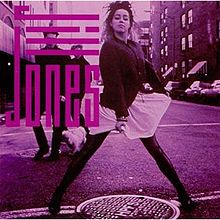
With hindsight, Jill Jones’ 1987 debut album, released on Prince’s Paisley Park Records, is one of the great missed opportunities of his career, and its standout song ‘Violet Blue’ particularly demonstrates why.
The album started in the summer of 1983 during the filming of ‘Purple Rain’ (featuring Jill’s less-than-stellar cameo), when she replaced Prince’s guide vocal on ‘Mia Bocca’. Sadly he didn’t find time to resume work on the record until over two years later.
Consequently, it’s very uneven, with some decent material (‘For Love’, ‘My Man’) mixed in with middling Prince outtakes, covers and B-sides (‘All Day, All Night’, ‘G-Spot’, ‘With You’) and undone by rushed arrangements and drastic changes in tone.
‘Violet Blue’, recorded at LA’s Sunset Sound in October 1986, was the last song put down for the album. Quite simply, it shows what the record could have been, and, frankly, how much Prince (and Jill) had developed between 1983 and 1986.
The vocal intro and accordion breakdown are two cases in point, not to mention the interesting chord progression and superb horn (Eric Leeds) and string (Clare Fischer) arrangements. Jill delivers a knockout vocal too, even throwing in a neat little Nancy Wilson impression via Dinah Washington.
Sadly the Jill Jones album sank without trace. She has recorded intermittently since, contributing a great guest vocal on Ryuichi Sakamoto’s ‘You Do Me’ and playing low-key gigs.
Yesterday, when for the fifth time I was forced to avoid a rapidly approaching, earphone-wearing, phone-fixated zombie, it occurred to me that something had gone pretty wrong.
I remember the first time I was really blown away by my Walkman. It was Thomas Dolby’s samples on Joni Mitchell’s song ‘The Three Great Stimulants’.
Then there were a few other striking sonic details only revealed by close Walkman listening, including Donald Fagen’s stereo-traversing reverb vocals on Steely Dan’s ‘The Caves Of Altamira’.
The Walkman was the beginning of the truly solipsistic musical experience. But back then headphone listening definitely seemed a musical experience, designed for quiet contemplation rather than moving around the bustling big city (despite Cliff’s sojourn through Milton Keynes in the superbly naff ‘Wired For Sound’ video).
I took it to be an aural not psychological phenomenon – for wading into the music, not blocking out the world. (Actually a lot of ’80s music seems made for headphone listening. Talking Heads’ Speaking In Tongues and Dolby’s The Flat Earth spring to mind. Is that true of music now? Isn’t it just loud then quiet, or quiet then loud? Does this matter?)
Spotify’s MD Daniel Ek sums things up very well: ‘We are in the moment space, not the music space’. In other words, every important life ‘moment’, every emotion, should be accompanied by music. Or there’s probably something wrong with you.
This might be something to celebrate for musicians – it is, to a degree, but only a tiny percentage of artists are making money from streaming services. Taken to its extreme, it’s another weapon in the war on reality, another mode of desensitization. We are sleepwalking into trouble. We must be mindful. As JG Ballard said, there are danger signs ahead.
A fear of robots? Maybe we are the robots. As we walk around in a zombified state, we are losing touch with each other. Street banter is disappearing. Philosopher Michael Sandel recently wrote in his book ‘What Money Can’t Buy’: ‘Altruism, generosity, solidarity and civic spirit are like muscles that develop and grow stronger with exercise. One of the defects of the market-driven society is it lets these virtues vanish.’
Remember when you rushed to the shops to buy an album? We might do well to keep that excitement about music. It’s not wallpaper or the soundtrack to the mundanities of life. To paraphrase Bill Shankly, it’s far more important than that.
You could count on one one hand the British songwriters who have made their living exclusively in soul/funk/R’n’B.
It shows just how singular and important Rod Temperton’s career was (he died in 2016). Though never ‘flavour of the month’ (i.e. not ‘rock’), he has to be in the pantheon of great songwriters, Brit or otherwise.
Jed Pitman is first out of the traps with a biography of the Cleethorpes-born melody maestro who came out of the somewhat unprepossessing mid-’70s Midlands soul scene to somehow write (or co-write) ‘Thriller’, ‘Rock With You’, ‘Sweet Freedom’, ‘Give Me The Night’, ‘The Dude’, ‘Love Is In Control (Finger On The Trigger)’, ‘Ya Mo Be There’, ‘Love X Love’, ‘Always And Forever’, ‘The Lady In My Life’, ‘Razzamatazz’ and ‘Boogie Nights’.
Pitman’s book evolved from a BBC radio programme and as such does at times feel somewhat like a transcription, with lots of verbatim interview material but fairly limited authorial insight. But that’s nitpicking when one considers his interviewees: Quincy Jones, Siedah Garrett, Michael McDonald, Herbie Hancock, Bob James, Bruce Swedien, Greg Phillinganes etc. etc. The only major absentee seems to be Michael Jackson.
Pitman builds up a more vivid picture of this rather geeky guy writing his funky, hook-laden tunes on a cheap keyboard in the weird town of Worms, Germany. The groundbreaking disco/funk band Heatwave were of course the first recipients of his signature tunes, but the book’s great success is forging a line through all of Temperton’s work, identifying common traits and signposts. All those little synth and vocal motifs were clearly planned well in advance – it’s also clear that he worked from the bassline up.
The other really pleasing aspect of ‘The Invisible Man’ is discovering some of the more obscure avenues of Temperton’s career – collaborations with Herbie Hancock and Bob James, ‘The Color Purple’ soundtrack, ‘The Oprah Winfrey Show’. The book also places a lot more emphasis on his arranging work than is commonly known.
But we never quite work out what makes Temperton tick musically. Who were his main influences? The anecdotes seldom go beyond: ‘He was the real deal’. And Pitman rather glosses over the leaner last 20 years of his career – it would have been interesting to find out more about his view on the more technology-led/minimalist R’n’B of recent years, and the streaming revolution.
But on the whole this is a readable, valuable book. It certainly had me scurrying to various streaming services to check out everything in Rod’s illustrious songbook. (Incidentally, the cover of ‘The Invisible Man’ is pretty ghastly but apparently a very accurate portrayal – almost every interviewee speaks of his obsession with the cigs…)
David Bowie, Milton Keynes Bowl, 3 July 1983. Photo by Denis O’Regan
The current London heatwave has sent me back to the summer of 1983 when it seemed like the sun shone every day and the radio was set to ‘fun’, blurting Men At Work, Thompson Twins, Kid Creole, KC and the Sunshine Band, Dexys Midnight Runners and Culture Club.
But Bowiemania trumped them all. In July ’83, all my parents’ friends were dancing to Let’s Dance and David’s Serious (or should that be Sirius?) Moonlight Tour was the hottest ticket in town.
Apologies to Milton Keynes natives, but Londoners of a certain generation will probably always suppress a titter at the mention of the new town’s name (The Style Council didn’t help with their satirical 1984 single ‘Come To Milton Keynes’).
Maybe Bowie tittered a bit too when three Milton Keynes Bowl dates (1/2/3 July 1983) were swiftly added to the tour due to unprecedented demand in the London area (he had already done a night at Wembley Arena and a charity show at the Hammersmith Odeon).
But the gigs were a huge success, and Denis O’Regan’s photo marking the occasion is surely one of the great ’80s music documents.
According to O’Regan, who had unparalleled access to Bowie and his entourage throughout the world tour, David had never been happier: ‘He talked about it being his Phil Collins period but this was heavily in retrospect. At the time, I know he loved it. It was the happiest and most successful he’d ever been’, O’Regan recently told MOJO magazine. Bowie was also making a bit of money at last, freed from dodgy record and management deals.
I haven’t kept many VHS cassettes, but two vids that definitely won’t be hitting the charity shop any time soon are Prince’s ‘Lovesexy Live: Volumes 1 and 2’ (currently unavailable on DVD…).
The Lovesexy tour kicked off 30 years ago this week, on 8 July 1988 at Paris’s Palais Omnisport. The seven-month jaunt, taking in Europe, North America and Japan, was arguably Prince’s greatest ever.
A spectacular in-the-round stage set was designed as a kind of ‘fantasy island’, half a playground and half a dreamscape, with curtains, a mini basketball court, brass bed, swing set and a Ford T-Bird which Prince ‘drove’ around the stage at the start of the show.
The Lovesexy tour band: left to right, Cat Glover, Dr Fink, Boni Boyer, Miko Weaver, Eric Leeds, Prince, Levi Seacer Jr., Matt Blistan, Sheila E
Taped on the last night of the European tour – 9 September 1988, at the Westfalenhalle in Dortmund, Germany – ‘Lovesexy Live’ still makes for a thrilling watch. Firstly, the music: this band could turn on a dime. It’s hard to imagine any other set of musicians from the era pulling off the ‘Adore’/’Jack U Off’/’Sister’ medley. Prince’s guitar playing is at its best, with creamy, delay-drenched distortion and tight, tasty Telecaster.
And of all the ’80s ‘pop’ acts who incorporated jazz into their work, Prince may be the most successful. In collaboration with his superb horn section (Eric Leeds on saxes, Matt Blistan on trumpet), he often went back to the source: Ellington’s ‘Things Ain’t What They Used To Be’ and Charlie Parker’s ‘Billie’s Bounce’ infiltrate ‘Blues In C/If I Had A Harem’, and Blistan occasionally quotes from ‘It Don’t Mean A Thing (If It Ain’t Got That Swing’). Meanwhile Sheila E brings the Bay Area jazz/rock sound so beloved of Prince. Her solo feature is a highlight of his ’80s live work.
Then there’s the ‘story’. The Lovesexy show is structured like one of those old Warner Bros gangster pictures – in the first half (lucky for us), we see an ‘evil’ Prince, seduced by the sins of the flesh and tempted by drugs, money and criminality, giving him an excuse to dust off Black Album standouts ‘Superfunkicalifragisexy’ and ‘Bob George’.
Then there’s punishment, atonement and spiritual conversion. Yes, y’all, the second half of the show is ‘God stuff’. But if you don’t go along with it, the music is enough of a spiritual experience anyway. Anyway, Prince certainly seems genuinely transported during ‘Anna Stesia’ and ‘I Wish U Heaven’.
Europe couldn’t get enough of the tour. There were no less than seven nights at London’s Wembley Arena and a series of famous after-show gigs, particularly at the Camden Palace on 25 July when Mica Paris was picked out from the crowd to sing ‘Just My Imagination’ and Ron Wood joined Prince onstage for a memorable ‘Miss You’.
Ticket sales were not so good in the States (14 September to 29 November) where apparently Prince struggled to sell out many arenas, despite it being his first major tour there for over three years.
But normal service was resumed when the Japan leg kicked off in early February 1989. The last night of the tour on the 13th was apparently an exceptionally emotional one.
When Prince got home to Minneapolis, he commenced work on the ‘Batman’ soundtrack, another project about the duality of man. It’s not hard to see where his head was at as the ’80s drew to a close.

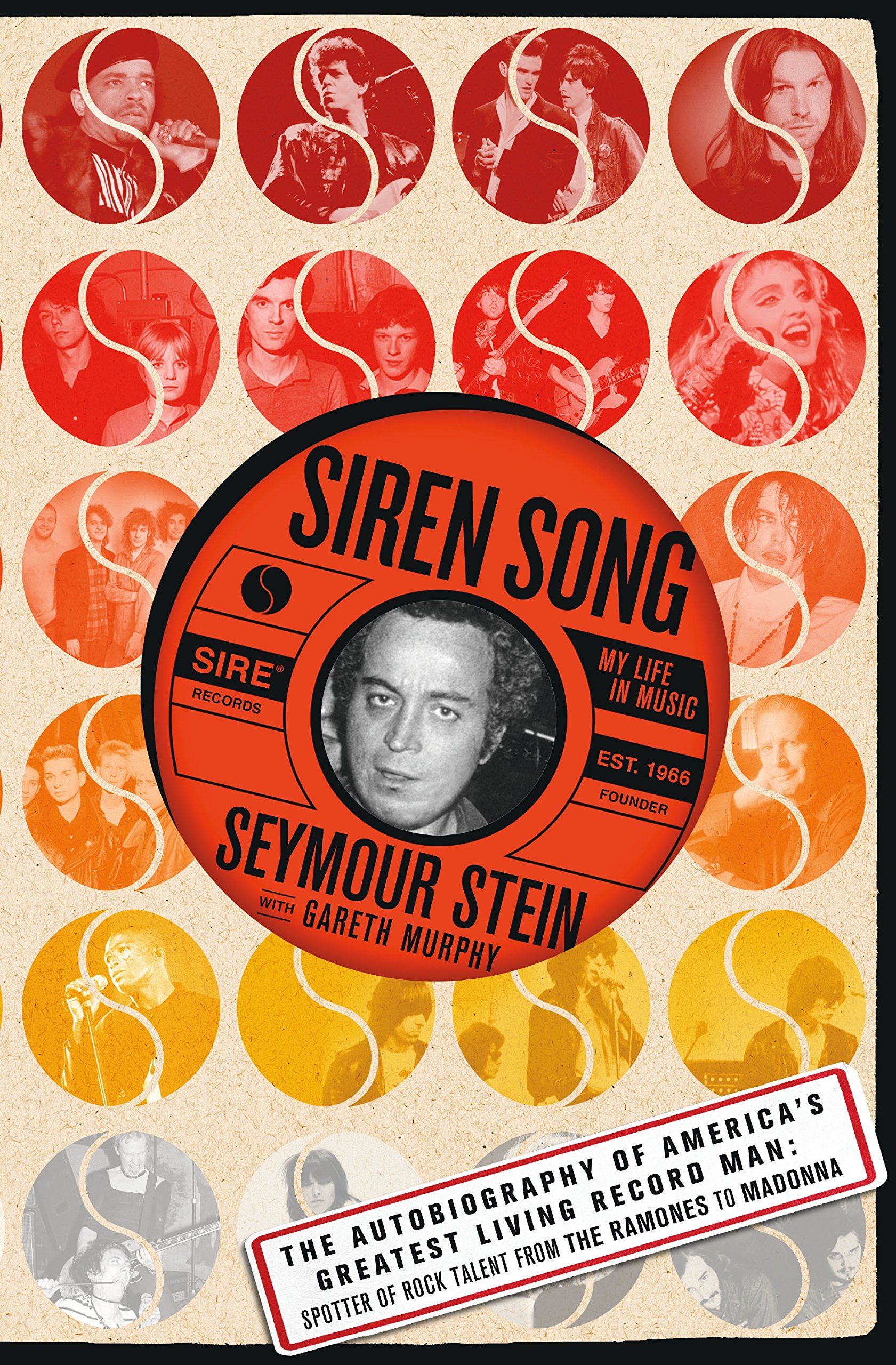 One thing you could never say about the man born Seymour Steinbigle: he’s led a dull life. And his new autobiography ‘Siren Song’ is anything but a dull book.
 Earworms: 1980s pop was chock-a-block with ’em.
 No, ‘Yellow Submarine’ doesn’t really have anything to do with the ’80s (or does it? See below…), but this website wouldn’t exist without the Fabs.
  When Prince appeared on the box the other day, my mum expressed her approval.
 Yesterday, when for the fifth time I was forced to avoid a rapidly approaching, earphone-wearing, phone-fixated zombie, it occurred to me that something had gone pretty wrong.
 You could count on one one hand the British songwriters who have made their living exclusively in soul/funk/R’n’B.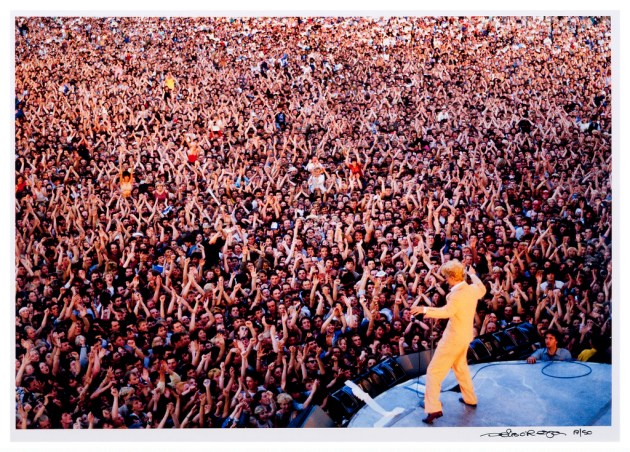


 movingtheriver.com