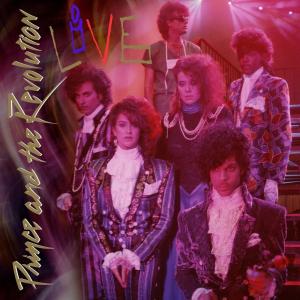
Prince: Syracuse, New York, 30 March 1985

In these crazy times, it’s always good to hear music that ‘washes away the dust of everyday life’, to paraphrase Art Blakey.

Rewatching Prince’s 30 March 1985 Syracuse gig this week did just that. The brilliant 1984-1989 period of albums is one thing but it’s somewhat of a shock to be reminded of how fantastic the live shows were during this time, and musically streets ahead of pretty much everything 2026 can offer.

Even though by all accounts he was already tired of the Purple Rain tour by early 1985 (during the tour he had put the finishing touches to The Family’s self-titled debut, Sheila E’s Romance 1600 and Around The World In A Day), he gave nothing less than his all.

The Syracuse gig was reportedly attended by 49,000 people but wasn’t sold out. A heavily edited 78-minute cut is currently on iPlayer for UK viewers, commemorating 10 years since Prince’s death, with a lot of the weirder sexual stuff edited out.

Joni Mitchell once said Prince was not a pioneer but instead a brilliant assimilator, and here we see James Brown, Little Richard, Sly Stone, Jimi Hendrix and Carlos Santana rolled into one. The show is built for pure entertainment. There are so many notable moments:

– Prince taking off his Telecaster and chucking it 25 yards into the arms of a roadie during ‘Computer Blue’

– Wendy and Prince’s twin rhythm guitars on ‘1999’ (Wendy acquits herself superbly throughout, often playing Prince’s recorded solos note for note with some aplomb. According to Prince’s engineer Susan Rogers, he acted as a guitar mentor to Wendy, his frequent advice to her being: ‘Learn to solo, learn to solo…’)

– Mark Brown’s excellent bass throughout, absurdly trebly and showing serious funk chops

– The use of silence. This band could turn on a dime. In fact, Prince insisted on it!

– The small stage, and how close the band members are to each other. Check out the remarkable shot where the camera zooms out to show the entirety of the stadium, with a tiny stage in the background

– Bobby Z’s control of the Linn Drum machine: some serious pressure there. There’s a particularly quick sleight of hand between ‘Let’s Go Crazy’ and ‘Delirious’. But he plays ‘live’ on ‘Take Me With U’ and ‘Purple Rain’ with the Linn trigger on his snare. You’d hope Lisa Coleman and Dr Fink were wearing ear plugs during this gig though – he NEVER lays off the cymbals

– The ‘Baby I’m A Star’ finale featuring Sheila E, Eric Leeds et al is pretty remarkable, complete with audience members doing the conga around the stage

The Purple Rain tour ended on 7 April 1985. He began work on Parade just ten days later! He sat down at the drums and recorded the first four songs at Sunset Sound on 17 April 1985. Then Around The World In A Day was released on 22 April. This guy was always thinking two albums ahead.
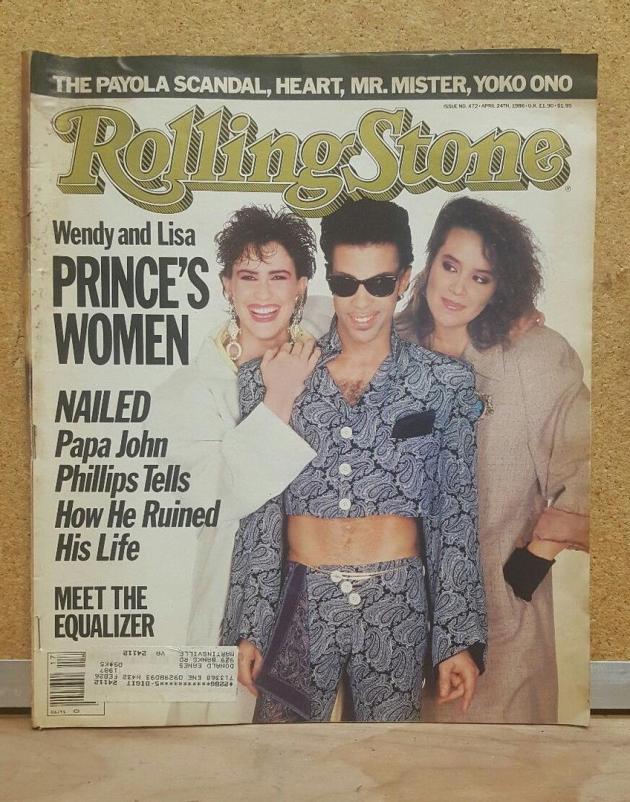
Rolling Stone from 40 years ago this week, the 26 April 1986 edition

But reportedly it was a big shock to Prince’s management and band that he refused to tour Purple Rain outside of the USA. They wanted to milk it for all it was worth, but Prince was moving on.

And his bandmates were less than thrilled to receive a tour bonus of just $10,000 each (meanwhile Prince’s accountants informed Sheila, who had acted as the opening act on the tour, that she owed Warner Bros. $1 million…).

Perhaps the most remarkable thing of all though is that Prince would go on to make better music during the 1980s, and arguably do better live shows too…

The Movers & Shakers Of 1980s Music: Their Real Names Revealed

Captain Sensible, AKA…

During the punk era, musicians often chose stage names so that the dole office wouldn’t identify them from album covers or gigs.

One wonders how much of an issue that was for Gordon Sumner, Paul Hewson and David Evans, AKA Sting, Bono and The Edge, but you never know.

But as the 1980s wore on and the post-punk era became the hip-hop era, a whole new generation of rappers, DJs, producers and musicians felt the need to create pseudonyms.

But what did their mums call them? Here, for your dubious pleasure, are some of the most intriguing real names of 1980s pop, rock, hip-hop, indie and jazz (this page will be updated regularly).

It’s fair to assume that most probably don’t like being reminded of these, for various reasons. YOU go taunting Ice-T with his real name (Tracy Marrow). But, on the other hand, kudos to The Cure’s Robert Smith for not using a pseudonym…

Bobby Z (Prince’s drummer): Robert Rivkin

David Z (Prince engineer/producer): David Rivkin

Atlanta Bliss (Prince’s trumpet player): Matthew Blistan

Dr Fink (Prince’s keyboard player): Matthew Fink

Brownmark (Prince’s bass player): Mark Brown

St Paul (The Family frontman): Paul Peterson

Vanity (Vanity 6 singer/actress): Denise Matthews

Rick Springfield: Richard Springthorpe

Thomas Dolby: Thomas Morgan Robertson

Nik Kershaw: Nicholas Kershaw

John Peel: John Ravenscroft

Jonathan King (impresario and DJ): Kenneth King

Suggs (Madness frontman): Graham McPherson

Cher: Cheryl Sarkisian

Iggy Pop: James Osterburg

Buster Bloodvessel (Bad Manners frontman): Douglas Trendle

Jona Lewie (‘Stop The Cavalry’/’In The Kitchen At Parties’ singer): John Lewis

Chaka Khan: Yvette Stevens

David Essex: David Cook

Elton John: Reginald Dwight

Cliff Richard: Harry Webb

Roxanne Shante (rapper): Lolita Shante Gooden

The Real Roxanne (rapper): Adelaida Martinez

Scott Walker: Noel Scott Engel

Green Gartside (Scritti Politti frontman): Paul Julian Strohmeyer

Terminator X (Public Enemy DJ): Norman Rogers

Jet Black (Stranglers drummer): Brian Duffy

W. Axl Rose: William Bruce Rose Jr.

Divine: Glenn Milstead

Henry Rollins: Henry Garfield

MC Lyte: Lana Moorer

Kate Bush: Catherine Bush

Sun Ra: Herman Blount

Sade: Helen Folasade Adu

Adam Ant: Stuart Goddard

Ozzy Osbourne: John Michael Osbourne

Genesis P-Orridge (Throbbing Gristle/Psychic TV frontperson): Neil Megson

Cosey Fanni Tutti (Throbbing Gristle co-founder): Christine Newby

Jamaaladeen Tacuma (Ornette Coleman bassist): Rudy McDaniel

Howard Devoto (Magazine singer/solo artist): Howard Trafford

Wilko Johnson: John Wilkinson

Jah Wobble: John Wardle (named by a drunken Sid Vicious, whose real name is John Ritchie…)

Prairie Prince (Tubes/XTC drummer): Charles Lempriere Prince

Sydney Youngblood (‘If Only I Could’ singer): Sydney Ford

Yazz (‘The Only Way Is Up’): Yasmin Evans

Belouis Some (‘Imagination’ singer): Neville Keighley

Hollywood Beyond (‘What’s The Colour Of Money’ singer): Mark Rogers

Tommy Vance (legendary DJ): Richard Anthony Crispian Francis Prew Hope-Weston

Melle Mel: Melvin Glover

John Martyn: Iain McGeachy

Tom Verlaine (Television frontman): Thomas Miller

Johnnie Walker (DJ): Peter Dingley

Kim Wilde: Kim Smith

Midge Ure: James Ure

Elvis Costello: Declan MacManus

Adrian Belew: Robert Steven Belew

Princess (London soul singer of ‘Say I’m Your Number One’ fame): Desiree Heslop

Dweezil Zappa: Ian Donald Calvin Euclid Zappa (The LA hospital nurse wouldn’t let Gail and Frank name him ‘Dweezil’ so FZ named him after his early collaborators Ian Underwood, Captain Beefheart, Carl Schenkel and ‘Motorhead’ Sherwood. Dweezil’s name was legally changed when he was five years old.)

Mick Mars (Motley Crue guitarist): Robert Alan Deal

John Foxx: Dennis Leigh

Trugoy (De La Soul rapper): David Jolicoeur

Cheryl Baker (Bucks Fizz vocalist): Rita Crudgington

Grandmaster Flash: Joseph Saddler

Kidd Creole (Furious Five rapper): Nathaniel Glover

KRS-One: Lawrence Parker

Pauline Black (Selecter singer): Belinda Magnus

Siouxsie Sioux: Susan Ballion

Geddy Lee: Gershon Eliezer Weinrib

Sebastian Bach (Skid Row singer): Sebastian Bierk

Marilyn (‘Calling Your Name’ singer): Peter Robinson

Don Was (Was Not Was co-founder/superstar producer): Don Fagenson

Falco (‘Rock Me Amadeus’ one-hit wonder): Johann Holzel

Steve Severin (Siouxsie and the Banshees bassist): John Bailey

Budgie (Siouxsie drummer): Peter Clarke

Dave Vanian (Damned singer): David Lett

Lydia Lunch: Lydia Koch

Flavor Flav: William Drayton

LL Cool J: James Smith

Tone Loc: Anthony Smith

Bonnie Tyler: Gaynor Hopkins

Yngwie Malmsteen: Lars Lannerback

Young MC: Marvin Young

Ice Cube: O’Shea Jackson Sr.

Shakin’ Stevens: Michael Barratt

Donna Summer: LaDonna Gaines

Captain Sensible: Raymond Burns

Rat Scabies (Damned drummer): Christopher Millar

Vanilla Ice: Matthew Van Winkle

MC Hammer: Stanley Burrell

DJ Kool Herc (hip-hop pioneer): Clive Campbell

Duke Bootee (hip-hop pioneer): Edward Fletcher

Afrika Bambaataa: Lance Taylor

Nikki Sixx (Motley Crue bassist): Franklin Ferrana

Skip McDonald (On-U Records/Sugar Hill guitarist): Bernard Alexander

Billy Idol: William Broad

Bill Wyman: William Perks

Fish: Derek Dick

Fee Waybill (Tubes vocalist): John Waldo

Billy Ocean: Leslie Charles

Posdnuous (De La Soul rapper): Kelvin Mercer

Maseo (De La Soul rapper): Vincent Mason Jr.

Chris De Burgh: Christopher Davidson

Kool Moe Dee: Mohandas Dewese

Dee C Lee (Style Council vocalist/’See The Day’ solo artist): Diane Sealey

Steve Strange (Visage frontman/Blitz pioneer): Stephen John Harrington

Youth (Killing Joke bassist/superstar producer): Martin Glover

Geordie (Killing Joke guitarist): Kevin Walker

Doug E Fresh: Douglas Davis

Book Review: My Life In The Purple Kingdom by BrownMark

It’s a time-honoured music-biz story: The Hometown Kid Makes It Big.
Or, to paraphrase Bill Bruford, first you get used to failure, then you get used to success. But BrownMark’s new memoir ‘My Life In The Purple Kingdom’, outlining his five-year stint as bassist with Prince And The Revolution, has a few intriguing twists to the old story.

Firstly, it’s a very timely work, since there’s very little documentation about the Inner Workings of the Purple Rain circus. Then there’s the added intrigue of the book mainly taking place in the huge, often-underestimated Midwestern city of Minneapolis.

The early sections are gripping, a vision of a young man flourishing as a musician, getting by in (racially and economically) difficult conditions, supported by a loving mother and extended family.

Mark documents the Minneapolis music scene of the 1970s very well, tracing his development from young Staple Singers/Ohio Players/Earth, Wind & Fire fan into local music ‘star’, with lots of talk about image creation in the era of Rick James and Controversy-era Prince (‘Only women had clothes that fit the vibe I was looking for, but I didn’t want to dress in drag’…).

Soon Prince has his number, and there’s a long, strange section on his recruitment for The Revolution (spoiler alert: hardcore Prince fans should approach the book with caution…), and a memorable account of the infamous October 1981 gig supporting The Rolling Stones in Los Angeles. There are some excellent photographs, many of which this writer had never seen, and a fine introduction by Questlove, Prince fanatic and esteemed Black Music documentarian.

But ‘My Life In The Purple Kingdom’ is also a cursory tale, a veritable How Not To Succeed In The Music Biz, and it has to be said that Mark sometimes comes across as incredibly naïve, even for a nineteen-year-old.

This speaks to something very strange at the heart of the book. There are missing details that put everything else into doubt – nothing about the status of the offer Mark received from Prince’s management upon joining The Revolution (whisked out of nowhere to join one of the most successful bands of all time, he never discusses terms and then is shocked when ‘cheated’ out of a bonus); nothing about his knowledge of Prince’s music before he joined The Revolution; barely a mention of any Prince songs or interesting musical moments during his time in the band (only Lisa Coleman and Matt Fink get cursory mentions).

The book has a ‘happy’ ending of sorts, ending with Mark’s late-‘80s solo deal with Motown Records, but bizarrely the recent (very successful) Revolution reunion isn’t mentioned. It’s almost as if he wrote it back in 1990, at the height of his bitterness and brain fog. The closing, cursory thanks to Prince almost raises the first proper laugh of the book.

But ‘My Life In The Purple Kingdom’ is an absolute must for 1999 and Purple Rain completists and those wanting to know more about the Minneapolis music scene. It’s an arresting piece of social history, often gripping and definitely original, especially in its early sections.

‘My Life In The Purple Kingdom’ by BrownMark (with Cynthia Uhrich) is published by the University Of Minnesota Press.

Prince: Dirty Mind/Controversy

Picture the scene: It’s August 1980 at Warner Bros Records’ Los Angeles HQ. Prince’s manager Steve Fargnoli is playing the suits his charge’s new demos.

Both the artist and his manager want to release these rough recordings as the next album.

Fargnoli hits the play button, and these lyrics crawl out over a peppy – but distinctly lo-fi – new-wave groove:

I was only sixteen but I guess that’s no excuse
My sister was thirty-two, lovely and loose
She don’t wear no underwear
She says it only gets in her hair…

Major labels often – quite rightly – take a lot of flak, but Warner Bros deserves credit for taking on Dirty Mind (released 8 October 1980) and Controversy (released 14 October 1981).

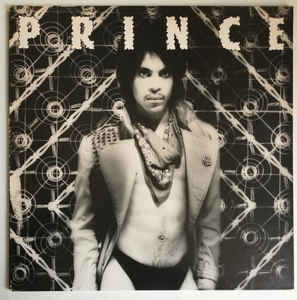
It was a brave move by Prince too, an incredible volte face after it looked like he might be going down a big-budget, soft-rock/disco rabbit hole. Just compare the Prince and Dirty Mind covers: it was definitely one in the eye for Reagan’s new, ultra-conservative regime.

I first heard these albums circa 1988 via a compilation tape made by my schoolfriend Seb. I already knew and loved Parade and Sign O’ The Times but these older songs sounded like they’d been sent down from a different planet. I didn’t pay much attention to lyrics in those days but sensed something very odd going on.

In the Dirty Mind/Controversy era, Prince’s main modus operandi seems to be: shock at all costs. It’s a novel approach, because if he can express himself completely freely, and then deliver such a classic, ‘throwaway’ rock song like ‘When You Were Mine’, you never know what’s going to come next. Cue a long, great career.

Recorded very quickly during summer 1980 at his rather ramshackle home studio in Lake Minnetonka, Minneapolis (the drum kit apparently sat in a puddle of water surrounded by sand bags), Dirty Mind has more in common with the B-52s, Elvis Costello, Blondie and The Cars than it does Earth, Wind & Fire or REO Speedwagon.

It’s nasty, brutish and short. And of course what struck me listening to it again after five or six years, it’s remarkably stripped down compared to a great deal of modern music – hardly surprising when nearly all the noises are made by Prince. Only ‘Head’, ‘Partyup’ and ‘Uptown’ outstay their welcome, underwhelming grooves with slight vocal performances (though the former became a great live track).

My old vinyl version of Controversy sounds absolutely great. Of course it helps that the album’s only 37 minutes long, and also there’s a lot more bottom-end this time. On a decent turntable, various details emerge like the scuzzy synth bass escaping from the left channel during the Lord’s Prayer on the title track (can you guess it’s a Prince album yet?) and some low-octave backing vocals throughout.

It’s also a totally schizophrenic album again, with the title track and ‘Sexuality’ laying down a kind of free-love/free-speech manifesto, two rockabilly tunes (one a message to Reagan), a graphic seduction ballad and synthetic funk tune (‘Private Joy’) which marks Prince’s first use of the Linn LM-1 drum machine.

Weirdly, none of these songs made the PMRC’s Filthy 15 list. But they still sound totally fresh, especially the unclassifiable stuff like ‘Dirty Mind’, ‘Annie Christian’, ‘Jack U Off’, ‘Sexuality’ and ‘Ronnie Talk To Russia’.

Prince toured Dirty Mind and Controversy extensively, and there were three particularly infamous gigs during the period: his London debut at The Lyceum on 2 June 1981 and the two shows supporting The Rolling Stones at the Los Angeles Memorial Coliseum on 9 and 11 October 1981.

Prince: The Lovesexy Tour @ 30

I haven’t kept many VHS cassettes, but two vids that definitely won’t be hitting the charity shop any time soon are Prince’s ‘Lovesexy Live: Volumes 1 and 2’ (currently unavailable on DVD…).

The Lovesexy tour kicked off 30 years ago this week, on 8 July 1988 at Paris’s Palais Omnisport. The seven-month jaunt, taking in Europe, North America and Japan, was arguably Prince’s greatest ever.

A spectacular in-the-round stage set was designed as a kind of ‘fantasy island’, half a playground and half a dreamscape, with curtains, a mini basketball court, brass bed, swing set and a Ford T-Bird which Prince ‘drove’ around the stage at the start of the show.

The Lovesexy tour band: left to right, Cat Glover, Dr Fink, Boni Boyer, Miko Weaver, Eric Leeds, Prince, Levi Seacer Jr., Matt Blistan, Sheila E

Taped on the last night of the European tour – 9 September 1988, at the Westfalenhalle in Dortmund, Germany – ‘Lovesexy Live’ still makes for a thrilling watch. Firstly, the music: this band could turn on a dime. It’s hard to imagine any other set of musicians from the era pulling off the ‘Adore’/’Jack U Off’/’Sister’ medley. Prince’s guitar playing is at its best, with creamy, delay-drenched distortion and tight, tasty Telecaster.

And of all the ’80s ‘pop’ acts who incorporated jazz into their work, Prince may be the most successful. In collaboration with his superb horn section (Eric Leeds on saxes, Matt Blistan on trumpet), he often went back to the source: Ellington’s ‘Things Ain’t What They Used To Be’ and Charlie Parker’s ‘Billie’s Bounce’ infiltrate ‘Blues In C/If I Had A Harem’, and Blistan occasionally quotes from ‘It Don’t Mean A Thing (If It Ain’t Got That Swing’). Meanwhile Sheila E brings the Bay Area jazz/rock sound so beloved of Prince. Her solo feature is a highlight of his ’80s live work.

Then there’s the ‘story’. The Lovesexy show is structured like one of those old Warner Bros gangster pictures – in the first half (lucky for us), we see an ‘evil’ Prince, seduced by the sins of the flesh and tempted by drugs, money and criminality, giving him an excuse to dust off Black Album standouts ‘Superfunkicalifragisexy’ and ‘Bob George’.

Then there’s punishment, atonement and spiritual conversion. Yes, y’all, the second half of the show is ‘God stuff’. But if you don’t go along with it, the music is enough of a spiritual experience anyway. Anyway, Prince certainly seems genuinely transported during ‘Anna Stesia’ and ‘I Wish U Heaven’.

Europe couldn’t get enough of the tour. There were no less than seven nights at London’s Wembley Arena and a series of famous after-show gigs, particularly at the Camden Palace on 25 July when Mica Paris was picked out from the crowd to sing ‘Just My Imagination’ and Ron Wood joined Prince onstage for a memorable ‘Miss You’.

Ticket sales were not so good in the States (14 September to 29 November) where apparently Prince struggled to sell out many arenas, despite it being his first major tour there for over three years.

But normal service was resumed when the Japan leg kicked off in early February 1989. The last night of the tour on the 13th was apparently an exceptionally emotional one.

When Prince got home to Minneapolis, he commenced work on the ‘Batman’ soundtrack, another project about the duality of man. It’s not hard to see where his head was at as the ’80s drew to a close.

Gig Review: The Revolution @ The Showbox, 15 July 2017

Our guest writer in Seattle: Sebastian Wright.

A warm Seattle evening, just steps away from the iconic Pike Place Market. One of the definitive bands of the ’80s are getting ready to take the stage.

But one member, the lead vocalist, is famously and notably absent. How can they pay tribute without becoming a tribute act?

The Revolution are close to the end of their 29-date North American tour. Reformed with the original line-up, they provided backup for Prince throughout his creative zenith (1980-86).

It’s hard to think of a band who funked as hard in that era. And tonight, that’s what shines through.

The Revolution, 2017: From left, Brown Mark, Dr Fink, Bobby Z, Lisa Coleman, Wendy Melvoin and guest Dez Dickerson

Gone are the ’80s fashions, the side partings, ruffs and glitter (though keyboard player Dr Fink maintains his scrubs and stethoscope). This is not a celebration of the past but rather a testament to how relevant Prince’s music remains today.

In the diverse, 1,100 capacity Showbox crowd, there is no hint of irony or throwback-chic. These people, many of them tattooed with Prince’s ‘symbol’ motif, came to party. And from the opening bars of ‘Computer Blue’, party is what they do.

What follows is a two-hour set of peerless pop classics. There are no overwrought solos, no extended jams. Nothing outstays its welcome or is embellished. Wendy takes lead guitar but keeps true to her original riffs instead of trying to mimic Prince’s soloing.

It’s a joy to hear a band this tight and disciplined. Their use of vintage keyboards and drum machines, at chest- splitting volume, has a transportive effect.

Joined by guest vocalist Stokley Williams, The Revolution power through ‘Uptown’ and ‘DMSR’ until noticeably dropping the energy level (and losing the crowd) with two tracks from Prince’s vault of unreleased songs.

Then it’s back to the dancefloor, tearing through ‘Erotic City’, ‘Let’s Work’ and ‘1999’, until their next break in pace: Wendy and Lisa’s quiet, melancholic and clearly deeply personal tribute to their missing bandleader, ‘Sometimes It Snows In April’.

It’s at this point that you hear the tears from fans who continue to be touched by the passing of their innovative, imaginative hero. For many, this is a moment of quiet reflection, surrounded by like-minded people – a cathartic release for all, including a visibly upset Wendy.

As the show goes on, climaxing with ‘Purple Rain’, the band are overwhelmed by the ecstatic energy of the crowd. It’s not hard to understand how The Revolution, all now in their mid-50s, can keep up with touring such a high-energy show.

The passion of the music, camaraderie of the players and discipline of their act transform the audience into just what they lack: their missing frontman.