I missed the recent 30th anniversary of Raintown probably because I was surprised it was originally released as early as 1 May 1987.
A famous ‘sleeper’ record, it eventually crawled up to #14 in the UK album charts but remained in the top 100 for 18 months off the back of some re-released singles and constant touring.
Later on in Deacon Blue’s career, singer/lead songwriter Ricky Ross name-dropped Van Morrison and Springsteen, but on Raintown the big influence is surely Prefab Sprout.
They gave the game away a few years later, naming their collection of B-sides and outtakes Ooh Las Vegas. Nothing to do with Prefab’s ‘Hey Manhattan’, then… (To be fair, the influence may have worked the other way round too – Prefab employed Raintown producer Jon Kelly for some of From Langley Park To Memphis, and that album’s slick sheen bears an occasional resemblance to Raintown.)
Raintown is pop, not rock. The album positively sparkles. James Prime’s excellent keyboard playing is prominent (they didn’t really need a guitarist at this point) with his ‘mystery’ chord very recognisable (later also heard on ‘Real Gone Kid’ and ‘Love And Regret’).
Vocalist Lorraine McIntosh emerges as a kind of ‘bluesier’ version of Prefab’s Wendy Smith though she certainly divides opinion – she nearly ruins the title track and otherwise superb ‘Love’s Great Fears’ but is very effective when reining it in on ‘Loaded’ and ‘Dignity’.
There aren’t many more evocative ’80s album openers than the brief ‘Born In A Storm’, a gorgeous mood piece which sounds a bit like The Blue Nile with a few more chords.
‘Loaded’ is a classic song ‘about some of the people we’d met in the record business’, in Ross’s words. His gritty vocals really work on this – he sounds positively distraught by the last few choruses – and the modulation at 2:48 is one of the great moments of late-’80s pop.
‘When Will You Make My Phone Ring’ is also memorable, even if Ross struggles a little with the lead vocal and the whole thing is a little similar to the soul standard ‘If You Don’t Know Me By Now’.
The excellent ‘Chocolate Girl’ – influenced by Prefab’s ‘Cruel’ in its portrait of a modern relationship – features some gorgeous BJ Cole pedal steel and a few classic couplets including: ‘He calls her the chocolate girl/Cos he thinks she melts when he touches her’.
Finally, Raintown is a romantic album about work, home, love and nostalgia which probably gives a lot of people (including me) a warm glow when they hear it. I couldn’t get with the band’s later rockier direction but I’ll always have a soft spot for this one.
On first listen, ‘The Land Of Make Believe’ would seem to be a frothy, fairly harmless bit of fun built on one of the oldest chord sequences in the book.
But dig a little deeper and it’s a distinctly odd psych/pop classic and one of the weirdest number ones of the 1980s (hitting the top spot 36 years ago this week).
The main reason for that would seem to be the presence of Pete Sinfield on the songwriting credits. Most famous for providing lyrics for prog behemoths King Crimson and ELP, in his bizarre career he has also – thrillingly – co-written Celine Dion’s ‘Think Twice’ and Five Star’s ‘Rain Or Shine’!
In the book ‘1,000 UK Number Ones’, he recalled being tasked by Fizz producer/co-songwriter Andy Hill to come up with the words for ‘The Land Of Make Believe’:
It is 10 times more difficult to write a three-minute hit song with a veneer of integrity than it is to write anything for King Crimson or ELP. But I half-succeeded on “The Land Of Make Believe”. Beneath its ‘tra-la-laas’ is a virulent anti-Thatcher song. Oh yes it is. Something nasty in your garden, waiting, until it can steal your heart…
Portraying Thatcherism as a kind of creeping ‘Invasion Of the Body Snatchers’-style affliction… Well, maybe it’s just about discernible in the lyrics.
But more likely it’s a neat concept on which to hang a lot of disparate references, from Superman to Captain Kidd (apparently a Scottish sailor who was tried and executed for piracy after returning from a voyage to the Indian Ocean) and fairy tales of all kinds.
But I always think of that creepy scene in ‘Salem’s Lot’ when I hear those lines about ‘shadows tapping at your window/Ghostly voices whisper will you come and play’…
The fade-out features a cod nursery rhyme – also penned by Sinfield – which was narrated by Abby Kimber, future Minipop and 11-year-old daughter of Bill Kimber, an executive at RCA Records. Listening as a nine-year-old burgeoning pop fan in early 1982, it used to give me the creeps, and can still send a chill down my spine.
The video was filmed at White City swimming baths in West London. It references ‘The Wizard Of Oz’, ‘Cinderella’ and ‘The Lion, The Witch And The Wardrobe’ and foregrounds some fairly blatant swimwear shots of singer Jay Aston, whose unhappy tenure in Bucks Fizz was outlined in Simon Garfield’s excellent book ‘Expensive Habits’.
Aston also apparently chose the outfits for the video, the female costumes coming from Kahn & Bell on the King’s Road and the male costumes from Boy. Aston later remarked that her and Cheryl Baker’s costumes ‘were ten years ahead of Madonna, with the cone boobs…’
‘The Land Of Make Believe’ subsequently became Bucks Fizz’s biggest-selling single in the UK, outselling even their famous 1981 Eurovision winner ‘Making Your Mind Up’. Not bad for a song that apparently no-one in the group particularly liked.
So here’s the second instalment of essential drum albums from the 1980s (check out part one here), a selection of the decade’s movers and shakers who either pushed the boundaries, flew somewhat under the radar or simply made the music sound better.
19. Chuck Brown And The Soul Searchers: Live ’87 Drummer: Ricky Wellman
Alongside Keith LeBlanc, Jonathan Moffett and Dennis Chambers, Wellman played some of the scariest single bass drum of the decade, laying down the go-go template that would influence everyone from Trevor Horn to Miles Davis (who headhunted Wellman in late 1987).
18. Nik Kershaw: The Riddle (1984) Drummer: Charlie Morgan
Another somewhat underrated Brit sessionman, Morgan does exactly what’s right for the songs with a lot of panache. His ghost-note-inflected grooves on ‘City Of Angels’ and ‘Easy’ are treats for the eardrums.
17. Tackhead: Friendly As A Hand Grenade (1989) Drummer/programming: Keith LeBlanc
Included because of the sheer variety of grooves, both human and machine-generated. Some beats bring to mind the sounds of electro and early hip-hop, but Keith also provides precise, tight, funky grooves on the kit.
16. XTC: English Settlement (1982) Drummer: Terry Chambers
He was not subtle but the unreconstructed Swindon powerhouse could mix it with the best of ’em when it came to rock. Strongly aided by the dream Lillywhite/Padgham production/engineering team, his cavernous grooves always hit the spot. Currently residing in the ‘where are they now’ file (Or is he? Check out the comments section below… Ed.).
15. Power Tools: Strange Meeting (1987) Drummer: Ronald Shannon Jackson
Ex-Ornette/Ayler collaborator and serious Buddhist Shannon Jackson cut a swathe through ’80s drumming with his striking solo albums and occasional projects like this frenetic trio alongside Bill Frisell and future Rollins Band bassist Melvin Gibbs. Free jazz with balls and humour. Play LOUD.
14. Roxy Music: Avalon (1982) Drummer: Andy Newmark
Hard to bet against this masterpiece of tasteful, empathetic song-accompaniment. Even more impressive is the revelation that Newmark was usually the last musician to overdub, replacing a skeletal drum machine part.
13. Nile Rodgers: B Movie Matinee (1985) Programming: Jimmy Bralower
Much-in-demand NYC programmer Bralower wasn’t every drummer’s cup of tea but he came up with many memorable, catchy beats on Nile’s forgotten second solo album. Even classy ballad ‘Wavelength’ chugs along to what can only be described as an electro groove.
12. Yes: Big Generator (1987) Drummer: Alan White
Possessing one of the crispest snare sounds of the decade, White played 4/4 rock with lots of surprises – both listener and band alike have to be on their toes – and conversely also made the most complex arrangements sound completely natural.
11. Grace Jones: Living My Life (1982) Drummer: Sly Dunbar
Sly came up with not one but two classic, much-imitated beats on this album (‘My Jamaican Guy’, ‘Nipple To The Bottle’) and also proved he could play rock with the best of them. Mark Knopfler and Bob Dylan were definitely listening.
10. Mark King: Influences (1984)
We knew he’d started his musical life as a drummer but finally hearing the results of his misspent youth was well worth the wait. He gives his heroes Billy Cobham and Lenny White a serious run for their money on this varied collection, from Level-style funk to Latin-tinged jazz/rock.
9. King Crimson: Discipline (1981) Drummer: Bill Bruford
Impossible to leave out. Aided by Robert Fripp’s ‘rules’, the Surrey sticksman redefined rock drumming for the new decade, adding unusual timbres and taking the emphasis off the hi-hat. He also delivered one of the great over-the-top performances on ‘Indiscipline’.
8. Weather Report: Sportin’ Life (1985) Drummer: Omar Hakim
The fusion supergroup’s penultimate studio album is also one of their best, and Omar is a big reason why. His touch on the hi-hats and ride cymbal is instantly recognisable, and he swings hard on the inspired cover of Marvin Gaye’s ‘What’s Going On’.
7. Stewart Copeland: Rumble Fish (1983)
Not for nothing was the ex-Police man calling himself The Rhythmatist around this time: he hits anything and everything (xylophone, drum kit, marimba, piano, typewriter) to create a colourful, unique soundtrack for Francis Ford Coppola’s black-and-white curio.
6. Sadao Watanabe: Maisha (1985) Drummers: Harvey Mason, John Robinson
A superior example of big-budget ‘smooth jazz’ before it became a cliché, Mason and Robinson split the drum duties and perfectly compliment each other. The latter particularly lets his hair down a bit more than usual, particularly on ‘Paysages’.
5. Simple Minds: Sparkle In The Rain (1984) Drummer: Mel Gaynor
Slinky, powerful grooves from South London’s answer to Omar Hakim. He has the walls of Shepherds Bush’s Townhouse studios shaking with his uber-beats on ‘Up On The Catwalk’, ‘Waterfront’ and ‘C Moon Cry Like A Baby’.
4. Level 42: A Physical Presence (1985) Drummer: Phil Gould
An exciting live performance from one of the great British drummers. His top-of-the-beat feel and crisp sound suggest a mix of Billy Cobham and Bill Bruford, and he could also lay down explosive multi-tom fills to match both of them.
3. Chick Corea Elektric Band: Eye Of The Beholder (1988) Drummer: Dave Weckl
Love or hate Corea’s Scientology-infused, neo-classical jazz/rock, Weckl’s stellar performance on this album was beyond question. He delivered a gorgeous sound, a total mastery of the drum kit and stunning chops when required.
2. Jeff Beck’s Guitar Shop (1989) Drummer: Terry Bozzio
One of the loudest drummers this writer has ever heard in concert (Hammersmith Odeon, December 1989), Bozzio delivered some of the fastest double-bass playing on record (‘Sling Shot’) and also unique takes on reggae (‘Behind The Veil’) and funk (‘Day In The House’).
1. The Clash: Sandinista! (1980) Drummer: Topper Headon
The rebel rockers embraced rockabilly, reggae, dub, calypso, punk and even funk on this ambitious triple album, but they wouldn’t have been able to go there without the versatile London sticksman.
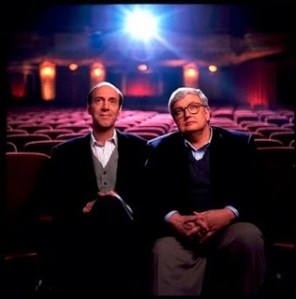
Given the precarious state of movie criticism (and movies?) these days, it’s a treat to check out the intelligent, measured and authoritative work of these two gentlemen.
Probably best known for their ‘thumbs up/thumbs down’ schtick, I’ve recently become fairly addicted to Siskel and Ebert’s deceptively laidback presenting styles and incisive comments.
They called it exactly as they saw it, and you never feel there is any kind of corporate skullduggery going on in the background. And they certainly didn’t always agree on stuff; their exchanges could get pretty fruity.
Gene Siskel died in 1999 and Roger Ebert in 2013. They started out as rivals, writing for competing Chicago papers (the Sun Times and Tribune) in the early 1970s, but were brought together for the small screen when PBS devised a new movie review show in 1975. Its popularity quickly increased and it received national syndication in 1982.
As well as reviewing all the current releases, Siskel and Ebert also presented in-depth investigations on movie controversies of the early ’80s (video nasties and slasher movies) and weren’t afraid to get moral on our asses.
But I initially zeroed in on this ‘worst of 1987′ list. Let’s go back almost 30 years to the day and check out a very tasty list of ill-conceived star vehicles (sorry about the picture quality). I want to see all of ’em. Especially the Stallone arm-wrestling flick.
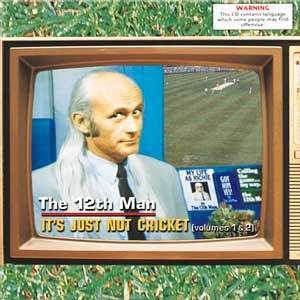
Cricket is probably a bit like jazz or religion – if it gets you when you’re young, you’re probably in for life.
For me, it was seeing the touring West Indies team at Hove in 1980. Botham’s Ashes a year later sealed the deal. Until a couple of weeks ago, when the Ashes were relinquished, over the last few months my first waking thought had generally been: what’s the score in the cricket?
Alas, ‘we’ have been out-played, out-muscled and out-thought by the Aussies. So for now, I’ll console myself with ‘The 12th Man’, Billy Birmingham’s irreverent comedy sketch series born in the early 1980s when Australian cricket was in a less-than-cockahoop state.
Inspired by Channel Nine’s popular and extensive cricket coverage on Australian TV, ‘The 12th Man’ features Birmingham impersonating respected broadcasters (Richie Benaud, Bill Lawry) and then-current players (Javed Miandad, Geoff Lawson, Allan Border, Steve Waugh) alike, ripping the p*ss out of all and the state of Australian cricket in general. But you always feel the love and respect behind the mockery.
A ’12th Man’ tape was briefly passed around my mates at school and had the cache of something really illicit, almost forbidden. Listening back now, it still raises a titter though one wonders how Birmingham got away with some of the more un-PC stuff. But it’s scant consolation for another Ashes mullering by the Aussies…
Here we go again, then. Ducking the bombardment of crappy Christmas musical missives, and two years on from the first collection, we present a few more festive tracks that – hopefully – don’t require the services of a sickbag.
A very Merry Christmas to all.
6. Paul McCartney: Pipes Of Peace (1983)
Paul’s Christmas 1983 chart-topper is, surprisingly, his only UK solo number one single (no doubt helped by the impressive video). The melody maestro puts together a hook-laden mini-symphony that Brian Wilson would surely be proud of. Producer George Martin even conjures a bit of Pepper-stylesurrealism for the intro.
5. Chris Rea: Joys Of Christmas (1987)
It can’t be easy writing a ‘downer’ Christmas song. ‘Joys Of Christmas’ was a single but wasn’t a hit, reaching just 67 in the UK, but it still sounds like a minor classic, lyrically a harrowing portrait of the North East underclass and musically a kind of ZZ Top/Robert Palmer hybrid (what’s with that weird ‘Addicted To Love’ accordion?) with some scorching Telecaster work. And his voice has never sounded better – he hits some amazing low notes in the verses.
4. Joan Jett: Little Drummer Boy (1981)
I first heard this on the soundtrack of the 1983 guilty-pleasure movie ‘Class’ and have had a soft spot for it ever since. It was never a single but appeared for a while on Jett’s breakthrough album I Love Rock’n’Roll until it was bumped off in favour of something less seasonal.
3. Wham!: Last Christmas (1984)
Recorded at London’s Advision studios in August 1984, George insisted on playing all instruments (including some very dodgy bass). But the bittersweet lyrics, twinkling synths, George’s gossamer vocals and the poignant memory of his death a year ago make it an indispensable seasonal hit. It was kept off the 1984 Christmas number one spot in the UK by Band Aid’s ‘Do They Know It’s Christmas’.
2. The Replacements: Beer For Breakfast (1983)
Is it a Christmas song? Dunno, but Paul Westerberg drawls ‘I’m dreaming of a white Christmas’ halfway through, and maybe it’s a portrait of his Christmas Day libations. Good effort (swearing alert).
1. Chris Rea: Driving Home For Christmas (1988)
Rea’s song was only a minor yuletide hit on its original UK release in 1988 (though written in 1984 and recorded in 1986) but it’s still played regularly and has made the top 100 every year it’s been re-released. Rea told Classic Rock magazine recently: ‘I do regret that I never got it to Van Morrison because that’s who I wrote it for. I thought he would have done a marvellous job. But I can’t knock it. I always think, if I don’t hear “Driving Home For Christmas”, it means I can no longer go on holiday…’
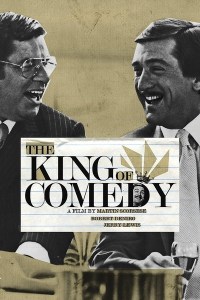
Looking at the trailer and publicity for James Franco’s Tommy Wiseau biopic ‘The Disaster Artist’, it’s hard to ignore the ‘King Of Comedy’ comparisons.
Featuring Robert De Niro’s fascinating and detailed turn as anti-hero Rupert Pupkin, Martin Scorsese’s classic black comedy was released 35 years ago today.
If Wiseau didn’t actually exist, Hollywood would probably have to invent him. Recent American cinema is full of Wiseaus and Pupkins – desperate characters, probably a few cards short of a full deck, who will do almost anything to make it.
Pupkin passive-aggressively stalks celebrities for their autographs, but then comes to believe that he is owed a shot at fame. Talk-show host Jerry Langford (Jerry Lewis) is his passport to success – Pupkin and disturbed rich-girl Masha, brilliant played by Sandra Bernhard, kidnap him. Pupkin then demands the opening monologue on Langford’s nightly TV show.
Jerry Lewis and Robert De Niro in character
If ‘The King Of Comedy’ had been made today, it would probably be hailed as a modern classic, a fable for our times, a coruscating attack on narcissism, celebrity culture and unchecked ambition.
It’s ‘Nightcrawler’ meets ‘Curb Your Enthusiasm’. But it stiffed on its original release (not helped by a substandard trailer – see below), grossing barely $3 million against a $19 million budget.
The studio didn’t know how to market it, trying to sell it as a knockabout comedy. Scorsese sensed the bad vibes gathering around the film long before it was released, telling writer Peter Biskind, ‘A close friend of mine told me “The buzz is bad.” I hate that. When the buzz is bad, people don’t want to be associated with the picture. But they were right – the film was a bomb. It’s called “The King Of Comedy”, it’s Jerry Lewis, and it’s not a comedy. Already it’s a problem…’
Yes, it sometimes feels like a succession of skits strung together, almost in the style of Brian De Palma’s early films ‘Greetings’ and ‘Hi Mom’. And it would be nice to get a bit more access to Pupkin and Masha’s backgrounds.
But Scorsese, Lewis, De Niro and Bernhard, working instinctively from ex-Newsweek film critic’s Paul D Zimmerman’s slight but intriguing story, create something toxic and completely memorable.
Scorsese fills the screen with significant minor characters, mainly playing themselves and recruited from the ‘real’ TV world, and he obviously has deep respect for Lewis and all he stands for (though has less respect for the all-pervading, gossipy influence of TV culture).
Bernhard, prodded by De Niro, is superb, given free rein by Scorsese to improvise freely: ‘I cover the waterfront, remember that!’ she bawls at Pupkin, just before one of the director’s typically bracing cuts.
There are many excruciating moments: Pupkin’s arrival at the Langford house (De Niro apparently screamed antisemitic abuse at Lewis to elicit the correct level of outrage in his response to having his golf game interrupted) and Masha’s ‘seduction’ of Langford. Is his violence towards her ‘justified’?
And then there’s Pupkin’s monologue, shown in one long take with no cutaways – Scorsese and De Niro dare us to laugh at this schmuck, and it’s unsettling when one or two of his gags hit the spot.
‘The King Of Comedy’ is the De Niro/Scorsese collaboration I return to the most. Nobody gets killed, but a lot of people get hurt. Very hurt indeed.
And it bears repeated viewings: recently I noticed an intruder in the restaurant scene where Pupkin tries to persuade his ‘girlfriend’ Rita to accompany him to Langford’s. Check him out. He’s behind Pupkin, mocking him throughout. I take it he’s supposed to stand in for the entire film-going audience.
Inspiration was easy to come by; the early ‘80s delivered brilliant drum-centric hits like The Jam’s ‘A Town Called Malice’, Bow Wow Wow’s ‘I Want Candy’, Adam and the Ants’ ‘Ant Rap’ and Phil Collins’ ‘In The Air Tonight’. Drums were sounding like DRUMS again – the days of dead-sounding kits seemed (almost) over.
Exciting fusions were everywhere: avant-gardists combined free-funk and free-jazz; art-popsters brought ideas from minimalism, Africa and the Far East; jazz/rock masters of the 1970s moved into production and arrangement; dub and World music thrived.
Post-punks fused rock and reggae; the ‘Young Lions’ embraced and sometimes extended the drum worlds of Art Blakey, Philly Joe Jones and Max Roach; funk and R’n’B got precise and spicy; metal players took double-kick playing to extraordinary extremes. And of course there was also the sudden development of technology: some drummers shrunk from the challenge, others rose to it.
So, to celebrate movingtheriver.com’s third anniversary, here’s a personal selection of the decade’s finest drum performances, in no particular order.
46. Loose Tubes: Loose Tubes (1985) Drummer: Nic France
France marshals this big band through jazz/rock, Latin and African vibes with a sparky, lively studio sound, something like a Brit version of Dave Weckl.
45. Lee Ritenour: Earth Run (1986) Drummer: Carlos Vega
The album may be the beginning of Ritenour’s descent into bona fide smooth jazz but the best tracks feature brilliant playing by the underrated Vega.
44. Prefab Sprout: Protest Songs (1989) Drummer: Neil Conti
Conti’s classy playing provided a subtle, always stylish counterpoint to Paddy McAloon’s pithy, complex songs about poverty, childhood and the social mores of the early ’80s.
43. Robert Plant: Shaken ‘N’ Stirred (1985) Drummer: Richie Hayward
Little Feat were a tough act to follow from a drumming point of view but Hayward settled into the 1980s with this superb performance, showcasing a bright, expressive style on Plant’s quirky, Peter Gabriel-influenced art-rock.
42. Frank Gambale: Live! (1989) Drummer: Joey Heredia
LA-based Heredia combined slinky funk/fusion, Police-style rock/reggae and Latin grooves to spectacular effect on this classic live album. His sparring with a terrifyingly unhinged Gambale on ‘Credit Reference Blues’ and ‘Touch Of Brazil’ is essential listening.
41. Al Jarreau: L Is For Lover (1986) Drummer: Steve Ferrone
The ex-Average White Band ex-pat Brit takes us on a journey through the art of groove on this nearly-forgotten Nile Rodgers-produced minor classic. He gives James Gadson a run for his money with his killer 16th-note hi-hats, crisp snare and nifty footwork.
40. Eddie Gomez: Mezgo (1986) Drummer: Steve Gadd
On this Japan-only album (which is still waiting for a CD release), Gadd was at his most expressive, navigating the bebop flavours of ‘Puccini’s Walk’ and quirky fusion stylings of ‘Me Two’ with great aplomb. And no one else could have played a samba the way Gadd does on ‘Caribbean Morning’.
39. Miles Davis: We Want Miles! (1982) Drummer: Al Foster
In combination with bassist Marcus Miller, the underrated Foster laid down some highly original rhythm section work on Miles’s only live album of the 1980s. Listening to his ‘bouncing ball’ dynamics on ‘Kix’, you’d swear that the very fabric of time was being messed with.
38. Rockin’ Jimmy & The Brothers Of The Night (1982) Drummer: Chuck DeWalt
Here’s one out of left-field from a Tulsa bar band who I first heard yonks ago on Alexis Korner’s fabled early-’80s Radio One blues show. DeWalt had a Ringo-esque knack for coming up with simple but memorable drum parts, with a great feel and nice use of space.
37. Living Colour: Vivid (1988) Drummer: Will Calhoun
Calhoun’s whip-crack snare and natty ride cymbal/hi-hat combinations knocked a lot of drummers’ socks off in 1988. He was just as comfortable with the half-time, Bonhamesque rock of ‘Cult Of Personality’ as he was with the funk and go-go grooves of ‘Funny Vibe’ and ‘Broken Hearts’.
36. INXS: Kick (1987) Drummer: Jon Farriss
If it’s funky pop you’re after, Farriss is your man. His dynamics, ghost notes and weird accents on ‘New Sensation’ and ‘Need You Tonight’ are worth the price of admission, while ‘Never Tear Us Apart’ sounds a bit like Ringo if he had a few more chops.
35. Hiram Bullock: Give It What U Got (1987) Drummer: Charley Drayton
NYC-native Drayton delivered a cutting snare, subtle cymbal work and exciting two-hi-hat grooves on this impeccable slice of late-’80s funk/fusion. No one else – not even his buddy Steve Jordan – could have done a better job.
34. Sting: …Nothing Like The Sun (1987) Drummer: Manu Katche
Overproduced? It’s a moot point when the playing’s as delicious as this. His independence between kick drum and hi-hat on ‘Rock Steady’ is fairly mind-boggling, while no one apart from Copeland and Colaiuta has perfected the high-speed reggae groove with such aplomb.
33. Narada Michael Walden: Divine Emotions (1988)
The ’70s fusion hero turned ’80s producer extraordinaire still had time to deliver this forgotten classic featuring tasty, tight, propulsive grooves and a return to blazing jazz/rock on the hysterical closer ‘We Still Have A Dream’.
32. John Scofield: Electric Outlet (1984) Drummer: Steve Jordan
The NYC tyro had already turned heads with the Blues Brothers and ‘Saturday Night Live’ bands but this album perfectly captured his more expansive side. Two hi-hats, crisp snare, gorgeous K Zildjians and some spry kick drum work, particularly on ‘Pick Hits’, ‘Big Break’ and the title track.
31. Nik Kershaw: The Works (1989) Drummer: Vinnie Colaiuta
We knew that Vinnie could unleash some jaw-dropping chops, but this album perfectly demonstrates his groove side. Check out how he navigates the 6/4 time of ‘Cowboys And Indians’ and hot-wires mid-tempo rocker ‘Wounded Knee’. And then there’s THAT fill in ‘Don’t Ask Me’…
30. Billy Cobham: Powerplay (1986)
An album that finally captured what it’s like to stand a few feet away from the master, featuring a lovely acoustic drum sound, shorn of any studio effects. There was incredible clarity to his playing even if the material wasn’t quite as strong as on the previous year’s album Warning.
29. Japan: Oil On Canvas (1983) Drummer: Steve Jansen
Jansen was always looking at new ways to play a 4/4 beat and came up with five or six classics on this live retrospective. ‘Visions Of China’, ‘Canton’ and ‘Sons Of Pioneers’ still sound like unique drum statements in the history of recorded music.
28. Stanley Clarke: Rocks, Pebbles And Sand (1980) Drummer: Simon Phillips
Beautifully recorded by Dennis Mackay, his drums have never sounded better or bigger. From the driving rock’n’roll of ‘Danger Street’ to highly technical prog-fusion of ‘She Thought I Was Stanley Clarke’, the London maestro delivered a superb performance throughout.
27. Bireli Lagrene: Foreign Affairs (1988) Drummer: Dennis Chambers
Many to choose from in Dennis’s repertoire but I’ve plumped for this hard-to-find fusion classic. With a fatter snare than usual, he anchors the band beautifully on Weather Report-style jams ‘Josef’ and ‘Senegal’ and unleashes a trademark 6/8 groove and killer solo on the title track.
26. Van Halen: 1984 Drummer: Alex Van Halen
If he had only ever recorded the freaky double-bass workout ‘Hot For Teacher’, his place in the drum pantheon would be assured. But this breakthrough album also featured a host of other treats, not least ‘Jump’, plus the most identifiable snare drum in hard rock.
25. John Abercrombie: Getting There (1987) Drummer: Peter Erskine
Difficult to choose one from possibly the jazz drummer of the decade but I’ve gone for this mid-career classic. Erskine busts out his Elvin Jones chops on ‘Furs On Ice’ and rocks hard on the epic title track which almost approaches avant-rock.
24. John Martyn: Glorious Fool (1981) Drummer: Phil Collins
A fascinating companion piece to Phil’s Face Value and Genesis’s Duke during arguably his best period of drumming. He brings out lots of lovely ghost-noted grooves in the Little Feat style, some brutal rock on ‘Amsterdam’ and even spicy fusion on ‘Didn’t Do That’.
23. China Crisis: Diary Of A Hollow Horse (1989) Drummer: Kevin Wilkinson
Wilkinson was (he sadly took his own life in 1999) kind of an English Jeff Porcaro, a tasty groovemeister who always played exactly what was right for the song – with lots of elan. Check out the subtleties of ‘St Saviour’s Square’, ‘In Northern Skies’ and ‘Red Letter Day’.
22. Toto IV (1982) Drummer: Jeff Porcaro
It would almost be sacrilege not to include this. Some of the greatest rock drumming in history, with feel, finesse, style, a rich, full sound and lovely time-feel (though he famously claimed ‘my time sucks’!).
21. Pat Metheny: 80/81 (1981) Drummer: Jack DeJohnette
DeJohnette was always a class act on ECM’s ’80s projects and he sounds sparkling on this double album. But I include it mainly for his performance on ‘Every Day I Thank You’, goosing saxophonist Michael Brecker into one of his finest sax solos on record.
20. Stanley Clarke Band: Find Out! (1985) Drummer: Rayford Griffin
There are definitely shades of Cobham in his exuberant style (and he set himself up left-handed on a right-handed kit like Billy) but also grooves aplenty on this underrated album. His lopsided funk on ‘Born In The USA’ is balanced out by chops-fests ‘Campo Americano’ and ‘My Life’. This guy has technique to burn but also does what’s right for the song.
Alan Clarke’s films generally go straight into the ‘once seen, never forgotten’ file.
Features such as ‘Scum’ and ‘Rita, Sue And Bob Too’ courted huge controversy while his groundbreaking TV work including ‘The Firm’, ‘Psy Warriors’, ‘Elephant’, ‘Road’ and ‘Made In Britain’ shone a light on the darker corners of the Thatcher years to devastating effect.
Those films and many others adorn the superb new BFI box set ‘Disruption’ which gathers all his television work made between 1978 and 1989 – including David Bowie’s remarkable turn as Baal, Bertolt Brecht’s anti-hero, adapted by Clarke and John Willett from the 1918 play.
Though it wasn’t exactly a frequently-performed work, British theatre audiences were treated to a Peter O’Toole star turn during the early 1960s, just after the actor’s Oscar-winning appearance in ‘Lawrence Of Arabia’.
For some reason, ‘Baal’ was scarcely mentioned in Bowie obituaries as one of his more successful screen performances, a serious oversight. Bravely broadcast by BBC One at 9:25pm on Sunday 2 March 1982 (cosy Sunday night viewing it wasn’t), it was filmed at Television Centre (W12 8QT!) during the summer of 1981, just after Bowie had recorded ‘Under Pressure’ with Queen.
According to producer Louis Marks, Bowie jumped at the chance to portray the ultimate street punk, and was already a fan of Clarke’s work. He was also reportedly completely undemanding, modest and eager to please on set, requesting only a car and bodyguard and receiving the standard BBC fee.
Bowie could also hardly look less ‘star-like’ in ‘Baal’, with his battered teeth, dark eyes, ratty beard, grimy face and dishevelled clothes; he completely embodies the role of the amoral troubadour. Clarke captures him mostly in long shot with very lengthy takes in the classic alienating Expressionist style, but the camera positively adores Bowie’s Baal with his alligator grin, dangerous sexuality and moments of sudden violence.
He also delivers several plainsong ballads straight to camera in strident, superb voice, accompanying himself on banjo. The subsequent Baal EP, re-recorded at Hansa Studios with added instrumentation, even got to #29 in the UK singles chart, Bowie’s last release for RCA.
‘Baal’ makes for fascinating viewing these days and you only wish the Beeb would take such chances again. Critics of the time were pretty scathing about Bowie’s performance but their comments make for fairly amusing reading these days.
It’s scarcely believable to think that only a year after ‘Baal’ was broadcast, Bowie was rocking the zoot suit and peroxide blond quiff for the Let’s Dance media offensive. It’s also virtually impossible to think of another star of such magnitude who would dare take on such a bleak, singular project. A true artist.
Further reading: ‘Alan Clarke’ edited by Richard Kelly
Randy’s music hooked me sometime in the late 1980s.
Lying ill in bed, I heard a lyric wafting upstairs from the living room where my dad was playing some music by an American guy who sounded world-weary, beaten-down:
‘There she is sitting there/Out behind the smoke-house in her rocking chair/She don’t say nothin’/She don’t do nothin’/She don’t feel nothin’/She don’t know nothin’/Maybe she’s crazy, I don’t know/Maybe that’s why I love her so‘ (later discovered to be ‘A Wedding In Cherokee County’ from Good Old Boys).
I’ve been a major fan since then, studying interviews and always checking out the new albums, and yet the ‘real’ Newman remains elusive.
‘The Life & Music of Randy Newman’, written by husband-and-wife team David and Caroline Stafford, has a damn good crack at revealing the enigma and it’s also the first extensive biography of the singer/songwriter.
There are some great anecdotes. Don Henley reports that Randy’s only direction to him when singing background vocals on Good Old Boys was to ‘sound like a water buffalo’ – i.e. like Randy.
When Newman premiered that same album with a concert at the very swish Atlanta Symphony Hall backed by an 87-piece orchestra, he decided to preface the title track by announcing: ‘Here’s a song that’s guaranteed to be offensive to black and white, Jew and gentile…’
The book is exhaustively researched; as befitting a songwriter so interested in historical and biographical detail, the authors do a fine job placing Newman’s songs in context.
Tens of published Randy interviews are also mined to produce a great commentary on all the albums. But unfortunately there are no new interviews with Newman, his collaborators or friends, so real insight is scant. There are also occasionally ‘style’ issues too, jarringly flippant phrases that sometimes take one out of the narrative.
But ‘The Life & Music Of Randy Newman’ is an enjoyable read, a fitting tribute to a modern American master. And if one comes away without any concrete sense of the protagonist, in this case it’s hardly the fault of the authors – and probably just the way Newman likes it.
‘The Life & Music Of Randy Newman’ is published by Omnibus Press.

 I missed the recent 30th anniversary of Raintown probably because I was surprised it was originally released as early as 1 May 1987.
  On first listen, ‘The Land Of Make Believe’ would seem to be a frothy, fairly harmless bit of fun built on one of the oldest chord sequences in the book.
  Given the precarious state of movie criticism (and movies?) these days, it’s a treat to check out the intelligent, measured and authoritative work of these two gentlemen.
  Cricket is probably a bit like jazz or religion – if it gets you when you’re young, you’re probably in for life.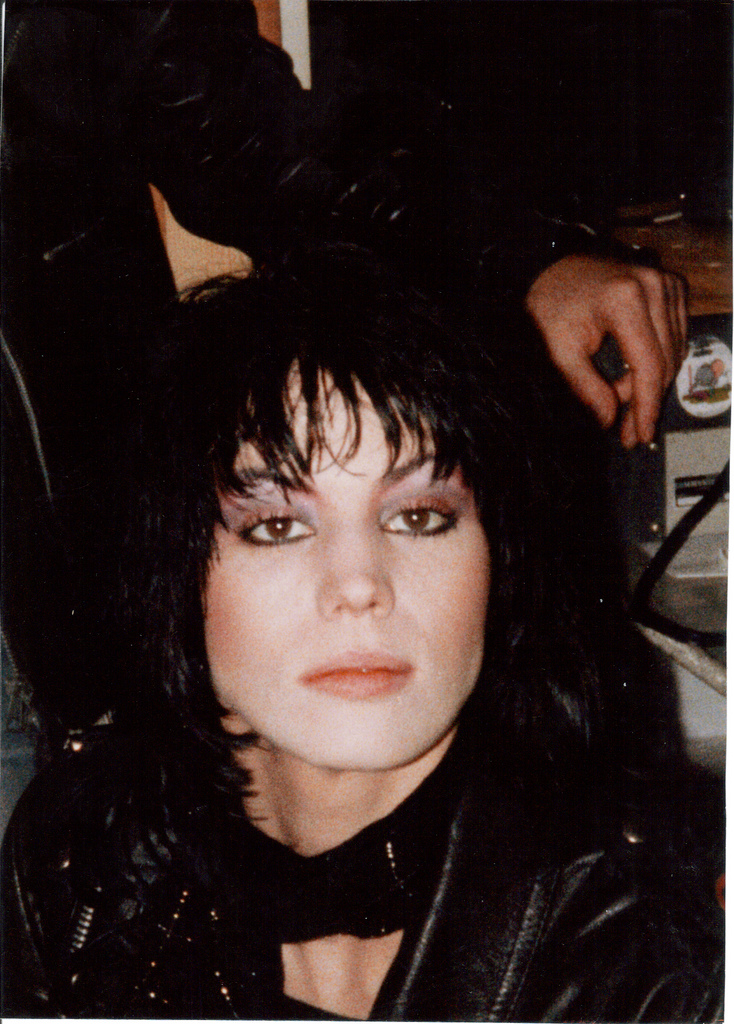
 Looking at the trailer and publicity for James Franco’s Tommy Wiseau biopic ‘The Disaster Artist’, it’s hard to ignore the ‘King Of Comedy’ comparisons.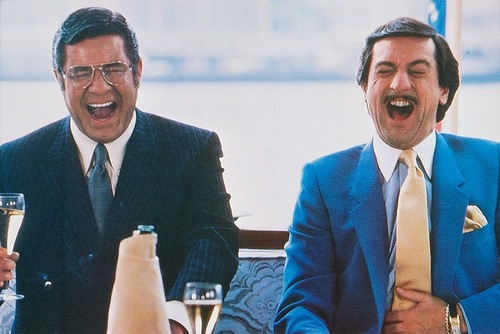

 Alan Clarke’s films generally go straight into the ‘once seen, never forgotten’ file.
 movingtheriver.com