Recorded at Utopia Studios, Woodstock, upstate New York
UK album chart position: #90 (!)
US album chart position: #70 (!)
Terry-Thomas in ‘School For Scoundrels’
Side One:
1. ‘Summer’s Cauldron’
Andy Partridge (composer): ‘Something about the words reminded me of Dylan Thomas. Not that I’m saying I’m a Dylan Thomas. More of a Terry-Thomas, really…’
2. ‘Grass’
Colin Moulding (composer): ‘A lot of people think the song’s about marijuana – it isn’t. Todd said: “Don’t sing so deep. You sound like a bit of a molester.” So I just did the Bowie thing and added an octave above it…’
3. ‘The Meeting Place’
Moulding: ‘Because the riff was a bit like “Postman Pat”, we were just figures on a Toytown landscape viewed from above. It was me meeting her (future wife Carol) at the gates for a sandwich in The Beehive pub, embroidered with the suggestion of a lunchtime quickie…’
4. ‘That’s Really Super, Supergirl’
Partridge: ‘I’d go into his (guitarist Dave Gregory) little room, smelling of aftershave and guitar wax and dead mice, and he’d be rehearsing this solo over and over again. I can still see him playing it. I remember when we were recording the song that Todd was trying to master it on keyboard, and Dave whispered to me, “He’s got the chords wrong!” He thought the chords were major, and they’re not. I was hearing it a lot more clangorous…’
5. ‘Ballet For A Rainy Day’ (Partridge)
6. ‘1000 Umbrellas’
Partridge: ‘There was very little time to do the strings. They had one run-through and then recorded it. Their balls were on the line but they turned in a pretty fine performance…’
7. ‘Season Cycle’
Partridge: ‘I felt that I had maybe laid the ghost of Ray Davies ‘fore me and written a song that could stand up against “Shangri-La” or even, dare I suggest, “Autumn Almanac”.’
Side Two:
8. ‘Earn Enough For Us’ (Partridge)
9. ‘Big Day’
Moulding: ‘I’d been messing around with the chords of Labi Siffre’s “It Must Be Love” and, with a little moving around, it became this sort of fanfare to a big event, a ticker-tape parade for a big day.’
10. ‘Another Satellite’
Partridge: ‘I regret writing it because things turned out so marvellously with the person (Erica Wexler) it’s all about. The story had a happy ending because Erica and I finally got to express the emotional bond that was always there.’
11. ‘Mermaid Smiled’ (Partridge)
12. ‘The Man Who Sailed Around His Soul’
Partridge: ‘It just says you’re born, you live and you die. Why look for the meaning of life when all there is is death and decay? Todd said, “Let’s do a John Barry thing” and, literally overnight, came up with his arrangement with brass and flutes. It’s bang on. Cod spy music.’
13. ‘Dying’ (Moulding)
It frightens me when you come to mind The day you dropped in the shopping line And my heart beats faster when I think of all the signs, all the signs When they carried you out your mouth was open wide The cat went astray and the dog did pine for days and days And I felt so guilty when we played you up When you were ill, so ill What sticks in my mind is the sweet jar on the sideboard
And your multicoulored tea cozy What sticks in my mind is the dew drop hanging off your nose Shrivelled up and blue And I’m getting older, too But I don’t want to die like you
14. ‘Sacrificial Bonfire’
Moulding: ‘There was a touch of “The Sorcerer’s Apprentice” and a bit of Arthur Brown’s “Fire” in it, I suppose. But I wasn’t moralising. It was just that this was an evil piece of music and good would triumph over it. (The strings) were a bit too Vivaldi for me, but it had to go somewhere, I suppose…’
Recorded at Angel Studios, North London, 21-23 July 1986
UK album chart position: #39
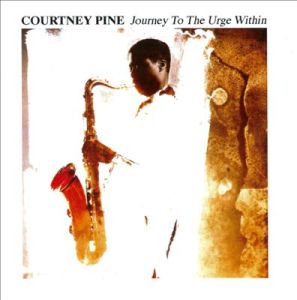
Gifted saxophonist Courtney Pine‘s career is one of British jazz’s great success stories. Starting out in the early ‘80s as a sideman with reggae act Clint Eastwood & General Saint and various Britfunk bands, he became disillusioned with the outlawing of jazz as a respected, popular music in the climate of the early ’80s London scene.
As he memorably put it in the BBC’s excellent ‘Jazz Britannia’ doc, ‘I would add different notes in the scale the way Sonny Rollins did and people would say, “No man, we don’t want that.” They were saying to me, “If you’re black and you want to play jazz in this country, you’d better go and live somewhere else!”’
But all that changed when he caught US trumpeter Wynton Marsalis on TV one afternoon. Marsalis’s professionalism and dynamism were a revelation to Pine (not to mention his youthfulness); if Marsalis could bring jazz to a wide audience, he could too.
A period of intense woodshedding paid off – soon Courtney was guesting with Art Blakey’s Jazz Messengers and The Charlie Watts Big Band, blowing all over the ‘Angel Heart‘ soundtrack and blowing people away with his solos in Gary Crosby’s groundbreaking Jazz Warriors and Jazz Jamaica groups.
Island Records came calling, and Journey To The Urge Within made the Top 40 in the UK, an almost-unheard-of state of affairs for a jazz album. This writer fondly remembers the day when, on opening the NME, he unexpectedly found Pine and Miles Davis sharingthe album chart. Happy days.
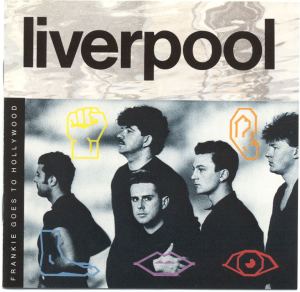
It’s well known that FGTH’s deal with ZTT was one of the worst recording contracts in pop history (outlined in embarrassing detail in vocalist Holly Johnson’s ‘A Bone In My Flute’ autobiography).
But the band were already starting to show signs of subordination by late 1984 – they refused to record the Velvet Underground’s ‘Heroin’ as the B-side to ‘The Power Of Love’, part of ZTT ideas man Paul Morley’s bizarre plan* to get the label’s acts to write a history of pop through cover versions.
FGTH also scuppered ZTT’s plan for them to star in a sci-fi movie which was to be scripted by Martin Amis and directed by Nicolas Roeg (actually, that sounds brilliant…).
The band then insisted that they actually play on their second album Liverpool rather than let session players lay down the basic tracks, a request that seems to have been granted. Guest players this time were few and far-between, and it’s quite hard to identify Trevor Rabin, Steve Howe and Lol Creme.
Sensing trouble, Trevor Horn took the role of ‘executive producer’ and passed production duties over to the gifted Stephen Lipson, who clearly had his work cut out. A schism was opening up between Holly Johnson and the rest of the band, or ‘The Lads’, as he dubbed them (Lipson discusses the making of Liverpool in this excellent podcast).
Tensions were also running high in the UK – by mid 1986, unemployment had topped three million and anti-Thatcher feeling had reached its peak. Oxford University refused her an honorary degree. So the frivolity and epicurean excesses of Welcome To The Pleasuredome were definitely out.
Holly Johnson and Paul Rutherford
Still, Liverpool is a sumptuous-sounding album, with immense care taken over recording, mixing and mastering – apparently to the tune of a whopping £760,000.
It stands up pretty well today especially if taken as a separate entity to Pleasuredome, even if the songs – not surprisingly – are not as memorable as the debut’s.
Lipson pulls out all the stops, playing some superb fuzz-toned lead guitar, particularly on ‘Maximum Joy’ and ‘Rage Hard’, and piecing together an album of musically-rich, prog-influenced hard rock.
Synth players Andy Richards and Peter-John Vettese contribute intriguing intros and outros, often involving backing vocalist Betsy Cook too.
And though Liverpool is obviously a more ‘serious’ album than Frankie’s debut, there are still amusing spoken-word inserts in broad Scouse (‘In the common age of automation, where people might eventually work ten or twenty hours a week, man for the first time will be forced to confront himself with the true spiritual problems of livin”!).
‘Warriors Of The Wasteland’, ‘Rage Hard’ and ‘Kill The Pain’ are tough techno-rock tracks which wouldn’t have sounded out of place on It Bites’ debut album. ‘Rage Hard’ was also subjected to a fantastically overblown extended mix featuring Pamela Stephenson (doing her best Thatcher impersonation?) taking us on a tour of the 12” single.
‘Maximum Joy’ is superb; pure ZTT bliss, while ‘Lunar Bay’ is also brilliant, balls-out prog/pop in the style of Propaganda’s A Secret Wish.
‘For Heaven’s Sake’ is a completely barmy anti-Thatcher ballad (‘She should buy us all a drink’) in queasy 6/8 time, featuring a melody that wouldn’t be out of place in a classic Broadway musical, some Native American chanting by Holly and a weird music-hall middle section.
‘Is Anybody Out There’ is a fitting end to Frankie’s recording career, a majestic, distinctly Suede-like ballad (the guitar solo is totally Bernard Butler) with some beautiful Holly vocals and a subtle Richard Niles string arrangement.
The album was not a commercial disaster, reaching #5 in the UK album chart and the top 10 in many other European countries, but a disappointing #88 in the US. And Thatcher still had four years left in Downing Street.
*Morley’s influence was apparently running amok, evidenced by Liverpool‘s fairly ridiculous liner notes (‘Best wishes to Stan Boardman’) and a choice of album title that suggested he was pretty certain the band would soon be returning to their hometown, banished from pop’s high table. Holly apparently hated the title…
Recorded at Genetic Sound Studios, Reading, Berkshire, UK
UK album chart position: #1
US album chart position: #3
Singles released: ‘The Sound Of The Crowd’ (UK #12)
‘Love Action (I Believe In Love)’ (UK #3)
‘Open Your Heart’ (UK #6)
‘Don’t You Want Me’ (UK #1, US #1)
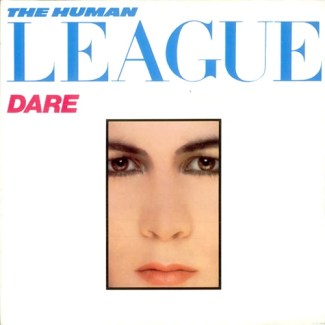
Phil Oakey (vocals/co-composer): ‘Martin really knew what pop was. He could take your mad sounds and make them pop. I still reckon “The Sound Of The Crowd” is one of the maddest songs that’s ever got in the Top 20. “Love Action” hasn’t got a proper chorus. I remember smashing the phone after I was told “Don’t You Want Me” was number 1 in America. It’s so much to live up to. Everyone and their grandma knows about you so no one wants to wear your badges any more…’
Martin Rushent: ‘To a large extent, I was their band. I was certainly their drummer because I programmed all the rhythms and made all the decisions about the grooves. I learned a lot from working with the arranger Johnny Harris. He was bandleader for all the show singers like Petula Clark, Tom Jones and Shirley Bassey. I learned about voicing instruments and how the most important element of music is silence. If you listen to Dare, there’s lots of space in the songs and lots of little parts and you can sing them all…’
Nigel Planer as Den Dennis, playing with Bad News at Castle Donington, 16 August 1986
If you were a British teenager in the mid-’80s, ‘The Young Ones’ and ‘The Comic Strip Presents’ were pretty much required viewing.
In fact, it’s hard to imagine that period without them. They fused comedy and music with anarchic zeal and have endured as bona fide TV classics.
Nigel Planer was an integral part of both groundbreaking shows, working alongside Ade Edmondson, Dawn French, Jennifer Saunders, Ben Elton, Rik Mayall, Alexei Sayle, Peter Richardson and many more.
He brought the world such classic characters as the perennially-prickly hippy Neil and Den Dennis, heavy metal’s unluckiest guitarist. Since then, Planer has appeared in countless quality TV productions, written several books and plays and starred in the hit musicals ‘We Will Rock You’, ‘Evita’, ‘Chicago’, ‘Wicked’, ‘Charlie And The Chocolate Factory’ and ‘Hairspray’.
He’s also worked on several BBC Four music documentaries and is currently revisiting an early interest in songwriting. I began my chat with Nigel by asking him about his musical influences.
MP: There was a great punky energy about the early days of The Comic Strip troupe, but I’m guessing your own musical tastes weren’t rooted in punk. Did you play in bands before becoming a pro actor?
NP: I was more into psych-folk and new-age jazz stuff. I didn’t so much play in bands but I did make a bubblegum pop record with my brother Roger, and I had a publishing deal for my songs which were sort of sub-Nick Drake, soft, liberal, poetic things.
We all loved your portrayal of Neil in ‘The Young Ones’ (I think I still have ‘Neil’s Book Of The Dead’ somewhere…), but how much of that character was yours and how much of it Ben Elton and Lise Mayer’s?
Well, the original Neil comes from a show I wrote and performed with Peter Richardson and Pete Richens called ‘Rank’. Many of the characters later to appear in Comic Strip films stem from this show. We first did it at the Roundhouse and then on tour with various bands. We were trying to be like Alberto y Los Trios Paranoias or The Fabulous Poodles, if anyone remembers them. We ended up more like a Mike Leigh play with a rock band in it. When we made our double act, Neil came along with us and so he was my character in the ‘Young Ones’ setup. He was mostly my character but Ben and Lise made him more stereotypically hippyish.
Your cover of Traffic’s ‘Hole In My Shoe’ got to #2 in July 1984! Any good memories from Neil’s ‘pop’ period?
It was an incredible experience, to be a pop star all of a sudden without having to take the consequences of that decision because I was in character. I learned that I would hate to be a pop star.
Who or what was your inspiration for the brilliant Den, the hapless rhythm guitarist from The Comic Strip’s ‘Bad News Tour’ and ‘More Bad News’?
I’m afraid Den Dennis comes from deep inside my soul…
You famously played the 1986 Monsters Of Rock festival at Castle Donington with the News, how was that? The festival was probably at its peak during that time.
It was our first gig. We were terrified. It looks pretty good in the film – you see all the usual spoof documentary gags, we argue, get ready for the gig, go up the stairs onto the stage. And then in one panning shot you realise it’s real, there are actually 40,000 people there baying for our blood and throwing bottles of urine at us. The compere (Tommy Vance) had to wear a helmet and face guard, but we just walked out there like idiots.
‘Bad News Tour’ famously appeared on British TV long before ‘This Is Spinal Tap’ was released. Have you ever met any of the Tap guys? Are they aware of ‘Bad News Tour’?
I think both ideas were in germination at the same time. Funny how things happen like that. I never met any of them but have a huge admiration.
In Ade’s Comic Strip film ‘Private Enterprise’, you play this great character Derek, a bow-tied, extremely effete A&R man. It’s a brilliant portrayal of a lot of those public school types who got into the music biz in the late-’70s and early-’80s. Was Derek based on anyone you knew?
Not really. I didn’t think of him as a public school type, I just came up with this weird voice. A lot of the time things are just done on instinct and it’s best not to work it out too much. I did feel I knew the kind of person he should be, ie it wasn’t exactly a stretch.
In later Comic Strips, there were cameos and musical contributions from the likes of Jeff Beck, Kate Bush and Lemmy. Any printable memories of working with them?
We used to do this gag where one of us, probably Ade, would turn down volume on his guitar and mime, and out would come the most amazing solo. Then out from behind a speaker would walk Brian May, Jeff Beck or whoever we’d managed to con into doing the solo. Then Ade would stop and shout at the guitar hero: ‘I paid you a fiver to stay behind that speaker, you bastard!’ At The Marquee, we did it not once but twice – after coming out, Brian then turned down volume on his guitar and out walked Jeff. Jimmy Page did the gag with us once too, but I can’t remember where we were playing. Ah, memories… I do remember an early morning filming call in a hotel in Devon on a Comic Strip film. There had been a lot of drinking the night before. I’d gone to bed early, being a professional ‘actor’ you know, but others had stayed up trying to keep up with Lemmy. The next day at 6am, I get down to the lobby for pick-up time – none of the cast are there, not even the runner nor the driver. In fact, the only other person turning up on time for work, with his lines learned, was Lemmy.
You’ve been in the original casts of several very popular West End musicals (‘Charlie And The Chocolate Factory’, ‘Hairspray’, ‘We Will Rock You’) in the last ten years or so – what are the challenges of singing live night after night?
It’s a slog doing eight shows a week on a raked stage. Lots of injuries and physio and the like. The singing is the nice bit. One is also fighting boredom on a grand scale. It’s hard to stay cheerful. But on ‘We Will Rock You’, I remember thinking to myself: ‘Shut the f*** up, you are about to go on in front of 3,000 people and sing a beautiful song with a band of incredible musicians handpicked by Queen and then do about 20 minutes of jokes and make everyone laugh and you’re complaining?’ I’m good at complaining. Ben used to call me Niggle Complainer.
In recent years, you’ve been the go-to voiceover guy for music documentaries on BBC4 – do you enjoy them and are there any more in the pipeline?
None in the pipeline at the moment unfortunately, but they are a really, really good gig. You get to sit for a day listening to all this brilliant music and hear some people talking who maybe meant a lot to you when younger. I particularly enjoyed ‘Blues Britannia’ which I thought was very interesting. The idea that the Brits re-imported the Blues back to America where it was dying.
What are you up to at the moment? A little bird told me you’re working on a music project alongside the acting…
I have a couple of musical projects at the moment. One is a stage musical I have written with Hannah-Jane Fox and Andrew Holdsworth who I met in the ‘We Will Rock You’ days. We’re trying to place it in a theatre now. It’s not usual musical theatre fare. It’s heavy-rock/pop based, a very dark gothic horror story called ‘She Devil’! The other is a psych-folk band called Rainsmoke I have formed with my musician brother Roger and a guy called Chris Wade who is behind the Dodson And Fogg albums. We have one song up on Bandcamp now, and are hoping to finish the album by the new year. Most of the songs are based on all those songs I wrote in the early 1970s when I was a young, green, poet-type guy.
Thank you Nigel.
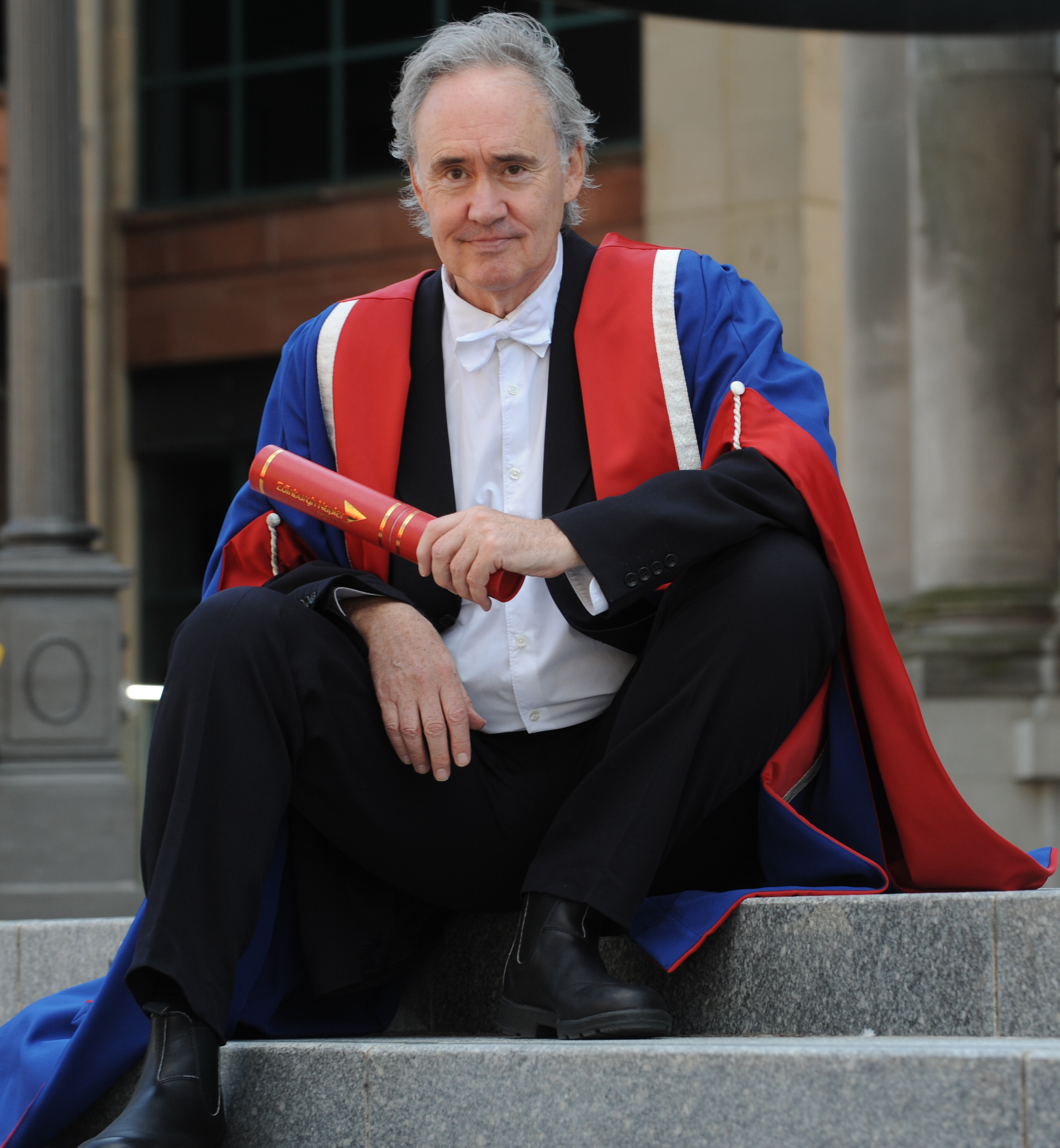
Nigel receiving his Honorary Doctor of Arts degree from Edinburgh Napier University in 2011
14 April 1981: King Crimson – or Discipline, as they are currently named – are rehearsing new material in deepest Dorset.
But all is not well. Guitarist/de facto leader Robert Fripp is getting seriously ticked off with Bill Bruford’s drumming.
He outlines the pertinent issues in his diary (available to read in the remastered CD’s liner notes):
Bill is really getting to me, so I’m trying to understand how he works: 1. He’s a very busy player and doesn’t enjoy playing sparsely. 2. His parts have lots of fills and major changes of texture. 3. His fills are dramatic ie., they shock.
So Fripp comes up with some suggestions for Bruford:
1. Repeat yourself. 2. Take your time. 3. Leave room. 4. Listen to everybody else. 5. Develop a new set of clichés. 6. Develop a new vocabulary of drum sounds. 7. Listen to the sound of what you play.
Bruford’s autobiography outlines his general attitude to these instructions. But he gamely meets Fripp halfway and adapts his style accordingly, laying off the hi-hats, ride and crash cymbals unless absolutely necessary and adding a set of Octobans, a China cymbal and a few electric drums to his kit.
There are other Fripp stipulations. The music’s high frequencies should be saved for the electric guitar (Fripp was perhaps influenced by the ‘rules’ set by Peter Gabriel for his groundbreaking third album) and the 16th notes usually played by the hi-hat or ride cymbal should also now be the guitarists’ responsibility.
The formula was set. And one of the great albums (and bands) of the ’80s was born.
There was something very exciting in the air around late ’70s/early ’80s rock. The talk was all of ‘village music’ – an African concept wherein each player’s contribution is vital but only a small part of the mighty whole.
Talking Heads’ Remain In Light, Brian Eno/David Byrne’s My Life In The Bush Of Ghosts, David Bowie’s Lodger, Japan’s Tin Drum and Gabriel III showed how ‘world’ influences could integrate with ‘rock’ to thrilling effect, and Discipline fits in very neatly with those albums.
Musical references might come from Mozambique, Java, China, Bali or South Africa, or from the soundworlds of Karlheinz Stockhausen, Glenn Branca, Philip Glass and Steve Reich. Like Talking Heads, King Crimson filtered these influences through a New York art-rock/post-punk perspective but, arguably, no one integrated them more successfully.
Fripp and Bruford recruited Adrian Belew (who chose Crimson over Talking Heads) and Tony Levin in New York. Belew had grown into an incredibly assured vocalist – according to Bruford, he was literally incapable of singing out of tune – and master of unusual guitar textures. His solos featured tones and approaches never heard before.
Levin had already played bass with a plethora of heavyweights including Paul Simon, John Lennon and Gabriel, and had also just turned down an invitation to join Weather Report at the beginning of 1981. He unleashed a new weapon for the Crimson gig – the ten-stringed Chapman Stick, played by tapping or ‘hammering on’ (heard to great effect during the opening of ‘Elephant Talk’).
Back in the mid-’80s, my brother and I used to peruse Discipline‘s liner notes for clues as to the powerful and mysterious music therein. We didn’t have a clue what a ‘Stick’ was, concluding wrongly that it must be the slightly synthetic woodblock sound heard throughout ‘The Sheltering Sky’ and title track (I’m still not sure what that sound is – maybe a ‘triggered’ Bruford hi-hat?).
Tony Levin and Chapman Stick
The band wrote an hour of new material fairly quickly and toured modestly in the UK during April and May 1981, calling themselves Discipline. The album of the same name was recorded over the summer at Island’s Basing Street Studio in Notting Hill (later Trevor Horn’s Sarm complex) with producer Rhett Davies, fresh from helming Roxy Music’s Flesh And Blood.
By September, pleasantly surprised by the quality of music in the can, Fripp was issuing a lengthy (and fairly incomprehensible) press release explaining why the band would henceforth be known as King Crimson.
As Bruford says in his book, ‘For a couple of years at the beginning of the ’80s, we were the right band in the right place at the right time – not to get hits, but to do useful, fascinating and right work.’
He also says that the Crimson drum stool was one of the three best rock gigs in the last few decades of the 20th century, naming the other two as Gabriel and Frank Zappa. Hard to argue with that.
When MJ and Quincy are requesting your songs, you know you’ve made it.
Rod Temperton’s compositions are timeless, uplifting, full of detail and subtleties, with lots of vamp-busting major-7th/9th chords and joyful melody lines. It’s also important to note that he arranged all his own tunes for Jackson and Quincy too, outlining the rhythm, vocal and keyboard parts.
Like many kids of my age, I was kind of obsessed with Rod’s ‘Thriller’ during the mid-’80s. It was a perfect musical storm. Jackson’s red-hot vocal performance, the killer groove, brilliant horn arrangements, silly but spooky horror-movie lyrics, intriguing sound effects and Vincent Price’s rap/monologue all left an indelible mark.
But there was much more to Rod Temperton’s career than that obvious highlight. He was born in Cleethorpes, Lincolnshire, beginning his public life playing keyboards and writing songs for Heatwave, writing every song on their 1977 debut album Too Hot To Handle including ‘Boogie Nights’ and classic ballads ‘All You Do Is Dial’ and ‘Always & Forever’.
This led to his work on Michael Jackson’s Off The Wall albumforwhich he wrote the title track, ‘Rock With You’ and ‘Burn This Disco Out’.
Temperton started the 1980s contributing to George Benson’s Quincy-produced Give Me The Night, composing the title track, ‘Love X Love’, killer disco/jazz instrumental ‘Off Broadway’ and the extraordinary ‘Star Of The Story’.
There were other classic Rod compositions and arrangements around this time for Patti Austin, The Brothers Johnson, Rufus, Herbie Hancock, Karen Carpenter and Bob James, as well as the classic Donna Summer floorfiller ‘Love Is In Control’.
He contributed to Quincy’s fine 1981 solo album The Dude, supplying the title track, ‘Somethin’ Special’, ‘Turn On The Action’ and of course the stunning ‘Razzamatazz’:
Then came the epochal Thriller. Temperton was all over the record, composing and arranging ‘Baby Be Mine’, soul standard ‘The Lady In My Life’ and of course the title track.
He famously wrote most of Vincent Price’s rap/monologue in a car whilst being rushed over to Ocean Way Studios to join Price’s vocal session. In fact, he was so prolific that he found time to write a third verse for the monologue, edited from the album version but available in outtake form here:
In the mid-’80s, Rod supplied three more classic compositions: Michael McDonald’s ‘Sweet Freedom’, McDonald’s duet with James Ingram ‘Yah Mo B There’ (co-composed by Ingram, McDonald and Quincy) and also the underrated ‘Spice Of Life’ by Manhattan Transfer featuring Stevie Wonder on harmonica.
Rod enjoyed somewhat of a songwriting/arranging/producing renaissance in the early ’90s, including some great work for Mica Paris’s Whisper A Prayer album and also Q’s Jook Joint. His contributions to music won’t be forgotten, and he was by all accounts a lovely fellow too.
Rodney Lynn Temperton, 9 October 1949 – October 2016
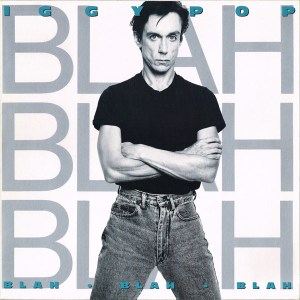
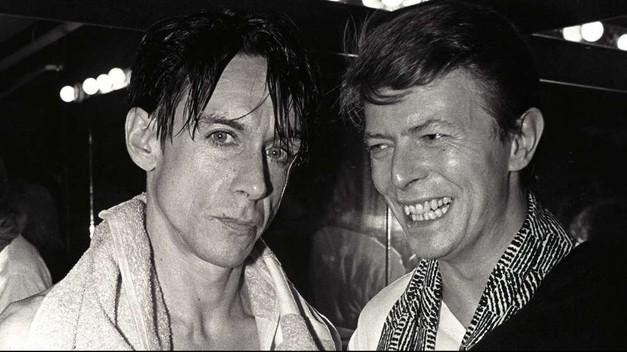
While David Bowie was turning in one of his finest live performances of the 1980s at Live Aid, his good friend Jim Osterberg AKA Iggy Pop was ensconced in LA, writing songs with ex-Sex Pistol Steve Jones.
Bowie’s use of six Iggy lyrics on the Let’s Dance and Tonight albums had given Osterberg enough royalties to buy some much-needed thinking time after a disastrous run of early ’80s solo albums and the termination of his Arista record contract.
Iggy and Jones came up with nine new songs, three of which – ‘Fire Girl’, ‘Winners And Losers’ and ‘Cry For Love’ – would make it onto Blah-Blah-Blah (though they were clearly inferior to the Bowie/Iggy material).
The latter lyric especially had opened up a new vulnerability in Iggy’s writing. He later said: ‘Just expressing that openness frightened me. I didn’t want to admit I was in need of basic affection.’ Yes, Iggy was now singing boy/girl songs – love songs.
Bowie hooked up with Iggy in late 1985 to hear some of the new stuff. He was impressed. He suggested they co-write some more uptempo material and also offered to produce, apparently telling Iggy: ‘I can make this as commercial as hell.’
They disappeared off to David’s holiday home in Mustique with their respective girlfriends, then undertook a lengthy skiing holiday in Gstaad, taking a four-track tape machine with them. Mountain Studios, owned by Queen and scene of the ‘Under Pressure’ recording, was booked for April 1986, and co-producer/tech guru David Richards came onboard for the sessions too.
Bowie recruited a crack band for Blah-Blah-Blah – Kevin Armstrong played guitar (joined by Steve Jones on one track), fresh from being David’s musical director at Live Aid and doing sessions for Prefab Sprout, Propaganda and Alien Sex Fiend!
Gifted Swiss multi-instrumentalist Erdil Kizilcay, who had worked on the Let’s Dance demos and also epic soundtrack single ‘When The Wind Blows’, played (excellent) bass and shared live drums with the Linn machine borrowed from Queen’s Roger Taylor. Bowie played most of the keyboards.
David was apparently workmanlike and professional in the studio, ticking off daily tasks on a notepad with lots of nervous energy. He was focused on helping his friend to the very best of his ability. ‘He’d be chucking down the coffee and fags, and it would be pretty neurotic and manic around him’, said Armstrong.
But Bowie was also a typically shrewd people-watcher – he apparently wrote the first verse of ‘Shades’ after watching Iggy give his girlfriend Suchi a gift, turning it around to make the guy the grateful, humble recipient.
Blah-Blah-Blah features Iggy’s best singing on record. He has developed a gloriously dark croon and finally has the right material to showcase it. ‘Winners And Losers’ particularly shows off his improved vocal range.
It’s also a very funny album. Bowie and Iggy clearly had a great laugh writing these songs, with some preposterous couplets thrown in, especially on ‘Isolation’ (‘I need some lovin’ like a body needs a soul/I need some lovin’ like a fastball needs control, here I am!‘).
‘Baby It Can’t Fail’ features some of the best opening lines in 1980s rock: ‘You have loved me with energy/Backed up hard work and guts!‘ Iggy’s committed delivery always prompts a smile.
There’s some excellent, genuinely uplifting material in the shape of ‘Shades’, ‘Isolation’ (with gorgeous Bowie backing vocals) and ‘Hideaway’.
The title track is a sample-heavy curio in the style of Sigue Sigue Sputnik’s ‘Love Missile F1-11’ (which Bowie later covered) with amusing ‘geeky’ vocal stylings by Iggy and some wilfully-gormless lyrics (‘Shimon Peres, whatcha gonna do?/I’m from Detroit’ etc etc).
‘Little Miss Emperor’ tellingly quotes Allen Ginsberg and features a classic Bowie piano flourish in the ‘Absolute Beginners’/’Life On Mars’ style. Blah-Blah-Blah even spawned Iggy’s first UK singles chart showing (#10) with ‘Real Wild Child’, a cover of Australian rock’n’roller Johnny O’Keefe’s only hit.
Promotional duties led to a very memorable appearance on the regional British kids’ TV show ‘Number 73’ wherein Iggy decided to simulate sexual relations with an oversized teddy bear.
Apparently Richard Branson heard an early pressing of Blah-Blah-Blah and phoned Iggy personally to invite him to Virgin Records. But he eventually went with A&M and delivered a reasonable hit for the company; the album went gold in Canada and made a decent dent in both the UK and US charts.
So is Blah-Blah-Blah the best Bowie-related album of the ’80s? It’s certainly up there. Older Iggy fans may have been shocked by the ‘poppy’ nature of some of the material, but there’s always an edge.
The album was also arguably an influence on bands like The Mission, Sisters Of Mercy and Miss World with its monolithic drum programming, deep vocals and anthemic songcraft.
To a certain extent, Bowie tried to repeat the formula on his own decidedly patchy Never Let Me Down album, but the news was better for Iggy; he embarked on a ten-month world tour, laying off the booze and drugs for the entirety.
For the band, however, it was a different story – apparently Kevin Armstrong and drummer Gavin Harrison were in a pretty terrible state by the time they got home to London in summer 1987.
But Bowie had done it again – he’d helped kickstart Iggy’s career for the fourth time and delivered probably the commercial apex of his solo work; Blah-Blah-Blah is definitely due a critical reappraisal.
Further reading: ‘Open Up And Bleed’ by Paul Trynka
By his own admission, Paul Simon had some very lean years between his 1975 classic Still Crazy After All These Years and 1986’s multi-million selling, multi-Grammy-winning Graceland.
His 1983 album Hearts And Bones was a major flop despite featuring some fine songs and great musicianship.
But the real nadir was ‘One-Trick Pony’. I stumbled across it very late at night on British TV in the late ’90s and was instantly gripped. It’s that special kind of crap movie – the ‘rock star’ vanity project with a gallon of overreaching ambition.
To say it hasn’t aged well would be a huge understatement, though, as with most genuinely bad films, it features a myriad of guilty pleasures too…
In 1980, Simon clearly wanted to celebrate his new Warner Bros record contract with a bang (he’d just jumped ship from CBS) but who persuaded him that a self-written, autobiographical movie was the answer? His screen persona was hitherto based pretty much on one (admittedly superb) cameo in Woody Allen’s ‘Annie Hall’.
But in ‘One-Trick Pony’ he tried to carry an entire movie with just two default settings: he’s either bopping around the stage, sweaty and somewhat bug-eyed, trying desperately to ‘rock’ (in Joe Queenan’s memorably cruel words, Simon is ‘too short to rock’n’roll, too young to die’), or he’s sulky and morose, peering doe-eyed into the middle distance, desperately trying to be adorable.
Simon plays Jonah Levin, a once-popular folk-rock artist who has fallen on hard times (see what he did there?) and now reduced to hawking his band (Steve Gadd, Tony Levin, Richard Tee and Eric Gale) around the Midwest, supporting bands like the B-52’s (who are held up as an example of the ‘hideous’ way the recording industry is going, but whose schtick is so much more vital and life-affirming than Simon’s supposedly ‘raw’ music…).
Jonah’s relationship with his estranged wife – Blair Brown in a completely thankless role – is terminally dull, with undramatic longueurs and clunking one-liners. There’s also some excruciating stuff with Jonah’s ‘cute’ son. You know the kind of thing – lots of ‘whatever happens, Daddy loves you, OK?’, cloying shenanigans with baseball mitts and copying Daddy shaving at the mirror.
From a muso perspective, you might well ask how a movie so heavily featuring superstar players such as Gadd, Gale, Tee and Levin can be outright crap. Well, the novelty effect lasts a few minutes but after that you can only feel for these gents – they’re given pretty thankless roles, playing a fairly tasteless ‘dead pop stars’ quiz in the car, reading out gig reviews and endlessly checking into dodgy hotels. Poor Richard Tee and Eric Gale look the most uncomfortable.
Jonah’s dealings with the record-biz ‘suits’ in ‘One-Trick Pony’ are presumably based on Simon’s disagreements with his previous employers CBS Records, and they produce the only enjoyable sections of the film.
Rip Torn is reliably gruff though resolutely uncomical in his impersonation of legendary CBS hatchet man Walter Yetnikoff, but Lou Reed clearly relishes his cameo as a jobsworth producer; he’s desperate to add strings, horns and backing vocals to Jonah’s stripped-down tracks. Cue a lingering close-up of David Sanborn letting rip on alto, though we’re never sure if this is meant to be a Bad Thing or even a joke – to this viewer, it seemed like the first bit of decent music in the movie.
Oh yeah, the music. The soundtrack of course did a hell of a lot better than the movie – great single ‘Late In The Evening’ featured a Steve Gadd groove almost as influential as ’50 Ways To Leave Your Lover’ and even made the top 10 in the States.
To be fair to Simon, he had sorted out his screen persona by the time of the ‘You Can Call Me Al’ video in 1986, settling on a kind of faux-naif ‘everyman’ figure with some aplomb. He was also pretty funny in Steve Martin’s ‘Homage To Steve’ short from the same year. But let’s just rejoice that he hasn’t returned to the world of feature films since…

 Virgin Records, released 27 October 1986

 Virgin Records, released 16 October 1981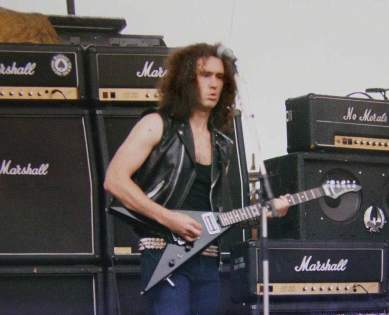






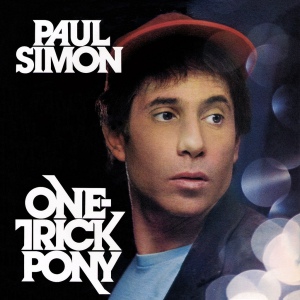 By his own admission, Paul Simon had some very lean years between his 1975 classic Still Crazy After All These Years and 1986’s multi-million selling, multi-Grammy-winning Graceland.
  movingtheriver.com