10 Classic 1980s Singles Featuring Brushes

Some brushes, yesterday

When you think of 1980s pop music, which drum sounds come to mind?

They’re probably pretty loud and the infamous gated snare possibly looms large: ‘Let’s Dance’, ‘In The Air Tonight’, ‘Hey Mickey’, ‘Uptown Girl’, ‘A Town Called Malice’, ‘Born In The USA’.

But there’s a whole alternative world of 1980s hits where the drummer played very quietly, with brushes rather than sticks. Stuff like Buddy Holly’s ‘Raining In My Heart’, The Beatles’ ‘When I’m 64’ and Lou Reed’s ‘Walk On The Wild Side’ probably laid down the gauntlet, but you can’t imagine any producers or focus groups demanding that the drummer play brushes to create a hit (and when was the last hit that featured brushes?).

Here are some classic 1980s singles that somehow got away with it (all chart placings from the UK).

10. Echo & the Bunnymen: ‘Killing Moon’
Powered by Pete de Freitas’s subtle and unexpected brushwork, the classic single got all the way to #9 in early 1984.

9. George Michael: ‘Kissing A Fool’
The seventh and final single from Faith, written back in 1984, reached the top 20 and was initially mooted to be the title track of that 1987 album. Session player Ian Thomas, soon to play with everyone from Robbie Williams to Scott Walker, overdubbed some brushes on the snare after first recording a pass with sticks.

8. The Cure: ‘The Lovecats’
This stand-alone single was also the band’s first top ten hit, peaking at #7 in October 1983. Drummer Andy Anderson began his career with Hawkwind’s Nik Turner and Steve Hillage, then ended up on Robert Smith and Steve Severin’s The Glove side project. He found himself recording this song in Paris then joined the band for a year, playing on 1984 album The Top and playing brushes on another B-side, ‘Speak My Language’. He then toured with Iggy Pop throughout 1987. Anderson died in 2019.

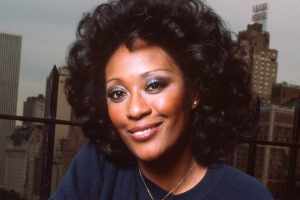
7. Alison Moyet: ‘That Ole Devil Called Love’
This stand-alone single reached a heady #2 during March 1985, produced by ’18 With A Bullet’ singer Pete Wingfield. But who’s the drummer? Answers on a postcard please.

6. Robert Wyatt: ‘Shipbuilding’
Not much is known about drummer Martin Hughes, but he did a nice job on this classic single which reached #35 in April 1983.

5. Chris Rea: ‘Driving Home For Christmas’
Written in 1978, it was originally intended for Van Morrison. Rea first recorded it as a B-side to the 1986 single ‘Hello Friend’, with drummer Dave Mattacks playing almost with a country feel. But the most famous version features on Rea’s 1988 New Light Through Old Windows compilation album with drums by Martin Ditcham, best known for his percussion work.

4. Chris Isaak: ‘Wicked Game’
Kenney Dale Johnson played some very subtle drums on this classic single released in July 1989, going on to become a huge sleeper hit in the US and UK.

3. Elton John: ‘Blue Eyes’
Recorded at AIR Studios in Montserrat, this touching ballad was the lead-off single from John’s Jump Up! album, reaching the top ten in 1982. The very slow 6/8 groove was beautifully marshalled by Jeff Porcaro. See also Toto’s ‘Don’t Stop Me Now’ and Ray Charles’ ‘Still Crazy After All These Years’ for some classic Porcaro brushwork.

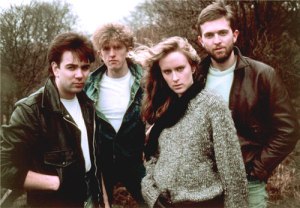
2. Fairground Attraction: ‘Perfect’
It reached UK #1 in May 1988 – is it the only chart-topper to feature a drummer playing brushes? London jazzer Roy Dodds did the honours on this.

1. Rain Tree Crow: ‘Blackwater’
Cheating a bit here. It wasn’t released until 1991 but was recorded in December 1989 at Chateau Miraval in Southern France. It was the reformed Japan’s only single, reaching #62. In the band biography ‘Cries And Whispers’, drummer Steve Jansen makes the remarkable claim that his whole performance was pieced together using samples. Weird…

Any other 1980s hits that feature brushes? Drop us a line below.

Gig Review: Bill Frisell @ Cadogan Hall, 25 October 2024

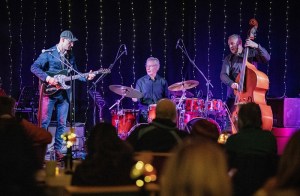
Though the American guitarist’s 1980s sonic explorations with the likes of John Zorn, Power Tools and on solo albums such as Before We Were Born are long gone, Frisell’s fascinating (and much quieter) late-career boom continues abound.

He’s a regular visitor to the Big Smoke but, revelling in his newfound freedom at Blue Note Records, this Cadogan Hall gig felt like his most ‘jazz’ outing for years.

That’s chiefly due to the presence of A-list collaborators, in concert and on recent album Four: Gerald Clayton on piano, Gregory Tardy on various reed instruments and Johnathan Blake on drums. Close readers will notice one word notable by its absence: bass. It’s a credit to Frisell that the instrument wasn’t really missed here, nor did he or Clayton particularly resort to vamps to make up for the absent low-end.

Consequently, the meticulously arranged and rehearsed set, strongly foregrounding collective improvisation, had a lovely ‘floating’ atmosphere. (Two touchstones may be Louis Armstrong’s Hot Five and The Jimmy Guiffre 3, the latter of course featuring Frisell hero Jim Hall on guitar.)

Themes came and went, with many segues. Somewhat sombre recent compositions such as ‘Waltz For Hal Willner’ and ‘Claude Utley’ – both named for recently departed friends of Frisell – bumped up against familiar pieces such as Paul Motian’s ‘Conception Vessel’ (taken at a very leisurely clip) and Bacharach/David’s ‘What The World Needs Now’, as well as two fast bebop-style heads which nodded to Ornette Coleman (though the Monk-ish treat ‘Holiday’ was sadly missing).

In short, it was business as usual for Frisell, who unapologetically places melody at the heart of everything he does, whether playing ‘60s pop, country, avant-garde or bebop. Hall really does seem to be his totem these days, though he still knows when to add disconcertingly witty moments of found sounds and dissonant loops via his pedal board.

And while the ensemble occasionally felt like it was kept on unusually tight leash, Clayton added much-needed harmonic colour and elaborate flourishes, touching variously on stride piano, systems music and glorious call-and-response lines reaching back to Tatum and Hines. Tardy brought the blues feeling, laying down three or four fantastic solos, while Blake – the man with the lowest drum set in the world, barely above his knees – played at a perfect volume in the very boomy Cadagon Hall, and with great taste.

All in all, this quartet has legs. One would hope they could gather for another album on Blue Note, and we might get another enjoyable gig like this too. The standing ovation seemed to come as quite a surprise to this most modest master of the electric guitar.

Gig Review: Nik Kershaw @ Shepherds Bush Empire, 16 October 2024

As the male solo artist with the most weeks on the UK singles chart during 1984, it’s not surprising Nik Kershaw is celebrating that year with a lengthy European tour, playing his two top 10 albums Human Racing and The Riddle in their entirety.

He’s still able to command big audiences for his solo gigs, and with good reason – his vocals are if anything much improved since his mid-‘80s heyday and his songs are built to last, with their bold melodies, crafty harmonies and intricate arrangements. But then regular readers already know movingtheriver is a big fan.

So Kershaw’s back catalogue is an embarrassment of riches but also presents some potential problems for a five–piece ‘rock’ band – for a start, how to recreate those dense textures and sequence-heavy arrangements? Thankfully he generally didn’t scrimp on any of that, mostly using the same audio stems and keyboard sounds from the 1980s. There was little or no ‘reimagining’ during this gig, hugely enjoyed by a packed house.

‘Roses’, whose lyrics are still relevant today, was the surprise but effective first song, the band (all middle-aged white guys dressed in black, but then you don’t go to a Kershaw gig expecting bells and whistles) arriving onstage to the opening percussion loop.

‘Know How’ and ‘Wild Horses’ (a favourite of Miles Davis) sounded fantastic, benefitting from bassist Paul Geary’s beefy tone and Kershaw’s fluid guitar lines.

He delivered a great vocal on ‘Wide Boy’, while ‘City Of Angels’ – written about ‘a city I’d never been to’ – featured a lovely laidback performance from drummer Bob Knight, though at times during the gig he lacked the dynamics and smooth grooves of original Human Racing/Riddle sticksman Charlie Morgan.

Geary had his work cut out aping Mark King on ‘Easy’, but he did a pretty good job if somewhat lacking the Level 42 man’s precise percussiveness and syncopated slides. Impressively, keys player Phil Peckett seemed to take care of all the track’s fast sixteenth-notes in real time rather than relying on a sequencer. The whole band did pretty much the same on ‘Don Quixote’.

Self-deprecating to the last (he’s always claimed he’s just a ‘muso’ who was thrust into the limelight), Kershaw played down his Green credentials before ‘Save The Whale’, claiming it had been written as a last-minute ‘rent-an-issue’ song for The Riddle.

The excellent ‘You Might’ featured ‘too many chords’, according to Kershaw, while the first set closed with the album’s perennially popular title track, featuring tasty duel lead guitars though with a rather stiff ‘rock’ feel compared to the slinky sixteenth-note groove of the original.

Set two featured Human Racing in its entirety, and this is where the now rather dated zaniness of Kershaw’s early stuff became apparent, the superbly sung title track and ‘Wouldn’t It Be Good’ aside, though the latter was played surprisingly early in the set.

There was a lengthy tribute to and applause for producer Peter Collins who passed away in June before Kershaw closed up Human Racing with ‘I Won’t Let The Sun Go Down On Me’, rescued by the frontman’s lengthy Holdsworth-like guitar solo.

He seemed genuinely delighted by the ecstatic crowd reaction, signing off with a breezy ‘You’ve made an old man very happy’, before encoring with mass singalongs ‘When A Heart Beats’ (complete with superb note-for-note solo from second guitarist Adam Evans), should-have-been-a-hit ‘The Sky’s The Limit’ and ‘The One And Only’.

A great night of classy music and enjoyable nostalgia. Who knows – maybe Nik will amaze us with Radio Musicola @ 40 in 2026.

Nine Memorable 1980s Pop Parodies

The HeeBee GeeBees

One adjective you couldn’t use about 1980s pop is ‘boring’. The music had way too much character and the artists too much physical presence for that.

But 1980s music culture was easy to lampoon. And there was so much mainstream TV to do the lampooning, from ‘Not The Nine O’Clock News’ and ‘The Goodies’ to ‘The Kenny Everett Video Show’ and ‘Spitting Image’.

And across the pond, of course, there was ‘Saturday Night Live’. Then there were the radio spoofs and specially-constructed ‘bands’ like The Hee Bee Gee Bees. All in all it was a golden era for satire.

So here we round up some classic spoofs of 1980s music, with a few recurring subjects…

9. Not The Nine O’Clock News: ‘Happy Crappy Nappy Song’
Inane pop pretenders or joyous post-punk tunesmiths? If you thought Altered Images were the former, Pamela Stephenson and pals pretty much nailed the Glaswegian band’s shtick right here.

8. Stevie Nicks: ‘What The Hell Is She Saying?’
Who the hell is responsible for this classic?


7. Not The Nine O’Clock News: ‘Nice Video, Shame About The Song’
It’s the naughty gang again, this time brilliantly skewering early ‘80s pop videos, particularly the work of pioneers Russell ‘Vienna’ Mulcahy and David ‘Ashes To Ashes’ Mallet.


6. The Hee Bee Gee Bees: ‘Quite Ahead Of My Time’
Angus Deayton, Phil Pope and Michael Fenton Stevens brilliantly lampoon David Bowie’s 1976-1980 era, with nods to ‘Golden Years’, ‘Ashes To Ashes’, ‘African Night Flight’, ‘Fashion’, ‘It’s No Game’ and even ‘The Secret Life Of Arabia’. There’s also a touch of Eno and Bowie’s ‘point to some chord signs with a baton and get the band to play them’ Berlin-era modus operandi about the music here.


5. Spitting Image: ‘We’re Scared Of Bob’
Lyrically and musically spot-on, and also highlights the use of minor celebs in ‘We Are The World’ and ‘Do They Know It’s Christmas’.


4. The Kenny Everett Video Show: The Bee Gees
Ten years before Clive Anderson’s disastrous TV interview, Kenny nails the inescapable naffness of the Brothers Gibb.


3. The Hee Bee Gee Bees: ‘Too Depressed To Commit Suicide’
The first of two Police pastiches, Messrs. Deayton, Pope and Fenton Stevens (apparently with amusing lyrical input by Richard Curtis too) offer a great distillation of their sound, somewhere between ‘Walking On The Moon’ and ‘Don’t Stand So Close To Me’. Also check out the delicious piss-taking of Stewart Copeland’s penchant for adding ‘delays’ (echoes) to his drums.


2. Weird Al Yankovic: ‘Velvet Elvis’
Not as good as the previous track – his voice is pretty poor – but musically it’s pretty damn sharp.


1. Saturday Night Live: Frank Sinatra and Stevie Wonder
Just a timeless classic…

Any classic ’80s parodies missing here? Leave a comment below.

Bronski Beat: ‘Smalltown Boy’ @ 40

40 years ago, gay artists weren’t just occasional visitors to the British pop charts – they were leading the agenda.

A famous top three of August 1984 featured George Michael at #1, Frankie Goes To Hollywood at #2 and Bronksi Beat’s ‘Smalltown Boy’ at #3.

Remarkably, the latter was also the Bronskis’ debut single, coming from debut album The Age Of Consent. And what a trailblazing/timeless classic it is, danceable and tearjerking, with a once-in-a-lifetime vocal performance from Jimmy Somerville and that winning chord sequence.

Bernard Rose’s sombre video (which has had 121 million YouTube views at the time of writing) was obviously a huge part of the song’s success, combining the ‘realist’ style of Mike Leigh and Ken Loach with a few poetic touches to brilliant and moving effect.

Producer Mike Thorne’s role on the track is often undervalued too – there was a touch of his ‘Tainted Love’ in his bass sound and extensive use of top-end on synths and drums, and he also gets a pat on the back for leaving in a few mistakes (check out the shockingly-played synth lead line in the first 30 seconds, a section that also seems to speed up a lot).

The legacy of ‘Smalltown Boy’ is rather sad though – writers/co-founders Steve Bronski and Larry Steinbachek have both died recently, deaths that seems to have been somewhat under-reported in the media.

Rockin’ Jimmy & The Brothers Of The Night (1982)

In this day and age, it’s weirdly reassuring to recommend an album which resolutely refuses to appear on streaming platforms or even CD.

So, at the time of writing, it has always ever been just a 1982 vinyl release for Rockin’ Jimmy & The Brothers Of The Night (widely available on Discogs).

Fronted by bespectacled Rockin’ Jimmy Byfield, they were a Tulsa-based bar band with country, blues and R’n’B influences, prowling similar territory as late Little Feat, JJ Cale, mid-‘70s Eric Clapton (who covered Byfield’s ‘Little Rachel’ on There’s One In Every Crowd), early Dire Straits, late-‘70s Ry Cooder and even ZZ Top at their most laidback.

Championed by Alexis Korner on his fabled Radio 1 show, Rockin’ Jimmy’s second and final album was one of the first ‘rock’ albums your correspondent remembers enjoying. It appeared on the small but influential, Notting Hill-based Sonet Records. Based around Byfield’s pleasant voice and Chuck DeWalt’s fat beats, the band eschewed distorted guitars and blues/rock cliches in favour of catchy, melodic songs and neat ensemble work.

The album’s beautifully recorded, with no concessions to early 1980s production (thanks to Brit helmer Peter Nicholls, best known for his work with Joe Cocker and Leon Russell). ‘Rockin’ All Nite’, ‘Angel Eyes’ and ‘It’s A Mystery’ have staying power. The rest of the album hasn’t dated much either.

Sadly the band split after this second record, but they did apparently tour a little until the end of 1982, as this clip attests, and may still occasionally play around Tulsa (correct?). The cover’s quite cool too – which meeting of which ‘brotherhood’ is Byfield about to attend? The shadow knows…

Madonna @ The MTV Video Music Awards: 40 Years On

40 years ago this weekend, Madonna stunned the music biz with her premiere performance of ‘Like A Virgin’ on the MTV Awards at the Radio City Music Hall, NYC.

Not a household name at the time, she sung live in full wedding regalia, perched atop a giant cake, before shedding her shoes and veil and ending up writhing around the stage, her underwear exposed.

In terms of landmark pop TV moments, some have compared it to The Beatles on ‘The Ed Sullivan Show’ or Michael Jackson’s moonwalking on ‘Motown 25’. Others saw it as summing up the coarsening of popular culture.

But Madonna’s stylist Maripol later claimed to Classic Pop magazine that MTV ‘tried to destroy her that day…they put the camera under her skirt.’ And it’s hard to see the performance outside the context of Prince’s highly sexualised ‘Purple Rain’ movie (released in the US two months earlier) and attendant live shows.

It’s also widely forgotten that this performance came a month before ‘Like A Virgin’ was released as a single, so this was the first time most people had heard the song (‘Borderline’, from Madonna’s self-titled debut album, was only just peaking in Europe in September 1984). Bravely, Madonna refused to perform either ‘Borderline’ or ‘Holiday’ for MTV.

Still, manager Freddy DeMann was reportedly furious with Madonna, believing the performance to be career suicide. But of course it was just the opposite, helping propel her to megastardom. Happy birthday to a groundbreaking moment of 1980s pop.

(Postscript: As for the MTV Awards, they’re still going strong – Madonna spawned quite a monster…)

Book Review: American Drummers (1959-1988) by Val Wilmer

Val Wilmer has arguably been Britain’s leading jazz photographer (and writer of classic jazz book ‘As Serious As Your Life’) since she started taking pictures of musicians over 60 years ago.

And now Café Royal Books have issued a lovely budget paperback of Wilmer’s photos entitled ‘American Drummers 1959-1988’, which does exactly what it says on the tin (though note ‘jazz’ doesn’t appear – possibly because it’s a word with which some of the musicians therein have expressed difficulty).

To my knowledge, it’s the first book of its kind. And – befitting a truly original artist – Wilmer’s work generally defies expectations. For example it’s nothing like Francis Wolff’s meticulous, pristine, famous photos of players such as Art Blakey and Elvin Jones.

Instead her general focus is on the minutiae of the working drummer’s life – we see Andrew Cyrille and Marquis Foster unloading kits from their cars, Denis Charles practicing on the steps of a New York tenement, Zutty Singleton chatting with Count Basie outside a bar, Papa Jo Jones in a drum store, Ed Blackwell chilling with a newspaper, Blakey backstage.

But of course showmanship is one of the chief tools in the drummer’s armoury, and as such there are exciting shots of all-time great players in performance including Billy Higgins, Tony Williams, Milford Graves, Max Roach, Ronald Shannon Jackson and Kenny Clarke.

And the kicker: this wonderful book retails at around just £6.99 in the UK (as do the other Café Royal titles) – don’t miss it.

Tony Williams, Hammersmith Odeon, London, 1967


The Cult Movie Club: The Shining and Shelley Duvall

It was fascinating watching the long American cut of ‘The Shining’ recently with a packed, young crowd at the BFI Southbank.

They clapped and cheered at the end, and many flinched and jumped out of their seats during Jack’s manic outbursts. It was also fascinating to re-evaluate Shelley Duvall’s performance after her sad recent death (and re-watching her superbly odd turn in Robert Altman’s ‘3 Women’ in the same venue recently).

But, despite the doc ‘Room 237’ and terrific work by Rob Ager (most of it on his Collative Learning YT channel), what surprised me was how many aspects of the film still mystified and enthralled after numerous viewings. Here are some of my jottings (with spoilers):

The Gold Room
It’s not in Stephen King’s book. Ager has investigated the possible motivations for Kubrick including it. But unless I’m very mistaken Ager doesn’t discuss the strange photos on the sign by the entrance. What are they? The look suspiciously like late-1970s singer-songwriters rather than crooners of a 1920s vintage…

The lighting
There’s weird lighting everywhere. Lamps, blazing sun through windows, fluorescent beams. Lucifer – bringer of light?

Madness, misogyny and suggestions of child sexual abuse
The idea that a father could have malicious thoughts about his wife and son is terrifying and probably hits home to most general viewers. Plus Jack’s pure rage aimed at his wife. But possibly the film goes very much further than that – Ager’s excellent video explores even more troubling aspects. As for the misogyny, the Sunday Times recently reported that Duvall was shown the baseball bat scene during a 2016 interview, and broke down in tears, saying: ‘I can only imagine how many women go through this kind of thing.’

The shape in the river of blood
What the hell is it? A body? An octopus?

The sound design
It’s NOT perfect. During Danny’s pedal-car rides on the rugs/floors, the sound still doesn’t seem correctly sync’d…

People walking backwards
Once you first notice it, it’s quite funny clocking how many characters walk backwards during the movie…

Danny and ‘Tony’
Did Kubrick watch the 1977 BBC documentary about the Enfield Poltergeist?

Shelley Duvall
Hers is a thankless role in a way and you can be sure it was cut to shreds in the edit. She told Roger Ebert that her experience on the film was ‘unbearable’ and claimed that she had to cry for 12 hours a day for nine months straight to get what Stanley was after. But it was worth it. Watch the scene where she brings Jack lunch at his typewriter and finally realises what she’s up against. Apparently a sweetheart too if this interview is anything to go by.

Influences of ‘The Amityville Horror’ and ‘The Exorcist’?
In ‘Amityville’, a family man goes mad with an axe. And it only came out a year before ‘The Shining’. As for ‘The Exorcist’, ‘Tony’ and Captain Howdy? Then there’s the fade to black and the ‘open your eyes’ in the long US version of ‘The Shining’ – there’s an almost identical cut in ‘The Exorcist’.

Mirrors
Jack only sees ‘ghosts’ when he’s opposite a mirror. Check it out. Even his ‘rant’ as he walks down the corridor towards the Gold Room seems to be ‘activated’ by mirrors.

Two Jacks and two Gradys?
Is Jack crazy from the start? Is he the ‘chosen’ man to get the ghosts going or is he driven crazy by the hotel? Also note that during his job interview, his boss Ullman says Jack has come ‘well recommended by our people in Denver’. Sounds dodgy and taps into the strange mythology that has grown up since around Denver… And why is Grady given two names – Charles and Delbert?

Hallorann
Seeing as he’s an absolute expert ‘shiner’, why would he work at such an evil place as The Overlook? You’d think he would avoid it like the plague. Is this a piece of social commentary by King/Kubrick?

Vivian Kubrick
Stanley’s daughter was reportedly an almost daily presence on the set, helming her making-of documentary and helping out in the production office. She also has an uncredited cameo in the film and it’s a doozy. She even ‘toasts’ the camera. She’s sitting on the sofa nearest Jack when Delbert Grady spills advocaat on him.

Jack Daniel’s
Kubrick was a genius. In the first Gold Room scene, Jack asks Lloyd for a bourbon – but he doesn’t get one. He gets a Jack Daniel’s: Jack and Daniel (Danny). Geddit? Also see the baseball bat Wendy brandishes, a Louisville Slugger. What’s the symbolism of that? You can bet Kubrick didn’t include it by chance.

Working with children
What an amazing performance by Danny Lloyd as young Danny (big credit to Leon Vitali – check out ‘Filmworker’). He doesn’t blink. The troubling themes are a lot to pin on the young boy but he seems to have turned out OK.

Jack Nicholson
He wasn’t nominated for an Oscar. Why the hell not? Someone (Stanley Donen? Nicholas Ray? Jean-Luc Godard?) once said a good movie only needs three or four great scenes on which to hang its hat – Jack’s in all of them.