Billy Cobham @ 80: Five From The 1980s

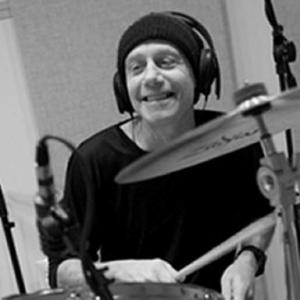
The author with Billy Cobham, autumn 2000

Many happy returns to Mr Cobham who turned 80 this week. His drum mastery continues to inspire.

Movingtheriver pretty much learnt to drum by listening to Mr Cobham’s Spectrum, David Sanborn’s (RIP) Hideaway, Steely Dan’s Aja and a few more. His playing was sheer class, something to aim for. There was always an emphasis on technical excellence and good tuning – but the most important thing was the music, the groove.

I was fortunate enough to study with Mr Cobham at the Guildhall School of Music circa 2000. Unforgettable memories.

To celebrate his 80th birthday, here are five key moments from his 1980s. The early part of the decade saw Mr Cobham forge a new life in Switzerland, whilst fronting various bands featuring the likes of Mike Stern, Don Grolnick and Gil Goldstein. Then came the short-lived, controversial tenure in John McLaughlin’s revamped Mahavishnu Orchestra (explored in my book) which nonetheless produced some great music, and then a high-profile return to the solo career via Dave Grusin and Larry Rosen’s GRP Records.

5. Drum Clinic (Part 6), BBC TV, 1982 (?)
Here’s where it all started for movingtheriver. My dad caught it totally by chance on BBC2 and luckily recorded it onto a VHS. It blew the minds of many British drummers including Level 42’s Phil Gould who was reportedly present at the filming.

4. Billy Cobham/Herbie Hancock/Ron Carter: ‘Eye Of The Hurricane’, Lugano, Switzerland, 1983
A period when Billy embarked on various brilliant European collaborations. Still one of the most exciting, propulsive trios I’ve ever heard in acoustic jazz.

3. ‘The Dancer’ (1985)
If memory serves, I was given Mr Cobham’s Warning for my 13th birthday, alongside Joni Mitchell’s Dog Eat Dog and Steely Dan’s The Royal Scam. What a day that was. I still love this album and am glad I kept the vinyl.

2. ‘The Debate’ (1986)
Warning’s followup Power Play didn’t quite have the impact of his GRP debut but Billy’s drums have arguably never been better recorded.

1. Live In Cannes (1989)
A recent find this, worth watching for a rare look at Billy playing timbales (during the first song) and also his fine hookup with percussionist Nippy Noya.

Book Review: Absolute Beginner by Kevin Armstrong

Most fans of 1980s pop and rock will have come across the name Kevin Armstrong, guitarist with Iggy Pop, Morrissey, Sinead O’Connor, John Lydon, Propaganda, Tin Machine, Prefab Sprout, Thomas Dolby and Paul McCartney, and famously part of David Bowie’s band at Live Aid.

His enjoyable new memoir ‘Absolute Beginner’ is that rare thing – a book by a British session player who has borne witness to massive egos, occasional artistic triumphs and typical music biz disappointments, all the while trying to get a reasonable guitar sound.

But the book is anything but a polite/completist career overview – Armstrong knows where the bodies are buried and doesn’t hold back on salacious details. He’s also blatantly honest about his own perceived musical shortcomings and mental health issues.

Finally the book comes over as something like a cross between Giles Smith’s ‘Lost In Music’ and Guy Pratt’s ‘My Bass And Other Animals’, with just as many laughs as both.

We learn about his misspent youth in the relatively salubrious environs of Orpington, Kent, nurturing his increasing interest in the guitar and music of David Bowie, Yes, Zappa and Roxy Music (and ponders whether Eno’s squealing synths caused him some hearing loss issues when watching Roxy supporting Alice Cooper). There are superb passages about the power of listening to a great album while studying the sleeve and indulging in ‘mild hallucinogens’.

The punk era sees Armstrong squatting in Brixton, hanging out with The Slits and recording with Local Heroes (on Charlie Gillett’s record label) and The Passions. There’s a whole chapter on collaborating with Thomas Dolby, lots on laying down Steve McQueen with Prefab (fronted by the ‘emotionally fragile’ and ‘shy’ Paddy McAloon) and some hilarious stories about playing in Jonathan Ross’s house band for ‘The Last Resort’.

But the real meat and drink of the book is the fabulous section on Live Aid, particularly illuminating the strange realities of the music industry when he returns alone to his tiny West London flat soon after performing for two billion people. There are also fascinating, funny stories about recording ‘Absolute Beginners’ and ‘Dancing In The Street’.

His dealings with Bowie during the Tin Machine era are also as intriguing as you might expect (as is his story about being ‘let go’ before the release of that band’s debut album, also nixing the rumour that Bowie gave up booze a long time before 1989…), as are those with the mercurial McCartney, the superstitious, over-sensitive Morrissey and bizarre O’Connor.

There are many revelations too around touring with Iggy Pop, as well as some refreshingly honest opinions on some of his bandmates (especially – and surprisingly – drummer Gavin Harrison…) and a fascinating detour into joining a choir led by Eno.

But Armstrong saves most of his bile for his late entrée into the world of TV advertising: ‘Blind optimism and over-confidence drew me inexorably into the seedy and frightening world of production music…a world so steeped in bullshit and doublethink that it beggars belief’!

‘Absolute Beginner’ is one of the most enjoyable music memoirs movingtheriver has read over the last few years. Just when you think you know where it’s going, it delivers yet another zinger. It’s an absolute must for any fans of Bowie, Iggy, Dolby or Prefab, while offering the casual 1980s and 1990s music fan loads of tasty morsels.

The Blue Nile: A Walk Across The Rooftops 40 Years Old Today

‘Every record should be compared to silence. Silence is perfect. What are you going to put on it?’
Paul Buchanan, 1984

The Blue Nile’s debut album A Walk Across The Rooftops – released 40 years ago today – embraced silence. The first minute of the title track was a case in point. Buyers all over the UK were wondering if their tapes and records were faulty.

In a superb year for debut albums, the Scottish trio stole a march on David Sylvian, beating his Brilliant Trees by two months, though Scott Walker was first out of the traps with Climate Of Hunter. Both Sylvian and Walker reportedly adored A Walk, as did Peter Gabriel and Brian Eno.

The album has a funny/weird backstory involving the Bee Gees, Krankees and Spice Girls, well worth checking out. But how does my original Linn/Virgin CD (catalogue number LKHCD1) sound 40 years on? Fantastic. Seldom have acoustic drums and pianos been better recorded, the songwriting is solid and every electronic noise has its place.

‘Tinseltown In The Rain’ and ‘Heatwave’ would make for superb hi-fi testers. Buchanan’s voice is original and affecting. Lyrically, his speciality seems to be life-changing realisations in ordinary settings. The title track, for instance, was reportedly inspired by the view outside his Edinburgh kitchen window.

A Walk only got to #80 in the UK on release but became a formidable sleeper hit and has apparently sold way beyond the band’s wildest expectations. They waited five years to release followup Hats, an album many rate as superior to A Walk. Not this writer though. A great debut album in a decade full of them.

Michael Hedges: Aerial Boundaries @ 40

Alternate guitar tunings were nothing new in 1984. Many flamenco and folk guitarists deviated from the standard EADGBE, and of course John Martyn and Joni Mitchell were innovators whose own ingenious tunings aided their compositions.

But when Sacramento-born guitarist Michael Hedges recorded the title track from his album Aerial Boundaries – released 40 years ago this weekend – he created something new under the sun.

For a start, it’s remarkable that all of this sound came from one guitarist – no overdubs. He used hammer-ons, pull-offs, tapping (often ‘clawed’ or barred with one finger), finger-picking and harmonics to build up layers of counterpoint. The independence of limb is pretty staggering. This guy must have been a great drummer. And all performed on a bog-standard steel-string acoustic guitar (reportedly with heavy strings and a very high action).

Other contemporary guitarists like Stanley Jordan and David Torn used tapping and hammering-on to a great extent too but arguably never to the smooth, rolling, melodic effect that Hedges achieves.

‘Aerial Boundaries’ is certainly a jewel in the Windham Hill Records’ crown, and sounds completely unlike any of the label’s other solo guitarists. Hedges called it a ‘systems’ piece, a la Steve Reich, Philip Glass etc. The tuning is CC(an octave higher)DGAD but he pretty much used a different one for every composition. Most guitarists try a common alternate tuning and then noodle around until they find something interesting. Not Hedges. It seems the music came first, then the tuning.

It’s a real challenge to play and has inspired many YouTube cover versions – this guy has nailed it. Hedges made it look ridiculously easy when he played it live and sometimes even added in a riff or two from Iron Butterfly’s ‘In-A-Gadda-Da-Vida’.

Hedges’ music is frequently described as ‘new age’ but he was actually a big Prince and Genesis fan who died in a car crash in 1997 at the age of just 43. Arguably he never topped ‘Aerial Boundaries’. Happy 40th birthday to a solo guitar masterpiece.

‘Top Gun’ And 33 Other ‘Classic’ 1980s Movies I’ve Never Seen

Which ‘non-classic’ 1980s movies are virtually impossible to switch off when they come onto the TV late at night, no matter how many times one has seen them?

In my case, it’s stuff like ‘Desperately Seeking Susan’, ‘Barfly’, ‘Innerspace’, ‘Hollywood Shuffle’, ‘The Man With Two Brains’, ‘Christine’, ‘Evil Dead II’, ‘Clockwise’, ‘Fletch Lives’, ‘Uncle Buck’, ‘Caddyshack’, ‘Class’, ‘The Sure Thing’, ‘Alligator’, ‘St. Elmo’s Fire’ etc. etc. – the list goes on and on.

But then there are the ‘classic’ 1980s movies which leave this writer totally cold. Most of the below are either multi-award-winners, critically-acclaimed cult favourites and/or films that made a huge splash in popular culture, but are hitherto completely unwatched in their entirety by movingtheriver, either by accident or design. I generally didn’t fancy seeing them during my teens, and the clips I’ve seen since haven’t changed my mind…

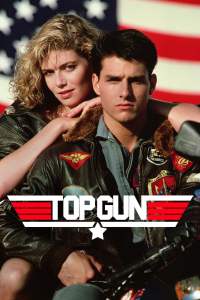
34. Top Gun (1986)
Smug, young Cruise is too much for this writer – see also ‘Risky Business’ – but that changed with ‘Rain Man’.

33. Reds (1981)

32. Arthur (1981)

31. Another Country (1984)

30. Porky’s (1982)

29. Woman On The Verge Of A Nervous Breakdown (1988)

28. My Beautiful Launderette (1985)

27. Mona Lisa (1986)

26. Dirty Dancing (1987)

25. The Mission (1986)

24. Beverly Hills Cop (1985)
I’m a big Eddie fan, but somehow haven’t been snared by the supporting cast/set-up of this.

22/23. First Blood (1982)/Rambo First Blood Part II (1985)

21. Splash (1983)

20. Repo Man (1984)
Emilio Estevez was part of a great ensemble cast in ‘St. Elmo’s Fire’ and ‘The Breakfast Club’, but carrying a whole movie?

19. Sophie’s Choice (1982)
Forever tarnished by Joan Smith’s takedown in her classic book ‘Misogynies’.

18. Wall Street (1987)

17. Platoon (1986)

16. The Lost Boys (1987)
Kiefer Sutherland directed by Joel Schumacher? No thanks… Great theme song by Gerald McMann though.

15. The Karate Kid (1987)

14. Ordinary People (1980)
Or ‘Ordinary Peepholes’, as memorably renamed in ‘The Fisher King’.

13. On Golden Pond (1980)

12. Stranger Than Paradise (1984)
Have never really got the Jim Jarmusch ‘thing’…

11. Wings Of Desire (1987)

10. The Last Emperor (1988)

9. Pauline At The Beach (1983)

8. River’s Edge (1986)

7. Gandhi (1982)

6. Out Of Africa (1985)

5. Driving Miss Daisy (1989)

4. Kiss Of The Spiderwoman (1985)

3. Mississippi Burning (1988)

2. Paris, Texas (1985)

1. Room With A View (1985)

(Postscript. The ‘classic’ 1980s films I do wanna see, but have somehow managed thus far to miss: My Dinner With Andre, Salvador, My Favourite Year, The Coal Miner’s Daughter, Silkwood, The Year Of Living Dangerously, Once Upon A Time In America…)

Michael McDonald: Sweet Freedom (Extended)

It’s always a nice surprise when a classic 1980s track suddenly appears on streaming services out of the blue.

Michael McDonald’s ‘Sweet Freedom’, written by Rod Temperton and co-produced by Temperton, Bruce Swedien and Dick Rudolph, is one such single, but the only version currently available is the superb seven-minute extended mix.

It was a good period for McDonald (weird that he wasn’t involved with ‘We Are The World’?). Despite a now-very-dated 1985 album No Lookin’ Back, he had recorded fine duets with James Ingram, Patti Labelle and Joni Mitchell.

As for Temperton, hot off the back of Thriller he had worked on Steven Spielberg’s ‘The Color Purple’ soundtrack, then ‘Running Scared’, nowadays a pretty-much-forgotten Billy Crystal/Gregory Hines vehicle. Recorded at Westlake in Los Angeles, where most of Thriller was laid down, ‘Sweet Freedom’ was the movie’s key song and arguably Temperton’s final masterpiece. The verses owe a little to Lionel Richie’s ‘All Night Long’ and Temperton finally gets his ‘starlight’ motif into the middle eight (‘Starlight’ was an early title for the song ‘Thriller’).

The extended version is a brilliant little pop/soul symphony, with every performer getting a feature. Greg Phillinganes adds his special sauce on keys and there are some beautiful backing vocals from Siedah Garrett. The horn section (Bill Reichenbach, Chuck Findley, Jerry Hey, Larry Williams) contribute brief solos as does guitarist Paul Jackson Jr.

It would have been nice to have heard a real rhythm section (JR Robinson and Nathan East?) let loose on this but no matter. And people who say McDonald isn’t a soulful singer need to hear his performance in the second half of this extended version.

Released in June 1986, ‘Sweet Freedom’ reached #7 in the US and #12 in the UK.

Yngwie J Malmsteen: Rising Force 40 Years On

When movingtheriver started playing guitar and buying muso magazines in the late 1980s, the name Yngwie J Malmsteen seemed to inspire awe throughout the whole ‘scene’.

But there was no way you could just happen upon Malmsteen’s music in the UK unless you listened to ‘The Friday Rock Show’ with Tommy Vance.

Then my interest was piqued again when It Bites’ Francis Dunnery mentioned him in a Guitarist magazine interview from October 1989. Almost immediately after that I found Malmsteen’s debut solo album Rising Force – released 40 years ago this month – in a bargain bin at the Richmond Our Price.

You could make an argument that the Swede – born Lars Lannerback! – was THE rock guitarist of the 1980s, having as much of an impact as Eddie Van Halen did five years before. Rising Force was a perfect bridge between the UK, Genesis and Yes albums I was investigating and the heavier influences coming in from Steve Vai and Van Halen.

But, as with any freaky guitar virtuoso, the main issue was finding the right musical context. Rising Force has its duff songs (though always with brilliant guitar playing) but delivers two of the most stunning instrumentals in rock history, ‘Black Star’ and ‘Icarus Dream Suite Op.4’. And to think he was just 20 when he recorded them.

With Malmsteen’s scalloped Strat and nods to Paganini, Bach, Albinoni and Mozart, he achieved (and achieves) a remarkable control of vibrato, both via fingers and whammy bar – demonstrating possibly influences from Allan Holdsworth and Al Di Meola at this early stage – and superb tone, plus a mastery of those baroque passing chords.

I saw Yngwie live once at The Marquee on Charing Cross Road on 11 June 1994. It was thrilling seeing him at such close quarters but I kept wanting the singer to shut up. Eventually said vocalist got into a spat with someone at the front and smashed the mic stand down on his head.

Yngwie then set his Strat alight, kicked it to pieces and chucked the neck towards the sound desk, just missing my head and landing about 15 feet away. The venue was evacuated, and as we chatted nervously outside, a laughing kid ran past brandishing the smoking neck. Wonder where it/he is now.

I no longer have the CD of Rising Force for some reason – wish I had held onto it because the album is not on any streaming platforms at the time of writing. Malmsteen’s career continues at great pace – he’s just played two gigs in London and done a great interview with Rick Beato.

And for those who like reaction videos, The Daily Doug has put together a neat musical analysis of ‘Icarus Dream Suite’ here.

Book Review: Withnail & I (From Cult To Classic) by Toby Benjamin

The ‘Withnail’ cult shows no sign of waning. Writer/director of the 1987 movie Bruce Robinson spent some of lockdown discussing the film while co-star Richard E Grant posted regular line-readings on social media. And now there’s news of a long-awaited, Robinson-endorsed stage play.

So Toby Benjamin’s excellent ‘From Cult To Classic’ seems to have arrived at the perfect time. Authorised by Robinson and written with his full co-operation, it assembles a veritable cornucopia of ‘Withnail’ info.

The brilliantly blunt Robinson foreword almost had movingtheriver punching the air with excitement. Elsewhere letters from his personal collection show correspondence around the film’s financing and script editing. There are anotated script pages, detailed location administration and premiere tickets. We even see Robinson’s London to Cumbria train tickets for the shoot. Richard Curtis and Richard E also donate personal letters.

There are brilliant on-set photos, many by official snapper Murray Close, some donated by Robinson and the cast (including a great one of a clearly mullered Ringo Starr). All the main cast members give long, interesting interviews, as do many key bit-part players (The Irishman, the ‘Get in the back of the van!’ cop, Farmer Parkin) and the hairdresser, stills photographer, makeup artist, cinematographer, production manager, costume designer and soundtrack composers Rick Wentworth and David Dundas. We even hear from the owner of Crow Crag (Sleddale Hall).

There are a few minor quibbles – the book is dotted with ‘celebrity’ endorsements of the film but you’d be hard pressed to recognise any of them, outside of Matt Johnson, Charlie Higson and Diane Morgan, and no biographies are provided. Also the book’s ‘distressed’ interior design will probably divide opinion.

But if you’ve seen ‘Withnail’ more than once, you have to have this book. Absolutely unreservedly recommended to scrubbers and terrible c*nts everywhere.

The Samantha Fox/Mick Fleetwood BRIT Awards Fiasco: 35 Years On

Memorable for all the wrong reasons, the 1989 BRIT awards, broadcast live 35 years ago this month, has long gone down as one of the most shambolic, embarrassing  TV shows ever.

It took place at the Royal Albert Hall during the Jason/Kylie/Rick Astley/Brother Beyond/Bros-inspired pop peak of the late 1980s, less than six months after the first Smash Hits Poll Winners Party at the same venue. Madchester was just around the corner but it seemed like another world.

Cool Britannia this wasn’t. Firstly, there was the the two presenters (wasn’t Phillip Schofield available?). Apart from anything else, Fox is 5’1” and Mick 6’6”. Then there was their extremely unnatural, awkward presentation styles, though, to this day, Fox swears that the autocue was broken.

Various bad-tempered Stones came and went, Boy George was introduced as The Four Tops, Tina Turner and Annie Lennox looked desperately awkward, other ‘dignitaries’ were wheeled out and MPs were booed.

Rounding things off perfectly, Cliff Richard was then given a Lifetime Achievement Award and delivered a brilliantly sniffy speech for the plebs. All in all, it’s no surprise that this was the last time the BRITS went out live on TV for 18 years…


Arvo Pärt: Tractus (2023)

Can music bring about social change, get people to put down their guns, retire their drones? Can ‘religious’ music affect the atheist/agnostic as powerfully as it affects the ‘believer’?

Ted Gioia may have some answers but in the meantime the Estonian composer Arvo Pärt has been making special music for decades.

His work was particularly revered in the 1980s as ambient/minimalism gained a bigger following than ever before, his ‘Fratres’ becoming a classic, performed by everything from a string quartet to cello octet and featuring on countless movie soundtracks.

Pärt’s mesmerising new ECM New Series album Tractus – probably movingtheriver’s album of 2023 – was recorded during September 2022 in Tallinn’s Methodist Church. It features music written between 1988 and 2019 for string orchestra, soprano voice, choir, piano and assorted percussion.

The title refers to a series of theological writings published between 1833 and 1845 by
English cardinal John Henry Newman, and also an ancient form of singing first noted as early as the third century AD. There are other historical precedents to both the title and compositional style, outlined in great detail within the CD’s liner notes.

Sadly the people who should listen to Tractus will probably never get to hear it.