Angel Heart (1987): The Motion Picture Soundtrack

Which 1980s movies have soundtracks that are better than the film? ‘Diva’? ‘Betty Blue’? ‘Risky Business’? ‘Blade Runner’? ‘The Hitcher’? ‘Blow Out’? ‘Friday 13th Part III’? ‘Absolute Beginners’?

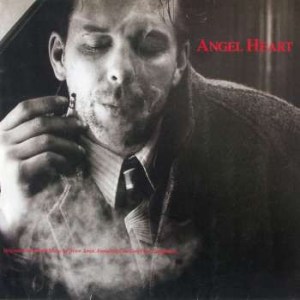
You could probably raise an argument for Alan Parker’s 1987 neo-noir/horror ‘Angel Heart’ too. The baffling but intermittently excellent – mainly due to Mickey Rourke’s star turn – movie was scored by South African keyboardist Trevor Jones who had worked on ‘Excalibur’, ‘Runaway Train’ and ‘Labyrinth’ before getting the nod from Parker.

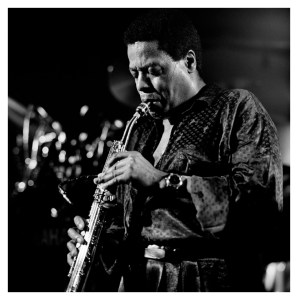
He puts together a jazzy, menacing, enticing original soundtrack featuring brooding synths, sampled vibraphone, acoustic bass and horns, plus some muscular blowing from tenor saxophonist Courtney Pine. Jones’s original music for ‘Angel Heart’ was also very influential, reverberating through the erotic thriller and neo-noir genres of the late 1980s and 1990s.

But it’s the official soundtrack album, released on Antilles/New Directions via Island, that really pulls out all the stops. It’s beautifully compiled, a hallucinatory, engaging 40 minutes of music with ingenious cross-fades and key dialogue lines sprinkled in, many of which still raise a smile (‘I got a thing about chickens…’).

The album is fleshed out with some great deep blues and gospel from LaVern Baker, Bessie Smith and Brownie McGhee, while Glen Gray’s chillingly effective crooner classic ‘Girl Of My Dreams’ (alluded to many times by Pine during his solos) nods to the use of similar in Stanley Kubrick’s ‘The Shining’.

Jones reunited with Parker for the following year’s ‘Mississippi Burning’, then worked on the Al Pacino vehicle ‘Sea Of Love’, and his last notable major film seems to have been Michael Mann’s ‘Last Of The Mohicans’. But what a shame this superb soundtrack album is not in full on streaming platforms (but is available from Discogs). Glad I kept hold of my cassette…

Women In Revolt (Art And Activism In The UK 1970-1990) @ Tate Britain

Behind the shiny, fun, tabloid version of the 1980s, there was an undercurrent of protest, upheaval and misogyny.

In the latter camp, how about the following astonishing UK laws still enshrined at the dawn of the decade: men had a right to have sex with their wives without consent. Welfare benefits were paid to married women via their husbands.

A fascinating new exhibition at London’s Tate Britain investigates the woman artists and activists whose work was a reaction to these and other issues. There’s a strong presence for punk, post-punk and industrial musicians: Gina Birch of The Raincoats, Throbbing Gristle’s Cosey Fanni Tutti and Poly Styrene of X-Ray Spex. We see fanzines, posters, gig excerpts.

There’s groundbreaking video art – Vivienne Dick’s ‘Two Little Pigeons’ and Birch’s scream are particularly memorable. We see banners, collages, sculptures and newsletters produced by the women who marched from Cardiff to Greenham Common in September 1981, challenging the decision to house 96 nuclear missiles on the site.

There’s a focus on the British Black Arts Movement, a group of artists who gathered in the wake of various uprisings in the early 1980s, from Toxteth to Brixton, and also Four Indian Women Artists, the first UK exhibition organised by and exclusively featuring women of colour.

Margaret Thatcher cut arts funding drastically in the mid-’80s, a decision which ushered in corporate sponsorship and prompted a backlash from many woman artists who began to show their work in local spaces, community centres, libraries, cafes and homes. We see much of this material and learn about its contexts.

And then of course there are the famous sexist advertising billboards, wittily defaced.

The exhibition constantly undermines Thatcher’s comment to Woman’s Own magazine in 1987 that ‘there’s no such thing as society’. And there’s a surprise around every corner. It’s moving, amusing, disturbing and educational in equal measures, and a reminder that protest and assemblage can create change. But the exhibition is also very large and probably takes two visits to really appreciate.

Women In Revolt! runs at the Tate Britain until 7 April 2024. A new podcast interviews some of the key artists.

Agnetha Faltskog: The Heat Is On

One of the many pleasures of listening to the Forgotten 80s radio show is hearing a hit of which you have absolutely no memory whatsoever.

A classic example came on the air a few weekends ago. The intro featured a ramshackle, lumbering, almost-reggae groove with party voices, sleazy horns and a good bass player (revealed when listening on a decent system, but it’s almost impossible to find out which musicians played on the single) before a strident, excellent, slightly familiar voice took centre stage.

Eddi Reader? Basia? Debbie Harry? Lene Lovich? Wrong, wrong, wrong, wrong. I was gobsmacked to hear that it was actually the first solo single by Agnetha Faltskog of ABBA, released just over 40 years ago (her bandmate Frida had just had her own hit, ‘I Know There’s Something’s Going On’, produced by Phil Collins).

‘The Heat Is On’ got to #1 in Sweden, Denmark, Norway, Finland, and Belgium, #2 in The Netherlands and Germany, #29 in the USA and #35 in the UK.

The incredibly catchy number turns out to be a cover of a 1979 near-hit by Australian singer Noosha Fox. Written by Florrie Palmer and Tony Ashton, it was also massacred by Manfred Mann’s Earth Band in 1980 in a truly screwed up version retitled ‘On The Run’.

But back to Agnetha. Her version of ‘The Heat Is On’ was produced by Mike Chapman, on a particularly hot streak in early 1983 having just helmed Blondie’s biggest albums and Altered Images’ classic single ‘Don’t Talk To Me About Love’.

Faltskog’s accompanying album Wrap Your Arms Around Me is not so great but has apparently sold approximately 1.5 million copies worldwide to date (her second solo album, 1985’s Eyes Of A Woman, was produced by 10cc’s Eric Stewart). She has also been the subject of a BBC Four documentary (a dubious honour?) in the UK.

Now, got to get this damn song out of my head – almost an impossible task once heard a few times…

Movie Review: Killers Of The Flower Moon (2023)

Based on David Grann’s non-fiction book about series of mysterious deaths among the Osage Native American tribe in 1920s Oklahoma, Martin Scorsese’s new three-and-a-half hour movie is currently in the middle of a brief cinema run before showing on Paramount + (who also co-financed alongside Apple TV).

A new Scorsese movie is always an event. Co-starring Leonard DiCaprio, Robert De Niro and Lily Gladstone, ‘Killers Of The Flower Moon’ is another epic ‘creation of modern America’ movie, the flipside of ‘Goodfellas’, ‘Casino’, ‘The Irishman’, ‘Once Upon A Time In America’ and ‘The Godfather’, whilst also nodding to the oil boom of the 1920s and development of the FBI (‘Killers’ was reportedly reformatted during the Covid era to focus less on the FBI and more on the Osage).

The first thing to address is the giant running time. It’s quite extraordinary – and sometimes quite a challenge – watching a three-and-a-half-hour movie in 2023. And if, at times, it feels very much like an elongated TV show, its huge budget is all up there on the screen, with peerless attention to detail, meticulous mise en scene and truly hefty star performances.

You’re in the hands of a master, though Scorsese fans wanting elaborate camera movements and zippy set pieces will be disappointed – this is a sober, slow film, gaining its power from an accumulation of moods and images.

But ‘Killers’ is a true story of such simple, unremitting horror that you may also question why you are sitting so passively watching an exceptionally unpleasant, shameful episode in American history – all very apt in a long, non-fiction book or article, less so in a feature film of such extreme length.

One generally wants to look away from the casual, regular violence, unpleasantly forensic detail and focus on sometimes passive, unwell women. There’s exposure of intense anxiety and physical threat to child actors. There are also many longeurs, often undercut by Robbie Robertson’s pretty much wall-to-wall music (influenced by Kubrick’s ‘Barry Lyndon’ and ‘The Shining’?) with occasional Daniel Lanois-esque ‘funky’ breakdowns and slightly disconcerting inserts of blues and bluegrass.

But it’s the performances that linger longest in the mind after viewing. It’s thrilling watching intimate ‘behaviour’, as per Scorsese’s assessment of Marlon Brando in ‘On The Waterfront’, played out in the midst of such an epic, sprawling movie.

There are two key De Niro/DiCaprio stand-offs – it’s an absolute treat to see these two actors sparring on the big screen at such close quarters (and remember De Niro gave Leo his first big break in ‘This Boy’s Life’).

For his part, DiCaprio channels Brando, jutting out his bottom jaw, desperate to dial down the joie de vivre, excellently portraying a weak man who just wants to be left alone to enjoy money and gambling but is drawn into evil deeds. De Niro, in the meantime, seems to channel Trump. Gladstone burns very brightly during the first hour of the picture but fades fast, through no fault of her own, despite regrouping for a powerful final scene with DiCaprio.

There are shades of ‘Goodfellas’ and ‘The King Of Comedy’ in the film’s finale which summarises the hideous plot via a trite, ‘comic’ supper-theatre show, enjoyed by a middle-class audience and featuring a weird, uncharacteristically emotional cameo from the director.

So ‘Killers’ is not exactly Marty’s ‘Heaven’s Gate’ but a disappointment after ‘The Irishman’. Movingtheriver would put it alongside ‘Gangs Of New York’, ‘The Aviator’ and a few others in the ‘heroic failures’ camp. But is it worth seeing on the big screen? Of course. And Scorsese turns 81 on 17 November.

Level 42: Rockpalast 40 Years On

It’s not surprising that a lot of Level 42 fans cite 1983 as the peak of the band’s career.

Messrs. King, Lindup, Gould and Gould had just released their first UK top 10 album Standing In The Light (and arguably their greatest single ‘The Sun Goes Down’) but were still very much holding on to their jazz/funk/rock roots, despite Polydor Records wanting more hits and less instrumentals.

The band were also still very much an in-your-face live act in 1983, a year off adding sequencers, drum machines and a much more commercial sheen to their sound. They toured Standing extensively during the autumn, including a dynamite show filmed 40 years ago today in Bochum, Germany, recently released on DVD.

It’s Exhibit A for those who love the early days of the band. And, for Level fans like movingtheriver who only came onboard around 1985, discovering the broadcast was gold dust. Also it’s not every day you see a bass player laying down deliciously funky lines while dancing like Max Wall (at around 4:30 below) and telling the fans to ‘Clap, you sods!’.

It’s interesting though that Mark King himself to this day strongly questions the live potency of the band during this era. In the March 1992 issue of Bass Player magazine, he came out with all guns blazing, discussing their November 1983 ‘Whistle Test On The Road’ appearance at the Brixton Ace (now the Academy):

‘I dug up an old one of us doing a live BBC programme… I thought, “Oh yeah, they were the good old days”. So I put on the video – and it was crap. The audience were fine, the lights were fine, the sound was fine. The band was crap. It was just so unsure, so uncertain…’

So which Level do you prefer? The choice is yours… In any case, it’s exciting to report that they’re currently in the middle of a UK tour celebrating 40 years of ‘The Sun Goes Down’.

Further reading: ‘Level 42: Every Album, Every Song’.

Book Review: The Extraordinary Journey Of Jason Miles (A Musical Biography)

Surprisingly few musical memoirs take the reader right into the recording studios of the 1980s and 1990s, documenting what actually went down during the making of some classic albums.

In his enjoyable new book, Jason Miles – synth player/programmer for Miles Davis, Whitney Houston, Luther Vandross, Roberta Flack, David Sanborn, Diana Ross, George Benson, Will Downing, Marcus Miller, Chaka Khan, Scritti Politti and The Brecker Brothers – does just that, in the process outlining the joys and sorrows of the American music business in its money-drenched pomp.

‘The Extraordinary Journey Of Jason Miles’ traces the author’s young life as a teenage Brooklyn jazz fanatic to becoming a first-call studio sessionman for some of the biggest artists on the planet. The book is also notable for outlining the considerable pressures – and potential threats to one’s mental health – of coming up with the goods and harnessing the ever-evolving music technology when time is money.

There’s a memorably tense episode when things go very wrong on a Vandross session and an unsparingly honest view of putting together his Miles Davis-celebrating Kind Of New project with trumpeter Ingrid Jensen. Jason also outlines his struggles bringing award-winning tributes to the music of Grover Washington Jr., Ivan Lins, Weather Report and Marvin Gaye to life.

Printing problems bring about a few curious errors/typos but the book is an absolutely key text for Miles Davis fans, a fast-paced, brave, uncompromising read also featuring some superb photographs. There are also intriguing, fond portraits of musicians such as Bernie Worrell, Lenny White, Marcus Miller and Joe Sample.

Also it strikes movingtheriver that we don’t have much first-person documentation of great 1980s and 1990s Black music – ‘The Extraordinary Journey Of Jason Miles’ corrects that, and sheds more light on who actually played what on Tutu and Amandla, though sadly my favourite ‘80s Davis (and Miller) album Siesta barely gets a mention (Jason tells movingtheriver he will write about it in his second book, coming soon).

(Postscript – One of Jason’s gripes is the lack of credit he has received through his career – sure enough, my remastered CD copy of Davis’s Amandla only gives him a sole credit, on the classic track ‘Mr Pastorius’… But Jason assures movingtheriver that Warners has made corrections to more recent versions of the album).


Keith Floyd: The Man On The Telly

What a treat to see that Freeview channel London Live seems to be re-running Keith Floyd’s classic BBC films of the 1980s.

There had been others before him but Floyd is generally regarded as the original modern TV chef. He’s certainly the only one I can watch, though probably wouldn’t be let within a mile of a television studio these days.

But who was this charismatic, erudite, passionate, well-spoken, Withnailesque bloke gently joshing the cameraman (the long-suffering Clive – ‘Stay where you are, old bean!’) and director (David Pritchard), all the while quoting poetry and chucking down the red wine?

He had a colourful past. Floyd was born at his family farm near Reading in 1943 into distinctly less-than-well-off circumstances. He developed a passion for picking fruit and vegetables and attended Wellington School (at the same time as Jeffrey Archer) but left at 16 to develop his writing skills alongside Tom Stoppard at the Bristol Evening News.

Then, on a whim, after seeing the Michael Caine movie ‘Zulu’, he joined the Army. He moved into catering work at the BBC before opening his own successful restaurant in Bristol, where he’d mill around amongst the clientele, reciting First World War poetry and Bob Dylan lyrics.

BBC producer David Pritchard observed Floyd there in 1983 and offered him a TV gig. The rest is history. First there was ‘Floyd On Fish’, then ‘Floyd On France’ and a selection of well-regarded films and series, all shot on film and still looking sumptuous today. Don’t watch if you are hungry…

Floyd was married and divorced four times and fleeced by the vicious British tabloid press of the late 1980s. It’s not surprising he fell out of love with the TV game, outlined in hilarious detail in Tom Hibbert’s ‘Who The Hell’ interview for Q magazine:

‘Celebrity? It’s a heap of sh*t! You get frightened to go out. People you’d like to speak to don’t speak to you because they’re too polite. People you don’t want to speak to hound you to death. Everyone thinks you’re incredibly rich when you’re not. No-one believes you if you say you’re lonely or depressed because…you’re The Man On The Telly.’

Floyd even made a single with The Stranglers’ Hugh Cornwell called ‘Give Geese A Chance’ (apparently no-no’d by Yoko Ono…), with Fuzzbox guesting on the B-side. Between 1989 and 1996, he also ran his own gastropub/B&B – The Maltsters Arms in Devon – still going strong today.

Floyd was probably not an easy man to get along with, and Keith Allen’s excellent TV doc – made just before his death in 2009 – shows the effect his drinking had on lovely daughter Poppy. But in terms of the idiot box, he was a breath of fresh air. And in these nannying, oversensitive days, his brutal honesty, erudition and unabashed debauchery are a delight.

Jean-Michel Jarre: Destination Docklands @ 35

35 years ago this weekend, French synth pioneer Jean-Michel Jarre played two concerts in an area of East London known as Docklands, next to the River Thames.

Destination Docklands took place in October 1988 on a huge, somewhat dilapidated site known as the Royal Victoria Docks, the largest of the three Royal docks in the borough of Newham (the area was completely refurbished a few years later).

Both the Saturday and Sunday concerts were reportedly attended by 100,000 people. There were fireworks, lasers, choirs, dancers and a Hank Marvin guest spot. My dad spontaneously drove us out to Woolwich on the Saturday evening (quite a journey from South-West London) and unsuccessfully tried to get us in, though I distinctly remember the thrill of seeing the lasers and fireworks in the sky.

Brilliantly, the second night (beset by torrential rain and high winds) was filmed by Mike Mansfield, the director best known for his hilarious ‘Cue The Music’ clips on late-night ITV. His documentary makes for fascinating, funny viewing today, most of the (rather ‘eccentric’…) musicians having to be shadowed by umbrella-holding extras.

Jarre seems to enjoy it, though, quipping: ‘Frogs like rain!’ However it’s questionable how much of this music was played live, if any…

Did you go to either of the concerts? Let us know your memories below.

Little Feat: Let It Roll 35 Years On

If memory serves I was given the cassette of Little Feat’s Let It Roll for my 16th birthday.

I loved their cocktail of blues, acid-rock, funk, fusion, country, Cajun and Tex-Mex. And they – along with Steely Dan – seemed to represent everything exciting and glamorous about America to me, also introducing exotic-sounding place names like Georgia, Atlanta (!), Tupelo and Juarez.

A burgeoning drummer, I also particularly dug their skinsman Richie Hayward who belongs in the same bracket of 1970s groovemasters as James Gadson, Jeff Porcaro, Jim Keltner, Jim Gordon, Earl Young, Bernard Purdie et al.

I was excited to listen to Let It Roll – which recently turned 35 – after many years, so I looked for my old cassette. Gone. I must have got rid of it years ago. Why? All shall become clear…

Recorded at The Complex, the LA studio owned by EW&F’s Maurice White, it was the band’s comeback album, their first since the death of chief singer/songwriter/slide guitarist Lowell George in 1979.

Of course the absence of George is palpable. Despite new vocalist Craig Fuller’s vague similarity to George in both vocal and slide guitar departments, the days of lyrics like: ‘Onomatopoetry symmetry in motion/They heard about that girl across the ocean’ (‘Down Below The Borderline’) or ‘Heard you got an infection/Just before your lewd rejection’ (‘The Fan’) were long gone.

(According to Hayward, George’s musical influence was also palpable, regularly suggesting fill ideas and rhythms, and frequently telling the drummer that he played too many notes!) Fuller also brings more of a country influence to the band, and there’s less of the ‘white boy got the whoo-whoos!’ (Van Dyke Parks’ analysis of George’s vocal style).

But most of all Let It Roll is inconsistent both song and sound-wise. The good stuff first: opener ‘Hate To Lose Your Lovin’ is a passable pastiche of the classic Feat sound, Second-Line meets funky country, while ‘Cajun Girl’ and the title track are very catchy. ‘Business As Usual’ has a few intriguing harmonic moves and riffs.

Elsewhere there’s too much rather bland AOR, Bruce Hornsby and Steve Winwood apparently the touchstones. Most of the band’s kinks have been ironed out, though Hayward still sounds fantastic, inspired by his new drum hero Manu Katche. Let It Roll could have used some decent mastering too – the volume levels are all over the place.

Surprisingly, the album didn’t chart in the UK but was a very good seller in the US, making #36 on the Billboard Hot 100 and earning a gold disc (they followed it up with 1990’s Representing The Mambo, which I confess I’ve still never heard).

They played a triumphant gig at London’s Town & Country Club in December 1988 though, with special guest Bonnie Raitt on guitar and vocals, and I’m not sure why I wasn’t there. I had to wait until 11 September 2000 to see this brilliant band at the same venue. And, despite the loss of George, Hayward and guitarist Paul Barrere, they’re still an occasional live entity.

(If you’re not acquainted with the band, try Little Feat in their pomp on Feats Don’t Fail Me Now, The Last Record Album or Time Loves A Hero).

Mark Stewart (1960-2023)

‘I think a paranoid is someone who’s in possession of all the facts.’ Mark Stewart, 1996

In another terrible year for musician deaths, one of 2023’s most surprising and least welcome was the passing of post-punk pioneer Mark Stewart in April, of undisclosed causes.

Indeed it is almost uncanny, considering how full of life he seemed onstage last year during On-U Sound Records’ 40th anniversary rave-up at London’s Forum. And the fact that 2022 also saw one of his best ever collaborations, with KK Null.

His music and friendship helped pave the way for his Bristol mates Tricky, Gary Clail and Massive Attack, and his influence is detectable in such acts as Sleaford Mods and LCD Soundsystem.

I saw Mark live five or six times. His presentation was sometimes hilarious, sometimes disturbing, always thrilling. He would shamble onstage, often with a shopping bag of beers in tow, before exploding into action, a man with a lot on his mind. The fact that he was often playing with one of the slickest/funkiest American rhythm sections in history (Skip McDonald/Doug Wimbish/Keith LeBlanc) was a brilliant dichotomy.

He was interested in everything from the Dead Sea Scrolls to CIA Mind Control to the Gemstone Files and Operation Gladio. His thing was information – who controls it and how/why they conceal it.

The teenage, beanpole, 6’6” Mark – resplendent in zoot suit and brothel creepers – was a regular sight at clubs and gigs in mid-1970s Bristol as part of the Funk Army. After his first band The Pop Group split up, he pursued mad mash-ups of sound, sometimes using Walkmans to create his collages, plundering scary ‘50s sci-fi voices and even TV ads.

He gave good album title: Learning To Cope With Cowardice. As The Veneer Of Democracy Starts To Fade. He was never interested in slick, ‘funky’ beats – even his ‘band’ album, 1990’s Metatron, with Wimbish, McDonald and LeBlanc, is distinctly uneasy listening.

By 1996’s Control Data, the music world had finally caught up with him, the album’s mix of techno, dub and house more commercial than usual. But the extraordinary ‘Simulacra’, ‘Red Zone’ and ‘Digital Justice’ to this day sound unlike anything else. This trend continued through his occasional records of the noughties, particularly the excellent Edit (2009).

His vocals were generally low in the mix. You had to strain to hear his lyrics. Why? He claimed it was the influence of dub and funk. ‘So it’s not like making a f**king speech’, he told Simon Reynolds. But his words were often brilliant, as funny and peculiar as Mark E Smith or Morrissey. Check out ‘The Lunatics Have Taken Over The Asylum’, ‘Low Life, High Places’ or The Pop Group’s ‘Citizen Zombie’ (You’ve got that brainwashed look of an alien abductee/Maybe your mind has been wiped clean’).

Mark also made a lot of impact writing for other acts – Tackhead, Gary Clail, Living Colour (‘Sacred Ground’), Audio Active (‘Happy Shopper’). But I’ll always remember him passing the time of day with my brother in the audience immediately after the Forum gig last April. He always said his fans were just as interesting as the musicians onstage – another legacy of punk.

Farewell to a brilliant one-off.