Stanley Clarke: If This Bass Could Only Talk

stanley_clarke-1988-if_this_bass_could_only_talk

This album was a substantial breath of fresh air when it came out in 1988.

I remember walking into Our Price and hearing Wayne Shorter’s majestic soprano sax over some swooning chord changes and thinking: ‘What the hell is this?!’

It was a relief and total surprise when it turned out to be Stanley’s cover of Mingus’s ‘Goodbye Pork Pie Hat’ (and what a brave choice of track to play in the shop…).

It wasn’t just the Baby Boom rockers who struggled a bit during the 1980s. Stanley started the decade very well with Rocks Pebbles & Sand but then there were a few middling collaborations with George Duke and a very patchy run of albums: Let Me Know You, Time Exposure and Hideaway. 1985’s Find Out had some brilliant moments though.

But ITBCOT put Stanley back on the jazz map. Its full-on playing – with admittedly a few late-’80s production values in tow – brought to mind classic ’70s albums Journey To Love and School Days. Drum machines were out: drummers were back in (Ndugu Chancler, John Robinson, Gerry Brown and Stewart Copeland, all of whom play beautifully).

The album also emphasised how much of a singular voice Clarke had now developed on piccolo bass, as distinctive on his instrument as Parker, Miles, Monk or Rollins were on theirs.

‘Working Man’ is an update of ‘Lopsu Lu’ from Stanley’s classic first album and features some ridiculously brilliant soloing leaning very heavily towards John Coltrane’s ‘sheets of sound’ approach.

Gerry Brown stays toe-to-toe with Stanley, providing some spectacularly-unhinged drums, though maybe with a bit too much ’80s ‘gated’ snare for some ears.

My cassette copy of ITBCOT didn’t have any personnel listed on it, so when I first heard ‘Stories To Tell’ I didn’t realise I was getting my first exposure to the extraordinary guitar playing of Allan Holdsworth.

I’m very thankful that Stanley unleashed Holdsworth onto my sensibilities. He delivers some remarkably-fluid playing with a shrill, almost reedy tone. The first and last four bars of his solo are really special. Copeland plays superbly too, with more restraint than usual.

Freddie Hubbard shines on a fine cover of Janet Jackson/Jam and Lewis’s ‘Funny How Time Flies (When You’re Having Fun)’ while Stanley brings the funk with a great take-off of Zapp’s Roger Troutman on ‘I Want To Play For You’.

Elsewhere there are two fun but rather dispensable duets with tapdancer Gregory Hines but they don’t outstay their welcome. Finally, ‘Tradition’ may feature Stanley’s finest recorded playing bar none and highlights a strong John McLaughlin influence (via Coltrane, of course).

In a much-maligned genre of music, ’80s fusion, ITBCOT is a minor classic that deserves critical reappraisal. It also led to a really good period for Stanley – he joined Shorter in Lenny White’s short-lived but intriguing Manhattan Project, and also toured as part of a supergroup with Herbie Hancock, Shorter and Omar Hakim.

Stanley was back, back, back!
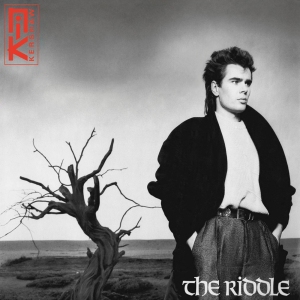
Nik Kershaw: The Riddle

the-riddle-54d854ab5fe83After several years playing guitar in cover bands and fronting East Anglia blue-eyed-soulsters Fusion, Nik Kershaw wrote a few poppy-sounding tracks and suddenly found himself thrust into the solo spotlight.

But he didn’t fool anyone with the snood, fingerless gloves and mullet – it was obvious from the get-go that Nik was a superb musician and songwriter. He had a voice a bit like Stevie Wonder (though my dad rightly identified something Numanoid too), played guitar a bit like Allan Holdsworth and wrote clever, catchy pop songs with prog, metal and funk undercurrents.

He also had some very famous fans in the US including Miles Davis and Herbie Hancock. But his image, dreamed up by some wags in MCA’s marketing department, probably didn’t do him any favours – Smash Hits summed it up perfectly, calling him ‘the thinking man’s Limahl’!

The Riddle is probably his best album. It was recorded pretty quickly to cash in on the unexpected success of his debut Human Racing, though featured a fair amount of post-production courtesy of the excellent Peter Collins who later produced Rush’s Power Windows and had previously worked on Musical Youth’s ‘Pass The Duchie’.

It features a very solid but expressive rhythm section (Elton John sticksman Charlie Morgan and ex-Secret Affair bassist Dennis Smith plus a great guest appearance from Level 42’s Mark King on ‘Easy’). Kershaw’s use of synths was kind of revolutionary, with intriguing sequencer patterns and subtle, almost subliminal pads. He also had invaluable input and some ZTT flash from keyboardist Andy ‘Relax’/’Two Tribes’ Richards throughout the album.

Yes, The Riddle screams the mid-1980s, but every song on it is memorable and has a very distinct flavour. On a songwriting level, Kershaw always knows how to keep things interesting for the listener. ‘Know How’ is a case in point – initially coming across somewhere between Level 42 and Talking Heads, it veers into prog territory with its superb pair of instrumental breakdowns.

Miles apparently recorded a cover of the very pretty ‘Wild Horses’ which has never seen the light of day. Hollywood-baiting ‘City Of Angels’ and eco-themed ‘Roses’ have more than a hint of Steely Dan about them, partly due to the use of the famous Purdie Shuffle, nicely reformatted by Morgan.

‘Wide Boy’ and ‘Don Quixote’ have lots of interesting melodic modulations under their pop sheen. ‘Easy’ is a brilliant band performance and crafty composition with a nutty middle eight, while the closing ballad ‘Save The Whale’ is also musically rich. And though the title track divides opinion, to say the least, check out its two-chords-per-bar middle-eight for a great example of Kershaw’s craft.

The cover photo was taken at Chesil Beach in Dorset. The Riddle peaked at #8 in the UK and went multi-platinum. The lead single was the title track which reached #3 in the UK. ‘Wide Boy’ peaked at #9, ‘Don Quixote’ #10. Three top 10 hits from a sophomore album – pretty damn good.

Nik was massive for approximately 18 months. He played Live Aid in July 1985 but then waited until autumn 1986 to follow up The Riddle – probably a mistake. The screaming girls were growing up fast or moving on to a-ha. He was developing as a musician and songwriter but gaining a much more ‘selective’ appeal, in the words of Spinal Tap’s manager Ian Faith.

Allan Holdsworth: Secrets

Allan_Holdsworth_-_1989_-_Secrets

Some time around the late ’80s, I became a bit disillusioned with the major UK music mags (but continued to love Q).

Their infinite search for ‘coolness’ coincided with my increasing interest in playing bass and guitar, so I started checking out American mags such as Musician, Guitar World and Guitar Player, as well as Guitarist here in the UK.

Their focus seemed to be on the mechanics of/intentions behind making music rather than puking in hotels or haircuts.

I think I first heard guitarist Allan Holdsworth’s name via a Guitar Player cover interview to promote his Secrets album. I hadn’t yet heard a note of his music but his intelligent, exceptionally modest (some would say mordant) approach to playing drew me in, as did his endorsement of sax players (Brecker, Coltrane, Parker) rather than the usual guitar influences.

Also he mentioned that he had been working with drummer Vinnie Colaiuta, another name that I had heard with relation to Frank Zappa but had never really properly investigated. By chance, I came upon Secrets a few months later in a bargain bucket. From the first bar of the opener ‘City Nights’ (a typically nimble salvo around the kit by Vinnie) I was blown away.

Holdsworth’s solo is burning, with loads of notes spraying out everywhere, but it’s also totally devoid of clichés. He repeats the trick all over Secrets, with Vinnie and bassist Jimmy Johnson cajoling him every step of the way.

It’s also refreshing to hear Allan blowing over lots of major chords in ‘Joshua’, the sort of tune which might be a bit soppy in the hands of Metheny or Abercrombie but is transformed into a stunningly fluent series of solos alongside Colaiuta’s brilliantly unhinged accompaniment.

‘Spokes’ is a nicely arranged vehicle for Allan’s nutty synthaxe playing (and some more Vinnie/Jimmy genius) and, on ‘Endomorph’, Holdsworth even comes up with a very moving song inspired by the death of his father with some excellent vocals from Craig Copeland.

Secrets is the one where technology really caught up with his ingenious concepts. All lead guitarists are on an endless search for tone and Allan seems to have found his ideal here. It’s smooth yet fiery and he genuinely achieves the ‘sheets-of-sound’ style of improvising that he so admires in his favourite sax players by utilising incredibly wide intervals (for a guitarist) and legato phrasing.

His playing is as instantly recognisable as Wes, Van Halen or Scofield’s. It’s not easy music, though. But, as he lamented in the interview mentioned above, it’s not that difficult and he always wished it was more popular.

Secrets was the first in a trio of superb solo albums (and some sterling sideman work with Chad Wackerman) which continued with Wardenclyffe Tower in ’92 and Hard Hat Area in ’94, all of which are pretty essential listening if you like his vibe.

Within a year of Secrets coming out, I’d seen Allan live at the Bloomsbury Theatre in London and also checked out his month-long guest spot with Level 42 at Hammersmith Odeon throughout December 1990 (and some brilliant solos on their Guaranteed album). I was becoming a major fan…