Essential 1980s Jazz/Rock Albums (Part 2)

Continuing our look at some of the finest jazz/rock albums of the 1980s. You can find part 1 here.

Jaco Pastorius: Twins (1982)
A classic double album (an edited version was released as Invitation) recorded live in Japan just after the bass pioneer left Weather Report. Jaco’s brand of fusion took in jazz, Cuban, soul and R’n’B – no guitars here, but brilliant bass playing and powerful solos from Toots Thielemans, Lew Soloff, Jon Faddis and Bob Mintzer.

Frank Gambale: Live! (1989)
The Australian guitarist’s outrageous live debut was recorded at the Baked Potato in LA, and it finally showed just what he’s capable of – electrifying, original solos. His compositions are memorable too and there’s fantastic Latin/fusion drumming from Joey Heredia.

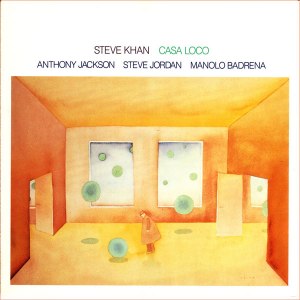
Steve Khan: Casa Loco (1983)
An album which still amazes musicians the world over. Arguably guitarist Khan, bassist Anthony Jackson, drummer Steve Jordan and percussionist Manolo Badrena have never done better work – that’s saying something considering who they’ve all played with.

Bill Bruford’s Earthworks: Dig? (1989)
Both of Bruford’s 1980s Earthworks albums were really good but this gets the nod due to Django Bates being given free reign, contributing superb keyboard solos, a cool reimagining of Petula Clark’s ‘Downtown’ and classic composition ‘Dancing On Frith Street’.

Paquito D’Rivera: Why Not! (1984)
An underrated album from the Cuban alto sax and clarinet star, also featuring Claudio Roditi on trumpet, Michel Camilo on keys and a wonderful performance from drummer Dave Weckl on the opening ‘Gdansk’.

Lyle Mays: Street Dreams (1988)
The Metheny Group keyboard player chucks in everything he knows on this big-budget project – ambient post-jazz, widescreen fuzak, big-band swing and Fagen-style fusion, and it’s all good. Some, like this writer, may also prefer the more red-blooded guitar playing of Bill Frisell to Metheny.

Pat Metheny Group: American Garage (1980)
No one is too sure if this came out in late 1979 or early 1980 but it’s this writer’s favourite Metheny album, though the guitarist himself seems to have almost disowned it. He loosens up and opens himself up to some rock and Steely Dan influences, driven along by Danny Gottlieb’s superb drums.

Level 42: A Physical Presence (1985)
A lot of it’s not strictly ‘fusion’, of course, but any album featuring such brilliant live versions of ‘Mr Pink’, ‘Foundation And Empire’ and ‘88’ has to make this list.

Mark King: Influences (1984)
The Level 42 mainman amazes with his 18-minute fusion classic ‘The Essential’, plus an eerily assured tribute to early Return To Forever called ‘There Is A Dog’. Plus he played almost everything on it.

John Patitucci: On The Corner (1989)
Both of the bassist’s 1980s solo albums were good but this gets the nod courtesy of the sheer variety of grooves from drummers Vinnie Colaiuta, Dave Weckl and Alex Acuna, and the leader’s exciting solos and excellent compositions, all memorable.

John Abercrombie: Getting There (1988)
A rare excursion into jazz/rock for ECM Records, the guitarist’s most dynamic ‘80s album featured Michael Brecker on sax, a hefty ‘rock’ mix courtesy of James Farber and arguably drummer Peter Erskine’s heaviest recorded performance to date.

Joni Mitchell: Wild Things Run Fast (1983)
She littered the album with influences from the Police but the main driver was the brilliant jazz/rock musicianship of bassist Larry Klein, drummers Colaiuta and John Guerin, saxist Wayne Shorter and keys player Russell Ferrante. ‘Moon At The Window’, ‘Be Cool’, ‘Ladies Man’ and ‘You’re So Square’ smuggled fusion into the album charts.

Miles Davis: Star People (1983)
Blues, blazing jazz/rock, chromatic funk and general weirdness combine for arguably Miles’s most exciting album of the decade, featuring all-time great guitar from Mike Stern and John Scofield.

John Martyn: Glorious Fool (1981)
John’s music was now bringing in influences from Weather Report, Latin music and spiritual jazz, and Phil Collins, keyboard player Max Middleton, percussionist Danny Cummings and bassist Alan Thompson made for a fantastic rhythm section.

Bruford: Gradually Going Tornado (1980)
Any album featuring ‘Gothic 17’, ‘Land’s End’, ‘Joe Frazier’ and ‘Palewell Park’ has to be on this list. Epochal work from bassist Jeff Berlin, keys man Dave Stewart and the drummer himself.

Bubbling under:
Terje Rypdal: The Singles Collection (1988)
Power Tools: Strange Meeting (1987)
Stanley Clarke: If This Bass Could Only Talk (1988)
Terri Lyne Carrington: Real Life Story (1989)
Chick Corea Elektric Band: Eye Of The Beholder (1988)
Bill Frisell: Before We Were Born (1989)
Loose Tubes (1984)
Players (Jeff Berlin, Scott Henderson, Steve Smith, T Lavitz) (1986)

(PS. If you like the sound of any of these albums, please consider buying them in physical formats to best support the artists.)

Essential 1980s Jazz/Rock Albums (Part 1)

1980s jazz/rock generally gets the side-eye these days.
But it wasn’t all the Chick Corea Elektric Band prancing around the stage in tracksuits or pitiful WAVE-style smooth jazz.

The 1970s jazz/rock pioneers were mostly going strong and if some were too tempted by synths and drum machines, the best music was made by sticking pretty rigorously to the tried-and-tested real drums/bass/guitar/keys lineup favoured by Miles, Weather Report, Return To Forever et al.

So here’s a selection of 1980s jazz/rock albums that have consistently gripped movingtheriver, most of which he queued up to buy at the HMV or Virgin Megastore, or found in an Our Price bargain bin. (These are not proggy or funky. So no Herbie, Brecker Brothers, David Sanborn or David Torn, but there are elements of R’n’B/Latin/soul/whatever mixed in with the jazz).

Bireli Lagrene: Foreign Affairs (1988)
Just 21 years old when he recorded it with producer Steve Khan, the French guitarist’s second Blue Note album is a cohesive gem and massive improvement on the debut, with terrific contributions from keyboardist Koono and drummer Dennis Chambers.

Ornette Coleman: Virgin Beauty (1988)
One of the most ‘accessible’ albums of the master’s career, with memorable melodies, a brilliantly expressive bassist (Al McDowell) and some decidedly odd guest appearances from Jerry Garcia.

Tribal Tech (Scott Henderson/Gary Willis): Nomad (1988)
Recorded in April 1988 but not released until early 1990, guitarists were rightly wowed by Henderson’s brilliance, a mixture of Michael Brecker, Allan Holdsworth and Stevie Ray Vaughan, while the rhythm section is groovy and propulsive and both Henderson and Willis’s compositions are excellent. And ‘Tunnel Vision’ may feature the perfect guitar solo…

John McLaughlin: Mahavishnu (1984)
OK there are some question marks in the keyboard and sax departments, and a few mediocre tracks, but Billy Cobham has rarely sounded better and John contributes three or four classic compositions and a few brilliant solos to this reunion album of sorts.

Marc Johnson’s Bass Desires: Second Sight (1987)
Wonderful interplay between guitarists John Scofield and Bill Frisell, plus some classic compositions including Scofield’s surf-rock-meets-jazz ‘Twister’, Frisell’s Monk-like ‘1951’ and Johnson’s moving ‘Hymn For Her’.

Larry Carlton: Last Nite (1987)
Guitarists of all stripes were blown away by Carlton’s playing in the 1980s, and here’s the best evidence, captured live at LA’s Baked Potato club with Alex Acuna, Abe Laboriel and JR Robinson.

Human Chain: Cashin’ In (1988)
This Brit jazz/rock classic, released on EG Records, had elements of the Canterbury sound, West Coast cool jazz, English folk music and 1980s Weather Report, featuring Django Bates’ fantastic keys and French horn and some weirdly impressive guitar and fretless bass from Stuart Hall (who he?). Also injects a healthy dose of much-needed humour to the ’80s jazz world.

Hiram Bullock: Give It What U Got (1988)
All the fun of the fair from this gifted but troubled guitarist: raunchy funk/rock, instrumental Steely Dan, Brecker Brothers horns, classic fusion and an Al Jarreau guest appearance on a Sam Cooke tune, but all shot through with jazz chords and Hiram’s lyrical playing.

Ronald Shannon Jackson: Mandance (1982)
Ornette-style harmolodics and Mingus-like ensemble work meet NYC punk-jazz on the drummer’s intriguing and powerful album, recorded live in the studio, featuring future Living Colour axeman Vernon Reid.

Weather Report: Sportin’ Life (1985)
It was a toss-up between this and Night Passage, both classics, but this gets the nod courtesy of the newly-minted rhythm section of Omar Hakim and Victor Bailey, plus a few classic Wayne Shorter tunes including ‘Face On The Barroom Floor’ which reportedly Joni Mitchell was particularly smitten by.

Wayne Shorter: Atlantis (1985)
Wayne again, fronting this fascinating, complex song-cycle featuring Alex Acuna on drums and Joni’s husband Larry Klein on bass. Takes some time to digest, but like a good wine gets better every year.

Allan Holdsworth: Secrets (1989)
A toss-up between this and Metal Fatigue, this gets in because of his delicious guitar tone and the inspired contributions of drummer Vinnie Colaiuta – ‘City Nights’, ‘Spokes’, ‘Peril Premonition’ and ‘Joshua’ are musical landmarks. Fiery, exciting, unmissable.

Steps Ahead: Modern Times (1984)
Messrs Brecker, Erskine, Mainieri, Gomez and Bernhardt were embracing some new technology but they never let it overshadow the mostly excellent compositions with telling solos, particularly from Brecker.

John Scofield: Still Warm (1985)
Take your pick between this, Blue Matter and Loud Jazz, all fantastic pieces of work, but Still Warm gets the nod courtesy of its dynamite rhythm section (Darryl Jones and Omar Hakim) and arguably John’s best writing of the ’80s.

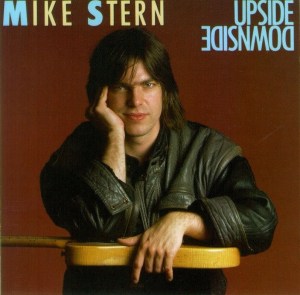
Mike Stern: Upside Downside (1986)
Produced by Hiram Bullock and featuring a crack band including Dave Weckl on drums, it showcases Stern’s finest/fieriest playing on record to date and also one of Jaco Pastorius’s last notable appearances. Still the best Stern solo album and quite extreme in its own way.

(If you’re new to any of these albums and they float your boat, please consider buying physical copies to support the artists.)

Bill Bruford: The Comeback

Pop musicians make comebacks all the time – in jazz or jazz/rock, it’s almost unheard of.
Reading King Crimson/Yes/Genesis/Earthworks drum legend Bill Bruford’s fine autobiography, there was no doubt he’d had his fill of the music business when he officially retired from performance on 1 January 2009 (his last headlining gig took place the previous July).

Away from the kit, in recent years he’s achieved a PhD from the University of Surrey, curated an excellent YouTube channel and released the occasional reissue or compilation, the latest of which is The Best of Bill Bruford.

But, as they say in sporting circles, you’re a long time retired. So it’s thrilling to report that Bruford is making tentative steps back to public performance – in a recent interview he described his return to playing as ‘explosive, unexpected, and very sudden’.

He turned up at the John Wetton tribute gig last year, performing ‘Let’s Stick Together’ alongside Phil Manzanera and Chris Difford, and now he’s joined up with his old drum tech, German ex-pat guitarist Pete Roth, plus bassist (usually on acoustic but here on electric) Mike Pratt, for some low-key trio gigs.

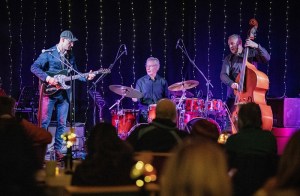
His recent show at the 606 was the busiest your correspondent had seen Chelsea’s treasured jazz club for years. Roth’s website describes his music as ‘jazz without borders’, and it’s a pretty good summary – they generally avoid fusion clichés like the plague, sounding more like John Abercrombie’s organ trio than anything Bruford recorded with Allan Holdsworth.

His kit was a return to his youth – two tom-toms, angled snare, two cymbals. And he still has that prodigious, propulsive technique on the hi-hats and ride cymbal, even if his snare drum no longer particularly has that distinctive ‘clang’.

‘Billie’s Bounce’ featured Bruford’s trademark figures between the tom-toms and snare drum, and Roth’s organ patch and octave pedal were a novel touch. ‘How Insensitive’ developed from a freeform rubato opening into an Abercrombie-esque mood-jazz piece, though Pratt’s strident bass seemed a little out of place.

‘If Summer Had Its Ghosts’, first recorded by Bruford with Eddie Gomez and Ralph Towner, meshed odd-time fun with the blues, Roth’s guitar at its more Scofield-like. ‘Summertime’ came with a tricky vamp which Pratt and Roth rushed somewhat – never a problem for Bruford, while a section from Dvořák’s Symphony No. 9 was a slowburn success. Meanwhile band composition ‘Trio of Five’ (or was it ‘Fun’?) was another attractive if a little harmonically inert, vamp-based piece in their favourite 5/4.

Though there were times when Bruford seems to have lost a little of the fluidity of old, it seems churlish to judge a performance thus when the performer and loyal crowd are having so much fun.

The trio play at the Oxford Spin club later this month, and for some other selected dates next year – don’t miss. What an unexpected pleasure to see Bruford back.

Peter Gabriel: Plays Live 40 Years On

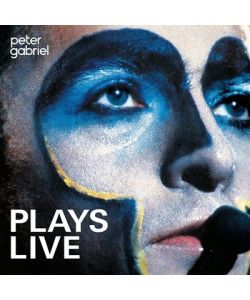
PG’s first live album – released 40 years ago this week – touched down incongruously during 1983’s Summer of Fun, crashing into the UK chart at #9 alongside Let’s Dance and Thriller (but Japan’s posthumous live album Oil On Canvas did even better – it was the week’s highest new entry at #5).

Plays Live was ostensibly recorded during four dates of the American tour in December 1982. Gabriel had taken some choreography lessons and often ventured into the audience for ‘Lay Your Hands On Me’, sometimes ‘falling backwards’ from the stage in the manner of those corporate team-building/trust exercises.

But he was very transparent about there being a lot of ‘cheating’ on this album – many overdubs/vocal corrections were undertaken with the assistance of co-producer Peter Walsh (fresh from Simple Minds’ New Gold Dream) at Gabriel’s Ashcombe House studios near Bath.

Plays Live hangs together very well – it’s immaculately sequenced and you certainly get your money’s worth, clocking in at a shade under 90 minutes. The tracks taken from Peter Gabriel IV AKA Security are a huge improvement on the studio versions. ‘Humdrum’, ‘Not One Of Us’, ‘No Self Control’ and ‘DIY’ are similarly transformed to become radical, vital updates.

There’s even an excellent Melt outtake called ‘I Go Swimming’. And when the band are freed from the sequencers and drum machines, they really sound like a band – check out the ‘floating’ tempos of ‘Humdrum’ and a few other tracks.

Jerry Marotta’s huge drum sound and (quite advanced) used of drum machines were not everyone’s cup of tea – Bill Bruford was still kvetching about it to Modern Drummer magazine during a 1989 interview. Both Marotta and synthesist Larry Fast, a key collaborator, were given the boot by Gabriel at the end of 1983, to much consternation.

My entrée into Plays Live was the (remixed) single release of ‘I Don’t Remember’ courtesy of its video being shown on ‘The Max Headroom Show’ in 1985. Marcello Anciano’s disturbing clip featured nude dancers from the Rational Theatre Company and some figures inspired by the artist/sculptor Malcolm Poynter. It’s hardly surprising that it missed the top 40…

Bruford: One Of A Kind Revisited

In the late 1980s, some ‘long-lost’ cult tracks took on almost mythical status amongst my musician friends and I.

There was Frank Zappa’s ‘The Black Page’, Rush’s ‘YYZ’ and ‘La Villa Strangiato’, UK’s ‘In The Dead Of Night’ and Bill Bruford’s ‘Five G’ and ‘Travels With Myself And Someone Else’.

Guitarist Allan Holdsworth, who died four years ago today, of course featured on the latter three tracks (he originally came to my attention when It Bites’ Francis Dunnery waxed lyrical about him in a 1989 Guitarist magazine interview).

Pre-YouTube and Spotify, the problem was that you just couldn’t get hold of this stuff (even though it was barely ten years old!). So it was a thrill when I finally tracked down a copy of Bruford’s One Of A Kind album – featuring ‘Five G’ and ‘Travels With Myself’ – sometime in the mid-1990s.

And now this landmark collection has received the posh reissue treatment, as part of a box set or as a double CD set featuring a new stereo remix, carried out by Bruford and Level 42/King Crimson guitarist Jakko Jakszyk, and a DVD containing the remastered original mix and a new surround-sound mix.

You could argue that the album is the most complete work by all of the participants. Recorded at Soho’s Trident Studios, One Of A Kind was released on the cusp of the 1980s and pointed to where all the four members’ music would take them in the new decade.

There’s no quantizing here – it’s music that breathes (check out the ‘bendy’ time on ‘Hells Bells’, ‘Travels’ and the title track) played by empathetic, truly virtuosic musicians. But is it rock, jazz, prog or fusion? Who knows, but it’s some of the greatest British instrumental music of all time.

Bruford stuns with one of the tightest drum sounds on record – whipcrack snare, cutting Rototoms – with great phrasing and ideas, some fantastic tuned percussion (marimba, xylophone) and excellent compositions. Bassist Jeff Berlin is an astonishing talent – logical, inventive, technically perfect but never boring.

Dave Stewart (not to be confused with David A Stewart of Eurythmics) is a revelation, layering superbly with his new Prophet 5 synth and adding some effective solos. The liner notes report Holdsworth returning to the studio after a break, hearing Stewart overdubbing on ‘Travels With Myself’ and finding himself in tears.

For his part, Allan was by all accounts rather unhappy during the recording, but delivers brilliant, moving solos, particularly on ‘Travels’ and ‘Sahara Of Snow Part 2’. He also contributes the excellent composition ‘The Abingdon Chasp’, apparently named for a beloved brand of real ale.

Then there’s the resplendent ‘Fainting In Coils’, complete with the ‘Alice In Wonderland’ excerpts and tricky time signature which sounds completely natural in Bruford’s hands. But how does the new remix sound? First, the good news: the title track, ‘Fainting In Coils’ and ‘Hells Bells’ sound fresh and thrilling; it’s like hearing them for the first time.

But now the bad news: ‘Travels’ inserts some new Stewart solo licks, inaccurately mutes some of his synth pads and then inexplicably mixes his acoustic piano way down and drenches it in muddy reverb (though Holdsworth’s comping is brought forward in the mix).

Then there’s ‘Five G’ – it’s mixed totally dry, with all reverb removed, again with Stewart’s keys too low and Berlin’s bass too high and too ‘middly’. And the packaging? Sid Smith’s liner notes are excellent, with some lovely, previously-unpublished photos from rehearsal rooms and pub gardens (both in Kingston, Surrey!).

But there’s no sign of the tracklisting or song/composer credits on the digipack – you have to search around for the inner pamphlet to find the details printed in the middle, so quick reference while listening is not easy.

Still – even if the remix is patchy (I can’t comment on the surround mix), the whole package is well worth getting. Any excuse to celebrate a classic album and brilliant band, and a rich voyage of discovery if you don’t know this music.

One Of A Kind Expanded & Remixed is available at Burning Shed.

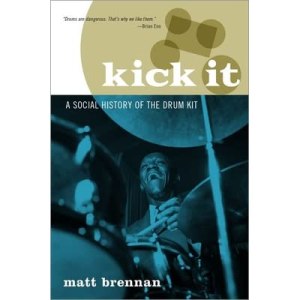
Book Review: Kick It (A Social History Of The Drum Kit) by Matt Brennan

What’s your favourite drummer joke?

One attributed to legendary London saxophonist/club owner Ronnie Scott particularly sticks in the memory:

‘Dad, I want to be a drummer when I grow up.’

‘Well, make your mind up, son. You can’t do both.’

Though Matt Brennan’s excellent ‘Kick It: A Social History Of The Drum Kit’ commences with a raft of such jibes, it does so only to make a point and might even put pay to them forever. The book puts skin-spankers right at the forefront of modern music and is surely the best PR job for the profession yet to emerge.

Though ostensibly an ‘academic’ work, ‘Kick It’ is anything but stodgy or overly-analytical – rather, it’s an enjoyable, fast-paced, truly internationalist voyage through the evolution of the drum kit and status/profession of the drummer, from slave ships to the modern-day, multi-tasking, technology-savvy ‘beat-maker’, via Congo Square, the swing/bebop revolutions of the 1930s/1940s and advent of the studio player in the 1960s.

‘Kick It’ unflinchingly outlines how racial and cultural stereotypes initially hampered the status of the percussionist in modern industrial societies, but also brilliantly describes the vital role of the multi-faceted, ambidextrous drummer in vaudeville, minstrel and music-hall traditions (drummers were called upon to supply everything from rainfall to thundercracks during live performance).

Accordingly, Brennan also shows how drummers’ demands accelerated technological developments both in kit/cymbal construction and recording techniques, and also how German, Turkish and British manufacturers were arguably just as important as the American companies.

Brennan outlines the careers and styles of such legends as Gene Krupa (who put the tom-tom on the map), Kenny Clarke (who brought the ride cymbal and kick drum into play) and Earl Palmer, who served as a link between ‘jazz’ and ‘pop’ players, ‘swinging’ his rock grooves on records by Fats Domino and Chuck Berry even as pianists and guitarists were moving towards ‘straight eights’.

Brennan also looks at the issue of sexism in the percussion industry, with particular focus on the tragic career of gifted drummer Karen Carpenter.

Later Brennan makes fascinating parallels in the careers and playing styles of first Ringo Starr and Charlie Watts, then, in a moving section, Keith Moon and John Bonham (the latter two dying at the depressingly young age of 32 – Brennan fascinatingly explores how both may have suffered from feelings of inferiority and insecurity, not helped by the attitudes of their bandmates).

‘Kick It’ moves intriguingly into the 1980s, looking at the careers of Billy Cobham, Bill Bruford, Phil Collins, Neil Peart and Steve Gadd, exploring how recording techniques and drum machines revolutionised percussion sounds, and finally comes right up to the present to investigate how sampling and programming have given drummers a whole new lease of life in the streaming era.

A tremendous achievement – both a history lesson and exciting story to boot – ‘Kick It’ had this drummer newly inspired, rushing to his kit with some gusto and not a little pride.

Players will find a host of fascinating photos and stories – the book may also have you questioning everything you ever assumed about the traditional kit – while the general music fan will find an intriguing, fast-paced history of modern music.

Don’t let ‘em ever tell you you’re ‘just’ a drummer…

‘Kick It’ is published by the Oxford University Press.

28 Great Drum Grooves Of The 1980s

Steve Jordan
Photo by Deborah Feingold

Could it be that the ’80s spawned more ‘drum-based’ songs than any other music decade?

New recording technology meant that the drums had never been louder and prouder in the mix. Stylistically, influences from ’70s fusion and classic soul/R’n’B were still fresh and relevant.

Hip-hop and go-go brought a funky swing. Metal and punk added a unashamedly aggressive dimension. And let’s not underestimate The Collins Effect: Phil brought a lot of attention to the drums.

Here are 28 notable grooves from the decade. My definition: pieces of music where the drum parts are intrinsic to the architecture of the piece. Eagle-eyed readers will spot lots of shuffles here – fast ones, slow ones, medium ones, half-times. Bernard Purdie and John Bonham’s influences apparently loomed large…

28. Joan Armatrading: ‘The Key’ (1983)
Drummer: JERRY MAROTTA

27. Cameo: ‘She’s Strange’ (1984)
Drummer: LARRY BLACKMON

26. Japan: ‘Still Life In Mobile Homes’ (1981)
Drummer: STEVE JANSEN

25. Lee Ritenour: ‘Road Runner’ (1982)
Drummer: HARVEY MASON
How does he find time to fill out the groove with all those 32nd notes on the hi-hats? With such solidity? Only the master knows.

24. Steve Khan: ‘Uncle Roy’ (1983)
Drummer: STEVE JORDAN
Apparently Khan’s instruction to Jordan was to play an ‘Elvin Jones type of thing’ on this half-time shuffle. He completely ignored the guitarist and came up with an outrageous groove , turning the snare off, smacking the crash/ride cymbal as if his life depended on it and adding some tasty footwork for good measure.

23. U2: ‘Sunday Bloody Sunday’ (1983)
Drummer: LARRY MULLEN JR.
Love or hate the track, it was the beat of choice for air-drumming schoolkids across the land (at least it was at my school). You can even hum it.

22. TONY WILLIAMS: ‘Sister Cheryl’ (1985)
In essence, Tony ‘straightens’ out the jazz swing ride cymbal/hi-hat pattern, adds some snare backbeats and then dials in almost a Latin feel. It’s a revolutionary beat on an album full of them (Foreign Intrigue).

21. Weather Report: ‘Volcano For Hire’ (1982)
Drummer: PETER ERSKINE
Maybe Joe Zawinul came up with this pattern, but it’s superbly played and certainly one of the most striking and powerful in WR’s illustrious drumming legacy.

20. INXS: ‘What You Need’
Drummer: JON FARRISS
Fleet-of-foot dancefloor funk/rock smasher from one of the best groove drummers of the ’80s.

19. China Crisis: ‘In Northern Skies’ (1989)
Drummer: KEVIN WILKINSON
A different kind of half-time shuffle, with crossed hands, neat ghost notes and a nice tom-tom emphasis on the ‘3’.

18. Prince: ‘Dance On’ (1988)
Drummer: SHEILA E
Sheila unleashes her ’70s fusion chops on this curio from Lovesexy. Quite unlike anything else in her or the Purple One’s discography.

17. Joni Mitchell: ‘Be Cool’ (1982)
Drummer: JOHN GUERIN
LA session legend Guerin ended his 10-year sideman gig with Joni playing this inspired take on a medium jazz swing. Holding two brushes, one marks out time with triplets and other ‘brushes’ in quintessential jazz style.

16. Level 42: ‘It’s Over’ (1987)
Drummer: PHIL GOULD
One of many crafty, original ’80s grooves from the Isle Of Wight sticksman, this one was achieved by playing 16th notes on the hi-hat with both the foot and the hands. On a good system you can really hear the subtleties.

15. Jeff Beck: ‘Space Boogie’ (1980)
Drummer: SIMON PHILLIPS
Of course it takes its cue from Billy Cobham’s famous ‘Quadrant 4’ double-bass-plus-ghost-notes shuffle, but Phillips’s beat is in 7/4 and bloody hard to pull off. He maintains the intensity remarkably well and throws in some killer fills.

14. Jeff Beck: ‘Star Cycle’ (1980)
Drummer: JAN HAMMER
Another classic from Jeff’s There And Back album, the composer/keyboard player takes the sticks himself for a classic, still-funky, displaced-snare groove. Hammer has always been a superb drummer – check out his First Seven Days album for more evidence.

13. Weather Report: ‘Molasses Run’ (1983)
Drummer: OMAR HAKIM
Lots to choose from in Omar’s prestigious ’80s discography but this one sticks out. His beats have a sense of structure befitting a natural songwriter/arranger (which, of course, he is too).

12. Joni Mitchell: ‘My Secret Place’ (1988)
Drummer: MANU KATCHE
Kind of a variation on number 8, this cyclical groove almost IS the song.

11. Bennie Wallace: ‘All Night Dance’ (1985)
Drummer: BERNARD PURDIE
Another classic from the shuffle master on this track from the saxophonist’s hard-to-find Blue Note album Twilight Time, this managed to incorporate both of Purdie’s trademarks: ghost notes and hi-hat barks.

10. Adam & The Ants: ‘Ant Rap’ (1981)
Drummers: CHRIS HUGHES, TERRY LEE MIALL
There are two or three grooves on this and they’re all corkers. The song led to an outbreak of desktop hand-drumming by schoolkids in the early ’80s, driving teachers to distraction.

9. Grace Jones: ‘Warm Leatherette’ (1980)
Drummer: SLY DUNBAR
Trust Sly to come up with two such original takes on the shuffle.

8. Paul Simon: ’50 Ways To Leave Your Lover’ (1982)
Drummer: STEVE GADD
What a treat to hear and see this classic live version from Central Park, possibly with some tiny deviations from the recorded take. Much imitated, never surpassed. And check out Gadd’s superb extended coda.

7. John Scofield: ‘Blue Matter’ (1986)
Drummer: DENNIS CHAMBERS
One of the great beatmakers of the ’80s or any other decade, the Baltimore master busted loose with two classic go-go grooves for the price of one.

6. Van Halen: ‘Hot For Teacher’ (1984)
Drummer: ALEX VAN HALEN
Modern Drummer magazine said it best: ‘The song begins with Alex pounding out a fairly complex floor-tom pattern featuring the ever-popular hairta rudiment, played over shuffling double bass drums. Add some tom hits and then a driving ride cymbal, and you’ve got one of the most classic drum tracks of the ’80s—or any decade.’

5. The Police: ‘Murder By Numbers’ (1983)
Drummer: STEWART COPELAND
Yet another ingenious variation on the medium jazz swing, Copeland turns 4/4 into 6/8, adds some weird emphases and catches the ear every time.

4. King Crimson: ‘Frame By Frame’ (1981)
Drummer: BILL BRUFORD
At Robert Fripp’s prompting, Bruford plays the lion’s share of the beat on one of his Octobans, not the hi-hat. From the classic album Discipline.

3. Chuck Brown & The Soul Searchers: ‘We Need Some Money’ (1985)
Drummer: RICKY WELLMAN
The right foot that floored the drumming world.

2. Toto: ‘Rosanna’ (1982)
Drummer: JEFF PORCARO
Impossible to leave out this half-time classic. Porcaro fused The Purdie Shuffle with a Bo Diddley beat to create a monster.

1. John Martyn: ‘Pascanel (Get Back Home)’ (1981)
Drummer: PHIL COLLINS
Phil came up with numerous cool variations on Harvey Mason’s ‘Chameleon’ beat in the ’80s, but this is my favourite. It’s basically ‘Chameleon’ but with a very groovy triplet figure inserted between the hi-hats and snare. From the classic Glorious Fool album.

Book Review: Uncharted (Creativity And The Expert Drummer) by Bill Bruford

Recently, for work, I’ve had the pleasure of hanging out a bit with Paddy Spinks, the man charged with keeping King Crimson together in the 1980s.

Chatting about that mighty musical unit recently, he said that Bill Bruford had been the ‘natural showman’ of the band.

So it was a bit of a surprise to read Bruford’s words about the latter part of his distinguished drumming career in the introduction to fascinating new book ‘Uncharted’: ‘I dreaded performance to the point where…I was unable to function meaningfully. Performance had become incomprehensibly difficult and insuperably so.’

‘Uncharted’ is Bruford’s detailed voyage through the psychology of performance, performance anxiety and drumming creativity. He sets out his objectives clearly: ‘I want to suggest some answers to some fundamental questions about drummers. What do we do and why do we do it? Is there anything creative about it? What are drummers for, if not to be creative?’

He provides some answers himself and also garners opinions from a variety of respected players including Peter Erskine (Weather Report, Kate Bush, Steely Dan), Chad Wackerman (Frank Zappa, Allan Holdsworth) and Cindy Blackman-Santana.

‘Uncharted’ is most assuredly an academic book, the fruits of a University of Surrey PhD, so it probably won’t surprise any Bruford fans to learn that it features no drummer jokes. But it’s never less than gripping, with fascinating titbits dropped in here and there about a distinguished career in music.

The book shines a light on the current state of the recording world, with pithy comments about the rise of the ‘bedroom’ musician and ‘stay-at-home’ drummer sending in his/her parts via email or Skype.

Bruford laments the lessening of time that bands spend together in the rehearsal room these days, often due to financial constraints, rightly commenting that music as complex and nuanced as Yes or King Crimson could only have been produced via lengthy band ‘woodshedding’ sessions.

There are striking observations on the merits or otherwise of ‘playing to your audience’, especially from Erskine: ‘I don’t really give a f**k about the audience. You can quote me on that!’, and also a couple of amusingly barbed Bruford comments about playing double drums with another of the UK’s greatest players. Hint, hint…

Despite its occasional longeurs, ‘Uncharted’ is a fascinating, forensic look at creativity and collaboration, with reverberations that go far beyond the world of music.

‘Uncharted: Creativity And The Expert Drummer’ is published by the University Of Michigan Press.

Great Drumming Albums Of The 1980s (Part Two)

So here’s the second instalment of essential drum albums from the 1980s (check out part one here), a selection of the decade’s movers and shakers who either pushed the boundaries, flew somewhat under the radar or simply made the music sound better.

19. Chuck Brown And The Soul Searchers: Live ’87
Drummer: Ricky Wellman
Alongside Keith LeBlanc, Jonathan Moffett and Dennis Chambers, Wellman played some of the scariest single bass drum of the decade, laying down the go-go template that would influence everyone from Trevor Horn to Miles Davis (who headhunted Wellman in late 1987).

18. Nik Kershaw: The Riddle (1984)
Drummer: Charlie Morgan
Another somewhat underrated Brit sessionman, Morgan does exactly what’s right for the songs with a lot of panache. His ghost-note-inflected grooves on ‘City Of Angels’ and ‘Easy’ are treats for the eardrums.

17. Tackhead: Friendly As A Hand Grenade (1989)
Drummer/programming: Keith LeBlanc
Included because of the sheer variety of grooves, both human and machine-generated. Some beats bring to mind the sounds of electro and early hip-hop, but Keith also provides precise, tight, funky grooves on the kit.

16. XTC: English Settlement (1982)
Drummer: Terry Chambers
He was not subtle but the unreconstructed Swindon powerhouse could mix it with the best of ’em when it came to rock. Strongly aided by the dream Lillywhite/Padgham production/engineering team, his cavernous grooves always hit the spot. Currently residing in the ‘where are they now’ file (Or is he? Check out the comments section below… Ed.).

15. Power Tools: Strange Meeting (1987)
Drummer: Ronald Shannon Jackson
Ex-Ornette/Ayler collaborator and serious Buddhist Shannon Jackson cut a swathe through ’80s drumming with his striking solo albums and occasional projects like this frenetic trio alongside Bill Frisell and future Rollins Band bassist Melvin Gibbs. Free jazz with balls and humour. Play LOUD.

14. Roxy Music: Avalon (1982)
Drummer: Andy Newmark
Hard to bet against this masterpiece of tasteful, empathetic song-accompaniment. Even more impressive is the revelation that Newmark was usually the last musician to overdub, replacing a skeletal drum machine part.

13. Nile Rodgers: B Movie Matinee (1985)
Programming: Jimmy Bralower
Much-in-demand NYC programmer Bralower wasn’t every drummer’s cup of tea but he came up with many memorable, catchy beats on Nile’s forgotten second solo album. Even classy ballad ‘Wavelength’ chugs along to what can only be described as an electro groove.

12. Yes: Big Generator (1987)
Drummer: Alan White
Possessing one of the crispest snare sounds of the decade, White played 4/4 rock with lots of surprises – both listener and band alike have to be on their toes – and conversely also made the most complex arrangements sound completely natural.

11. Grace Jones: Living My Life (1982)
Drummer: Sly Dunbar
Sly came up with not one but two classic, much-imitated beats on this album (‘My Jamaican Guy’, ‘Nipple To The Bottle’) and also proved he could play rock with the best of them. Mark Knopfler and Bob Dylan were definitely listening.

10. Mark King: Influences (1984)
We knew he’d started his musical life as a drummer but finally hearing the results of his misspent youth was well worth the wait. He gives his heroes Billy Cobham and Lenny White a serious run for their money on this varied collection, from Level-style funk to Latin-tinged jazz/rock.

9. King Crimson: Discipline (1981)
Drummer: Bill Bruford
Impossible to leave out. Aided by Robert Fripp’s ‘rules’, the Surrey sticksman redefined rock drumming for the new decade, adding unusual timbres and taking the emphasis off the hi-hat. He also delivered one of the great over-the-top performances on ‘Indiscipline’.

8. Weather Report: Sportin’ Life (1985)
Drummer: Omar Hakim
The fusion supergroup’s penultimate studio album is also one of their best, and Omar is a big reason why. His touch on the hi-hats and ride cymbal is instantly recognisable, and he swings hard on the inspired cover of Marvin Gaye’s ‘What’s Going On’.

7. Stewart Copeland: Rumble Fish (1983)
Not for nothing was the ex-Police man calling himself The Rhythmatist around this time: he hits anything and everything (xylophone, drum kit, marimba, piano, typewriter) to create a colourful, unique soundtrack for Francis Ford Coppola’s black-and-white curio.

6. Sadao Watanabe: Maisha (1985)
Drummers: Harvey Mason, John Robinson
A superior example of big-budget ‘smooth jazz’ before it became a cliché, Mason and Robinson split the drum duties and perfectly compliment each other. The latter particularly lets his hair down a bit more than usual, particularly on ‘Paysages’.

5. Simple Minds: Sparkle In The Rain (1984)
Drummer: Mel Gaynor
Slinky, powerful grooves from South London’s answer to Omar Hakim. He has the walls of Shepherds Bush’s Townhouse studios shaking with his uber-beats on ‘Up On The Catwalk’, ‘Waterfront’ and ‘C Moon Cry Like A Baby’.

4. Level 42: A Physical Presence (1985)
Drummer: Phil Gould
An exciting live performance from one of the great British drummers. His top-of-the-beat feel and crisp sound suggest a mix of Billy Cobham and Bill Bruford, and he could also lay down explosive multi-tom fills to match both of them.

3. Chick Corea Elektric Band: Eye Of The Beholder (1988)
Drummer: Dave Weckl
Love or hate Corea’s Scientology-infused, neo-classical jazz/rock, Weckl’s stellar performance on this album was beyond question. He delivered a gorgeous sound, a total mastery of the drum kit and stunning chops when required.

2. Jeff Beck’s Guitar Shop (1989)
Drummer: Terry Bozzio
One of the loudest drummers this writer has ever heard in concert (Hammersmith Odeon, December 1989), Bozzio delivered some of the fastest double-bass playing on record (‘Sling Shot’) and also unique takes on reggae (‘Behind The Veil’) and funk (‘Day In The House’).

1. The Clash: Sandinista! (1980)
Drummer: Topper Headon
The rebel rockers embraced rockabilly, reggae, dub, calypso, punk and even funk on this ambitious triple album, but they wouldn’t have been able to go there without the versatile London sticksman.

King Crimson: Beat 35 Years Old Today

EG Records, released 18 June 1982

UK Album Chart position: #39

9/10

If you were to ask fans of 1980s King Crimson why they love the band, lyrics probably wouldn’t be a priority.

But, pushed hard by Robert Fripp and possibly influenced by the 25th anniversary of Jack Kerouac’s ‘On The Road’, Adrian Belew came up with some choice words on Beat, the excellent second album from this remarkable quartet.

References to the Beat writers abound; ‘Neal and Jack and Me’ concerns Kerouac and his best friend Neal Cassady and mentions several significant Kerouac works; ‘Heartbeat’ is the name of a book written by Cassady’s wife Carolyn about her experiences with the Beats; ‘Sartori In Tangier’ references the Moroccan city where a number of Beats resided; ‘Neurotica’ shares its title with a very influential Beat-era magazine, and presumably ‘The Howler’ refers to Allen Ginsberg’s ‘Howl’.

As the saying goes, you take inspiration where you find it, and Belew had come up with a very handy concept on which to hang the new band improvisations. Musically, Beat is a brilliant development of the Discipline sound. ‘Neurotica’ and ‘The Howler’ feature some remarkable, unhinged ensemble playing, teetering on total chaos.

On the latter, Bill Bruford delivers intricate patterns on his acoustic/electric kit (with shades of Steve Reich, acknowledged with Bruford’s credit for ‘Drumming’) while Belew’s white-noise guitar outburst is a killer (he repeats the trick on ‘Waiting Man’ and ‘Neal’, extending his palette of sounds from Discipline and sometimes tuning his high E string down to a C).

‘Sartori’ is a superb vehicle for Fripp while ‘Waiting Man’ demonstrates the amazing rhythm dexterity of the band, a development of the ‘Village Music’ concept with Bruford and Tony Levin sharing a tricky 3/4 figure (joined by Belew on drums when they played it live) underneath an expressive vocal performance.

There’s even a noble, painless attempt at a pop hit with ‘Heartbeat’. The only track that outstays its welcome is ‘Requiem’, a fairly dreary investigation of A-minor.

In short, the musical intelligence of this unit was pretty damn scary. But they never neglected a crucial factor: melody. Lesser bands might have built their entire careers on any Beat song.

Not surprisingly, tensions were high during the London recording sessions. Echoing the situation with The Police around the same time, they sought out a producer who might act as peacemaker.

Fripp told writer Anthony DeCurtis in 1984: ‘We tried to get someone from the outside to organise it: Rhett Davies. I think if failed. I would rather have the wrong judgement of a member of the band than the right judgement of someone outside the band.’

Also, Belew was now very much the centre of attention and under pressure to produce melodies and lyrics to order. According to Bruford’s autobiography, Belew told Fripp to leave the studio after one too many barbs from the bespectacled Wimbornian, who ‘went straight back to Dorset and was silent for three days’. Only some desperate calls from Bruford and manager Paddy Spinks rescued the situation.

In the same 1984 interview as above, Fripp said of ’80s Crimson: ‘I feel I’ve created a field in which other people can discover themselves’. On the evidence of Beat, he did a fine job.