Matt’s new book ‘John McLaughlin: From Miles and Mahavishnu to The 4th Dimension’ is available now and can be ordered via the links below.
‘A must-have in every aspiring musician’s personal library.’ Billy Cobham, Mahavishnu Orchestra drummer
‘A wonderful insight into a true innovator and colossus of the guitar.’ Mark King, Level 42 bassist/vocalist
‘Scrupulously researched… A fluent career overview.’ **** MOJO, December 2023
‘The most comprehensive overview of McLaughlin’s career to make it into print thus far.’ **** Shindig!, January 2024
‘Comprehensive and thoroughly researched, Phillips’ book is a revelation. A must-read for guitar aficionados and McLaughlin devotees.’ Bill Milkowski, author of ‘Jaco’ and ‘Michael Brecker’
‘Riveting… Meticulous storytelling… The book is not just a narrative, it’s a visual feast.’ Jazz In Europe
‘Paints the fullest picture yet of the guitarist’s life.’ Jazzed
‘Thorough and impassioned… The first book to fully illuminate the least-appreciated, least-documented periods in the extraordinary career of this wondrously free-spirited, prolific, perpetually questing artist.’ Booklist
It’s an exhaustive look at John’s catalogue, live career and spiritual life, with an introductory note by Robert Fripp, testimonials from Mark King, Billy Cobham and Bill Milkowski, interviews with key collaborators and lots of exclusive photographs. I cover John’s early sessions with David Bowie and Donovan, his remarkable sideman work with Tony Williams and Miles Davis, the fabled solo career fronting The Mahavishnu Orchestra and Shakti and various projects alongside the likes of Sting, Jeff Beck, Herbie Hancock and Carlos Santana.
If you’ve enjoyed this website in any capacity, please consider buying this book and getting it to the toppermost of the poppermost… Thank you!
The sad death of soprano/tenor sax titan Wayne Shorter has inspired many column inches but, reading most of the obituaries, you might be forgiven for thinking that he was completely dormant during the 1980s.
Nothing could be further from the truth, even if he took more of a backseat in his ‘day job’ co-leading Weather Report (though still contributed brilliant compositions, of which more later).
Your correspondent has to declare a large interest. Wayne’s music was part of my DNA from early doors, probably courtesy of the memorable tunes ‘Harlequin’ and ‘Palladium’ on WR’s Heavy Weather and beguiling ‘The Elders’ and ‘Pinocchio’ on Mr Gone which my dad played throughout my childhood.
By 1985, I was all-in. Wayne was my E.T. and my Monk, Virgo Rising, delivering nuggets of brilliance straight into my burgeoning musical brain. WR’s Sportin’ Life made a huge impression, featuring his majestic composition ‘Face On The Barroom Floor’.
Then Wayne’s contributions to Joni Mitchell’s music started to register – there were many highlights throughout the 1980s, from ‘Be Cool’ and ‘Love’ on Wild Things Run Fast to ‘A Bird That Whistles’ on Chalk Mark In A Rainstorm.
Then Wayne’s solo album Atlantis hit. Strange to report though, apart from the opening ‘sweetener’ ‘Endangered Species’, I failed to really ‘understand’ this dense, intricately arranged record of acoustic chamber fusion for about 20 years. The penny finally dropped and I’m bloody glad I persevered.
Phantom Navigatorcame hot on its heels. Like his friends and bandmates Miles and Herbie Hancock (and inspired by his commitment to Human Revolution), Wayne was tired of improvising over ‘jazz’ rhythms and standard songforms, branching out into symphonic/through-composed material utilising synthesizer and sampling technology.
But of course it sounded completely unlike anyone else. ‘Condition Red’ was an immediate brain-blower, and again this most misunderstood/underestimated album has proved a sleeper classic.
Ditto 1988’s Joy Ryder, with the extraordinary ‘Someplace Called Where’ featuring Dianne Reeves, brilliant ‘Over Shadow Hill Way’ and some fantastic Hancock/Geri Allen/Darryl Jones/Nathan East/Terri Lyne Carrington interplay throughout.
The 1980s Columbia albums get fairly short shrift in critical circles these days but Wayne played several compositions from that era – ‘Atlantis’, ‘Over Shadow Hill Way’, ‘Joy Ryder’, ‘Endangered Species’, ‘The Three Marias’ – right through to the 2010s.
Then there were the intriguing 1980s guest spots and side projects: he acted memorably in ‘Round Midnight’ and contributed to gorgeous ‘The Peacocks’ and brilliant ‘Une Noche con Francis’ (duelling with Dexter Gordon) on the Oscar-winning soundtrack album.
There was a moving guest performance on Toninho Horta’s ‘Ballad For Zawinul’ from the guitarist’s Diamond Land album (still not available on streaming platforms at time of writing) and the memorable team-up with pianist Michel Petrucciani and guitarist Jim Hall on Power Of Three.
Wayne also contributed a fine solo to Stanley Clarke’s ‘Goodbye Pork Pie Hat’ and played beautifully throughout Buster Williams’ 1988 album Somethin’ Else. (Chime in below if I have missed any other great Wayne 1980s guest performances.)
Wayne ended a fruitful decade recording The Manhattan Project’s excellent self-titled live Blue Note album at Chelsea Studios, NYC, in December 1989 alongside Clarke, Petrucciani and Lenny White (c’mon Universal, get this on streaming platforms). He plays some marvellous stuff throughout, particularly on Jaco Pastorius’s ‘Dania’, new composition ‘Virgo Rising’ and a reversioned ‘Nefertiti’.
Then there was the live work. Wayne toured the UK regularly between 1985 and 1988. I think I saw him four times during the decade, and each concert was fascinating.
There was a Weather Report gig at the Dominion Theatre in summer 1984, a poorly-attended solo gig at the Logan Hall on 25 October 1985 (‘lack of promotion ’, someone said to my dad) and a really weird all-nighter at the Town & Country Club on 4 April 1987 when Wayne’s sci-fi fusion stopped the jazz dancers in their tracks,
Then there was a gig with Carlos Santana at the Royal Festival Hall on 13 July 1988 of which I can’t remember much apart from a few hippies in the front row loudly saluting every note Carlos played, and Ndugu Chancler’s absurdly-high cymbal setup. (There was also apparently a solo Wayne gig at The Astoria in April 1988 which for some reason I missed.)
I would study him and his sidemen (and, notably, sidewomen: his 1980s bands featured no less than five women, Marilyn Mazur, Geri Allen, Tracy Wormworth, Renee Rosnes and Carrington), fascinated and enthralled by the originality of his music and playing.
Farewell to a master, a talisman, an enlightened being. Nam myoho renge kyo.
Further listening: check out my Wayne playlist which outlines some key tracks of his career.
A sense of contour, of line, a bit of flash, a good tone and maybe a touch of storytelling.
Luckily for us, the 1980s featured an embarrassment of riches on the guitar solo front, a decade when you could hear everything from post-punk insanity, avant-garde weirdness, shock-and-awe widdlefests and sometimes perfect little compositions in themselves.
Sometimes great solos came from the guitarist in the band, but more often than not they came from the ‘ringer’, the session player. Truly great players of all stripes could find themselves blowing on a top 10 single. Their job was to add the pizzazz, the zing, the memorable bit that all the kids wanted to learn.
So here’s a selection of goodies from the guitar-shaped chocolate box, featuring some rock, some blues, some fusion, some soul, some new-wave, some pop, some metal, some funk, some jazz:
27. Lloyd Cole And The Commotions: ‘Forest Fire’ (Guitarist: Neil Clark)
26. Tears For Fears: ‘Everybody Wants To Rule The World’ (Guitarist: Neil Taylor)
25. Marillion: ‘Easter’ (Guitarist: Steve Rothery)
24. Michael Hedges: ‘Aerial Boundaries’
The whole thing is a solo, of course, but it’s one of the most astonishing examples of solo guitar in recording history, a mixture of tapping, strumming, thumping and hammering. There are no overdubs and a very strange tuning on the classic title track to Hedges’ 1984 album.
23. Tribal Tech: ‘Tunnel Vision’ (Guitarist: Scott Henderson)
A perfect solo from the jazz/rock master’s album Nomad. It’s so complete it sounds almost pre-composed (apparently only the first eight bars were hummed to him by the tune’s writer Gary Willis), each interesting idea following completely logically from the last.
22. Talk Talk: ‘I Don’t Believe In You’ (Guitarist: Robbie McIntosh)
This one taken from the classic album The Colour Of Spring can be filed in the ‘minimalist’ category, but it’s brilliant. The way the veteran Pretenders/McCartney guitarist bends into his last note, perfectly fitting with the key change, is sublime.
21. Johnny Guitar Watson: ‘Telephone Bill’
Johnny G pulled out all the stops for this barnstorming bebop-meets-blues breakdown, from the Love Jones album, closing out his funny proto-rap in some style. He also gets extra points for quoting Dizzy Gillespie’s ‘Salt Peanuts’.
20. Bootsy Collins: ‘Kissin’ You’ (Guitarist: Stevie Salas)
From Booty’s now forgotten 1988 album What’s Bootsy Doin’, a brief but flamboyant classic from one of the great unhinged metal guitarists of the decade, used as a ringer by George Clinton, Bill Laswell and Shakespear’s Sister to good effect.
19. Thomas Dolby: ‘Budapest By Blimp’ (Guitarist: Larry Treadwell)
The LA-based guitarist was part of a Christian duo backing the Pope on his infamous ‘Popemobile’ tour of American stadiums when he answered Dolby’s magazine ad, and he excelled himself on this epic track from Aliens Ate My Buick, coming up with a strong melody over the funky break and even throwing in a little Dave Gilmour homage.
18. Trevor Rabin: ‘I Can’t Look Away’
The title track of the Yes guitarist’s 1989 solo album was a song of two brilliant solos, but I’m going for the opening salvo, a brutal, flashy classic that features all the notes he knows and more.
17. Robert Cray: ‘Waiting For The Tide To Turn’
You could choose almost any solo from Mr Cray’s Bad Influence album, but this one seems to be best encapsulate his classy string-bending, snappy rhythmic sense and ice-cold Strat tone.
16. Nile Rodgers: ‘Stay Out Of The Light’
A brilliant player not necessarily known for his solos, but this closing track from his forgotten second solo album B Movie Matinee opened the floodgates – a fantastic mixture of Charlie Christian and Jimmy Nolen. Starts at 3:37:
15. John McLaughlin: ‘The Wait’
McLaughlin plugs in the Les Paul and unleashes one of the most vicious solos of his career, gradually developing in intensity, with even a touch of his old mucker Carlos Santana at times. Unfortunately it mostly fell on deaf ears, coming from a nearly-forgotten 1987 album Adventures In Radioland.
14. Defunkt: ‘Eraserhead’ (Guitarist: Ronnie Drayton)
One of those unhinged solos that starts at ’11’ and then just carries on in the same vein. The underrated session great is given his head and goes for it. From the punk/funk legends’ forgotten, excellent 1988 comeback album In America.
13. Yngwie J. Malmsteen: ‘Black Star’
This piece, kicking off the Swede’s Rising Force opus, is a guitar masterclass from top to tail, but the first few minutes demonstrate some extraordinary touches like a legato section that you’d swear was achieved with a delay pedal.
12. Stanley Clarke: ‘Straight To The Top’ (Guitarist: Carlos Santana)
The song – which kicked off Stanley’s 1981 career nadir Let Me Know You – may be a disco cheesefest but Carlos’s solo is a stonker, an emotive showstopper with a luscious, creamy tone and lots of emotional moments. It was a good period for Santana – see also Herbie Hancock’s ‘Saturday Night’ and Carlos’s own ‘Stay Beside Me’ and ‘Song For Devadip’.
11. It Bites: ‘You’ll Never Go To Heaven’ (Guitarist: Francis Dunnery)
The Cumbrian gunslingers wrote a great ballad here and Dunnery laid his claim as one of the great Brit guitarists of the ’80s with this extreme solo, a sometimes lyrical, sometimes demented mixture of flash and panache. From the lads’ debut album The Big Lad In The Windmill.
10. Billy Idol: ‘Rebel Yell’ (Guitarist: Steve Stevens)
He produced several memorable moments alongside the 6’2” blond bombsite born William Broad, but Stevens excelled himself here with a memorable, well-organised solo full of flashy bits and unexpected ‘outside’ notes.
9. Joe Satriani: ‘Ice 9’
Satch’s sophomore album Surfing With The Alien of course produced some guitar highlights but this track featured one of his most distinctive solos ever, Allan Holdsworth meets Eddie Van Halen.
8. Randy Crawford: ‘You Might Need Somebody’ (Guitarist: Steve Lukather)
This gets in for superb tone and admirable restraint, apart from that fantastic flurry of notes in the middle. Luke could hardly do any wrong around this time. Just around the corner was Quincy’s The Dude, ‘Rosanna’, Joni Mitchell’s ‘Love’ and Jacko’s Thriller.
7. Red Hot Chili Peppers: ‘Sex Rap’ (Guitarist: Hillel Slovak)
One of those great solos that sounds like it could fall apart any second, and frequently does. From the lads’ uneven but sometimes thrilling George Clinton-produced Freaky Styley album.
6. Yellowjackets: ‘Monmouth College Fight Song’ (Guitarist: Robben Ford)
In the days when Robben’s trump card was playing bebop/blues with a distorted guitar, and when he loved blowing over interesting chord changes, this track from 1981’s Casino Lights is a classic. A super-sophisticated mixture of Charlie Parker and Albert King. Starts at 1:35:
5. Sting: ‘Little Wing’ (Guitarist: Hiram Bullock)
Hiram could be relied upon to produce classic solos in the late 1980s, as he did with Steps Ahead, Terri Lyne Carrington and on his solo records, and this from Sting’s …Nothing Like The Sun was sublime.
4. Pink Floyd: ‘Comfortably Numb’ (Guitarist: David Gilmour)
Take your pick between two fantastic solos from The Wall album, but I’m going for the first one, a beautiful feature with a killer tone and great use of whammy bar.
3. XTC: ‘That’s Really Super, Supergirl’ (Guitarist: Dave Gregory)
He apparently rehearsed it alone for hours in a little room stinking of rat poison in Todd Rundgren’s rundown studio complex in Woodstock, upstate New York, but it paid off, a memorable, melodic classic.
2. Mike Stern: ‘Time In Place’
The title track of Mike’s second solo album demonstrated definitely one of the slowest solos of his career, and also one of the most lyrical.
1. John Martyn: ‘Johnny Too Bad’
This was one of the more memorable solos of Martyn’s career, during a decade when he was more interested in songwriting than making extreme guitar statements. But he sure found his Les Paul’s sweet spot on a classic cover version from Grace And Danger.
Considering he was such a huge star and cultural icon, it’s surprising that Prince’s eventful life and sad death has yet spawned so few ‘kiss and tell’ memoirs.
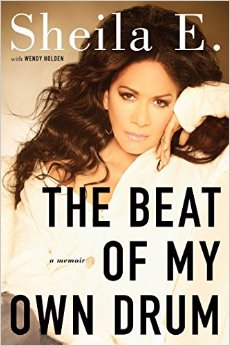
Let’s hope it stays that way. But while his long-time musical partner and one-time fiancée Sheila E certainly doesn’t shy away from sharing her memories of him in her fine autobiography ‘The Beat Of My Own Drum’ (co-written with Wendy Holden), those recollections form only a small part of a very rich, diverse collection of portraits.
After all, Sheila has played percussion and/or drums with some of the all-time greats: Carlos Santana, Herbie Hancock, Marvin Gaye, George Duke, Lionel Richie, Tito Puente, Diana Ross and Billy Cobham, not forgetting her father Pete Escovedo.
But while there are plenty of tasty music biz anecdotes, the book also provides a fascinating portrait of growing up in a mixed-race family (her mother is African-American and father Mexican) in a less-than-salubrious section of Oakland, California.
Sheila paints a rich picture of a seemingly happy childhood based around music, dancing, sports (she is apparently a pretty useful football player), charity and community, with shared cultural references such as The Carpenters (Sheila was hugely inspired by seeing Karen on the TV), Sly and the Family Stone and The Jackson 5, though there also some racial tensions around too.
But then the book goes in a completely different, unexpectedly harrowing direction when she chronicles the sexual abuse suffered as a young girl at the hands of several cousins. The section rivals James Rhodes’ recent book ‘Instrumental’ in its shocking candour.
Thankfully, if anything, the abuse drives her ambition rather than beats her down, though she admits to seeing it as a dark secret that clouds the rest of her life.
There are fascinating anecdotes about travelling to Colombia at the age of just 15 to play percussion with the Latin/fusion supergroup Azteca. Cobham, Duke and Gaye are mainly described in glowing terms, almost as father figures, and she is unexpectedly candid about her romantic and musical infatuations with Santana. There’s also a hilariously mismanaged backstage ‘meeting’ with Diana Ross.
But it’s easy to forget just how unique Sheila’s talent was in the 1980s when she made it as a ‘pop star’. We had never seen a percussionist/singer/dancer triple-threat before, as she herself points out, and Latin celebrities were very rare.
This pop period is grippingly covered in the book, with tales of disastrous video shoots, crazy tour schedules and much celebrity hobnobbing. Escovedo also very nicely juggles the spicy anecdotes with some genuine, intelligent advice for the modern musician, and just enough technical stuff about playing drums and percussion too.
Sheila also discusses her project Elevate Hope Foundation which focuses on music therapy for victims of child abuse, a noble and important program which continues to go from strength to strength.
So if the last quarter of ‘The Beat Of My Drum’ reads more like a self-help book than a famous musician’s autobiography, we can surely cut her some slack. Highly recommended.

 Matt’s new book ‘John McLaughlin: From Miles and Mahavishnu to The 4th Dimension’ is available now and can be ordered via the links below.
 The sad death of soprano/tenor sax titan Wayne Shorter has inspired many column inches but, reading most of the obituaries, you might be forgiven for thinking that he was completely dormant during the 1980s.

 movingtheriver.com