But now to the music – how does it stand up in 2025?
‘If You Love Somebody Set Them Free’ was a ‘corrective’ for ‘Every Breath You Take’, an anti-surveillance, anti-control relationship song.
Sting’s demo apparently sampled Omar Hakim’s snare from Bowie’s ‘Let’s Dance’, much to the drummer’s amusement. Listen out for Sting’s great rhythm guitar in the middle eight.
It was the lead-off single from the album but only reached #26 in the UK (#3 in the States), despite a superb Godley and Creme video.
‘Love Is The Seventh Wave’ was a last-minute jam (with Sting on bass?) and the album’s second single (missing the top 40 completely), while ‘Shadows In The Rain’ was the first thing the band recorded at Eddy Grant’s studio while waiting for Marsalis to show up.
During the saxist’s overdub, reportedly he wasn’t told anything about the track, just told to start playing. Apparently Sting mumbles ‘A-minor’ when asked by Branford what key the song’s in…
Sting has gone on record as saying that ‘Russians’ was supposed to be an ‘ironic’ song in the Randy Newman/Mose Allison mold, and it was the only decent hit in the UK (#12) when released as a Christmas single in December 1985.
Though particularly well-sung (but with an annoying slap-back echo), it sadly misses with its annoyingly on-the-nose lyrics and Kirkland’s cheapo synth backing.
This song really needed the Trevor Horn, Steve Lipson or even Hugh Padgham treatment, as did ‘We Work The Black Seam’.
But there’s much better stuff elsewhere. ‘Children’s Crusade’ was reportedly a second take, recorded totally live, with Sting replacing his vocals later.
He taught ‘Consider Me Gone’ to the band in the studio. Reportedly they tried a few unsuccessful takes, then Eddy Grant brought in the president of Guyana to say hello. They nailed it immediately afterwards. Sting’s voice is superb here, on the edge of hysteria.
The brief, Thelonious Monk-like title track (also with Sting on bass?) features a mind-bending Kirkland piano solo which amazed me as kid. I didn’t understand its ingenious polyrhythms at all. I do now but it still sounds brilliant.
‘Moon Over Bourbon Street’ (Sting on bass?) is musically heavily influenced by the jazz standard ‘Autumn Leaves’ and lyrically inspired by Anne Rice’s book ‘Interview With A Vampire’.
Kirkland’s synth oboes are a bit naff – couldn’t Sting afford real ones? It missed the top 40 when released as the album’s fourth and final single.
‘Fortress Around The Heart’ marries a stunning chorus to some seriously tricky verse modulations (Rick Beato’s great video runs them down). One can take or leave the rather heavy-handed symbolism of the lyric, guaranteed to wind up the post-punk critics, but at least Sting was stretching.
The album’s third single, ‘Fortress’ also missed the top 40 (Sting has always been a surprisingly unsuccessful solo artist with regard to the UK singles chart).
Ultimately Turtles is a bitty album, evidently put together very quickly. Every song is different and it seems a template for potential future projects (arguably Sting only really got his solo career on track with the followup …Nothing Like The Sun) rather than a confident debut.
The playing is predictably great though. Everyone gets their chance to shine…expect Darryl Jones, who is weirdly anonymous.
Sting was apparently obsessed with the Synclavier digital sampler during 1984 but admirably resisted a machine-tooled, over-produced album.
Still, for someone so keen to distance himself from The Police, maybe it’s odd that he rerecorded a Police song for the album and also named his next album/film after a Police song….
Sting and band did some ‘secret’ gigs at the Theatre Mogador in Paris just before the album release on 17 June 1985, and if memory serves this writer bought it the week it came out. It was one of many exciting buys during that landmark summer of 1985 (see below for more).
Turtles was immediately a big hit, reaching #3 in the UK and #2 in the States. It also earned a Grammy nomination for Album of the Year (admirably, Sting didn’t play any songs from it during his Live Aid appearance in July).
Then, in a turn of events that must have amused him, readers of Rolling Stone magazine voted Sting #2 jazz artist of 1985 (after Wynton Marsalis) and voted Turtles #2 album of the year (after Brothers In Arms).
He was also #2 male singer and #2 songwriter, both behind Springsteen, and #2 bassist, despite the fact that he probably didn’t pick up a bass during 1985…
Then of course there was the ‘Bring On The Night’ tour, album and movie, of which much more soon.
(PS – What a stunning series of album releases during summer/autumn 1985: Boys And Girls, Cupid & Psyche ‘85, Turtles, A Physical Presence, A Secret Wish, Hounds Of Love, Around The World In A Day, Brothers In Arms, Steve McQueen, You’re Under Arrest, Dog Eat Dog etc. etc…)
At the end of 1984, Sting seemed hellbent on erasing (albeit temporarily) any traces of The Police.
Buoyed by his happy relationship with Trudie Styler, he was falling back in love with music (but not, apparently, the bass guitar) and studying Brecht and Weill.
‘I cry a lot. I’m moved easily by a chord progression,’ he told Musician mag at the time.
He was also developing some solo material. But there was no band.
He moved FAST. In late 1984, he asked his friend, musician and writer Vic Garbarini, to put some feelers out in New York City.
By January 1985, saxophonist Branford Marsalis had been recruited (helped by the fact that Sting had heard that The Police were his favourite band) and some audition workshops were set up, attended by some of the hottest young fusion and funk musicians in the city.
Then, during a dinner break near AIR Studios in Montserrat while working on Dire Straits’ ‘Money For Nothing’, Sting met drummer Omar Hakim for the first time, who was another quick shoo-in (Omar apparently jokingly auditioned with knife and fork at the table).
At New York’s SIR rehearsal studios in January 1985, Sting, sitting in front of his Synclavier, with a Fender Tele at his side, bassist Darryl Jones (who was still playing with Miles Davis), Hakim and keyboardist Kenny Kirkland jammed on Police songs ‘One World’, ‘Demolition Man’ and ‘Driven To Tears’.
Sting then set them to work on a new song, ‘Children’s Crusade’, playing the demo over the studio speakers. He had found his band (Sting also found time to guest on Miles’s ‘One Phone Call’ during this time).
Sting, Marsalis, Hakim, Kirkland and Jones did a few surprise gigs at The Ritz club in New York City in late February. By early March 1985, after an aborted try at Compass Point Studios in Nassau, they were recording Turtles at Eddy Grant’s Blue Wave Studios in Barbados.
Pete Smith was engineering and co-producing, who had impressed Sting while helping record his Synchronicity demos.
But Sting was panicking about his voice, and the fact that he was going right outside his comfort zone. With good reason. This new music, light and drawing on jazz, funk and folk forms, was nothing like The Police. A&M Records were depending on a hit.
There wouldn’t be one note of distorted guitar on the album. It was more in line with Sade or Simply Red (but of course the musicianship was on a different planet to those artists). And the production and arrangements were very minimalist by mid-‘80s standards.
Next time: the album, track by track – and has it stood the test of time?
You could put forward a pretty good case that John Scofield was THE guitarist of the 1980s.
Probably best known for his incendiary playing in Miles Davis’s band between 1982 and 1985, he also enjoyed a distinguished solo career.
Whilst focusing on straightahead jazz during the early part of the decade, his stellar ‘fusion’ period between 1984 and 1988 – encompassing classic albums Electric Outlet, Still Warm, Blue Matter, Pick Hits Live and Loud Jazz – featured excellent original compositions and formidable players such as David Sanborn, Don Grolnick, Omar Hakim, Darryl Jones, Dennis Chambers, Hiram Bullock and George Duke.
In the meantime Sco was much in demand as a sideman, playing with everyone from Terri Lyne Carrington to Tommy Smith (this playlist gathers some of his greatest music of the 1980s) whilst also teaming up with fellow guitarist Bill Frisell, drummer Peter Erskine and bassist Marc Johnson in the latter’s Bass Desires project that produced two classic albums on ECM Records: Bass Desires and Second Sight.
Immediately recognisable with his chorus/overdrive sound and molten, legato style – always informed by the blues – Scofield’s solo career has since gone from strength, and we now find him ensconced in a highly productive spell on ECM, his latest album being Uncle John’s Band.
movingtheriver caught up with John to talk about his wonderful 1980s as he prepared for a European tour with keyboardist John Medeski – he’s ever the road warrior and seems full of energy and good humour.
MTR: I’d love to know a little about how/when you signed with Gramavision Records, and did you consider other options for your mid-‘80s solo career such as ECM?
JS: I signed with Gramavision shortly before I recorded Electric Outlet. They were very interested and made us a good deal when no one else had contacted me. After I met (ECM founder/producer) Manfred Eicher at the Bass Desires recording session he expressed interest but I had already signed a multi-record contract with Gramavision. After that I stayed with other New York-based companies (Blue Note and Verve) because I met those people here at home and they were major international labels. I’m quite happy now that I’ve found a home at ECM that is aligned with my current musical direction.
Drummer Steve Jordan plays some wonderful stuff on Electric Outlet – was he overdubbed at the end after you’d tracked everything with a drum machine?
Yes, exactly. I had bought a Roland drum machine and used it to make a four-track demo at home with me playing guitars and bass. I recreated that in the studio and had Steve overdub on all the tunes. He was incredible and nailed them so quickly. We’d played together a bit before – he was on my Who’s Who album in 1978.
I’m fascinated by the work you did with saxophonist George Adams during the 1980s, especially More Sightings (1984) – can you tell me how that came about?
I had played with George in New York on gigs with the Gil Evans Orchestra and then did a tour and album as a guest with the George Adams/Don Pullen band. Then George wanted to do the tour with Hannibal Marvin Peterson. They invited me and we ended up recording a live show in Zürich. I loved George’s playing and we were friendly. I even got him to come in to record with Miles for Columbia in 1983, but it seems that that recording session was lost somehow. I believe it was at The Hit Factory on Broadway. When they were putting together some CBS tapes for reissue, I was told by Michael Cuscuna that they didn’t find anything from that session… That’s all I know. It was Miles‘s band but with George on saxophone. (Adams is understood to have guested with Miles’s band in the studio on 16 June 1983 and also in concert at the Avery Fisher Hall in NYC on 26 June 1983, and was also part of the big band which played with Miles at Montreux in 1991 – Ed.)
Is it true that Kenny Kirkland was supposed to play keyboards on Still Warm but didn’t show at the last minute? And please tell me how the fabulous Omar Hakim came to play on the album.
Yes, Kenny was a friend and I was lucky enough to get to play with him a bunch, but somehow he didn’t show up at rehearsal so I asked Don Grolnick. I think Kenny just had his dates mixed up maybe? I’m not sure. It was a real loss that he died so young. Omar and Darryl Jones were playing with Sting at that time and I knew Omar although I had never played with him but I thought that he and Darryl could really lock it in. They sounded fantastic together.
So was Still Warm recorded just after you left Miles?
I think it was before the last tour. The last stuff I did with Miles was later in the summer in Europe and then Japan.
How much rehearsal time did you get with the bands in general for Still/Blue/Loud? Or did you give the band demos to learn in advance? Because a few of these compositions are treacherous, I’m thinking of stuff like ‘Trim’ and ‘Loud Jazz’ – how did Dennis learn them (he famously doesn’t read music – Ed.)?
For Still Warm, I think we probably had one rehearsal, then one in the studio. I think I made demos of the tunes to give everybody, but I can’t remember. By Blue Matter and Loud Jazzwe were a working band. I had been playing some of the Blue Matter songs with a different keyboardist and drummer along with Gary Grainger. Gary recommended Dennis and I guess he learned the songs at rehearsal. Maybe I made demos… I just remember Dennis trying a go-go beat on ‘Blue Matter’ which I hadn’t tried before. I think I wrote that song just before the session and had never played it live. Then we played a week at Fat Tuesday before going into the studio with Dennis and Mitch Forman. For Loud Jazz, we rehearsed but also played the tunes live on tour before the recording.
Regarding producer Steve Swallow’s role, did he select material? The albums have stood the test of time so well because they’re generally free of 1980s production clichés.
Steve has been a friend and mentor to me since the ‘70s. He was interested in production and multi-track recording and I knew he would be great at it. Although he didn’t select the material, he probably helped me with selecting my own tunes. He was really involved in mixing and had suggestions for the arrangements. Because Gramavision had their own studios, we were allowed to mix for many hours and treated mixing more like we would for a pop record. We were really lucky to have the great engineer Joe Ferla, to whom we deferred for many of the mix ideas. Along with Steve, he was responsible for the sound.
Can you tell me a bit more about the tune ‘Gil B643’ – presumably it’s a tribute to Gil Evans? And was the title at all influenced by the movie ‘THX 1138’?
B643 was Gil‘s apartment number! We lived at the same building in Manhattan.
I’d love to know a bit more about ‘Picks And Pans’ and its 6/8 feel, it strikes me that it’s a very influential tune in ‘fusion’ but was it influenced by Joe Zawinul’s ‘The Juggler’ (from Weather Report’s Heavy Weather)?
I liked Joe’s tune but I don’t think I got the beat especially from that…but there were other examples of that kind of beat. Probably lots of them. Maybe it first came from Afro-Cuban music like Mongo Santamaria’s ‘Afro Blue’. Or you can take a jazz waltz and just put a backbeat in there!
Which is your favourite of the two terrific Bass Desires albums and why?
I can’t say that I really have a favourite, but I just remember the chemistry for the first record was really exciting and it was great when we realized we could play together and that the group had a different sound, largely because of Bill Frisell and his unique approach. Also the sound with the two of our styles working together. That’s not to take anything from Marc and Peter, who really contributed so much and brought in material and if it weren’t for Marc having the idea of putting us all together, it would never have happened. I remember we played some gigs together before we went in the studio as well as rehearsing. I think we played a strange cabaret club in New York City. I can’t remember the name of the place and we probably also played a gig in Boston as well before we went into the studio with Manfred Eicher.
How did Dennis Chambers and Gary Grainger come onboard for the Blue Matter band – did you headhunt them, did they audition, or a bit of both?
I was looking for an electric bass player and my friend, the keyboard player Marc Copland, recommended Gary who he had played with in Washington DC. He said Gary could play anything on electric bass and it turned out he was absolutely correct. I then played with Gary in another configuration and he recommended Dennis. Gary and Dennis grew up together in Baltimore and were old friends. I had heard about Dennis with The P-Funk All Stars and was so surprised to learn that he was looking to play more jazz/fusion. Actually, Darryl Jones had played me a great board tape and said, ‘Isn’t this drummer fantastic?’ But we didn’t know who it was. I found out later that it was Dennis so I was a fan already even though I didn’t know it!
Hiram Bullock is an inspired rhythm-guitar choice on Blue Matter – was he a Steve Swallow recommendation?
No, I knew Hiram was great. I knew him from the New York scene and we were friends. I wanted rhythm guitar on that one track and I thought he would do a better job than I did – I think he did.
Was ‘Blue Matter’ influenced by Miles’s ‘Tutu’ (composed by Marcus Miller)?
I just had a generic triplet-ish backbeat in mind. It had no relation to ‘Tutu’ – not at all. ‘Tutu’ sounds a bit like (Burt Bacharach tune) ‘The Look Of Love’, right?!
How did you achieve the final minute of ‘Time Marches On’ where you solo over that ‘drone’ – was it a slowed down tape loop?
No, we just did it in real time.
I’d love to know your favourite guitarists of the 1980s, any genre…
Mainly I liked the jazz guys Wes Montgomery, Jim Hall, George Benson, Pat Martino. But I always loved the blues guys starting with Hendrix and Clapton back in the ’60s, plus Otis Rush, Albert King and BB King. I always admired my contemporaries Metheny, Stern, Frisell, Abercrombie, Mick Goodrick… I went in the fusion direction because of my experience with Miles. If it wasn’t for him, I probably would’ve been just playing bebop and giving guitar lessons!
The only time I saw the Blue Matter band in London was a really weird but brilliant gig in the East End in summer 1987 I think, maybe it was called the Mile End Theatre? Do you remember that? And in general do you have good memories of touring the UK and Europe?
Was that the Half Moon Theatre? I’ll never forget the gig. The late John Cumming brought us to London and I played many gigs subsequently for him. Maybe it was my first one in London as a leader? Not sure? That band was so strong. We really had some success in UK/Europe in those days.
Did Miles ever give you feedback on your 1980s solo career, or did you ever seek it out?!
I know he liked my tunes because I wrote ‘You’re Under Arrest’ for him and gave him a demo of a bunch of other stuff, some of which ended up on my records. He said he was gonna record everything but then when I quit the band in order to go out on tour with Blue Matter, I didn’t get a chance to do any of that with Miles. He had moved on to Tutu. I remember I played him some of Blue Matter for him once and he was really blown away by Dennis’s playing…
Finally, how do you look back on your 1980s career in general? Was it a great era for guitar-based music?
It was an incredible time. It was great because of getting to play with Miles and all the exposure it got me, and then starting my own career, playing funk/jazz with those guys. I was so influenced by Miles and his direction in the ‘80s. But, for me, Weather Report and Herbie’s Head Hunters were the greatest. I think it was a really good era for guitar when you think of Holdsworth, Stern, Metheny, Robben Ford and so many more. And of course the classic rockers like Clapton and Beck were around. Pop music in general had some pretty hot-shot guitar stuff in there, and funk was really everywhere. Thanks to Sly…
Thanks John and good luck on the European tour…
John Scofield at the Cape Town Jazz Festival, 2003. Photo by William Ellis
The heart always beats a little faster when there’s news of a ‘previously unreleased’ Miles project. And if it’s from the 1980s, even better.
The era is still one the least understood/lauded periods of Miles’s work, despite the stellar efforts of George Cole.
It also has not been served well posthumously, particularly by his final label Warners; in recent years there has been the weirdly undercooked/incomplete Rubberband project, and the appallingly-mastered/incomplete Warners Years box set.
So hopes were high for Sony’s new Bootleg Series 7, which takes in the years 1982 to 1985 and looks at the sessions that made up the (classic) albums Star People, Decoy and You’re Under Arrest. The packaging looks OK:
But what about the music? Before his death, Teo Macero, producer of many epochal Davis albums and also Star People, was very critical of the ‘complete sessions’ boxes that appeared after Miles’s demise. It’s safe to say he would not like this either.
We essentially get a collection of long studio jams, featuring the occasional familiar section – generally the best bit of the jam, expertly filleted by Teo. He really earned his money during this era of Miles music. There are also some alternative versions of You’re Under Arrest material, a few full-length, unedited versions of released tracks and one or two outtakes such as ‘What’s Love Got To Do With It’.
The full, unedited versions of ‘Freaky Deaky’ (Darryl Jones’ first recording with Miles) and ‘Katia’ (before Miles took his razor blade to John McLaughlin’s remarkable solo) are well worth hearing. Marcus Miller plays a brilliant bass solo on ‘Remake Of OBX Ballad’. There’s also a really strange duet featuring trombonist JJ Johnson and Miles on keyboards.
Unlike some of the previous Bootleg Series albums, there’s a lack of interesting studio chatter, which would have enlivened things (though there is the occasional brief Miles interjection). And there are still tracks that refuse to leave the vaults, such as the version of Nik Kershaw’s ‘Wild Horses’.
Disc one just contains too many formless jams, with Mike Stern, Miles and Bill Evans struggling to put together cogent solos (despite Al Foster’s beautiful drumming), and basically the band is crying out for John Scofield’s arrival in autumn 1982. He brings immediate relief, from both a soloing and compositional perspective. The live disc is serviceable and quite well recorded, but certainly not one of the best nights from the 1983 tour.
Essentially, we learn three things from the very uneven Bootleg Series 7: Scofield was a vital addition to Miles’s band and prolonged his career, Miller was Miles’s best bass player of the 1980s and Macero did a great job on Star People. But we probably knew all of that already.
So, basically, it’s another opportunity missed. I’ll stick to the original albums, with one or two exceptions. But you gotta check it out if you’re a fan of Miles’s 1980s music. George Cole covers the box in a lot more detail here.
As a teenage jazz/fusion fan and burgeoning muso, 1983’s Star People caught my ear but it was You’re Under Arrest that really captured my imagination and made me a Miles fan for life.
Everything about the package was designed to be provocative, from the garish cover design to the in-your-face but always funky music. It’s a far more colourful and multi-layered listen than the previous year’s Decoy, partly because Miles was going public with his views on police intimidation, racism and the nuclear threat for the first time (and also getting involved with the anti-apartheid movement on the Sun City project).
In the era of ‘We Are The World’, even Miles was demonstrating that he had a social conscience, but he used gallows humour and an uncanny ear for a gorgeous melody to make his points.
Between 1981 and 1984, the primary musical style of Miles’s comeback had been so-called ‘chromatic funk’, a hard-driving, minimalist style consisting mainly of one-chord vamps, heavy bass lines, frantic Latin percussion and fleet-fingered melodic heads, usually played by sax and guitar in unison (and more often than not based on transcribed John Scofield guitar solos).
But in early 1984, Miles took his band into New York’s Record Plant studios to record a whole host of pop and AOR tunes, including ‘Wild Horses’ by Nik Kershaw, Tina Turner’s ‘What’s Love Got To Do With It’, Dionne Warwick’s’ ‘Deja Vu’, Michael Jackson’s ‘Human Nature’ and Cyndi Lauper’s ‘Time After Time’.
Though of course Miles was by no means new to recording pop songs, it’s doubtful whether any of these were anywhere near the calibre of ‘My Funny Valentine’ or ‘It’s Only A Paper Moon’. Various 1985 band members have since expressed their dissatisfaction Miles’s ‘pop’ direction and it’s telling that only ‘Time After Time’ and ‘Human Nature’ made the cut for You’re Under Arrest (and, to be fair, became centrepieces of his live gigs until the end of his life). The other covers are yet to see the light of day.
By all accounts, the album eventually came together very quickly and just under the wire; Miles took his band into the studio and re-recorded much of the 1984 material over a very short period in January 1985, later saying that the tempos had been wrong on the original takes and that they didn’t have enough punch.
The opening ‘One Phone Call/Street Scenes’, with its sound effects, darkly-comic spoken-word shenanigans (‘Smokin’ that marijaroney’!) and fleet funk, is the kind of thing you might expect from Prince or George Clinton, but not the most famous jazz artist in the world. The track was surely a big influence on Prince’s Madhouse project and also B-sides such as ‘Movie Star’.
John McLaughlin delivers an exciting modal guitar blowout on ‘Katia’ (named after his then wife the pianist Katia Lebeque) finding endless lines to play over the one-chord vamp. Despite the dated Simmons drums and synthesized horn blasts, the track is still gripping and dramatic after all these years.
Ditto the title track, the ultimate take on ‘chromatic funk’. The ‘Jean Pierre/And Then There Were None’ medley is also arresting with its eerie sound effects and childlike celeste. Listen out for Miles’ mordant closing remark too, intended either for Reagan or recording engineer Ron Lorman (or both?).
The only tracks I really can’t take are the two ballads, ‘Time After Time’ and ‘Human Nature’. Although the latter became a really powerful live number, Miles’s playing is fairly underwhelming and the arrangements don’t add anything to the originals. But, in general, You’re Under Arrest is a really strong album and quite a stunning statement from a 59-year-old ‘jazz’ musician.
Watching footage of Miles playing live in 1985 shows what an extraordinary presence he still was – stalking the stage, sometimes whispering into his bandmates’ ears, sometimes throwing mock-right-hooks towards the camera lens – coupled with possibly his best trumpet chops during the last decade of his life.

 In part one of this 40th anniversary celebration, we looked at the origins and recording of The Dream Of The Blue Turtles.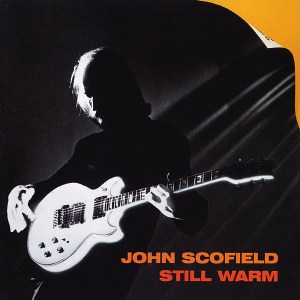


 movingtheriver.com