The John Scofield Interview: Sco in the ’80s, from Miles to Blue Matter

You could put forward a pretty good case that John Scofield was THE guitarist of the 1980s.

Probably best known for his incendiary playing in Miles Davis’s band between 1982 and 1985, he also enjoyed a distinguished solo career.

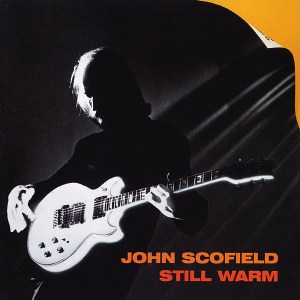
Whilst focusing on straightahead jazz during the early part of the decade, his stellar ‘fusion’ period between 1984 and 1988 – encompassing classic albums Electric Outlet, Still Warm, Blue Matter, Pick Hits Live and Loud Jazz – featured excellent original compositions and formidable players such as David Sanborn, Don Grolnick, Omar Hakim, Darryl Jones, Dennis Chambers, Hiram Bullock and George Duke.

In the meantime Sco was much in demand as a sideman, playing with everyone from Terri Lyne Carrington to Tommy Smith (this playlist gathers some of his greatest music of the 1980s) whilst also teaming up with fellow guitarist Bill Frisell, drummer Peter Erskine and bassist Marc Johnson in the latter’s Bass Desires project that produced two classic albums on ECM Records: Bass Desires and Second Sight.

Immediately recognisable with his chorus/overdrive sound and molten, legato style – always informed by the blues – Scofield’s solo career has since gone from strength, and we now find him ensconced in a highly productive spell on ECM, his latest album being Uncle John’s Band.

movingtheriver caught up with John to talk about his wonderful 1980s as he prepared for a European tour with keyboardist John Medeski – he’s ever the road warrior and seems full of energy and good humour.

MTR: I’d love to know a little about how/when you signed with Gramavision Records, and did you consider other options for your mid-‘80s solo career such as ECM?

JS: I signed with Gramavision shortly before I recorded Electric Outlet. They were very interested and made us a good deal when no one else had contacted me. After I met (ECM founder/producer) Manfred Eicher at the Bass Desires recording session he expressed interest but I had already signed a multi-record contract with Gramavision. After that I stayed with other New York-based companies (Blue Note and Verve) because I met those people here at home and they were major international labels. I’m quite happy now that I’ve found a home at ECM that is aligned with my current musical direction.

Drummer Steve Jordan plays some wonderful stuff on Electric Outlet – was he overdubbed at the end after you’d tracked everything with a drum machine?

Yes, exactly. I had bought a Roland drum machine and used it to make a four-track demo at home with me playing guitars and bass. I recreated that in the studio and had Steve overdub on all the tunes. He was incredible and nailed them so quickly. We’d played together a bit before – he was on my Who’s Who album in 1978.

I’m fascinated by the work you did with saxophonist George Adams during the 1980s, especially More Sightings (1984) – can you tell me how that came about?

I had played with George in New York on gigs with the Gil Evans Orchestra and then did a tour and album as a guest with the George Adams/Don Pullen band. Then George wanted to do the tour with Hannibal Marvin Peterson. They invited me and we ended up recording a live show in Zürich. I loved George’s playing and we were friendly. I even got him to come in to record with Miles for Columbia in 1983, but it seems that that recording session was lost somehow. I believe it was at The Hit Factory on Broadway. When they were putting together some CBS tapes for reissue, I was told by Michael Cuscuna that they didn’t find anything from that session… That’s all I know. It was Miles‘s band but with George on saxophone. (Adams is understood to have guested with Miles’s band in the studio on 16 June 1983 and also in concert at the Avery Fisher Hall in NYC on 26 June 1983, and was also part of the big band which played with Miles at Montreux in 1991 – Ed.)

Is it true that Kenny Kirkland was supposed to play keyboards on Still Warm but didn’t show at the last minute? And please tell me how the fabulous Omar Hakim came to play on the album.

Yes, Kenny was a friend and I was lucky enough to get to play with him a bunch, but somehow he didn’t show up at rehearsal so I asked Don Grolnick. I think Kenny just had his dates mixed up maybe? I’m not sure. It was a real loss that he died so young. Omar and Darryl Jones were playing with Sting at that time and I knew Omar although I had never played with him but I thought that he and Darryl could really lock it in. They sounded fantastic together.

So was Still Warm recorded just after you left Miles?

I think it was before the last tour. The last stuff I did with Miles was later in the summer in Europe and then Japan.

How much rehearsal time did you get with the bands in general for Still/Blue/Loud? Or did you give the band demos to learn in advance? Because a few of these compositions are treacherous, I’m thinking of stuff like ‘Trim’ and ‘Loud Jazz’ – how did Dennis learn them (he famously doesn’t read music – Ed.)?

For Still Warm, I think we probably had one rehearsal, then one in the studio. I think I made demos of the tunes to give everybody, but I can’t remember. By Blue Matter and Loud Jazz we were a working band. I had been playing some of the Blue Matter songs with a different keyboardist and drummer along with Gary Grainger. Gary recommended Dennis and I guess he learned the songs at rehearsal. Maybe I made demos… I just remember Dennis trying a go-go beat on ‘Blue Matter’ which I hadn’t tried before. I think I wrote that song just before the session and had never played it live. Then we played a week at Fat Tuesday before going into the studio with Dennis and Mitch Forman. For Loud Jazz, we rehearsed but also played the tunes live on tour before the recording.

Regarding producer Steve Swallow’s role, did he select material? The albums have stood the test of time so well because they’re generally free of 1980s production clichés.

Steve has been a friend and mentor to me since the ‘70s. He was interested in production and multi-track recording and I knew he would be great at it. Although he didn’t select the material, he probably helped me with selecting my own tunes. He was really involved in mixing and had suggestions for the arrangements. Because Gramavision had their own studios, we were allowed to mix for many hours and treated mixing more like we would for a pop record. We were really lucky to have the great engineer Joe Ferla, to whom we deferred for many of the mix ideas. Along with Steve, he was responsible for the sound.

Can you tell me a bit more about the tune ‘Gil B643’ – presumably it’s a tribute to Gil Evans? And was the title at all influenced by the movie ‘THX 1138’?

B643 was Gil‘s apartment number! We lived at the same building in Manhattan.

I’d love to know a bit more about ‘Picks And Pans’ and its 6/8 feel, it strikes me that it’s a very influential tune in ‘fusion’ but was it influenced by Joe Zawinul’s ‘The Juggler’ (from Weather Report’s Heavy Weather)?

I liked Joe’s tune but I don’t think I got the beat especially from that…but there were other examples of that kind of beat. Probably lots of them. Maybe it first came from Afro-Cuban music like Mongo Santamaria’s ‘Afro Blue’. Or you can take a jazz waltz and just put a backbeat in there!

Which is your favourite of the two terrific Bass Desires albums and why?

I can’t say that I really have a favourite, but I just remember the chemistry for the first record was really exciting and it was great when we realized we could play together and that the group had a different sound, largely because of Bill Frisell and his unique approach. Also the sound with the two of our styles working together. That’s not to take anything from Marc and Peter, who really contributed so much and brought in material and if it weren’t for Marc having the idea of putting us all together, it would never have happened. I remember we played some gigs together before we went in the studio as well as rehearsing. I think we played a strange cabaret club in New York City. I can’t remember the name of the place and we probably also played a gig in Boston as well before we went into the studio with Manfred Eicher.

How did Dennis Chambers and Gary Grainger come onboard for the Blue Matter band – did you headhunt them, did they audition, or a bit of both?

I was looking for an electric bass player and my friend, the keyboard player Marc Copland, recommended Gary who he had played with in Washington DC. He said Gary could play anything on electric bass and it turned out he was absolutely correct. I then played with Gary in another configuration and he recommended Dennis. Gary and Dennis grew up together in Baltimore and were old friends. I had heard about Dennis with The P-Funk All Stars and was so surprised to learn that he was looking to play more jazz/fusion. Actually, Darryl Jones had played me a great board tape and said, ‘Isn’t this drummer fantastic?’ But we didn’t know who it was. I found out later that it was Dennis so I was a fan already even though I didn’t know it!

Hiram Bullock is an inspired rhythm-guitar choice on Blue Matter – was he a Steve Swallow recommendation?

No, I knew Hiram was great. I knew him from the New York scene and we were friends. I wanted rhythm guitar on that one track and I thought he would do a better job than I did – I think he did.

Was ‘Blue Matter’ influenced by Miles’s ‘Tutu’ (composed by Marcus Miller)?

I just had a generic triplet-ish backbeat in mind. It had no relation to ‘Tutu’ – not at all. ‘Tutu’ sounds a bit like (Burt Bacharach tune) ‘The Look Of Love’, right?!

How did you achieve the final minute of ‘Time Marches On’ where you solo over that ‘drone’ – was it a slowed down tape loop?

No, we just did it in real time.

I’d love to know your favourite guitarists of the 1980s, any genre…

Mainly I liked the jazz guys Wes Montgomery, Jim Hall, George Benson, Pat Martino. But I always loved the blues guys starting with Hendrix and Clapton back in the ’60s, plus Otis Rush, Albert King and BB King. I always admired my contemporaries Metheny, Stern, Frisell, Abercrombie, Mick Goodrick… I went in the fusion direction because of my experience with Miles. If it wasn’t for him, I probably would’ve been just playing bebop and giving guitar lessons!

The only time I saw the Blue Matter band in London was a really weird but brilliant gig in the East End in summer 1987 I think, maybe it was called the Mile End Theatre? Do you remember that? And in general do you have good memories of touring the UK and Europe?

Was that the Half Moon Theatre? I’ll never forget the gig. The late John Cumming brought us to London and I played many gigs subsequently for him. Maybe it was my first one in London as a leader? Not sure? That band was so strong. We really had some success in UK/Europe in those days.

Did Miles ever give you feedback on your 1980s solo career, or did you ever seek it out?!

I know he liked my tunes because I wrote ‘You’re Under Arrest’ for him and gave him a demo of a bunch of other stuff, some of which ended up on my records. He said he was gonna record everything but then when I quit the band in order to go out on tour with Blue Matter, I didn’t get a chance to do any of that with Miles. He had moved on to Tutu. I remember I played him some of Blue Matter for him once and he was really blown away by Dennis’s playing…

Finally, how do you look back on your 1980s career in general? Was it a great era for guitar-based music?

It was an incredible time. It was great because of getting to play with Miles and all the exposure it got me, and then starting my own career, playing funk/jazz with those guys. I was so influenced by Miles and his direction in the ‘80s. But, for me, Weather Report and Herbie’s Head Hunters were the greatest. I think it was a really good era for guitar when you think of Holdsworth, Stern, Metheny, Robben Ford and so many more. And of course the classic rockers like Clapton and Beck were around. Pop music in general had some pretty hot-shot guitar stuff in there, and funk was really everywhere. Thanks to Sly…

Thanks John and good luck on the European tour…

John Scofield at the Cape Town Jazz Festival, 2003. Photo by William Ellis

Special thanks to William Ellis, George Cole and Jan Lohmann for their help with this piece.

Arvo Pärt: Tractus (2023)

Can music bring about social change, get people to put down their guns, retire their drones? Can ‘religious’ music affect the atheist/agnostic as powerfully as it affects the ‘believer’?

Ted Gioia may have some answers but in the meantime the Estonian composer Arvo Pärt has been making special music for decades.

His work was particularly revered in the 1980s as ambient/minimalism gained a bigger following than ever before, his ‘Fratres’ becoming a classic, performed by everything from a string quartet to cello octet and featuring on countless movie soundtracks.

Pärt’s mesmerising new ECM New Series album Tractus – probably movingtheriver’s album of 2023 – was recorded during September 2022 in Tallinn’s Methodist Church. It features music written between 1988 and 2019 for string orchestra, soprano voice, choir, piano and assorted percussion.

The title refers to a series of theological writings published between 1833 and 1845 by
English cardinal John Henry Newman, and also an ancient form of singing first noted as early as the third century AD. There are other historical precedents to both the title and compositional style, outlined in great detail within the CD’s liner notes.

Sadly the people who should listen to Tractus will probably never get to hear it.

Pat Metheny & Lyle Mays: As Falls Wichita, So Falls Wichita Falls 40 Years On

‘A game of two halves’ is a common expression in football, but it can apply to albums too.

We all know albums which have one good side and one bad one (I’ll throw in The Seeds Of Love, Fulfingness’ First Finale, Music Of My Mind, The Colour Of Spring for your consideration…).

But another humdinger is As Falls Wichita, So Falls Wichita Falls, released 40 years ago today.

The Cult Of Metheny has ensnared many, and puzzled just as many. But As Falls Wichita fell smack bang in my favourite era of Pat’s music (between American Garage and Song X), and represented a real change of scene.

Side one’s 20-minute title track delivered a full-on prog/fusion masterwork, ably assisted by Lyle Mays in classic-synth heaven (Prophet 5, various Oberheims, Roland CR-78 and Linn LM-1 drum machines), always totally recognisable, and at a time when polyphonic playing had just become possible. He was rapidly becoming a Joe Zawinul for the 1980s.

‘As Falls Wichita’ may be the most ‘rock’ music released on the ECM label during the 1980s, with the possible exception of David Torn’s 1987 record Cloud About Mercury. It also seems dangerously ambitious. Then again, the whole album was recorded in just three days! Lesser musicians could have taken a month to record this track alone.

Apparently chiefly written to play over the PA system before Metheny Group concerts, it’s pure headphone music. The enigmatic title (apparently nicked, with permission, from an unreleased Steve Swallow composition) and superb album cover certainly help.

The track plays out like a good movie (its working title was ‘Apocalypse When’). It’s more John Carpenter than Keith Jarrett. You might even describe it as cathartic, dammit.

(Another reason for its success may be the complete lack of instrumental solos. Pat doesn’t get any solo space at all – he just plays some unobtrusive bass, chiming 12-string electric and a little six-string. All sounds are textural and in the service of the whole piece.)

A superb live version was featured on the 1983 Metheny Group album Travels. And those who remember the Christian Dior ‘Fahrenheit’ adverts in the late 1980s may be familiar with a small excerpt of the track:

But back to that ‘album of two halves’ thing. Sadly, side two of As Falls Wichita is New-Age sludge. Ponderous and flabby, it’s fuel to Pat detractors, but probably loved by acolytes.

‘September Fifteenth’, a tribute to Bill Evans (named for the date of the great jazz pianist’s death in 1980) is the chief culprit. A closing, out-of-tune version of ‘Amazing Grace’ doesn’t help. It’s music for tired Apple executives, and sounds like it was recorded in the last afternoon of the three days.

But As Falls Wichita was an unexpected smash by ‘jazz’ standards: the album got to #1 on the Billboard Jazz Charts and quickly became Metheny’s biggest seller to date.

So happy 40th birthday to the classic title track. Pour yourself something tall, tune in, drop out, get the headphones on, lie on the floor and crank it up. It’s a trip, man…

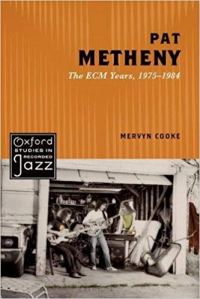
Further reading: ‘Pat Metheny: The ECM Years’ by Mervyn Cooke

ECM to Electro: New ’80s Playlists

Check out some brand new, specially-curated movingtheriver.com playlists on Spotify.

Nothing if not ambitious (and eclectic), the ultimate aim is to create a near-complete guide to 1980s music, genre by genre… And we’ll need your assistance from time to time too.

The first batch of five playlists showcases some great singles of the 1980s, classic new age and ambient sounds, a selection of electro/breakdance bangers and choice ’80s cuts from iconic jazz label ECM.

You can find them all on the new Playlists page, and I’ll be updating it regularly. Happy listening…


Book Review: Pat Metheny (The ECM Years 1975-1984) by Mervyn Cooke

You know the guy: long, bushy hair, beatific grin, jeans, sneakers, long-sleeved T-shirt, usually rhapsodizing intensely via some kind of guitar gizmo.

Despite his many stylistic detours, Pat Metheny is a brand all right, and his music inspires a devotion and attendant sales profile that has rarely – if ever – been afforded to ‘jazz’ musicians.

If you – like me – aren’t always enamoured by the bulletproof sincerity of his stage presentation (in Gary Giddins’ memorable words, he ‘intones plush melodies with excessive sobriety, as though the notes were transmitted directly from God’ – the main reason why I’ve always preferred his stuff on record rather than live…), it’s beyond doubt that Metheny is one of the great guitar soloists.

Mervyn Cooke’s superb new book ‘Pat Metheny: The ECM Years, 1975-1984′ sheds light on the first – and, for me, best – decade of the guitarist’s recording career, when he was the famous European jazz label’s top turn.

It’s an academic study, though never boring and certainly never predictable, with close attention played to Pat’s guitar styles, musical history, tunings, key collaborators (loads of new stuff about Jaco, Charlie Haden, Michael Brecker, Gary Burton and Lyle Mays here), equipment, album cover designs and inspirations.

There are fascinating details, like Metheny’s obsession with flat ride cymbals (hence his deliberate placement of drummers onstage, ride cymbals always in close proximity to his left ear) and his singular band-leading philosophies. There are solo transcriptions and quotes from archive interviews.

Cooke also shrewdly compares Metheny’s studio work in this era to that of Weather Report’s, drawing parallels between both acts’ meticulous sculpting of ‘spontaneous’ musical performances and attempts to concoct ‘through-composed’ – rather than vamp-based – material.

Metheny fans will love ‘The ECM Years’, as will anyone who has even the faintest interest in guitar trends of the last 40 years. It also serves as a rich biography of ECM Records in its early years, with numerous revelations about label boss Manfred Eicher.

Reading the book sent me running back to choice cuts from Pat’s early albums that I liked during my teenage years – Bright Size Life, American Garage, 80/81, As Falls Wichita, So Falls Wichita Falls, Travels, Rejoicing, First Circle, Song X.

Revisiting As Falls Wichita in particular has been somewhat of a revelation. (Prog fans: check out side one. It’s a cinematic masterpiece, analysed in great detail by Cooke.)

Mervyn Cooke’s ‘Pat Metheny: The ECM Years, 1975-1984’ is published by Oxford University Press.

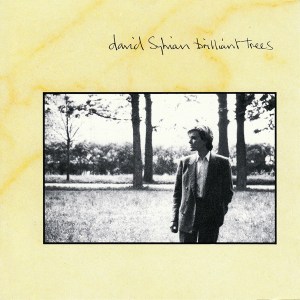
September Songs: David Sylvian’s Brilliant Trees

September’s here again. The leaves brown, the nights draw in; thoughts and ears turn towards Sylvian’s music.

The exquisite Brilliant Trees, released in July 1984is one of those collections that I must have owned on almost every format over the years, and probably bought a few times on each.

A period of extreme introspection and even depression descended upon Sylvian following the split of Japan in late 1982.

Although his relationship with Mick Karn’s ex Yuka Fujii (who took the photos in the stylish Brilliant Trees album package) was largely thought to be the main catalyst, it still represented for Sylvian a distressing rupture of childhood friendships.

He later claimed that he could barely stay awake during this period, so degraded were his immune system and emotional reserves.

Sylvian gathered co-producer Steve Nye and some of his favourite musicians at Berlin’s Hansa Studios and RAK in London. Influences came from ambient music, NYC avant-funk, John Martyn, Nick Drake and ECM jazz.

His friend/ frequent collaborator Ryuichi Sakamoto and brother Steve Jansen were the main musical cohorts, though ex-Japan keyboard texturalist Richard Barbieri also appeared to great effect.

Brilliant Trees is very much an album of two sides. The opener ‘Pulling Punches’ is a sweetener, an effective but unrepresentative slice of white funk featuring NYC sessioneers Wayne Braithwaite and Ronnie Drayton on bass and guitar. The nearest thing to the Tin Drum sound, there’s nothing remotely like it on the rest of the album.

What a treat to hear Kenny Wheeler and Mark Isham’s flugelhorn/trumpet breaks on the classic singles ‘Ink In The Well’ (UK #36) and ‘Red Guitar’ (UK #17). Side two is a different matter altogether – it’s dark, foreboding, autumnal.

Sylvian and Nye mostly eschew ‘conventional’ solos in favour of ‘found’ sounds courtesy of Holger Czukay’s Dictaphone (see below) or Jon Hassell’s extraordinary conch-like trumpet, both used to especially brilliant effect on ‘Wailing Wall’.

‘Backwater’ begins with a powerful build up of (sampled?) strings (and check out Jansen’s inspired groove, a queasy 6/4 over a very strange programmed shaker pattern), while the almost hymnal title track is beautifully performed by Sylvian and adorned with a gorgeous ethno-jam outro.

Listening 30 years on, what strikes one is the minimalist nature of the whole album. It has dated remarkably well. Many tracks are built around a cyclical Jansen groove, sparse bass, strong Sylvian melody and then tasteful, painterly touches from clean guitar, piano, Dictaphone or synth.

This stunning collection set in motion a superb four-album run of form for Sylvian. Brilliant Trees is an almost-perfect blend of songcraft and the avant-garde at a time when pop was drawing on jazz, ambient and world music to occasionally spectacular – and commercial – effect (the album reached #4 in the UK charts and sold over 100,000 copies). You might say things were never quite the same again.

Book Review: A Message To Our Folks (The Art Ensemble Of Chicago) by Paul Steinbeck

If the 1980s saw the full flowering of PR and image’s influence on the music world, it’s sometimes forgotten that jazz was an unlikely beneficiary of this trend too.

The Art Ensemble Of Chicago, that important unit whose line-up went unchanged for almost 30 years until trumpeter/co-founder Lester Bowie’s death in 1999, were a massive live draw during the early ’80s, particularly in France, where they were welcomed more like rock stars than avant-garde jazzers. Image and stage presentation were undoubtedly big factors.

Paul Steinbeck fine new biography of the band ‘A Message To Our Folks’ is a scholarly, forensic study, tracing their origins from the South Side of Chicago through their controversial move to Paris in 1969, return to the States in 1971 and commercial peak in the early 1980s.

He analyses key albums, talks to living members and dissects the Ensemble’s cultural importance. Despite the sometimes frivolous onstage ‘antics’, musically the collective was as serious as your life, to borrow the title of Val Wilmer’s groundbreaking book.

Drummer Don Moye remembers Bowie taking him aside after his successful audition and saying: ‘Don’t even mess with us or get any more involved if you can’t commit to playing Great Black Music at a very high level, becoming famous and taking our place in the history of jazz.’ The stakes were high.

They were ahead of their time with the use of slogans, labelling their sound Great Black Music to distinguish it from jazz; according to Bowie, ‘Never before were we even allowed the dignity of selecting a name for our own music.’ They also described their music as ‘Ancient To The Future’.

The band would pick up various celebrity fans: in 1975, Bowie took a trip to Nigeria and became Fela Kuti’s ‘guest of honour’ when he wowed him with an impromptu trumpet solo: ‘I played this blues… After I played a couple of choruses, Fela said, “Stop. Somebody go get this guy’s bags. He’s moving in with me…”‘

David Bowie also famously employed his namesake for the Black Tie White Noise album as did Danny Wilson for their acclaimed debut Meet Danny Wilson.

Don Moye in 2017

The Art Ensemble Of Chicago would also open doors for other instrumental groups with their onstage presentation, verging on dramatic performance – face paint and stage personas were the norm at a time when ‘jazz’ was becoming extremely bland.

‘Message To Our Folks’ is a fairly brief, fairly serious but highly effective biography, a must for general fans and a good companion piece to other key books on Free Jazz: ‘As Serious As Your Life’, Graham Lock’s ‘Forces In Motion’ and Ben Watson’s ‘Derek Bailey’.

‘A Message To Our Folks: The Art Ensemble Of Chicago’ is published now by The University Of Chicago Press.

John Abercrombie: Getting There 30 Years On

Maybe John Abercrombie was the Andy Murray of jazz guitarists.

People say Murray was ‘unlucky’ to be playing tennis at the same time as Federer, Djokovic and Nadal; Abercrombie was arguably ‘unfortunate’ to have been forging a career at the same time as Pat Metheny, Mike Stern, John Scofield and Bill Frisell.

But a superb career he forged all the same. Starting out as somewhat of a John McLaughlin imitator playing unhinged jazz/rock with Billy Cobham and Dreams on ‘some of the worst fusion albums ever made’ (his words), by 1974 Abercrombie had settled into a long, intriguing career on ECM Records, where he could pursue all his interests, from acoustic guitar duos with Ralph Towner to organ trios with Jan Hammer and Jack DeJohnette.

But one of his best bands was this mid-1980s outfit with ex-Bill Evans/Lyle Mays sideman Marc Johnson on bass and legendary Peter Erskine on drums, often augmented by Michael Brecker on sax too.

Abercrombie was getting heavily into the guitar synth around this time, while also using loops and ethereal keyboard patches to beef up the studio sound.

’86’s Current Events was a fine ‘blowing’ record but followup Getting There – released 30 years ago this month – was arguably Abercrombie’s most commercial album. It’s big and bold but definitely no ‘fusion’ sell-out, and it distills its ideas into relatively short, concise statements.

It’s also somewhat of a rarity for the ECM label in that it’s not produced by Manfred Eicher – Lee Townsend is in charge here, assisted by James Farber.

The epic title track is loud and proud, almost approaching avant-rock with Erskine absolutely lamping his drums and a hysterical, exciting set of screaming guitar-synth solos. It gets near the approach of David Torn’s sometimes raucous Cloud About Mercury album.

Ethereal, gentle and gorgeous ‘Thalia’ (composed by Vince Mendoza) and ‘Chance’ are ambient/jazz masterpieces with shades of Mark Isham’s work.

Classic ballad ‘Remember Hymn’ initially sounds like a re-harmonisation of Sibelius’s ‘Valse Triste’ but slowly becomes a vehicle for Brecker’s haunting tenor. The latter also cleans up on the raucous two-chord blowout ‘Furs On Ice’, reminiscent of Johnson’s Bass Desires band, with Erskine at his most Elvin Jones-like.

Getting There predictably received a somewhat muted critical reaction (but did get a three-star review in Q Magazine). I wasn’t bothered about that – having been recommended Abercrombie by a guitar player friend, I bought it sight unseen from HMV Oxford Street on vinyl a few weeks after it came out. It’s still my favourite album by the guitarist.

But it would be the last time Abercrombie dipped his toe into ‘rockist’ waters – he quickly regrouped to continue his ever-eclectic, increasingly gentle career, and, to the best of my knowledge, never picked up the guitar synth again…

Terje Rypdal: The Singles Collection

terje

It can’t hurt a record label to have a USP, a recognisable visual concept and/or sound. It has certainly stood Blue Note, Impulse and 4AD in good stead.

When one thinks of ECM, images of fjords, mountains or trees probably come to mind, alongside a certain sonic quality, a kind of rarefied ambience (producer/owner Manfred Eicher and his house engineers’ choice of reverb units are apparently almost as ‘secret’ as Colonel Sanders’ chicken recipe…).

The ECM formula worked for two decades. But then along came Terje Rypdal’s The Singles Collection in 1989 to throw a spanner in the works. Though the title is a joke – there are no ‘singles’ on the album – you wish more pop music was as bold as this collection which explores hard rock, early-’60s-style balladry, techno-fusion and even Prince-influenced funk to exciting and sometimes amusing effect.

The shorter tracks start out sounding a bit like Living In A Box jamming with Jeff Beck, before completely changing gear a minute in and turning into dark, introspective mood pieces with Messiaen chords and ethereal fretless bass.

Rypdal chucks in the whole kitchen sink, as if desperate to avoid a boring listening experience. The ploy works. Yes, this is the ECM album whose first track is titled ‘There Is A Hot Lady In My Bedroom And I Need A Drink’… It’s Lovesexy meets Ligeti.

The Singles Collection was the third album in a row where Rypdal hooked up with The Chasers, a cracking bass and drums team comprising of Bjorn Kjellemyr and Audun Kleive. The latter is thinking more Manu Katche and Stewart Copeland than Jon Christensen on this album, and the music is much better for it (no disrespect to the excellent Jon).

But a vital ingredient is the addition of keyboardist Allan Dangerfield who contributes three compositions and all manner of weird textures, Synclavier drum/sequencer patterns and unhinged, hysterical Hammond organ solos very much in the Prince style.

‘Sprøtt’ (Norwegian for ‘crazy’) sounds like an outtake from Jeff Beck’s Guitar Shop album with its chugging rockabilly rhythms and blistering lead guitar. Luscious noir ballad ‘Mystery Man’ will be familiar to fans of the Michael Mann movie ‘Heat’. If Mann hadn’t bagged it, you can bet David Lynch wouldn’t have been far behind. Maybe Dave can still put the gorgeous, glacial ‘Somehow, Somewhere’ to good use.

Elsewhere, ‘U’n’I’ fuses rockabilly and free-jazz beats with fusion bass, Ligeti chords and Van Halen guitar styles to thrilling effect. ‘Steady’ features some serious funk/rock riffing and another nutty Dangerfield solo. All in all, a striking, fascinating album.

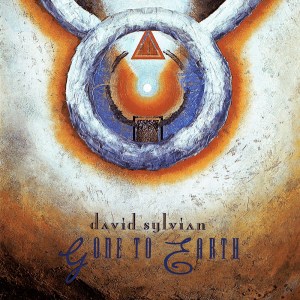
David Sylvian: Gone To Earth 30 Years Old Today

David sylvian

cover artwork by Russell Mills

Recently, I was honoured to be asked by photographer William Ellis to contribute to his One LP project where he asks musicians, writers and music business figures to speak about the album that has been most important to them.

Here’s what I said about Gone To Earth (with a few edits):

I was given the album by my parents on my 14th birthday. I had heard the single ‘Taking The Veil’ a few weeks before and it had struck me immediately as something I needed to check out. Concurrently, I was getting into Japan, Sylvian’s band from the early ’80s.

But Gone To Earth had a whole new influence: ECM-style jazz. Kenny Wheeler plays some beautiful solos, John Taylor features strongly on piano, and Harry Beckett blows all over ‘Wave’. Back in the mid-’80s, pop music embraced jazz with ease, but now it seems like the two worlds have completely diverged. Sylvian combines both elements really nicely.

When I delved deeper into Sylvian’s lyrics, I realised that they could be related to romantic affairs – there was a ‘pop’ element to them – but they could also be spiritual in nature, about ‘the other’ in general, touching on religious ideas, metaphysical ideas. That concept has fascinated me as I’ve got older.

Side two of Gone To Earth is completely instrumental. Sylvian loathed the term ‘new age’ and instead produced ambient music which was more environmental, geared towards self-reflection and an appreciation of nature. He once said, ‘If I didn’t live in a city, I wouldn’t need to make this music.’

On ‘The Healing Place’, German artist Joseph Beuys speaks about his vision of art. Another track features Robert Graves reciting his poem ‘The Foreboding’. The voice of JG Bennett makes a few appearances, familiar from Fripp’s Exposure.

And then, of course, there’s Sylvian’s voice. I think of it as an instrument. Some people find him a bit doomy, depressing, po-faced, but I’m always inspired by his melodies. He’s also a great, natural musician, very underrated/understated on keyboards and guitar.

The story goes that Virgin didn’t want to fund the second instrumental side. You can imagine, can’t you? They said, ‘This pop singer’s trying to an album of instrumentals? What’s going on?’, even though Bowie had done it ten years before. In this fascinating interview from 1986, Sylvian explains that he had to work on side two in his ‘spare’ time, away from Virgin’s watchful eye. I’m glad he did.

Musically, the album is also a guitarists’ dream: Robert Fripp, Phil Palmer, Bill Nelson and Sylvian himself contribute memorable, considered work. Nelson in particular is a revelation. Sylvian gives him space to sculpt and layer his parts, and he delivers some brilliant solos. BJ Cole adds some dreamy pedal steel.

David Sylvian

In 1988, I saw Sylvian at the Hammersmith Odeon with a great band featuring Mark Isham on trumpet, David Torn on guitar and Steve Jansen on drums. It was tremendously exciting; there was a kind of ‘goth’ element at the gig which surprised me and lots of young women screaming for Sylvian!

He was still holding onto his ‘pop’ status – it’s no mean feat for an 80-minute, half-instrumental album to reach 24 in the charts. It was a time when pop music had a lot more mystique; you had to scan The Face, Wire, NME or Melody Maker to glean any snippets of information about artists of Sylvian’s calibre.

Every time I listen to Gone To Earth, I notice something new. It’s such a layered, beautiful piece of music, almost always to be enjoyed in one sitting, and it came out during an incredibly fertile period for Sylvian – the 1984-1987 run of Brilliant Trees, Gone To Earth and Secrets Of The Beehive surely matches any other artist in ’80s music…