Michael Jackson’s ‘Thriller’ Video Premiere: 40 Years Ago Today

“‘Thriller’ made MTV. ‘Thriller’ created the home video business. ‘Thriller’ created so many things.”
John Landis

It’s hard to overestimate the cultural impact of the ‘Thriller’ video. Frequently parodied and ripped-off but still powerful, it premiered on Channel 4 and MTV 40 years ago today.

In the UK, it was shown (without any end credits) during a special late-night edition of ‘The Tube’ just before midnight on Friday 2 December 1983. I recall being allowed to stay up and watch it. It was one of the most exciting things I’d ever seen on TV, and also one of the scariest… Here’s how the special ended:

Let’s rewind to July 1983. The Police’s Synchronicity had just bumped Jackson’s Thriller album off the top of the Billboard charts. Jackson’s label Epic quickly formulated a plan to reinstate Thriller, reluctantly suggesting that its title track be released as a single (executives reportedly believed it to be a ‘novelty’ record!).

The catalyst for the groundbreaking video, which was part-financed by MTV, was Jackson phoning director John Landis in August 1983. He professed his love for Landis’s ‘An American Werewolf In London’, told him about the impending single release of ‘Thriller’ and then uttered the immortal words: ‘Can I turn into a monster?’

The rest is history. The video helped double Thriller’s album sales almost overnight, arguably broke down racial barriers in popular entertainment and helped raised the music-video format into a serious art-form. It also has to be said: it’s probably the last time Michael seemed relatively ‘normal’ (though his line ‘I’m not like other guys’ still raises a titter…).

“The only video we ever paid for was ‘Thriller’. We were playing it every hour, and announcing when it would next air. It brought people to MTV for the first time, and it made them stay and watch it again and again. Now everybody was into MTV.”
Bob Pittman, MTV executive

“When MTV started, it wanted nothing to do with Black artists. I thought, Wow, are we gonna miss out on this? But then I gave them ‘All Night Long’ after Michael had broken down the door. And from then on I was on MTV.”
Lionel Richie

“Michael Jackson had taken hold of the video form and shown everyone what you’re supposed to do with it. We all thought: Oh, OK – dancing!
Rick Springfield

Let us know your memories of watching ‘Thriller’ for the first time.

All quotes are taken from the excellent book ‘I Want My MTV’.

Check out Anthony Marinelli’s YouTube channel for lots of great muso stuff on the making of the Thriller album.
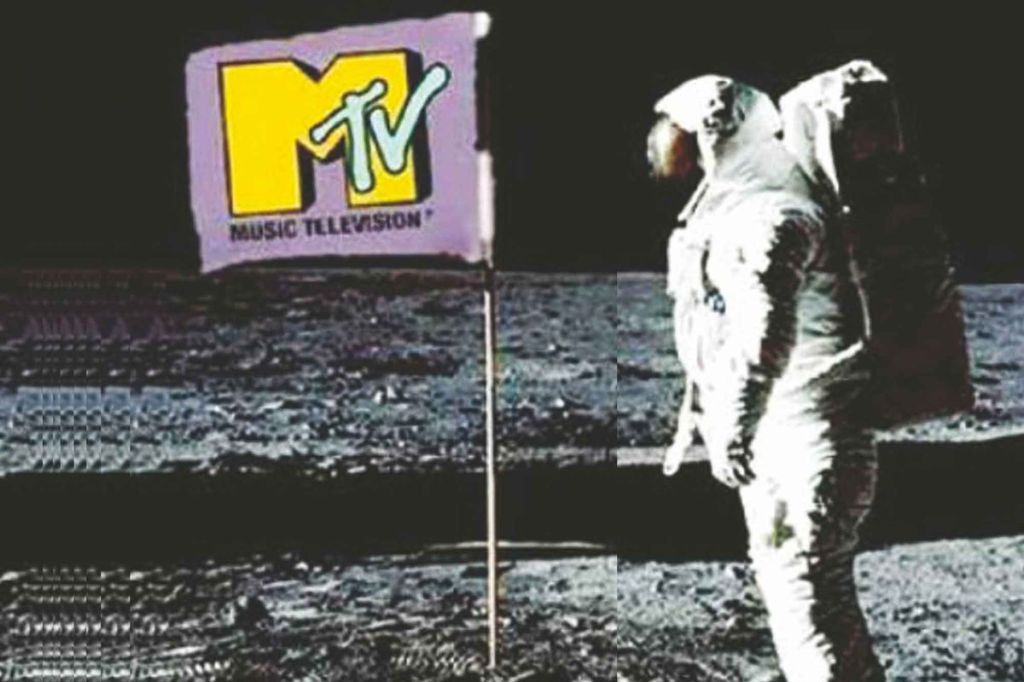
MTV @ 40: The First Five Years

Like most good ideas, it was a deceptively simple one: music radio, but on TV.

When the Warner Bros./American Express-bankrolled MTV (Music Television) launched 40 years ago this month, kicking off with The Buggles’ ‘Video Killed The Radio Star’, the music business was in a post-Saturday Night Fever slump.

But global record sales doubled between 1981 and 1990. Like it or hate it, MTV had a huge role to play. Its story also has fascinating echoes of the music business in the 2020s. But how did it revolutionise the industry so quickly?

In the early ’80s, video-making was a veritable Wild West, an almost-anything-goes environment. There were undoubtedly some shenanigans which wouldn’t win any #woke awards these days but, interestingly, it was predominantly women who ran video shoots, as producers and production designers.

Though their offices were based in New York, MTV was only initially available in the Midwest and suburban areas, as these were the places that had cable laid (leading to a veritable industrial revolution after the iconic ‘I Want My MTV!’ promo spots). Sonically, it was also important that MTV insisted on stereo audio from day one.

The localisation of MTV led to a big grassroots following for bands, particularly British ones, almost overnight. It also led to record companies getting very granular with sales; they paid closer attention, watching with interest if a band took off in one area. Labels started to take MTV very seriously indeed.

Then there was the Second British Invasion: a whole legion of young British acts (ABC, Flock Of Seagulls, Eurythmics, Culture Club, Cure, Billy Idol, Bananarama etc.) emerged in the early 1980s who took to videos like a duck to water.

They wowed Middle America, helped enormously by gifted Brit directors such as David Mallet (whose groundbreaking work on ‘The Kenny Everett Video Show’ from 1978 to 1980 ushered in many music-video tropes), Julien Temple, Steve Barron, Godley & Creme, Nigel Dick, Don Letts and Tim Pope.

But, in a curious echo of the current streaming craze, it seems the major labels were not prepared for the video revolution. They didn’t understand it and were suspicious of giving their content away for free. So they did what they usually do: shafted the artists. Video budgets became recoupable fees that came straight out of the artists’ profits. Artists were to all intents and purposes paying for their own videos.

The rise of MTV also meant that now the emphasis was on killer tracks rather than albums. It was a big problem for some acts, and the 1980s became synonomous with one-hit wonders. Rolling Stone and the trade magazines regularly trashed MTV in its first few years, and David Bowie questioned the lack of Black artists amidst frequent charges of racism.

But, by 1984, everything had changed. In the bumper year for Michael Jackson, Bruce Springsteen, Prince, Lionel Richie, Cyndi Lauper, Tina Turner and Madonna, it was clear that MTV was the tail wagging the dog. The naïve, experimental era was over. Post-‘Thriller’, more and more money was being thrown at videos and every director wanted to put their stamp on the material.

Also, by 1984, thanks to advertising revenue, MTV’s margins were huge. They were dictating to record companies, not the other way round. MTV didn’t have to pay royalties to artists or labels for showing videos. There was no ‘playlist’ per se, so they could pick and choose what they played.

It couldn’t last. The big major labels demanded a royalty to play their videos in 1984, threatening withdrawal of their products, and they eventually got it.

The first few hours of MTV’s launch day is a fascinating watch, showing how rooted in the 1970s it was when it started out, featuring REO Speedwagon, Stevie Nicks, Carly Simon, Gerry Rafferty, Todd Rundgren, The Buggles, Lynyrd Skynyrd (and TWO videos each of Pat Benatar, Split Enz and Rod Stewart!) and showing the dearth of decent contemporary videos.

The gauntlet had been laid down and it didn’t take long for some very creative people to pick it up. Next time: the videos that made MTV during its first five years on the air.

Further reading: ‘The Speed Of Sound’ by Thomas Dolby

‘I Want My MTV’ by Craig Marks and Rob Tannenbaum