The Greatest 1980s Movie Quotes

Whilst 1980s cinema was seemingly dominated by action heroes and comic actors (Bill Murray, Chevy Chase, Eddie Murphy, Steve Martin et al) who generally tended to transform projects by dint of their improvisatory skills, there were enough gifted writers around (Woody Allen, Oliver Stone, Bruce Robinson, John Carpenter, John Hughes, the Coen brothers etc.) to generate memorable, crafted lines too.

And the proliferation of comedies, horror movies and smart teen movies made for good zingers. But what makes a memorable movie quote? We present for your dubious pleasure a selection of 1980s lines and mini soliloquies that seem to hold up; some have become part of modern culture, some always provide a laugh or chill however many times one has seen the films, some are just plain weird and wonderful, and a few were probably improvised.

‘Heineken? F*ck that sh*t! Pabst Blue Ribbon!’ Blue Velvet (1986)

‘Let’s f*ck! I’ll f*ck anything that moves!’ Blue Velvet

‘Why are there people like Frank? Why is there so much trouble in this world?’ Blue Velvet

‘Better to be king for a night than schmuck for a lifetime.’ The King Of Comedy (1982)

‘I bet you’re the kind of guy that would f*ck a person in the ass and not even have the goddamn common courtesy to give him a reach-around.’ Full Metal Jacket (1987)

‘I have come here to chew bubblegum and kick ass, and I’m all out of bubblegum.’ They Live (1988)

‘Can I get ya anything? Coffee? Tea? Me?’ Working Girl (1988)

‘I have a head for business and a bod for sin.’ Working Girl

‘I am serious, and don’t call me Shirley.’ Airplane (1980)

‘What a pisser.’ Airplane (1980)

‘Into the mud, scum queen!’ The Man With Two Brains (1983)

‘You touch me, he dies. If you’re not in the air in thirty seconds, he dies. You come back in, he dies.’ Escape From New York (1981)

‘Beware the moon, lads.’ American Werewolf In London (1981)

‘We’re living in a shop. The world is one magnificent f*cking shop. And if it hasn’t got a price tag, it isn’t worth having.’ How To Get Ahead In Advertising (1989)

‘I tried to stand up and fly straight, but it wasn’t easy with that sumbitch Reagan in the White House. I dunno. They say he’s a decent man, so maybe his advisors are confused.’ Raising Arizona (1987)

‘Be the ball.’ Caddyshack (1980)

‘I’m a veg, Danny…’ Caddyshack

‘This is a cross of Kentucky Bluegrass, Featherbed Bent and Northern California Sensemilia. The amazing stuff about this is, you can play 36 holes on it in the afternoon, take it home and just get stoned to the bejeezus-belt that night.’ Caddyshack

‘The last time I was inside a woman was when I visited the Statue Of Liberty.’ Crimes And Misdemeanours (1989)

‘Showbusiness is not so much dog-eat-dog, it’s more dog doesn’t return dog’s calls.’ Crimes And Misdemeanours

‘For all my education, accomplishments, and so-called wisdom, I can’t fathom my own heart.’ Hannah And Her Sisters (1986)

‘How the hell do I know why they were Nazis? I don’t know how the can-opener works.’ Hannah And Her Sisters

‘If you build it, he will come.’ Field Of Dreams (1989)

‘It’s the best joke of all – a joke on the children…’ Halloween III (1983)

‘Get out…now!’ Halloween II (1981)

‘Listen, lady. If you don’t give Big Ed some air, he’s gonna piss…all over your half of my body.’ All Of Me (1983)

‘You can start by wiping that f*cking dumb-ass smile off your rosy f*cking cheeks. Then you can give me a f*cking automobile. A f*cking Datsun. A f*cking Toyota. A f*cking Mustang. A f*cking Buick! Four f*cking wheels and a seat.’ Planes Trains And Automobiles (1987)

‘I mean to have you even if it must be burglary.’ Withnail & I (1987)

‘My thumbs have gone weird.’ Withnail & I

‘We want the finest wines available to humanity, we want them here and we want them now!’ Withnail & I (1987)

‘Monty, you terrible c**t!’ Withnail & I

‘Flash, I love you, but we only have 14 hours to save the Earth!’ Flash Gordon (1980)

‘Get ready for greatness.’ Say Anything (1989)

‘She’s a brain trapped in the body of a game-show hostess.’ Say Anything

‘I’m incarcerated, Lloyd!’ Say Anything

‘I gave her my heart. She gave me a pen.’ Say Anything

‘Can I borrow your towel for a sec? My car just hit a water buffalo.’ Fletch (1985)

‘When you grow up, your heart dies.’ The Breakfast Club (1985)

‘I wanna be just like you. I figure all I need’s a lobotomy and some tights.’ The Breakfast Club

‘You’re a parent’s wet dream – neo-maxi-zoom-dweebie…’ The Breakfast Club

‘May I admire you again later today?’ Pretty In Pink (1986)

‘She thinks you’re sh*t, and deep down you know she’s right.’ Pretty In Pink

‘This is an incredibly romantic moment and you’re ruining it for me.’ Pretty In Pink

‘I did not achieve this position in life by having some snot-nosed punk leave my cheese out in the wind.’ Ferris Bueller’s Day Off (1986)

‘I’m obsessed, thank you very much.’ St Elmo’s Fire (1985)

‘No Springsteen is leaving this house!’ St Elmo’s Fire

‘How much more black can it be? The answer is…none.’ This Is Spinal Tap (1984)

‘What’s wrong with being sexy?’ This Is Spinal Tap

‘Hope you like our new direction.’ This Is Spinal Tap

‘I’m not gonna be ignored, Dan.’ Fatal Attraction (1987)

‘I love my dead gay son.’ Heathers (1989)

‘Be afraid. Be very afraid.’ The Fly (1986)

‘I’ll have what she’s having.’ When Harry Met Sally (1989)

‘It’s a good scream…’ Blow Out (1981)

‘Where we’re going, we don’t need roads…’ Back To The Future (1985)

‘Seize the day. Make your lives extraordinary.’ Dead Poets Society (1989)

‘They’re here.’ Poltergeist (1982)

‘Listen, and understand! That Terminator is out there! It can’t be bargained with. It can’t be reasoned with. It doesn’t feel pity, or remorse, or fear. And it absolutely will not stop… ever! Until you are dead!’ The Terminator (1984)

‘Gentlemen! Let’s broaden our minds. Lawrence?’ Batman (1989)

‘I’m of a mind to make some mookie.’ Batman

‘I…corrected them, sir.’ The Shining (1980)

‘Little pigs! Little pigs! Let me come in!’ The Shining

‘Why don’t we just… wait here for a little while. See what happens.’ The Thing (1981)

‘There’s no fog bank out there… There’s no fog bank out there… Hey, there’s a fog bank out there.’ The Fog (1980)

‘Get inside and lock your doors. Close your windows. There’s something in the fog!’ The Fog

‘Say goodnight to the bad guy…’ Scarface (1983)
The Cult Movie Club: The Thing (1982) 40 Years Old Today

Of course it wasn’t as much of a flop as often thought (budget circa $15 million, US box office circa $20 million) but director John Carpenter was under no illusions as to how the studio (Universal) perceived his ‘Thing’ in the immediate aftermath of its 25 June 1982 release, not helped by the appearance of ‘E.T. The Extra-Terrestrial’ two weeks before.
Come to think of it, has there ever been a less suitable ‘summer movie’ than ‘The Thing’? Carpenter agreed – he reportedly virtually begged Universal to delay its release to Halloween 1982 and change the title to ‘Who Goes There’, to avoid comparisons with ‘E.T.’. They refused.

Then there was the changing nature of horror-film audiences to contend with. After a market-research screening, one teenager apparently approached Carpenter pleading complete ignorance regarding the ending. When the director responded that it was up to their imagination, the co-ed mumbled, ‘Oh, God, I hate that…’

With hindsight, maybe we can also point a finger at the marketing. The standard Hollywood thinking – as per Art Linson’s book ‘What Just Happened’ – was that the marketing people would always blame a film’s poor box office on anything but the marketing, and generally keep their jobs in the event of a bomb. That would definitely not be the case now…

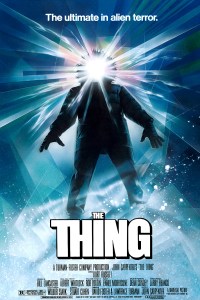
Above is the original poster – hardly a classic of its era, with very little if nothing to do with the film. The below VHS rental cover is surely what they should have gone with, complete with classic tagline and surreal main image.

Still, the movie is as fresh and troubling today as it was 40 years ago (and, watching it for probably around the tenth time recently, moves at a far swifter clip than I’d remembered), and anyone who hasn’t seen it should check it out ASAP, on as big a screen as possible. Happy birthday, Der Thing!

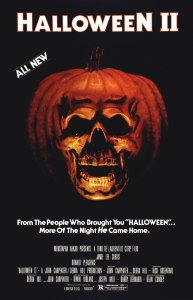
The Cult Movie Club: Halloween II (1981) 40 Years On

A babysitting uncle (later reprimanded by my mum!) showed my brother and I John Carpenter’s classic 1978 film ‘Halloween’, recorded from TV after its first (edited) UK showing, sometime in 1982 or early 1983.

I loved it but it scared the bejesus out of me. Well, I guess everyone’s entitled to one good scare on Halloween. But Rick Rosenthal’s 1981 sequel, released 40 years ago this weekend, was a definite no-no. My parents wouldn’t let my brother and I watch it, though I distinctly remember us creeping along the upstairs corridor and spying on them watching the rented video with friends.

‘Halloween’ has of course been through numerous/confusing sequels and reboots. The new ‘Halloween Kills’ is supposedly a ‘proper’ sequel to the rebooted ‘original’ of 2018 (which I tried to watch recently, but didn’t last beyond the first five minutes…).

But back to John Carpenter’s original 1978 classic. It was a huge hit. Once the money started rolling in, a sequel was on the cards, one that Carpenter was unable to veto due to his original contract (he also allegedly missed out on a huge amount of royalties too).

So he reluctantly hooked up again with Debra Hill to write the screenplay and co-produce. The result was one of the last big ‘slasher’ hits, outside of the endless ‘Friday The 13th’ sequels, earning around $25 million worldwide against a $2.5 million budget. And this was in the days when sequels were not commonplace.

But how does ‘Halloween II’ stand up today? First, the good stuff:

The camerawork
Director of photography Dean Cundey was lured back from the original, passing up the opportunity to work on Spielberg’s ‘Poltergeist’, and his original angles and Panaglide compositions elevate the film way beyond the standard slasher fare.

The hospital setting
It’s a great idea to set the film in a suburban hospital, and gives a claustrophobic sense of isolation, of course a descendant of Carpenter’s ‘Assault On Precinct 13′ (via, originally, Howard Hawks’ ‘Rio Bravo’ and George Romero’s ‘Night Of The Living Dead’).

Continuity
It’s a neat concept to start the film right where the original ‘Halloween’ ended.

Donald Pleasence
Once again he fully embraces the role of Dr Sam Loomis. He takes it seriously and does a stand-up job, complete with a few memorable line readings.

The Chordettes’ ‘Mr Sandman’ intro and end credits
A very creepy choice, possibly influenced by the use of music in ‘The Shining’.

But then there’s the bad stuff:

Lack of Jamie Lee Curtis
She spends most of the movie either in a hospital bed or limping/crawling around (wearing a very odd wig). As good a performance as she gives, the film suffers from her inertia.

Too much dialogue/exposition
There are way too many slow, boring plot/dialogue longeurs.

Lack of engaging/likable characters
As workmanlike as the mostly young cast are, they can’t replicate the natural rapport that existed between Jamie Lee, Nancy Loomis, PJ Soles etc. in the original film.

Dick Warlock as The Shape
The original film mostly used Nick Castle as The Shape, but experienced Hollywood stuntman Warlock got the role here, and he moves way too slowly and stiffly (and the William Shatner mask doesn’t quite fit…). And the closing fire stunt may have won him some brownie points in the industry but looks absurd now.

Gratuitous gore
Carpenter took a look at the first assembly of ‘Halloween II’ and decided it was too long and not scary enough. He shot a few additional scenes, adding some gore and spikes. Sadly this resulted in too many nods to standard slasher movies, and resulted in a lot of dodgy reviews. Carpenter was also fairly disgusted with himself for ‘messing’ with another director’s work – ‘I did something I don’t believe in. I did something I would hate for anybody to do with me. It was an evil thing to do and I didn’t enjoy any of it,’ he told biographer Gilles Boulenger.

Music
Alan Howarth overdubbed onto Carpenter’s original 16-track tapes, adding copious synths and and drum machines – there’s a lot of bluster but unfortunately Howarth adds little to the original soundtrack.

In conclusion: I’d argue it’s a decent-enough sequel, despite the obvious problems. The last 15 minutes offer creeps, shocks and thrills, and the hospital setting works excellently.

The movingtheriver.com rating: 6/10.

Now, I must go and answer that door. Damn kids…

The Cult Movie Club: The Dead Zone (1983)

What’s the ‘accepted’, untouchable shortlist of ‘successful’ Stephen King screen adaptations? ‘Misery’, ‘The Shawshank Redemption’, ‘It’, ‘Carrie’, ‘Stand By Me’, ‘Salem’s Lot’.

But David Cronenberg’s ‘The Dead Zone’ seldom appears in that top tier. Why? Possibly because it is seemingly part of the early-‘80s big-budget horror era, when the studios were trying to cash in on ‘slasher’ hits like ‘Halloween’ and ‘Friday 13th’ (see also ‘Omen III: The Final Conflict’, ‘Halloween III: Season Of The Witch’, ‘Psycho II’, ‘Christine’).

Cronenberg had just completed sci-fi/horror shocker ‘Videodrome’ when he was invited onto the project by Debra Hill, producer of ‘Halloween’/’The Fog’ and ex-wife of John Carpenter (‘The Dead Zone’ had apparently previously been earmarked for Stanley Donen, director of ‘Singin’ In The Rain’!).

King himself supplied the first draft of the script. According to Cronenberg, it was a ghastly, serial-killer-on-the-loose gore fest. Jeffrey Boam and Cronenberg worked on it and built the story around Johnny Smith, played by Christopher Walken, who develops second sight after five years in a coma following a devastating car crash.

So how does ‘The Dead Zone’ stand up today? Exceptionally well. It’s Cronenberg’s first film about ‘God-fearing’ people, and also his first warm-hearted picture. It takes place in King’s fictional town of Castle Rock, supposedly a combination of various real locations in Maine – all very Norman Rockwell.

These are the first Cronenberg characters we care for (he has described it as ‘a lost-love story’). Brooke Adams, Herbert Lom, Tom Skerritt and Walken are excellent, playing it completely straight, and there’s a terrific, terrifying performance by Martin Sheen as the Jim Jones-like Greg Stillson.

But finally it’s Walken’s film (Cronenberg described his face as the ‘subject of the movie’), another brilliant performance. We totally accept Johnny’s story and want him to succeed. He’s a good man in pain who has lost the love of his life.

The movie is relentlessly downbeat with no ironic escape route. It’s totally Cronenberg’s milieu – a snowy, crisp mise-en-scene (shot in and around Toronto), with a typically great car crash.

He casts his cold, clinical eye over some pretty preposterous material, but it’s stark and chilling, with the director’s customarily-abrasive cutting and editing style. It’s NOT a film for kids…

Importantly, Johnny’s visions are genuinely scary. But is he God or Lucifer? (There may be minor similarities of the film with John Landis’s opening segment of ‘Twilight Zone: The Movie’, released three months before ‘The Dead Zone’). Walken plays with this dichotomy perfectly.

Like King’s ‘Misery’, ‘The Dead Zone’ takes a none too fond look at the ‘great unwashed’, with Johnny getting endless pleading/begging letters from people with ‘lost dogs, lost lives’.

And it’s also unfailingly negative about the US political process during the early 1980s (Boam reportedly delivered his first draft the day of Ronald Reagan’s inauguration).

There’s a lush, superb score by Michael Kamen. Its main five-note motif is almost as memorable as anything John Williams wrote for Spielberg, speaking to Johnny’s tragic dilemma.

Of course there are some bum notes: the poor performances of a few minor characters; a very gratuitous, unpleasant sexual assault/murder scene (apparently not in King’s book); and the constant dilemma of second-guessing his physical contact with others.

What is Johnny withholding from us/the other characters when he shakes their hand or embraces them? Also the film rather lurches from one section to another, with Johnny basically inert and ‘in hiding’ until he is called on to act by the townsfolk.

‘The Dead Zone’ did pretty good business at the box office, earning double its costs and ushering in Cronenberg’s brief flirtation with the mainstream (he was offered – but turned down – ‘Flashdance’, ‘Beverly Hills Cop’ and ‘Top Gun’ during this period): next up was ‘The Fly’, a huge hit.

You could make the case that he was one of the key directors of the 1980s. From the landmark sci-fi/horrors ‘Scanners’, ‘Videodrome’ and ‘The Fly’ to the ice-cold ‘Dead Ringers’, he consistently pushed the envelope.

Further reading: ‘Cronenberg On Cronenberg’ (ed. Chris Rodley)

The Cult Movie Club: John Carpenter’s ‘The Fog’ 40 Years On

What with ‘The Lighthouse’ and ‘Bait’, you can’t move for nautically-themed movies at the moment.

But it’s arguable whether either are as effective as John Carpenter’s ‘The Fog’, released 40 years ago today.

But then I’m biased: aside from Carpenter’s ‘Halloween’ and ‘American Werewolf In London’, it was one of the first scary movies I was allowed to watch in my teenage years, and subsequently inspired a dodgy short horror novel of my own (‘The Ghost Of The Drowned Sailor’…).

Revisiting it this week for the first time in ages, it delivered all sorts of treats though these days is scarcely mentioned alongside ‘Halloween’, ‘Assault On Precinct 13’ and ‘The Thing’ in the list of bona fide Carpenter classics.

Shot mainly in coastal California around Point Reyes, Bodega Bay and Inverness, ‘The Fog’ was a brave move on Carpenter and producer/co-writer Debra Hill’s part, following up ‘Halloween’ by mostly eschewing the slasher format (it’s interesting to note that both ‘The Shining’ and ‘Friday The 13th’ were released two months later, in May 1980) in favour of a seemingly old-fashioned ghost story inspired by a trip to Stonehenge and the writings of Edgar Allan Poe.

This attempt at a different kind of movie caused problems when Carpenter’s original cut was deemed too moody and not supplying the requisite scares for post-‘Halloween’ sensibilities.

Many scenes were re-shot and some new ones added just a few months before release, including the opening ghost story, ‘Close Encounters’-style scene-setting and top-of-the-lighthouse finale. The music and sound effects were also reworked.

Watching the 2002 DVD edition, the first thing I noticed is the gorgeous lighting and camerawork. Its sharp, crisp colours and composition are a great testament to the lab technicians (heralded by Carpenter on his DVD commentary) and director of photographer Dean Cundey, who has since gone on to be one of the premier DPs in Hollywood.

The impressive miniature/model work, widescreen lenses and evocative coastal locations give a lot of bang for relatively little buck (‘The Fog’ was eventually brought in at just over $1 million). ‘The Fog’ also benefits from an excellent central performance from Adrienne Barbeau as the Hawksian, Bacall-voiced DJ Stevie Wayne (and spinner of Steely Dan-approved big-band and light jazz/fusion tunes).

She and co-writer Debra Hill manage to root the hokum in a credible, sympathetic, rounded character. It’s also great fun to see Janet Leigh appearing in the same movie as her daughter Jamie Lee Curtis, and Nancy Loomis delivers her usual amusingly insouciant line readings.

Effects man extraordinaire Rob Bottin features as head ghost Blake, heading up a very rock’n’roll-looking bunch of ghouls, though arguably the movie would have benefitted from a little less ‘show’ and a little more ‘tell’ in the last 20 minutes. Seeing Blake in plain sight at the end is always a bit of a disappointment, despite the glowing red eyes.

But editors Charles Bornstein and Tommy Lee Wallace deserve much credit for building tension in the last third with shrewd, snappy cutting (sometimes seamlessly between studio/location shots). Carpenter’s excellent soundtrack cribs a little from Michel Legrand’s famous score for ‘The Go-Between’ but has some marvellous sections, particularly during Barbeau’s ‘look for the fog’ closing speech (obviously very influenced by a similar ending to Howard Hawks’ ‘The Thing’).

‘The Fog’ was a hit (despite Siskel and Ebert’s stinking review, see below), earning around $20 million against its $1 million budget. It was a lot of fun to revisit it again, and looks like just the low-budget horror classic I always remembered it to be, with more imagination and storytelling elan than 99% of other genre offerings.

Happy birthday to a true cult classic. Now, what’s that sound? Who’s rapping on my door at this hour? Goddamn kids… They won’t like finding me at home…

The Cult Movie Club: Moviedrome

Watching ‘Halloween 2’ (1981) on the big screen the other night brought back lots of memories.
Apart from generating a few more good scares than I was expecting, it also reminded me of the very real excitement of the late-night cult movie. ‘Moviedrome’ wasn’t a cult movie but a series of cult movies transmitted on Sunday nights by the Beeb between 1988 and 2000.

Pre-internet, there was a real curiosity to this collection of lost classics. Your parents had gone to bed. It was just you and the TV. What forbidden wonders were about to be unfurled. ‘Moviedrome’ was initially presented by director Alex Cox (‘Sid And Nancy’, ‘Walker’, ‘Repo Man’), and just a glance at the running order of the first two series should excite movie fans of a certain hue:

1988:

The Wicker Man
Electra Glide in Blue
Diva
Razorback
Big Wednesday
Fat City
The Last Picture Show
Barbarella
The Hired Hand
Johnny Guitar
The Parallax View
The Long Hair of Death
Invasion of the Body Snatchers (1956)
The Fly (1958)
One From The Heart
The Man Who Fell To Earth
The Good, The Bad and The Ugly
One-Eyed Jacks

1989:

The Man With The X-Ray Eyes
Jabberwocky
D.O.A.
The Thing From Another World
The Incredible Shrinking Man
California Dolls
THX 1138
Stardust Memories
Night of the Comet
The Grissom Gang
The Big Carnival (Ace in the Hole)
Alphaville
Two-Lane Blacktop
Trancers
The Buddy Holly Story
Five Easy Pieces
Sweet Smell of Success
Sunset Boulevard

Many of these films are etched upon my brain 30 years on, particularly ‘THX 1138’, ‘Electra Glide In Blue’,  ‘The Man With X-Ray Eyes’, (‘Pluck it out! Pluck it out!’), ‘Five Easy Pieces’ and ‘The Parallax View’.

In later series, they showed uncut UK premieres of ‘Bad Timing’, ‘Scarface’ and ‘Pulp Fiction’, amongst others. Checking in to watch ‘Moviedrome’ on a Sunday night gave you the feeling that you were a member of a very small but select club.

Cox’s introductions were highly original bits of film criticism in themselves, with his arch sense of irony and keen eye for detail (bit-part actors, weird editing, striking set design). He even had the audacity to present his own movie ‘Walker’ during the series.

Later Mark Cousins brought a more serious tone, an intriguing accent and also some intelligent, subtle analyses. Watching a few of these intros just make me want to watch the movies again. If only there was such a widely-seen yet distinctly ‘cult’ film club as ‘Moviedrome’ these days.

The Cult Movie Club: Southern Comfort (1981)

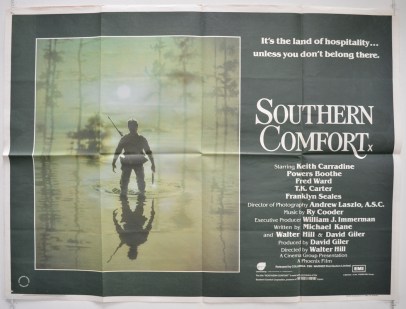
After the extended prologue, when Ry Cooder’s swampy blues riff slides in over a glorious widescreen shot of the Louisiana bayou, you know you’re watching a classic of its kind.

To this day, co-writer/director Walter Hill claims that the superb ‘Southern Comfort’ doesn’t directly allude to the Vietnam War, but it’s hard to conclude otherwise.

Set in 1973, his film concerns a motley group of weekend National Guardsmen whose sojourn into Cajun country (with the promise of prostitutes at the end of the road) turns into a desperate fight for survival when a foolish prank leaves them at the mercy of some particularly vengeful locals.

Hill prefers to call it a ‘displaced Western’, a film about escalating moral dilemmas in unfamiliar surroundings. That rings true too, but watching it again after ten years or so, I couldn’t help comparing it to John Carpenter’s ‘The Thing’, another all-male classic about creeping, self-defeating paranoia, fudged leadership and dodgy group-think.

‘Southern Comfort’ might also be described as ‘The Warriors’ meets ‘Deliverance’. It’s that good. This is a pre-irony, pre-CGI action movie, where men are men (the sort of men who might get a ‘phone call in a pub….on a landline’), decisions have consequences and vengeance is swift and fairly brutal.

The action sequences are gripping, though never tawdry, and look extremely punishing for the cast – there’s a particularly realistic dog attack and a memorable quicksand incident. Apparently the shoot was long, cold and difficult, with camera tripods frequently sinking into the bayou.

The dialogue is fast and loose – the brain has to be in gear to pick up all the political/ethical nuances that fly by – and the acting styles deceptively ‘naturalistic’. Keith Carradine and Powers Boothe are superb as the reluctant heroes who must overcome their basically apolitical stances to become men of action and moral choice.

Carradine in particular makes for a fascinating action-man (according to Hill, his character is a ‘Southern aristocrat’). The secondary cast of mainly unknowns (the ever-excellent Peter Coyote aside) is also superb. But ‘Southern Comfort’ was a commercial dud on its 1981 release. Maybe, like ‘The Thing’, it’s far too stark a vision. But it certainly it spawned some new movie clichés and looks like an influence on many ’80s movies from ‘Aliens’ to ‘Predator’.

It’s also a fascinating watch these days considering the state of the US – the film’s message seems to be that peace is impossible while there remain so many internal divisions and prejudices.

Gig Review: John Carpenter @ The Troxy, 1 November 2016

carpenter-halloween

Carpenter (centre) and band overseen by Jamie Lee Curtis and Nancy Loomis in ‘Halloween’

It’s surprising that John Carpenter has taken so long to perform his own music in concert.

The director of ‘Halloween’, ‘Assault On Precinct 13’, ‘The Fog’ and ‘The Thing’ is well-known for his incredibly effective, synth-laden soundtracks, and he’s also been known to let his hair down in after-hours rock band The Coupe De Villes with movie biz friends Nick Castle and Tommy Lee Wallace.

But it’s actually a perfect time for him to be fronting his own band. Watching Adam Curtis’s impressive ‘HyperNormalisation’ documentary last week, I was struck how many current bands are clearly influenced by Carpenter’s music (which has also frequently turned up in Curtis’s docs). The dark, pulsing synthscapes of worriedaboutsatan and Pye Corner Audio particularly owe him a large debt.

Though apparently not in tip-top health (it’s hard to resist quoting that great line from ‘Assault’: ‘He don’t stand up as good as he used to…’), Carpenter was clearly having a ball on this short UK tour, bopping around behind his keyboard and booming out pre-rehearsed lines like ‘Good evening, London, I’m John Carpenter!’ and ‘Horror movies will live forever!’.

The beautiful Art-Deco Troxy venue was specially decked out like the ‘Escape From New York’ set, while a large screen behind the stage projected key scenes from his many classic movies.

carpenter-they-live

Carpenter mixed up tracks from his soundtrack work with some from recent non-soundtrack albums Lost Themes 1 and 2. The theme from ‘The Fog’, embellished with some baroque church organ, sent a chill down the spine while ‘They Live’ and ‘In The Mouth Of Madness’ were graced with some great, sleazy noir lead guitar from Daniel Davies.

‘Halloween’ and ‘Escape From New York’ were greeted like hit singles by the near-sold-out crowd. Newer track ‘Vortex’ showed how distinctive a musician Carpenter really is, the opening piano chords instantly recognisable as his soundworld. Other tracks had hints of Metallica, The Knack and even The Police at their rockiest.

A couple of bum notes: the venue sound was not great and the band were a bit brittle at times – you occasionally wanted a bit of double-bass-pedal mayhem from drummer Scott Seiver. There was also a bit too much DX7 and not enough booming Moog in the synth department. And where was the video for ‘Night’?

But all in all this was a great way to pay one’s respects to a master of mood and texture and a damn good musician to boot. Go ahead, John. We await the Coupe De Ville’s debut London gig with anticipation.

Andy Summers & Robert Fripp: I Advance Masked/Bewitched

Andy-Summers-I-Advance-Masked-77760With hindsight, it seems completely logical (not least because they both hail from the county of Dorset, England) for these two guitar giants to record together, and their two 1980s collaborations are engaging if annoyingly inconsistent.

1982’s I Advance Masked is under-produced, tentative and unfinished-sounding, and this approach works fine on the beguiling title track (which prompted one of the worst videos of the decade) and evocative ‘Hardy Country’, where strong themes carry the day.

The album offers fascinating examples of the kinds of guitar woodshedding the players were doing in the early ‘80s. Summers is in full-on Ghost In The Machine mode with meshes of swelling guitar synth and simple, incongruously bluesy solos, while Fripp foregrounds ideas that he would use to greater effect on King Crimson’s Beat album.

But the duo’s limitations as multi-instrumentalists hamper the rest of I Advance Masked – the drum programming is limp, bass playing fairly amateurish and the synth playing simplistic (though sometimes perversely enjoyable in a kind of sub-John Carpenter way). The shorter tracks search in vain for some status as ‘ambient’ or ‘environmental’ music but are too quirky for that purpose.

And, amazingly, I Advance Masked cracked the top 60 in the US Billboard pop charts.

summers and fripp1985’s Bewitched is a dramatic improvement on that debut album. Side one features attractive melodies, well-thought-out song structures, (mostly) real drums, some incredible bass playing from Chris Childs and ex-League of Gentleman/Gang of Four Sara Lee, pristine mastering and more of a ‘band’ sound.

The opener ‘Parade’ flies out of the traps with New Wave drums and an engaging little synth guitar melody. With its major-chord exuberance and very short duration, it could easily have come from side one of Bowie’s Low.

‘What Kind Of Man Reads Playboy’ is pretty much a perfect distillation of the state of the electric guitar in the mid-‘80s. Summers’ ingenious layering takes in wah-wah funk, harmonic washes, bebop, bluesy leads and tasteful guitar-synth textures. Fripp plays one of the most extreme solos of his career while Sara Lee (or is it Chris Childs?) impresses with high-speed soloing and tasty grooving.

Unfortunately, side two is more in line with the debut album, a series of rather uninteresting, short and badly recorded tracks. Think ‘Behind My Camel’ in demo form but without Stewart Copeland. But the best is saved until last, the stunning closer ‘Image And Likeness’ featuring Summers’ cascading harmonics.

By his own admission, Fripp generally takes a back seat and basically provides a framework for Summers’ talents to shine through. An admirable position for sure, but he was becoming a bit like the Wayne Shorter of guitar at this point, happy to be in the shadows.

But this is in general an intriguing and somewhat overlooked collaboration calling to mind an era when big labels were putting some serious money behind instrumental music (though Summers reports that A&M were extremely reticent about this collaboration) and ‘rock’ was allowed to be intelligent.