The Face Magazine: Culture Shift @ National Portrait Gallery, London

Any British music fan who came of age during the 1980s must surely have a soft spot for The Face magazine.

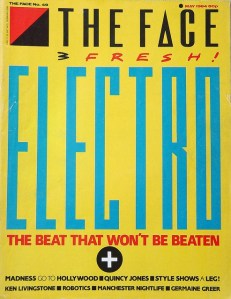
Launched by Smash Hits founder/NME editor Nick Logan in May 1980, the monthly rag – so named because of its Mod allegiances – quickly become known as a first-rate style mag (it covered fashion, music, culture, clubbing and cinema too), with its many famous covers reaching the level of high-quality pop art.

Indeed, looking again at issue #1, it’s remarkable how many of its listed writers and photographers would turn out to be key documentors of the decade – Janette Beckman, Julie Burchill, Gary Crowley, Anton Corbijn, Ian Cranna, Jill Furmanovsky, David Hepworth, Tony Parsons, Sheila Rock, Pennie Smith (and that issue alone features iconic photos of Madness, The Specials, The Clash, John Lydon and Paul Weller, amongst others).

It was also unique amongst 1980s music mags in paying as much attention to reggae, hip-hop, electro, house, rare groove and jazz as it did to post-punk, 2-Tone and sophistipop.

But movingtheriver also remembers it most for its superb long-form interviews: I still have issues featuring in-depth pieces on Miles Davis, Trouble Funk, Dennis Hopper, David Sylvian, David Byrne, Robert Smith, Daryl Hall and Ken Russell.

The Face’s iconic imagery is celebrated at the excellent if compact new exhibition at London’s National Portrait Gallery. Predictably it’s photos from those post-punk/New Pop salad days of 1980-1983 which produce the most smiles of recognition/pleasure – Bowie in Japan, Adam Ant, Phil Oakey, John Lydon, Annie Lennox.

But there are great pics/stories from later in the decade too – Bros with their mum at home in Peckham, Shane MacGowan, Sade, Nick Kamen, Felix et al. There’s also a great chronology of 1980s clubbing, from Goth to Acid House, and a focus on long- lost London nightspots.

As the 1980s became the 1990s, The Face arguably reflected a gradual coarsening of the culture with more focus on fashion and lifestyle – but you knew that anyway. But this exhibition is a must-see for any music fan who loved the 1980s, and it was also refreshing to see such a broad range of ages attending.

The Face Magazine: Culture Shift runs at the National Portrait Gallery until 18 May 2025.

Book Review: Absolute Beginner by Kevin Armstrong

Most fans of 1980s pop and rock will have come across the name Kevin Armstrong, guitarist with Iggy Pop, Morrissey, Sinead O’Connor, John Lydon, Propaganda, Tin Machine, Prefab Sprout, Thomas Dolby and Paul McCartney, and famously part of David Bowie’s band at Live Aid.

His enjoyable new memoir ‘Absolute Beginner’ is that rare thing – a book by a British session player who has borne witness to massive egos, occasional artistic triumphs and typical music biz disappointments, all the while trying to get a reasonable guitar sound.

But the book is anything but a polite/completist career overview – Armstrong knows where the bodies are buried and doesn’t hold back on salacious details. He’s also blatantly honest about his own perceived musical shortcomings and mental health issues.

Finally the book comes over as something like a cross between Giles Smith’s ‘Lost In Music’ and Guy Pratt’s ‘My Bass And Other Animals’, with just as many laughs as both.

We learn about his misspent youth in the relatively salubrious environs of Orpington, Kent, nurturing his increasing interest in the guitar and music of David Bowie, Yes, Zappa and Roxy Music (and ponders whether Eno’s squealing synths caused him some hearing loss issues when watching Roxy supporting Alice Cooper). There are superb passages about the power of listening to a great album while studying the sleeve and indulging in ‘mild hallucinogens’.

The punk era sees Armstrong squatting in Brixton, hanging out with The Slits and recording with Local Heroes (on Charlie Gillett’s record label) and The Passions. There’s a whole chapter on collaborating with Thomas Dolby, lots on laying down Steve McQueen with Prefab (fronted by the ‘emotionally fragile’ and ‘shy’ Paddy McAloon) and some hilarious stories about playing in Jonathan Ross’s house band for ‘The Last Resort’.

But the real meat and drink of the book is the fabulous section on Live Aid, particularly illuminating the strange realities of the music industry when he returns alone to his tiny West London flat soon after performing for two billion people. There are also fascinating, funny stories about recording ‘Absolute Beginners’ and ‘Dancing In The Street’.

His dealings with Bowie during the Tin Machine era are also as intriguing as you might expect (as is his story about being ‘let go’ before the release of that band’s debut album, also nixing the rumour that Bowie gave up booze a long time before 1989…), as are those with the mercurial McCartney, the superstitious, over-sensitive Morrissey and bizarre O’Connor.

There are many revelations too around touring with Iggy Pop, as well as some refreshingly honest opinions on some of his bandmates (especially – and surprisingly – drummer Gavin Harrison…) and a fascinating detour into joining a choir led by Eno.

But Armstrong saves most of his bile for his late entrée into the world of TV advertising: ‘Blind optimism and over-confidence drew me inexorably into the seedy and frightening world of production music…a world so steeped in bullshit and doublethink that it beggars belief’!

‘Absolute Beginner’ is one of the most enjoyable music memoirs movingtheriver has read over the last few years. Just when you think you know where it’s going, it delivers yet another zinger. It’s an absolute must for any fans of Bowie, Iggy, Dolby or Prefab, while offering the casual 1980s and 1990s music fan loads of tasty morsels.

Six Great ’80s Album Openers

vinyl-goldSequencing an album can be a real headache but it’s surely one of the dark arts of the music business.

One thing’s for sure: the lead-off track is key. You know the old A&R cliché – ‘You gotta grab ’em from the first bar!’ But sometimes quiet and enigmatic can be just as effective as loud and arresting.

Repeated listening and nostalgic reverie possibly cloud the issue but it’s almost impossible to imagine some albums with different opening tracks. Revolver kicking off without ‘Taxman’? Rubber Soul without ‘Drive My Car’? Pretzel Logic without ‘Rikki Don’t Lose That Number’? Unthinkable.

So here are six of my favourite album-openers from the ’80s:

6. Phil Collins: ‘In The Air Tonight’ from Face Value (1981)
Love or hate Phil, no one can deny this is one of the killer intros. He programmes his own ‘Intruder’ beat on a Roland CR-78 drum machine, adds some slabs of heavy guitar, some moody chords (in D minor, the saddest of all keys…) and chills all and sundry.

5. Yes: ‘Owner Of A Lonely Heart’ from 90125 (1983)
A blast of sampled Alan White drums (later co-opted for Art Of Noise’s ‘Close To The Edit’) and we’re away! Trevor Rabin’s gargantuan power-chord intro became an MTV mainstay and gave the prog-rock survivors their only US number one single. But, arguably, they shot their load too early – the rest of the album never comes close to this lavish opener.

4. Simple Minds: ‘Up On The Catwalk’ from Sparkle In The Rain (1984)
I’m a sucker for drummer count-ins and this is one of the best. There’s a lovely contrast between the unproduced timbre of Mel Gaynor’s yelp and stick-clicks and the subsequent blizzard of gated drums and Yamaha CP-70 piano in the classic Gabriel/Lillywhite/Padgham style.

3. Tears For Fears: ‘Woman In Chains’ from The Seeds Of Love (1989)
A less-than-great song from a less-than-great album, but messrs Olazabal and Smith weave a rather delicious, Blue Nile-influenced intro that promises great things, before Phil Collins’s stodgy drums and some chronic over-production buries it in bombast.

2. PiL: ‘FFF’ from Album (1986)
‘Farewell my fairweather friend!’ bawls Johnny over a cacophony of gated drums (played by jazz legend Tony Williams, fact fans) and angry guitars.

1. The Blue Nile: ‘A Walk Across The Rooftops’ from A Walk Across The Rooftops (1984)
Another one that asks, ‘Hang on, is there something wrong with this CD?’ Subtle synths ruminate in near-silence before some found sounds (coins being inserted into a slot machine?) and a lonesome trumpet gently prod a classic album into life.