Gig Review: Bill Frisell @ Cadogan Hall, 25 October 2024

Though the American guitarist’s 1980s sonic explorations with the likes of John Zorn, Power Tools and on solo albums such as Before We Were Born are long gone, Frisell’s fascinating (and much quieter) late-career boom continues abound.

He’s a regular visitor to the Big Smoke but, revelling in his newfound freedom at Blue Note Records, this Cadogan Hall gig felt like his most ‘jazz’ outing for years.

That’s chiefly due to the presence of A-list collaborators, in concert and on recent album Four: Gerald Clayton on piano, Gregory Tardy on various reed instruments and Johnathan Blake on drums. Close readers will notice one word notable by its absence: bass. It’s a credit to Frisell that the instrument wasn’t really missed here, nor did he or Clayton particularly resort to vamps to make up for the absent low-end.

Consequently, the meticulously arranged and rehearsed set, strongly foregrounding collective improvisation, had a lovely ‘floating’ atmosphere. (Two touchstones may be Louis Armstrong’s Hot Five and The Jimmy Guiffre 3, the latter of course featuring Frisell hero Jim Hall on guitar.)

Themes came and went, with many segues. Somewhat sombre recent compositions such as ‘Waltz For Hal Willner’ and ‘Claude Utley’ – both named for recently departed friends of Frisell – bumped up against familiar pieces such as Paul Motian’s ‘Conception Vessel’ (taken at a very leisurely clip) and Bacharach/David’s ‘What The World Needs Now’, as well as two fast bebop-style heads which nodded to Ornette Coleman (though the Monk-ish treat ‘Holiday’ was sadly missing).

In short, it was business as usual for Frisell, who unapologetically places melody at the heart of everything he does, whether playing ‘60s pop, country, avant-garde or bebop. Hall really does seem to be his totem these days, though he still knows when to add disconcertingly witty moments of found sounds and dissonant loops via his pedal board.

And while the ensemble occasionally felt like it was kept on unusually tight leash, Clayton added much-needed harmonic colour and elaborate flourishes, touching variously on stride piano, systems music and glorious call-and-response lines reaching back to Tatum and Hines. Tardy brought the blues feeling, laying down three or four fantastic solos, while Blake – the man with the lowest drum set in the world, barely above his knees – played at a perfect volume in the very boomy Cadagon Hall, and with great taste.

All in all, this quartet has legs. One would hope they could gather for another album on Blue Note, and we might get another enjoyable gig like this too. The standing ovation seemed to come as quite a surprise to this most modest master of the electric guitar.
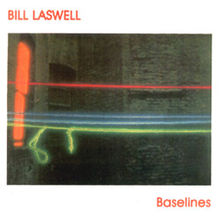
Bill Laswell: Baselines Revisited

Bill Laswell has carved out one of the most critic-proof careers in music.

He’s probably best known as the producer of distinctive pop hits (Herbie Hancock’s ‘Rockit’, PiL’s ‘Rise’, Sly & Robbie’s ‘Boops’) and rock/jazz legends in need of a makeover (Mick Jagger’s She’s The Boss, Iggy Pop’s Instinct, Sonny Sharrock’s Ask The Ages, Ronald Shannon Jackson’s Red Warrior).

He was the Miles Davis Estate’s go-to man for reimagining the trumpeter’s 1970s catalogue (Panthalassa) and also hugely important for bringing the P-funk sound into the ’80s and ’90s.

But Laswell is also a highly-original bassist in his own right and was a key figure of the late-’70s/early-’80s Downtown New York scene, featuring in bands like Massacre, Last Exit and Material (though he was pretty disparaging about the ‘scene’, once telling writer Bill Milkowski: ‘There never really was a Downtown community. All that means is that people don’t have enough money to get a better place to live…’).

His solo career has been interesting too, latterly showcasing a fusion of ambient, world and dub styles. But it’s his debut album Baselines (released 14 June 1983 on Elektra/Asylum) that really floats my boat. He plays a lot more bass than usual, fusing the soundworlds of Bootsy and Ornette Coleman and doing cool things like sticking objects under the strings or digging out the old Mu-Tron pedal for some memorably funky lines.

To these ears, Baselines is also the project that gave him the perfect vehicle for all his interests – My Life In The Bush Of Ghosts-style found sounds, paranoid funk a la Talking Heads/King Crimson, Afrobeat, early hip-hop, avant-fusion, authentic jazz soloing and even post-punk white noise courtesy of future Chili Peppers/Soundgarden producer Michael Beinhorn.

I wasn’t in New York in 1983 but this album would seem to be a perfect amalgam of all the hippest sh*t that was going down at the time. It’s Laswell’s show, leading from the front on four/six/eight-string fretted and fretless basses and generally keeping the tracks short and sweet. Baselines is also beautifully recorded and produced – it’s easy on the ear despite some abrasive textures.

Shannon Jackson has never sounded better, supplying hilariously scattergun grooves and crunching fills. ‘Upright Man’ still inspires a kind of giggly menace, nearly 40 years on. Who supplies the scary spoken-word part? Whosampled doesn’t reveal, but the smart money’s on Fred Frith (who also plays some amusing violin on country-tinged curio ‘Lowlands’).

Baselines was certainly influential from a bass point of view too – you can bet Jah Wobble, Mick Karn, Stump and Human Chain had well-thumbed copies in their collections. But, to the best of my knowledge, Laswell has never returned to such a bass-led solo project since. A shame. He might have a future there…

Thelonious Monk: That’s The Way I Feel Now

Most jazz players don’t really seem to ‘get’ the music of Thelonious Monk.

Decent cover versions are hard to come by, of course with some notable exceptions (Steve Khan, Kenny Kirkland, Lynne Arriale, Paul Motian and probably a few more).

During the centenary of the genius’s birth, it seems as good a time as any to revisit a classic 1980s Thelonious tribute album which puts his miraculous compositions front and centre (plus the fact that I’ve just acquired a brilliant new cassette player* which is bringing it to life again after years stuck in the proverbial drawer).


That’s The Way I Feel Now was masterminded by producer/curator Hal Willner and inspired by bad Monk cover versions. Willner told writer Howard Mandel:

‘I was sitting at Carnegie Hall at some jazz memorial to Monk, getting freaked out that all these other people who really had a love of Monk weren’t performing. Monk’s music was never boring.’

So, at New York’s Mediasound Studios in early 1984, he set about assembling an extraordinary cast of fans including Todd Rundgren, Donald Fagen, Joe Jackson, Carla Bley, Peter Frampton, John Zorn, Was (Not Was), Dr John, Gil Evans, Bobby McFerrin, John Scofield and Elvin Jones to celebrate Monk.

(Willner has gathered similarly eclectic casts for albums celebrating Mingus, Nino Rota, Kurt Weill and the music of Walt Disney films, as well as producing records by Lou Reed and Marianne Faithful and movie soundtracks including ‘Short Cuts’.)

Listened to in one sitting, That’s The Way I Feel Now still makes for a gloriously psychedelic celebration of Monk’s ouevre. Over 22 tracks, I can only make out three duds. It’s also a triumph of sequencing, holding the attention with ease.

First, the ‘rock’: Rundgren’s take on ‘Four In One’ is a gloriously anarchic, Gary Windo’s sax blaring out over a cacophony of samples, cheap drum machines and amateurish keyboards. Was (Not Was)’s take on ‘Ba-Lue-Bolivar-Ba-Lues-Are’ features a knockout multi-tracked guest spot from vocalist Sheila Jordan, while Donald Fagen and Steve Khan mesh perfectly on beautiful ballad ‘Reflections’.

NRBQ’s take on ‘Little Rootie Tootie’ comes near to perfection, as does Chris Spedding/Peter Frampton’s surf-rock-tinged ‘Work’ featuring a classic Marcus Miller bass performance. Only Joe Jackson didn’t get the memo, delivering an overly-lush – though obviously heartfelt – ‘Round Midnight’.

Then there’s the ‘jazz’: John Zorn lays down an outrageous ‘Shuffle Boil’ featuring babbling vocals, bubble-blowing, chainsaw guitar, Bontempi organ and hilariously remedial drumming; Elvin Jones and Steve Lacy deliver a memorable ‘Evidence’; Randy Weston, Dr John and Barry Harris’s contributions are solo piano masterworks; John Scofield and Mark Bingham smash ‘Brilliant Corners’ out of the park, as do vocalists Bobby McFerrin and Bob Dorough on ‘Friday The 13th’.

Finally, Carla Bley’s ‘Misterioso’ is possibly the album standout, an affecting symphony for Monk featuring electrifying performances from Kenny Kirkland on piano, Johnny Griffin on tenor and Hiram Bullock on guitar.

The Rundgren tune aside, to my ears That’s The Way I Feel Now could have been recorded yesterday. The only problem is that it’s almost impossible to buy these days. So I’m bloody glad I held onto my ancient cassette version. Here’s hoping for a CD/download re-release soon.

*a Denon DRR 6.5, if you’re interested…