Nearly the Greatest Pop Albums of the 1980s (The One-Crap-Track Theory)

It’s been a bit of a movingtheriver obsession over the past few weeks as summer finally kicks in and the album format makes a seasonal comeback.

You’re enjoying the music, hailing a ‘classic’ record and then…damn. It’s the track you always skip, the runt of the collection, the song that tarnishes a perfectly good album.

Maybe the band was ‘letting their hair down’ after a few pints in the pub down the road. Maybe it was the drummer/producer/bass player’s vanity track. Maybe it’s the overplayed hit. Maybe the album sequencing isn’t quite right. To be honest, often it’s just something irrational that you can’t quite put your finger on.

For whatever reason, here are movingtheriver’s almost perfect 1980s ‘pop’ albums, and the tracks that just don’t quite sit right:

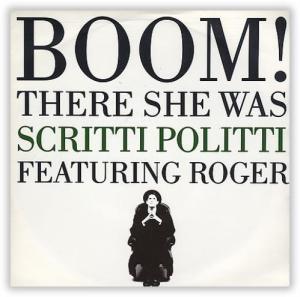
Scritti Politti: Provision (skipped track: ‘Boom! There She Was’)

Prefab Sprout: Steve McQueen (skipped track: ‘Horsin’ Around’)

Prefab Sprout: Protest Songs (skipped track: ‘Tiffany’s’)

Prefab Sprout: From Langley Park To Memphis (skipped track: ‘I Remember That’)

Talking Heads: Remain In Light (skipped track: ‘The Overload’)

Phil Collins: Face Value (skipped track: ‘I’m Not Moving’)

Propaganda: A Secret Wish (skipped track: ‘Jewel’)

Wendy & Lisa: Fruit At The Bottom (skipped track: ‘Tears Of Joy’)

China Crisis: Diary Of A Hollow Horse (skipped track: ‘Age Old Need’)

Danny Wilson: Meet Danny Wilson (skipped track: ‘Nothing Ever Goes To Plan’)

Danny Wilson: Bebop Moptop (skipped track: ‘NYC Shanty’)

Frankie Goes To Hollywood: Liverpool (skipped track: ‘Watching The Wildlife’)

David Bowie: Let’s Dance (skipped track: ‘Cat People’)

Kate Bush: Hounds Of Love (skipped track: ‘Running Up That Hill’)

The Police: Synchronicity (skipped track: ‘Every Breath You Take’, and sometimes ‘Mother’ too…)

Joni Mitchell: Wild Things Run Fast (skipped track: ‘Solid Love’)

Roxy Music: Avalon (skipped track: ‘Take A Chance With Me’, but I love the intro…)

Hue and Cry: Remote (skipped track: the title track)

Prince: Batman (skipped track: ‘Arms Of Orion’)

Swing Out Sister: It’s Better To Travel (skipped track: ‘Breakout’)

Thomas Dolby: The Golden Age Of Wireless (skipped track: ‘Windpower’)

(In the name of balance, I’ve listed my all-thriller/no-filler 1980s albums here. )

Do chime in with the tracks that, for you, muck up otherwise excellent 1980s albums.

John Giblin (1952-2023): Seven Of The Best

Phil Collins and John, circa 1980

The period roughly between 1978 and 1985 was a golden age if you were a British or American session musician.

The mission: to sprinkle your unique brand of fairy dust over a song or album. You lived on your wits and gambled on your talent but your employers were more often than not creative artists at the top of their game.

As far as UK bassists go, Glasgow-born John Giblin, who has died at the age of 72, was always near the top of the list. He was famed for his melodic fretless bass style (though later pretty much disowned it, moving to five-string fretted and stand-up acoustic basses), starting his career with ex-Yes guitarist Pete Banks. He then hooked up with Brand X and Phil Collins and the rest is history.

After prestigious work with Kate Bush, John Martyn and Peter Gabriel, Giblin joined Simple Minds as full-time member in summer 1985 but left three years later after a falling out with producer Trevor Horn during the recording of Street Fighting Years. He also ran a much-loved rehearsal studio called Barwell Court near Chessington, Surrey.

Of course he was influenced by Jaco Pastorius but didn’t really sound like him. (Anyway, he traced that particular line from Eberhard Weber, who apparently claims Jaco ripped HIM off!) Giblin played memorable bass on tens of key tracks but here are seven that particularly registered with your correspondent, in chronological order.

7. John Martyn: ‘Some People Are Crazy’
movingtheriver’s introduction to Giblin’s work, he delivers a brilliant fretless commentary here, though I’m not even sure I realised it was a ‘bass’ circa 1985 – just superb music. It’s funky, flowing and also features those famed sliding harmonics, nicked from Ron Carter and Percy Jones. Giblin is also a talking head in the great Martyn documentary ‘Johnny Too Bad’.

6. Peter Gabriel: ‘Family Snapshot’
The whole of Gabriel III is of course a bass masterclass but Giblin and Gabriel fill in the backstory of the troubled political assassin to great effect in the moving final minute of this.

5. Kate Bush: ‘Breathing’
Just business as usual for Giblin on this classic Bush anti-nuclear ballad, weaving arch, memorable lines around her vocals. Also listen out for his closing, sepulchral E-flat.

4. Phil Collins: ‘Tomorrow Never Knows’
The much-ripped off (hello Pearl Jam) line that propelled one of the better Beatles cover versions.

3. Simple Minds: ‘Let It All Come Down’
Giblin didn’t get many composer credits but this co-write was always your correspondent’s favourite track on Street Fighting Years (Jim Kerr apparently wrote the words).

2. Kate Bush: ‘Love And Anger’
Kate again, and this time Giblin lets fly with some brilliant slap bass in the final few minutes alongside David Gilmour’s tasty guitar solo.

1. Scott Walker: ‘Tilt’
Demonstrating his post-’80s five-string style, Giblin enlivens Walker’s classic title track with some strikingly ‘out’ notes and a great sense of space.

The Movers & Shakers Of 1980s Music: Their Real Names Revealed

Captain Sensible, AKA…

During the punk era, musicians often chose stage names so that the dole office wouldn’t identify them from album covers or gigs.

One wonders how much of an issue that was for Gordon Sumner, Paul Hewson and David Evans, AKA Sting, Bono and The Edge, but you never know.

But as the 1980s wore on and the post-punk era became the hip-hop era, a whole new generation of rappers, DJs, producers and musicians felt the need to create pseudonyms.

But what did their mums call them? Here, for your dubious pleasure, are some of the most intriguing real names. It’s fair to assume that most probably don’t like being reminded of these, for various reasons. YOU go taunting Ice-T with his real name (Tracy Marrow). But, on the other hand, kudos to The Cure’s Robert Smith for not using a pseudonym…

Terminator X (Public Enemy DJ): Norman Rogers

Jet Black (Stranglers drummer): Brian Duffy

W. Axl Rose: William Bruce Rose Jr.

Divine: Glenn Milstead

MC Lyte: Lana Moorer

Kate Bush: Catherine Bush

Sun Ra: Herman Blount

Sade: Helen Folasade Adu

Adam Ant: Stuart Goddard

Ozzy Osbourne: John Michael Osbourne

Genesis P-Orridge (Throbbing Gristle/Psychic TV frontperson): Neil Megson

Cosey Fanni Tutti (Throbbing Gristle co-founder): Christine Newby

Jamaaladeen Tacuma (Ornette Coleman bassist): Rudy McDaniel

Howard Devoto (Magazine singer/solo artist): Howard Trafford

Wilko Johnson: John Wilkinson

Jah Wobble: John Wardle (named by a drunken Sid Vicious, whose real name is John Ritchie…)

Prairie Prince (Tubes/XTC drummer): Charles Lempriere Prince

Sydney Youngblood (‘If Only I Could’ singer): Sydney Ford

Yazz (‘The Only Way Is Up’): Yasmin Evans

Belouis Some (‘Imagination’ singer): Neville Keighley

Hollywood Beyond (‘What’s The Colour Of Money’ singer): Mark Rogers

Tommy Vance (legendary DJ): Richard Anthony Crispian Francis Prew Hope-Weston

Melle Mel: Melvin Glover

John Martyn: Iain McGeachy

Tom Verlaine (Television frontman): Thomas Miller

Johnnie Walker (DJ): Peter Dingley

Kim Wilde: Kim Smith

Midge Ure: James Ure

Elvis Costello: Declan MacManus

Adrian Belew: Robert Steven Belew

Princess (London soul singer of ‘Say I’m Your Number One’ fame): Desiree Heslop

Dweezil Zappa: Ian Donald Calvin Euclid Zappa (The LA hospital nurse wouldn’t let Gail and Frank name him ‘Dweezil’ so FZ named him after his early collaborators Ian Underwood, Captain Beefheart, Carl Schenkel and ‘Motorhead’ Sherwood. Dweezil’s name was legally changed when he was five years old.)

Mick Mars (Motley Crue guitarist): Robert Alan Deal

John Foxx: Dennis Leigh

Trugoy (De La Soul rapper): David Jolicoeur

Cheryl Baker (Bucks Fizz vocalist): Rita Crudgington

Grandmaster Flash: Joseph Saddler

Kidd Creole (Furious Five rapper): Nathaniel Glover

KRS-One: Lawrence Parker

Pauline Black (Selecter singer): Belinda Magnus

Siouxsie Sioux: Susan Ballion

Geddy Lee: Gershon Eliezer Weinrib

Sebastian Bach (Skid Row singer): Sebastian Bierk

Marilyn (‘Calling Your Name’ singer): Peter Robinson

Don Was (Was Not Was co-founder/superstar producer): Don Fagenson

Falco (‘Rock Me Amadeus’ one-hit wonder): Johann Holzel

Steve Severin (Siouxsie and the Banshees bassist): John Bailey

Budgie (Siouxsie drummer): Peter Clarke

Dave Vanian (Damned singer): David Lett

Lydia Lunch: Lydia Koch

Flavor Flav: William Drayton

LL Cool J: James Smith

Tone Loc: Anthony Smith

Bonnie Tyler: Gaynor Hopkins

Yngwie Malmsteen: Lars Lannerback

Young MC: Marvin Young

Ice Cube: O’Shea Jackson Sr.

Shakin’ Stevens: Michael Barratt

Donna Summer: LaDonna Gaines

Captain Sensible: Raymond Burns

Rat Scabies (Damned drummer): Christopher Millar

Vanilla Ice: Matthew Van Winkle

MC Hammer: Stanley Burrell

DJ Kool Herc (hip-hop pioneer): Clive Campbell

Duke Bootee (hip-hop pioneer): Edward Fletcher

Afrika Bambaataa: Lance Taylor

Nikki Sixx (Motley Crue bassist): Franklin Ferrana

Skip McDonald (On-U Records/Sugar Hill guitarist): Bernard Alexander

Billy Idol: William Broad

Bill Wyman: William Perks

Fish: Derek Dick

Fee Waybill (Tubes vocalist): John Waldo

Billy Ocean: Leslie Charles

Posdnuous (De La Soul rapper): Kelvin Mercer

Maseo (De La Soul rapper): Vincent Mason Jr.

Chris De Burgh: Christopher Davidson

Kool Moe Dee: Mohandas Dewese

Dee C Lee (Style Council vocalist/’See The Day’ solo artist): Diane Sealey

Steve Strange (Visage frontman/Blitz pioneer): Stephen John Harrington

Youth (Killing Joke bassist/superstar producer): Martin Glover

Geordie (Killing Joke guitarist): Kevin Walker

Doug E Fresh: Douglas Davis

Brett Anderson’s ‘Track Seven’ Theory: A Special movingtheriver.com Report

Brett, yesterday

All music fans love a theory.

And what with all this talk of Q’s sad demise, movingtheriver has been ruminating on the magazine’s great articles past, including an interview with Brett Anderson in which the Suede head honcho posited his theory that track seven of an album is always the best track.

This was red rag to a bull for movingtheriver. But was Brett on to something? Or does he just have some kind of weird, ritualistic interest in the number seven? In a world exclusive, we investigate some movingtheriver-approved, ‘critic-proof’ albums of the 1980s to test his theory.

In the words of Ian Dury, this is what we find…

1980: Talking Heads’ Remain In Light
Track seven: ‘Listening Wind’

1981: Human League’s Dare
Track seven: ‘I Am The Law’

1982: Roxy Music’s Avalon
Track seven: ‘Take A Chance With Me’

1983: Michael Jackson’s Thriller
Track seven: ‘Human Nature’

1984: Prince’s Purple Rain
Track seven: ‘I Would Die 4 U’

1985: Kate Bush’s Hounds Of Love
Track seven: ‘Under Ice’

1986: Paul Simon’s Graceland
Track seven: ‘Under African Skies’

1987: David Sylvian’s Secrets Of The Beehive
Track seven: ‘Mother And Child’

1988: Prefab Sprout’s From Langley Park To Memphis
Track seven: ‘Knock On Wood’

1989: The Blue Nile: Hats
Track seven: ‘Saturday Night’

So how do the track sevens stack up? It has to be said, most do seem to have something ‘Suede-like’ about them, something wistful, melancholic, or, in the case of the Talking Heads, Human League and Kate Bush tracks, positively menacing. Brett would probably approve.

But are they the ‘best’ tracks from their respective albums? No. You could possibly make a case for ‘Human Nature’ and ‘Saturday Night’* but you’d certainly be going out on a limb.

So there you have it. Obviously Mr A was talking out of his a*se. Next time: Peter Andrex’s ‘track four’ theory. B*llshit or not? YOU be the judge…

*Er… Wait. Wasn’t one of Suede’s best singles also entitled ‘Saturday Night’? Whoa, daddy…

(Other examples/alternative theories always welcome…)

Dreams By The Sea: Peter Gabriel & Kate Bush

kate bushI’m certainly not alone in finding the seaside very evocative of childhood memories and, in turn, musical revelations gone by.
Walking on Devon’s Slapton Sands recently, I was taken back to family holidays at St Margaret’s Bay, a little village atop the famous White Cliffs of Dover on the English Channel.

Armed with my Walkman, I’d take off towards the creepy, deserted air-raid shelters, then scramble up the steep chalk track to enjoy the huge expanse of sea in all directions and the French coast in the distance.

The two tracks most redolent of that time – and two which somehow seem to capture something about the English fascination with all things nautical – are Kate Bush’s ‘And Dream Of Sheep’ and Peter Gabriel/Robert Fripp’s ‘Here Comes The Flood’. They are almost indistinguishable to me and will forever be connected to that coastline and the seaside in general.

Gabriel’s sea song was originally recorded for his 1976 debut album in a bombastic style. But in 1978, he laid down a much gentler, far superior piano/vocal version, to which Fripp later added Frippertronics and a spoken-word segment from his spiritual guide/Gurdjieff-protegee JG Bennett (who also turned up on David Sylvian’s Gone To Earth).

kate bush peter gabriel

Gabriel’s lyric seems to point towards the inhabitants of an island (England?) joining forces (telepathically?) to save themselves from a pending (apocalyptic?) tsunami. In doing so, the islanders taken on mystical, extra-sensory powers.

There are shades of the Genesis track ‘Supper’s Ready’, with its epic tale of good versus evil, and also elements of the research into ESP that Gabriel was apparently doing at the time.

Bush’s sea song kicks off the extraordinary Ninth Wave suite (and uses very similar chords to ‘Here Comes The Flood’: C#min, A and B) taking up the entire second side of her classic 1985 album Hounds Of Love. We are thrust unceremoniously into a psychic association with a female protagonist who finds herself in the middle of the sea after a shipwreck. Echoes of past/present obsessions, loves and losses float to the surface of her mind (including the Radio 4 Shipping Forecast), ostensibly to keep her awake so that she doesn’t drown.

The conclusion of the song cycle suggests that she’s now at peace and in a far more positive state of mind, either in death or safe at shore.

Japan: Oil On Canvas 32 Years On

japan

First of all: the cover. As a teenager, I was instantly intrigued by Frank Auerbach’s artwork, and then the music very definitely lived up to the packaging.

But, though billed as such, it could hardly be called a ‘live’ album. In the recent band biography ‘A Foreign Place’, Jansen reports that the only ‘live’ elements on the album are his drums – everything else was replayed in the studio. Three excellent new all-studio tracks were added too. But Oil On Canvas was released six months after the band’s break-up and proved a near-perfect farewell from one of the key groups of the early ’80s.

The fact that it ended up as Japan’s highest-selling album (shifting over 100,000 in the UK and hitting #5) must have really irked manager Simon Napier-Bell – after year of toil, the band were calling it a day just as they were getting some commercial success (read ‘A Foreign Place’ for a full explanation of the split).

Tin Drum was great but who knows what they might have come up with as a follow-up given the giant strides they had made as musicians, songwriters and arrangers since ’81. Sure enough, within a few months of their split, Duran Duran were taking their sound and image to the bank.

The Oil On Canvas line-up, December 1982: Masami Tsuchiya, Richard Barbieri, David Sylvian, Steve Jansen, Mick Karn. (Photo by Fin Costello/Redferns)

The Oil On Canvas line-up, December 1982: Masami Tsuchiya, Richard Barbieri, David Sylvian, Steve Jansen, Mick Karn. (Photo by Fin Costello/Redferns)

There is so much to enjoy on Oil On Canvas. The Tin Drum tracks have added heft and a bit more air. David Sylvian’s vocals are warmer and more expressive than on the studio albums (though he has since virtually disowned this early singing style), and his Satie-esque title track prefigures the triumphs of his solo career.

‘Ghosts’ is extended with a superb Stockhausen-meets-serialism intro/interlude thrown in while ‘Canton’ becomes a mighty parade of musical colours, with clanging synths, whip-lashing china cymbals and the late great Mick Karn’s increasingly insane bass embellishments.

There has never been a rhythm section quite like Karn and Steve Jansen (drums) and probably never will be again. They revel in open spaces and ‘non-rock’ textures, typified by the deceptively simple and downright spooky ‘Sons Of Pioneers’.

Karn sounded like no one else on fretless bass, exploring Middle Eastern concepts and weird intervals to produce a sound both complex and hilarious. Jansen came up with several of the most ingenious backbeats in pop history while always making them danceable.

Together, they produced classic grooves like ‘Visions Of China’, ‘Cantonese Boy’ and ‘Still Life In Mobile Homes’, and Richard Barbieri’s creative keys playing always emphasises texture and mood over technique. His closing instrumental ‘Temple Of Dawn’ bids a fantastic album farewell first with a chill and then with a brief shot at redemption.

Sylvian escaped to a successful, innovative solo career, Karn also went solo and hooked up with collaborators including Midge Ure, Peter Murphy and, most memorably, Kate Bush. Barbieri and Jansen teamed up regularly in various projects and recorded together as The Dolphin Brothers in 1987 but didn’t enjoy much commercial success. Against all odds, they all got together again at the end of the ’80s for the intriguing Rain Tree Crow project.