1980s jazz/rock generally gets the side-eye these days.
But it wasn’t all the Chick Corea Elektric Band prancing around the stage in tracksuits or pitiful WAVE-style smooth jazz.
The 1970s jazz/rock pioneers were mostly going strong and if some were too tempted by synths and drum machines, the best music was made by sticking pretty rigorously to the tried-and-tested real drums/bass/guitar/keys lineup favoured by Miles, Weather Report, Return To Forever et al.
So here’s a selection of 1980s jazz/rock albums that have consistently gripped movingtheriver, most of which he queued up to buy at the HMV or Virgin Megastore, or found in an Our Price bargain bin. (These are not proggy or funky. So no Herbie, Brecker Brothers, David Sanborn or David Torn, but there are elements of R’n’B/Latin/soul/whatever mixed in with the jazz).
Bireli Lagrene: Foreign Affairs (1988)
Just 21 years old when he recorded it with producer Steve Khan, the French guitarist’s second Blue Note album is a cohesive gem and massive improvement on the debut, with terrific contributions from keyboardist Koono and drummer Dennis Chambers.
Ornette Coleman: Virgin Beauty (1988)
One of the most ‘accessible’ albums of the master’s career, with memorable melodies, a brilliantly expressive bassist (Al McDowell) and some decidedly odd guest appearances from Jerry Garcia.
Tribal Tech (Scott Henderson/Gary Willis): Nomad(1988)
Recorded in April 1988 but not released until early 1990, guitarists were rightly wowed by Henderson’s brilliance, a mixture of Michael Brecker, Allan Holdsworth and Stevie Ray Vaughan, while the rhythm section is groovy and propulsive and both Henderson and Willis’s compositions are excellent. And ‘Tunnel Vision’ may feature the perfect guitar solo…
John McLaughlin: Mahavishnu (1984)
OK there are some question marks in the keyboard and sax departments, and a few mediocre tracks, but Billy Cobham has rarely sounded better and John contributes three or four classic compositions and a few brilliant solos to this reunion album of sorts.
Marc Johnson’s Bass Desires: Second Sight (1987)
Wonderful interplay between guitarists John Scofield and Bill Frisell, plus some classic compositions including Scofield’s surf-rock-meets-jazz ‘Twister’, Frisell’s Monk-like ‘1951’ and Johnson’s moving ‘Hymn For Her’.
Larry Carlton: Last Nite (1987)
Guitarists of all stripes were blown away by Carlton’s playing in the 1980s, and here’s the best evidence, captured live at LA’s Baked Potato club with Alex Acuna, Abe Laboriel and JR Robinson.
Human Chain: Cashin’ In (1988)
This Brit jazz/rock classic, released on EG Records, had elements of the Canterbury sound, West Coast cool jazz, English folk music and 1980s Weather Report, featuring Django Bates’ fantastic keys and French horn and some weirdly impressive guitar and fretless bass from Stuart Hall (who he?). Also injects a healthy dose of much-needed humour to the ’80s jazz world.
Hiram Bullock: Give It What U Got (1988)
All the fun of the fair from this gifted but troubled guitarist: raunchy funk/rock, instrumental Steely Dan, Brecker Brothers horns, classic fusion and an Al Jarreau guest appearance on a Sam Cooke tune, but all shot through with jazz chords and Hiram’s lyrical playing.
Ronald Shannon Jackson: Mandance (1982)
Ornette-style harmolodics and Mingus-like ensemble work meet NYC punk-jazz on the drummer’s intriguing and powerful album, recorded live in the studio, featuring future Living Colour axeman Vernon Reid.
Weather Report: Sportin’ Life(1985)
It was a toss-up between this and Night Passage, both classics, but this gets the nod courtesy of the newly-minted rhythm section of Omar Hakim and Victor Bailey, plus a few classic Wayne Shorter tunes including ‘Face On The Barroom Floor’ which reportedly Joni Mitchell was particularly smitten by.
Wayne Shorter: Atlantis (1985)
Wayne again, fronting this fascinating, complex song-cycle featuring Alex Acuna on drums and Joni’s husband Larry Klein on bass. Takes some time to digest, but like a good wine gets better every year.
Allan Holdsworth: Secrets(1989)
A toss-up between this and Metal Fatigue, this gets in because of his delicious guitar tone and the inspired contributions of drummer Vinnie Colaiuta – ‘City Nights’, ‘Spokes’, ‘Peril Premonition’ and ‘Joshua’ are musical landmarks. Fiery, exciting, unmissable.
Steps Ahead: Modern Times (1984)
Messrs Brecker, Erskine, Mainieri, Gomez and Bernhardt were embracing some new technology but they never let it overshadow the mostly excellent compositions with telling solos, particularly from Brecker.
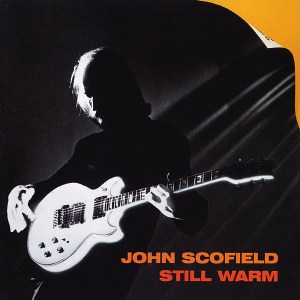
John Scofield: Still Warm (1985)
Take your pick between this, Blue Matter and Loud Jazz, all fantastic pieces of work, but Still Warm gets the nod courtesy of its dynamite rhythm section (Darryl Jones and Omar Hakim) and arguably John’s best writing of the ’80s.
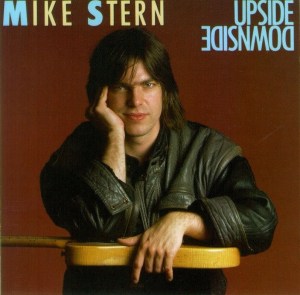
Mike Stern: Upside Downside (1986)
Produced by Hiram Bullock and featuring a crack band including Dave Weckl on drums, it showcases Stern’s finest/fieriest playing on record to date and also one of Jaco Pastorius’s last notable appearances. Still the best Stern solo album and quite extreme in its own way.
(If you’re new to any of these albums and they float your boat, please consider buying physical copies to best support the artists and their families.)
But now to the music – how does it stand up in 2025?
‘If You Love Somebody Set Them Free’ was a ‘corrective’ for ‘Every Breath You Take’, an anti-surveillance, anti-control relationship song.
Sting’s demo apparently sampled Omar Hakim’s snare from Bowie’s ‘Let’s Dance’, much to the drummer’s amusement. Listen out for Sting’s great rhythm guitar in the middle eight.
It was the lead-off single from the album but only reached #26 in the UK (#3 in the States), despite a superb Godley and Creme video.
‘Love Is The Seventh Wave’ was a last-minute jam (with Sting on bass?) and the album’s second single (missing the top 40 completely), while ‘Shadows In The Rain’ was the first thing the band recorded at Eddy Grant’s studio while waiting for Marsalis to show up.
During the saxist’s overdub, reportedly he wasn’t told anything about the track, just told to start playing. Apparently Sting mumbles ‘A-minor’ when asked by Branford what key the song’s in…
Sting has gone on record as saying that ‘Russians’ was supposed to be an ‘ironic’ song in the Randy Newman/Mose Allison mold, and it was the only decent hit in the UK (#12) when released as a Christmas single in December 1985.
Though particularly well-sung (but with an annoying slap-back echo), it sadly misses with its annoyingly on-the-nose lyrics and Kirkland’s cheapo synth backing.
This song really needed the Trevor Horn, Steve Lipson or even Hugh Padgham treatment, as did ‘We Work The Black Seam’.
But there’s much better stuff elsewhere. ‘Children’s Crusade’ was reportedly a second take, recorded totally live, with Sting replacing his vocals later.
He taught ‘Consider Me Gone’ to the band in the studio. Reportedly they tried a few unsuccessful takes, then Eddy Grant brought in the president of Guyana to say hello. They nailed it immediately afterwards. Sting’s voice is superb here, on the edge of hysteria.
The brief, Thelonious Monk-like title track (also with Sting on bass?) features a mind-bending Kirkland piano solo which amazed me as kid. I didn’t understand its ingenious polyrhythms at all. I do now but it still sounds brilliant.
‘Moon Over Bourbon Street’ (Sting on bass?) is musically heavily influenced by the jazz standard ‘Autumn Leaves’ and lyrically inspired by Anne Rice’s book ‘Interview With A Vampire’.
Kirkland’s synth oboes are a bit naff – couldn’t Sting afford real ones? It missed the top 40 when released as the album’s fourth and final single.
‘Fortress Around The Heart’ marries a stunning chorus to some seriously tricky verse modulations (Rick Beato’s great video runs them down). One can take or leave the rather heavy-handed symbolism of the lyric, guaranteed to wind up the post-punk critics, but at least Sting was stretching.
The album’s third single, ‘Fortress’ also missed the top 40 (Sting has always been a surprisingly unsuccessful solo artist with regard to the UK singles chart).
Ultimately Turtles is a bitty album, evidently put together very quickly. Every song is different and it seems a template for potential future projects (arguably Sting only really got his solo career on track with the followup …Nothing Like The Sun) rather than a confident debut.
The playing is predictably great though. Everyone gets their chance to shine…expect Darryl Jones, who is weirdly anonymous.
Sting was apparently obsessed with the Synclavier digital sampler during 1984 but admirably resisted a machine-tooled, over-produced album.
Still, for someone so keen to distance himself from The Police, maybe it’s odd that he rerecorded a Police song for the album and also named his next album/film after a Police song….
Sting and band did some ‘secret’ gigs at the Theatre Mogador in Paris just before the album release on 17 June 1985, and if memory serves this writer bought it the week it came out. It was one of many exciting buys during that landmark summer of 1985 (see below for more).
Turtles was immediately a big hit, reaching #3 in the UK and #2 in the States. It also earned a Grammy nomination for Album of the Year (admirably, Sting didn’t play any songs from it during his Live Aid appearance in July).
Then, in a turn of events that must have amused him, readers of Rolling Stone magazine voted Sting #2 jazz artist of 1985 (after Wynton Marsalis) and voted Turtles #2 album of the year (after Brothers In Arms).
He was also #2 male singer and #2 songwriter, both behind Springsteen, and #2 bassist, despite the fact that he probably didn’t pick up a bass during 1985…
Then of course there was the ‘Bring On The Night’ tour, album and movie, of which much more soon.
(PS – What a stunning series of album releases during summer/autumn 1985: Boys And Girls, Cupid & Psyche ‘85, Turtles, A Physical Presence, A Secret Wish, Hounds Of Love, Around The World In A Day, Brothers In Arms, Steve McQueen, You’re Under Arrest, Dog Eat Dog etc. etc…)
At the end of 1984, Sting seemed hellbent on erasing (albeit temporarily) any traces of The Police.
Buoyed by his happy relationship with Trudie Styler, he was falling back in love with music (but not, apparently, the bass guitar) and studying Brecht and Weill.
‘I cry a lot. I’m moved easily by a chord progression,’ he told Musician mag at the time.
He was also developing some solo material. But there was no band.
He moved FAST. In late 1984, he asked his friend, musician and writer Vic Garbarini, to put some feelers out in New York City.
By January 1985, saxophonist Branford Marsalis had been recruited (helped by the fact that Sting had heard that The Police were his favourite band) and some audition workshops were set up, attended by some of the hottest young fusion and funk musicians in the city.
Then, during a dinner break near AIR Studios in Montserrat while working on Dire Straits’ ‘Money For Nothing’, Sting met drummer Omar Hakim for the first time, who was another quick shoo-in (Omar apparently jokingly auditioned with knife and fork at the table).
At New York’s SIR rehearsal studios in January 1985, Sting, sitting in front of his Synclavier, with a Fender Tele at his side, bassist Darryl Jones (who was still playing with Miles Davis), Hakim and keyboardist Kenny Kirkland jammed on Police songs ‘One World’, ‘Demolition Man’ and ‘Driven To Tears’.
Sting then set them to work on a new song, ‘Children’s Crusade’, playing the demo over the studio speakers. He had found his band (Sting also found time to guest on Miles’s ‘One Phone Call’ during this time).
Sting, Marsalis, Hakim, Kirkland and Jones did a few surprise gigs at The Ritz club in New York City in late February. By early March 1985, after an aborted try at Compass Point Studios in Nassau, they were recording Turtles at Eddy Grant’s Blue Wave Studios in Barbados.
Pete Smith was engineering and co-producing, who had impressed Sting while helping record his Synchronicity demos.
But Sting was panicking about his voice, and the fact that he was going right outside his comfort zone. With good reason. This new music, light and drawing on jazz, funk and folk forms, was nothing like The Police. A&M Records were depending on a hit.
There wouldn’t be one note of distorted guitar on the album. It was more in line with Sade or Simply Red (but of course the musicianship was on a different planet to those artists). And the production and arrangements were very minimalist by mid-‘80s standards.
Next time: the album, track by track – and has it stood the test of time?
You could put forward a pretty good case that John Scofield was THE guitarist of the 1980s.
Probably best known for his incendiary playing in Miles Davis’s band between 1982 and 1985, he also enjoyed a distinguished solo career.
Whilst focusing on straightahead jazz during the early part of the decade, his stellar ‘fusion’ period between 1984 and 1988 – encompassing classic albums Electric Outlet, Still Warm, Blue Matter, Pick Hits Live and Loud Jazz – featured excellent original compositions and formidable players such as David Sanborn, Don Grolnick, Omar Hakim, Darryl Jones, Dennis Chambers, Hiram Bullock and George Duke.
In the meantime Sco was much in demand as a sideman, playing with everyone from Terri Lyne Carrington to Tommy Smith (this playlist gathers some of his greatest music of the 1980s) whilst also teaming up with fellow guitarist Bill Frisell, drummer Peter Erskine and bassist Marc Johnson in the latter’s Bass Desires project that produced two classic albums on ECM Records: Bass Desires and Second Sight.
Immediately recognisable with his chorus/overdrive sound and molten, legato style – always informed by the blues – Scofield’s solo career has since gone from strength, and we now find him ensconced in a highly productive spell on ECM, his latest album being Uncle John’s Band.
movingtheriver caught up with John to talk about his wonderful 1980s as he prepared for a European tour with keyboardist John Medeski – he’s ever the road warrior and seems full of energy and good humour.
MTR: I’d love to know a little about how/when you signed with Gramavision Records, and did you consider other options for your mid-‘80s solo career such as ECM?
JS: I signed with Gramavision shortly before I recorded Electric Outlet. They were very interested and made us a good deal when no one else had contacted me. After I met (ECM founder/producer) Manfred Eicher at the Bass Desires recording session he expressed interest but I had already signed a multi-record contract with Gramavision. After that I stayed with other New York-based companies (Blue Note and Verve) because I met those people here at home and they were major international labels. I’m quite happy now that I’ve found a home at ECM that is aligned with my current musical direction.
Drummer Steve Jordan plays some wonderful stuff on Electric Outlet – was he overdubbed at the end after you’d tracked everything with a drum machine?
Yes, exactly. I had bought a Roland drum machine and used it to make a four-track demo at home with me playing guitars and bass. I recreated that in the studio and had Steve overdub on all the tunes. He was incredible and nailed them so quickly. We’d played together a bit before – he was on my Who’s Who album in 1978.
I’m fascinated by the work you did with saxophonist George Adams during the 1980s, especially More Sightings (1984) – can you tell me how that came about?
I had played with George in New York on gigs with the Gil Evans Orchestra and then did a tour and album as a guest with the George Adams/Don Pullen band. Then George wanted to do the tour with Hannibal Marvin Peterson. They invited me and we ended up recording a live show in Zürich. I loved George’s playing and we were friendly. I even got him to come in to record with Miles for Columbia in 1983, but it seems that that recording session was lost somehow. I believe it was at The Hit Factory on Broadway. When they were putting together some CBS tapes for reissue, I was told by Michael Cuscuna that they didn’t find anything from that session… That’s all I know. It was Miles‘s band but with George on saxophone. (Adams is understood to have guested with Miles’s band in the studio on 16 June 1983 and also in concert at the Avery Fisher Hall in NYC on 26 June 1983, and was also part of the big band which played with Miles at Montreux in 1991 – Ed.)
Is it true that Kenny Kirkland was supposed to play keyboards on Still Warm but didn’t show at the last minute? And please tell me how the fabulous Omar Hakim came to play on the album.
Yes, Kenny was a friend and I was lucky enough to get to play with him a bunch, but somehow he didn’t show up at rehearsal so I asked Don Grolnick. I think Kenny just had his dates mixed up maybe? I’m not sure. It was a real loss that he died so young. Omar and Darryl Jones were playing with Sting at that time and I knew Omar although I had never played with him but I thought that he and Darryl could really lock it in. They sounded fantastic together.
So was Still Warm recorded just after you left Miles?
I think it was before the last tour. The last stuff I did with Miles was later in the summer in Europe and then Japan.
How much rehearsal time did you get with the bands in general for Still/Blue/Loud? Or did you give the band demos to learn in advance? Because a few of these compositions are treacherous, I’m thinking of stuff like ‘Trim’ and ‘Loud Jazz’ – how did Dennis learn them (he famously doesn’t read music – Ed.)?
For Still Warm, I think we probably had one rehearsal, then one in the studio. I think I made demos of the tunes to give everybody, but I can’t remember. By Blue Matter and Loud Jazzwe were a working band. I had been playing some of the Blue Matter songs with a different keyboardist and drummer along with Gary Grainger. Gary recommended Dennis and I guess he learned the songs at rehearsal. Maybe I made demos… I just remember Dennis trying a go-go beat on ‘Blue Matter’ which I hadn’t tried before. I think I wrote that song just before the session and had never played it live. Then we played a week at Fat Tuesday before going into the studio with Dennis and Mitch Forman. For Loud Jazz, we rehearsed but also played the tunes live on tour before the recording.
Regarding producer Steve Swallow’s role, did he select material? The albums have stood the test of time so well because they’re generally free of 1980s production clichés.
Steve has been a friend and mentor to me since the ‘70s. He was interested in production and multi-track recording and I knew he would be great at it. Although he didn’t select the material, he probably helped me with selecting my own tunes. He was really involved in mixing and had suggestions for the arrangements. Because Gramavision had their own studios, we were allowed to mix for many hours and treated mixing more like we would for a pop record. We were really lucky to have the great engineer Joe Ferla, to whom we deferred for many of the mix ideas. Along with Steve, he was responsible for the sound.
Can you tell me a bit more about the tune ‘Gil B643’ – presumably it’s a tribute to Gil Evans? And was the title at all influenced by the movie ‘THX 1138’?
B643 was Gil‘s apartment number! We lived at the same building in Manhattan.
I’d love to know a bit more about ‘Picks And Pans’ and its 6/8 feel, it strikes me that it’s a very influential tune in ‘fusion’ but was it influenced by Joe Zawinul’s ‘The Juggler’ (from Weather Report’s Heavy Weather)?
I liked Joe’s tune but I don’t think I got the beat especially from that…but there were other examples of that kind of beat. Probably lots of them. Maybe it first came from Afro-Cuban music like Mongo Santamaria’s ‘Afro Blue’. Or you can take a jazz waltz and just put a backbeat in there!
Which is your favourite of the two terrific Bass Desires albums and why?
I can’t say that I really have a favourite, but I just remember the chemistry for the first record was really exciting and it was great when we realized we could play together and that the group had a different sound, largely because of Bill Frisell and his unique approach. Also the sound with the two of our styles working together. That’s not to take anything from Marc and Peter, who really contributed so much and brought in material and if it weren’t for Marc having the idea of putting us all together, it would never have happened. I remember we played some gigs together before we went in the studio as well as rehearsing. I think we played a strange cabaret club in New York City. I can’t remember the name of the place and we probably also played a gig in Boston as well before we went into the studio with Manfred Eicher.
How did Dennis Chambers and Gary Grainger come onboard for the Blue Matter band – did you headhunt them, did they audition, or a bit of both?
I was looking for an electric bass player and my friend, the keyboard player Marc Copland, recommended Gary who he had played with in Washington DC. He said Gary could play anything on electric bass and it turned out he was absolutely correct. I then played with Gary in another configuration and he recommended Dennis. Gary and Dennis grew up together in Baltimore and were old friends. I had heard about Dennis with The P-Funk All Stars and was so surprised to learn that he was looking to play more jazz/fusion. Actually, Darryl Jones had played me a great board tape and said, ‘Isn’t this drummer fantastic?’ But we didn’t know who it was. I found out later that it was Dennis so I was a fan already even though I didn’t know it!
Hiram Bullock is an inspired rhythm-guitar choice on Blue Matter – was he a Steve Swallow recommendation?
No, I knew Hiram was great. I knew him from the New York scene and we were friends. I wanted rhythm guitar on that one track and I thought he would do a better job than I did – I think he did.
Was ‘Blue Matter’ influenced by Miles’s ‘Tutu’ (composed by Marcus Miller)?
I just had a generic triplet-ish backbeat in mind. It had no relation to ‘Tutu’ – not at all. ‘Tutu’ sounds a bit like (Burt Bacharach tune) ‘The Look Of Love’, right?!
How did you achieve the final minute of ‘Time Marches On’ where you solo over that ‘drone’ – was it a slowed down tape loop?
No, we just did it in real time.
I’d love to know your favourite guitarists of the 1980s, any genre…
Mainly I liked the jazz guys Wes Montgomery, Jim Hall, George Benson, Pat Martino. But I always loved the blues guys starting with Hendrix and Clapton back in the ’60s, plus Otis Rush, Albert King and BB King. I always admired my contemporaries Metheny, Stern, Frisell, Abercrombie, Mick Goodrick… I went in the fusion direction because of my experience with Miles. If it wasn’t for him, I probably would’ve been just playing bebop and giving guitar lessons!
The only time I saw the Blue Matter band in London was a really weird but brilliant gig in the East End in summer 1987 I think, maybe it was called the Mile End Theatre? Do you remember that? And in general do you have good memories of touring the UK and Europe?
Was that the Half Moon Theatre? I’ll never forget the gig. The late John Cumming brought us to London and I played many gigs subsequently for him. Maybe it was my first one in London as a leader? Not sure? That band was so strong. We really had some success in UK/Europe in those days.
Did Miles ever give you feedback on your 1980s solo career, or did you ever seek it out?!
I know he liked my tunes because I wrote ‘You’re Under Arrest’ for him and gave him a demo of a bunch of other stuff, some of which ended up on my records. He said he was gonna record everything but then when I quit the band in order to go out on tour with Blue Matter, I didn’t get a chance to do any of that with Miles. He had moved on to Tutu. I remember I played him some of Blue Matter for him once and he was really blown away by Dennis’s playing…
Finally, how do you look back on your 1980s career in general? Was it a great era for guitar-based music?
It was an incredible time. It was great because of getting to play with Miles and all the exposure it got me, and then starting my own career, playing funk/jazz with those guys. I was so influenced by Miles and his direction in the ‘80s. But, for me, Weather Report and Herbie’s Head Hunters were the greatest. I think it was a really good era for guitar when you think of Holdsworth, Stern, Metheny, Robben Ford and so many more. And of course the classic rockers like Clapton and Beck were around. Pop music in general had some pretty hot-shot guitar stuff in there, and funk was really everywhere. Thanks to Sly…
Thanks John and good luck on the European tour…
John Scofield at the Cape Town Jazz Festival, 2003. Photo by William Ellis
Bryan Ferry’s one and only UK #1 album to date (and biggest-selling record in the US) was released 40 years ago this month.
The Antony Price/Simon Puxley cover is seductive, the Bob Clearmountain mix is delicious, the grooves are pleasant, there’s an array of great players, and this writer can’t resist playing his vinyl copy every year or so.
So why is Boys And Girls always a strangely underwhelming listen?
Despite its big sales and Ferry’s watertight reputation, it has also failed to garner any posh anniversary write-ups in the monthly music mags and didn’t even make Classic Pop mag’s 2015 readers poll of the 100 best 1980s albums. Maybe it could/should have been Ferry’s Let’s Dance (and one wonders why he didn’t enlist Nile Rodgers to produce?).
Ferry completed the album just as he was mourning the death of his father (reflected in the lyrics to ‘The Chosen One’?) but started work back in summer 1983 with producer/engineer Rhett Davies, veteran of Roxy’s Avalon as well as the classic King Crimson double of Discipline and Beat (Davies left the music business for 20 years soon after working on Boys And Girls…). They devised drum-machine beats and laid down keyboard beds while Ferry outlined vague lyric/melody ideas.
Work mostly took place at The White House on London’s King’s Road (meanwhile, less than a mile away in Stanhope Gardens, David Sylvian was devising his own mid-1980s triptych, arguably a far more successful fusion of pop, white funk, ambient and jazz…), a demo studio owned by Ferry’s manager Mark Fenwick. Musicians were then brought in to overdub onto those eight-track demos – seven studios and 30 musicians/singers are credited!
The songs have various nods to the Avalon era. ‘Windswept’ (named by Ferry in a 2003 interview as one of his six favourite songs, the others being ‘Do The Strand’, ‘Avalon’, ‘In Every Dream Home A Heartache’ and ‘Mother Of Pearl’) seems inspired by B-side ‘Always Unknowing’, ‘Slave To Love’ obviously nods to ‘Avalon’ while ‘Sensation’ is built around a melodic motif embedded in ‘Take A Chance With Me’.
The piecemeal recording process affects the material though – Boys And Girls desperately misses the quirkier aspects of Avalon, with those vital contributions of messrs Manzanera and Mackay (not to mention bassist Alan Spenner).
David Gilmour, Mark Knopfler, David Sanborn, Nile, Marcus Miller and Andy Newmark are vaguely familiar now and then, but other big players are anonymous. Ferry’s patented piano work is almost entirely absent.
‘Slave’ is a case in point (though does feature some of that Ferry piano). Built around one of the hoariest old chord progressions in commercial music (incidentally very similar to the verses of ‘Dance Away’ but without that song’s interesting key change or atmosphere…), Ferry doesn’t bother with a bridge (or what Americans call the ‘pre-chorus’) or interesting chorus, just repeats the verse chords again and adds the chanted vocals.
He generally eschews bridges and modulations on Boys And Girls, sticking mainly to two-chord vamps (Avalon, in contrast, featured several ONE-chord songs, apparently influenced by Miles’s On The Corner and James Brown, but they really worked…).
The title track drearily cycles E-min/B-min, while ‘Stone Woman’ sticks rigidly to a very dull D-min/B-flat. Both songs are mercifully/abruptly cut short, Ferry unable to elevate the material with strong melodies.
Still, the music is beguiling and beautifully-appointed (though side A seems much too long, my stylus really struggling to get through ‘Windswept’) and yes, this time next year movingtheriver will probably be reaching for the vinyl, saying ‘Maybe this time’…
‘The baddest shit on the planet’ – that was Weather Report keyboardist/co-founder/chief composer Joe Zawinul’s assessment of his band’s music.
He wasn’t alone – many credit them as the greatest jazz/rock unit in history, pretty impressive considering they developed out of a ‘scene’ that also included The Mahavishnu Orchestra, Return To Forever and Herbie Hancock’s Head Hunters.
Curt Bianchi has run the acclaimed Weather Report Discography website for many years and now expands his study to create the excellent ‘Elegant People’, an elaborate history of the band which features a myriad of exclusive interviews, photographs and information.
It has Brian Glasser’s effective Zawinul biography ‘In A Silent Way’ in the rear-view mirror but emerges as a very different proposition. Bianchi initially looks in detail at the formative years of Zawinul and co-founder/saxophonist Wayne Shorter, with sobering tales of the young Zawinul’s experiences in wartime Vienna and fascinating insights into Shorter’s extended periods in the bands of Maynard Ferguson, Art Blakey and Miles Davis.
The sections on Weather Report’s formation around 1970 are fascinating. Columbia’s marketing of them as a ‘progressive’ – rather than ‘jazz’ – band led to some interesting dichotomies; Shorter and Zawinul were already established superstars in their field but often had to engage in fairly menial/minor promotional work just to get a foot in the door with rock audiences. We also learn about the other potential band names that hit the cutting-room floor before ‘Weather Report’ appeared.
Bianchi then expertly traces the group from those early days as a kind of ‘chamber’ jazz/rock unit to their status as a ‘power band’ around the arrival of bassist Alphonso Johnson and drummer Chester Thompson in 1975, and the subsequent boost with the recruitment of Jaco Pastorius and Peter Erskine.
Bianchi brings the albums to life with great gusto. There’s a rare photo from the Night Passage sessions at The Complex in Los Angeles, and the last-ever photo of the Jaco/Erskine band taken at the Power Station in NYC, with Jaco almost a ghost at the back of the shot (shades of that famous final Syd Barrett photo with Pink Floyd). Elsewhere there are ticket stubs and even session track sheets.
And fans of Weather Report’s 1980s music can rest assured that Bianchi doesn’t give that era short shrift – there’s almost as much about the last few albums Sportin’ Life and This Is This (and many of Zawinul and Shorter’s post-Weather Report projects) as there is about commercial breakthroughs Black Market and Heavy Weather.
So ‘Elegant People’ is surely the ultimate Weather Report book – it’s an absolute must for fans and those wanting a deeper dive into the band’s music.
The early 1980s was a pretty good period to start out as a musician.
If your ears were open and you had a half-decent hi-fi/radio, there were some truly inspirational players around and a host of different styles vying for your attention.
But the burgeoning muso couldn’t quickly get onto YouTube or download an app to learn a new skill or technique. Music education also wasn’t exactly in a great place, if the drum lessons at my comprehensive school were anything to go by…
You could see great homegrown bands and big-name American sessioneers playing live on ‘The Tube’, fork out an extortionate sum for the dreaded instructional video, or go to a live clinic (I gave up pretty quickly on these after seeing a guy called Lloyd Ryan, who supposedly ‘taught’ Phil Collins how to drum, even though Phil’s name is spelt incorrectly on his website…).
So you generally had to make your own fun (cue the violins…); jam with friends, play live whenever you could, and grab whatever bits of technical info that were passed around.
‘Rockschool’ was a bold attempt by the Beeb to bring modern music education right into the home. First airing on 1st November 1983, it featured a studio band (Deirdre Cartwright on guitar, Henry Thomas on bass, Geoff Nicholls on drums) breaking down basic contemporary arrangements, styles and instrumentation.
A US version also started in 1985, featuring the UK band and hosted rather excellently by Herbie Hancock. And then season two, broadcast in late 1987, brought in keyboard player Alastair Gavin. That was the series that really hooked my muso pals and I (and check out the brilliant, none-more-’80s intro music below).
But even back then we were dubious as to how proficient the studio band actually were. They certainly paled in comparison to the great US players of the decade.
But they were engaging, knowledgeable presenters and it was just a great way of seeing some musical heroes like Omar Hakim, Bootsy, Jan Hammer, Larry Graham, Andy Summers, Tony Banks and Allan Holdsworth demonstrating their craft.
Could you bring back ‘Rockschool’ now? It seems unlikely given the relatively solipsistic nature of ‘rock’ music education these days. YouTube is chock-a-block with technically brilliant players, but the general musicianship of bands has probably never been worse. Here come those violins again…
Could it be that the ’80s spawned more ‘drum-based’ songs than any other music decade?
New recording technology meant that the drums had never been louder and prouder in the mix. Stylistically, influences from ’70s fusion and classic soul/R’n’B were still fresh and relevant.
Hip-hop and go-go brought a funky swing. Metal and punk added a unashamedly aggressive dimension. And let’s not underestimate The Collins Effect: Phil brought a lot of attention to the drums.
Here are 28 notable grooves from the decade. My definition: pieces of music where the drum parts are intrinsic to the architecture of the piece. Eagle-eyed readers will spot lots of shuffles here – fast ones, slow ones, medium ones, half-times. Bernard Purdie and John Bonham’s influences apparently loomed large…
28. Joan Armatrading: ‘The Key’ (1983) Drummer: JERRY MAROTTA
27. Cameo: ‘She’s Strange’ (1984) Drummer: LARRY BLACKMON
26. Japan: ‘Still Life In Mobile Homes’ (1981) Drummer: STEVE JANSEN
25. Lee Ritenour: ‘Road Runner’ (1982) Drummer: HARVEY MASON
How does he find time to fill out the groove with all those 32nd notes on the hi-hats? With such solidity? Only the master knows.
24. Steve Khan: ‘Uncle Roy’ (1983) Drummer: STEVE JORDAN
Apparently Khan’s instruction to Jordan was to play an ‘Elvin Jones type of thing’ on this half-time shuffle. He completely ignored the guitarist and came up with an outrageous groove , turning the snare off, smacking the crash/ride cymbal as if his life depended on it and adding some tasty footwork for good measure.
23. U2: ‘Sunday Bloody Sunday’ (1983) Drummer: LARRY MULLEN JR.
Love or hate the track, it was the beat of choice for air-drumming schoolkids across the land (at least it was at my school). You can even hum it.
22. TONY WILLIAMS: ‘Sister Cheryl’ (1985)
In essence, Tony ‘straightens’ out the jazz swing ride cymbal/hi-hat pattern, adds some snare backbeats and then dials in almost a Latin feel. It’s a revolutionary beat on an album full of them (Foreign Intrigue).
21. Weather Report: ‘Volcano For Hire’ (1982) Drummer: PETER ERSKINE
Maybe Joe Zawinul came up with this pattern, but it’s superbly played and certainly one of the most striking and powerful in WR’s illustrious drumming legacy.
20. INXS: ‘What You Need’ Drummer: JON FARRISS
Fleet-of-foot dancefloor funk/rock smasher from one of the best groove drummers of the ’80s.
19. China Crisis: ‘In Northern Skies’ (1989) Drummer: KEVIN WILKINSON
A different kind of half-time shuffle, with crossed hands, neat ghost notes and a nice tom-tom emphasis on the ‘3’.
18. Prince: ‘Dance On’ (1988) Drummer: SHEILA E
Sheila unleashes her ’70s fusion chops on this curio from Lovesexy. Quite unlike anything else in her or the Purple One’s discography.
17. Joni Mitchell: ‘Be Cool’ (1982) Drummer: JOHN GUERIN
LA session legend Guerin ended his 10-year sideman gig with Joni playing this inspired take on a medium jazz swing. Holding two brushes, one marks out time with triplets and other ‘brushes’ in quintessential jazz style.
16. Level 42: ‘It’s Over’ (1987) Drummer: PHIL GOULD
One of many crafty, original ’80s grooves from the Isle Of Wight sticksman, this one was achieved by playing 16th notes on the hi-hat with both the foot and the hands. On a good system you can really hear the subtleties.
15. Jeff Beck: ‘Space Boogie’ (1980) Drummer: SIMON PHILLIPS
Of course it takes its cue from Billy Cobham’s famous ‘Quadrant 4’ double-bass-plus-ghost-notes shuffle, but Phillips’s beat is in 7/4 and bloody hard to pull off. He maintains the intensity remarkably well and throws in some killer fills.
14. Jeff Beck: ‘Star Cycle’ (1980) Drummer: JAN HAMMER
Another classic from Jeff’s There And Back album, the composer/keyboard player takes the sticks himself for a classic, still-funky, displaced-snare groove. Hammer has always been a superb drummer – check out his First Seven Days album for more evidence.
13. Weather Report: ‘Molasses Run’ (1983) Drummer: OMAR HAKIM
Lots to choose from in Omar’s prestigious ’80s discography but this one sticks out. His beats have a sense of structure befitting a natural songwriter/arranger (which, of course, he is too).
12. Joni Mitchell: ‘My Secret Place’ (1988) Drummer: MANU KATCHE
Kind of a variation on number 8, this cyclical groove almost IS the song.
11. Bennie Wallace: ‘All Night Dance’ (1985) Drummer: BERNARD PURDIE
Another classic from the shuffle master on this track from the saxophonist’s hard-to-find Blue Note album Twilight Time, this managed to incorporate both of Purdie’s trademarks: ghost notes and hi-hat barks.
10. Adam & The Ants: ‘Ant Rap’ (1981) Drummers: CHRIS HUGHES, TERRY LEE MIALL
There are two or three grooves on this and they’re all corkers. The song led to an outbreak of desktop hand-drumming by schoolkids in the early ’80s, driving teachers to distraction.
9. Grace Jones: ‘Warm Leatherette’ (1980) Drummer: SLY DUNBAR
Trust Sly to come up with two such original takes on the shuffle.
8. Paul Simon: ’50 Ways To Leave Your Lover’ (1982) Drummer: STEVE GADD
What a treat to hear and see this classic live version from Central Park, possibly with some tiny deviations from the recorded take. Much imitated, never surpassed. And check out Gadd’s superb extended coda.
7. John Scofield: ‘Blue Matter’ (1986) Drummer: DENNIS CHAMBERS
One of the great beatmakers of the ’80s or any other decade, the Baltimore master busted loose with two classic go-go grooves for the price of one.
6. Van Halen: ‘Hot For Teacher’ (1984) Drummer: ALEX VAN HALEN
Modern Drummer magazine said it best: ‘The song begins with Alex pounding out a fairly complex floor-tom pattern featuring the ever-popular hairta rudiment, played over shuffling double bass drums. Add some tom hits and then a driving ride cymbal, and you’ve got one of the most classic drum tracks of the ’80s—or any decade.’
5. The Police: ‘Murder By Numbers’ (1983) Drummer: STEWART COPELAND
Yet another ingenious variation on the medium jazz swing, Copeland turns 4/4 into 6/8, adds some weird emphases and catches the ear every time.
4. King Crimson: ‘Frame By Frame’ (1981) Drummer: BILL BRUFORD
At Robert Fripp’s prompting, Bruford plays the lion’s share of the beat on one of his Octobans, not the hi-hat. From the classic album Discipline.
3. Chuck Brown & The Soul Searchers: ‘We Need Some Money’ (1985) Drummer: RICKY WELLMAN
The right foot that floored the drumming world.
2. Toto: ‘Rosanna’ (1982) Drummer: JEFF PORCARO
Impossible to leave out this half-time classic. Porcaro fused The Purdie Shuffle with a Bo Diddley beat to create a monster.
1. John Martyn: ‘Pascanel (Get Back Home)’ (1981) Drummer: PHIL COLLINS
Phil came up with numerous cool variations on Harvey Mason’s ‘Chameleon’ beat in the ’80s, but this is my favourite. It’s basically ‘Chameleon’ but with a very groovy triplet figure inserted between the hi-hats and snare. From the classic Glorious Foolalbum.
So here’s the second instalment of essential drum albums from the 1980s (check out part one here), a selection of the decade’s movers and shakers who either pushed the boundaries, flew somewhat under the radar or simply made the music sound better.
19. Chuck Brown And The Soul Searchers: Live ’87 Drummer: Ricky Wellman
Alongside Keith LeBlanc, Jonathan Moffett and Dennis Chambers, Wellman played some of the scariest single bass drum of the decade, laying down the go-go template that would influence everyone from Trevor Horn to Miles Davis (who headhunted Wellman in late 1987).
18. Nik Kershaw: The Riddle (1984) Drummer: Charlie Morgan
Another somewhat underrated Brit sessionman, Morgan does exactly what’s right for the songs with a lot of panache. His ghost-note-inflected grooves on ‘City Of Angels’ and ‘Easy’ are treats for the eardrums.
17. Tackhead: Friendly As A Hand Grenade (1989) Drummer/programming: Keith LeBlanc
Included because of the sheer variety of grooves, both human and machine-generated. Some beats bring to mind the sounds of electro and early hip-hop, but Keith also provides precise, tight, funky grooves on the kit.
16. XTC: English Settlement (1982) Drummer: Terry Chambers
He was not subtle but the unreconstructed Swindon powerhouse could mix it with the best of ’em when it came to rock. Strongly aided by the dream Lillywhite/Padgham production/engineering team, his cavernous grooves always hit the spot. Currently residing in the ‘where are they now’ file (Or is he? Check out the comments section below… Ed.).
15. Power Tools: Strange Meeting (1987) Drummer: Ronald Shannon Jackson
Ex-Ornette/Ayler collaborator and serious Buddhist Shannon Jackson cut a swathe through ’80s drumming with his striking solo albums and occasional projects like this frenetic trio alongside Bill Frisell and future Rollins Band bassist Melvin Gibbs. Free jazz with balls and humour. Play LOUD.
14. Roxy Music: Avalon (1982) Drummer: Andy Newmark
Hard to bet against this masterpiece of tasteful, empathetic song-accompaniment. Even more impressive is the revelation that Newmark was usually the last musician to overdub, replacing a skeletal drum machine part.
13. Nile Rodgers: B Movie Matinee (1985) Programming: Jimmy Bralower
Much-in-demand NYC programmer Bralower wasn’t every drummer’s cup of tea but he came up with many memorable, catchy beats on Nile’s forgotten second solo album. Even classy ballad ‘Wavelength’ chugs along to what can only be described as an electro groove.
12. Yes: Big Generator (1987) Drummer: Alan White
Possessing one of the crispest snare sounds of the decade, White played 4/4 rock with lots of surprises – both listener and band alike have to be on their toes – and conversely also made the most complex arrangements sound completely natural.
11. Grace Jones: Living My Life (1982) Drummer: Sly Dunbar
Sly came up with not one but two classic, much-imitated beats on this album (‘My Jamaican Guy’, ‘Nipple To The Bottle’) and also proved he could play rock with the best of them. Mark Knopfler and Bob Dylan were definitely listening.
10. Mark King: Influences (1984)
We knew he’d started his musical life as a drummer but finally hearing the results of his misspent youth was well worth the wait. He gives his heroes Billy Cobham and Lenny White a serious run for their money on this varied collection, from Level-style funk to Latin-tinged jazz/rock.
9. King Crimson: Discipline (1981) Drummer: Bill Bruford
Impossible to leave out. Aided by Robert Fripp’s ‘rules’, the Surrey sticksman redefined rock drumming for the new decade, adding unusual timbres and taking the emphasis off the hi-hat. He also delivered one of the great over-the-top performances on ‘Indiscipline’.
8. Weather Report: Sportin’ Life (1985) Drummer: Omar Hakim
The fusion supergroup’s penultimate studio album is also one of their best, and Omar is a big reason why. His touch on the hi-hats and ride cymbal is instantly recognisable, and he swings hard on the inspired cover of Marvin Gaye’s ‘What’s Going On’.
7. Stewart Copeland: Rumble Fish (1983)
Not for nothing was the ex-Police man calling himself The Rhythmatist around this time: he hits anything and everything (xylophone, drum kit, marimba, piano, typewriter) to create a colourful, unique soundtrack for Francis Ford Coppola’s black-and-white curio.
6. Sadao Watanabe: Maisha (1985) Drummers: Harvey Mason, John Robinson
A superior example of big-budget ‘smooth jazz’ before it became a cliché, Mason and Robinson split the drum duties and perfectly compliment each other. The latter particularly lets his hair down a bit more than usual, particularly on ‘Paysages’.
5. Simple Minds: Sparkle In The Rain (1984) Drummer: Mel Gaynor
Slinky, powerful grooves from South London’s answer to Omar Hakim. He has the walls of Shepherds Bush’s Townhouse studios shaking with his uber-beats on ‘Up On The Catwalk’, ‘Waterfront’ and ‘C Moon Cry Like A Baby’.
4. Level 42: A Physical Presence (1985) Drummer: Phil Gould
An exciting live performance from one of the great British drummers. His top-of-the-beat feel and crisp sound suggest a mix of Billy Cobham and Bill Bruford, and he could also lay down explosive multi-tom fills to match both of them.
3. Chick Corea Elektric Band: Eye Of The Beholder (1988) Drummer: Dave Weckl
Love or hate Corea’s Scientology-infused, neo-classical jazz/rock, Weckl’s stellar performance on this album was beyond question. He delivered a gorgeous sound, a total mastery of the drum kit and stunning chops when required.
2. Jeff Beck’s Guitar Shop (1989) Drummer: Terry Bozzio
One of the loudest drummers this writer has ever heard in concert (Hammersmith Odeon, December 1989), Bozzio delivered some of the fastest double-bass playing on record (‘Sling Shot’) and also unique takes on reggae (‘Behind The Veil’) and funk (‘Day In The House’).
1. The Clash: Sandinista! (1980) Drummer: Topper Headon
The rebel rockers embraced rockabilly, reggae, dub, calypso, punk and even funk on this ambitious triple album, but they wouldn’t have been able to go there without the versatile London sticksman.
The general critical consensus is that Tonight represents the nadir of David Bowie’s career, the only true stinker in his discography.
It’s been described as a quickie cash-in on the Let’s Dance formula, a concession to his new ‘Phil Collins’ audience and a charity album for Iggy Pop. Only three years after its release, Bowie himself was virtually disowning it.
But it’s a fascinating, occasionally superb collection by arguably the greatest album artist in rock history. David tries out a lot of styles and gets away with most of them. And it could have been a lot worse.
So I’m putting it squarely alongside Heathen, Black Tie White Noise, David Bowie, both the Tin Machine studio albums, hours… and several others in the prodigious second tier of DB albums.
In the summer of 1984, Uncle David was competing with the shiny British New Pop acts of the era – Duran, Wham!, Culture Club, Thompson Twins, Nik Kershaw, Howard Jones, Frankie, Bananarama – and to some extent beating them at their own game: Tonight went straight in at number one in the UK album chart.
But writer Nicholas Pegg made an interesting point aboutitssound in his superb ‘Complete David Bowie’: David was apparently more taken with the ‘straight’, poppier artists of the era than the edgier acts such as Bronski Beat, The Smiths, The Cure, Marc Almond etc etc.
Tonight took five weeks to record, two weeks longer than Let’s Dance. It was tracked in Quebec, Canada during May 1984, only a few months after the end of the ‘Serious Moonlight’ tour.
Lenny Pickett’s Borneo Horns were retained from the live dates and there were some holdovers from the Let’s Dance sessions: Omar Hakim on drums, Carmine Rojas on bass, Sammy Figueroa on percussion.
But Nile Rodgers wasn’t asked back to co-produce (it’s oft forgotten that David was also a great producer). It was a decision that apparently baffled and disappointed Rodgers. Instead, ex-Heatwave bassist Derek Bramble was brought in on the strength of his work with Lynx, David Grant and Jaki Graham.
He probably hoped he would be the new Nile, but it wasn’t to be. He played some great bass, guitar and synths on the basic tracks but was given the boot only a few weeks into the project. Police/XTC/Peter Gabriel/Genesis man Hugh Padgham – initially only employed as the engineer – was asked to finish off the album as co-producer.
Hugh has since expressed dismay at the choice of songs, saying that a few new Iggy/Bowie compositions were left unfinished (perhaps later used for Blah-Blah-Blah) because Bowie ‘couldn’t be bothered’ to finish them.
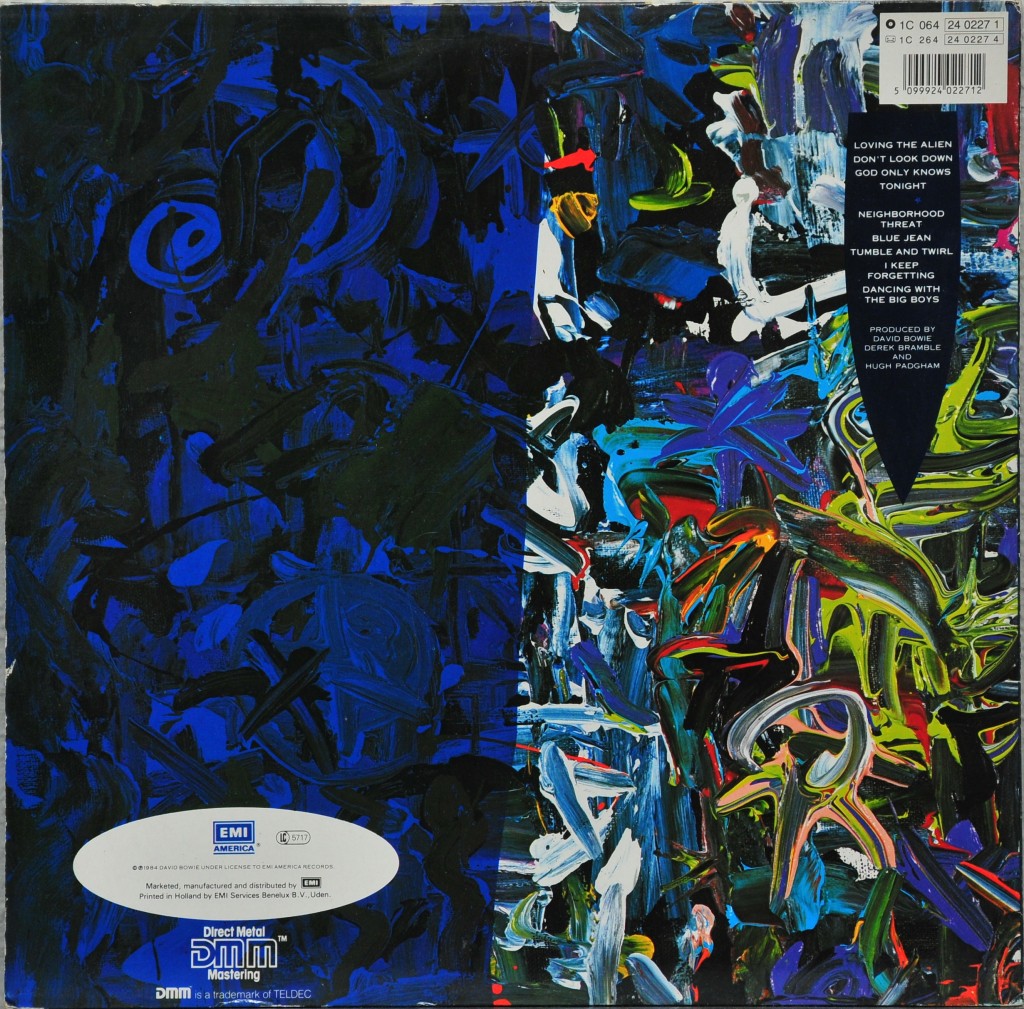
It’s hard to disagree – if ‘God Only Knows’, the title track and ‘I Keep Forgettin’ had been replaced by some new tunes, Tonight could have been a corker.
But it ain’t bad. And the critics all pretty much loved it at the time. It may have been a huge shock if you were brought up on Ziggy Stardust and Hunky Dory, but I came in around Scary Monsters. It seemed a natural progression.
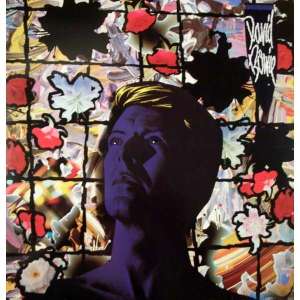
Mick Haggerty’s sleeve design splits opinion too – it’s either a witty Gilbert & George pastiche or a garish bit of mid-’80s tastelessness. Judge for yourself. Oh, and get the 1990 Rykodisc version of Tonight if you can find it rather than the 1999 EMI remaster.
Interesting reggaefied cover of a track from Iggy’s album New Values. Featuring a sublime David vocal, some excellent Bramble bass and a gorgeous horn/synth arrangement embedded in the mix, reminiscent of Gil Evans’ soundworld. Play loud.
3. ‘God Only Knows’
A great David vocal though very curious MOR arrangement of this Brian Wilson composition. Cavernous drums, soaring strings and acoustic guitar high in the mix. Fascinating though only really defensible if viewed as a kind of Scott Walker homage.
4. ‘Tonight’
Shorn of the shock heroin-overdose intro heard on the original from Iggy’s Lust For Life album. But it’s hard to defend this rushed, underwhelming filler which flopped as Bowie’s 1984 Christmas single. Even Omar sounds out-of-sorts on this. But let’s cut them some slack – David helped save Tina’s career. According to her, David dragged the bigwigs of Capitol Records out to see her perform live in New York against their wishes, prompting them to re-sign her.
5. ‘Neighbourhood Threat’
This perky techno-rocker, also originally from Lust For Life, features a fine vocal from David in ‘cyborg’ mode and brilliant drumming from Omar. It works very well but sounds unlike anything else on Tonight. Weirdly, Bowie dismissed it in 1987, saying ‘it wasn’t the right band to do that song. It sounded so tight and compromised.’
6. ‘Blue Jean’
A brief, harmless bit of ‘sexist rock’n’roll’ in Bowie’s words, a portrait of a woman he fancied in a magazine ad. Padgham works his magic on Omar’s drums, there’s some window-shaking sax from Lenny Pickett and Bowie borrows Iggy’s baritone. The first single from the album, it reached UK #6 and US #8 and featured a watchable but very silly long-form video directed by Julien Temple, shown in UK cinemas as support feature to ‘A Company Of Wolves’.
7. ‘Tumble And Twirl’
Another album highlight, co-written by David and Iggy, it’s an effective slice of tropical swing/funk with Mark King’s (uncredited) bass in Stanley Clarke mode, Guy St Onge’s cheery marimba, some sparkling 12-string guitar from Alomar and funny ‘muzak’ bridge with soothing backing vocals. Also some amusing lyrics inspired by Iggy and David’s vacation in Java.
8. ‘I Keep Forgettin’’
The album’s low point, where its ‘happy’, summery, positive feel comes truly unstuck. Electric drums fizz unpleasantly, David hams it up to little effect and the arrangements are more Pebble Mill than Muscle Shoals.
9. ‘Dancing With The Big Boys’
Another Iggy/Bowie co-write, the album closes with a tasty piece of one-chord, horn-based techno-rock flash. A funny lyric that seems to be about American military might: ‘Your family is a football team’. Iggy is very audible on vocals. Arthur Baker also put together an ear-bleeding 12” remix which is worth a listen.
Further reading: ‘Strange Fascination’ by David Buckley

 1980s jazz/rock generally gets the side-eye these days.

 Bryan Ferry’s one and only UK #1 album to date (and biggest-selling record in the US) was released 40 years ago this month.
 The early 1980s was a pretty good period to start out as a musician.
 movingtheriver.com