Essential 1980s Jazz/Rock Albums (Part 2)

Continuing our look at some of the finest jazz/rock albums of the 1980s. You can find part 1 here.

Jaco Pastorius: Twins (1982)
A classic double album (an edited version was released as Invitation) recorded live in Japan just after the bass pioneer left Weather Report. Jaco’s brand of fusion took in jazz, Cuban, soul and R’n’B – no guitars here, but brilliant bass playing and powerful solos from Toots Thielemans, Lew Soloff, Jon Faddis and Bob Mintzer.

Frank Gambale: Live! (1989)
The Australian guitarist’s outrageous live debut was recorded at the Baked Potato in LA, and it finally showed just what he’s capable of – electrifying, original solos. His compositions are memorable too and there’s fantastic Latin/fusion drumming from Joey Heredia.

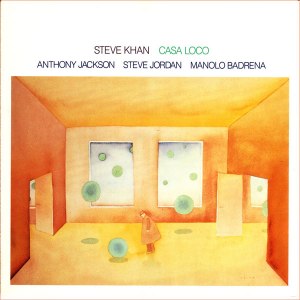
Steve Khan: Casa Loco (1983)
An album which still amazes musicians the world over. Arguably guitarist Khan, bassist Anthony Jackson, drummer Steve Jordan and percussionist Manolo Badrena have never done better work – that’s saying something considering who they’ve all played with.

Bill Bruford’s Earthworks: Dig? (1989)
Both of Bruford’s 1980s Earthworks albums were really good but this gets the nod due to Django Bates being given free reign, contributing superb keyboard solos, a cool reimagining of Petula Clark’s ‘Downtown’ and classic composition ‘Dancing On Frith Street’.

Paquito D’Rivera: Why Not! (1984)
An underrated album from the Cuban alto sax and clarinet star, also featuring Claudio Roditi on trumpet, Michel Camilo on keys and a wonderful performance from drummer Dave Weckl on the opening ‘Gdansk’.

Lyle Mays: Street Dreams (1988)
The Metheny Group keyboard player chucks in everything he knows on this big-budget project – ambient post-jazz, widescreen fuzak, big-band swing and Fagen-style fusion, and it’s all good. Some, like this writer, may also prefer the more red-blooded guitar playing of Bill Frisell to Metheny.

Pat Metheny Group: American Garage (1980)
No one is too sure if this came out in late 1979 or early 1980 but it’s this writer’s favourite Metheny album, though the guitarist himself seems to have almost disowned it. He loosens up and opens himself up to some rock and Steely Dan influences, driven along by Danny Gottlieb’s superb drums.

Level 42: A Physical Presence (1985)
A lot of it’s not strictly ‘fusion’, of course, but any album featuring such brilliant live versions of ‘Mr Pink’, ‘Foundation And Empire’ and ‘88’ has to make this list.

Mark King: Influences (1984)
The Level 42 mainman amazes with his 18-minute fusion classic ‘The Essential’, plus an eerily assured tribute to early Return To Forever called ‘There Is A Dog’. Plus he played almost everything on it.

John Patitucci: On The Corner (1989)
Both of the bassist’s 1980s solo albums were good but this gets the nod courtesy of the sheer variety of grooves from drummers Vinnie Colaiuta, Dave Weckl and Alex Acuna, and the leader’s exciting solos and excellent compositions, all memorable.

John Abercrombie: Getting There (1988)
A rare excursion into jazz/rock for ECM Records, the guitarist’s most dynamic ‘80s album featured Michael Brecker on sax, a hefty ‘rock’ mix courtesy of James Farber and arguably drummer Peter Erskine’s heaviest recorded performance to date.

Joni Mitchell: Wild Things Run Fast (1983)
She littered the album with influences from the Police but the main driver was the brilliant jazz/rock musicianship of bassist Larry Klein, drummers Colaiuta and John Guerin, saxist Wayne Shorter and keys player Russell Ferrante. ‘Moon At The Window’, ‘Be Cool’, ‘Ladies Man’ and ‘You’re So Square’ smuggled fusion into the album charts.

Miles Davis: Star People (1983)
Blues, blazing jazz/rock, chromatic funk and general weirdness combine for arguably Miles’s most exciting album of the decade, featuring all-time great guitar from Mike Stern and John Scofield.

John Martyn: Glorious Fool (1981)
John’s music was now bringing in influences from Weather Report, Latin music and spiritual jazz, and Phil Collins, keyboard player Max Middleton, percussionist Danny Cummings and bassist Alan Thompson made for a fantastic rhythm section.

Bruford: Gradually Going Tornado (1980)
Any album featuring ‘Gothic 17’, ‘Land’s End’, ‘Joe Frazier’ and ‘Palewell Park’ has to be on this list. Epochal work from bassist Jeff Berlin, keys man Dave Stewart and the drummer himself.

Bubbling under:
Power Tools: Strange Meeting (1987)
Stanley Clarke: If This Bass Could Only Talk (1988)
Terri Lyne Carrington: Real Life Story (1989)
Chick Corea Elektric Band: Eye Of The Beholder (1988)
Bill Frisell: Before We Were Born (1989)
Loose Tubes (1984)
Players (Jeff Berlin, Scott Henderson, Steve Smith, T Lavitz) (1986)

(PS. If you like the sound of any of these albums, please consider buying them in physical formats to best support the artists.)

Essential 1980s Jazz/Rock Albums (Part 1)

1980s jazz/rock generally gets the side-eye these days.

But it wasn’t all the Chick Corea Elektric Band prancing around the stage in tracksuits or pitiful WAVE-style smooth jazz.

The 1970s jazz/rock pioneers were mostly going strong and if some were too tempted by synths and drum machines, the best music was made by sticking pretty rigorously to the tried-and-tested real drums/bass/guitar/keys lineup favoured by Miles, Weather Report, Return To Forever et al.

So here’s a selection of 1980s jazz/rock albums that have consistently gripped movingtheriver, most of which he queued up to buy at the HMV or Virgin Megastore, or found in an Our Price bargain bin. (These are not proggy or funky. So no Herbie, Brecker Brothers, David Sanborn or David Torn, but there are elements of R’n’B/Latin/soul/whatever mixed in with the jazz).

Bireli Lagrene: Foreign Affairs (1988)
Just 21 years old when he recorded it with producer Steve Khan, the French guitarist’s second Blue Note album is a cohesive gem and massive improvement on the debut, with terrific contributions from keyboardist Koono and drummer Dennis Chambers.

Ornette Coleman: Virgin Beauty (1988)
One of the most ‘accessible’ albums of the master’s career, with memorable melodies, a brilliantly expressive bassist (Al McDowell) and some decidedly odd guest appearances from Jerry Garcia.

Tribal Tech (Scott Henderson/Gary Willis): Nomad (1988)
Recorded in April 1988 but not released until early 1990, guitarists were rightly wowed by Henderson’s brilliance, a mixture of Michael Brecker, Allan Holdsworth and Stevie Ray Vaughan, while the rhythm section is groovy and propulsive and both Henderson and Willis’s compositions are excellent. And ‘Tunnel Vision’ may feature the perfect guitar solo…

John McLaughlin: Mahavishnu (1984)
OK there are some question marks in the keyboard and sax departments, and a few mediocre tracks, but Billy Cobham has rarely sounded better and John contributes three or four classic compositions and a few brilliant solos to this reunion album of sorts.

Marc Johnson’s Bass Desires: Second Sight (1987)
Wonderful interplay between guitarists John Scofield and Bill Frisell, plus some classic compositions including Scofield’s surf-rock-meets-jazz ‘Twister’, Frisell’s Monk-like ‘1951’ and Johnson’s moving ‘Hymn For Her’.

Larry Carlton: Last Nite (1987)
Guitarists of all stripes were blown away by Carlton’s playing in the 1980s, and here’s the best evidence, captured live at LA’s Baked Potato club with Alex Acuna, Abe Laboriel and JR Robinson.

Human Chain: Cashin’ In (1988)
This Brit jazz/rock classic, released on EG Records, had elements of the Canterbury sound, West Coast cool jazz and 1980s Weather Report, featuring Django Bates’ fantastic keys and French horn and some weirdly impressive guitar and fretless bass from Stuart Hall (who he?).

Hiram Bullock: Give It What U Got (1988)
All the fun of the fair from this gifted but troubled guitarist: raunchy funk/rock, instrumental Steely Dan, Brecker Brothers horns, classic fusion and an Al Jarreau guest appearance on a Sam Cooke tune, but all shot through with jazz chords and Hiram’s lyrical playing.

Ronald Shannon Jackson: Mandance (1982)
Ornette-style harmolodics and Mingus-like ensemble work meet NYC punk-jazz on the drummer’s intriguing and powerful album, recorded live in the studio, featuring future Living Colour axeman Vernon Reid.

Weather Report: Sportin’ Life (1985)
It was a toss-up between this and Night Passage, both classics, but this gets the nod courtesy of the newly-minted rhythm section of Omar Hakim and Victor Bailey, plus a few classic Wayne Shorter tunes including ‘Face On The Barroom Floor’ which reportedly Joni Mitchell was particularly smitten by.

Wayne Shorter: Atlantis (1985)
Wayne again, fronting this fascinating, complex song-cycle featuring Alex Acuna on drums and Joni’s husband Larry Klein on bass. Takes some time to digest, but like a good wine gets better every year.

Allan Holdsworth: Secrets (1989)
A toss-up between this and Metal Fatigue, this gets in because of his delicious guitar tone and the inspired contributions of drummer Vinnie Colaiuta – ‘City Nights’, ‘Spokes’, ‘Peril Premonition’ and ‘Joshua’ are musical landmarks. Fiery, exciting, unmissable.

Steps Ahead: Modern Times (1984)
Messrs Brecker, Erskine, Mainieri, Gomez and Bernhardt were embracing some new technology but they never let it overshadow the mostly excellent compositions with telling solos, particularly from Brecker.

John Scofield: Still Warm (1985)
Take your pick between this, Blue Matter and Loud Jazz, all fantastic pieces of work, but Still Warm gets the nod courtesy of its dynamite rhythm section (Darryl Jones and Omar Hakim) and arguably John’s best writing of the ’80s.

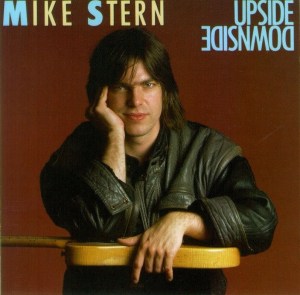
Mike Stern: Upside Downside (1986)
Produced by Hiram Bullock and featuring a crack band including Dave Weckl on drums, it showcases Stern’s finest/fieriest playing on record to date and also one of Jaco Pastorius’s last notable appearances. Still the best Stern solo album and quite extreme in its own way.

(If you’re new to any of these albums and they float your boat, please consider buying physical copies to support the artists.)

1980s Jazz, Fusion, Soul and Funk Acts I Should Like But Don’t

We’ve looked before at the celebrated 1980s rock and pop acts whose output somehow leaves this writer cold.

But how about the decade’s jazz, soul and fusion artists who always seem to get the props but inexplicably fail to float movingtheriver’s boat?

Rick James
Frequently mentioned in dispatches as a funk pioneer and influence on Prince etc. (and also mentor of Teena Marie?) but for this listener his music is generally coarse and one-dimensional, and his voice nothing to write home about.

Bill Connors
The guitarist made some excellent music for ECM Records in the 1970s both as solo artist and sideman (Jan Garbarek/Stanley Clarke/Return To Forever/Julian Priester etc.) but his 1980s work disappoints. He apparently developed a fixation on Allan Holdsworth’s sound/technique which hampered his progress. Somewhat regrouped in the 1990s and new millennium though.

Kazumi Watanabe
The guitarist employed some fantastic musicians (Jeff Berlin, Steve Jordan, Marcus Miller, Bill Bruford) in the 1980s but, outside of one or two half-decent riffs, seemingly failed to generate much memorable music.

Stanley Jordan
Bassist Anthony Jackson called him a ‘genius’, and he should know, but technical feats notwithstanding (he famously played the guitar exclusively by ‘tapping’ the strings with the fingers of both hands), he seemingly failed to develop his music beyond smoochy smooth jazz during the 1980s.

Chick Corea
Obviously a genius-level musical brain and maker of some memorable material in the 1970s but generally his ‘80s music and stage presentation was a bit embarrassing (though I have a penchant for the Light Years and Eye Of The Beholder albums). A great mentor though (Dave Weckl, John Patitucci, Frank Gambale, Scott Henderson etc.).

Al Di Meola
See above.

Howard Hewett
Owner of some fantastic pipes and a stellar career co-fronting Shalamar, but for this writer his solo career generally seems like over-produced, underwhelming mush, and he doesn’t seem much of a songwriter. (He did an unforgettable take on Marvin Gaye in the 1990s though.)

Narada Michael Walden
One of the great drummers (Jeff Beck, Weather Report, McLaughlin etc.) and producers (Whitney, Aretha etc.) ended the 1980s with a half-decent album (Divine Emotions) but, to these ears, the rest of the decade’s solo career was unmemorable disco/funk…

Brand X
Often touted as a kind of British Weather Report – fugedaboudit. Their musicianship was competent at best and their compositions somehow didn’t stick in the brain, despite the occasional drumming contributions of a Mr P Collins. Bill Bruford did it much better with a far superior bunch of players (Jeff Berlin, Allan Holdsworth, Jon Clark, Dave Stewart). See also: Pierre Moerlen’s Gong.

Pat Metheny
This writer dug his stereo-chorus sound and musical approach at the dawn of the decade (80/81, American Garage, Travels) but, as the 1980s went on, he seemed to embrace a mushy new-age sensibility and indistinct jazz guitar sound that generally underwhelmed. And his stage presentation is one of the least savoury in music history… (Gary Giddins: ‘intoning plush melodies with excessive sobriety, as though the notes were transmitted directly from God…’). Liked his collaborations with Ornette Coleman and Bowie though.

Jean-Luc Ponty
Valued sideman for ’70s behemoths (Zappa, McLaughlin) but his solo career has generally disappointed this writer (but generally not other jazz/rock fans, who inexplicably seem to love his stuff…), outside of the fact that he doesn’t seem to possess a particularly pleasant violin tone with an annoying penchant for the phaser pedal. He employed some superb players in the ‘80s (Scott Henderson, Rayford Griffin, Baron Browne etc.) but never convinced that he’s much of a composer. Always quite liked this though…

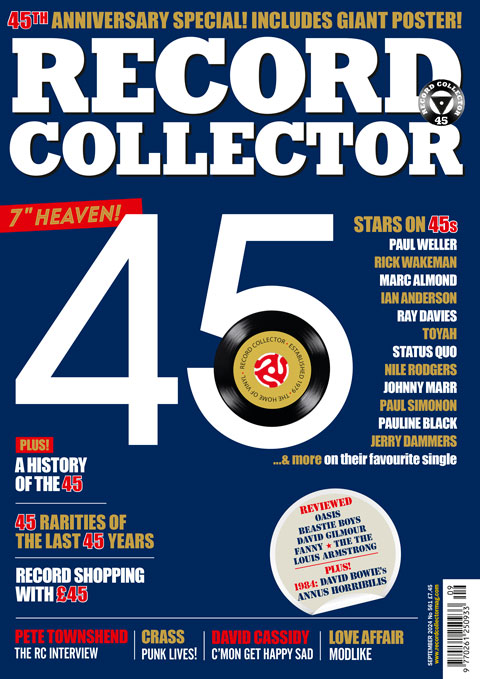
1984: David Bowie’s Worst Year?

Bowie’s Tonight, the speedy followup to Let’s Dance released 40 years ago, was one of the most divisive albums of his career.

For some, it was over-produced pap. For others, it was a great little pop/rock album. In the September issue of Record Collector magazine, I reassess it, rounding up some of the usual and unusual 1980s suspects in the process.

Still, for many, 1984 remains the worst year of David’s career. In fact, during a period of great personal strain, it was one of his most intriguing, including collaborations with Pat Metheny, Tina Turner, John Schlesinger and Iggy Pop, the ‘Jazzin’ For Blue Jean’ short film with Julien Temple and his (at first) tentative foray into the Band Aid project.

Read all about DB’s 1984 in the new RC. Top breeders recommend it.

Book Review: Formation (Building A Personal Canon Part 1) by Brad Mehldau

There’s a history of controversial jazz autobiographies that would have to include Mezz Mezzrow’s ‘Really The Blues’, Charles Mingus’s ‘Beneath The Underdog’, Sidney Bechet’s ‘Treat It Gentle’, Billie Holiday’s ‘Lady Sings The Blues’, Dizzy Gillespie’s ‘Dizzy’ and Art Pepper’s ‘Straight Life’.

It may be somewhat of a surprise to report that the apparently mild-mannered, urbane Mehldau – modern master jazz pianist and probably best known for his majestic Radiohead and Beatles covers – joins that list with ‘Formation’, charting his musical and personal rites of passage from the mid-’70s to late 1990s.

The general fan may have heard Mehldau make vague references to his previous junkie life – here we get the full story, and it’s both revelatory and somewhat disturbing. Also, unlike some of the books listed above, ‘Formation’ is certainly not ghostwritten, hardly a surprise when one considers some of the extensive liner essays Mehldau has penned, particularly 2000’s Places.

Growing up in mid-‘70s New Hampshire, Mehldau’s young life is all very Judy Blume, soundtracked by Billy Joel, Beethoven, Fleetwood Mac, the Eagles, Steve Miller and Supertramp, with the twin undercurrents of organised religion and the Cold War.

At the turn of the new decade, piano lessons become increasingly important and he becomes a major prog fan, Pink Floyd and Rush becoming key touchstones, though he also relates the loneliness in his own life to the music of Miles, Billie Holiday and Brahms.

A move to Hartford, Connecticut, precipitates the first major instances of bullying, outlined in shocking detail, a theme that will echo throughout his time in formal education. It’s hardly surprising that alcohol and drug use become regular companions during his late-teenage life, as do doubts about his sexuality.

In the age of Reagan, Stallone and Schwarzenegger, Mehldau becomes a true ‘outsider artist’, finding solace in the works of Thomas Mann, the Beats, German philosophers and Bob Dylan. Meanwhile high school hastens the flowering of his jazz piano talent.

From there, it’s a short ride to Mehldau’s relocation to New York in the late 1980s, and his jazz piano initiation at great lost venues such as Augie’s and the Village Gate. It’s hard to think of another book which better explores that fabled NYC jazz scene of the late 1980s to mid 1990s, nor one that better explores the thought processes and doubts of a nascent jazz pianist.

There are touching tributes to his piano teachers and also contemporary ivory-ticklers such as Larry Goldings, Bill Charlap and Kevin Hays. The book closes with lengthy accounts of his time playing with Joshua Redman, David Sanchez and Pat Metheny, undertaken in the shadow of heroin addiction, though the book ends with hope and a sense of rebirth.

Though always engaging, Mehldau’s writing style is wildly unpredictable – sometimes intimate and conversational, sometimes dry and analytical, often shockingly fly, with scant consideration for political correctness. But his intelligence flies off the page, hardly a surprise to anyone who’s heard him weave magic at the piano.

He’s honest about his own faults as well as the faults of others, and there’s no getting away from it – he paints a mostly harsh, violent picture of America in the 1980s, certainly no country for old men or those of a sensitive disposition. ‘Formation’ is also graced with the author’s own sizeable photo collection.

A fine if sometimes shocking addition to the pantheon of great jazz autobiographies, we eagerly await part two of ‘Formation’. Meanwhile Brad’s playing career goes from strength to strength – I’m looking forward to the Wigmore Hall solo gig in September.

Pat Metheny & Lyle Mays: As Falls Wichita, So Falls Wichita Falls 40 Years On

‘A game of two halves’ is a common expression in football, but it can apply to albums too.

We all know albums which have one good side and one bad one (I’ll throw in The Seeds Of Love, Fulfingness’ First Finale, Music Of My Mind, The Colour Of Spring for your consideration…).

But another humdinger is As Falls Wichita, So Falls Wichita Falls, released 40 years ago today.

The Cult Of Metheny has ensnared many, and puzzled just as many. But As Falls Wichita fell smack bang in my favourite era of Pat’s music (between American Garage and Song X), and represented a real change of scene.

Side one’s 20-minute title track delivered a full-on prog/fusion masterwork, ably assisted by Lyle Mays in classic-synth heaven (Prophet 5, various Oberheims, Roland CR-78 and Linn LM-1 drum machines), always totally recognisable, and at a time when polyphonic playing had just become possible. He was rapidly becoming a Joe Zawinul for the 1980s.

‘As Falls Wichita’ may be the most ‘rock’ music released on the ECM label during the 1980s, with the possible exception of David Torn’s 1987 record Cloud About Mercury. It also seems dangerously ambitious. Then again, the whole album was recorded in just three days! Lesser musicians could have taken a month to record this track alone.

Apparently chiefly written to play over the PA system before Metheny Group concerts, it’s pure headphone music. The enigmatic title (apparently nicked, with permission, from an unreleased Steve Swallow composition) and superb album cover certainly help.

The track plays out like a good movie (its working title was ‘Apocalypse When’). It’s more John Carpenter than Keith Jarrett. You might even describe it as cathartic, dammit.

(Another reason for its success may be the complete lack of instrumental solos. Pat doesn’t get any solo space at all – he just plays some unobtrusive bass, chiming 12-string electric and a little six-string. All sounds are textural and in the service of the whole piece.)

A superb live version was featured on the 1983 Metheny Group album Travels. And those who remember the Christian Dior ‘Fahrenheit’ adverts in the late 1980s may be familiar with a small excerpt of the track:

But back to that ‘album of two halves’ thing. Sadly, side two of As Falls Wichita is New-Age sludge. Ponderous and flabby, it’s fuel to Pat detractors, but probably loved by acolytes.

‘September Fifteenth’, a tribute to Bill Evans (named for the date of the great jazz pianist’s death in 1980) is the chief culprit. A closing, out-of-tune version of ‘Amazing Grace’ doesn’t help. It’s music for tired Apple executives, and sounds like it was recorded in the last afternoon of the three days.

But As Falls Wichita was an unexpected smash by ‘jazz’ standards: the album got to #1 on the Billboard Jazz Charts and quickly became Metheny’s biggest seller to date.

So happy 40th birthday to the classic title track. Pour yourself something tall, tune in, drop out, get the headphones on, lie on the floor and crank it up. It’s a trip, man…

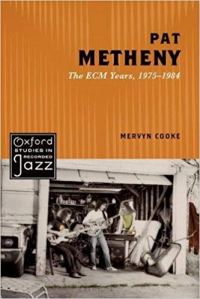
Further reading: ‘Pat Metheny: The ECM Years’ by Mervyn Cooke

Great Guitar Solos Of The 1980s (Take Two)

We continue our rundown of classic solos from the 1980s. Check out the first part here.

39. Stone Roses: ‘She Bangs The Drums’ (Guitarist: John Squire)

38. Shakespears Sister: ‘You’re History’ (Guitarist: Stevie Salas)

37. Bireli Lagrene: ‘Rue De Pierre Part 3’
A triumph of solo guitar, and the only acoustic solo in this list, Bireli stunned the cognoscenti with this track from his 1988 Steve Khan-produced album Foreign Affairs.

36. Bros: ‘Chocolate Box’ (Guitarist: Paul Gendler)
Yes, Bros… Gendler had been a fully-paid-up member of New Romantic nearly-men Modern Romance before becoming an in-demand player on the UK scene, and he enlivened this hit with a raunchy, nimble classic.

35. REO Speedwagon: ‘Keep On Loving You’ (Guitarist: Garry Richrath)
Unreconstructed, huge-toned, double-tracked solo which revels in being almost out-of-tune throughout. Its sheer, brilliant in-your-faceness always comes as somewhat of a shock.

34. George Benson: ‘Off Broadway’
Slick, tasty solo from a truly great player. The tune is a Rod Temperton-penned, post-disco beauty from Give Me The Night.

33. Killing Joke: ‘Love Like Blood’ (Guitarist: Geordie)
This is ‘just’ a melody, but it’s a great melody, escalating in volume and intensity.

32. Phil Upchurch: ‘Song For Lenny’ (Guitarists: Phil Upchurch/Lenny Breau)
A couple of superb solos from a great, totally forgotten 1984 Upchurch solo album Companions. Breau stuns with his array of false harmonics and jazzy runs, while Upchurch brings the blues feeling.

31. Frank Zappa: ‘Alien Orifice’
It’s nice to hear Frank blowing over a few changes rather than his usual one or two-chord vamps. And he really gets a nice ‘flowing’ thing going here, right in the middle of one of his densest compositions. Starts at around 1:32:

30. Cameo: ‘A Goodbye’ (Guitarist: Fred Wells)
From the classic album Single Life, this solo goes way over and beyond the call of duty for an ’80s soul ballad. But it’s mainly included for its brilliant final flourish, spitting notes out like John McLaughlin. Who is Fred Wells and where is he now?

29. Rush: ‘YYZ’ (Guitarist: Alex Lifeson)
Hard to do without this flowing, creamy, Strat-toned classic on one of the great rock instrumentals of all time (though inexplicably it lost out to The Police’s ‘Behind My Camel’ at the Grammies…).

28. Kevin Eubanks: ‘That’s What Friends Are For’
A real hidden gem from the almost impossible-to-find Face To Face album, Eubanks lays down a short but beautifully-structured solo on a cool cover version.

27. Steve Miller Band: ‘Abracadabra’
Good fun and totally unpredictable. Also notable for its lovely Spanish-style flurry of triplets in its last two bars.

26. Starship: ‘Nothing’s Gonna Stop Us Now’ (Guitarist: Corrado Rustici)
Cheesy? Maybe a bit, but who cares when it’s this well-structured and performed. Add a great tone, nice string-bending and a lovely phrase at the end and you’ve got a classic.

25. Queen: The Invisible Man (Brian May)
May played a lot of great solos in the late 1980s, mostly on other people’s records (Holly Johnson, Fuzzbox, Living In A Box etc) but this one was just a kind of ‘play as many notes as possible in eight bars’ solo, and it’s a killer.

24. Lee Ritenour: ‘Mr Briefcase’
Rit found the sweet spot on his Ibanez many times in the early ’80s, no more so than on this single that kicked off the classic Rit album. The solo also sounds double-tracked too, no mean feat considering the crazy bunch of 32nd notes at the end of bar 10.

23. Michael Jackson: ‘Wanna Be Startin’ Something’ (Guitarist: David Williams)
Not so much a solo as a suddenly-foregrounded riff, Williams became one of the most in-demand US session players after laying down this classic.

22. Pat Metheny: ‘Yolanda You Learn’
A marvellous, ‘singing’ guitar-synth solo from the First Circle album, rhythmically interesting and reflecting a strong Sonny Rollins influence, also closing with a cool quote from the standard ‘My One And Only Love’.

21. Frank Zappa: ‘Sharleena’ (Guitarist: Dweezil Zappa)
Frank’s son was apparently just 14 years old when he laid down this absurdly fluid cameo.

20. Eric Clapton: ‘Bad Love’
Nice to hear Eric pushing himself for once, delivering a striking solo played right at the top of the neck, demonstrating a mastery of string-bending and precise fingering.

19. Sadao Watanabe: ‘Road Song’ (Guitarist: Carlos Rios)
A classic rock/fusion solo, all the more impressive because it’s apparently double-tracked, from the album Maisha. Rios is still one of the most in-demand session players in Los Angeles (and one of the few leftie fusion players…), probably best known for his work with Gino Vannelli, Chick Corea and Lionel Richie.

18. Prince: ‘Batdance’
It’s the unapologetic volume and raucous tone, almost distorting it’s so hot in the mix.

17. David Sanborn: ‘Let’s Just Say Goodbye’ (Guitarist: Buzz Feiten)
Feiten seems a weirdly unrecognised figure in the guitar fraternity, but he contributed some great stuff to Sanborn’s seminal Voyeur album including this tasty break over a killer Marcus Miller/Steve Gadd groove. There are some lovely moments when Sanborn’s sax cuts in to augment his solo.

16. Paul Simon: ‘Allergies’ (Guitarist: Al Di Meola)
I love hearing ‘jazz’ musicians turning up on ‘pop’ records, and this is a classic of its kind featuring all of Al’s trademark licks in one short, tasty burst. It’s a lot more fun than listening to his solo albums, anyway…

15. Manhattan Transfer: ‘Twilight Zone’ (Guitarist: Jay Graydon)
At a time when he was getting much more into the production game, Graydon still found time to toss off a double-tracked showstopper on this hit single. All in a day’s work for the session genius who of course unleashed the famous solo on Steely Dan’s ‘Peg’. Speaking of which…

14. Steely Dan: ‘Glamour Profession’ (Guitarist: Steve Khan)
A mini masterpiece of precision and invention. Khan is given his head and takes the classic tune OUT in the last three minutes. When the chord changes, he changes.

13. King Crimson: ‘Elephant Talk’ (Guitarists: Adrian Belew/Robert Fripp)
Two great solos for the price of one on this Discipline opener. Fripp supplies the opening horn-like curio, then Belew adds some fire and a bit of famous elephantosity for good measure.

12. Living Colour: ‘Funny Vibe’ (Guitarist: Vernon Reid)
A classic modern blues solo from a modern master, adding excitement and elan to an already burning piece, helped along by Will Calhoun’s cajoling kit work.

11. Steely Dan: ‘Third World Man’ (Guitarist: Larry Carlton)
Another day, another classic Steely guitar solo, this one recorded in 1977 during the Aja sessions but not unleashed for another three years. Again, double-tracked for lasting power, featuring a superb mastery of tone and melody.

10. Wendy & Lisa: ‘Waterfall’ (Guitarist: Wendy Melvoin)
Sadly this is my only female entry in the list (more suggestions please), but it’s a fuzz-toned, anthemic treat, with shades of Santana and McLaughlin.

9. The Police: ‘Driven To Tears’ (Guitarist: Andy Summers)
It’s the random, off-the-cuffness that appeals on this one. Summers sounds a lot more p*ssed off than usual, possibly reeling from yet another Sting jibe.

8. Steve Vai: ‘Call It Sleep’
Just a superb guitar composition from top to tail, but the moment at 1:22 when he stomps on the distortion pedal and rips it up is a great moment of ’80s music.

7. Propaganda: ‘Dream Within A Dream’ (Guitarist: Stephen Lipson)
Lipson modestly provided three or four extremely memorable guitar features during his golden ZTT period (not least Frankie’s ‘Two Tribes’), but this one gets extra points for its infinite reverb and a dynamite fuzztone.

6. Orange Juice: ‘Rip It Up’ (Guitarist: Edwyn Collins)
Just a funny two-fingers-up to the well-made solo, and also a fond homage to Pete Shelley’s famous break on Buzzcock’s ‘Boredom’.

5. Frank Gambale: ‘Credit Reference Blues’
Just wind him and watch him go. It starts slowly, almost wistfully, but then becomes a fire-breathing classic. Still scary after all these years.

4. Dire Straits: ‘Romeo And Juliet’ (Guitarist: Mark Knopfler)
The closing solo is just an oasis of choice phrases and unique tones.

3. Van Halen: ‘One Foot Out The Door’ (Guitarist: Eddie Van Halen)
Of course ‘Beat It’ is the industry standard, and possibly the greatest guitar solo of all time, but I’m going for this curio which closes out the oft-forgotten Fair Warning album. He just blows brilliantly over the changes with a gorgeous tone.

2. Jeff Beck: People Get Ready
The second and last solo is the one, a feast of Jeff-isms. A rare good bit from the rather poor Flash album.

1. Stanley Clarke: ‘Stories To Tell’ (Guitarist: Allan Holdsworth)
No chucking out any old solo for our Allan – this is a brief but fully-formed, perfectly structured, wide-interval classic that is easily the best thing about the tune. He seems to get a bit ‘lost’ in the middle, but then regroups for a stunning closing section over the rapid chord changes.

Book Review: Pat Metheny (The ECM Years 1975-1984) by Mervyn Cooke

You know the guy: long, bushy hair, beatific grin, jeans, sneakers, long-sleeved T-shirt, usually rhapsodizing intensely via some kind of guitar gizmo.

Despite his many stylistic detours, Pat Metheny is a brand all right, and his music inspires a devotion and attendant sales profile that has rarely – if ever – been afforded to ‘jazz’ musicians.

If you – like me – aren’t always enamoured by the bulletproof sincerity of his stage presentation (in Gary Giddins’ memorable words, he ‘intones plush melodies with excessive sobriety, as though the notes were transmitted directly from God’ – the main reason why I’ve always preferred his stuff on record rather than live…), it’s beyond doubt that Metheny is one of the great guitar soloists.

Mervyn Cooke’s superb new book ‘Pat Metheny: The ECM Years, 1975-1984′ sheds light on the first – and, for me, best – decade of the guitarist’s recording career, when he was the famous European jazz label’s top turn.

It’s an academic study, though never boring and certainly never predictable, with close attention played to Pat’s guitar styles, musical history, tunings, key collaborators (loads of new stuff about Jaco, Charlie Haden, Michael Brecker, Gary Burton and Lyle Mays here), equipment, album cover designs and inspirations.

There are fascinating details, like Metheny’s obsession with flat ride cymbals (hence his deliberate placement of drummers onstage, ride cymbals always in close proximity to his left ear) and his singular band-leading philosophies. There are solo transcriptions and quotes from archive interviews.

Cooke also shrewdly compares Metheny’s studio work in this era to that of Weather Report’s, drawing parallels between both acts’ meticulous sculpting of ‘spontaneous’ musical performances and attempts to concoct ‘through-composed’ – rather than vamp-based – material.

Metheny fans will love ‘The ECM Years’, as will anyone who has even the faintest interest in guitar trends of the last 40 years. It also serves as a rich biography of ECM Records in its early years, with numerous revelations about label boss Manfred Eicher.

Reading the book sent me running back to choice cuts from Pat’s early albums that I liked during my teenage years – Bright Size Life, American Garage, 80/81, As Falls Wichita, So Falls Wichita Falls, Travels, Rejoicing, First Circle, Song X.

Revisiting As Falls Wichita in particular has been somewhat of a revelation. (Prog fans: check out side one. It’s a cinematic masterpiece, analysed in great detail by Cooke.)

Mervyn Cooke’s ‘Pat Metheny: The ECM Years, 1975-1984’ is published by Oxford University Press.

13 Great Album Covers Of The 1980s

One of the many positives of the recent vinyl resurgence is the potential for some decent album covers again.

For a while, it seemed as if the art was being lost.

Back in the ’80s, as the cliché goes, you would generally buy an album, stick it on and then peruse the cover at some length while you listened. The best covers seemed to take on a life of their own.

Budgets were healthy, the musicians cared and you could see the time and effort that went into the work. I particularly liked those covers with a ‘psychological’ aspect, some kind of story or scene, an image that maybe enhanced the lyrical themes of the album. 

Here are eleven album covers of the ’80s that still beguile, from the spooky to the decidedly Spielbergian.

13. Donna Summer: She Works Hard For Her Money (1983)

Design: Chris Wharf/Photo by Harry Langdon

12. Scritti Politti: Cupid & Psyche 85 (above)

Design by Keith Breeden/Artwork by Art-O-Matic

11. Pat Metheny/Lyle Mays: As Falls Wichita, So Falls Wichita Falls (1981)

Design by Barbara Wojirsch
Photo by Klaus Frahm

10. Weather Report: Procession (1983)

Artwork by John Lykes

weather report

9. It Bites: The Big Lad In The Windmill (1986)

Cover artwork by David O’Connor

It+Bites+The+Big+Lad+In+The+Windmill+452664

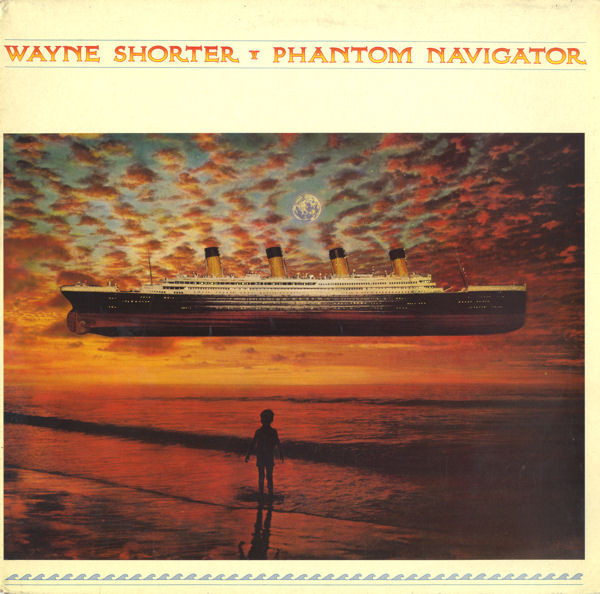
8. Wayne Shorter: Phantom Navigator (1988)

Cover artwork by Jean-Francois Podevin

wayne sh

7. Level 42: Level 42 (1981)

Cover artwork by Joy Barling Loyla

level

6. Japan: Oil On Canvas (1983)

Cover artwork by Frank Auerbach

japan

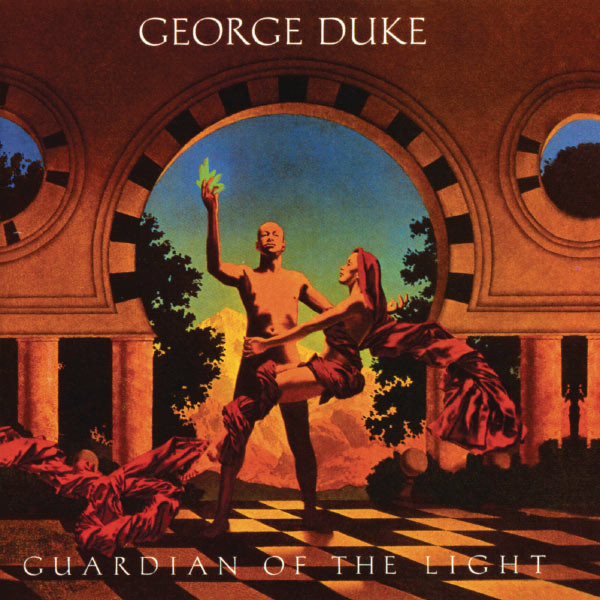
5. George Duke: Guardian Of The Light (1983)

Cover artwork: unidentified (anyone know?)

george

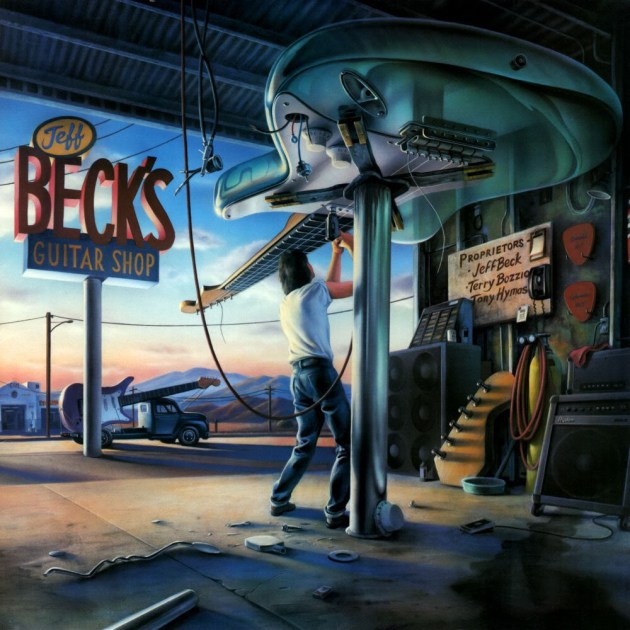
4. Jeff Beck’s Guitar Shop (1989)

Cover artwork by Mark Ryden

jeff-becks-guitar-shop-55b528bc7fc87

3. Peter Gabriel: 3 (1980)

Cover artwork/photography by Hipgnosis (Storm Thorgerson/Audrey Powell)

hs_PG3_UMGI_Vinyl-12_Gatefold_6mmSpine_OUT_RI_AUG10.indd

2. Talk Talk: The Colour Of Spring (1986)

Cover artwork by James Marsh

talk talk

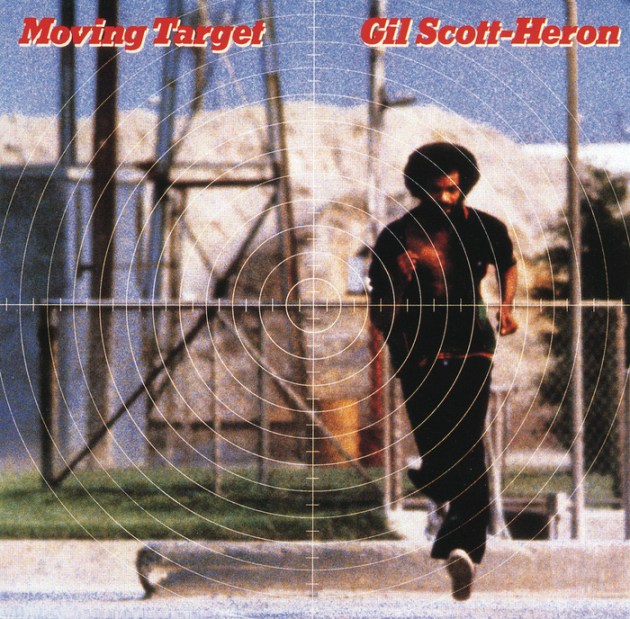
1. Gil Scott-Heron: Moving Target (1982)

Photography by John Ford, artwork by Donn Davenport

gil scott heron

Mike Stern: Upside Downside

mike stern

There’s no telling how a jazz musician will react to a bad review, whether from a critic or fellow player.

Some, like Miles Davis, take a – how shall we put it – stoic view, either refusing to read any press or choosing his writer friends very carefully (Leonard Feather, Quincy Troupe).

But for every naysayer, there’s an aggressor; drum master Tony Williams laid into jazz scribe Stanley Crouch for his less-than-flattering comments on Miles’ electric-era music, while Weather Report famously took Downbeat magazine to task for its one-star slagging of 1978 classic Mr Gone.

Though guitarist Mike Stern had studied at the famous Berklee music school in the mid-‘70s and then landed a top gig with jazz/pop supergroup Blood Sweat & Tears, he wasn’t prepared for bandmate Jaco Pastorius’s succinct review of his guitar playing after a dodgy run through Chick Corea’s ‘Spain’ on tour with BS&T one night – ‘Stern, you know that sh*t wasn’t happening at all! You’ve got to learn faster tempos!’

Jaco and Mike, 1980

Jaco and Mike, 1980

To his great credit, Stern listened to his friend, learnt the tune note by note and in the process became one of the greatest players of his generation. His slick bebop lines played with a ‘rock’ sound were quite new when he came of age playing with Billy Cobham’s band.

Miles was also listening closely while he was in the early stages of putting together his ‘comeback’ band in early 1981. The story goes that he appeared in the front row of The Bottom Line club in New York City and poached Stern during a break, apparently even calling Cobham off the bandstand in the middle of a tune to issue his intentions!

Stern was then summoned to the Columbia Records studio to record the electrifying half-time strut ‘Fat Time’ (Miles’s nickname for Stern) in one take. The track appeared on the Man With The Horn album and Stern was then invited to go out on the road with Miles.

My dad took me to see Miles at the Hammersmith Odeon in 1982, my first proper gig. I’m sad to say that I don’t recall much about it apart from Miles’s white suit and someone shouting: ‘Turn the trumpet up!’

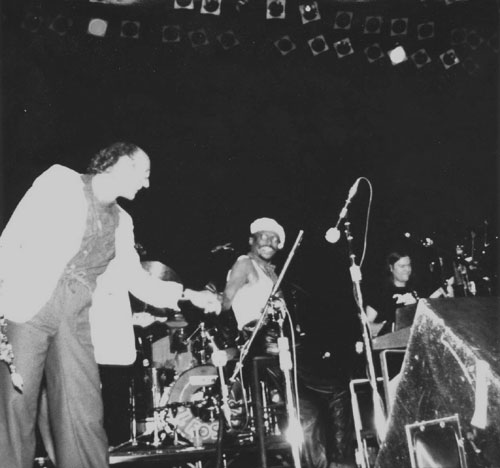
Dave Liebman, Miles and Mike Stern, 1981. Photo by Julie Coryell

Dave Liebman, Miles and Mike Stern, 1981. Photo by Julie Coryell

Critics were harsh on Stern, not believing that a chubby, jeans-wearing, long-haired guy playing a white Strat with a fuzzbox could play ‘jazz’, but with hindsight he did a brilliant job of holding down the harmony and delivering powerful, surprising solos in the keyboard-less quintet.

But the demons that haunted some of his early career wouldn’t go away. Stern recently said, ‘I played about two gigs in my life between the ages of 12 and 32 when I was sober’.

Miles even got John Scofield into the band as second guitarist to cover for his increasingly unreliable secret weapon. Stern eventually missed a flight and got the boot, but after a successful spell in rehab returned to play with old friend Michael Brecker and Mike Mainieri’s fusion supergroup Steps Ahead.

Stern also put together a solo record deal with Atlantic Records and began working on Upside Downside in early 1986 with his late friend and fellow shit-hot guitarist Hiram Bullock in the producer’s chair.

The album is a great excuse for Stern to play the hell out his guitar in a variety of idioms. The uptempo tracks are blessed with typically fiery solos while the ballads beautifully demonstrate Stern’s lyrical side, his Telecaster screaming emotively above Dave Weckl’s subtle drumming and Mark Egan’s springy bass.

Jaco completists will enjoy one of his very last recorded contributions on the raucous ‘Mood Swings’ while saxophonist David Sanborn’s playing on ‘Goodbye Again’ is spine-tingling. But mainly the album is a must for any lover of the guitar. His sound is a little more fluid and widescreen than on recent albums and there’s no-one quite like Stern at the top of his game, a fusion of Charlie Parker and Roy Buchanan.

Mike made two excellent follow-up albums later in the ’80s, Time In Place and Jigsaw, both produced by the fine guitarist Steve Khan. For me, this was Stern’s best era, when his raunchy playing was closer to blues and rock than the lighter Methenyesque jazz and World music vibes of recent times. I also saw him live at the Town and Country Club in 1989, a memorable gig featuring the mind-blowing Dennis Chambers on drums.

Further reading: ‘The Extraordinary And Tragic Life Of Jaco Pastorius’ by Bill Milkowski