10 Classic 1980s Singles Featuring Brushes

Some brushes, yesterday

When you think of 1980s pop music, which drum sounds come to mind?

They’re probably pretty loud and the infamous gated snare possibly looms large: ‘Let’s Dance’, ‘In The Air Tonight’, ‘Hey Mickey’, ‘Uptown Girl’, ‘A Town Called Malice’, ‘Born In The USA’.

But there’s a whole alternative world of 1980s hits where the drummer played very quietly, with brushes rather than sticks. Stuff like Buddy Holly’s ‘Raining In My Heart’, The Beatles’ ‘When I’m 64’ and Lou Reed’s ‘Walk On The Wild Side’ probably laid down the gauntlet, but you can’t imagine any producers or focus groups demanding that the drummer play brushes to create a hit (and when was the last hit that featured brushes?).

Here are some classic 1980s singles that somehow got away with it (all chart placings from the UK).

10. Echo & the Bunnymen: ‘Killing Moon’
Powered by Pete de Freitas’s subtle and unexpected brushwork, the classic single got all the way to #9 in early 1984.

9. George Michael: ‘Kissing A Fool’
The seventh and final single from Faith, written back in 1984, reached the top 20 and was initially mooted to be the title track of that 1987 album. Session player Ian Thomas, soon to play with everyone from Robbie Williams to Scott Walker, overdubbed some brushes on the snare after first recording a pass with sticks.

8. The Cure: ‘The Lovecats’
This stand-alone single was also the band’s first top ten hit, peaking at #7 in October 1983. Drummer Andy Anderson began his career with Hawkwind’s Nik Turner and Steve Hillage, then ended up on Robert Smith and Steve Severin’s The Glove side project. He found himself recording this song in Paris then joined the band for a year, playing on 1984 album The Top and playing brushes on another B-side, ‘Speak My Language’. He then toured with Iggy Pop throughout 1987. Anderson died in 2019.

7. Alison Moyet: ‘That Ole Devil Called Love’
This stand-alone single reached a heady #2 during March 1985, produced by ’18 With A Bullet’ singer Pete Wingfield. But who’s the drummer? Answers on a postcard please.

6. Robert Wyatt: ‘Shipbuilding’
Not much is known about drummer Martin Hughes, but he did a nice job on this classic single which reached #35 in April 1983.

5. Chris Rea: ‘Driving Home For Christmas’
Written in 1978, it was originally intended for Van Morrison. Rea first recorded it as a B-side to the 1986 single ‘Hello Friend’, with drummer Dave Mattacks playing almost with a country feel. But the most famous version features on Rea’s 1988 New Light Through Old Windows compilation album with drums by Martin Ditcham, best known for his percussion work.

4. Chris Isaak: ‘Wicked Game’
Kenney Dale Johnson played some very subtle drums on this classic single released in July 1989, going on to become a huge sleeper hit in the US and UK.

3. Elton John: ‘Blue Eyes’
Recorded at AIR Studios in Montserrat, this touching ballad was the lead-off single from John’s Jump Up! album, reaching the top ten in 1982. The very slow 6/8 groove was beautifully marshalled by Jeff Porcaro. See also Toto’s ‘Don’t Stop Me Now’ and Ray Charles’ ‘Still Crazy After All These Years’ for some classic Porcaro brushwork.

2. Fairground Attraction: ‘Perfect’
It reached UK #1 in May 1988 – is it the only chart-topper to feature a drummer playing brushes? London jazzer Roy Dodds did the honours on this.

1. Rain Tree Crow: ‘Blackwater’
Cheating a bit here. It wasn’t released until 1991 but was recorded in December 1989 at Chateau Miraval in Southern France. It was the reformed Japan’s only single, reaching #62. In the band biography ‘Cries And Whispers’, drummer Steve Jansen makes the remarkable claim that his whole performance was pieced together using samples. Weird…

Any other 1980s hits that feature brushes? Drop us a line below.

Nick Mason: Fictitious Sports

Who are the luckiest musicians in rock?

Which players have made the megabucks peddling middling-at-best instrumental skills and generally keeping their heads down? Mick Fleetwood, John McVie, Eric Clapton, Phil Selway, Adam Clayton?

Nick Mason would probably have to be in that list too. But then you wonder if the Pink Floyd sticksman has hidden talents – after all, he’s produced the Damned, Robert Wyatt, Gong and Steve Hillage.

Good musicians seem to really like and respect him and he has always seemed one of rock’s gentlemen.

He was at it again in 1979 when he was offered a ‘vanity’ record deal during some Pink Floyd off-time. He didn’t have any particular plans, so asked esteemed jazz arranger/keyboardist Carla Bley if she could help out.

She had some songs prepared that she’d written for her punk band Penny Cillin And The Burning Sensations. Mason and Bley managed to quickly gather a rock snob’s dream team (Wyatt on vocals, Chris Spedding on guitar, cover designers Hipgnosis, record label Harvest) and record in Bley’s basement (Mason also apparently wanted Yul Brynner to be the singer, but he turned it down…).

It all led to his one and only solo album Fictitious Sports, eventually released in 1981. It’s a fascinating, intermittently brilliant project that borrows from art-pop, prog, new-wave rock and even musical theatre to produce something pretty original (hardly surprising if one delves into Bley’s ouevre with any depth).

On the superb, disquieting ‘I’m A Mineralist’, Wyatt rehearses a Peter Gabriel-style blanked-out vocal and Bley inserts some witty Philip Glass Einstein On The Beach-style tomfoolery and a few general pokes at minimalism.

And she doesn’t scrimp on the silly but menacing lyrics either: ‘Just the thought of ironing gives me spasms of lust’, ‘Mother used to try to meddle in my affairs’, etc…

‘Do Ya’ is a highly original, witty evocation of a crumbling relationship, reminiscent of something from Robert Fripp’s Exposure, with Wyatt sounding like he’s at the end of his tether. It could almost be the soundtrack to one of those Bruce Nauman man/woman video art pieces.

There are loads of other treats littered throughout, and even an odd Floyd/Kate Bush-style symphonic rock piece (‘Hot River’). Mason adroitly leaves the clever stuff to Bley, generally only picking up the sticks during the riff sections.

But it’s the best thing I’ve heard him do, with the exception of Syd-era Floyd. An interesting beginning – and end – to an almost fictitious solo career, and a great set for Robert Wyatt completists.

Working Week: Does Jazz Go Into Pop?

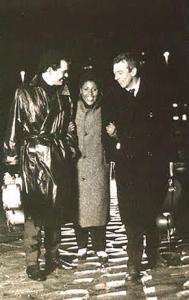
Simon Booth, Juliet Roberts and Larry Stabbins of Working Week

Simon Booth, Juliet Roberts and Larry Stabbins of Working Week

I’ve just had the pleasure of writing the liner notes to a really good new live album by Working Week, possibly the premier jazz/pop band of the 1980s.

It got me thinking about why jazz has totally disappeared from the charts and why the first half of the ’80s seemed the perfect time for jazz and pop to co-exist, especially in the UK.

Here an excerpt from the notes:

‘Does jazz go into pop? Judging by the current music scene, the answer would appear to be an unequivocal ‘no’, but, for a golden period in the early-to-mid ’80s, it seemed as if the two styles could happily co-exist.

Artists like David Sylvian, John Martyn, Hue and Cry, Elvis Costello, Kate Bush, The Rolling Stones, Sting, Danny Wilson, Swing Out Sister, Joe Jackson and Everything But The Girl smuggled some cool chords into the charts introduced the pop audience to players of the calibre of Kenny Wheeler, Harry Beckett, Lester Bowie, Michael Brecker, Ronnie Scott, Eberhard Weber, Sonny Rollins, Guy Barker, Kenny Kirkland and Branford Marsalis.

Sade, Carmel, The Style Council and Matt Bianco’s fusion of jazz and pop wasn’t everyone’s cup of tea but all of them had big hits. The Stranglers’ ‘Golden Brown’ was a jazz waltz (with a few bars of 4/4 thrown in) which got to number one!

The advertising and TV industries played ball and a full-scale jazz ‘revival’ was underway, documented in classic 1986 documentary ’10 Days That Shook Soho’. Courtney Pine and Miles Davis shared space on the UK album chart, Wynton Marsalis made the cover of Time and you could even catch Loose Tubes, Tommy Chase and Andy Sheppard on primetime terrestrial TV.

DJs Paul Murphy, Baz Fe Jazz, Patrick Forge and Gilles Peterson packed out Camden’s Dingwalls and the Electric Ballroom and young hepcats were dancing to Cannonball Adderley, Roy Ayers, Donald Byrd, Art Blakey and Lee Morgan.

Dancers at Dingwalls, London, 1988

Dancers at Dingwalls, London, 1988

Though older British jazzers such as Stan Tracey, Keith Tippett and Mike Westbrook (and some younger ones too) naturally viewed this latest revival with some suspicion, at least it was a relief from the extremely precarious ’70s when rock, funk and fusion almost subsumed jazz.

The old guard hung on, gigging in the back rooms of pubs, picking up occasional free improve shows in Europe or moonlighting in West End pit orchestras. But then punk came along, and it affected more than just disenfranchised young rock fans – its DIY ethos breathed new life into jazz too. Bands like Rip Rig + Panic and Pigbag made huge strides in engaging a youthful, receptive audience. Pigbag even made it onto ‘Top Of The Pops’…twice!

But it was Working Week, co-founded in 1983 by saxophonist Larry Stabbins and guitarist Simon Booth, who really typified the successful fusion of jazz and pop in mid-‘80s. Formed in 1983 from the ashes of jazz/post-punk outfit Weekend (whose ‘The View From Her Room‘ was a confirmed early-’80s club classic), initially Working Week was almost the de facto house band for the emerging scene, with the infectiously exuberant IDJ dancers often joining them onstage.

Robert Wyatt and Tracey Thorn duetted on classic single ‘Venceremos – We Will Win’ which briefly made an appearance on the UK singles chart in late 1984. The accompanying album Working Nights, featuring other Brit jazz legends Guy Barker, Harry Beckett and Annie Whitehead and produced by Sade’s regular helmer Robin Millar, reached a sprightly number 23 in the UK album chart soon after…’

Read more in the Working Week live album.