Summer 1980. Jack Nicholson was in the middle of his busiest period. ‘The Shining’ had just wrapped and he had inked contracts to appear in both ‘Reds’ and ‘The Postman Always Rings Twice’.
But first up was ‘The Border’, one of his least known films but a fascinating watch these days and still relevant. It’s also one of his most serious, intense screen performances, rivalling ‘Five Easy Pieces’, ‘The Pledge’ and ‘The Passenger’.
Nicholson plays a downtrodden Texas border patrolman who, after years of viewing corruption and trapped in an unhappy marriage, decides to do something completely altruistic. When the baby of an underage Mexican girl is kidnapped with threats of being sold/adopted, Jack takes a stand against his spiritually-bankrupt superiors.
It’s possible that Nicholson was attracted to the project due to the involvement of director Tony Richardson, the Brit who helmed John Osborne’s legendary ‘Look Back In Anger’ on both stage and screen, and also the presence of co-stars Warren Oates and Harvey Keitel, with whom Jack does some great sparring.
Shot in El Paso, ‘The Border’ is a terse, angsty, mature movie with moments of dark humour and an interesting companion piece to both John Sayles’ ‘Lone Star’ and Tony Garnett’s ‘Handgun’.
But its third act moves uneasily into action territory – Richardson seems out of his depth here, searching in vain for his inner Peckinpah (and why the 18 certificate? My DVD warns of ‘strong sex, violence and language’, but none of the above feature, outside of one particularly poorly staged gore effect).
Still, apparently it was an interesting shoot, with a blitzed Dennis Hopper arriving to set up a huge prank for Jack involving the president of Mexico, a cadre of cheerleaders and some Hells Angels (see Robert Sellers’ book below for more). Sadly though, Ry Cooder’s soundtrack is rather phoned-in, despite featuring an early version of the classic ‘Across The Borderline’.
‘The Border’ was delayed for a year and crept out in February 1982 to minimal fanfare (though Siskel and Ebert both liked it) and rotten box office. In truth, it feels much more like a movie of the 1970s than the 1980s. But it features yet another gripping performance from Jack during arguably his peak period and it’s well worth a look – if you can find it…
Further reading: ‘Hollywood Hellraisers (Bad Boy Drive)’ by Robert Sellers
Quentin Tarantino recently drew an interesting comparison between the 1980s careers of Chevy Chase and Bill Murray.
Both had reputations for being difficult but it was Murray who sought ‘positive’/’learning’ scripts through the decade and early 1990s. Chase didn’t: his characters generally started out as wise-cracking assholes, and ended the films the same way.
And the always amusing ‘Fletch’ – a movingtheriver favourite which premiered 40 years ago this weekend – is exhibit A. Based on the 1974 novel by Gregory McDonald (who subsequently wrote ten other Fletch books), it came into existence when Michael Douglas got on board as producer (later to be replaced by his brother Peter) and Universal finally took it on after many false starts.
McDonald had star approval though, and Burt Reynolds, Mick Jagger, Richard Dreyfuss and Jeff Bridges nearly played Irwin R Fletcher, before Chevy got the nod. After a few lean years, he was hot in 1984 after the success of ‘National Lampoon’s Vacation’. In the meantime Andrew ‘Blazing Saddles’ Bergman had written a screenplay with uncredited help from Phil ‘All Of Me’ Alden Robinson too.
Director Michael Ritchie must take a lot of credit for the success of ‘Fletch’. Helmer of bittersweet classics ‘Smile’, ‘The Candidate’, ‘Downhill Racer’ and ‘Prime Cut’ (and, after ‘Fletch’, ‘The Golden Child’ and ‘Cool Runnings’), he keeps things moving fast and reportedly encouraged Chase’s surreal ad-libs. ‘Nugent. Ted Nugent’, was the first, apparently uttered totally spontaneously by Chevy.
His stoned delivery and anti-establishment wisecracks hit the spot time and time again. This writer always giggles when someone shoots out Fletch’s back windscreen and Chevy shouts ‘Thanks a lot!’, ditto the entire ‘airplane investigation’ scene. Chase is always one step ahead of the material, sharing a joke with the audience, assuming it’s intelligent and on his side.
But watching it again, ‘Fletch’ certainly seems more suitable for adults than teenagers (borne out by the fact that when I first saw it at the Putney Odeon during school summer holidays in 1985, the teens around me mainly threw popcorn and talked amongst themselves). The plot is hard to follow and the stakes never seem very high, despite the film’s noir leanings (one key character is named Stanwyk).
The film benefits from some excellent supporting turns – female co-star Dana Wheeler-Nicholson is delightfully natural (though weirdly didn’t make another movie for five years after ‘Fletch’) and Joe Don Baker, M Emmet Walsh, Geena Davis, Richard Libertini and George Wendt (RIP) do solid, enjoyable work.
Harold Faltermeyer’s memorable synth soundtrack still raises a smile. And though ‘Fletch’ would seem to be influenced by ‘Beverly Hills Cop’, it was actually shot around the same time as that Eddie Murphy vehicle, summer 1984, in and around Los Angeles during the Olympics.
‘Fletch’ was a surprisingly big hit, grossing around $60 million against an $8 million budget. Roger Ebert and Pauline Kael quite liked it, Gene Siskel loved it. Kevin ‘Clerks’ Smith tried and failed to reinvigorate the Fletch brand in the 1990s. But Jon Hamm has just played him in 2022’s ‘Confess, Fletch’ – any good? Doubt it… Peak Chevy is a hard act to follow.
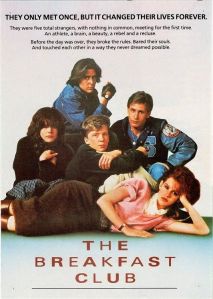
Despite a few bum notes, ‘The Breakfast Club’ – which premiered 40 years ago this month – remains one of the essential 1980s movies, a must-see for generation after generation of teenagers.
Like or loathe it (some contemporary critics such as Pauline Kael lamented its whinier aspects, while others such as Roger Ebert were surprisingly sympathetic), its superb cast act as if their lives depended on it, and writer/director John Hughes’s attention to detail and comic timing are as spot-on today as they must have seemed in 1985.
But what was going on behind the scenes? Where was the film shot? Which famous actors nearly got cast? Which actors didn’t get along? Movingtheriver has done some digging (with spoilers)…
17. The film was edited by Hollywood royalty Dede Allen, who had worked on ‘The Hustler’, ‘Bonnie & Clyde’, ‘Serpico’, ‘Dog Day Afternoon’ and ‘Reds’ (apparently she was put to work on John Hughes’ original three-hour cut…).
16. Theme song ‘Don’t You Forget About Me’ was written by Keith Forsey after witnessing the scene where Brian (Anthony Michael Hall) asks his fellow detention attendees if they’ll still be friends the next day. Simple Minds turned it into a US #1 but Bryan Ferry was Forsey and Hughes’ first choice – he turned it down, busy mixing Boys & Girls.
15. Hughes wrote the first draft of the film over one weekend.
14. Universal weren’t behind the film, wanting more teenage hi-jinks and nudity a la ‘Porky’s’. They weren’t even sure Hughes should direct.
13. Anthony Michael Hall and Molly Ringwald were just 16 years old during filming – all the other ‘schoolkids’ were well into their 20s.
12. Jodie Foster, Laura Dern and Robin Wright all auditioned for the part of Claire, the prom queen. Molly Ringwald got the role despite initially being cast as Alison, the misfit. Emilio Estevez was initially cast as the ‘bully’ John Bender until Judd Nelson came in at the last minute (Nicolas Cage, John Cusack and Jim Carrey all almost played Bender too). Rick Moranis was due to play Carl the janitor but left the film just before shooting.
11. It was shot between March-May 1984 at Maine North High School in Des Plaines, Illinois, the same abandoned school used for ‘Ferris Bueller’s Day Off’. Most of the film takes place in a library – this was actually a set built in the school gymnasium.
10. The cast rehearsed for three weeks before the cameras rolled. They were running lines and bonding even as sets were being built around them. The film was also shot in sequence, a rarity.
9. Researching his role as Bender, Judd Nelson went ‘undercover’ at a nearby high school with fake ID and formed a real clique of naughty teens.
8. The cast didn’t smoke real pot in the famous ‘truth-telling’ scene – it was oregano.
7. Anthony Michael Hall’s real life mother and sister talk to him in the car at the beginning (and Hughes has a cameo as his dad).
6. Ringwald tried to get Hughes to remove the scene where Bender hides under the desk and looks between her legs, but he refused.
5. Bender’s famous, defiant/celebratory fist-raise at the end was improvised by Judd Nelson.
4. The scene where the characters sit around and explain why they are in detention was all improvised.
3. The original cut was 150 minutes long – they had to lose 53 minutes, including a long dream sequence and a whole character (a sexy gym teacher). Some deleted scenes have appeared on DVDs and on YouTube but many outtakes have never been seen.
2. The iconic poster photo was taken by Annie Leibovitz and later satirised by ‘Texas Chainsaw Massacre 2’.
1. The budget was just under $1 million! The film made over $51 million during its initial run…
It’s well documented that none of the so-called Brat Pack enjoyed a particularly easy ride – both professionally and personally – after their imperial 1983-1985 period (though many have made fascinating recent late-career comebacks, but that’s a whole ‘nother article…).
Demi Moore and Rob Lowe were less than a year on from the enormo-hit ‘St. Elmo’s Fire’ when they co-starred in ‘About Last Night…’, one of the least well-known but best films of their entire careers and a movie your correspondent returns to every three or four years and always enjoys.
Based on David Mamet’s 1974 play ‘Sexual Perversion In Chicago’ and directed by future ‘thirtysomething’ TV show co-creator Edward Zwick, it concerns the social lives of four young, fresh-out-of-college twentysomethings (erroneously described as ‘yuppies’ in some reviews of the film), struggling to commit to relationships while navigating AIDS and post-adolescence loneliness.
Lowe plays Dan, enjoying a relatively carefree existence of one-night stands, drinking games and weekend softball, spurred on by his constant, crass companion Bernie, excellently played by James Belushi (a part his brother John was originally pencilled in to play back in 1981, alongside Dan Aykroyd). That’s until Dan meets Debbie, nicely portrayed by Moore – he’s instantly smitten, totally tongue-tied.
The problem is they’re totally mismatched. The result is funny and sad, a kind of down-at-heel ‘When Harry Met Sally’ or freewheeling/comic ‘Nine Half Weeks’. The Chicago setting roots the movie in an agreeably specific milieu. Lowe acts his little socks off in surely the best performance of his career. Elizabeth Perkins, in her screen debut a few years before her big breakthrough with Tom Hanks in ‘Big’, is an absolute hoot as Debbie’s best friend.
Much of Mamet’s original dialogue is retained (though the role of Bernie is drastically reduced) resulting in several classic scenes and some coruscating one-liners. Sadly the movie doesn’t quite have courage of its convictions though – it occasionally cops-out with a few MTV-style montages and superfluous, ‘shocking’ nudity.
But ‘About Last Night…’ is extremely subtle in its depiction of a relationship that never really had a chance (or did it? Watch right through to the end…) and bears repeated viewings. The film was a success in the box office too, grossing nearly $40 million against a budget of $9 million, and earning glowing reviews from Roger Ebert and Pauline Kael.
A babysitting uncle (later reprimanded by my mum!) showed my brother and I John Carpenter’s classic 1978 film ‘Halloween’, recorded from TV after its first (edited) UK showing, sometime in 1982 or early 1983.
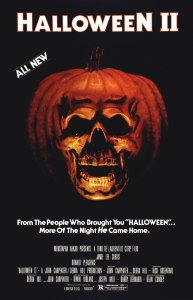
I loved it but it scared the bejesus out of me. Well, I guess everyone’s entitled to one good scare on Halloween. But Rick Rosenthal’s 1981 sequel, released 40 years ago this weekend, was a definite no-no. My parents wouldn’t let my brother and I watch it, though I distinctly remember us creeping along the upstairs corridor and spying on them watching the rented video with friends.
‘Halloween’ has of course been through numerous/confusing sequels and reboots. The new ‘Halloween Kills’ is supposedly a ‘proper’ sequel to the rebooted ‘original’ of 2018 (which I tried to watch recently, but didn’t last beyond the first five minutes…).
But back to John Carpenter’s original 1978 classic. It was a huge hit. Once the money started rolling in, a sequel was on the cards, one that Carpenter was unable to veto due to his original contract (he also allegedly missed out on a huge amount of royalties too).
So he reluctantly hooked up again with Debra Hill to write the screenplay and co-produce. The result was one of the last big ‘slasher’ hits, outside of the endless ‘Friday The 13th’ sequels, earning around $25 million worldwide against a $2.5 million budget. And this was in the days when sequels were not commonplace.
But how does ‘Halloween II’ stand up today? First, the good stuff:
The camerawork
Director of photography Dean Cundey was lured back from the original, passing up the opportunity to work on Spielberg’s ‘Poltergeist’, and his original angles and Panaglide compositions elevate the film way beyond the standard slasher fare.
The hospital setting
It’s a great idea to set the film in a suburban hospital, and gives a claustrophobic sense of isolation, of course a descendant of Carpenter’s ‘Assault On Precinct 13′ (via, originally, Howard Hawks’ ‘Rio Bravo’ and George Romero’s ‘Night Of The Living Dead’).
Continuity
It’s a neat concept to start the film right where the original ‘Halloween’ ended.
Donald Pleasence
Once again he fully embraces the role of Dr Sam Loomis. He takes it seriously and does a stand-up job, complete with a few memorable line readings.
The Chordettes’ ‘Mr Sandman’ intro and end credits
A very creepy choice, possibly influenced by the use of music in ‘The Shining’.
But then there’s the bad stuff:
Lack of Jamie Lee Curtis
She spends most of the movie either in a hospital bed or limping/crawling around (wearing a very odd wig). As good a performance as she gives, the film suffers from her inertia.
Too much dialogue/exposition
There are way too many slow, boring plot/dialogue longeurs.
Lack of engaging/likable characters
As workmanlike as the mostly young cast are, they can’t replicate the natural rapport that existed between Jamie Lee, Nancy Loomis, PJ Soles etc. in the original film.
Dick Warlock as The Shape
The original film mostly used Nick Castle as The Shape, but experienced Hollywood stuntman Warlock got the role here, and he moves way too slowly and stiffly (and the William Shatner mask doesn’t quite fit…). And the closing fire stunt may have won him some brownie points in the industry but looks absurd now.
Gratuitous gore
Carpenter took a look at the first assembly of ‘Halloween II’ and decided it was too long and not scary enough. He shot a few additional scenes, adding some gore and spikes. Sadly this resulted in too many nods to standard slasher movies, and resulted in a lot of dodgy reviews. Carpenter was also fairly disgusted with himself for ‘messing’ with another director’s work – ‘I did something I don’t believe in. I did something I would hate for anybody to do with me. It was an evil thing to do and I didn’t enjoy any of it,’ he told biographer Gilles Boulenger.
Music
Alan Howarth overdubbed onto Carpenter’s original 16-track tapes, adding copious synths and and drum machines – there’s a lot of bluster but unfortunately Howarth adds little to the original soundtrack.
In conclusion: I’d argue it’s a decent-enough sequel, despite the obvious problems. The last 15 minutes offer creeps, shocks and thrills, and the hospital setting works excellently.
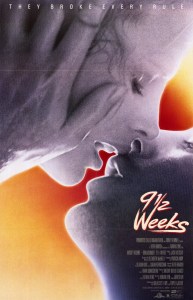
Its similarity to (groan) ‘Fifty Shades Of Grey’ and ‘Last Tango In Paris’ – plus rumours of lead actress Kim Basinger’s shabby on-set treatment by director Adrian Lyne and co-star Mickey Rourke – mean that ‘Nine ½ Weeks’ is generally denied a fair shake these days.
So why do I return to it every few years, always finding something new to enjoy (no sniggering at the back there)?
The NYC-set tale of a torrid, co-dependent affair between successful, attractive couple Elizabeth (Basinger) and John (Rourke) was based on Ingeborg Day’s (writing as Elizabeth McNeill) controversial 1978 memoir of the same name.
Despite its risqué subject matter, it’s hardly surprising the film – released 35 years ago today – was given a green light. Lyne was fresh from ‘Flashdance’, an enormous hit, while Basinger (beating off competition for the role from Kathleen Turner, Isabella Rossellini and Teri Garr) and Rourke were red-hot and highly in-demand.
But finally, it’s quite a downbeat, subtle, adult film, revealing layers of meaning with repeated viewings, possibly why I recall it as pretty boring (I was wrong…) when first seeing it with mates during my thrill-seeking late teens.
Essentially it’s about two attractive but somewhat alienated people – we frequently see them both ‘lonely in a crowd’. But repeated viewings of the film show them to be well-rounded, fully-formed characters, not just show-ponies in a second-rate soft-porn movie.
Basinger is the star of the movie, and she’s excellent. The demands of the role and lengths to which she was pushed by both Rourke and Lyne reportedly led her to some psychological trauma and even marital problems for up to a year after the film wrapped, as reported by New York Times writer Nina Darnton. Rourke’s first marriage also reportedly hit the skids during the shoot’s slipstream.
The film was shot in sequence, and Lyne encouraged the leads to stay in character off the set, so that their ‘real’ relationship echoed the screen relationship. Whatever was going on behind the scenes, the results speak for themselves – there’s palpable chemistry between Basinger and Rourke.
Sparks fly when they first meet in that Chinese deli (with a great cameo from Kim Chan, so memorable in Scorsese’s ‘King Of Comedy’) and there are elements of fun and light-heartedness in their relationship which can still raise a smile today.
Though the sexual politics of the movie may disturb these days, it’s interesting to note that the screenplay is credited to two women – Patricia Louisianna Klopp and Sarah Kernochan – alongside the dreaded Zalman King…
Elizabeth is completely ‘in control’ at her workplace, but totally out of control in her personal life. This contrasts with John, a total control freak – at least on the surface – in both facets of his life. So she seems a highly intelligent, though somewhat lonely figure (indeed, loneliness is a big theme of the movie), sometimes even prudish, at least compared to her workmate Molly (played by the excellent Margaret Whitton).
Lyne’s direction and Peter Biziou’s camerawork are impressive with scrupulous attention to detail – every shot is designed to create the utmost visual impact, with recurring motifs and interesting subtexts.
A few years before ‘American Psycho’, the film also offers a truly fetishized view of ‘80s tech – John’s wardrobe, his state-of-the-art hi-fi, the emphasis on surfaces and image. This article sums up the film’s style concerns beautifully.
New York looks wonderful, with resplendent locations like the Chelsea and Algonquin hotels, Spring Street Gallery and Cafe Des Artistes. Lyne shrewdly places non-actors into the mix to give some local color, as he would for his next films ‘Fatal Attraction’ and ‘Jacob’s Ladder’.
There’s a remarkable section where Elizabeth clicks through a succession of modern-art slides, and you can bet that every single one has been placed for a very specific purpose (and brings to mind the use of Francis Bacon’s artwork in ‘Last Tango’).
There are so many quintessential, memorable 1980s moments, most with very shrewd use of music (which lead many rather dunderheaded reviewers to describe the film as a full-length MTV pop video): the food orgy; the striptease to Joe Cocker’s ‘You Can Leave Your Hat On’; the moment when Rourke and Basinger enter underpinned by Corey Hart’s ‘Eurasian Eyes’ (though Rourke reported that the ‘blue stuff’ sprayed into the room to add the perfect visual aura Lyne was after did a terrible number on his throat and eyes for weeks afterwards); the use of Jean-Michel Jarre’s ‘Arpeggiator’, Roger Eno’s ‘Voices’ and Eurythmics’ ‘This City Never Sleeps’.
Rourke has never looked better and his performance is fascinating, very much living up to the ‘Brando for the 1980s’ tag. This film catapulted him into the Hollywood A-list, albeit very briefly (to his great credit, he resisted appearing in a lot of crud – at least for a few years – delaying a follow-up until ‘Angel Heart’).
Elizabeth and John’s final parting – featuring a rather stunning bit of Rourke business when a tearful John finally tries to reveal his ‘true’ self in order to keep hold of Elizabeth – again can’t help but bring ‘Last Tango’ to mind.
Devastated, Elizabeth leaves for the last time. But she’s full of ‘what ifs’ – should she have waited a little longer, given him a chance to atone? Could they have had a chance at a happy, ‘healthy’ relationship?
Out on the street, heartbroken, she looks over her shoulder in yet another beautiful shot, perhaps hoping John will be running after her. Sadly, he is rooted at his apartment, begging her to come back, albeit under his breath, soundtracked by Jack Nitzsche’s beguiling piano/synth theme.
The film’s shoot was long and troubled, and it reportedly went through various versions with some of the more risqué scenes (including one where the couple seem – at John’s behest – to enter into a suicide pact, only for it to be revealed as another one of his ‘tests’) removed after preview screenings.
There were a few other key excisions, apparently including one scene where they lay down the rules of their relationship ‘game’ – which might have helped explain why Elizabeth sticks around for so long in the face of such abusive treatment.
The release date was postponed a few times but when the movie was finally unleashed in the USA during March 1986, it underperformed. But there were a few unexpected celebrants, including Roger Ebert. In extended/uncut form, it found a big audience in Europe, particularly France, going on to gross around $100 million against a $17 million budget. It also became a huge success when released on home video (and was certainly the first-choice rental for a lot of us teens in the late 1980s).
So, forget ‘Fifty Shades’: happy 35th birthday to a fascinating – if potentially ‘troublesome’ – cult classic.
A major trope of ’80s or ’80s-set movies, novels and plays was the insane or morally unsound banker, broker or trader.
‘Wall Street’, ‘American Psycho’, ‘9 1/2 Weeks’, ‘Glengarry Glen Ross’, ‘Bonfire Of The Vanities’, ‘The Wolf Of Wall Street’. But in Jon Jost’s ‘All The Vermeers In New York’, actor Stephen Lack, best known for his unique performance in David Cronenberg’s cult classic ‘Scanners’, delivered a nuanced, highly original take on the character.
His middle-aged broker Mark is lonely, strange, poetic, neurotic and in possession of a serious death wish. He’s kind of a Zen Patrick Bateman, without the serial killing.
So it’s just his bad luck when he becomes obsessed with French acting student Anna (Emmanuelle Chalet), whom he believes looks just like the woman in Vermeer’s painting ‘Study Of A Young Girl’.
Stephen Lack in ‘All The Vermeers In New York’
The film – which I managed to record onto VHS during its one and only showing on Channel Four in the mid-1990s – is kind of ‘Eyes Wide Shut’ meets Mike Leigh, a classic New York art-house movie with its quiet bars, art galleries (Mark finds Anna in the Met, in a scene reminiscent of Brian De Palma’s ‘Dressed To Kill’) and plush interiors, but one that also relies on ‘naturalistic’ performances and mostly improvised dialogue.
Jon English’s avant-jazz score is also superb, with more than a hint of Charles Mingus about it. ‘All The Vermeers In New York’ is also weirdly au courant, about the commodification of art and sex, and the all-powerful money-mind.
We only see fragments of the characters’ troubled, conflicted lives – the teenager who worries about the unethical companies her rich daddy is putting her name to, the heroin-addicted artist refused money by his gallery-owning friend, Mark wearily intoning about his lonely apartment looking out on a building that could be ‘street-level Europe’.
Roger Ebert gave ‘All The Vermeers In New York’ a decent review on its release. To some, the film will seem like pretentious twaddle, to others a refreshing voyage into a dream world à la ‘Blow Up’, ‘Dead Ringers’, ‘The Music Of Chance’. movingtheriver revisits it every three years or so and takes something new from it each time.
Director Jost seems to have a very sketchy rep, described online variously as an indie movie pioneer and pretentious waste of space. Yes, ‘All The Vermeers In New York’ probably belongs in an art gallery rather than a movie theatre, but it’s a fascinating ride.
Given the precarious state of movie criticism (and movies?) these days, it’s a treat to check out the intelligent, measured and authoritative work of these two gentlemen.
Probably best known for their ‘thumbs up/thumbs down’ schtick, I’ve recently become fairly addicted to Siskel and Ebert’s deceptively laidback presenting styles and incisive comments.
They called it exactly as they saw it, and you never feel there is any kind of corporate skullduggery going on in the background. And they certainly didn’t always agree on stuff; their exchanges could get pretty fruity.
Gene Siskel died in 1999 and Roger Ebert in 2013. They started out as rivals, writing for competing Chicago papers (the Sun Times and Tribune) in the early 1970s, but were brought together for the small screen when PBS devised a new movie review show in 1975. Its popularity quickly increased and it received national syndication in 1982.
As well as reviewing all the current releases, Siskel and Ebert also presented in-depth investigations on movie controversies of the early ’80s (video nasties and slasher movies) and weren’t afraid to get moral on our asses.
But I initially zeroed in on this ‘worst of 1987′ list. Let’s go back almost 30 years to the day and check out a very tasty list of ill-conceived star vehicles (sorry about the picture quality). I want to see all of ’em. Especially the Stallone arm-wrestling flick.

 Summer 1980. Jack Nicholson was in the middle of his busiest period. ‘The Shining’ had just wrapped and he had inked contracts to appear in both ‘Reds’ and ‘The Postman Always Rings Twice’.
 Quentin Tarantino recently drew an interesting comparison between the 1980s careers of Chevy Chase and Bill Murray.
 Despite a few bum notes, ‘The Breakfast Club’ – which premiered 40 years ago this month – remains one of the essential 1980s movies, a must-see for generation after generation of teenagers.
  It’s well documented that none of the so-called Brat Pack enjoyed a particularly easy ride – both professionally and personally – after their imperial 1983-1985 period (though many have made fascinating recent late-career comebacks, but that’s a whole ‘nother article…).
 A babysitting uncle (later reprimanded by my mum!) showed my brother and I John Carpenter’s classic 1978 film ‘Halloween’, recorded from TV after its first (edited) UK showing, sometime in 1982 or early 1983.
 Its similarity to (groan) ‘Fifty Shades Of Grey’ and ‘Last Tango In Paris’ – plus rumours of lead actress Kim Basinger’s shabby on-set treatment by director Adrian Lyne and co-star Mickey Rourke – mean that ‘Nine ½ Weeks’ is generally denied a fair shake these days.

 A major trope of ’80s or ’80s-set movies, novels and plays was the insane or morally unsound banker, broker or trader.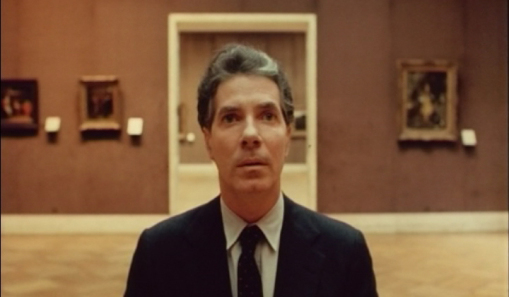
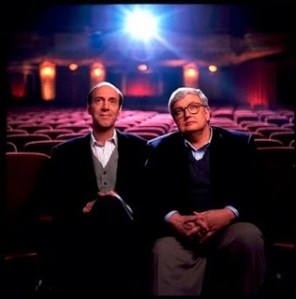 Given the precarious state of movie criticism (and movies?) these days, it’s a treat to check out the intelligent, measured and authoritative work of these two gentlemen.
  movingtheriver.com