Essential 1980s Jazz/Rock Albums (Part 1)

1980s jazz/rock generally gets the side-eye these days.

But it wasn’t all the Chick Corea Elektric Band prancing around the stage in tracksuits or pitiful WAVE-style smooth jazz.

The 1970s jazz/rock pioneers were mostly going strong and if some were too tempted by synths and drum machines, the best music was made by sticking pretty rigorously to the tried-and-tested real drums/bass/guitar/keys lineup favoured by Miles, Weather Report, Return To Forever et al.

So here’s a selection of 1980s jazz/rock albums that have consistently gripped movingtheriver, most of which he queued up to buy at the HMV or Virgin Megastore, or found in an Our Price bargain bin. (These are not proggy or funky. So no Herbie, Brecker Brothers, David Sanborn or David Torn, but there are elements of R’n’B/Latin/soul/whatever mixed in with the jazz).

Bireli Lagrene: Foreign Affairs (1988)
Just 21 years old when he recorded it with producer Steve Khan, the French guitarist’s second Blue Note album is a cohesive gem and massive improvement on the debut, with terrific contributions from keyboardist Koono and drummer Dennis Chambers.

Ornette Coleman: Virgin Beauty (1988)
One of the most ‘accessible’ albums of the master’s career, with memorable melodies, a brilliantly expressive bassist (Al McDowell) and some decidedly odd guest appearances from Jerry Garcia.

Tribal Tech (Scott Henderson/Gary Willis): Nomad (1988)
Recorded in April 1988 but not released until early 1990, guitarists were rightly wowed by Henderson’s brilliance, a mixture of Michael Brecker, Allan Holdsworth and Stevie Ray Vaughan, while the rhythm section is groovy and propulsive and both Henderson and Willis’s compositions are excellent. And ‘Tunnel Vision’ may feature the perfect guitar solo…

John McLaughlin: Mahavishnu (1984)
OK there are some question marks in the keyboard and sax departments, and a few mediocre tracks, but Billy Cobham has rarely sounded better and John contributes three or four classic compositions and a few brilliant solos to this reunion album of sorts.

Marc Johnson’s Bass Desires: Second Sight (1987)
Wonderful interplay between guitarists John Scofield and Bill Frisell, plus some classic compositions including Scofield’s surf-rock-meets-jazz ‘Twister’, Frisell’s Monk-like ‘1951’ and Johnson’s moving ‘Hymn For Her’.

Larry Carlton: Last Nite (1987)
Guitarists of all stripes were blown away by Carlton’s playing in the 1980s, and here’s the best evidence, captured live at LA’s Baked Potato club with Alex Acuna, Abe Laboriel and JR Robinson.

Human Chain: Cashin’ In (1988)
This Brit jazz/rock classic, released on EG Records, had elements of the Canterbury sound, West Coast cool jazz and 1980s Weather Report, featuring Django Bates’ fantastic keys and French horn and some weirdly impressive guitar and fretless bass from Stuart Hall (who he?).

Hiram Bullock: Give It What U Got (1988)
All the fun of the fair from this gifted but troubled guitarist: raunchy funk/rock, instrumental Steely Dan, Brecker Brothers horns, classic fusion and an Al Jarreau guest appearance on a Sam Cooke tune, but all shot through with jazz chords and Hiram’s lyrical playing.

Ronald Shannon Jackson: Mandance (1982)
Ornette-style harmolodics and Mingus-like ensemble work meet NYC punk-jazz on the drummer’s intriguing and powerful album, recorded live in the studio, featuring future Living Colour axeman Vernon Reid.

Weather Report: Sportin’ Life (1985)
It was a toss-up between this and Night Passage, both classics, but this gets the nod courtesy of the newly-minted rhythm section of Omar Hakim and Victor Bailey, plus a few classic Wayne Shorter tunes including ‘Face On The Barroom Floor’ which reportedly Joni Mitchell was particularly smitten by.

Wayne Shorter: Atlantis (1985)
Wayne again, fronting this fascinating, complex song-cycle featuring Alex Acuna on drums and Joni’s husband Larry Klein on bass. Takes some time to digest, but like a good wine gets better every year.

Allan Holdsworth: Secrets (1989)
A toss-up between this and Metal Fatigue, this gets in because of his delicious guitar tone and the inspired contributions of drummer Vinnie Colaiuta – ‘City Nights’, ‘Spokes’, ‘Peril Premonition’ and ‘Joshua’ are musical landmarks. Fiery, exciting, unmissable.

Steps Ahead: Modern Times (1984)
Messrs Brecker, Erskine, Mainieri, Gomez and Bernhardt were embracing some new technology but they never let it overshadow the mostly excellent compositions with telling solos, particularly from Brecker.

John Scofield: Still Warm (1985)
Take your pick between this, Blue Matter and Loud Jazz, all fantastic pieces of work, but Still Warm gets the nod courtesy of its dynamite rhythm section (Darryl Jones and Omar Hakim) and arguably John’s best writing of the ’80s.

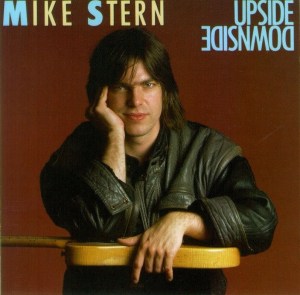
Mike Stern: Upside Downside (1986)
Produced by Hiram Bullock and featuring a crack band including Dave Weckl on drums, it showcases Stern’s finest/fieriest playing on record to date and also one of Jaco Pastorius’s last notable appearances. Still the best Stern solo album and quite extreme in its own way.

(If you’re new to any of these albums and they float your boat, please consider buying physical copies to support the artists.)

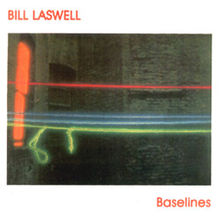
Bill Laswell: Baselines Revisited

Bill Laswell has carved out one of the most critic-proof careers in music.

He’s probably best known as the producer of distinctive pop hits (Herbie Hancock’s ‘Rockit’, PiL’s ‘Rise’, Sly & Robbie’s ‘Boops’) and rock/jazz legends in need of a makeover (Mick Jagger’s She’s The Boss, Iggy Pop’s Instinct, Sonny Sharrock’s Ask The Ages, Ronald Shannon Jackson’s Red Warrior).

He was the Miles Davis Estate’s go-to man for reimagining the trumpeter’s 1970s catalogue (Panthalassa) and also hugely important for bringing the P-funk sound into the ’80s and ’90s.

But Laswell is also a highly-original bassist in his own right and was a key figure of the late-’70s/early-’80s Downtown New York scene, featuring in bands like Massacre, Last Exit and Material (though he was pretty disparaging about the ‘scene’, once telling writer Bill Milkowski: ‘There never really was a Downtown community. All that means is that people don’t have enough money to get a better place to live…’).

His solo career has been interesting too, latterly showcasing a fusion of ambient, world and dub styles. But it’s his debut album Baselines (released 14 June 1983 on Elektra/Asylum) that really floats my boat. He plays a lot more bass than usual, fusing the soundworlds of Bootsy and Ornette Coleman and doing cool things like sticking objects under the strings or digging out the old Mu-Tron pedal for some memorably funky lines.

To these ears, Baselines is also the project that gave him the perfect vehicle for all his interests – My Life In The Bush Of Ghosts-style found sounds, paranoid funk a la Talking Heads/King Crimson, Afrobeat, early hip-hop, avant-fusion, authentic jazz soloing and even post-punk white noise courtesy of future Chili Peppers/Soundgarden producer Michael Beinhorn.

I wasn’t in New York in 1983 but this album would seem to be a perfect amalgam of all the hippest sh*t that was going down at the time. It’s Laswell’s show, leading from the front on four/six/eight-string fretted and fretless basses and generally keeping the tracks short and sweet. Baselines is also beautifully recorded and produced – it’s easy on the ear despite some abrasive textures.

Shannon Jackson has never sounded better, supplying hilariously scattergun grooves and crunching fills. ‘Upright Man’ still inspires a kind of giggly menace, nearly 40 years on. Who supplies the scary spoken-word part? Whosampled doesn’t reveal, but the smart money’s on Fred Frith (who also plays some amusing violin on country-tinged curio ‘Lowlands’).

Baselines was certainly influential from a bass point of view too – you can bet Jah Wobble, Mick Karn, Stump and Human Chain had well-thumbed copies in their collections. But, to the best of my knowledge, Laswell has never returned to such a bass-led solo project since. A shame. He might have a future there…

Great Drumming Albums Of The 1980s (Part Two)

So here’s the second instalment of essential drum albums from the 1980s (check out part one here), a selection of the decade’s movers and shakers who either pushed the boundaries, flew somewhat under the radar or simply made the music sound better.

19. Chuck Brown And The Soul Searchers: Live ’87
Drummer: Ricky Wellman
Alongside Keith LeBlanc, Jonathan Moffett and Dennis Chambers, Wellman played some of the scariest single bass drum of the decade, laying down the go-go template that would influence everyone from Trevor Horn to Miles Davis (who headhunted Wellman in late 1987).

18. Nik Kershaw: The Riddle (1984)
Drummer: Charlie Morgan
Another somewhat underrated Brit sessionman, Morgan does exactly what’s right for the songs with a lot of panache. His ghost-note-inflected grooves on ‘City Of Angels’ and ‘Easy’ are treats for the eardrums.

17. Tackhead: Friendly As A Hand Grenade (1989)
Drummer/programming: Keith LeBlanc
Included because of the sheer variety of grooves, both human and machine-generated. Some beats bring to mind the sounds of electro and early hip-hop, but Keith also provides precise, tight, funky grooves on the kit.

16. XTC: English Settlement (1982)
Drummer: Terry Chambers
He was not subtle but the unreconstructed Swindon powerhouse could mix it with the best of ’em when it came to rock. Strongly aided by the dream Lillywhite/Padgham production/engineering team, his cavernous grooves always hit the spot. Currently residing in the ‘where are they now’ file (Or is he? Check out the comments section below… Ed.).

15. Power Tools: Strange Meeting (1987)
Drummer: Ronald Shannon Jackson
Ex-Ornette/Ayler collaborator and serious Buddhist Shannon Jackson cut a swathe through ’80s drumming with his striking solo albums and occasional projects like this frenetic trio alongside Bill Frisell and future Rollins Band bassist Melvin Gibbs. Free jazz with balls and humour. Play LOUD.

14. Roxy Music: Avalon (1982)
Drummer: Andy Newmark
Hard to bet against this masterpiece of tasteful, empathetic song-accompaniment. Even more impressive is the revelation that Newmark was usually the last musician to overdub, replacing a skeletal drum machine part.

13. Nile Rodgers: B Movie Matinee (1985)
Programming: Jimmy Bralower
Much-in-demand NYC programmer Bralower wasn’t every drummer’s cup of tea but he came up with many memorable, catchy beats on Nile’s forgotten second solo album. Even classy ballad ‘Wavelength’ chugs along to what can only be described as an electro groove.

12. Yes: Big Generator (1987)
Drummer: Alan White
Possessing one of the crispest snare sounds of the decade, White played 4/4 rock with lots of surprises – both listener and band alike have to be on their toes – and conversely also made the most complex arrangements sound completely natural.

11. Grace Jones: Living My Life (1982)
Drummer: Sly Dunbar
Sly came up with not one but two classic, much-imitated beats on this album (‘My Jamaican Guy’, ‘Nipple To The Bottle’) and also proved he could play rock with the best of them. Mark Knopfler and Bob Dylan were definitely listening.

10. Mark King: Influences (1984)
We knew he’d started his musical life as a drummer but finally hearing the results of his misspent youth was well worth the wait. He gives his heroes Billy Cobham and Lenny White a serious run for their money on this varied collection, from Level-style funk to Latin-tinged jazz/rock.

9. King Crimson: Discipline (1981)
Drummer: Bill Bruford
Impossible to leave out. Aided by Robert Fripp’s ‘rules’, the Surrey sticksman redefined rock drumming for the new decade, adding unusual timbres and taking the emphasis off the hi-hat. He also delivered one of the great over-the-top performances on ‘Indiscipline’.

8. Weather Report: Sportin’ Life (1985)
Drummer: Omar Hakim
The fusion supergroup’s penultimate studio album is also one of their best, and Omar is a big reason why. His touch on the hi-hats and ride cymbal is instantly recognisable, and he swings hard on the inspired cover of Marvin Gaye’s ‘What’s Going On’.

7. Stewart Copeland: Rumble Fish (1983)
Not for nothing was the ex-Police man calling himself The Rhythmatist around this time: he hits anything and everything (xylophone, drum kit, marimba, piano, typewriter) to create a colourful, unique soundtrack for Francis Ford Coppola’s black-and-white curio.

6. Sadao Watanabe: Maisha (1985)
Drummers: Harvey Mason, John Robinson
A superior example of big-budget ‘smooth jazz’ before it became a cliché, Mason and Robinson split the drum duties and perfectly compliment each other. The latter particularly lets his hair down a bit more than usual, particularly on ‘Paysages’.

5. Simple Minds: Sparkle In The Rain (1984)
Drummer: Mel Gaynor
Slinky, powerful grooves from South London’s answer to Omar Hakim. He has the walls of Shepherds Bush’s Townhouse studios shaking with his uber-beats on ‘Up On The Catwalk’, ‘Waterfront’ and ‘C Moon Cry Like A Baby’.

4. Level 42: A Physical Presence (1985)
Drummer: Phil Gould
An exciting live performance from one of the great British drummers. His top-of-the-beat feel and crisp sound suggest a mix of Billy Cobham and Bill Bruford, and he could also lay down explosive multi-tom fills to match both of them.

3. Chick Corea Elektric Band: Eye Of The Beholder (1988)
Drummer: Dave Weckl
Love or hate Corea’s Scientology-infused, neo-classical jazz/rock, Weckl’s stellar performance on this album was beyond question. He delivered a gorgeous sound, a total mastery of the drum kit and stunning chops when required.

2. Jeff Beck’s Guitar Shop (1989)
Drummer: Terry Bozzio
One of the loudest drummers this writer has ever heard in concert (Hammersmith Odeon, December 1989), Bozzio delivered some of the fastest double-bass playing on record (‘Sling Shot’) and also unique takes on reggae (‘Behind The Veil’) and funk (‘Day In The House’).

1. The Clash: Sandinista! (1980)
Drummer: Topper Headon
The rebel rockers embraced rockabilly, reggae, dub, calypso, punk and even funk on this ambitious triple album, but they wouldn’t have been able to go there without the versatile London sticksman.

Ronald Shannon Jackson: Behind Plastic Faces

ronald_shannon_jackson_06n5970

Shannon Jackson in 2012

Musicians and writers have long puzzled over a definition of Harmolodics, the musical system invented by Ornette Coleman.

The man himself was famously coy on the subject, his brief liner note on the back of the Dancing In Your Head LP possibly the nearest he ever got to an outright definition: ‘Rhythms, harmonics and tempos are all equal in relationship’.

Of all the Ornette collaborators who developed their own take on Harmolodics, Ronald Shannon Jackson, who died in October 2013, probably came up with the most accessible version.

He had played with avant-garde pioneers Albert Ayler, Ornette, James Blood Ulmer and Cecil Taylor in the 1970s, but developed into a fine bandleader/composer in the ’80s, fronting a red-hot band featuring guitarist Vernon Reid (Living Colour), bassist Melvin Gibbs (Rollins Band), trombonist Robin Eubanks and saxophonist Zane Massey. (Shannon’s version of Harmolodics was so successful it possibly even influenced Ornette’s Virgin Beauty.)

r-1084782-1190894488-jpeg

My dad used to get sent a lot of music in his capacity as a programme consultant for Channel 4 TV’s music arm back in the mid-1980s. A surprising amount of it would come in home-compiled cassette format. One such tape was simply called ‘Dance Music’ – I’ve still got it somewhere.

Most of it was fairly standard Brazilian and Blue Note stuff but one track stood out a mile and became somewhat of an obsession for my brother and I: Shannon’s ‘Behind Plastic Faces’, from the 1985 album Decode YourselfIt was the beginning of my love affair with his music and drumming.

He lays down one of his patented military grooves on Simmons drums underneath slithering fretless bass, chattering Reid guitar and Onaje Allan Gumbs’ summery keyboards. But then the track suddenly changes gear halfway through and turns into a Afro-Funk/No-Wave rave-up, with Shannon moving over to the acoustic drums and Eric Person rhapsodising on alto sax.

The track and attendant album were recorded at Electric Lady Studios in New York and produced by Bill Laswell. Decode Yourself seems very difficult to find on physical formats these days, like many of Shannon’s numerous other ’80s albums, but thankfully it is on streaming platforms.

Shannon Jackson was born and brought up in Forth Worth, Texas, just like Ornette. His father’s jukebox introduced him to BB King, Howlin’ Wolf, Charlie Parker and Dave Brubeck, but there were many other influences in the mix too, as he told writer Gary Giddins in 1985:

‘You’d wake up and hear hillbilly music on the radio. In school, we’d play (Wagner’s) “Lohengin”, at night we’d hear Bo Diddley or Bobby “Blue” Bland. On Sunday, we’d hear gospel. It was a total black community, and music wasn’t categorised as jazz or pop – nobody told you you weren’t supposed to like something.’