
 It was fascinating watching the long American cut of ‘The Shining’ recently with a packed, young crowd at the BFI Southbank.
They clapped and cheered at the end, and many flinched and jumped out of their seats during Jack’s manic outbursts. It was also fascinating to re-evaluate Shelley Duvall’s performance after her sad recent death (and re-watching her superbly odd turn in Robert Altman’s ‘3 Women’ in the same venue recently).
But, despite the doc ‘Room 237’ and terrific work by Rob Ager (most of it on his Collative Learning YT channel), what surprised me was how many aspects of the film still mystified and enthralled after numerous viewings. Here are some of my jottings (with spoilers):
The Gold Room
It’s not in Stephen King’s book. Ager has investigated the possible motivations for Kubrick including it. But unless I’m very mistaken Ager doesn’t discuss the strange photos on the sign by the entrance. What are they? The look suspiciously like late-1970s singer-songwriters rather than crooners of a 1920s vintage…
The lighting
There’s weird lighting everywhere. Lamps, blazing sun through windows, fluorescent beams. Lucifer – bringer of light?
Madness, misogyny and suggestions of child sexual abuse
The idea that a father could have malicious thoughts about his wife and son is terrifying and probably hits home to most general viewers. Plus Jack’s pure rage aimed at his wife. But possibly the film goes very much further than that – Ager’s excellent video explores even more troubling aspects. As for the misogyny, the Sunday Times recently reported that Duvall was shown the baseball bat scene during a 2016 interview, and broke down in tears, saying: ‘I can only imagine how many women go through this kind of thing.’
The shape in the river of blood
What the hell is it? A body? An octopus?
The sound design
It’s NOT perfect. During Danny’s pedal-car rides on the rugs/floors, the sound still doesn’t seem correctly sync’d…
People walking backwards
Once you first notice it, it’s quite funny clocking how many characters walk backwards during the movie…
Danny and ‘Tony’
Did Kubrick watch the 1977 BBC documentary about the Enfield Poltergeist?
Shelley Duvall
Hers is a thankless role in a way and you can be sure it was cut to shreds in the edit. She told Roger Ebert that her experience on the film was ‘unbearable’ and claimed that she had to cry for 12 hours a day for nine months straight to get what Stanley was after. But it was worth it. Watch the scene where she brings Jack lunch at his typewriter and finally realises what she’s up against. Apparently a sweetheart too if this interview is anything to go by.
Influences of ‘The Amityville Horror’ and ‘The Exorcist’?
In ‘Amityville’, a family man goes mad with an axe. And it only came out a year before ‘The Shining’. As for ‘The Exorcist’, ‘Tony’ and Captain Howdy? Then there’s the fade to black and the ‘open your eyes’ in the long US version of ‘The Shining’ – there’s an almost identical cut in ‘The Exorcist’.
Mirrors
Jack only sees ‘ghosts’ when he’s opposite a mirror. Check it out. Even his ‘rant’ as he walks down the corridor towards the Gold Room seems to be ‘activated’ by mirrors.
Two Jacks and two Gradys?
Is Jack crazy from the start? Is he the ‘chosen’ man to get the ghosts going or is he driven crazy by the hotel? Also note that during his job interview, his boss Ullman says Jack has come ‘well recommended by our people in Denver’. Sounds dodgy and taps into the strange mythology that has grown up since around Denver… And why is Grady given two names – Charles and Delbert?
Hallorann
Seeing as he’s an absolute expert ‘shiner’, why would he work at such an evil place as The Overlook? You’d think he would avoid it like the plague. Is this a piece of social commentary by King/Kubrick?
Vivian Kubrick
Stanley’s daughter was reportedly an almost daily presence on the set, helming her making-of documentary and helping out in the production office. She also has an uncredited cameo in the film and it’s a doozy. She even ‘toasts’ the camera. She’s sitting on the sofa nearest Jack when Delbert Grady spills advocaat on him.
Jack Daniel’s
Kubrick was a genius. In the first Gold Room scene, Jack asks Lloyd for a bourbon – but he doesn’t get one. He gets a Jack Daniel’s: Jack and Daniel (Danny). Geddit? Also see the baseball bat Wendy brandishes, a Louisville Slugger. What’s the symbolism of that? You can bet Kubrick didn’t include it by chance.
Working with children
What an amazing performance by Danny Lloyd as young Danny (big credit to Leon Vitali – check out ‘Filmworker’). He doesn’t blink. The troubling themes are a lot to pin on the young boy but he seems to have turned out OK.
Jack Nicholson
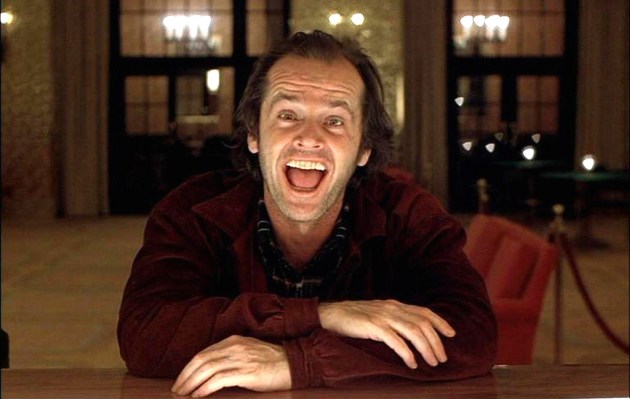
He wasn’t nominated for an Oscar. Why the hell not? Someone (Stanley Donen? Nicholas Ray? Jean-Luc Godard?) once said a good movie only needs three or four great scenes on which to hang its hat – Jack’s in all of them.
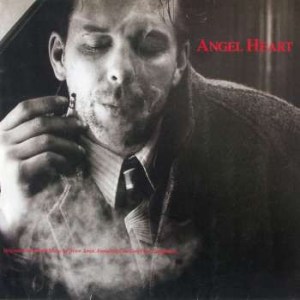
 What’s the first image that comes to mind when we think of 1980s Jack?
  Movie taglines: you know the drill (actually the tagline for a dental-themed slasher pic whose name escapes me…). One, two or three sentences that sum up a film’s flavour or sometimes entire plot.


 movingtheriver.com