The Walkman Legacy (AKA The Rise Of The Zombies)

Yesterday, when for the fifth time I was forced to avoid a rapidly approaching, earphone-wearing, phone-fixated zombie, it occurred to me that something had gone pretty wrong.

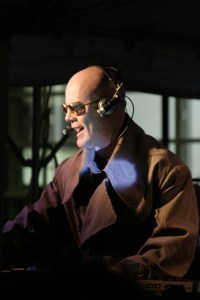
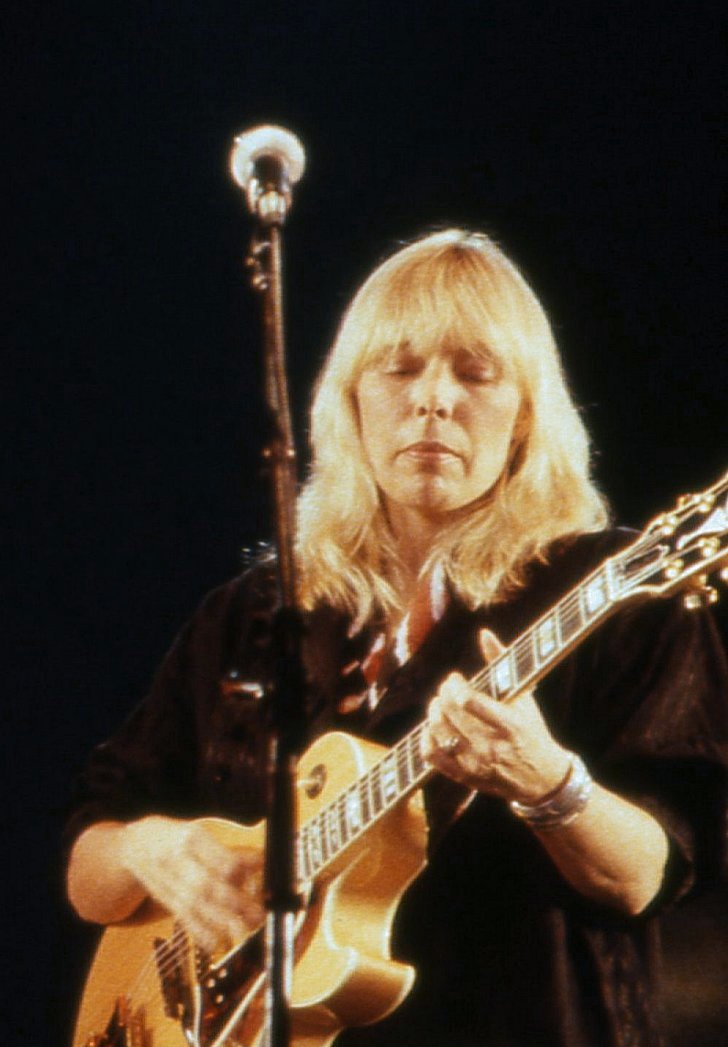
I remember the first time I was really blown away by my Walkman. It was Thomas Dolby’s samples on Joni Mitchell’s song ‘The Three Great Stimulants’.

Then there were a few other striking sonic details only revealed by close Walkman listening, including Donald Fagen’s stereo-traversing reverb vocals on Steely Dan’s ‘The Caves Of Altamira’.

The Walkman was the beginning of the truly solipsistic musical experience. But back then headphone listening definitely seemed a musical experience, designed for quiet contemplation rather than moving around the bustling big city (despite Cliff’s sojourn through Milton Keynes in the superbly naff ‘Wired For Sound’ video).

I took it to be an aural not psychological phenomenon – for wading into the music, not blocking out the world. (Actually a lot of ’80s music seems made for headphone listening. Talking Heads’ Speaking In Tongues and Dolby’s The Flat Earth spring to mind. Is that true of music now? Isn’t it just loud then quiet, or quiet then loud? Does this matter?)

Spotify’s MD Daniel Ek sums things up very well: ‘We are in the moment space, not the music space’. In other words, every important life ‘moment’, every emotion, should be accompanied by music. Or there’s probably something wrong with you.

This might be something to celebrate for musicians – it is, to a degree, but only a tiny percentage of artists are making money from streaming services. Taken to its extreme, it’s another weapon in the war on reality, another mode of desensitization. We are sleepwalking into trouble. We must be mindful. As JG Ballard said, there are danger signs ahead.

A fear of robots? Maybe we are the robots. As we walk around in a zombified state, we are losing touch with each other. Street banter is disappearing.  Philosopher Michael Sandel recently wrote in his book ‘What Money Can’t Buy’: ‘Altruism, generosity, solidarity and civic spirit are like muscles that develop and grow stronger with exercise. One of the defects of the market-driven society is it lets these virtues vanish.’

Remember when you rushed to the shops to buy an album? We might do well to keep that excitement about music. It’s not wallpaper or the soundtrack to the mundanities of life. To paraphrase Bill Shankly, it’s far more important than that.

Thompson Twins: Quick Step & Side Kick 35 Years On

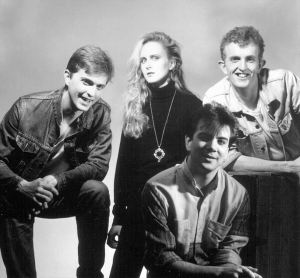
‘We’re not worthy!’ It was Wayne and Garth’s catchphrase but it could just as easily have been uttered by Thompson Twins’ frontman Tom Bailey in response to the band’s worldwide fame during 1983 and 1984.

He told Channel Four in 2001 (see below) that, at the peak of their success, he always felt on the verge of being ‘found out’ – an intruder at the 1980s Pop High Table. 

And then there was the ignominy of being christened ‘The Thompson Twats’ by that naughty Frankie Goes To Hollywood.

They were being a tad harsh; The Thompson Twats made some great pop in the early ’80s. But Quick Step – released 35 years ago this week – is fiendishly difficult to ‘place’, representing a kind of musical Year Zero.

The only real antecedents seem to be Bowie, Gary Numan and Thomas Dolby (who I can’t believe is not a guest keyboard player on the album – if he is, he’s not credited).

After the Twins’ first two records – when they were a kind of Grebo/agitprop/post-punk outfit – Bailey sacked half the band (including bass ace Matthew Seligman) and formed a lean, mean three-piece (Bailey took care of the music, Alannah Currie and Joe Leeway the image and stage show, though all got songwriting credits).

The final masterstroke was recruiting star Grace Jones/Talking Heads/Robert Palmer producer Alex Sadkin.

The formula worked a treat on Quick Step, recorded at Compass Point Studios on the Bahamas and one of the first albums I loved all the way through. Sadkin plays a blinder, adding loads of percussion, perambulating synths and those much-imitated, elastic bass sounds.

There are so many classic early ’80s pop tunes that it’s almost indecent. Just hearing the intros to ‘Lies’ and ‘Love Lies Bleeding’ makes me want to jump up and down like my 12-year-old self.

‘Watching’ – featuring Grace Jones’ hysterical vocals – and ‘We Are Detective’ are also good clean pop fun. The latter even throws in some Piazzolla-style fake accordion for good measure.

Quick Step & Side Kick was a big hit in the UK, hitting #2. Those anti-capitalist ideals were quickly waylaid. US sales were helped no end when the ever-prescient John Hughes chose ‘If You Were Here’ for a key moment in his 1984 movie ‘Sixteen Candles’, but the Twins didn’t really hit the jackpot in the States until the follow-up album Into The Gap. They even played at Live Aid – in Philadelphia, not London.

N.B. Michael White wrote a really nice, little-known memoir about life in the Twins called ‘Thompson Twin’. He played live keyboards with the band during their pop peak. Spoiler alert: it was not a bed of roses…

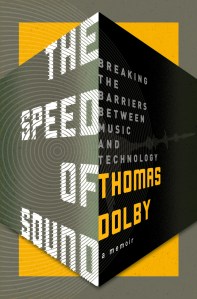
Book Review: The Speed Of Sound by Thomas Dolby

A cursory survey of Dolby’s musical career reveals that he’s a pivotal figure by any standards, collaborating with Prefab Sprout, Stevie Wonder, Eddie Van Halen, Jerry Garcia, George Clinton, Herbie Hancock, Trevor Horn, David Bowie, Def Leppard, Joni Mitchell…

And that’s not even factoring in the excellent solo albums and technological innovations (he created the software for the first popular mobile ringtones).

So if it’s pithy, musicianly anecdotes and the bittersweet memories of an Englishman (mostly) abroad you’re after, his enjoyable autobiography ‘The Speed Of Sound’ certainly does the business. But, as we’ll see, it’s very much a book of two halves.

A music-and-technology-mad teenager, Thomas Morgan Robertson first builds up his performing chops during a lengthy period of busking in Paris, finding out quickly that playing ‘Stairway To Heaven’ is the only way to make any money.

Returning to London, he’s in the right place at exactly the right time and on the verge of launching his solo career when summoned across the pond to work on Foreigner 4.

Christened ‘Booker T Boofin’ by the AOR legends for his considerable efforts, it nonetheless turns out to be a not entirely edifying entrée into the world of mega-bucks recording.

Then there’s solo-artist fame in the US, tempered by difficult video shoots, stage fright and the occasional debilitating panic attack. He’s summoned by Michael Jackson to come up with a few new post-Thriller tunes. It doesn’t end well.

His tours are well-attended but lose money and his second major single release ‘Hyperactive’ and attendant solo album The Flat Earth flatline partly due to dodgy record company ‘accounting’.

It’s a chastening experience; he focuses more on production work in the mid-’80s and any fans of Prefab’s Steve McQueen and Joni Mitchell’s Dog Eat Dog will find loads to enjoy here.

But Dolby inadvertently locks horns with Joni and finds himself sending in keyboard parts and arrangement ideas from Jenny Agutter’s spare room. Only in LA…

We get the inside story of his appearance with David Bowie’s at Live Aid (with only three short rehearsals), hear about a hilarious fishing trip with George Clinton and a memorable serenading by Stevie Wonder in a studio broom cupboard.

Then there’s an enjoyable detour into the world of movie soundtracks, ‘hanging out’ with George Lucas and meeting the love of his life in LA. By the early ’90s, we’re deep in ‘Spinal Tap’ territory when Dolby has amusingly mystifying dealings Eddie Van Halen and Jerry Garcia.

So far so good. But the second half of ‘Speed Of Sound’ focuses on Dolby’s lengthy sojourn in Silicon Valley. Depending on your taste, this will either be a trial or treat. I skipped large chunks of it.

I wanted a lot more music and a lot less tech, and you sometimes get the feeling Dolby did too throughout that period (he frequently laments the fact that his more ‘personal’ music on Aliens Ate My Buick and Astronauts & Heretics failed to find an audience).

The other issue – hardly Dolby’s fault of course – is that everyone seems to be writing a memoir these days and it only emphasises the dearth of decent recent music. And slightly lessens the mystique of the best ’80s material. I’d trade one more decent Dolby solo album for any number of ‘Speed Of Sound’s… But it’s still a very enjoyable read.

‘The Speed Of Sound’ is published now by Icon Books.

Dolby discusses the book here.

Thomas Dolby: The Golden Age Of Wireless 35 Years Old Today

London-born Thomas Morgan Robertson had already made a bit of a name for himself as a synth wiz for hire – working with Bruce Woolley/The Camera Club, Joan Armatrading, Thompson Twins, Lene Lovich and Foreigner – before embarking on his debut solo album in late summer 1981.

But, as he once said, he knew ‘too many chords’ to get any regular employment in the punk and new-wave bands of the era, so was pretty much forced to go it alone.

The Golden Age Of Wireless was mainly recorded at Tapestry (a subterranean South-West London studio built and owned by John Kongos), essentially a one-man-band operation with occasional contributions from various muso mates (Daniel Miller, Tim Friese-Greene, Andy Partridge, Simon House, Kevin Armstrong, Mutt Lange).

Lyrically, the album seemed to be a Janus-like vision of England – looking back to its WW2 past and forward to the kinds of urban dystopias explored by novelist JG Ballard.

‘Europa And The Pirate Twins’ emphasises this collision of past and future with Andy Partridge’s blues harmonica and the song’s rockabilly feel rubbing up against a barrage of synths and sequencers.

The haunting ‘One Of Our Submarines’ repeats the trick with ‘futuristic’ vocal samples alongside ARP string synths more redolent of the mid 1970s.

The album is also for me inextricably linked to the coastal area of South-East England near the White Cliffs Of Dover where I spent family holidays during my late teens, an area of course also reverberating with military history. I’d comb the beaches and walk the cliffs with Wireless playing loud on my Walkman.

But first to ‘She Blinded Me With Science’. The title is taken from a war-time phrase, an expression of female appreciation, as in: ‘Cor, she fair blinded me with science, guvnor!’

For a ‘novelty’ single, it has aged pretty well, mainly due to the incredible amount of detail placed across the stereo image: TV scientist Magnus Pyke’s still-pretty-funny interjections, Simon House’s beguiling, Middle-Eastern violin licks, Matthew Seligman’s pithy synth bass and Dolby’s intriguing sonic ‘events’.

The song was a huge American hit, making #5 in May 1983, but could it have been any more British? Never mind the title – one wonders how many Americans even came close to understanding a lyric such as ‘She blinded me with science and failed me in biology’.

But ‘Blinded’ was somewhat of an anomaly. Much of Wireless is downbeat, enigmatic and haunting. Dolby proves himself a brilliant producer and arranger, a master of painting pictures with sound: the shortwave radio which kicks off ‘Radio Silence’; the shipping forecast closing ‘One Of Our Submarines’, the ‘doom’ vocals which introduce ‘Weightless’ and close ‘Cloudburst At Shingle Street’.

He’s also obviously a tremendous keys player, with endless excellent arrangement ideas and even a few chops (you wouldn’t catch anyone from OMD attempting anything like the extended Moog solo in the very Prefab-esque ‘Commercial Breakup’).

In the middle of recording his second album (and second masterpiece) The Flat Earth, ‘Blinded’ took off in the States, becoming a signature tune of the Second British Invasion. Dolby had to drop everything and get over there pronto. Michael Jackson wanted to meet him.

But he would never again trouble the singles charts in the States, and the ‘mad scientist’ image would only very occasionally be dusted off from here on in. Not necessarily a bad thing.

Thomas Dolby: Aliens Ate My Buick

aliens-ate-my-buick-52dea191dc659This was Dolby’s ‘Marmite’ album – the one that really tested his fanbase.

A relocation to the States after marrying soap actress Kathleen Beller (Dolby’s companion on the front cover) led to a new home in the Hollywood Hills (apparently a very large, rather creepy movie-star mansion), the recruitment of a great new band The Lost Toy People via an advert in a local paper and a wholesale embracing of American black music.

In many ways, Aliens is Dolby’s reaction to the work of George Clinton and Prince (of course, he’d collaborated rather spiffingly on the former’s Some Of My Best Jokes Are Friends). But it’s also a rather uptight Brit’s view of American culture complete with tacky local detail: smog alerts, Bel Air bimbos, pink leather upholstery, weird license plates.

dolby

A very brave bit of sequencing puts ‘The Key To Her Ferrari’ right at the front of the album.

A fake-jazz/B-Movie swinger with a vaguely ‘50s rock’n’roll feel featuring lots of Zappaesque spoken word stuff from Dolby and some brilliant close-harmony female vocals, it’s all pretty stupid but the band plays fantastically and everyone sounds like they’re having a great time. However, you do wonder how many listeners made it past such an uncompromising track.

The lead-off single ‘Airhead”s delirious mash-up of funk and pop is pretty irresistible.

Mr Clinton contributes the funny and funky ‘Hot Sauce’ which packs in an incredible amount of good stuff into its five minutes including a Spaghetti Western prelude, a reference to Cameo’s ‘Candy’, a touch of salsa and even a killer James Brown-style piano break.

Ditto ‘May The Cube Be With You’, featuring Clinton and Lene Lovich on backing vocals, the Brecker Brothers on horns and a brilliant groove from P-Funk bass/drums team Rodney ‘Skeet’ Curtis and Dennis Chambers.

But, as with most Dolby albums, the treasures are mostly found in the more introspective, less gimmicky moments. ‘My Brain Is Like A Sieve’ easily transcends its title and faux-reggae arrangement to become a superb and quite downbeat pop song in the Prefab style. ‘The Ability To Swing’ is a cracking piece of funk/jazz, with some excellent lyrics, possibly Dolby’s most covered song.

‘Budapest By Blimp’ is very much the centrepiece of Aliens and its stand-out track, an epic ballad harking back to the Flat Earth sound with a great, David Gilmour-esque guitar solo by Larry Treadwell (one of many on the album) and some superb, driving bass from the late Terry Jackson.

The only slight misfire is ‘Pulp Culture’, initially interesting but quickly grating with coarse lyrics and a melody line too similar to Stevie Wonder’s ‘Have A Talk With God’. It’s worth noting, though, that according to Dolby, the entire song (including his vocals) is made up of Fairlight samples.

The album’s very moderate success (#30 in the UK and #70 in the US) was probably not a surprise – it was totally out of sync with anything in British or US pop. Aliens probably rather reflected Dolby’s interest in music video and movie soundtracks (he’d just finished scoring ‘Gothic’ and ‘Howard The Duck’).

I’d put Aliens up there with The Flat Earth as his best album, a perfect companion piece to other classics of summer 1988 such as Prefab’s From Langley Park To Memphis, Scritti Politti’s Provision and Prince’s Lovesexy. It’s strong beer but I love its pungent textures. And let’s not forget Steve Vance and Leslie Burke’s brilliant cover artwork.

Good Lyrics Of The 1980s

Joni_Mitchell_2004It has to be said, it was a bit easier coming up with good ’80s lyrics than it was to come up with crap ones.

I could probably have chosen three or four crackers from many of the artists featured below, but space permits only one. Maybe it’s not surprising that it was a great decade for lyricists when it was surely one of the most ‘literary’ musical decades to date – it would have to be with people like Bob Dylan, Morrissey, Paddy McAloon, Andy Partridge, Green Gartside, Tracey Thorn, Lloyd Cole, Joni Mitchell, Peter Gabriel and Springsteen around.

So here’s just a sprinkling of my favourites from the ’80s. Let me know yours.

I love you/You pay my rent

PET SHOP BOYS: ‘Rent’


Brother in the codpiece/I’ve seen him on the TV/I think he likes his ladies all sweet and sugary/I’m partial to a pudding/But that’s for second course/The main meal and the hors d’oeuvres must be smothered in hot sauce’

THOMAS DOLBY: ‘Hot Sauce’ (lyrics by George Clinton)


I believe in love/I’ll believe in anything/That’s gonna get me what I want/And get me off my knees’

LLOYD COLE AND THE COMMOTIONS: ‘Forest Fire’


I want you/It’s the stupid details that my heart is breaking for/It’s the way your shoulders shake and what they’re shaking for’

ELVIS COSTELLO: ‘I Want You’


Hey Mikey/Whatever happened to the f***in’ “Duke Of Earl”?’

RANDY NEWMAN: ‘Mikey’s’


If you had that house, car, bottle, jar/Your lovers would look like movie stars’

JONI MITCHELL: ‘The Reoccurring Dream’


‘Lost my shape/Trying to act casual/Can’t stop/I might end up in the hospital’

TALKING HEADS: ‘Crosseyed And Painless’


‘Once there was an angel/An angel and some friends/Who flew around from song to song/Making up the ends’

DANNY WILSON: ‘Never Gonna Be The Same’


Burn down the disco/Hang the blessed DJ’

THE SMITHS: ‘Panic’


‘Now the moon’s gone to hell/And the sun’s riding high/I must bid you farewell/Every man has to die/But it’s written in the starlight/And every line in your palm/We are fools to make war/On our brothers in arms’

DIRE STRAITS: ‘Brothers In Arms’


Out on the road today/I saw a Deadhead sticker on a Cadillac/A little voice inside my head said/Don’t look back, you can never look back…’

DON HENLEY: ‘Boys Of Summer’


‘Hello Johnson/Your mother once gave me a lift back from school/There’s no reason to get so excited/
I’d been playing football with the youngsters/Johnson says don’t dramatise/And you can’t even spell salacious’

PREFAB SPROUT: ‘Horsechimes’


‘I repeat myself when under stress/I repeat myself when under stress/I repeat…’

KING CRIMSON: ‘Indiscipline’


‘Come back Mum and Dad/You’re growing apart/You know that I’m growing up sad/I need some attention/I shoot into the light’

PETER GABRIEL: ‘Family Snapshot’


‘People say that I’m no good/Painting pictures and carving wood/Be a rich man if I could/But the only job I do well is here on the farm/And it’s breaking my back’

XTC: ‘Love On A Farmboy’s Wages’


So long, child/It’s awful dark’

DAVID BOWIE: ‘When The Wind Blows’


I could have been someone/Well so could anyone’

THE POGUES/KIRSTY MACCOLL: ‘Fairytale Of New York’


‘It’s an 18 carat love affair/I don’t know which side I’m on/But my best friend John said not to care’

ASSOCIATES: ’18 CARAT LOVE AFFAIR’

Joni Mitchell: Dog Eat Dog 30 Years Old Today

joni_mitchell-dog_eat_dog(2)Most music fans of a certain age probably had their favourite ‘Walkman albums’, those cassettes that worked perfectly on headphones, revealing intricacies (weird panning effects, funky little motifs, stereo drum kits) rarely noticed when played on normal speakers.

As much as I had loved Joni Mitchell’s music ever since my dad played me ‘Chinese Cafe (Unchained Melody)’ in 1983, I’d never have predicted that the superb Dog Eat Dog – released on 30 October 1985 – would turn into one of my top headphone albums. A clue, of course, was the presence of Thomas Dolby as co-producer and keyboard player, master of quirky soundscapes and synth textures.

joni

Though initially he might seem a weird choice of collaborator, with hindsight it’s not that much of a surprise that Joni and co-producer/bassist/hubbie Larry Klein should enlist his services. Joni admitted in contemporary interviews that she ‘could use a hit’. But they didn’t get along particularly well in the studio, Dolby not enamouring himself to her by blithely calling her ‘Joan’ between takes.

But the Englishman contributes a lot to Dog Eat Dog – interesting audio effects like Wayne Shorter’s sampled soprano throughout ‘Lucky Girl’, beats, dub textures here and there (‘Shiny Toys’) and of course the odd spoken word intrusion (maybe it was his idea to use Rod Steiger on ‘Tax Free’?).

One of the key aspects of Dog Eat Dog is Joni’s anger at the state of the world, both lyrically and vocally. Her cover pose says it all – throwing her hands up in the air with indignation and/or helplessness. As she puts it, the album is a portrait of ‘a culture in decline’. She takes aim at TV evangelists, consumerism, lawyers, yuppies and Reaganites with equal candour, letting fly with an F-bomb on the superb ‘Tax Free’.

The album also features some of Joni’s strongest singing on record. Her melodies are sometimes resplendent too, particularly on the title track and ‘Lucky Girl’. It’s also interesting to hear her trying out a slightly more minimalist lyric-writing approach on ‘Fiction’ and ‘Tax Free’, marrying her short, sharp lines to Klein’s music.

‘Good Friends’, initially a brooding piano ballad in demo form, kicks the album off in fine style, an AOR classic with more interesting chord changes than the usual and a typically distinctive guest spot from Michael McDonald. It was a bold though unsuccessful attempt at a hit, far too good for the charts. Joni even sung it live on ‘Wogan’ with a McDonald impersonator!

The elegant, stately ‘Impossible Dreamer’ is described by Joni as ‘a tribute to Martin Luther King, John Lennon, and Robert Kennedy – all those who gave us hope and were killed for it.’ It also features some sparkling soprano sax from Wayne Shorter. Master drummer Vinnie Colaiuta is mainly reduced to providing drum samples for Dolby, though plays some lovely stuff on ‘Shiny Toys’, the second single from the album and subject to a great 12″ mix by Francis Kevorkian

The ’80s weren’t particularly easy on Joni and her contemporaries Don Henley, Neil Young, Bob Dylan, Linda Ronstadt and Robbie Robertson. As she put it, ‘I made four albums for Geffen. For one reason or another, they were viewed as being out of sync with the ’80s. But I was out of sync with the ’80s. Thank God! To be in sync with these times, in my opinion, was to be degenerating both morally and artistically. Materialism became a virtue; greed was hip.’

A lot of people would probably have liked her to carry on making Blue for the rest of the ’70s and ’80s, but she was moving on. Every album was different and this may be the one most in need of critical reassessment. Some tracks would possibly benefit from acoustic reinvention, but hey… It’s Joni.

Sondheim Meets Springsteen: Prefab Sprout’s From Langley Park To Memphis

prefab

Prefab go Pop. There are big-name guest spots (Stevie Wonder, Pete Townshend), gospel choirs, an orchestra and Deacon Blue’s producer.

The lengthy recording period and increased budget certainly paid off; synths and strings glisten, Paddy McAloon and Wendy Smith sound like they’re singing in the room with you and one can hear every nuance of Neil Conti’s tasty drumming.

Steve McQueen producer Thomas Dolby could only find the time to oversee four out of the ten tracks; of these, only ‘Knock On Wood’ sounds like trademark TD. Apparently, once McAloon learned that Dolby would be unavailable for much of the recording, he flirted with the idea of using a different producer for each song. The notion was quickly abandoned but it reinforced the idea that this would be Paddy’s most collaborative project so far.

At the time of its release, Paddy publicly declared that he hated the sound of records being made in the late ’80s and in response seems to have looked for songwriting inspiration from pre-rock’n’roll forms – Gershwin, Berlin, Cole Porter, Broadway musicals (he also later said that he was slightly obsessed by Barbra Streisand’s The Broadway Album around this time).

Paddy had also by now made big strides in his keyboard playing, writing all but two From Langley Park tracks on piano. Consequently, his melodies are daring and original, but there’s arguably a fair degree of musical ‘schmaltz’ in the arrangements too, particularly on ‘Hey Manhattan’, ‘Nightingales’, ‘Nancy’ and ‘The Venus of the Soup Kitchen’, but it’s Stephen Sondheim schmaltz rather than Disney schmaltz. The wonderful ‘Nightingales’ sounds like the score from some kind of futuristic Broadway musical.

CBS obviously had high hopes for the album and their faith was paid off in the shape of a hit single, ‘King of Rock & Roll’, and one near-hit, ‘Cars And Girls’, though one wonders how McAloon views those now – I’ll wager with a degree of sheepishness. But I remember being extremely excited to see the video for ‘Cars And Girls’ popping up on ‘The Chart Show’.

Listening back after all this time, it’s From Langley‘s minor, more understated tracks that really stand the test of time. ‘Knock On Wood’ and ‘Enchanted’ could have come from Steve McQueen.

The former features a simple, unusually direct lyric from Paddy over a surreal, subtle pot-pourri of percussion and synth effects from Dolby. One wonders what McAloon’s demo sounded like. It’s slight and simple but no worse for that.

‘Nancy’ is gorgeous, a ‘Brief Encounter’esque tale of unrequited romance in the workplace, possibly inspired by McAloon’s relationship with his fellow Sprout (it doesn’t take a huge effort to imagine the word ‘Wendy’ in place of ‘Nancy’).

‘I Remember That’ sees McAloon in full-on crooner mode, emoting over MOR strings and weirdly-stilted gospel backing vocals. Paddy pokes fun at Springsteen’s obsessions on ‘Cars And Girls’, but then hilariously attempts a four-on-the-floor, Springsteenish rocker ‘The Golden Calf’ which doesn’t quite come off.

It’s hard to overstate the weirdness of the closing ‘Venus Of The Soup Kitchen’, a collision of slick Steely Dan drums, wonky Farfisa organ, distinctly-unfunky vocals from the Andrae Crouch singers and some amusing cocktail guitar from McAloon, coming over like a Ken Loach tale told in Broadway-musical style. For better or worse, there’s nothing else remotely like it in the Prefab output.

So, an important, big-selling album for Prefab (reaching #5 in the UK album charts) and another hugely impressive chunk of songwriting from McAloon. He was in a bullish mood, talking to the media about chart placings and competing with Michael Jackson and Prince, and his purple patch led to an even more cogent and powerful piece of work in the extraordinary Jordan The Comeback.

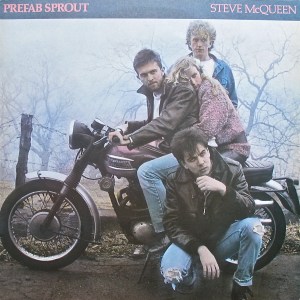
Prefab Sprout: Steve McQueen 30 Years Old Today

prefabSteve McQueen producer Thomas Dolby had taken part in a Radio One ‘Round Table’ singles review programme in early 1984, waxing lyrical about Prefab’s ‘Don’t Sing’.

The Sprouts happened to be listening in and asked their manager Keith Armstrong to ring Dolby the next day. Dolby takes up the story:

‘Keith said, “It so happens we’re actually looking for a producer right now. Are you interested?” I said, “Absolutely.” So they said, “Well, we don’t have many songs on tape to play you, but we’d like to invite you up to Paddy’s (McAloon, Prefab singer/songwriter) house.” I took the train up, spent the day there. He lived on the top of a hill in an old Catholic rectory where his mum had looked after the church. There were crucifixes on the walls. His dad, who’d had a stroke, was ill in bed upstairs. Paddy took me to his room and pulled out this stack of songs. He’d squint at them and strum his way through them. He would write notes for chords and melodies over the top of the lyrics but primarily it was about the poems.’

The songs for Steve McQueen were worked up in rehearsals with Dolby at Nomis Studios in West London in the autumn of 1984, before the recording sessions proper started at Marcus Studios.

The Sprouts apparently found the Big Smoke in turns beguiling and baffling. Taken out for dinner by CBS execs, they were introduced to the dubious pleasures of haute cuisine. According to Dolby, upon being delivered a tiny plate of food, bassist Martin McAloon was once heard to utter, ‘That was for me neck – now what’s for me stomach?’!

Dolby brought out the best in singer Wendy Smith, often using her unique soprano almost as a musical instrument, especially on ‘Moving The River’ and ‘Blueberry Pies’.

Dolby realised that part of his role as producer was to ‘smooth out’ some of the rough edges of Paddy’s remarkable songs:

‘What happened when the band started to arrange those was that there were lots of extra beats here and there, strange chord changes or rhythm changes, or odd lengths of phrases. The musicians tried to sort of accommodate those, but in fact what needed to happen was a few of the rough edges needed to be trimmed off. But at the same time, I didn’t want to throw out the baby with the bath water. I mean, what made them so unique is that they defied logic. So the task, really, at hand, for me, was how to elevate them to a more accessible level, commercially, without homogenizing the essence of the music.That was the first meeting with Paddy. He’s a very interesting guy, very well read but humble.’

The album was mixed at Farmyard Studios in Buckinghamshire. That was where Paddy really became aware of what Dolby had cooked up:

‘It’s taken me decades to try to absorb what it was that Thomas did. I mean, he had a great ear for individual sounds, he wasn’t swayed so much by the things of the day. He had a Fairlight and a PPG Wave and he would use them sparingly, and he had no time for the Yamaha DX7 and the things that everyone else rushed out and bought. He was into synthesis really. He didn’t make a big thing of it… it was just what he did, in addition to having a good sense of structure.’

Dolby talks about Paddy’s vocal style on the album:

‘He can be coaxed into letting rip every now and then. So one of my favourite things about the album is that you get these occasional primal screams. The way he sings “Antiques!”, the opening line. And then later on in “Goodbye Lucille” which is this very sort of lush, soft song, in the chorus he just lets rip at the end with this scream. And I always liked that he did that on that album. In later years he tended to be this sort of breathy crooner, and you hear less of that raw side.’

prefab

Drummer Neil Conti on recording Steve McQueen:

‘When we went in to record the album, there was a very relaxed vibe which I think you can hear in the music. After a rather tense start, when Thomas Dolby, who was used to drum machines, basically tried to get me to play like a machine, things loosened up and we had some hilarious late night jams after coming back from the pub. The track “Horsin’ Around” was recorded after one such rather inebriated sojourn to the boozer and you can hear Martin laughing while I’m counting it off. That track is all over the place, but it was just what the song needed. We couldn’t get it at all before we went to the pub to horse around a bit. I think the relaxed vibe really is one of the keys to why that album sounds good. No clicks, three takes max of each song, very loose and natural.’

Steve McQueen reached #21 on the UK album chart, perhaps a slight disappointment, but the critics generally loved it. It made #4 in NME’s Albums of 1985 poll and was well-received in Europe and the US. Rumours even appeared in the press (some good CBS PR) that Prefab might play at Live Aid. That was never going to happen but half the band did back David Bowie (producer Thomas Dolby, drummer Conti and occasional guitarist Kevin Armstrong).

An extensive UK and European tour followed the album release after which the band quickly recorded Protest Songs in late 1985, though it wouldn’t released for another four years. There was so much more to come from arguably the British band of the decade.

Thomas Dolby: The Flat Earth

Circa 1988, my schoolmate Seb stuck a few tracks from The Flat Earth (possibly ‘Screen Kiss’ and ‘Mulu’) at the end of the Lovesexy tape he did for me.

I was smitten – I needed as much music as possible by this guy. I’ve since bought the albums several times on various formats.

On Earth, Dolby deliberately downplays the ‘zany’ image and creates an atmospheric, beautifully arranged, largely introspective collection.

He covers various styles (funk, lounge jazz, synth rock, World), mastering all with an incredible consistency of mood, production and songwriting.

My mates and I also loved his habit of incorporating seemingly-random clips of audio into/between his songs, like the spoken word outbursts from the likes of Robyn Hitchcock.

The title track came from an unused jam originally intended for Malcolm McLaren’s Trevor Horn-produced Duck Rock album. Its lilting South African melody (reminiscent of ‘Obtala’ from Duck Rock) and confessional lyrics signalled a new maturity in Dolby’s style, continuing with the majestic ‘Screen Kiss’ featuring excellent, much imitated fretless bass work from Matthew Seligman.

Techno-rocker ‘White City’ should be covered by someone. Dolby himself masters the art of the cover version with his take on Dan Hicks’s ‘I Scare Myself’ featuring a gorgeous muted trumpet solo by guitarist Kevin Armstrong who, according to Dolby’s liner notes, had never played the instrument before the recording.

And the album closer ‘Hyperactive’ (originally written for Michael Jackson, fact fans) is actually a bit out-of-place on the largely downbeat Earth but it’s a fun, funky, irresistible little pop song, perfect to send you out into the night with a smile.

Dolby is a brilliant painter of pictures with sound, relentlessly using audio fragments to augment melodic and lyrical ideas (check out the extraordinary tree-falling which pops up throughout the title track and also the typewriters which pepper ‘Dissidents’).

But these songs would also work beautifully played with just an acoustic piano accompaniment, as his recent solo tours have demonstrated.

Of course, over here in Blighty, the music press were a bit suspicious of Dolby’s technical mastery and obvious musicianship, though The Flat Earth reached a respectable #14 in the UK album chart, #35 in the US.

Dolby followed up The Flat Earth by playing keyboards with David Bowie at Live Aid (alongside Seligman and Armstrong), forming occasional project Dolby’s Cube with George Clinton, Lene Lovich and the Brecker Brothers and producing both Prefab Sprout’s triumphant Steve McQueen and Joni Mitchell’s underrated Dog Eat Dog.