The Movers & Shakers Of 1980s Music: Their Real Names Revealed

Captain Sensible, AKA…

During the punk era, musicians often chose stage names so that the dole office wouldn’t identify them from album covers or gigs.

One wonders how much of an issue that was for Gordon Sumner, Paul Hewson and David Evans, AKA Sting, Bono and The Edge, but you never know.

But as the 1980s wore on and the post-punk era became the hip-hop era, a whole new generation of rappers, DJs, producers and musicians felt the need to create pseudonyms.

But what did their mums call them? Here, for your dubious pleasure, are some of the most intriguing real names. It’s fair to assume that most probably don’t like being reminded of these, for various reasons. YOU go taunting Ice-T with his real name (Tracy Marrow). But, on the other hand, kudos to The Cure’s Robert Smith for not using a pseudonym…

Terminator X (Public Enemy DJ): Norman Rogers

Jet Black (Stranglers drummer): Brian Duffy

W. Axl Rose: William Bruce Rose Jr.

Divine: Glenn Milstead

MC Lyte: Lana Moorer

Kate Bush: Catherine Bush

Sun Ra: Herman Blount

Sade: Helen Folasade Adu

Adam Ant: Stuart Goddard

Ozzy Osbourne: John Michael Osbourne

Genesis P-Orridge (Throbbing Gristle/Psychic TV frontperson): Neil Megson

Cosey Fanni Tutti (Throbbing Gristle co-founder): Christine Newby

Jamaaladeen Tacuma (Ornette Coleman bassist): Rudy McDaniel

Howard Devoto (Magazine singer/solo artist): Howard Trafford

Wilko Johnson: John Wilkinson

Jah Wobble: John Wardle (named by a drunken Sid Vicious, whose real name is John Ritchie…)

Prairie Prince (Tubes/XTC drummer): Charles Lempriere Prince

Sydney Youngblood (‘If Only I Could’ singer): Sydney Ford

Yazz (‘The Only Way Is Up’): Yasmin Evans

Belouis Some (‘Imagination’ singer): Neville Keighley

Hollywood Beyond (‘What’s The Colour Of Money’ singer): Mark Rogers

Tommy Vance (legendary DJ): Richard Anthony Crispian Francis Prew Hope-Weston

Melle Mel: Melvin Glover

John Martyn: Iain McGeachy

Tom Verlaine (Television frontman): Thomas Miller

Johnnie Walker (DJ): Peter Dingley

Kim Wilde: Kim Smith

Midge Ure: James Ure

Elvis Costello: Declan MacManus

Adrian Belew: Robert Steven Belew

Princess (London soul singer of ‘Say I’m Your Number One’ fame): Desiree Heslop

Dweezil Zappa: Ian Donald Calvin Euclid Zappa (The LA hospital nurse wouldn’t let Gail and Frank name him ‘Dweezil’ so FZ named him after his early collaborators Ian Underwood, Captain Beefheart, Carl Schenkel and ‘Motorhead’ Sherwood. Dweezil’s name was legally changed when he was five years old.)

Mick Mars (Motley Crue guitarist): Robert Alan Deal

John Foxx: Dennis Leigh

Trugoy (De La Soul rapper): David Jolicoeur

Cheryl Baker (Bucks Fizz vocalist): Rita Crudgington

Grandmaster Flash: Joseph Saddler

Kidd Creole (Furious Five rapper): Nathaniel Glover

KRS-One: Lawrence Parker

Pauline Black (Selecter singer): Belinda Magnus

Siouxsie Sioux: Susan Ballion

Geddy Lee: Gershon Eliezer Weinrib

Sebastian Bach (Skid Row singer): Sebastian Bierk

Marilyn (‘Calling Your Name’ singer): Peter Robinson

Don Was (Was Not Was co-founder/superstar producer): Don Fagenson

Falco (‘Rock Me Amadeus’ one-hit wonder): Johann Holzel

Steve Severin (Siouxsie and the Banshees bassist): John Bailey

Budgie (Siouxsie drummer): Peter Clarke

Dave Vanian (Damned singer): David Lett

Lydia Lunch: Lydia Koch

Flavor Flav: William Drayton

LL Cool J: James Smith

Tone Loc: Anthony Smith

Bonnie Tyler: Gaynor Hopkins

Yngwie Malmsteen: Lars Lannerback

Young MC: Marvin Young

Ice Cube: O’Shea Jackson Sr.

Shakin’ Stevens: Michael Barratt

Donna Summer: LaDonna Gaines

Captain Sensible: Raymond Burns

Rat Scabies (Damned drummer): Christopher Millar

Vanilla Ice: Matthew Van Winkle

MC Hammer: Stanley Burrell

DJ Kool Herc (hip-hop pioneer): Clive Campbell

Duke Bootee (hip-hop pioneer): Edward Fletcher

Afrika Bambaataa: Lance Taylor

Nikki Sixx (Motley Crue bassist): Franklin Ferrana

Skip McDonald (On-U Records/Sugar Hill guitarist): Bernard Alexander

Billy Idol: William Broad

Bill Wyman: William Perks

Fish: Derek Dick

Fee Waybill (Tubes vocalist): John Waldo

Billy Ocean: Leslie Charles

Posdnuous (De La Soul rapper): Kelvin Mercer

Maseo (De La Soul rapper): Vincent Mason Jr.

Chris De Burgh: Christopher Davidson

Kool Moe Dee: Mohandas Dewese

Dee C Lee (Style Council vocalist/’See The Day’ solo artist): Diane Sealey

Steve Strange (Visage frontman/Blitz pioneer): Stephen John Harrington

Youth (Killing Joke bassist/superstar producer): Martin Glover

Geordie (Killing Joke guitarist): Kevin Walker

Doug E Fresh: Douglas Davis

33 Great Cover Versions Of The 1980s

We’ve briefly looked at crap cover versions before (though doubtless there’ll be more to come), but how about good ones from the 1980s?
It was quite easy coming up with a fairly long list. I guess the ultimate test is that at the time most people (including me) didn’t know – or didn’t care – that they were cover versions.

There wasn’t a great deal of looking back in this golden period for pop.

But it did seem as if a lot of ’80s acts had the magic touch, or at least a total lack of fear, making almost everything sound like their own. Punk probably had quite a lot to do with that.

Some of the following choices get in for sheer weirdness but most are genuine artistic achievements. Recurring themes? The Beatles, Motown, Otis Redding. Probably not too much of a surprise there. And 1981 seems a particularly good year for covers.

Anyway, enough of my yakkin’. Let the countdown commence…

33. Bow Wow Wow: ‘I Want Candy’ (1982)

32. David Bowie: ‘Criminal World’ (1983)

31. Ry Cooder: ’13 Question Method’ (1987)
Ry’s brilliant solo take on Chuck Berry from the Get Rhythm album.

30. Propaganda: ‘Sorry For Laughing’ (1985)
The Dusseldorf pop mavericks take on Josef K’s post-punk curio (apparently at Paul Morley’s urging) to produce a sweeping, majestic synth-pop classic.

29. Joan Jett & The Blackhearts: ‘Little Drummer Boy’ (1981)

28. Living Colour: ‘Memories Can’t Wait’ (1988)

27. Sting: ‘Little Wing’ (1987)

26. Randy Crawford/Yellowjackets: ‘Imagine’ (1981)
Who knew this would work? Sensitive and imaginative reading of the Lennon classic, with a classic Robben Ford guitar solo.

25. Lee Ritenour: ‘(You Caught Me) Smilin” (1981)
Gorgeous West-Coast version of Sly Stone’s pop/funk opus. Surely one of the most unlikely covers of the decade, but it works a treat.

24. Luther Vandross: ‘A House Is Not A Home’ (1982)

23. John Martyn: ‘Johnny Too Bad’ (1980)
Originally a reggae track by The Slickers and first released on ‘The Harder They Come’ soundtrack in 1972, Martyn and drummer Phil Collins rearranged it and added some lyrics. It featured on John’s fantastic Grace And Danger album.

22. Soft Cell: ‘Tainted Love’ (1981)
Cracking version of Gloria Jones’ ’60s Northern Soul classic (written by Ed Cobb). A hit all over the world, with pleasingly remedial synth arrangement, instantly recognisable soundworld and classic intro.

21. Grace Jones: ‘Use Me’ (1981)
The Nightclubbing album featured a veritable smorgasbord of good cover versions, but this take on Bill Withers scores particularly highly for originality.

20. The Flying Lizards: ‘Sex Machine’ (1981)

19. The Replacements: ‘Cruela De Vil’ (1988)
From the brilliant Hal Willner-helmed Disney tribute album Stay Awake, you’d have been a brave punter to bet a dime on this one working, but work it does.

18. Quincy Jones: ‘Ai No Corrida’ (1981)

17. Donald Fagen: ‘Ruby Baby’ (1982)

16. Stanley Clarke: ‘Born In The USA’ (1985)
Who knows, maybe this could have provided Stanley with a novelty hit if CBS had been quicker off the mark. He references John Coltrane’s ‘A Love Supreme’ in the intro while Rayford Griffin lays down seismic grooves and a funny old-school rap.

15. The Power Station: ‘Get It On’ (1985)
‘If cocaine was a sound…’, as a YouTube wag described it. This near-hysterical rave-up is mainly the sound of a fun late-night jam (Tony Thompson’s drumming being particularly notable). Also check out guitarist Andy Taylor’s little ode to Talking Heads’ ‘Burning Down The House’ throughout.

14. Deborah And The Puerto Ricans: ‘Respect’ (1981)
A one-off solo single from The Flying Lizards’ singer, this Dennis Bovell-produced curio missed the charts but remains a fascinating post-punk artefact.

13. Roxy Music: ‘In The Midnight Hour’ (1980)
Roxy’s first cover version presumably raised some eyebrows but the lads pull it off with some aplomb, aided by Allan Schwartzberg’s tough NYC drum groove – and the fact that Bryan Ferry can’t resist adding some typical weirdness in the first 20 seconds.

12. Ringo Starr & Herb Alpert: ‘When You Wish Upon A Star’ (1988)
Another once-heard-never-forgotten cracker from the aforementioned Stay Awake collection, the album version is preceded by a very menacing Ken Nordine spoken-word intro.

11. Japan: ‘Ain’t That Peculiar’ (1980)
David Sylvian probably hates this but no matter. It’s hard to think of another band pulling it off. Ominous synthscapes from Richard Barbieri, a nice recorder solo by Mick Karn and brilliant ‘where’s-one?’ beat from Steve Jansen.

10. Everything But The Girl: ‘I Don’t Want To Talk About It’ (1988)
It definitely divides opinion, but certainly fits the ‘sounds like they wrote it’ criterion.

9. Bananarama & Fun Boy Three: ‘Really Saying Something’ (1982)
Penned by Motown songsmiths Norman Whitfield, Micky Stevenson and Edward Holland Jr and first performed by The Velvelettes in 1964, it’s hard not to smile when this comes on the radio. I love the way the ladies pronounce ‘strutting’.

8. David Bowie: ‘Kingdom Come’ (1980)
The Dame’s magnificent take on a little-known track from Tom Verlaine’s 1978 debut album.

7. UB40: ‘Red Red Wine’ (1983)
No apologies for including this Neil Diamond-penned perennial. Great bassline, nice groove, lovely Ali Campbell vocal performance.

6. Phil Collins: ‘Tomorrow Never Knows’ (1981)
Phil closed his Face Value album with this oft-forgotten corker, featuring a classic John Giblin bassline (later cribbed by Pearl Jam for the opening of their ‘Once’) and cool Shankar violin.

5. Robert Palmer: ‘Not A Second Time’ (1980)
Robert adds some New Wave grit to this Lennon-penned rocker, and his singing has rarely been better.

4. Siouxsie And The Banshees: ‘Dear Prudence’ (1983)

3. Joan Jett & The Blackhearts: ‘I Love Rock And Roll’ (1982)
First recorded by The Arrows in 1975, this is simply one of the great singles of the 1980s and a huge hit to boot.

2. Hue & Cry: ‘The Man With The Child In His Eyes’ (1988)
It shouldn’t work but it does, courtesy of singer Pat Kane’s excellent tone and phrasing. His trademark ‘na-na-na-na’s help too. I wonder what Kate thought of it.

1. Blondie: ‘The Tide Is High’ (1980)
Written by reggae legend John Holt and first performed by The Paragons in 1966, this was an inspired – if somewhat cheesy – choice for the band. It’s mainly included here for Debbie Harry’s delightfully off-the-cuff vocal, sounding like her first crack at the song.

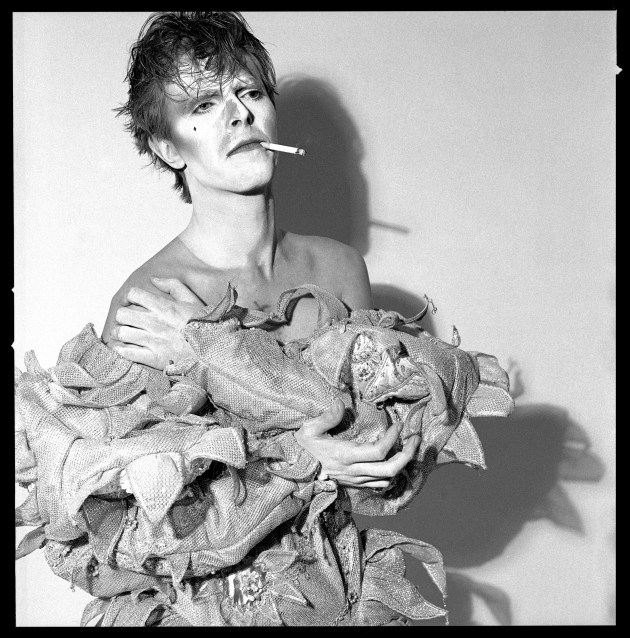
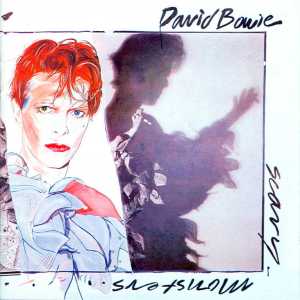
David Bowie: Scary Monsters (And Super Creeps) 35 Years Old Today

bowieRCA Records, released 12 September 1980

10/10

‘Albums of the ’80s’ lists are all the rage these days. Scary Monsters (And Super Creeps) would easily be in the movingtheriver top ten. It might even be in my top one.

It’s a timeless, masterful work which, for me, can only ever be consumed in its totality. It’s also the collection that all subsequent Bowie albums have been measured against. I would put it over and above Low, Ziggy Stardust and Hunky Dory for its sheer consistency.

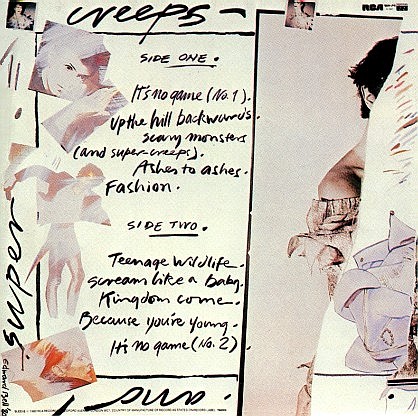
ScaryMonstersBackCover

Here’s my case for the defence, track by track:

1. It’s No Game (Part 1)

I’ve previously written about this being one of the great ’80s album intros. Vocally, Bowie channels John Lydon and Peter Hammill to deliver a New York/New Wave anti-fascist tirade that ranks among his great performances. Producer Tony Visconti ‘f***s with the fabric of time’ to create a cavernous, Eventide-drenched mix and guitarist Robert Fripp delivers one of his most unhinged statements. Avant-rock heaven. Adapted from Bowie’s early demo ‘Tired Of My Life‘.

2. Up The Hill Backwards

A brilliant treatise on press intrusion and the wretchedness of celeb culture inspired by Bowie’s ‘dealings’ with the press during his failing marriage, with an ingenious central image of paparazza snapping away at their prey as they shuffle ‘up the hill backwards’. Endlessly catchy with a beautifully-realised unison vocal – the only track in the Bowie canon which doesn’t feature his solo singing.

3. Scary Monsters

Bowie revisits his finest Mockney accent to deliver a bleak, blanked-out, darkly funny tale of semi-stalking. There’s more Phil Spector-style brilliance from Visconti and another Fripp masterclass in balls-out guitar playing. The only minor criticism is that it possibly goes on for about a minute too long.

4. Ashes To Ashes

An instant classic with a very Bowie mix of child-like innocence and creeping malevolence as the hopelessly drug-addicted, world-weary Major Tom drifts off into the ether. Effortlessly superb songcraft with three or four memorable sections, boundary-pushing lyrics (‘Visions of Jap girls in synthesis’!) and a myriad of majestic hooks.

5. Fashion

The lameness of the style wars is in Bowie’s sights this time as he almost mumbles the ironic verse lyrics over a tough New York disco/funk/rock groove. And there’s more barking mad Fripp soloing. Danceable, amusing, timeless. Originally titled ‘Jamaica’ in demo form.

6. Teenage Wildlife

Initially coming across as slightly lumpy and leaden, the track builds and builds in intensity to deliver a powerful message to Bowie’s ‘mythical younger brother’ about keeping a sense of perspective as one gets older. His patented ‘histrionic’ vocal style is superbly realised and drummer Dennis Davis holds it all together with aplomb. Originally titled ‘It Happens Every Day’ in demo form.

7. Scream Like A Baby

Spooky dystopian fable about a future society’s outlawing of homosexuality and other ‘deviant’ behaviour. Bowie’s ingenious stuttering provoked many a schoolyard titter and the weird vocal doppler effects are perfectly realised. Revamped from the Bowie-written/produced ‘I Am A Laser‘ originally recorded by Ava Cherry/The Astronettes.

=bowie

8. Kingdom Come

A superb cover of a track from Tom Verlaine’s debut album, Phil Spector is the obvious influence again with Davis’s booming, overdubbed tom fills and some anthemic, reverb-drenched backing vocals. Majestic, powerful, intriguing. Verlaine was apparently supposed to play guest guitar throughout the album but bowed out at the eleventh hour.

9. Because You’re Young

An ‘advice’ song to his son, Bowie offers the lessons he has learnt and looks back with great poignancy and not a little sarcasm on his carefree, youthful days. Peter Townshend strums along (apparently he arrived at the studio drunk and ready to party, but was stunned to find Visconti and Bowie sitting quietly at the recording desk like ‘two sober, little old men’!) and Bowie delivers a superb, kaleidoscopic lead/backing vocal combo.

10. It’s No Game (Part Two)

Carlos Alomar’s masterly rhythm guitar anchors this reprise, with Bowie doing his best Iggy croon and offering up images of world poverty, media saturation and dunderheaded political/cultural strategies. We hear the multitrack tape spool off its reels at the very end to close one of the great albums of the ’80s or any other decade.

A big nod to Nicholas Pegg.