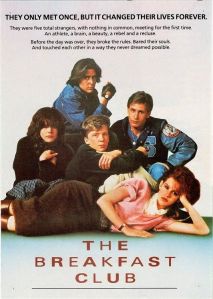
The Breakfast Club @ 40: 17 Things You Didn’t Know About The Classic Teen Movie

Despite a few bum notes, ‘The Breakfast Club’ – which premiered 40 years ago this month – remains one of the essential 1980s movies, a must-see for generation after generation of teenagers.

Like or loathe it (some contemporary critics such as Pauline Kael lamented its whinier aspects, while others such as Roger Ebert were surprisingly sympathetic), its superb cast act as if their lives depended on it, and writer/director John Hughes’s attention to detail and comic timing are as spot-on today as they must have seemed in 1985.

But what was going on behind the scenes? Where was the film shot? Which famous actors nearly got cast? Which actors didn’t get along? Movingtheriver has done some digging (with spoilers)…

17. The film was edited by Hollywood royalty Dede Allen, who had worked on ‘The Hustler’, ‘Bonnie & Clyde’, ‘Serpico’, ‘Dog Day Afternoon’ and ‘Reds’ (apparently she was put to work on John Hughes’ original three-hour cut…).

16. Theme song ‘Don’t You Forget About Me’ was written by Keith Forsey after witnessing the scene where Brian (Anthony Michael Hall) asks his fellow detention attendees if they’ll still be friends the next day. Simple Minds turned it into a US #1 but Bryan Ferry was Forsey and Hughes’ first choice – he turned it down, busy mixing Boys & Girls.

15. Hughes wrote the first draft of the film over one weekend.

14. Universal weren’t behind the film, wanting more teenage hi-jinks and nudity a la ‘Porky’s’. They weren’t even sure Hughes should direct.

13. Anthony Michael Hall and Molly Ringwald were just 16 years old during filming – all the other ‘schoolkids’ were well into their 20s.

12. Jodie Foster, Laura Dern and Robin Wright all auditioned for the part of Claire, the prom queen. Molly Ringwald got the role despite initially being cast as Alison, the misfit. Emilio Estevez was initially cast as the ‘bully’ John Bender until Judd Nelson came in at the last minute (Nicolas Cage, John Cusack and Jim Carrey all almost played Bender too). Rick Moranis was due to play Carl the janitor but left the film just before shooting.

11. It was shot between March-May 1984 at Maine North High School in Des Plaines, Illinois, the same abandoned school used for ‘Ferris Bueller’s Day Off’. Most of the film takes place in a library – this was actually a set built in the school gymnasium.

10. The cast rehearsed for three weeks before the cameras rolled. They were running lines and bonding even as sets were being built around them. The film was also shot in sequence, a rarity.

9. Researching his role as Bender, Judd Nelson went ‘undercover’ at a nearby high school with fake ID and formed a real clique of naughty teens.

8. The cast didn’t smoke real pot in the famous ‘truth-telling’ scene – it was oregano.

7. Anthony Michael Hall’s real life mother and sister talk to him in the car at the beginning (and Hughes has a cameo as his dad).

6. Ringwald tried to get Hughes to remove the scene where Bender hides under the desk and looks between her legs, but he refused.

5. Bender’s famous, defiant/celebratory fist-raise at the end was improvised by Judd Nelson.

4. The scene where the characters sit around and explain why they are in detention was all improvised.

3. The original cut was 150 minutes long – they had to lose 53 minutes, including a long dream sequence and a whole character (a sexy gym teacher). Some deleted scenes have appeared on DVDs and on YouTube but many outtakes have never been seen.

2. The iconic poster photo was taken by Annie Leibovitz and later satirised by ‘Texas Chainsaw Massacre 2’.

1. The budget was just under $1 million! The film made over $51 million during its initial run…
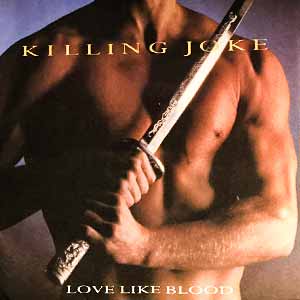
Killing Joke: Love Like Blood @ 40

Look up ‘intense’ in the dictionary and you might just see a photo of Jaz Coleman.
One of the best bits of post-Lockdown ‘normality’ was walking into Fopp in Covent Garden and quite by chance seeing the erstwhile Killing Joke frontman/keyboardist doing a signing session in full make-up.

His band’s ‘Love Like Blood’ hit its peak position of #16 in the singles chart 40 years ago this month. It was their sole top 40 single of the 1980s and biggest hit to date, a brilliant highlight of that Goth/ post-punk sound/attitude.

But, in a decade full of literary pop music, the song has an interesting and surprising genesis. Recently, Coleman told Songfacts:

That was inspired by the author Yukio Mishima… It was his views on writing with your blood as an artist that really inspired me. It’s a metaphor for the commitment an artist must take to his art form. When I was reading ‘Spring Snow’, one of Mishima’s novels, I really couldn’t speak for 24 hours after reading that book – it hit me so hard. The song itself was a distillation of everything that we hold dear, and one must aspire to walk and talk what you write about in your songs – actually live it. That’s the other part of art, isn’t it? You can’t just be conceptual, writing songs. It’s the way you live your life as well. It’s as important as the way you play your instruments or the music you create…

Musically, it’s fascinating too, the late great Kevin ‘Geordie’ Walker’s doom-laden guitar (with a very odd tuning), scary keyboards (played by Coleman) and a powerful, influential groove – apparently no click track here. Attendant album Night Time was a hit too, featuring the single ‘Eighties’ which Nirvana ripped off for ‘Come As You Are’.

The real corker though was this live performance of ‘Love Like Blood’ from ‘The Tube’. Makes you hanker for a time when bands really meant it… No mucking about. Audiences too. Like to have been there.


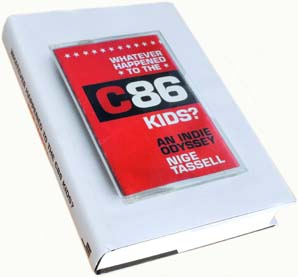
Book Review: Whatever Happened To The C86 Kids? by Nige Tassell

In 1986, legendary mag NME issued a famous cassette compilation called C86.

Arguably it defined a musical generation, bringing together figureheads of the burgeoning British indie scene from Primal Scream to Bogshed, Stump to The Pastels.

The NME’s timing could hardly have been better – in 1986, ‘indie’ music was beginning to get a sound of its own, John Peel was entering his imperial phase as a Radio 1 presenter, the music press was right on board and independent labels were springing up all over the shop.

The cassette had a huge impact, but did it have an impact on the bands? And what are they up to these days? Nigel Tassell’s hugely enjoyable book tracks them all down and hears their stories. Some, like Half Man Half Biscuit, The Wedding Present, Primal Scream and Fuzzbox are still going strong, others, like The Soup Dragons and The Bodines burnt brightly for a few years. Other band members ended up as social workers, bike shop owners, solicitors, driving instructors.

The result is a friendly, mostly uplifting tome, a bit like one of those old VH1 ‘Bands Reunited’ shows in book form. A few themes emerge: the major labels sniffing around; Peel Sessions; the ‘name’ producer enlisted for that unsuccessful second album; Alan McGee/Creation Records. But this is not a tale of rampant egos and prima donnas – it’s all refreshingly low-key (with the possible exception of the chapter on Primal Scream) with a side order of provincial British history too.

Like or loathe the music on C86, this book also perfectly captures the never-to-be-repeated thrill of first getting together in the teenage bedroom and trying to write and rehearse songs. Inadvertently, it’s also a sad comment on the loss of music in pubs and clubs across this isle of noises.

Tassell’s brisk, chatty style may divide opinion, but it’s entirely appropriate for a mostly heartwarming companion piece to Giles Smith’s ‘Lost In Music’ and Nick Duerden’s ‘Exit Stage Left’, outlining the pros and cons of youthful musical obsession. Highly recommended.

Tassell discusses ‘Whatever Happened To The C86 Kids’ in this interview.

Phil Upchurch: Companions @ 40

There’s a good case that 1984 was Last Call for classic jazz/funk (soon to morph into the dreaded smooth jazz) just before the machines took over and albums like David Sanborn’s A Change Of Heart became de rigeur (but only for a few years – there was an ‘acoustic’ revival in the late 1980s…).

Phil Upchurch’s Companions got in just under the wire. The legendary Chess Records/George Benson sideman (he wrote classic ‘Six To Four’ from Breezin’) had recorded over ten solo albums before 1984, all showing off his significant guitar chops and arrangement smarts.

But Companions (currently not on any streaming platforms – c’mon Universal Music) appeared 40 years ago this month on Paladin, the short-lived British jazz/dance label founded by DJ Paul Murphy and distributed by Virgin. Labelmates included Working Week, Robert Wyatt and Annie Whitehead.

It’s a classic West Coast album and a classic guitar album too, in large part due to the appearance of Lenny Breau (who died in mysterious circumstances on 12 August 1984, just a few days after the recording), famous for his fluid lines and cascading false harmonics, who appears on three tracks and to whom the album is dedicated.

Percussion fans – this album’s for you. Every track features a cornucopia of shakers, cowbells, woodblocks and congas played by Michael Fisher and Steve Forman. Gerald Albright blows a storm on the brilliant ‘Mr T (BA’s Song)’, probably heard by yours truly on Robbie Vincent’s BBC London show back in the day, while Russell Ferrante and Rodney Franklin provide tasty Fender Rhodes and Nathan East some excellent bass.

But, as is normal for mid-1980s fusion albums, there are some dodgy tracks on Companions too – two poor ‘pop’ cover versions (‘Rosanna’ sounds out-of-tune throughout) and an undercooked Jimmy Witherspoon cameo on ‘CC Rider’. Elsewhere there are not-so-great vocals on two tracks by Mike Baker (future drummer/vocalist for Zawinul Syndicate/Whitney Houston?).

But in general Companions is pure comfort music and well worth seeking out, rich with interesting harmony, good grooves and superb guitar playing.