Surprisingly few musical memoirs take the reader right into the recording studios of the 1980s and 1990s, documenting what actually went down during the making of some classic albums.
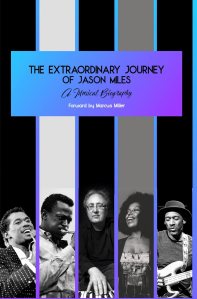
In his enjoyable new book, Jason Miles – synth player/programmer for Miles Davis, Whitney Houston, Luther Vandross, Roberta Flack, David Sanborn, Diana Ross, George Benson, Will Downing, Marcus Miller, Chaka Khan, Scritti Politti and The Brecker Brothers – does just that, in the process outlining the joys and sorrows of the American music business in its money-drenched pomp.
‘The Extraordinary Journey Of Jason Miles’ traces the author’s young life as a teenage Brooklyn jazz fanatic to becoming a first-call studio sessionman for some of the biggest artists on the planet. The book is also notable for outlining the considerable pressures – and potential threats to one’s mental health – of coming up with the goods and harnessing the ever-evolving music technology when time is money.
There’s a memorably tense episode when things go very wrong on a Vandross session and an unsparingly honest view of putting together his Miles Davis-celebrating Kind Of New project with trumpeter Ingrid Jensen. Jason also outlines his struggles bringing award-winning tributes to the music of Grover Washington Jr., Ivan Lins, Weather Report and Marvin Gaye to life.
Printing problems bring about a few curious errors/typos but the book is an absolutely key text for Miles Davis fans, a fast-paced, brave, uncompromising read also featuring some superb photographs. There are also intriguing, fond portraits of musicians such as Bernie Worrell, Lenny White, Marcus Miller and Joe Sample.
Also it strikes movingtheriver that we don’t have much first-person documentation of great 1980s and 1990s Black music – ‘The Extraordinary Journey Of Jason Miles’ corrects that, and sheds more light on who actually played what on Tutu and Amandla, though sadly my favourite ‘80s Davis (and Miller) album Siesta barely gets a mention (Jason tells movingtheriver he will write about it in his second book, coming soon).
(Postscript – One of Jason’s gripes is the lack of credit he has received through his career – sure enough, my remastered CD copy of Davis’s Amandla only gives him a sole credit, on the classic track ‘Mr Pastorius’… But Jason assures movingtheriver that Warners has made corrections to more recent versions of the album).
What a treat to see that Freeview channel London Live seems to be re-running Keith Floyd’s classic BBC films of the 1980s.
There had been others before him but Floyd is generally regarded as the original modern TV chef. He’s certainly the only one I can watch, though probably wouldn’t be let within a mile of a television studio these days.
But who was this charismatic, erudite, passionate, well-spoken, Withnailesque bloke gently joshing the cameraman (the long-suffering Clive – ‘Stay where you are, old bean!’) and director (David Pritchard), all the while quoting poetry and chucking down the red wine?
He had a colourful past. Floyd was born at his family farm near Reading in 1943 into distinctly less-than-well-off circumstances. He developed a passion for picking fruit and vegetables and attended Wellington School (at the same time as Jeffrey Archer) but left at 16 to develop his writing skills alongside Tom Stoppard at the Bristol Evening News.
Then, on a whim, after seeing the Michael Caine movie ‘Zulu’, he joined the Army. He moved into catering work at the BBC before opening his own successful restaurant in Bristol, where he’d mill around amongst the clientele, reciting First World War poetry and Bob Dylan lyrics.
BBC producer David Pritchard observed Floyd there in 1983 and offered him a TV gig. The rest is history. First there was ‘Floyd On Fish’, then ‘Floyd On France’ and a selection of well-regarded films and series, all shot on film and still looking sumptuous today. Don’t watch if you are hungry…
Floyd was married and divorced four times and fleeced by the vicious British tabloid press of the late 1980s. It’s not surprising he fell out of love with the TV game, outlined in hilarious detail in Tom Hibbert’s ‘Who The Hell’ interview for Q magazine:
‘Celebrity? It’s a heap of sh*t! You get frightened to go out. People you’d like to speak to don’t speak to you because they’re too polite. People you don’t want to speak to hound you to death. Everyone thinks you’re incredibly rich when you’re not. No-one believes you if you say you’re lonely or depressed because…you’re The Man On The Telly.’
Floyd even made a single with The Stranglers’ Hugh Cornwell called ‘Give Geese A Chance’ (apparently no-no’d by Yoko Ono…), with Fuzzbox guesting on the B-side. Between 1989 and 1996, he also ran his own gastropub/B&B – The Maltsters Arms in Devon – still going strong today.
Floyd was probably not an easy man to get along with, and Keith Allen’s excellent TV doc – made just before his death in 2009 – shows the effect his drinking had on lovely daughter Poppy. But in terms of the idiot box, he was a breath of fresh air. And in these nannying, oversensitive days, his brutal honesty, erudition and unabashed debauchery are a delight.
35 years ago this weekend, French synth pioneer Jean-Michel Jarre played two concerts in an area of East London known as Docklands, next to the River Thames.
Destination Docklands took place in October 1988 on a huge, somewhat dilapidated site known as the Royal Victoria Docks, the largest of the three Royal docks in the borough of Newham (the area was completely refurbished a few years later).
Both the Saturday and Sunday concerts were reportedly attended by 100,000 people. There were fireworks, lasers, choirs, dancers and a Hank Marvin guest spot. My dad spontaneously drove us out to Woolwich on the Saturday evening (quite a journey from South-West London) and unsuccessfully tried to get us in, though I distinctly remember the thrill of seeing the lasers and fireworks in the sky.
Brilliantly, the second night (beset by torrential rain and high winds) was filmed by Mike Mansfield, the director best known for his hilarious ‘Cue The Music’ clips on late-night ITV. His documentary makes for fascinating, funny viewing today, most of the (rather ‘eccentric’…) musicians having to be shadowed by umbrella-holding extras.
Jarre seems to enjoy it, though, quipping: ‘Frogs like rain!’ However it’s questionable how much of this music was played live, if any…
Did you go to either of the concerts? Let us know your memories below.
If memory serves I was given the cassette of Little Feat’s Let It Roll for my 16th birthday.
I loved their cocktail of blues, acid-rock, funk, fusion, country, Cajun and Tex-Mex. And they – along with Steely Dan – seemed to represent everything exciting and glamorous about America to me, also introducing exotic-sounding place names like Georgia, Atlanta (!), Tupelo and Juarez.
A burgeoning drummer, I also particularly dug their skinsman Richie Hayward who belongs in the same bracket of 1970s groovemasters as James Gadson, Jeff Porcaro, Jim Keltner, Jim Gordon, Earl Young, Bernard Purdie et al.
I was excited to listen to Let It Roll – which recently turned 35 – after many years, so I looked for my old cassette. Gone. I must have got rid of it years ago. Why? All shall become clear…
Recorded at The Complex, the LA studio owned by EW&F’s Maurice White, it was the band’s comeback album, their first since the death of chief singer/songwriter/slide guitarist Lowell George in 1979.
Of course the absence of George is palpable. Despite new vocalist Craig Fuller’s vague similarity to George in both vocal and slide guitar departments, the days of lyrics like: ‘Onomatopoetry symmetry in motion/They heard about that girl across the ocean’ (‘Down Below The Borderline’) or ‘Heard you got an infection/Just before your lewd rejection’ (‘The Fan’) were long gone.
(According to Hayward, George’s musical influence was also palpable, regularly suggesting fill ideas and rhythms, and frequently telling the drummer that he played too many notes!) Fuller also brings more of a country influence to the band, and there’s less of the ‘white boy got the whoo-whoos!’ (Van Dyke Parks’ analysis of George’s vocal style).
But most of all Let It Roll is inconsistent both song and sound-wise. The good stuff first: opener ‘Hate To Lose Your Lovin’ is a passable pastiche of the classic Feat sound, Second-Line meets funky country, while ‘Cajun Girl’ and the title track are very catchy. ‘Business As Usual’ has a few intriguing harmonic moves and riffs.
Elsewhere there’s too much rather bland AOR, Bruce Hornsby and Steve Winwood apparently the touchstones. Most of the band’s kinks have been ironed out, though Hayward still sounds fantastic, inspired by his new drum hero Manu Katche. Let It Roll could have used some decent mastering too – the volume levels are all over the place.
Surprisingly, the album didn’t chart in the UK but was a very good seller in the US, making #36 on the Billboard Hot 100 and earning a gold disc (they followed it up with 1990’s Representing The Mambo, which I confess I’ve still never heard).
They played a triumphant gig at London’s Town & Country Club in December 1988 though, with special guest Bonnie Raitt on guitar and vocals, and I’m not sure why I wasn’t there. I had to wait until 11 September 2000 to see this brilliant band at the same venue. And, despite the loss of George, Hayward and guitarist Paul Barrere, they’re still an occasional live entity.
‘I think a paranoid is someone who’s in possession of all the facts.’ Mark Stewart, 1996
In another terrible year for musician deaths, one of 2023’s most surprising and least welcome was the passing of post-punk pioneer Mark Stewart in April, of undisclosed causes.
Indeed it is almost uncanny, considering how full of life he seemed onstage last year during On-U Sound Records’ 40th anniversary rave-up at London’s Forum. And the fact that 2022 also saw one of his best ever collaborations, with KK Null.
His music and friendship helped pave the way for his Bristol mates Tricky, Gary Clail and Massive Attack, and his influence is detectable in such acts as Sleaford Mods and LCD Soundsystem.
I saw Mark live five or six times. His presentation was sometimes hilarious, sometimes disturbing, always thrilling. He would shamble onstage, often with a shopping bag of beers in tow, before exploding into action, a man with a lot on his mind. The fact that he was often playing with one of the slickest/funkiest American rhythm sections in history (Skip McDonald/Doug Wimbish/Keith LeBlanc) was a brilliant dichotomy.
He was interested in everything from the Dead Sea Scrolls to CIA Mind Control to the Gemstone Files and Operation Gladio. His thing was information – who controls it and how/why they conceal it.
The teenage, beanpole, 6’6” Mark – resplendent in zoot suit and brothel creepers – was a regular sight at clubs and gigs in mid-1970s Bristol as part of the Funk Army. After his first band The Pop Group split up, he pursued mad mash-ups of sound, sometimes using Walkmans to create his collages, plundering scary ‘50s sci-fi voices and even TV ads.
He gave good album title: Learning To Cope With Cowardice. As The Veneer Of Democracy Starts To Fade. He was never interested in slick, ‘funky’ beats – even his ‘band’ album, 1990’s Metatron, with Wimbish, McDonald and LeBlanc, is distinctly uneasy listening.
By 1996’s Control Data, the music world had finally caught up with him, the album’s mix of techno, dub and house more commercial than usual. But the extraordinary ‘Simulacra’, ‘Red Zone’ and ‘Digital Justice’ to this day sound unlike anything else. This trend continued through his occasional records of the noughties, particularly the excellent Edit (2009).
His vocals were generally low in the mix. You had to strain to hear his lyrics. Why? He claimed it was the influence of dub and funk. ‘So it’s not like making a f**king speech’, he told Simon Reynolds. But his words were often brilliant, as funny and peculiar as Mark E Smith or Morrissey. Check out ‘The Lunatics Have Taken Over The Asylum’, ‘Low Life, High Places’ or The Pop Group’s ‘Citizen Zombie’ (You’ve got that brainwashed look of an alien abductee/Maybe your mind has been wiped clean’).
Mark also made a lot of impact writing for other acts – Tackhead, Gary Clail, Living Colour (‘Sacred Ground’), Audio Active (‘Happy Shopper’). But I’ll always remember him passing the time of day with my brother in the audience immediately after the Forum gig last April. He always said his fans were just as interesting as the musicians onstage – another legacy of punk.
Of course it was just teenage aggro/jealousy, but my schoolmates and I were always a bit suspicious of those late-‘80s pop acts who were much fancied by our female friends: Morten Harket, Richard Marx, Jason Donovan, the Goss brothers, Marti Pellow, Nathan out of Brother Beyond, those blokes from Big Fun.
But Mark Shaw of Then Jerico was probably their favourite, instantly putting his band’s music into the dumper, even though we probably all had a soft spot for their 1987 hit ‘The Motive’.
Listening back now on a good system, it’s a superb-sounding single – impactful, clean and shiny, with great instrument separation. It typified late-1980s British pop/rock helmed by excellent producers who had learnt their trade in the golden age of commercial recording studios, people like Tim Palmer, Rhett Davies, Peter Henderson, Andy Richards, Jon Kelly, Rick Nowels, Mike Shipley, Bruce Lampcov, Peter Collins, Julian Mendelsohn, Gary Langan et al.
Of course Trevor Horn was an overarching influence, representing the gold standard. It Bites’ Francis Dunnery mocked ‘Big Area’ (see below) producer Langan (collaborator with Horn on Yes’s 90215, Malcolm McLaren’s Duck Rock and FGTH) in a 2021 interview for PROG magazine: ‘Everyone who had ever walked past Horn was given a record to produce. I think Trevor’s milkman produced Then Jerico and had a hit!’
Yes, there was a fair amount of turd-polishing but these producers inspired the late-1980s rock comeback, generating hits for Breathe, Fuzzbox, Cutting Crew, Paul Young, Love & Money, Deacon Blue, Killing Joke, All About Eve, The Mission.
And Then Jerico. Maybe they were actually pretty good. Their best songs – ‘Sugar Box’, ‘The Motive’, ‘Big Area’ – marry a sort of U2/Simple Minds/Tears For Fears ‘thing’ with Shaw’s tremulous vocals to strirring effect, something akin to the sound of falling in love. When any of them come onto ‘Forgotten 80s’, it’s impossible to turn off. Though one is still slightly reticent about checking out a whole album in one sitting.
And guess what – Shaw has reformed the band, and they’re touring extensively this year. And he has rather a juicy/chequered recent past to tell of too.
Goth is back. Siouxsie Sioux is reforming The Banshees and appearing on the cover of MOJO. An old-school Tim Burton TV series is imminent.
The tabloid image of the 1980s is one of glamour, fun and money, but Goth was just as much of a phenomenon during the decade, the dark underbelly of late-20th century pop culture, music and fashion.
And now novelist and esteemed music journalist Cathi Unsworth has put together a fulsome tribute, following Goth from its roots in the novels of Charlotte Bronte and Bram Stoker to the bands and artists who created a hugely popular music genre in its own right.
A labour of love, ‘Season Of The Witch’ features vivid depictions of growing up in late-1970s arable Norfolk with Sid and Nancy, hunger strikes, Thatcher’s rise (Unsworth is convinced she’s the antichrist!), National Front/anti-Nazi marches and the Yorkshire Ripper on the telly, and local ghost stories providing the village gossip.
It’s hardly surprising that she, along with legions of other young people, looked to the dark side and specifically those harbingers of doom, Dennis Wheatley, Nico, Juliette Greco, Jim Morrison, Alesteir Crowley, The Stooges, Black Sabbath, Robert Smith, Siouxsie, Howard Devoto, Nick Cave and the three Ians of Goth: Curtis, McCulloch and Astbury.
What emerges is essentially a timeline of Goth, with particular emphasis on the key music acts and outliers. Unsworth posits some remarkable theories – for example, aligning Killing Joke’s debut album with disenfranchised London Black youth of the early 1980s – but somehow pulls them off, and there’s also a great section on Psychobilly’s birth in a sweaty Victorian pub in Hammersmith.
The musical analysis is sound (though arguably a book like Simon Reynolds’ ‘Rip It Up’ covered similar territory and with a lot more brevity/impact) and there are the occasional revelatory factoids about a recording session or songwriting inspiration.
But ‘Season Of The Witch’ is at its best when filtering the music through the prism of current affairs, whether the miners strike, Falklands War, Brighton Tory Conference bombing or Rupert Murdoch’s rise and rise. Prescient and enjoyable as it is, I wanted much more personal stuff – there was the opportunity for this to be the Goth version of Sylvia Patterson’s ‘I’m Not With The Band’.
The enjoyable, pithy ‘Season Of The Witch’ ends with key depictions of Goths in literature and movies – a glaring omission from the latter is Katrin Cartlidge’s remarkable performance as Sophie in Mike Leigh’s 1993 film ‘Naked’, surely the ultimate Goth of British cinema.
Unsworth talks about the book in this recent WORD podcast.
There can’t be many more pleasurable summer activities than reclining in an English garden.
But XTC’s chief songwriter/vocalist Andy Partridge cut somewhat of a sad figure during May and June 1982 as he sat hunched over his acoustic guitar, working on new compositions, detoxing from Valium addiction and contemplating the end of his concert career.
Still, those songs were some of his best ever. But they appeared on an extremely inconsistent album called Mummer, named for the silent actors (keeping ‘mum’) who travelled around 18th century Britain and Ireland, released 40 years ago this week and very nearly titled Fruits Fallen From God’s Garden.
Japan (Tin Drum) producer Steve Nye was summoned for the project, recorded at Martin Rushent’s Genetic Studios and The Manor – a strange choice. He is good with the close-mic’d, dry-sounding, beautifully recorded acoustic-based tracks but not the heavier ones which were later remixed by Phil Thornalley, while the legendary Alex Sadkin redid ‘Wonderland’.
But Nye had his work cut out – the album is schizophrenic to say the least. The best songs sound like a decent band playing pretty much live in the studio – ‘Love On A Farmboy’s Wages’ (has there been a better English pop song about poverty?), ‘Great Fire’, ‘Ladybird’ (Andy discusses his jazzier influences in this great video), ‘Me And The Wind’. All wonderful. Dave Gregory is coming into his own with superb contributions on guitar and keyboards.
But the worst songs are rhythmically plodding – it’s understandable that Andy was trying to get away from 4/4 rock drums but ended up with too many cyclical grooves (putting pay to Terry Chambers’ tenure on the kit) – and melodically extremely challenging. Colin Moulding is not in great writing form either, ‘Wonderland’ excepted, though that too might have benefitted from a simpler treatment.
Mummer was initially rejected by Virgin A&R agent Jeremy Lascelles, who demanded another single. The excellent ‘Great Fire’ was Andy’s last-minute response, produced by Haircut 100 helmer Bob Sargeant, but it disappeared without trace – Radio 1 reportedly played it only once!
Along with The Big Express, Mummer was XTC’s worst selling album, reaching a barely believable #51 in the UK album charts and doing little business elsewhere, just over a year after ‘Senses Working Overtime’. It has to be said it was also not served well by its awful cover. But it features plenty of great music.
Further reading: ‘XTC Song Stories’ by Neville Farmer
If any more proof was needed as to how far the UK pop charts have declined since the mid-1990s, look no further than the fact that Genesis’s ‘Mama’ – released 40 years old this week – was their biggest hit, going all the way to #4.
Not bad for a nearly-seven-minute song without a proper chorus about a young man’s troubled relationship with a sex worker.
In my opinion, ‘Mama’ is one of the great singles of the 1980s, epic and menacing, and the last decent showing for post-Gabriel Genesis (I couldn’t/can’t get anywhere with its attendant 1983 self-titled album, nor any of their subsequent projects).
In autumn 1983, I was vaguely aware of Phil Collins, my ears having been piqued by my dad’s frequent playing of Face Value around the house. But when my uncle bought me the ‘Mama’ 12-inch single, I’m pretty sure I’d never heard of Genesis. But Uncle Jim wrote ‘Side A is the good side!’ on the front for guidance, knowing I’d love Phil’s immense drum sound (to these ears, still just as ‘shocking’ as ‘In The Air Tonight’). For me, this is the apex of Phil’s best era – roughly 1976 to 1983.
The author with his first snare drum, his dad the DJ about to put on ‘Mama’, circa autumn 1983
‘Mama’ was recorded at the band’s Farm studio near Chiddingfold, Surrey, and co-produced by Hugh Padgham. Phil set up in the new drum room modelled on the famous Townhouse Studio 2 in Shepherds Bush.
There are still so many pleasures – Phil’s sibilant, Lennon-influenced vocals (including a homage to Melle Mel), making full use of the slapback echo which went straight onto tape rather than being added later. Banks’s ominous synth layering and wacky lead tones. Mike Rutherford’s Linn drum programming, played through a guitar amp.
Also listen out for the way Phil avoids metal completely until the beginning of the fade, when his enormous crash cymbal is a huge release.
It’s hard to think of a movie that better captures an end-of-the-1970s/beginning-of-the-1980s vibe than ‘Being There’.
Directed by Hal Ashby (‘Shampoo’, ‘Harold & Maude’, ‘Coming Home’) and starring Peter Sellers, it was released on the same day as Steven Spielberg’s ‘1941’ just before Christmas 1979 and became one of the first critical and commercial successes of the ’80s.
Based on Jerzy Kosinski’s book (the Polish author became somewhat of a celebrity in the States before he committed suicide in 1991), ‘Being There’ is a political satire, the story of a simpleton who moves effortlessly to within spitting distance of the very highest echelons of American power.
Still, despite featuring one of the most famous final shots in cinema history, some classic catchphrases and Sellers’ penultimate screen performance as Chance the gardener (for which he was Oscar-nominated), ‘Being There’ inexplicably now seems somewhat forgotten.
Not round these parts. A recent re-watching was a revelation – it’s far better than I remembered it. It’s also surely another one for the relatively small ‘the film’s better than the book’ file. Here’s what I wrote in my notebook:
Shirley MacLaine
She barely gets a mention in all the literature I’ve read about ‘Being There’. A shame, because she delivers a fine comedy performance. Yes, the ‘I like to watch’ sequence is embarrassing and often subject to critical scrutiny, but it’s Sellers who is really the focus of that scene. You’ll certainly never think of Fred Rogers in the same way.
Stanley Kubrick
With its beautiful widescreen compositions, deep, rich colours, iconoclastic/irreverent humour and a brilliant central performance from Sellers, it’s surely a film of which Mr K would approve (and visitors to ‘Being There’ during Christmas 1979 would also have seen a teaser trailer for Kubrick’s ‘The Shining’). This guy’s interesting video finds a link between ‘Being There’ and ‘2001: A Space Odyssey’. Also, close viewing reveals that there’s a shot in ‘Being There’ of a TV – being watched by Chance – which doesn’t have a plugged-in cable, just like the similar shot in ‘The Shining’. Coincidence?
The Oscars
Sellers apparently channelled Stan Laurel for his blanked-out, mid-Atlantic accent, and worked diligently on line readings in the mirror. He was nominated for a Best Actor Oscar, but lost out to Dustin Hoffman for ‘Kramer vs. Kramer’. Sellers looks unwell, pale and drawn (he died just six months after the film’s release), but apparently surprises both himself and the actors around him with his wonderful comic creation.
Modern Culture
The film has a lot to say about where popular culture was headed. It’s no coincidence that Chance has been ‘brought up’ on television. When he appears on a chat show, Chance is told by the producer: ‘You’ll be seen by more people tonight than have been to the theatre in the last 40 years’. The movie relentlessly emphasises the more inane elements of TV throughout its duration.
Tom Cruise
Promoting the new ‘Mission Impossible’ film in a recent Sunday Times interview, Cruise recently said he would hitherto only make movies that audiences immediately understood – no puzzles, fables or anything demanding too much thought. No more ‘Eyes Wide Shut’s. Or ‘Being There’s. There’s not an iceberg’s chance in hell that this film would get made today.
Chance
How does Chance the gardener get so far up the totem pole so quickly? The film emphasises that you can get a very long way by ‘looking the part’ and having friends in high places. And of course there’s luck. But there are still one or two anomalies – why does he unquestioningly leave the house in which he has lived all his life just because the lawyers tell him he’s going to be evicted? Would he really have a clue what an eviction was? It seems more likely that he would stay put for as long as possible.
Washington DC
As Chance leaves his house, there’s a famous, striking montage of his sojourn through DC soundtracked by Deodato’s ‘Also Sprach Zarathustra’. We are initially shocked to realise that, despite his natty threads and luxurious pad, he’s been living in the poor part of town. We see a graffito which reads: ‘America ain’t shit cos the white man’s got a God complex’, later referenced by Public Enemy (the film in general has a lot to say about racial issues in America, superbly summarised by this video). Then there’s the famous shot of Chance walking down Pennsylvania Avenue, the moment we realise this is going to be rather a special movie.
Minor Characters
‘Being There’ is full of memorable secondary characters, each with a very specific role, from the lawyers to newspaper/magazine editors, TV producers, elevator orderlies and doctors. And fans of John Carpenter’s ‘The Thing’ will relish seeing Richard Dysart and David Clennon playing key roles.
The President
The President isn’t a sympathetic character – in fact he is a boorish, somewhat weak buffoon who doesn’t seem to have much power. But still, there’s plenty of evidence that he’s onto Chance from the beginning. The film ends with an internal cabal about to oust the president and move the government much further to the Right, possibly a portent of the upcoming Reagan years. The film also spends an inordinate amount of time on the more ‘fascistic’ elements of the US – the all-white, thrusting security detail and Secret Service operatives, the ridiculous vehicle cavalcades, the huge government properties in the countryside that look eerily like Nazi strongholds. Also watch out for the Eye of Providence on Ben Rand’s burial pyramid. A YouTube comment: ‘This movie tells us how the world really works’.
Vinnie Colaiuta
The drummer/composer released a great ‘tribute’ to Chance (or Chauncey, as he is mistakenly named by Eve Rand in the film) on his 1994 solo album, featuring Sting on bass.