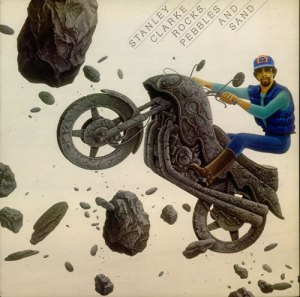
Stanley Clarke: Rocks, Pebbles And Sand

Stanley-Clarke-Rocks-Pebbles-And-543879

In 1979, Stanley recorded the sprawling double I Wanna Play For You which had some brilliant moments but also veered uncomfortably towards disco.

It also featured some outrageous live recordings which suggested he was going in a more ‘rock’ direction, mainly thanks to the sonic possibilities opened up by putting his Piccolo bass (tuned a fifth higher than a standard bass, A to C rather than E to G) through various effects pedals (see correction in the comments section below).

But how would Stanley start off the ’80s? On Rocks, Pebbles and Sand, he thankfully pushed the rock and prog-fusion rather than disco. It also really helps that it sounds very much like a ‘band’ project, apart from funk curio ‘We Supply’ which belongs on a different album altogether.

And what a band it is – Simon Phillips on drums, Charles Icarus Johnson on guitars and Steve Bach on keys. Phillips in particular is a perfect foil for Clarke with his meaty grooves and superchops. Though he was obviously coming from Billy Cobham with his prodigious double-bass playing, expansive tom fills and open-handed style (see below), his grooving on ‘Story of a Man and a Woman Part 2’ is just perfect.

Rocks, Pebbles and Sand‘s opener ‘Danger Street’ sounds like Stanley has been listening to The Who and Van Halen with its big drums, raucous guitar and gargantuan riff. Subtle it ain’t (and one can take or leave Stanley’s vocals), but it really works, mainly due to the mastering and mix – Rocks is one of the best-sounding albums of the era alongside Steely’s Gaucho, Lee Ritenour’s Rit and Zappa’s Sheik Yerbouti.

The duet vocals on ‘Underestimation’, ‘You/Me Together’ and ‘A Story of a Man and a Woman’ might put some people off, but isn’t that female voice familiar? A glance at the liner notes reveals a credit for one ‘Marcy Levy’ on vocals. It turns out to be none other than Marcella Detroit of Shakespeare’s Sister fame, an LA session singer in another life who had recorded and toured extensively with Eric Clapton (co-writing ‘Lay Down Sally’) before working with Stanley.

The funk/disco track ‘We Supply’ sticks out like a sore thumb but features a superb bassline from Louis Johnson and a hilarious spoken word intro from album engineer Dennis MacKay, proclaiming, ‘We supply all your funky needs!’ in the poshest voice you’ve ever heard. Git down and boogie with Dennis…

Stanley had a mixed ’80s to say the least, with a fair few misses but some big hits as well. Rocks is definitely one.


English Snapshot: Peter Gabriel III

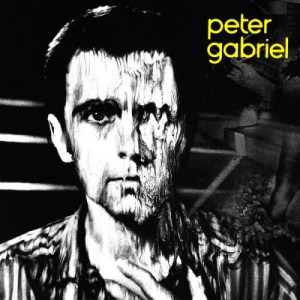
peter gabrielSo was my gateway Gabriel album, as it probably was for many teenagers in the 1980s.

But, in 1986, I don’t think I had a clue about his Genesis past or earlier self-titled records. So I went back and checked them out.

The cover artwork snagged me but initially I really struggled with Melt. The deceptively dry, claustrophobic mix, extensive use of processing, Gabriel’s animalistic yelps and the barmy Fairlight sound effects seemed very forbidding compared to So (elements drastically souped-up and ‘normalised’ by the superb 2002 CD remaster).

The opening ‘Intruder’, with its liberal use of flatted-fifth chords and Gabriel’s schizophrenic vocal, was exceptionally unsettling to a teenage lad in leafy south-west London. Forget Black Sabbath, this sounded genuinely dangerous, in a particularly English way.

The question is, of course, what an ostensibly happy, settled, middle-class young man such as Gabriel was doing digging around in the dirt in such spectacular fashion. But thank goodness he did. He extended ‘character’ songwriting – also used to memorable effect by the likes of Randy Newman, Sting, Steely Dan and The Beatles – far beyond the range of Genesis, conjuring up a memorable parade of the bungled and botched operating on the edges of society.

Musically, Gabriel apparently instructed producer Steve Lillywhite and engineer Hugh Padgham that nothing ‘normal’ was acceptable. Hence the famous cymbal ban, the layering of Kate Bush’s ethereal backing vocals and seemingly out-of-control processing and phasing.

kate bush peter gabriel

Kate Bush and PG recording at The Townhouse, London

The album’s themes seem to be the moral trapdoors of late-20th century urban life (mental illness, sexual violence, political assassinations, terrorism, the dehumanisation of war, social isolation).

You could argue that at the time of the Yorkshire Ripper, Bristol riots and IRA bombings, this was the perfect soundtrack.

‘Intruder’ subtly probes the sexual connotations of ‘breaking and entering’, equating a petty criminal’s intrusion with other kinds of violation, suggesting – controversially – some kind of tacit consent or ‘understanding’ by the victim.

On the epic, affecting ‘Family Snapshot’, Gabriel somehow manages to make us feel empathy for a fame-obsessed political assassin, especially in the closing ‘All turned quiet, I’ve been here before…’ section (which It Bites ‘paid homage to’ on fine 1988 B-side ‘Staring At The Whitewash’).

I used to think the protagonist of ‘Lead a Normal Life’ (‘eating with a spoon, they don’t give you knives’) was stuck in a borstal, but now I’m sure it’s far worse than that. And is the narrator of ‘I Don’t Remember’ an imprisoned political dissident or someone in an abusive relationship? It’s certainly not going to end well judging from Gabriel’s indecipherable whispers over the mechanized hum of the Fairlight in the outro, suggesting meek (drugged?) capitulation or even death.

It took me ten years or so to fully appreciate the album. But now it’s by far my favourite work by PG. Some fantastic UK session players play as if their lives depended on it, especially Dick Morrissey on sax and bassist John Giblin. Tony Levin delivers one of the greatest and most influential basslines in rock on ‘I Don’t Remember’ and single-handedly invigorates interest in the Chapman stick.

And, in my opinion, Padgham and Lillywhite have never done better work. Check out their stunning sound design on ‘And Through The Wire’; the mix subtly develops the drums with a little more room reverb in each successive chorus until the explosive last one when Marotta’s snare and Paul Weller’s brutal guitar threaten to destroy your speakers.

And the gradual building of ‘Biko’ and ‘No Self Control’, the latter with some distinctly Steve Reich-inspired marimbas played by Morris Pert, remains an aural treat. This fantastic album still challenges and surprises after all these years. 10/10.