Laurie Anderson: Big Science 35 Years On

The 1980s were littered with ‘novelty’ hits but perhaps none was more unexpected – or more powerful – than Laurie Anderson’s John Peel-endorsed, eight-minute UK #2 ‘O Superman (For Massenet)’.

Massenet was a French composer, whose aria ‘Ô Souverain, ô juge, ô père’ (‘O Sovereign, O Judge, O Father’) appeared in the 1885 opera ‘Le Cid’.

‘O Superman’ was totally hip at the time, a slice of NYC avant-garde post-punk appearing in the slipstream of Talking Heads’ ‘Once In A Lifetime’.

David Bowie was a big fan, covering the song during his 1997 Earthling tour. It still sounds unique and pretty hip today, even managing to throw in a little ode to Philip Glass with its brief, circular melodic motif that appears a few times.

A live performance of ‘O Superman’ was recorded in New York City in the week following the 9/11 attacks, and later appeared on the album Live In New York.

In this context, certain lyrics seem to take on greater significance: ‘Here come the planes/They’re American planes/Smoking or non-smoking?’ But Anderson has intimated that the song was inspired by watching television news reports of the Iran hostage crisis of 1979/80.

‘O Superman’ came from Anderson’s performance art/music piece ‘United States I-IV’, and was initially released as a single on the indie One Ten label. When it quickly sold out of its initial run of 1,000 copies, Warners picked it up and also asked for a whole album of music from the show.

What about the rest of Big Science? Not having heard it for a few years, I approached it with trepidation. But there was no need – ‘From The Air’ and ‘Sweaters’ (‘I no longer love the way you hold your pens and pen…cils’) are still very funny, but also oddly disquieting.

Lyrically, Big Science – like the performance piece it comes from – seems to be satirising the rebirth of American ‘heroism’ and industrial might of the Reagan era.

Anderson often speaks with (and mocks) the ‘voice of authority’, someone who, as she later said in an interview, is ‘either a shoe salesman or someone who wants to sell you an insurance policy you don’t want or need’ (now who does that remind you of…).

But there’s always a clash between this technological brave new world and spiritual binds that hold us together – family (‘O Mom and Dad…’), folklore and tradition.

The title track rams home the point with its ‘primitive’ percussion and vocals that sound vaguely like Native American chanting. ‘O Superman’ also does it with its initial focus on a piece of new technology – an answering machine – and then more metaphysical concerns (justice, God, love).

As the 1980s wore on, Anderson’s studio albums possibly suffered from being right on the ‘technological cutting edge’, but Big Science revels in simple acoustic/electric juxtapositions – some Velvet Underground drums here, an analogue synth, Vocoder or Harmonizer there, plus sax, percussion and treated violin.

Occasionally it would be nice to hear an instrumental solo, maybe someone of the NYC-art-rock-approved school such as Shankar or Jon Hassell, but generally Anderson keeps it simple and maintains a very assured minimalist musical style throughout.

Big Science slightly outstays its welcome, its last two tracks quite a stretch, but overall still sounds like a vital piece of work from a major, treasured artist.
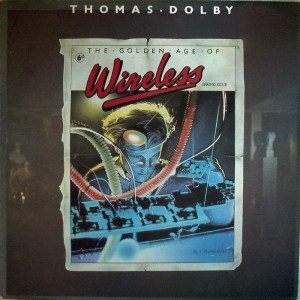


Thomas Dolby: The Golden Age Of Wireless 35 Years Old Today

London-born Thomas Morgan Robertson had already made a bit of a name for himself as a synth wiz for hire – working with Bruce Woolley/The Camera Club, Joan Armatrading, Thompson Twins, Lene Lovich and Foreigner – before embarking on his debut solo album in late summer 1981.

But, as he once said, he knew ‘too many chords’ to get any regular employment in the punk and new-wave bands of the era, so was pretty much forced to go it alone.

The Golden Age Of Wireless was mainly recorded at Tapestry (a subterranean South-West London studio built and owned by John Kongos), essentially a one-man-band operation with occasional contributions from various muso mates (Daniel Miller, Tim Friese-Greene, Andy Partridge, Simon House, Kevin Armstrong, Mutt Lange).

Lyrically, the album seemed to be a Janus-like vision of England – looking back to its WW2 past and forward to the kinds of urban dystopias explored by novelist JG Ballard.

‘Europa And The Pirate Twins’ emphasises this collision of past and future with Andy Partridge’s blues harmonica and the song’s rockabilly feel rubbing up against a barrage of synths and sequencers.

The haunting ‘One Of Our Submarines’ repeats the trick with ‘futuristic’ vocal samples alongside ARP string synths more redolent of the mid 1970s.

The album is also for me inextricably linked to the coastal area of South-East England near the White Cliffs Of Dover where I spent family holidays during my late teens, an area of course also reverberating with military history. I’d comb the beaches and walk the cliffs with Wireless playing loud on my Walkman.

But first to ‘She Blinded Me With Science’. The title is taken from a war-time phrase, an expression of female appreciation, as in: ‘Cor, she fair blinded me with science, guvnor!’

For a ‘novelty’ single, it has aged pretty well, mainly due to the incredible amount of detail placed across the stereo image: TV scientist Magnus Pyke’s still-pretty-funny interjections, Simon House’s beguiling, Middle-Eastern violin licks, Matthew Seligman’s pithy synth bass and Dolby’s intriguing sonic ‘events’.

The song was a huge American hit, making #5 in May 1983, but could it have been any more British? Never mind the title – one wonders how many Americans even came close to understanding a lyric such as ‘She blinded me with science and failed me in biology’.

But ‘Blinded’ was somewhat of an anomaly. Much of Wireless is downbeat, enigmatic and haunting. Dolby proves himself a brilliant producer and arranger, a master of painting pictures with sound: the shortwave radio which kicks off ‘Radio Silence’; the shipping forecast closing ‘One Of Our Submarines’, the ‘doom’ vocals which introduce ‘Weightless’ and close ‘Cloudburst At Shingle Street’.

He’s also obviously a tremendous keys player, with endless excellent arrangement ideas and even a few chops (you wouldn’t catch anyone from OMD attempting anything like the extended Moog solo in the very Prefab-esque ‘Commercial Breakup’).

In the middle of recording his second album (and second masterpiece) The Flat Earth, ‘Blinded’ took off in the States, becoming a signature tune of the Second British Invasion. Dolby had to drop everything and get over there pronto. Michael Jackson wanted to meet him.

But he would never again trouble the singles charts in the States, and the ‘mad scientist’ image would only very occasionally be dusted off from here on in. Not necessarily a bad thing.

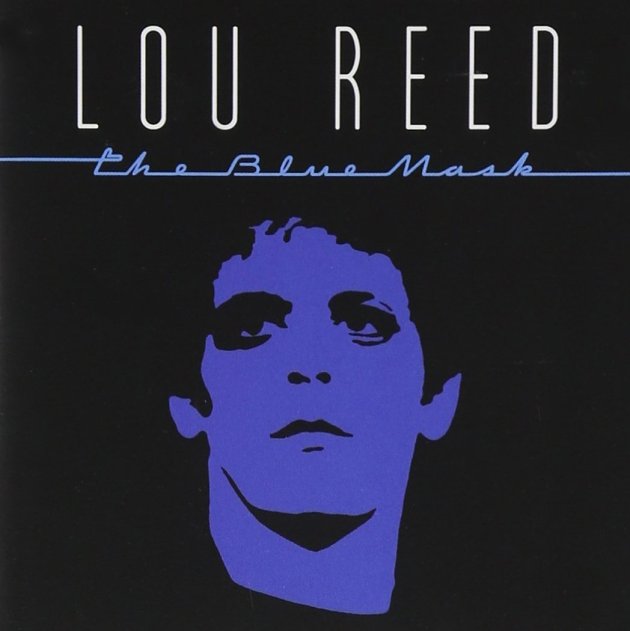
Lou Reed: The Blue Mask 35 Years Old Today

61doi8e-mvl-_sl1050_Humour: it’s not something often associated with Lou Reed, even though he filled up much of 1978’s Live: Take No Prisoners with breakneck Lenny Bruce-style banter.

But a listen to ‘The Gun’, ‘Underneath The Bottle’ or ‘Waves Of Fear’ from The Blue Mask – released 35 years ago today – always cheers me up; there’s just something so uncensored, unapologetic and even cathartic about his worldview, and of course an element of ‘there but for the grace of God…’

Newly married to Sylvia Morales (who also designed the striking album cover), recently clean and apparently the happiest he’d ever been, the more extreme cuts from the album seem to point towards some of the sacrifices Reed had made for this new life, and/or the fears that it could all go pear-shaped at any moment. Maybe falling in love just scared the hell out of him.

He had put together possibly the finest band of his career (Robert Quine on guitar, Fernando Sanders on bass, Doane Perry on drums). Gone were the perky, ‘funky’ tones of 1980’s Growing Up In Public – now it was time to return to two guitars, panned hard-left and hard-right, voice, bass and drums. The whole album has a gorgeous, ambient mix – Rudy Van Gelder would have approved.

‘Women’ is magnificent – Sanders plays some charming countermelodies on fretless while Lou eulogises: ‘A woman’s love can lift you up/And women can inspire/I feel like buying flowers and hiring a celestial choir/A choir of castratis to serenade my love/They’d sing a little Bach for us and then we’d make love.’

‘Waves Of Fear’, a coruscating portrait of alcohol DTs, plays out like a deleted scene from ‘The Lost Weekend’. In the extended outro, as Reed riffs viciously, Quine’s manic solo flaps around like a dying fish. ‘Underneath The Bottle’ also focuses on the booze to gripping and sometimes amusing effect: ‘Things are never good/Things go from bad to weird/Hey, gimme another scotch with my beer.’

The title track is a Burroughsian jaunt through torture, pain and self-loathing, while ‘The Gun’ seems to represent the worst possible situation between a man and woman: ‘A man…carrying a gun/And he knows how to use it/Nine millimetre Browning/Let’s see what it can do/Tell the lady to lie down/I want you to be sure to see this,’ croaks Lou over a gentle two-chord vamp and superb Sanders bass.

‘Average Guy’ brings back the lightness, a mock-heroic look at Lou’s new life: ‘Average in everything I do/My temperature is 98.2.’ ‘The Day John Kennedy Died’ is a classic piece of modern Americana, a fable of lost innocence: ‘I dreamed I was young and smart and it was not a waste/I dreamed that there was a point to life and to the human race.’

‘No redemption, no salvation… My characters just squeeze by’, Reed told the NME in 1983. Dylan rates him as one of the great lyricists and The Blue Mask offers many reasons why. The band sounds pretty damn great too but was sadly short-lived – apparently Lou couldn’t stand Perry who fled to Jethro Tull pretty soon after the recording. Quine lasted a little longer but was also soon on his way.

The Blue Mask only reached number 167 on the US album chart and didn’t even register in the UK – a pretty dire state of affairs for such an influential artist. The ’80s were not going to be easy on Lou.

XTC: English Settlement 35 Years Old Today

r-1455277-1313625163-jpegVirgin Records, released 12 February 1982
Produced by Hugh Padgham and XTC

Recorded at The Manor, Oxfordshire, October/November 1981

Working titles: Rogue Soup, Motorcyle Landscape, World Colour Banner, Explosion Of Flowers, Knights On Fire

Album Chart position: #5 (UK), #48 (US)

Singles released: ‘Senses Working Overtime’ (UK #10)
‘Ball And Chain’ (UK #58)
‘No Thugs In Our House’ (did not chart)

Andy Partridge (vocals, guitar, keyboards, percussion, co-composer): ‘We spent the summer of 1981 rehearsing at Terry “Fatty” Alderton’s Tudor Rehearsal Studio and it was very sweaty. All the Swindon heavy rock bands would rehearse there, drink cider and piss in the corner. Terry (Chambers) had forgotten how to drum. He had spent the early summer working on a building site and when he set up his drum kit it was more like scaffolding. He was just useless (but apparently improved pretty quickly… Ed.). I forced him to buy a new snare drum and timbale. I bought a Yamaha acoustic. It opened up possibilities for new sounds where the live arrangements mattered less. I’d become unhinged a couple of times on tour and wanted a break. The album cover (by Ken Ansell)? I think it was just that we were fascinated with the Uffington Horse. The Americans thought it was a duck…’

Dave Gregory (guitar, keyboards, backing vocals): ‘I’d always dreamed about owning a 12-string Rickenbacker but it had seemed like a frivolous folly until now. I fell totally in love with the sound. English Settlement was a watershed record for us. We’d made a couple of guitar records and then the acoustic side came out. It was definitely a progression. There weren’t too many songs, just not enough time…’

Colin Moulding: (vocals, bass, keyboards, percussion, co-composer): ‘I bought a fretless bass. I thought it would fit in with the acoustic stuff we were doing but it was impossible on tour. You have to have a flair for playing something without frets and I haven’t. As soon as the lights went out…the rest is history…’

For much more info on English Settlement, check out Neville Farmer’s book ‘XTC Song Stories’.

Jeff Porcaro: ‘Rosanna’ Exposed

Jeff_Porcaro_Toto_Fahrenheit_World_Tour_1986Jeff Porcaro laid down one of the greatest recorded drum performances of all time on the Toto song ‘Rosanna’, recorded at Sunset Sound in Los Angeles in December 1981.
He had been in the music business for less than a decade but was already being talked up as one of the finest drummers in the world. He was a disciple of Bernard Purdie and John Bonham, those kings of the half-time shuffle, as well as legendary ghost-note masters Jim Gordon and Jim Keltner.

But it’s the way Porcaro brought together all these influences to come up with something totally his own. Recorded by engineer Al Schmitt, ‘Rosanna’ may be the most analysed groove of all time, though Porcaro was always extremely humble about its genesis and execution.

Listening to it in its entirety, raw and uncut without any other accompanying instruments, the performance takes on a whole new meaning. Porcaro’s mastery of time and groove are impeccable. It’s the attention to detail, beyond ‘just’ the placing of the ghost notes and doubles.

Keep in mind also that he had to navigate the band through a tricky, mid-paced track with lots of ‘holes’ – a one-bar rest here, half-a-bar rest there – as well as apeing Jerry Hey’s horn arrangements, first heard at 1:08. It’s fascinating to hear how Porcaro navigates those holes, putting in an extra hi-hat or kick-drum beat to dictate the time to the band (and himself):

According to Schmitt (who deserves much credit for a beautiful sounding kit), ‘Rosanna’ was the first song recorded for Toto IV. Jeff’s part was laid down live with the rhythm section – bass, guitar, two keyboards – and it was the second and final take.

Written by David Paich and released as a single on 1 April 1982, it reached #14 on the Billboard Hot 100 and sold over a million copies. RIP Jeff.

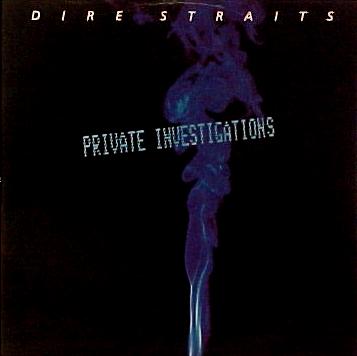
Story Of A Song: Dire Straits’ ‘Private Investigations’ (1981)

Andy Beckett’s excellent new book ‘Promised You A Miracle UK80-82’ has got me thinking about the early ’80s a lot.

It was in many ways a bleak time in the UK (temporarily lightened by the Royal Wedding and Ian Botham’s cricket heroics against the Aussies), mainly defined by Thatcher’s deeply unpopular government, the Yorkshire Ripper murders, various terrorist attacks and fears of a nuclear war that were hardly appeased by the terrifying ‘Protect And Survive’ public information films.

dire straits

Contemporary pop generally railed against this attitude, wresting some much-needed fun and glamour from the gloom.

Although ‘Private Investigations’ shares almost nothing with prevailing musical trends of the period (and Mark Knopfler saved his reaction to the Falklands War for Brothers In Arms‘ title track), it continues to hold my fascination.

These days it’s hard to read the song as anything other than a portrait of a love affair gone wrong, emphasised by the slightly dodgy video.

The song’s protagonist is fixated on looking for clues of his paramour’s infidelities, so he goes ‘checking out the reports’ and ‘digging up the dirt’, finding some ‘confidential information in the diary’.

We never found out exactly what he finds but it definitely ain’t good; in this song, to discover the truth of a relationship is a fate worse than death, leaving one ‘scarred for life’ with ‘no compensation’.

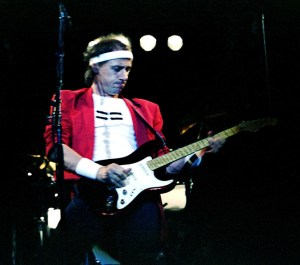
Love Over Gold Tour, Zagreb, 1983

Love Over Gold Tour, Zagreb, 1983

I love the track’s sonic detail. The sense of drama and use of dynamics leaves other contemporary pop for dust.

The stereo spectrum is used as a kind of panaromic field across which various sonic events are ‘placed’ to fit the narrative, including Mike Mainieri’s intricate marimba and subtle bits of percussion.

The result is a kind of mini-movie set to music, best listened to with headphones. Ennio Morricone couldn’t have done it better. You could argue that ‘Private Investigations’ was the catalyst for all Knopfler’s film soundtrack work.

He also demonstrates a mastery of many guitar styles on the track, from the nylon-string acoustic main theme/mini-solos through to the power-chorded interjections towards the end, the latter frequently inspiring some of my uncle’s most spirited air guitar-playing back in the ’80s.

Then Knopfler’s volume-pedal swell perfectly imitates a cat’s nocturnal howl. The last section, with its picked-bass/kick-drum heartbeat and Alan Clark’s chiming piano chords, seems very influenced by the title track of Steely Dan’s ‘Royal Scam‘.

I love that glass (window?) breaking and the click of a suitcase opening, or is it the latch of a door being tampered with? The space in the track forces you to focus on these details. It all adds up to something akin to Knopfler’s version of Peter Gabriel’s ‘Intruder’.

Astonishingly, in a slightly edited form, ‘Private Investigations’ reached UK number 2 in September 1982 (sitting incongruously in the top 10 alongside ABC, Duran Duran, Dexys, Shalamar and The Kids From Fame!), a sure signifier as to just how much better the charts were back then.

The track’s accompanying album, Love Over Gold, is seen as somewhat of a disappointment in Dire Straits’ discography, and I can’t say that any of its other tracks have had much effect on me.

But now that the nights are drawing in and the blinds are being shut, it’s always fun to dim the lights and give ‘Private Investigations’ a spin. The game commences…

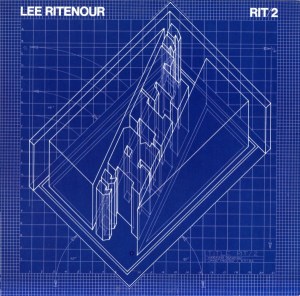
Lee Ritenour: Rit 2

ritenourSequels are seldom a good idea in the movie business, and thankfully they’re a lot less prevalent in the music game.

But one of the most successful ‘franchises’ of the ’80s was guitarist Lee Ritenour’s Rit/Rit 2 combo, now re-released by Cherry Red on a single CD, and they’re two of the best-sounding albums of the era.

Of course that shouldn’t be a huge surprise when you notice the presence of names such as Humberto Gatica, David Foster, Harvey Mason, Jeff Porcaro, Jerry Hey, Abe Laboriel, Alex Acuna and Greg Philinganes on the song credits, but then again a lot of albums at that time featured all the right ‘names’ but didn’t deliver the goods.


But if 1982’s Rit 2 is not quite in the same league as its predecessor, it’s still another classic piece of sumptuously-produced, blissed-out West Coast AOR with touches of jazz and soul, helped by the excellent vocals, keyboards and songwriting of Eric Tagg.

To these ears, it sounds as if Quincy Jones had produced Toto and got a good singer and a few decent songwriters in.’Promises Promises’ is superior disco/funk/rock and wouldn’t sound out of place on Quincy’s The Dude or Jacko’s Thriller.

‘Dreamwalkin’ is kind of the ‘happy’ version of Earth Wind & Fire’s ‘After The Love Has Gone’ and would make a great theme song for a an early-’80s, California-set Chevy Chase/Goldie Hawn vehicle. Ditto ‘Keep It Alive’.

‘Tied Up’ and ‘Voices’ initially seem like standard AOR fare, but reveal their superiority with interesting, layered vocal arrangements and surprising chord changes (and a classic bit of Porcaro drums on the latter).

But the real standout is killer instrumental ‘Road Runner’ featuring Harvey Mason’s incredibly intricate hi-hat work, a spicy Jerry Hey horn arrangement, some tasty Fender Rhodes from Philinganes and a corking set of solos from Ritenour.

Ritenour tried to repeat the formula on ’84’s less successful Banded Together before embarking on a decade of underwhelming instrumental smooth jazz with the occasional high point.

But Rit and Rit 2 are classics of their kind and belong alongside Steely’s Gaucho, Randy Crawford’s Secret Combination, Quincy’s The Dude, Michael Jackson’s Thriller and George Benson’s Give Me The Night as key albums of the era.

Story Of A Song: Chaka Khan’s ‘And The Melody Still Lingers On’ (1982)

Jazz regained some ground in the ’80s.

After a chastening period in the late-’60s and ’70s when rock pretty much swept all before it, major labels took a renewed interest in established jazz acts and underground movements flourished (no wave, acid jazz, harmolodic funk, neo-bop). Wynton Marsalis, Miles, Courtney Pine and Loose Tubes even put jazz back on primetime TV.

But when Chaka Khan recorded ‘And The Melody Still Lingers On (Night In Tunisia)’, the dramatic centrepiece of her What Cha’Gonna Do For Me album, she arguably set the whole revival in motion.

Dizzy Gillespie, Arif Mardin and Chaka Khan

Dizzy Gillespie, Arif Mardin and Chaka Khan, Atlantic Studios 1981

It was producer Arif Mardin’s idea, his mind wandering during a flight between New York and LA. The album was one song short – so how about a tribute to the bebop masters of the ’40s using the crème de la crème of the early ’80s soul/R’n’B/jazz session players? They could use Dizzy Gillespie and Frank Paparelli’s 1942 bebop classic ‘A Night In Tunisia’ as a template.

Chaka loved the idea. Mardin hoped to find a lyricist but deadlines were pending so he tackled it himself with Chaka adding the final touches. Mardin made a demo of the arrangement which cheekily inserted Charlie Parker’s famous 1946 alto break.

Charlie Parker in 1946, photo by Ted Giola

Charlie Parker in 1946

A lengthy chart was quickly made up (resembling a ‘Chinese laundry list written in cuneiform’, according to Mardin) which included eight spare bars for the insertion of the Parker lick.

The musicians – Casey Scheuerell on drums, David Foster and Ronnie Foster (no relation) on keys, Abe Laboriel on bass and Paulinho Da Costa on percussion (mostly heard on shaker in the first verse and congas in the second) – were booked and smashed the tune in one take.

Herbie Hancock later contributed a brilliant synth solo. Chaka then added her sublime vocals. Her four-part big-band harmonies and spine-tingling ad-libs bring the song right up to date.

But there was still space for an opening head melody and a solo in the final verse. Dizzy had been sent the demo by Mardin with a note asking him to contribute.

But the bebop legend replied that he would be on tour and so couldn’t make the recording session – but he suddenly arrived two days before the album’s mastering date at New York’s Atlantic Studios to add his part. The track was complete.

Chaka and Mardin attempted to repeat the trick a few years later with ‘Bebop Medley’ but it lacked the finesse of this timeless classic.