Story Of A Song: Chaka Khan’s ‘And The Melody Still Lingers On’ (1982)

Jazz regained some ground in the ’80s.

After a chastening period in the late-’60s and ’70s when rock pretty much swept all before it, major labels took a renewed interest in established jazz acts and underground movements flourished (no wave, acid jazz, harmolodic funk, neo-bop). Wynton Marsalis, Miles, Courtney Pine and Loose Tubes even put jazz back on primetime TV.

But when Chaka Khan recorded ‘And The Melody Still Lingers On (Night In Tunisia)’, the dramatic centrepiece of her What Cha’Gonna Do For Me album, she arguably set the whole revival in motion.
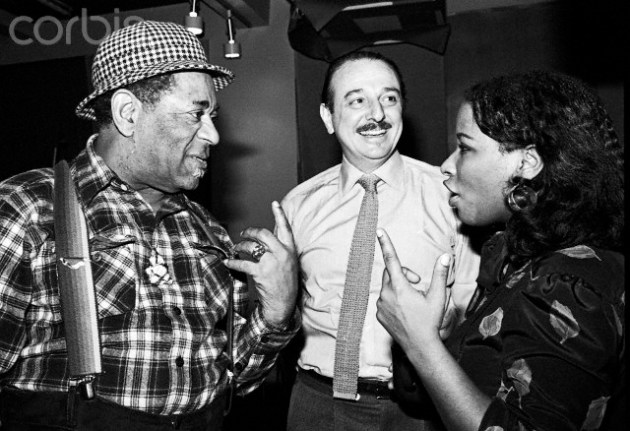
Dizzy Gillespie, Arif Mardin and Chaka Khan

Dizzy Gillespie, Arif Mardin and Chaka Khan, Atlantic Studios 1981

It was producer Arif Mardin’s idea, his mind wandering during a flight between New York and LA. The album was one song short – so how about a tribute to the bebop masters of the ’40s using the crème de la crème of the early ’80s soul/R’n’B/jazz session players? They could use Dizzy Gillespie and Frank Paparelli’s 1942 bebop classic ‘A Night In Tunisia’ as a template.

Chaka loved the idea. Mardin hoped to find a lyricist but deadlines were pending so he tackled it himself with Chaka adding the final touches. Mardin made a demo of the arrangement which cheekily inserted Charlie Parker’s famous 1946 alto break.

Charlie Parker in 1946, photo by Ted Giola

Charlie Parker in 1946

A lengthy chart was quickly made up (resembling a ‘Chinese laundry list written in cuneiform’, according to Mardin) which included eight spare bars for the insertion of the Parker lick.

The musicians – Casey Scheuerell on drums, David Foster and Ronnie Foster (no relation) on keys, Abe Laboriel on bass and Paulinho Da Costa on percussion (mostly heard on shaker in the first verse and congas in the second) – were booked and smashed the tune in one take.

Herbie Hancock later contributed a brilliant synth solo. Chaka then added her sublime vocals. Her four-part big-band harmonies and spine-tingling ad-libs bring the song right up to date.

But there was still space for an opening head melody and a solo in the final verse. Dizzy had been sent the demo by Mardin with a note asking him to contribute.

But the bebop legend replied that he would be on tour and so couldn’t make the recording session – but he suddenly arrived two days before the album’s mastering date at New York’s Atlantic Studios to add his part. The track was complete.

Chaka and Mardin attempted to repeat the trick a few years later with ‘Bebop Medley’ but it lacked the finesse of this timeless classic.

Andy Summers & Robert Fripp: I Advance Masked/Bewitched

Andy-Summers-I-Advance-Masked-77760With hindsight, it seems completely logical (not least because they both hail from the county of Dorset, England) for these two guitar giants to record together, and their two 1980s collaborations are engaging if annoyingly inconsistent.

1982’s I Advance Masked is under-produced, tentative and unfinished-sounding, and this approach works fine on the beguiling title track and evocative ‘Hardy Country’, where strong themes carry the day.

The album offers fascinating examples of the kinds of guitar woodshedding the players were doing in the early ‘80s. Summers is in full-on Ghost In The Machine mode with meshes of swelling guitar synth and simple, incongruously bluesy solos, while Fripp foregrounds ideas that he would use to greater effect on King Crimson’s Beat album.

But the duo’s limitations as multi-instrumentalists hamper the rest of I Advance Masked – the drum programming is limp, bass playing fairly amateurish and the synth playing simplistic (though sometimes perversely enjoyable in a kind of sub-John Carpenter way).

The shorter tracks search in vain for some status as ‘ambient’ or ‘environmental’ music but are too quirky for that purpose.

And, amazingly, I Advance Masked cracked the top 60 in the US Billboard pop charts.

summers and fripp1985’s Bewitched is a dramatic improvement on that debut album. Side one features attractive melodies, well-thought-out song structures, (mostly) real drums, some incredible bass playing from Chris Childs and ex-League of Gentleman/Gang of Four Sara Lee, pristine mastering and more of a ‘band’ sound.

The opener ‘Parade’ flies out of the traps with New Wave drums and an engaging little synth guitar melody. With its major-chord exuberance and very short duration, it could easily have come from side one of Bowie’s Low.

‘What Kind Of Man Reads Playboy’ is pretty much a perfect distillation of the state of the electric guitar in the mid-‘80s.

Summers’ ingenious layering takes in wah-wah funk, harmonic washes, bebop, bluesy leads and tasteful guitar-synth textures. Fripp plays one of the most extreme solos of his career while Sara Lee (or is it Chris Childs?) impresses with high-speed soloing and tasty grooving.

Unfortunately, side two is more in line with the debut album, a series of rather uninteresting, short and badly recorded tracks. Think ‘Behind My Camel’ in demo form but without Stewart Copeland.

But the best is saved until last, the stunning closer ‘Image And Likeness’ featuring Summers’ cascading harmonics.

By his own admission, Fripp generally takes a back seat and basically provides a framework for Summers’ talents to shine through. An admirable position for sure, but he was becoming a bit like the Wayne Shorter of guitar at this point, happy to be in the shadows.

But this is in general an intriguing and somewhat overlooked collaboration calling to mind an era when big labels were putting some serious money behind instrumental music (though Summers reports that A&M were extremely reticent about this collaboration) and ‘rock’ was allowed to be intelligent.