
Kev Hopper
Some years ago, we showcased some of the British bass players who, mainly influenced by Bernard Edwards, Jaco Pastorius, Louis Johnson and Stanley Clarke, brought some of the freshest grooves to 1980s pop music.
It seemed that every half-decent post-punk, New Pop, New Romantic or Britfunk band had a good bassist, and the dancefloor was the main target.
But there was some great Brit bass players investigating other corners of music during the 1980s too – here are a few of them.
Martin McAloon
The Prefab Sprout man brought a meaty tone (often tuning down a half-step to accompany his brother Paddy’s guitar) and great hook-up with drummer Neil Conti. Deceptively simple bass parts which were little compositions in themselves. Key tracks: ‘Hey Manhattan!’, ‘When The Angels’, ‘When Love Breaks Down’, ‘Horsin’ Around’
Ged Grimes
The Danny Wilson man is the very definition of bass solidity, supplying endless well-composed parts especially in combination with drummer David Palmer (Grimes now plays with Simple Minds). Key tracks: ‘Mary’s Prayer’, ‘I Can’t Wait’, ‘I Was Wrong’, ‘Lorraine Parade’
Richard Nolan
The It Bites man had three distinct phases – there was the early poppy stuff, with a trebly WAL sound and light strings, the middle-period ‘rock’ sound, then the sophisticated six-string playing of the band’s late period. It was all good and others were listening – he was later recruited by Tony Banks and Ray Davies, with whom he works to this day. Key tracks: ‘Whole New World’, ‘Heartbreaker’, ‘Positively Animal’, ‘Midnight’, ‘Calling All The Heroes’
Steve Severin
The flanger/plectrum combo was invented for the Siouxsie & The Banshees man. Every track featured a good bassline or good idea. Key tracks: ‘Cascade’, ‘Monitor’, ‘Spellbound’.
Mo Foster
The London bass legend was a mainstay of the capital’s studios during the 1980s, playing with everyone from Cliff Richard to Scott Walker and contributing to many hits. He died in 2023. Key tracks: Jeff Beck’s ‘Space Boogie’, Dennis Waterman’s ‘I Could Be So Good For You’, Gary Moore’s ‘Empty Rooms’, Elkie Brooks’ ‘No More The Fool’, Howard Jones’ ‘No One Is To Blame’
Sting
In the early 1980s he came up with brilliant, memorable lines, often scrappily played, but returned for 1987’s …Nothing Like The Sun as a model of taste and groove. Key tracks: ‘Voices Inside My Head’, ‘Rehumanise Yourself’, ‘Secret Journey’, ‘Be Still My Beating Heart’, ‘Lazarus Heart’
Matthew Seligman
Cyprus-born Matthew played great bendy basslines with The Soft Boys, Thompson Twins and Thomas Dolby, and even ended up playing Live Aid with Bowie. He died in 2020. Key tracks: ‘Living In Europe’ by Thompson Twins, ‘Absolute Beginners’ by David Bowie, ‘Screen Kiss’ by Thomas Dolby, ‘Magic’s Wand’ by Whodini
John McKenzie
Son of actor Liz McKenzie (Mrs Brumby in ‘Get Carter’), the late London bassist played some fantastic stuff on the Morrissey Mullen album Life On The Wire, then worked extensively with Eurythmics. Pretenders, Five Star, Bob Dylan and Dexys Midnight Runners too. He died in 2020. Key tracks: ‘Wham Rap! (Enjoy What You Do)’
Alan Thomson
Another of the many great Scottish bassists of the decade, Glasgow-born Thomson excelled himself on the fretless during his valuable collaboration with John Martyn, and also played with Julia Fordham, Rick Wakeman, Robert Palmer and others. Key tracks: John Martyn’s ‘Blood Money’, ‘Couldn’t Love You More’, ‘Glorious Fool’, ‘Hiss On The Tape’, ‘John Wayne’, especially the BBC In Concert version…
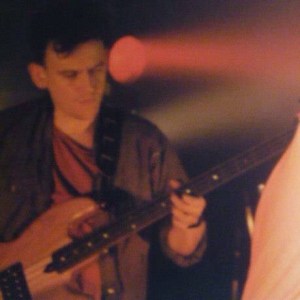
Kev Hopper
Influenced by Brand X’s Percy Jones, Hopper only made a few full-length recordings with Stump during the decade but left his mark with fantastically bendy fretless sounds/effects and intrepid lines. Has gone on to make some enjoyably weird music to this day. Key tracks: ‘Tupperware Stripper’, ‘Our Fathers’, ‘Eager Bereaver’, ‘Buffalo’, and everything, really…
Camelle Hinds
Ipswich-born Hinds was a founder member of Britfunk band Central Line and often the go-to guy when you needed excellent slap bass in the 1980s. He played great stuff with Beggar & Co, The The, B.E.F., Style Council and Heaven 17. Key tracks: The Kane Gang’s ‘Looking For Gold’
Bobby Paterson
The late Glasgow-born Love And Money bassist added some of the funkiest grooves of the late 1980s on his Fender Precision and MusicMan. Key tracks: ‘Jocelyn Square’, ‘Strange Kind Of Love’, ‘Candybar Express’.
Ewen Vernal
His playing on the two Deacon Blue albums of the late 1980s featured excellent, nimble five-string playing with loads of memorable lines and he always made sure each note was given its full value. Key tracks: ‘Fergus Sings The Blues’, ‘Chocolate Girl’, ‘When Will You Make My Telephone Ring’.
Gary ‘Gazza’ Johnson
His tenure with China Crisis brought some memorable lines and grooves. He played fretless on their early hits and was an early adopter of the octave pedal for added depth/punch. Key tracks: ‘Working With Fire And Steel’, ‘The Highest High’, ‘Day After Day’, ‘Strength Of Character’, ‘Red Sails’, ‘King In A Catholic Style’
This playlist brings together some of their best work.
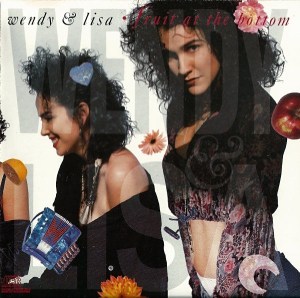 Despite massive record industry buzz, Wendy & Lisa’s 1987 debut album, rush-released after they were asked to leave Prince’s Revolution, failed to set the world on fire.
