Essential 1980s Jazz/Rock Albums (Part 2)

Continuing our look at some of the finest jazz/rock albums of the 1980s. You can find part 1 here.
Jaco Pastorius: Twins (1982)
A classic double album (an edited version was released as Invitation) recorded live in Japan just after the bass pioneer left Weather Report. Jaco’s brand of fusion took in jazz, Cuban, soul and R’n’B – no guitars here, but brilliant bass playing and powerful solos from Toots Thielemans, Lew Soloff, Jon Faddis and Bob Mintzer.

Frank Gambale: Live! (1989)
The Australian guitarist’s outrageous live debut was recorded at the Baked Potato in LA, and it finally showed just what he’s capable of – electrifying, original solos. His compositions are memorable too and there’s fantastic Latin/fusion drumming from Joey Heredia.

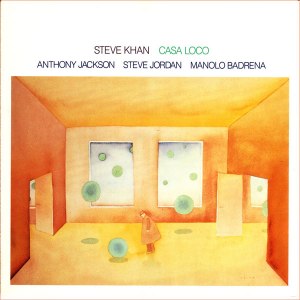
Steve Khan: Casa Loco (1983)
An album which still amazes musicians the world over. Arguably guitarist Khan, bassist Anthony Jackson, drummer Steve Jordan and percussionist Manolo Badrena have never done better work – that’s saying something considering who they’ve all played with.

Bill Bruford’s Earthworks: Dig? (1989)
Both of Bruford’s 1980s Earthworks albums were really good but this gets the nod due to Django Bates being given free reign, contributing superb keyboard solos, a cool reimagining of Petula Clark’s ‘Downtown’ and classic composition ‘Dancing On Frith Street’.

Paquito D’Rivera: Why Not! (1984)
An underrated album from the Cuban alto sax and clarinet star, also featuring Claudio Roditi on trumpet, Michel Camilo on keys and a wonderful performance from drummer Dave Weckl on the opening ‘Gdansk’.

Lyle Mays: Street Dreams (1988)
The Metheny Group keyboard player chucks in everything he knows on this big-budget project – ambient post-jazz, widescreen fuzak, big-band swing and Fagen-style fusion, and it’s all good. Some, like this writer, may also prefer the more red-blooded guitar playing of Bill Frisell to Metheny.

Pat Metheny Group: American Garage (1980)
No one is too sure if this came out in late 1979 or early 1980 but it’s this writer’s favourite Metheny album, though the guitarist himself seems to have almost disowned it. He loosens up and opens himself up to some rock and Steely Dan influences, driven along by Danny Gottlieb’s superb drums.

Level 42: A Physical Presence (1985)
A lot of it’s not strictly ‘fusion’, of course, but any album featuring such brilliant live versions of ‘Mr Pink’, ‘Foundation And Empire’ and ‘88’ has to make this list.

Mark King: Influences (1984)
The Level 42 mainman amazes with his 18-minute fusion classic ‘The Essential’, plus an eerily assured tribute to early Return To Forever called ‘There Is A Dog’. Plus he played almost everything on it.

John Patitucci: On The Corner (1989)
Both of the bassist’s 1980s solo albums were good but this gets the nod courtesy of the sheer variety of grooves from drummers Vinnie Colaiuta, Dave Weckl and Alex Acuna, and the leader’s exciting solos and excellent compositions, all memorable.

John Abercrombie: Getting There (1988)
A rare excursion into jazz/rock for ECM Records, the guitarist’s most dynamic ‘80s album featured Michael Brecker on sax, a hefty ‘rock’ mix courtesy of James Farber and arguably drummer Peter Erskine’s heaviest recorded performance to date.

Joni Mitchell: Wild Things Run Fast (1983)
She littered the album with influences from the Police but the main driver was the brilliant jazz/rock musicianship of bassist Larry Klein, drummers Colaiuta and John Guerin, saxist Wayne Shorter and keys player Russell Ferrante. ‘Moon At The Window’, ‘Be Cool’, ‘Ladies Man’ and ‘You’re So Square’ smuggled fusion into the album charts.

Miles Davis: Star People (1983)
Blues, blazing jazz/rock, chromatic funk and general weirdness combine for arguably Miles’s most exciting album of the decade, featuring all-time great guitar from Mike Stern and John Scofield.

John Martyn: Glorious Fool (1981)
John’s music was now bringing in influences from Weather Report, Latin music and spiritual jazz, and Phil Collins, keyboard player Max Middleton, percussionist Danny Cummings and bassist Alan Thompson made for a fantastic rhythm section.

Bruford: Gradually Going Tornado (1980)
Any album featuring ‘Gothic 17’, ‘Land’s End’, ‘Joe Frazier’ and ‘Palewell Park’ has to be on this list. Epochal work from bassist Jeff Berlin, keys man Dave Stewart and the drummer himself.

Bubbling under:
Power Tools: Strange Meeting (1987)
Stanley Clarke: If This Bass Could Only Talk (1988)
Terri Lyne Carrington: Real Life Story (1989)
Chick Corea Elektric Band: Eye Of The Beholder (1988)
Bill Frisell: Before We Were Born (1989)
Loose Tubes (1984)
Players (Jeff Berlin, Scott Henderson, Steve Smith, T Lavitz) (1986)

(PS. If you like the sound of any of these albums, please consider buying them in physical formats to best support the artists.)

Essential 1980s Jazz/Rock Albums (Part 1)

1980s jazz/rock generally gets the side-eye these days.

But it wasn’t all the Chick Corea Elektric Band prancing around the stage in tracksuits or pitiful WAVE-style smooth jazz.

The 1970s jazz/rock pioneers were mostly going strong and if some were too tempted by synths and drum machines, the best music was made by sticking pretty rigorously to the tried-and-tested real drums/bass/guitar/keys lineup favoured by Miles, Weather Report, Return To Forever et al.

So here’s a selection of 1980s jazz/rock albums that have consistently gripped movingtheriver, most of which he queued up to buy at the HMV or Virgin Megastore, or found in an Our Price bargain bin. (These are not proggy or funky. So no Herbie, Brecker Brothers, David Sanborn or David Torn, but there are elements of R’n’B/Latin/soul/whatever mixed in with the jazz).

Bireli Lagrene: Foreign Affairs (1988)
Just 21 years old when he recorded it with producer Steve Khan, the French guitarist’s second Blue Note album is a cohesive gem and massive improvement on the debut, with terrific contributions from keyboardist Koono and drummer Dennis Chambers.

Ornette Coleman: Virgin Beauty (1988)
One of the most ‘accessible’ albums of the master’s career, with memorable melodies, a brilliantly expressive bassist (Al McDowell) and some decidedly odd guest appearances from Jerry Garcia.

Tribal Tech (Scott Henderson/Gary Willis): Nomad (1988)
Recorded in April 1988 but not released until early 1990, guitarists were rightly wowed by Henderson’s brilliance, a mixture of Michael Brecker, Allan Holdsworth and Stevie Ray Vaughan, while the rhythm section is groovy and propulsive and both Henderson and Willis’s compositions are excellent. And ‘Tunnel Vision’ may feature the perfect guitar solo…

John McLaughlin: Mahavishnu (1984)
OK there are some question marks in the keyboard and sax departments, and a few mediocre tracks, but Billy Cobham has rarely sounded better and John contributes three or four classic compositions and a few brilliant solos to this reunion album of sorts.

Marc Johnson’s Bass Desires: Second Sight (1987)
Wonderful interplay between guitarists John Scofield and Bill Frisell, plus some classic compositions including Scofield’s surf-rock-meets-jazz ‘Twister’, Frisell’s Monk-like ‘1951’ and Johnson’s moving ‘Hymn For Her’.

Larry Carlton: Last Nite (1987)
Guitarists of all stripes were blown away by Carlton’s playing in the 1980s, and here’s the best evidence, captured live at LA’s Baked Potato club with Alex Acuna, Abe Laboriel and JR Robinson.

Human Chain: Cashin’ In (1988)
This Brit jazz/rock classic, released on EG Records, had elements of the Canterbury sound, West Coast cool jazz and 1980s Weather Report, featuring Django Bates’ fantastic keys and French horn and some weirdly impressive guitar and fretless bass from Stuart Hall (who he?).

Hiram Bullock: Give It What U Got (1988)
All the fun of the fair from this gifted but troubled guitarist: raunchy funk/rock, instrumental Steely Dan, Brecker Brothers horns, classic fusion and an Al Jarreau guest appearance on a Sam Cooke tune, but all shot through with jazz chords and Hiram’s lyrical playing.

Ronald Shannon Jackson: Mandance (1982)
Ornette-style harmolodics and Mingus-like ensemble work meet NYC punk-jazz on the drummer’s intriguing and powerful album, recorded live in the studio, featuring future Living Colour axeman Vernon Reid.

Weather Report: Sportin’ Life (1985)
It was a toss-up between this and Night Passage, both classics, but this gets the nod courtesy of the newly-minted rhythm section of Omar Hakim and Victor Bailey, plus a few classic Wayne Shorter tunes including ‘Face On The Barroom Floor’ which reportedly Joni Mitchell was particularly smitten by.

Wayne Shorter: Atlantis (1985)
Wayne again, fronting this fascinating, complex song-cycle featuring Alex Acuna on drums and Joni’s husband Larry Klein on bass. Takes some time to digest, but like a good wine gets better every year.

Allan Holdsworth: Secrets (1989)
A toss-up between this and Metal Fatigue, this gets in because of his delicious guitar tone and the inspired contributions of drummer Vinnie Colaiuta – ‘City Nights’, ‘Spokes’, ‘Peril Premonition’ and ‘Joshua’ are musical landmarks. Fiery, exciting, unmissable.

Steps Ahead: Modern Times (1984)
Messrs Brecker, Erskine, Mainieri, Gomez and Bernhardt were embracing some new technology but they never let it overshadow the mostly excellent compositions with telling solos, particularly from Brecker.

John Scofield: Still Warm (1985)
Take your pick between this, Blue Matter and Loud Jazz, all fantastic pieces of work, but Still Warm gets the nod courtesy of its dynamite rhythm section (Darryl Jones and Omar Hakim) and arguably John’s best writing of the ’80s.

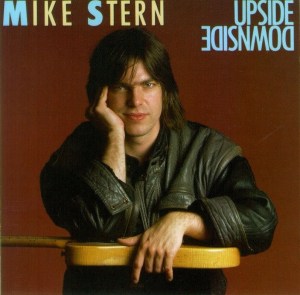
Mike Stern: Upside Downside (1986)
Produced by Hiram Bullock and featuring a crack band including Dave Weckl on drums, it showcases Stern’s finest/fieriest playing on record to date and also one of Jaco Pastorius’s last notable appearances. Still the best Stern solo album and quite extreme in its own way.

(If you’re new to any of these albums and they float your boat, please consider buying physical copies to support the artists.)

Protest Songs @ 40: Prefab Sprout’s Best Album?

Speedily recorded 40 years ago this autumn at Newcastle’s Lynx Studios, Protest Songs was intended to be the no-frills, lo-fi, rush-released, ‘answer’ album to Prefab’s Steve McQueen.

Fans who attended the Two Wheels Good UK tour of October and November 1985 were given leaflets advertising its release on 2 December for one week only.

But then ‘When Love Breaks Down’ reached #25 at the third attempt, earning the band spots on ‘Top Of The Pops’ and ‘Wogan’, and the album was shelved (though apparently a few hundred white labels ‘escaped’ from CBS and are out there somewhere…)

Protest Songs was eventually held back until June 1989, but proved well worth the wait and reached a respectable #18 on the UK chart. This writer would put it right up there with Steve, From Langley Park To Memphis and Jordan, maybe even above them…

The album was produced by the band and – apart from the last-minute addition ‘Life Of Surprises’ – mixed by Richard Digby Smith, once a staff engineer at Island Records who served his apprenticeship under the likes of Arif Mardin, Phil Spector, Muff Winwood and Chris Blackwell.

Protest also showed that Patrick Joseph McAloon was turning into a really decent keyboard player (he later claimed that every song on Langley Park was written on keyboards) and that – massively helped by drummer Neil Conti – Prefab were becoming a really good live band.

But most importantly Protest is a moving, razor-sharp suite of songs. Paddy was operating at the absolute top of his game, with some of the anger which had initially been so attractive to Thomas Dolby (also detectable in this recently discovered interview).

The only thing tongue-in-cheek about it is its title. These were not protests against nuclear power or war, but rather against deprivation and, just six months on from the miners’ strike, the general media condescension about provincial English life (particularly in the McAloon brothers’ native North East) under Thatcher.

‘Til The Cows Come Home’ may be the killer track. If you’re in the mood, it can be a real heartbreaker. The superb lyrics deftly change perspective mid-thought and allude to how unemployment affects generations:

Aren’t you a skinny kid?
Just like his poppa
Where’s he workin’?
He’s not workin’…

Why’re you laughin’?
You call that laughin’?
Wearing your death head grin
Even the fishes are thin…

He can’t have his coffee with cream

Meanwhile ‘Diana’ was revamped from the ‘When Love Breaks Down’ B-side (Deacon Blue definitely listened to THAT), slowed down and with a few new chords added. Conti expertly marshals proceedings with his tasty Richie Hayward-style half-time groove.

‘Dublin’ showcases Paddy’s lovely sense of chord movement, with a little influence from bossa nova (here’s Paddy playing a different studio take). ‘Life Of Surprises’ and ‘The World Awake’ are shiny, synth-laden, mid-period 4/4 Prefab but with stings in their tails:

Never say you’re bitter, Jack
Bitter makes the worst things come back

You don’t have to pretend you’re not cryin’
When it’s even in the way that you’re walkin’…

The hilarious ‘Horsechimes’ investigates school-day piss-taking, with a large dollop of Salingeresque satire. Meanwhile it’s hard to think of a more perfect marriage of words and melody than ‘Talking Scarlet’ (also drastically slowed down from the early demo), while ‘Pearly Gates’ closes out the album in moving style, like a dimly-remembered hymn from school days, a rare 1980s ‘death disc’.

The only partial misfire is the jaunty ‘Tiffany’s’, with its comically poor guitar solos, but its inclusion was totally understandable. Happy birthday to a classic.

Anthony Braxton: Quartet (England) 1985

Anthony Braxton has one of the largest discographies in music history, encompassing a huge variety of styles and formats: operas, pieces for two pianos, orchestras, solo saxophone, 100 tubas, jazz quartets, ‘found’ objects and many more.

The saxophonist/composer/teacher turned 80 in June, and has also just been inducted into the illustrious DownBeat Hall of Fame.

This writer has long championed ‘Forces In Motion’, Graham Lock’s excellent book about Braxton’s November 1985 tour of England, and a large portion of that tour can now be heard on a thrilling digital box set Quartet (England) 1985, for which Lock has provided new liner notes (he also recorded all the material on a portable cassette player).

The quartet, which comprised Braxton on various reed instruments, Marilyn Crispell on piano, Mark Dresser on double bass and Gerry Hemingway on percussion, was one of Braxton’s most active bands in the ’80s, but didn’t record in the studio until 1991.

Quartet (England) 1985 presents four complete concerts from Sheffield, Leicester, Bristol and Southampton (the London concert was officially recorded and broadcast by BBC radio). The original mono cassette recordings, captured by Lock as references for his book, have been restored by engineer Christopher Trent.

The package also features bonus recordings of the quartet playing John Coltrane’s ‘After the Rain’ and Miles Davis’s ‘Four’, plus soundcheck recordings of ‘All The Things You Are’ and ‘On Green Dolphin Street’. There are also previously unseen photos taken during the tour and a full list of the compositions played (the set was different every night).

Braxton (in borrowed coat), Dresser, Crispell and Hemingway at Stonehenge, 22 November 1985. Photo by Nick White

There’s no getting away from the fact that these are wild and woolly mono recordings, but pleased to report that Trent has done a superb job of cleaning up the tapes and the audio quality doesn’t hamper the listening experience one bit.

The music varies between good and excellent. ‘Free jazz’ barely covers it – the material is actually generally meticulously composed and arranged (featuring memorable, catchy melodies), though there are improvised sections which mainly serve as connecting interludes.

If you want to hear a collision between Sonic Youth, Ornette Coleman and Gyorgy Ligeti, enlist here. It’s a no-cliché zone, guaranteed to annoy the neighbours, and a valuable detox from the mainly safe, secure sounds of today. Quartet (England) 1985 is highly recommended and a fine 40th anniversary celebration of the 1985 tour.

(Postscript: for an impassioned defence of ‘spontaneous improvisation’, check out Stewart Lee’s appearance on the BBC’s ‘Great Lives’ discussing guitarist Derek Bailey.)

Sting: The Dream Of The Blue Turtles @ 40 (Part 2)

In part one of this 40th anniversary celebration, we looked at the origins and recording of The Dream Of The Blue Turtles.

But now to the music – how does it stand up in 2025?

‘If You Love Somebody Set Them Free’ was a ‘corrective’ for ‘Every Breath You Take’, an anti-surveillance, anti-control relationship song, with a neat groove (Sting’s demo apparently sampled Omar’s snare from Bowie’s ‘Let’s Dance’, much to the drummer’s amusement…) and some great Sting rhythm guitar in the middle eight.

It was the lead-off single from the album but only reached #26 in the UK (but #3 in the States), despite a superb Godley and Creme-directed video.

‘Love Is The Seventh Wave’ was a last-minute jam (with Sting on bass?) and the album’s second single (missing the top 40 completely), while ‘Shadows In The Rain’ was the first thing the band recorded at Eddy Grant’s studio while waiting for Marsalis to show up – during the saxist’s overdub, reportedly he wasn’t told anything about the track, just told to start playing. Apparently Sting mumbles ‘A-minor’ when asked by Branford what key the song’s in…

Sting has gone on record as saying that ‘Russians’ was supposed to be an ‘ironic’ song in the Randy Newman/Mose Allison mold, and it was the only decent hit in the UK (#12) when released as a Christmas single in December 1985.

Though particularly well-sung (but with an annoying slap-back echo), it sadly misses with its annoyingly on-the-nose lyrics and Kirkland’s cheapo synth backing. This song really needed the Trevor Horn, Steve Lipson or even Hugh Padgham treatment, as did ‘We Work The Black Seam’.

But there’s much better stuff elsewhere. ‘Children’s Crusade’ was reportedly a second take, recorded totally live, with Sting replacing his vocals later. He taught ‘Consider Me Gone’ to the band in the studio. Reportedly they tried a few unsuccessful takes, then Eddy Grant brought in the president of Guyana to say hello. They nailed it immediately afterwards. Sting’s voice is superb here, on the edge of hysteria.

The brief, Thelonious Monk-like title track (also with Sting on bass?) features a mind-bending Kirkland piano solo which amazed me as kid. I didn’t understand its ingenious polyrhythms at all. I almost do now but it still sounds brilliant.

‘Moon Over Bourbon Street’ (Sting on bass?) is musically heavily influenced by the jazz standard ‘Autumn Leaves’ and lyrically inspired by Anne Rice’s book ‘Interview With A Vampire’. Kirkland’s synth oboes are a bit naff – couldn’t Sting afford real ones? It missed the top 40 when released as the album’s fourth and final single.

‘Fortress Around The Heart’ marries a stunning chorus to some seriously tricky verse modulations (Rick Beato’s great video runs them down). One can take or leave the rather heavy-handed symbolism of the lyric, guaranteed to wind up the post-punk critics, but at least Sting was stretching himself. The album’s third single, ‘Fortress’ also missed the top 40 (Sting has always been a surprisingly unsuccessful solo artist with regard to the UK singles chart).

Ultimately Turtles is a bitty album, evidently put together very quickly. Every song is different and it seems a template for potential future projects (arguably Sting only really got his solo career on track with the followup …Nothing Like The Sun) rather than a confident debut. The playing is predictably great though. Everyone gets their chance to shine…expect Darryl Jones, who is weirdly anonymous.

Sting was apparently obsessed with the Synclavier digital sampler during 1984 but admirably resisted a machine-tooled, over-produced album. Still, for someone so keen to distance himself from The Police, maybe it’s odd that he rerecorded a Police song for the album and also named his next album/film after a Police song….

Sting and band did some ‘secret’ gigs at the Theatre Mogador in Paris just before the album release on 17 June 1985, and if memory serves this writer bought it the week it came out. It was one of many exciting buys during that landmark summer of 1985 (see below for more).

Turtles was immediately a big hit, reaching #3 in the UK and #2 in the States. It also earned a Grammy nomination for Album of the Year (and, admirably, Sting didn’t play any songs from it during his Live Aid appearance in July).

Then, in a turn of events that must have amused him, readers of Rolling Stone magazine voted Sting #2 jazz artist of 1985 (after Wynton Marsalis) and voted Turtles #2 album of the year (after Brothers In Arms). He was also #2 male singer and #2 songwriter, both behind Springsteen, and #2 bassist, despite the fact that he probably didn’t pick up a bass during 1985…

Then of course there was the ‘Bring On The Night’ tour, album and movie, of which much more soon.

(PS – What a stunning series of album releases during summer/autumn 1985: Boys And Girls, Cupid & Psyche ‘85, Turtles, A Physical Presence, A Secret Wish, Hounds Of Love, Around The World In A Day, Brothers In Arms, Steve McQueen, You’re Under Arrest, Dog Eat Dog etc. etc…)

Sting: The Dream Of The Blue Turtles @ 40 (Part 1)

At the end of 1984, Sting seemed hellbent on erasing (albeit temporarily) any traces of The Police.

Buoyed by his happy relationship with Trudie Styler, he was falling back in love with music (but not, apparently, the bass guitar) and studying Brecht and Weill. ‘I cry a lot. I’m moved easily by a chord progression,’ he told Musician mag around the time.

He was also developing some solo material. But there was no band. He moved FAST. In late 1984, he asked his friend, musician and writer Vic Garbarini, to put some feelers out in New York City.

By January 1985, saxophonist Branford Marsalis was recruited (helped by the fact that Sting had heard that The Police were his favourite band) and some audition workshops were set up, attended by some of the hottest young fusion and funk musicians in the city.

Then, during a dinner break near AIR Studios in Montserrat while working on Dire Straits’ ‘Money For Nothing’, Sting met drummer Omar Hakim for the first time, who was another quick shoo-in (Omar apparently jokingly auditioned with knife and fork at the table).

At New York’s SIR rehearsal studios in January 1985, Sting, sitting in front of his Synclavier, with a Fender Tele at his side, bassist Darryl Jones (who was still playing with Miles Davis), Hakim and keyboardist Kenny Kirkland jammed on Police songs ‘One World’, ‘Demolition Man’ and ‘Driven To Tears’.

Sting then set them to work on a new song, ‘Children’s Crusade’, playing the demo over the studio speakers. He had found his band (Sting also found time to guest on Miles’s ‘One Phone Call’ during this time).

Sting, Marsalis, Hakim, Kirkland and Jones did a few surprise gigs at The Ritz club in New York City in late February. By early March 1985, after an aborted try at Compass Point Studios in Nassau, they were recording The Dream Of The Blue Turtles at Eddy Grant’s Blue Wave Studios in Barbados. Pete Smith was engineering and co-producing, who had impressed Sting while helping record his Synchronicity demos.

But Sting was panicking about his voice, and the fact that he was going right outside his comfort zone. With good reason. This new music, light and drawing on jazz, funk and folk forms, was nothing like The Police. A&M Records were depending on a hit. There wouldn’t be one note of distorted guitar on the album. It was more in line with Sade or Simply Red (but of course the musicianship was on a different planet to those artists). And the production and arrangements were very minimalist by mid-‘80s standards.

Next time: the album, track by track – and has it stood the test of time?

The Stanley Clarke Band: Find Out @ 40

Like several other jazz/rock heroes of the 1970s, Stanley had a distinctly dodgy 1980s.

But the decade had a decent beginning (Rocks, Pebbles And Sand), middle (Find Out, released 40 years ago this month) and end (If This Bass Could Only Talk).

Circa 1989, this writer found a vinyl copy of Find Out in a weird (long-gone) record shop on Hammersmith Broadway called Trax, having no idea that it had ever been released.

As it turned out, the album was a fresh (but false) start for Stanley, arguably his best funk/pop record and a last shot at stardom, complete with ingenious ‘Born In The USA’ cover.

His bass playing could still knock your socks off but here it took a back seat to well-crafted, commercial songs plus a few decent instrumentals, all utilising top LA-based players/engineers/songwriters.

The liner notes reveal all. Many of the keyboards were played by Patrick Leonard, who had just finished a stint as musical director for the Jacksons’ Victory tour and was rehearsing for Madonna’s first US tour during the recording. He also had a hand in several compositions.

Stanley had also recruited his best drummer since Simon Phillips: Rayford Griffin. Their duels match anything he did with Steve Gadd and Gerry Brown during the ‘70s, and Griffin brought great grooves and arrangement-smarts too.

Then there was the presence of teenage soul prodigy Robert Brookins, a fine vocalist and keyboard player who had toured extensively with George Duke in 1983. Finally the album sounds great, helped by superstar engineers Chris Brunt, George Massenburg, Mick Guzauski and Tommy Vicari.

It’s full of catchy, easy-on-the-ear pop/soul tracks like ‘Don’t Turn The Lights Out Yet’, ‘Psychedelic’, ‘What If I Should Fall In Love’, the title track and ‘The Sky’s The Limit’. His Springsteen cover pushes the envelope, opening with a nod to John Coltrane’s ‘A Love Supreme’ and turning into a neat mash-up of rock, electro and old-school hip-hop, with mad bass solo thrown in for good measure.

The two synth-heavy instrumentals are a blast and the album closes with a kind of ‘School Days’ for the ‘80s called ‘My Life’, complete with superbly over-the-top Raymond Gomez guitar playing and Griffin drumming, much-imitated by yours truly back in the day.

Sadly Stanley followed up Find Out with the dismal Hideaway and his solo career arguably lost momentum. He mainly moved over to movie soundtracks in the ‘90s though made a partial return to top solo form in the mid-2000s. But if you want to mainline mid-1980s synth-funk heaven, you could do a lot worse than this.

Bryan Ferry: Boys And Girls @ 40

Bryan Ferry’s one and only UK #1 album to date (and biggest-selling record in the US) was released 40 years ago this month.

The Antony Price/Simon Puxley cover is seductive, the Bob Clearmountain mix is delicious, the grooves are pleasant, there’s an array of great players, and this writer can’t resist playing his vinyl copy every year or so.

So why is Boys And Girls always a strangely underwhelming listen?

Despite its big sales and Ferry’s watertight reputation, it has also failed to garner any posh anniversary write-ups in the monthly music mags and didn’t even make Classic Pop mag’s 2015 readers poll of the 100 best 1980s albums. Maybe it could/should have been Ferry’s Let’s Dance (and one wonders why he didn’t enlist Nile Rodgers to produce?).

Ferry completed the album just as he was mourning the death of his father (reflected in the lyrics to ‘The Chosen One’?) but started work back in summer 1983 with producer/engineer Rhett Davies, veteran of Roxy’s Avalon as well as the classic King Crimson double of Discipline and Beat (Davies left the music business for 20 years soon after working on Boys And Girls…). They devised drum-machine beats and laid down keyboard beds while Ferry outlined vague lyric/melody ideas.

Work mostly took place at The White House on London’s King’s Road (meanwhile, less than a mile away in Stanhope Gardens, David Sylvian was devising his own mid-1980s triptych, arguably a far more successful fusion of pop, white funk, ambient and jazz…), a demo studio owned by Ferry’s manager Mark Fenwick. Musicians were then brought in to overdub onto those eight-track demos – seven studios and 30 musicians/singers are credited!

The songs have various nods to the Avalon era. ‘Windswept’ (named by Ferry in a 2003 interview as one of his six favourite songs, the others being ‘Do The Strand’, ‘Avalon’, ‘In Every Dream Home A Heartache’ and ‘Mother Of Pearl’) seems inspired by B-side ‘Always Unknowing’, ‘Slave To Love’ obviously nods to ‘Avalon’ while ‘Sensation’ is built around a melodic motif embedded in ‘Take A Chance With Me’.

The piecemeal recording process affects the material though – Boys And Girls desperately misses the quirkier aspects of Avalon, with those vital contributions of messrs Manzanera and Mackay (not to mention bassist Alan Spenner).

David Gilmour, Mark Knopfler, David Sanborn, Nile, Marcus Miller and Andy Newmark are vaguely familiar now and then, but other big players are anonymous. Ferry’s patented piano work is almost entirely absent.

‘Slave’ is a case in point (though does feature some of that Ferry piano). Built around one of the hoariest old chord progressions in commercial music (incidentally very similar to the verses of ‘Dance Away’ but without that song’s interesting key change or atmosphere…), Ferry doesn’t bother with a bridge (or what Americans call the ‘pre-chorus’) or interesting chorus, just repeats the verse chords again and adds the chanted vocals.

He generally eschews bridges and modulations on Boys And Girls, sticking mainly to two-chord vamps (Avalon, in contrast, featured several ONE-chord songs, apparently influenced by Miles’s On The Corner and James Brown, but they really worked…).

The title track drearily cycles E-min/B-min, while ‘Stone Woman’ sticks rigidly to a very dull D-min/B-flat. Both songs are mercifully/abruptly cut short, Ferry unable to elevate the material with strong melodies.

Still, the music is beguiling and beautifully-appointed (though side A seems much too long, my stylus really struggling to get through ‘Windswept’) and yes, this time next year movingtheriver will probably be reaching for the vinyl, saying ‘Maybe this time’…

Robert Fripp: Exposure (The Definitive Edition) @ 40

Fripp’s debut solo album, originally recorded at New York’s Hit Factory between January 1978 and January 1979, has endured endless tinkering from the artist including various remixes/reversions.

But his 1985 (or should that be 1983?) remix, carried out at London’s Marcus Studios alongside Brad Davies, is the best.

But calling Fripp completists: is this version of Exposure even available on any format apart from the original cassette? (Thank goodness I still have my copy, signed by Fripp at the Virgin Megastore circa 1988, because I bought the noughties CD version to find that it featured completely different vocal takes, and the current streaming version is just as obtuse…).

The 1985 version of Exposure adds some sonic wallop to the drums, pushes Barry Andrews’ keyboards way back in the mix, comps the best of Daryl Hall and Peter Hammill’s vocals and features arguably Peter Gabriel’s best ever version of ‘Here Comes The Flood’ (with Frippertronics prelude).

It’s also a completely personal album, Fripp’s Face Value, the musings of an uptight Englishman in NYC, a prog/fusion version of ‘Annie Hall’. There are funny vocal interjections/indiscretions from his mother (‘You never remember happy things’), Fripp himself (‘Incredibly dismal, pathetic chord sequence’) and Eno (‘Can I play you some new things that I think could be commercial?’).

Gabriel fluffs the opening of ‘Here Comes The Flood’, Hall layers his vocals in strikingly avant-garde fashion, JG Bennett’s words are often layered in (with permission from his widow), arguments are eavesdropped upon and there are striking ‘audio verite’ sections. And lots of Frippertronics.

Fripp also uses silence to great effect. Don’t play this album too loud. But then there are the gorgeous ballads, ‘North Star’, featuring delightful pedal steel from Sid McGinnis and wonderful Hall vocals, and ‘Mary’, featuring Terre Roche (she also screams away on the cool reversion of Gabriel/Fripp’s title track).

And drummers: you gotta hear this album. Forget Narada Michael Walden’s playing with Weather Report, Jeff Beck, Tommy Bolin and the Mahavishnu Orchestra – this is his most outrageously brilliant drumming on record. Phil Collins plays well too, as do Allan Schwartzberg and Jerry Marotta.

1985 was a good year for Fripp. Alongside this fantastic Exposure remix, he met future wife Toyah, recorded some brilliant stuff with David Sylvian and also set up his ‘study group’ The League Of Crafty Guitarists.

Steve Hunt/Tim Miller: Changes

Arguably no guitarist has stepped into Allan Holdsworth’s shoes since the Yorkshireman’s sad death in 2017 – hardly surprising since he was one of the greatest, most original voices on the instrument.

But if anyone can get close to recapturing Holdsworth’s compositional magic, it’s keyboard player Steve Hunt who toured/recorded with the guitarist between 1988 and 1995 and wrote two bona fide Allan classics – ‘Dodgy Boat’ and ‘Joshua’.

Hunt’s new album Changes features guitarist Tim Miller and three key Holdsworth collaborators: drummers Chad Wackerman and Gary Husband, plus bassist Jimmy Johnson. It’s a feast of interesting chord voicings and strong melodic statements. It doesn’t hurt that Miller is clearly a devotee of Holdsworth, a fluid, elegant player with a similar tone and legato approach, but obviously way off the unpredictable, effervescent brilliance of Allan. No shame in that…

This is heavy, intricate, epic music, decidedly nearer the prog/rock end of fusion than the jazz. Opener ‘Falling’ is a superb composition with lots of Holdsworth chord voicings, interesting modulations and a memorable melody. ‘Sevens’ seems inspired by Allan’s ‘The Un Merry Go Round’, with another great melody and beguiling ‘add-9’ modal flavour, plus a classic Husband drum solo also echoing that Holdsworth piece.

The title track is a moving, melancholy solo Hunt piece performed on various synths, while ‘Inverted’ features some ingenious chord voicings and a superb Moog solo from the composer. ‘Emergence’ is catchy with a lovely crisscrossing feel alternating between 4/4 and 6/8 time, while the closing ‘Next’ may be the most Holdsworth-ish melody of the whole album (and foregrounding a strong Joe Zawinul flavour during the solo section).

There are a few minor gripes – Changes has a slightly ‘whooshy’/over-compressed quality, and the drummers occasionally sound similar, never a problem when they shared studios with Holdsworth during the late 1980s and 1990s. And Miller’s two compositions – ‘Aerial Route’ and ‘Chrysalis’ – are less essential, lacking Hunt’s melodic sense, though the former tune has a brilliant Johnson bass solo which explores every inch of the instrument.

But overall this is a really strong, cohesive, consistent album, and this writer’s favourite ‘fusion’ record since John McLaughlin’s Is That So? from 2019. It’s also essential listening for fans of Holdsworth, McLaughlin, Husband and Wackerman.