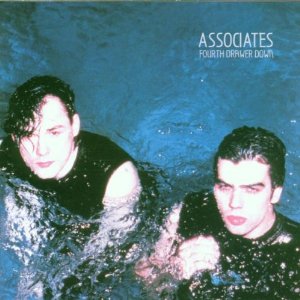
Associates: Fourth Drawer Down 40 Years On

The Associates gave good title: ‘Tell Me It’s Easter On Friday’, ‘Kitchen Person’, ‘White Car In Germany’, ‘Q Quarters’, ‘No’, ‘Those First Impressions’, ’18 Carat Love Affair’, ‘Nude Spoons’, ‘Party Fears Two’ etc. etc.

The first four of those tracks appeared on Fourth Drawer Down, released 40 years ago this weekend.

Mostly co-produced by 19-year-old Flood (Depeche Mode, U2), it was a collection of the increasingly bizarre singles released by the ‘band’ during 1981, all of which featured strongly on the Independent charts.

The Associates were yet another impressive 1980s pop duo, at least in their early incarnation. Billy Mackenzie was arguably the greatest singer of the post-punk era, while Alan Rankine was a key guitarist (and talented multi-instrumentalist) alongside John McGeoch, Charlie Burchill, Will Sergeant et al.

They were also arch music-biz pranksters, years before The KLF, good-looking, talented lads milking the record companies for all they were worth. Newly departed from Fiction Records, with ex-Cure bassist Michael Dempsey in tow, the three spent 1981 holed up in their St John’s Wood flat by day and Willesden’s Morgan (later Battery) Studios by night.

If taken in an amount just over their recommended dose, Quiet Life (also an ‘influence’ on David Sylvian/Japan?) health tablets would give a nice buzz, found in the ‘fourth drawer down’ of their bedroom cabinet.

It was a hedonistic, musically expansive period. Experimentation was king. It wasn’t unusual to see Billy singing down a vacuum tube or through tracing paper, while Rankine occasionally applied a water-filled balloon to his guitar strings.

Vintage synths were layered with dulcimer, xylophone, early drum machines, ‘funky’ bass and mad fuzz-toned guitar. It was a brittle, lo-fi sound, influenced by Bowie, Roxy, Sparks, Ennio Morricone and John Barry, quite insane in places.

The scary, majestic ‘White Car In Germany’ was the logical conclusion to all of that icy, post-Heroes Euro-grandeur, but is it a pastiche? ‘Lisp your way through Zurich/Walk on eggs in Munich’, croons Billy. It’s impossible to say, but that’s part of the fun.

The brilliant ‘Q Quarters’ is strongly reminiscent of Scott Walker’s ‘70s/’80s soundworld, and comes complete with Billy’s coughing solo. Superbly chaotic ‘The Associate’ is invaded by a screaming fit and what sounds like a major vacuum-cleaner malfunction.

Some of it may remind one of early Cocteau Twins (particularly Mackenzie’s strident vocals and oblique lyrics), early Suede and the work of Frankie Goes To Hollywood and Propaganda from later in the decade (Trevor Horn apparently almost produced a solo Mackenzie album around 1987, sadly yet another what-if in this gifted artist’s short life).

Less than a year later, aided by some more streamlined material, Warners money and the excellent producer Mike Hedges (who also worked on ‘White Car In Germany’ and ‘The Associate’), they spent nine months as bona fide pop stars in the UK.

But nothing ever sounded as singular as Fourth Drawer Down. And don’t miss out on the wacky B-sides, newly added to the remastered 2-CD version. Also worth checking out is their extraordinary Peel Session from April 1981.

Further reading:

‘The Glamour Chase’ by Tom Doyle

‘Rip It Up’ by Simon Reynolds
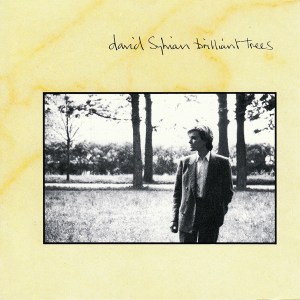
David Sylvian: The Brilliant Trees Sessions

Sylvian’s modus operandi for the studio sessions that made up his classic 1984 debut album perfectly reflected its ‘anti-rock’ stance.

Steve Jansen’s drums and/or percussion were generally recorded first, usually followed by David’s rough keyboards/guitars and a guide vocal. After that he worked closely with guest musicians on a one-to-one basis.

And the latter aspect is the main focus of some fascinating, newly-released footage of the Hansa Studio sessions in Berlin, documented by Sylvian’s then-partner Yuka Fujii.

It’s an absolute treat for Brilliant Trees fans and a great chance to see what actually happened in most recording studios during the 1980s. In common with making movies, there’s a lot of waiting around, a fair bit of chewing the fat and then some pretty intense bursts of performance/concentration.

It’s fascinating watching Sylvian collaborating with his good friends Ryuichi Sakamoto and Holger Czukay. Sakamoto is a model of quiet concentration, quickly learning the chords to album outtake ‘Blue Of Noon’. Czukay is full of smiles and fun while tinkering with his Dictaphone and laying down a guitar solo on ‘Red Guitar’ which didn’t make the cut.

Elsewhere we finally get to hear what ball-of-energy guitarist Ronny Drayton actually plays on ‘Pulling Punches’, and Jon Hassell is every inch the NYC avant-garde auteur (in his excellent book ‘Cries And Whispers’, Anthony Reynolds reports that he did just one five-hour session for Brilliant Trees, asking for and getting $5,000 upfront plus co-writing credits for the two tracks he played on).
But who knew he recorded his solos sitting on the floor in the corner of a tiny studio, Sylvian at his elbow? For his part, Sylvo is generally smiley, quiet, engaged, charming, extremely professional and seems to have a good rapport with co-producer Steve Nye.

Sadly the short bit of footage that emerged recently (then rapidly disappeared) of bassist Wayne Braithwaite recording ‘Red Guitar’ is not reinstated here.

The clip is a vital addition to one’s enjoyment of Brilliant Trees – check it out (and I’ve included Sylvian’s own notes on the footage below) before it gets taken down.

This raw footage, shot on what’s now seen as a primitive camera but which was a top of the line consumer product at the time, a massive, unwieldy object, was documented by Yuka Fujii. I’ve put the material together in the order it was recorded to give a very general idea of the process of development. It’s been my practice to work closely with each individual musician since my earliest days with the band in an attempt to get the best results. I’ve always maintained the band prepared me for working with others, gave me the confidence to work with my peers, the ‘newcomers’ in the room all being older than myself (25). At this point in time Ryuichi’s English was very rudimentary (this was to change radically within the next ten years or so) so we had to communicate as economically as possible, or rather, 95% of the exchange was purely musical. Yuka and Peter Barakan would step in when greater explication was needed. Holger’s English remained consistent throughout the years i knew him. Again, subtleties could be lost so the dialogue was relatively basic. These sessions in Berlin were my first step in creating what would become ‘Brilliant Trees’ and my initial move away from the structure of the band. It was one of the happiest recording experiences I can recall while signed with a major label. Because of the success of having everyone meet in Berlin, a city native to no one involved, it felt like an adventure. People arrived with a spirit of openness and receptivity. I went on to repeat this process with albums such as ‘Secrets of the Beehive’, ‘Rain Tree Crow’, and ‘The First Day’ among others.

I’ve left a lot of Jon’s conversation in as it’s of interest. In one section he’s explaining the nature of raga and how he came to it by working with renowned Indian singer/teacher Pandit Pran Nath. He was also intimating that, as ‘Brilliant Trees’ asked that he play in the western tradition, ‘steps’ as he describers it, he didn’t see how his performance could be incorporated into the title track. I persevered. He returned to his hotel room that evening to work on it and, overnight, came up with something so beautiful and complimentary to the piece, that moved away from raga (outside of the coda), and gave us one of the rare, if not unique recordings, of Jon playing in the western tradition.

Besides the limited nature of my vocabulary, the paired down nature of our exchanges for the reasons given above, my only regret is that I didn’t use Holger’s guitar solo on ‘Red Guitar’. At the time I felt it a little lightweight compared to the mix Steve Nye was prepping. I would now mix it quite differently pushing the drums way back (from the mid 70s through the 80s, drums were often foregrounded, a trend I wasn’t fond of. I fought for a change of approach on ‘Beehive’ and that’s about the time when things began to resemble how I’d initially imagined the material. There are always exceptions of course, ‘Weathered Wall’, ‘Before the Bullfight’ are just two examples). I loved Holger dearly and wish I’d imortalised his solo in some capacity. If it still exists on multitrack, all is not lost.

I came away from Berlin with an incomplete album and preceded to write a few remaining pieces to complement the best of what I had. “The Ink in the Well’, ‘Nostalgia’ and ‘Backwaters’ were added, ‘Blue of Noon’, an alternate version of ‘Forbidden Colours’, and a new track composed with Ryuichi were, with the exception of the latter, to find a home elsewhere. ‘Blue of Noon’ was originally a vocal piece but I felt this version didn’t hold together and, in any case, was out of place in the context of the album. Virgin released a working rough mix of the track as the B-side of a single.

I hope the mutual respect and good humour of everyone involved comes across along with their seriousness and committed nature to the material. Rarely has this proved otherwise for me. In this respect I feel very fortunate. From this session I made lifelong friends, a trend that was to continue for many years to come.

david sylvian july 2021

It Bites: Thankyou And Goodnight 30 Years Old Today

There’s a secret history of bands/artists disowning their own albums before they’ve even been released.

Lee Mavers’ La’s, Prince and Chrissie Hynde’s Pretenders come to mind, and the brilliant Cumbrian four-piece It Bites can also be added to that list. They even sent out a ‘please don’t buy our new album’ letter to their fan club. I still have it. Quote: ‘They feel Thankyou And Goodnight to be a complete rip-off on the part of Virgin Records…’ It didn’t work, of course. I bought it during its first week of release.

By summer 1991, a year after guitarist/lead vocalist Francis Dunnery had done a runner from the band (this interview gives intriguing hints as to his state of mind during spring 1990) while they were recording their never-to-be-released fourth studio album in Los Angeles, remaining members John Beck (keyboards), Dick Nolan (bass) and drummer Bob Dalton (then trying to make a go of it as Navajo Kiss, and later Sister Sarah) were less than thrilled to hear that Virgin intended to release an It Bites live album.

But it was out of their hands. They reluctantly helped with track selection/sequencing, approved the artwork and title and Thankyou And Goodnight became the official au revoir to one of the finest British bands of the 1980s. One top 40 single (‘Calling All The Heroes’) was a pretty dire return for one of the most melodic acts of the era.

Virgin should get some blame for that (they were generally better cheerleaders for their solo acts, apart from Genesis, Simple Minds and Culture Club). But these days you hear ‘Still Too Young To Remember’, ‘Underneath Your Pillow’, ‘Kiss Like Judas’ and ‘Midnight’ and it’s inexplicable that they didn’t crack the charts.

In particular, their singular lack of mainstream success throughout 1988 seems to have been a huge shock for the band, especially off the back of an extraordinary sophomore album Once Around The World, sold-out UK tour and well-received Robert Plant support slot. But back to Thank You And Goodnight. Visually, it’s a pretty shoddy package.

The cover looks like it was knocked off by a reluctant Virgin designer after a long liquid lunch. There are no recording dates or technical personnel, save for mixing engineer Nick Davis (XTC, Marillion, Genesis, Phil Collins), whose surname is misspelt.

Then there are some cursory ‘history of the band’ liner notes, with an annoying addendum by a Virgin staffer: ‘We owe you a drink, Ian!’. Yeah, right… And then there’s the track choice – it’s basically the audio from the televised June 1989 gig at London’s Town & Country Club, plus a few ringers: ‘Yellow Christian’ (recording date/venue unknown) and ‘You’ll Never Go To Heaven’ from London’s Marquee in 1987, previously the B-side of ‘Midnight’.

But it’s no surprise to report that most of the music on Thankyou And Goodnight is fantastic. Under Davis’s jurisdiction, Nolan’s bass and Dalton’s drums sound like a million dollars, at least on the T&C tracks. ‘Underneath Your Pillow’ is the standout, emerging as a superb pop song augmented by the extended, proggy ending, with Dunnery quoting from Holst’s Planet Suite (Venus, the Bringer of Peace).

‘The Ice Melts Into The Water’ and ‘Still Too Young To Remember’ (with its clever ‘Old Man & The Angel’ tag) are also superb, fitting reversions. From memory, I saw It Bites live five times (Brunel University/Astoria 1988, T&C/Hammersmith 1989, Hammersmith 1990) and they were never less than sensational. Thankyou And Goodnight is not a great package but a decent-enough document of their late-career pomp.

What a shame they couldn’t have recorded one more studio album after 1989’s Eat Me In St Louis though and basked in some long-overdue success. One further mystery – Dunnery has obviously added some post-production vocals to ‘Ice Melts Into The Water’ – when and where did he do them? Maybe he was secretly in on the project after all…


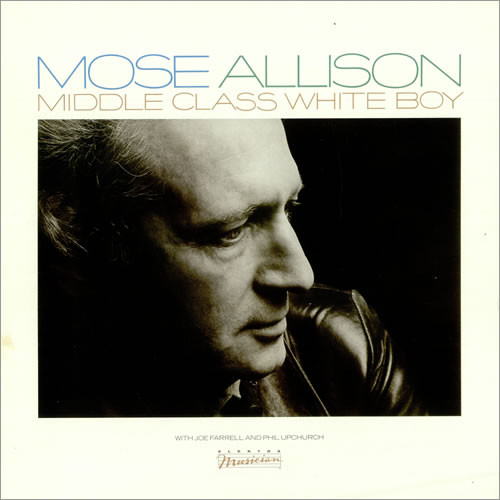
Mose Allison: Middle Class White Boy

You’d be hard pressed to find a musician less likely to thrive in the 1980s, but hey – it’s a great pleasure to feature Mose Allison on this site.

A big influence on artists as varied as The Who, Bonnie Raitt, Randy Newman and Frank Black, the Tennessee-born pianist and songsmith, who died in 2016, wrote witty, brilliant standards such as ‘Parchman Farm’, ‘Your Mind’s On Vacation’, ‘Feel So Good’ and ‘Everybody’s Cryin’ Mercy’.

His speciality was the medium-fast blues/jazz groove, with an extra bar or two thrown in and/or an unexpected modulation. He found endless interesting variations on this theme and his self-mocking, occasionally profound lyrics made one chuckle or think – sometimes both.

Mose toured relentlessly, mostly eschewing festivals in favour of nightclubs (the first time I saw him was during a long run at Pizza On The Park in Knightsbridge – don’t look for it, it’s not there any more…), and had a cadre of pick-up bassists and drummers all over the world who had to adhere to some pretty exacting rules – no egos, backbeats, cymbal crashes or excessive use of the kick drum.

1982’s Middle Class White Boy was Mose’s comeback album, his first for six years and debut for legendary jazz impresario Bruce Lundvall’s burgeoning Elektra Musician jazz label.

But it’s probably fair to say that neither Mose nor Lundvall got an album they were happy with. The terrible cover doesn’t bode well. It was recorded in just two days and sounds like it. Then there’s the fact that for some reason Mose mainly opted to use a tinny, badly-recorded electric piano on the date.

Also he arguably didn’t have enough decent original material – there are five cover versions, only Muddy Waters’ ‘Rolling Stone’ emerging with much distinction.

But on the plus side he’s helped by two formidable sidemen – Chess/George Benson legend Phil Upchurch on guitar and ex-Return To Forever man Joe Farrell on saxes and flute, both of whom get a lot of solo space and play excellently.

And the album benefits from not one but two absolute Mose classics: the title track and a new version of ‘Hello There Universe’. But otherwise it’s not a comfortable listen. It’s a big relief when he breaks out the acoustic piano on ‘When My Dreamboat Comes Home’, even if the song isn’t anything to write home about.

The Middle Class White Boy experience didn’t exactly make Mose rush back into a studio; he released one further album for Elektra, a live record from the 1982 Montreux Jazz Festival featuring none other than Billy Cobham on drums (they had occasionally recorded together on Mose’s Atlantic sides).

Then there was another five-year hiatus before his 1987 Blue Note Records (where he rejoined Lundvall) debut Ever Since The World Ended (with its remarkably prescient title track, given these current times), a return to form.

Perhaps predictably, the 1980s were not particularly kind to Mose but there are still some gems to seek out.

Pat Metheny & Lyle Mays: As Falls Wichita, So Falls Wichita Falls 40 Years On

‘A game of two halves’ is a common expression in football, but it can apply to albums too.

We all know albums which have one good side and one bad one (I’ll throw in The Seeds Of Love, Fulfingness’ First Finale, Music Of My Mind, The Colour Of Spring for your consideration…).

But another humdinger is As Falls Wichita, So Falls Wichita Falls, released 40 years ago today.

The Cult Of Metheny has ensnared many, and puzzled just as many. But As Falls Wichita fell smack bang in my favourite era of Pat’s music (between American Garage and Song X), and represented a real change of scene.

Side one’s 20-minute title track delivered a full-on prog/fusion masterwork, ably assisted by Lyle Mays in classic-synth heaven (Prophet 5, various Oberheims, Roland CR-78 and Linn LM-1 drum machines), always totally recognisable, and at a time when polyphonic playing had just become possible. He was rapidly becoming a Joe Zawinul for the 1980s.

‘As Falls Wichita’ may be the most ‘rock’ music released on the ECM label during the 1980s, with the possible exception of David Torn’s 1987 record Cloud About Mercury. It also seems dangerously ambitious. Then again, the whole album was recorded in just three days! Lesser musicians could have taken a month to record this track alone.

Apparently chiefly written to play over the PA system before Metheny Group concerts, it’s pure headphone music. The enigmatic title (apparently nicked, with permission, from an unreleased Steve Swallow composition) and superb album cover certainly help.

The track plays out like a good movie (its working title was ‘Apocalypse When’). It’s more John Carpenter than Keith Jarrett. You might even describe it as cathartic, dammit.

(Another reason for its success may be the complete lack of instrumental solos. Pat doesn’t get any solo space at all – he just plays some unobtrusive bass, chiming 12-string electric and a little six-string. All sounds are textural and in the service of the whole piece.)

A superb live version was featured on the 1983 Metheny Group album Travels. And those who remember the Christian Dior ‘Fahrenheit’ adverts in the late 1980s may be familiar with a small excerpt of the track:

But back to that ‘album of two halves’ thing. Sadly, side two of As Falls Wichita is New-Age sludge. Ponderous and flabby, it’s fuel to Pat detractors, but probably loved by acolytes.

‘September Fifteenth’, a tribute to Bill Evans (named for the date of the great jazz pianist’s death in 1980) is the chief culprit. A closing, out-of-tune version of ‘Amazing Grace’ doesn’t help. It’s music for tired Apple executives, and sounds like it was recorded in the last afternoon of the three days.

But As Falls Wichita was an unexpected smash by ‘jazz’ standards: the album got to #1 on the Billboard Jazz Charts and quickly became Metheny’s biggest seller to date.

So happy 40th birthday to the classic title track. Pour yourself something tall, tune in, drop out, get the headphones on, lie on the floor and crank it up. It’s a trip, man…

Further reading: ‘Pat Metheny: The ECM Years’ by Mervyn Cooke

Grace Jones: Nightclubbing 40 Years On

Nightclubbing, which turns 40 this week, would be iconic even if it was only half as good, thanks to Jean-Paul Goude’s fantastic cover painting.

But drop the needle anywhere and it’s an all-time classic, one of the jewels in Island Records’ crown and hugely influential.

Arguably its mashup of new wave, reggae, synth pop, disco and Caribbean flavours blueprinted the sound all the key New Pop acts of 1982/1983 (Talking Heads, Kid Creole, Spandau Ballet, Duran Duran, ABC, The Associates, Simple Minds, Thompson Twins et al) sought.

Some, of course, went route one and employed Nightclubbing co-producer and movingtheriver.com favourite Alex Sadkin. But you might also call Nightclubbing Grace’s covers album – it features not one but six classics, if you count ‘Libertango’ and the Marianne Faithfull’s previously-co-written-but-never-recorded ‘I’ve Done It Again’ (Sting lent her ‘Demolition Man’ before laying it down with The Police).

She revolutionises Flash & The Pan’s ‘Walking In The Rain’ (her androgynous alto freaked me out when I first heard it as kid, there was just no reference point…) and compare her funky, succinct ‘DM’ to The Police’s ponderous, overblown version.

On a good system Nightclubbing‘s sonic details delight: the tambourine commentary throughout ‘Use Me’, Sly Dunbar’s dub-delay cross-sticks on ‘Walking In The Rain’, Grace’s whispered chorus on ‘Art Groupie’. The Compass Point All Stars, particularly man-of-the-match Wally Badarou on keys, are perfectly poised to provide such moments.

But there is a weird quirk – the mastering. The album seems to get quieter as it goes along, at least on the original CD version. ‘Demolition Man’ requires some serious crankage. I’m not sure if subsequent reissues have rectified that.

Nightclubbing was NME’s album of the year for 1981 and it got to #32 on the US Billboard chart, a certified crossover hit. You might even say that the 1980s Proper started here, and it helped make 1981 one of the greatest ever pop years.

And we haven’t even mentioned Grace’s electrifying One-Man-Show that accompanied the album, directed by Goude, taking place at London’s Drury Lane Theatre and New York City’s Savoy. It was surely a huge influence on everyone from Laurie Anderson to Annie Lennox.

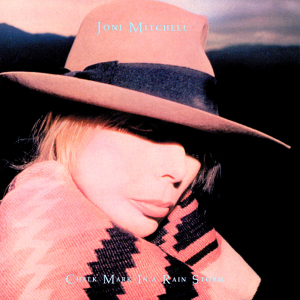
Joni Mitchell: Chalk Mark In A Rainstorm

Intelligent pop was alive and well in summer 1988 with key albums from Prefab Sprout, It Bites, Scritti Politti, Prince, Thomas Dolby…and, would you believe it, Joni.

Chalk Mark In A Rainstorm was a few years in the making after the underperforming (but excellent) Dog Eat Dog, and she was feeling the pressure.

‘I could use a hit’, she confessed to Q magazine in a long interview (they also gave the album a glowing four-star review).

She also granted a long interview to the NME, and was rewarded with her highest charting album (#26) in the UK since Mingus, almost ten years earlier. Stateside, off the back of a stinking, poorly-written Rolling Stone review, it reached a disappointing #45.

Released on 23 March 1988, Chalk Mark is based around a core band of Joni on keys, guitars and vocals, Larry Klein on bass and keys, Mike Landau on guitars and Manu Katche on drums. Larry and Joni co-produce.

There’s a real consistency to the sound, but, with its hermetically sealed nature, it seems almost critic-proof. There’s nothing to compare it too, apart from Joni’s own work.

Reviewers were generally confused by her choice to use the latest synth/sampling technology to illuminate anti-war, anti-advertising, anti-‘toxic crap’ (Joni’s words), pro-Native American songs. Well, that’s what’s known as ‘irony’…

Gorgeous opener and first single ‘My Secret Place’ was mostly recorded at Peter Gabriel’s Ashcombe House studio (he also offered her free studio time to make the demos for the album).

PG guests on vocals (though Joni plays all keyboards, including the memorable piano motif) while Katche delivers a superb, subtly-building performance with hints of Steve Gadd’s famous ’50 Ways To Leave Your Lover’ groove.

As usual, musicians and singers were queuing up to appear on a Joni record. Steve Stevens, Billy idol and Tom Petty combine to memorable effect on ‘Dancin’ Clown’ (apparently one of Bob Dylan’s favourites), while Wendy & Lisa add their gossamer back-ups to sumptuous ‘The Tea Leaf Prophecy (Study War No More)’.

‘The Reoccurring Dream’ is a collage of advertising cliches over richly-chorded Joni vocals. The standout is possibly ‘Beat Of Black Wings’, a furious anti-war song with a stately, orchestral theme in an unusual 6/4 time.

Less effective are the plodding ‘Number One’, ‘Snakes And Ladders’ and ‘Cool Water’, despite some welcome guest vocals by Willie Nelson on the latter. All would probably have been more effective as solo, acoustic songs (she often promoted the album with solo versions of the former).

The album ends with Wayne Shorter’s hearty chuckle after his multi-tracked, soprano sax deluge on ‘A Bird That Whistles’ (apparently Joni’s only instruction to him in the studio was: ‘You’re the bird’!).

Joni was in a group of one in 1988, feeling no particular kinship with the female singer-songwriters making their way towards the end of the decade, the likes of Suzanne Vega, Julia Fordham, Jane Siberry, Mary Margaret O’Hara, Louise Goffin, Toni Childs and Tracy Chapman (the latter beating Joni to a Best Pop Vocal Performance Grammy in 1989).

She was still far ahead of the competition, but also painting herself into a corner. It was the end of an era.

The acoustic guitar and ‘folky’ forms would re-emerge in time for the next album Night Ride Home; a logical, commercially-led move, but the end of a fascinating progression of sounds and styles during the ‘80s.

Read a great interview with Joni, Larry Klein, Billy Idol, Tom Petty and Willie Nelson about the making of the album here

Bruford: One Of A Kind Revisited

In the late 1980s, some ‘long-lost’ cult tracks took on almost mythical status amongst my musician friends and I.

There was Frank Zappa’s ‘The Black Page’, Rush’s ‘YYZ’ and ‘La Villa Strangiato’, UK’s ‘In The Dead Of Night’ and Bill Bruford’s ‘Five G’ and ‘Travels With Myself And Someone Else’.

Guitarist Allan Holdsworth, who died four years ago today, of course featured on the latter three tracks (he originally came to my attention when It Bites’ Francis Dunnery waxed lyrical about him in a 1989 Guitarist magazine interview).

Pre-YouTube and Spotify, the problem was that you just couldn’t get hold of this stuff (even though it was barely ten years old!). So it was a thrill when I finally tracked down a copy of Bruford’s One Of A Kind album – featuring ‘Five G’ and ‘Travels With Myself’ – sometime in the mid-1990s.

And now this landmark collection has received the posh reissue treatment, as part of a box set or as a double CD set featuring a new stereo remix, carried out by Bruford and Level 42/King Crimson guitarist Jakko Jakszyk, and a DVD containing the remastered original mix and a new surround-sound mix.

You could argue that the album is the most complete work by all of the participants. Recorded at Soho’s Trident Studios, One Of A Kind was released on the cusp of the 1980s and pointed to where all the four members’ music would take them in the new decade.

There’s no quantizing here – it’s music that breathes (check out the ‘bendy’ time on ‘Hells Bells’, ‘Travels’ and the title track) played by empathetic, truly virtuosic musicians. But is it rock, jazz, prog or fusion? Who knows, but it’s some of the greatest British instrumental music of all time.

Bruford stuns with one of the tightest drum sounds on record – whipcrack snare, cutting Rototoms – with great phrasing and ideas, some fantastic tuned percussion (marimba, xylophone) and excellent compositions. Bassist Jeff Berlin is an astonishing talent – logical, inventive, technically perfect but never boring.

Dave Stewart (not to be confused with David A Stewart of Eurythmics) is a revelation, layering superbly with his new Prophet 5 synth and adding some effective solos. The liner notes report Holdsworth returning to the studio after a break, hearing Stewart overdubbing on ‘Travels With Myself’ and finding himself in tears.

For his part, Allan was by all accounts rather unhappy during the recording, but delivers brilliant, moving solos, particularly on ‘Travels’ and ‘Sahara Of Snow Part 2’. He also contributes the excellent composition ‘The Abingdon Chasp’, apparently named for a beloved brand of real ale.

Then there’s the resplendent ‘Fainting In Coils’, complete with the ‘Alice In Wonderland’ excerpts and tricky time signature which sounds completely natural in Bruford’s hands. But how does the new remix sound? First, the good news: the title track, ‘Fainting In Coils’ and ‘Hells Bells’ sound fresh and thrilling; it’s like hearing them for the first time.

But now the bad news: ‘Travels’ inserts some new Stewart solo licks, inaccurately mutes some of his synth pads and then inexplicably mixes his acoustic piano way down and drenches it in muddy reverb (though Holdsworth’s comping is brought forward in the mix).

Then there’s ‘Five G’ – it’s mixed totally dry, with all reverb removed, again with Stewart’s keys too low and Berlin’s bass too high and too ‘middly’. And the packaging? Sid Smith’s liner notes are excellent, with some lovely, previously-unpublished photos from rehearsal rooms and pub gardens (both in Kingston, Surrey!).

But there’s no sign of the tracklisting or song/composer credits on the digipack – you have to search around for the inner pamphlet to find the details printed in the middle, so quick reference while listening is not easy.

Still – even if the remix is patchy (I can’t comment on the surround mix), the whole package is well worth getting. Any excuse to celebrate a classic album and brilliant band, and a rich voyage of discovery if you don’t know this music.

One Of A Kind Expanded & Remixed is available at Burning Shed.

Linda Ronstadt: Canciones De Mi Padre

Great singing voices: you need ‘em, I need ‘em, the world needs ‘em.

Put me down for Mike Patton, Sarah Vaughan, Frank Sinatra, Marvin Gaye, Nat ‘King’ Cole, Chaka Khan, Lewis Taylor, Donny and Lalah Hathaway, Leon Thomas, Al Green, Phyllis Hyman, Johnny Gill, etc. etc.

And Linda Ronstadt too. I was a big teenage fan of her live cameo in cult movie ‘FM’ (though possibly for reasons other than musical), loved her guest spot with Randy Newman at this October 1984 TV special and her work with Neil Young on Freedom, but it was only when I heard her 1987 album Canciones de mi Padre that it all came together.

It’s a collection of traditional Spanish-language songs that she heard as a kid growing up in Tucson, Arizona, only 45 minutes from the Mexican border (her father was of German, English and Mexican ancestry).

Produced by long-time manager/producer Peter Asher and with arrangements by Ruben Fuentes, it’s a gorgeous selection, with Ronstadt’s majestic voice rising above trumpets, violins, acoustic guitar, string bass and mariarchi vocals.

The album was a deeply personal project, as she told MOJO magazine in December 2018:

‘I knew those songs all my life and I wanted to sing them. I didn’t know the lyrics to most of them but my dad did – he was a big part of my research – and although I knew roughly what they were about, I had to learn what the Spanish meant. I had to really, really work to get it up to speed.’

Canciones de mi Padre was a huge success, winning a Grammy for Best Mexican/American Performance, and sold approximately two million copies in the USA (and ten million copies worldwide), making it the biggest-selling non-English-language album in Billboard history.

That’s pretty good for a beautiful album that Linda considers herself lucky to have been allowed to make at all, claiming she was only given a green light by Warners after her Nelson Riddle-composed/arranged For Sentimental Reasons was unexpectedly a big hit. She subsequently toured Canciones across the States in theatres, revue-style, and also recorded two further Spanish-language albums.

Ronstadt sadly retired from public performance in 2009 after a Parkinson’s Disease diagnosis. The recent, moving documentary ‘Sound Of My Voice’ explores her ’70 and ‘80s music, including the great collaborations with Dolly Parton and Emmylou Harris, and focuses on the Spanish-language albums too.

Jaco Pastorius: Truth, Liberty & Soul (Live In NYC, 27 June 1982)

Even as the streaming revolution sweeps all before it, there are a few aspects of physical music that seem to be thriving: vinyl and the ‘historical discovery’.

Bass superstar Jaco is now a worthy recipient of both, courtesy of Truth, Liberty & Soul, a complete gig recorded at the Avery Fisher Hall in New York City on 27 June 1982, part of that summer’s Kool Jazz Festival.

The concert was originally broadcast live on NPR but has lain in the vaults for decades, and it took Resonance Records (via vaultmeister Zev Feldman) six years to prepare these tapes for release.

It features Jaco alongside his regular band (Bob Mintzer – saxes, Randy Brecker – trumpet, Don Alias – percussion, Othello Molineaux – steel drums, Peter Erskine – drums), plus special guest Toots Thielemans on harmonica and a big band full of NYC’s finest horn players.

The album catches Jaco at somewhat of a crossroads; by most accounts, June 1982 was the last time he was truly ‘together’ in terms of his mental wellbeing, the wheels really coming off during the Japanese tour later that autumn.

(Fans of a certain age may fondly remember the live gig from the Montreal Jazz Festival which took place on 3 July 1982 and was shown on UK’s Channel Four about five years later).

The question is, if you already own Jaco’s 1983 live album Invitation (released in slightly expanded form as Twins in Japan), also featuring the big band, is it worth getting this one? The answer is a resounding yes. It’s thrilling to hear a whole gig in real time by one of the last true jazz titans.

The sound is superb – crisp, deep and rich. The packaging is excellent, with a weighty booklet full of incisive essays and previously unseen photos. The big band – featuring many NYC hotshots who came in for this one gig – sounds well-rehearsed and punchy.

And anyone sick of bandleaders’ endless yakking to the audience these days will be pleased to hear that Jaco doesn’t utter a single word until a garbled band announcement during the closer ‘Fannie Mae’ – he’s there to play music.

There are many highlights – a killer ‘Donna Lee’, touching Afro-Cuban take on Toots’s ‘Bluesette’, an epic ‘Liberty City’ and particularly Mintzer’s superb composition ‘Mr Fonebone’, electrifying in big-band format.

There are one or two longeurs – we could probably do without the extended percussion and drum improvisations and it has to be said that Jaco doesn’t sound on completely top form during his solos, though that’s possibly due to the size/acoustics of the venue, alluded to by a few contributors in the liner notes. But his accompaniment is typically brilliant throughout.

Frankly, it makes one desperate to attend such a gig in these crazy times. Truth, Liberty & Soul is a valuable release and an absolute must for anyone who owns any Jaco or Jaco-era Joni Mitchell/Weather Report albums.