Book Review: The Life & Music Of Randy Newman by David & Caroline Stafford

Randy’s music hooked me sometime in the late 1980s.

Lying ill in bed, I heard a lyric wafting upstairs from the living room where my dad was playing some music by an American guy who sounded world-weary, beaten-down:

There she is sitting there/Out behind the smoke-house in her rocking chair/She don’t say nothin’/She don’t do nothin’/She don’t feel nothin’/She don’t know nothin’/Maybe she’s crazy, I don’t know/Maybe that’s why I love her so‘ (later discovered to be ‘A Wedding In Cherokee County’ from Good Old Boys).

I’ve been a major fan since then, studying interviews and always checking out  the new albums, and yet the ‘real’ Newman remains elusive.

‘The Life & Music of Randy Newman’, written by husband-and-wife team David and Caroline Stafford, has a damn good crack at revealing the enigma and it’s also the first extensive biography of the singer/songwriter.

There are some great anecdotes. Don Henley reports that Randy’s only direction to him when singing background vocals on Good Old Boys was to ‘sound like a water buffalo’ – i.e. like Randy.

When Newman premiered that same album with a concert at the very swish Atlanta Symphony Hall backed by an 87-piece orchestra, he decided to preface the title track by announcing: ‘Here’s a song that’s guaranteed to be offensive to black and white, Jew and gentile…’

The book is exhaustively researched; as befitting a songwriter so interested in historical and biographical detail, the authors do a fine job placing Newman’s songs in context.

Tens of published Randy interviews are also mined to produce a great commentary on all the albums. But unfortunately there are no new interviews with Newman, his collaborators or friends, so real insight is scant. There are also occasionally ‘style’ issues too, jarringly flippant phrases that sometimes take one out of the narrative.

But ‘The Life & Music Of Randy Newman’ is an enjoyable read, a fitting tribute to a modern American master. And if one comes away without any concrete sense of the protagonist, in this case it’s hardly the fault of the authors – and probably just the way Newman likes it.

‘The Life & Music Of Randy Newman’ is published by Omnibus Press.

Book Review: I’m Not With The Band (A Writer’s Life Lost In Music) by Sylvia Patterson

Music writer Sylvia Patterson’s hugely enjoyable memoir had me at page 28:

‘The post-punk era, roughly ’78 to ’83, was arguably the most richly dynamic of all musical time, an era defined by a cultural geyser of creative freedom and political indignation – all stoked, crucially, by the incendiary spark of jokes…’

It helps that Patterson is first and foremost a music fan (between 1980 and 1983, she describes herself consecutively as a Mod, Massive Goth, Moody Art-School Dreamer and Indie Kid).

She is also a highly respected journalist who cut her teeth writing for Smash Hits during its million-readers-an-issue peak and has also contributed to the NME, Face, Big Issue, Glamour and Observer.

She has been a witness to how music journalism (and the wider recording industry) has become run by the lawyers, PR people and gossip mags.

And she knows where the bodies are buried, locating the beginning of the decline in the 1990s when ‘tot pop’ (Christina Aguilera, S Club 7, Britney etc.), boy/girl bands, reality TV, corporate branding, celebrity culture and the internet ran roughshod.

She writes brilliantly about the surreal pop boom of the late 1980s, when Kylie, Jason, Big Fun, Guns N’ Roses, Phil Collins, Tiffany, Debbie Gibson, Enya, Deacon Blue, Milli Vanilli, Brother Beyond (or The ‘Yond, in Smash Hits-speak), Bananarama, Salt ‘N Pepa and especially Bros ruled the waves.

But in 1990, as the music biz hits a recession, Patterson opts to go freelance – an interview with Stock/Aitken/Waterman pop poppet Sonia is apparently the straw that breaks the camel’s back…

A few months later she’s on the dole, drinking too much, struggling to pay the rent, mourning her father and brother and rueing the deterioration of her relationship with an alcoholic, mentally-ill mother. Cue the second half of the book and the second half of her sometimes troubled life.

Mariah Carey and Sylvia

‘I’m Not With The Band’ outlines what it’s like to live and breathe music. It has certainly been tough remaining true to her school.

But in documenting her journey Patterson also reaches the places other music biogs don’t reach. She’s like a big sister reporting from the front line of the pop biz – you’re always rooting for her, no matter how dark things get.

She also raids her cassette box to sprinkle in hilariously candid interviews with almost all the major pop players of the last four decades: Barney Sumner, Mick Hucknall and George Michael in the 1980s, Richey Edwards, Liam Gallagher, Shaun Ryder, Blur, Jarvis Cocker, Paul Heaton, Bobby Gillespie, Westlife, Page/Plant, Madonna and Prince in the ’90s, U2, Johnny Cash, Beyoncé (sample question: ‘Now you’re working with Jay Z and loads of tough guys, you’re hanging out with ex-drug dealers – how does your mum feel about Jay Z’s background?’), Kylie, Mariah, Britney, Eminem, Lily and Amy in the noughties. She captures exactly what it’s like to meet these people and asks all the difficult questions.

Witty and humane, never boring, occasionally hilarious, at times deeply affecting, Patterson’s book is up there with Giles Smith’s ‘Lost In Music’ (perhaps consciously referenced in the title) in documenting a troubled love affair with this thing we call…pop. We await Mike Leigh’s film adaptation.

‘I’m Not With The Band (A Writer’s Life Lost In Music)’ is published by Sphere/littlebrown.

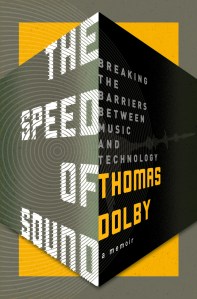
Book Review: The Speed Of Sound by Thomas Dolby

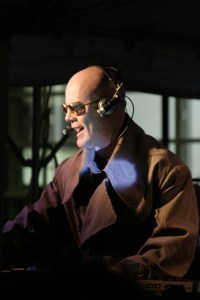
A cursory survey of Dolby’s musical career reveals that he’s a pivotal figure by any standards, collaborating with Prefab Sprout, Stevie Wonder, Eddie Van Halen, Jerry Garcia, George Clinton, Herbie Hancock, Trevor Horn, David Bowie, Def Leppard, Joni Mitchell…

And that’s not even factoring in the excellent solo albums and technological innovations (he created the software for the first popular mobile ringtones).

So if it’s pithy, musicianly anecdotes and the bittersweet memories of an Englishman (mostly) abroad you’re after, his enjoyable autobiography ‘The Speed Of Sound’ certainly does the business. But, as we’ll see, it’s very much a book of two halves.

A music-and-technology-mad teenager, Thomas Morgan Robertson first builds up his performing chops during a lengthy period of busking in Paris, finding out quickly that playing ‘Stairway To Heaven’ is the only way to make any money.

Returning to London, he’s in the right place at exactly the right time and on the verge of launching his solo career when summoned across the pond to work on Foreigner 4.

Christened ‘Booker T Boofin’ by the AOR legends for his considerable efforts, it nonetheless turns out to be a not entirely edifying entrée into the world of mega-bucks recording.

Then there’s solo-artist fame in the US, tempered by difficult video shoots, stage fright and the occasional debilitating panic attack. He’s summoned by Michael Jackson to come up with a few new post-Thriller tunes. It doesn’t end well.

His tours are well-attended but lose money and his second major single release ‘Hyperactive’ and attendant solo album The Flat Earth flatline partly due to dodgy record company ‘accounting’.

It’s a chastening experience; he focuses more on production work in the mid-’80s and any fans of Prefab’s Steve McQueen and Joni Mitchell’s Dog Eat Dog will find loads to enjoy here.

But Dolby inadvertently locks horns with Joni and finds himself sending in keyboard parts and arrangement ideas from Jenny Agutter’s spare room. Only in LA…

We get the inside story of his appearance with David Bowie’s at Live Aid (with only three short rehearsals), hear about a hilarious fishing trip with George Clinton and a memorable serenading by Stevie Wonder in a studio broom cupboard.

Then there’s an enjoyable detour into the world of movie soundtracks, ‘hanging out’ with George Lucas and meeting the love of his life in LA. By the early ’90s, we’re deep in ‘Spinal Tap’ territory when Dolby has amusingly mystifying dealings Eddie Van Halen and Jerry Garcia.

So far so good. But the second half of ‘Speed Of Sound’ focuses on Dolby’s lengthy sojourn in Silicon Valley. Depending on your taste, this will either be a trial or treat. I skipped large chunks of it.

I wanted a lot more music and a lot less tech, and you sometimes get the feeling Dolby did too throughout that period (he frequently laments the fact that his more ‘personal’ music on Aliens Ate My Buick and Astronauts & Heretics failed to find an audience).

The other issue – hardly Dolby’s fault of course – is that everyone seems to be writing a memoir these days and it only emphasises the dearth of decent recent music. And slightly lessens the mystique of the best ’80s material. I’d trade one more decent Dolby solo album for any number of ‘Speed Of Sound’s… But it’s still a very enjoyable read.

‘The Speed Of Sound’ is published now by Icon Books.

Dolby discusses the book here.

The Manual: How To Have A Number One The Easy Way

I recently got hold of Jimmy Cauty and Bill Drummond’s ‘The Manual: How To Have A Number One The Easy Way’ for a quid in my local Amnesty bookshop.
Cheap at the price: written in 1988, the book purports to be a foolproof guide to creating a hit single.

But then you never can tell. It might not be wise to take it too seriously because Cauty and Drummond are very naughty boys.

The former was once in ’80s pop agitators Brilliant and Zodiac Mindwarp while the latter is of course an industry veteran, a member of Liverpool proto-punks Big In Japan (also featuring Holly Johnson, Budgie and Ian Broudie) and later the manager of Echo & The Bunnymen and The Teardrop Explodes.

The two pop pranksters got together and made some serious money from their genre-busting (read: nicking bits of other records and stitching them together), giant hits as The KLF, The Timelords and The Justified Ancients Of Mu-Mu, before announcing their retirement very publicly onstage at the 1992 BRIT awards in a hilariously inappropriate send-off.

Two years later, they burnt a million quid on an island off the west coast of Scotland to make a point about…something. Even they didn’t seem too sure, as evidenced by this interview with Gay Byrne on Irish television:

All bluster aside, these days ‘The Manual’ makes for fascinating and weirdly relevant reading. When it comes to the pop biz, it seems the more things change, the more they stay the same. Cauty and Drummond correctly predicted how chart music would turn out…forever. The following was written when the UK record industry was thriving and studios had never been more popular:

‘It’s obvious that in a very short space of time the Japanese will have delivered the technology and then brought the price of it down so that you can do the whole thing at home. Then you will be able to sod off all that crap about going into studios. A kid with a box of records, two Technics turntables, a sampler and drum machine can have a number one.’

Another aspect that jumps out is the section on ‘trademarking grooves’, especially in the light of the recent Pharrell Williams/Marvin Gaye ‘Got To Give It Up’ lawsuit controversy.

Cauty and Drummond claim that ‘copywright law…has been developed by whites of European descent – 50 percent for the lyrics, 50 percent for the top-line melody. Groove doesn’t get a look in. If copyright law had been in the hands of blacks of African descent, at least 80 percent would have gone to creators of the groove.’

Controversial and prescient stuff. But where are the lads now? They’re probably doing OK, although Drummond already looked pretty ‘ancient’ in 1994…

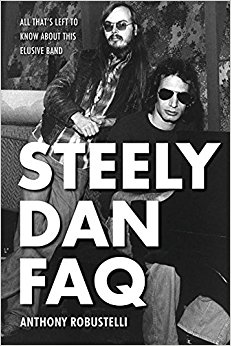
Book Review: Steely Dan FAQ by Anthony Robustelli

The general consensus seems to be that there’s relatively little published analysis of Steely’s work. But is that accurate?

Brian Sweet’s ‘Reelin’ In The Years’ was uncritical but biographically exhaustive; Don Breithaupt’s Aja book was excellent on The Dan’s musical methods; while ‘Revolution In The Head’ author Ian MacDonald wrote briefly but evocatively about Gaucho, included in his gripping ‘The People’s Music’ collection.

And then of course there are the intriguing, sometimes amusing ‘geek’ websites Fever Dreams and The Steely Dan Dictionary.

So it seems there’s actually quite a lot out there, but all the same I was intrigued when ‘Steely Dan FAQ (All That’s Left To Know About This Elusive Band)’ appeared recently. Is there anything left to ‘know’?

The first thing to say about the book is that it’s hard to know exactly which ‘frequently asked questions’ it’s answering – it’s structured more in the style of Omnibus Press’s old ‘Complete Guides’ series, with chapters on individual albums containing summaries of each song.

Then there are some extra sections dealing with Steely’s early days, their concert history, session players and solo projects. But, despite its rigid structure and a lack of any input from the two protagonists, ‘Steely FAQ’ comes up with some nice surprises.

Robustelli is particularly good on Dylan and The Beatles’ influence on Becker and Fagen’s songs. There’s the odd musical detail which hits the spot (during ‘Show Biz Kids’, I’d never noticed that guitarist Rick Derringer references Elliott Randall’s famous ‘Reelin’ In The Years’ solo after the ‘They got the Steely Dan t-shirts’ line) and there are some excellent, rare photos throughout.

Steely in all their scuzzy glory circa 1973. From left: Jim Hodder, Walter Becker, Denny Dias, Jeff ‘Skunk’ Baxter, Donald Fagen

The book is good too on the recent history of the Dan (though musically it’s an era I generally struggle with), with everything you’d ever need to know about the albums and tours since the 1990s.

There’s also a great chapter on cover versions, many of which I’d never heard (including Earl Klugh, The Pointer Sisters, Howard Jones, Dave Valentin, Grover Washington Jr. – approach them at your peril…).

On the minus side, musical/lyrical analysis is often scant and/or inaccurate – Michael Omartian’s solo piano outro on ‘Throw Back The Little Ones’ is described as ‘discordant’; the song ‘Pretzel Logic’ is summarised as ‘their first shuffle’ (what about ‘Reelin’ and ‘Bodhisattva’?) and the tutti line that kicks off ‘Parker’s Band’ is falsely characterised as a ‘dissonant chord’.

It’s weird too that Robustelli doesn’t mention the websites listed above and pretty much ignores their (sometimes) excellent lyrical analysis in his song summaries.

But, in the end, the success of such a book is measured by whether it takes you back to the music with a fresh ear; ‘Steely Dan FAQ’ certainly does that, despite its shortcomings and rather matter-of-fact style. It’s well worth chucking into your holiday bag this summer.

‘Steely Dan FAQ’ is published by Backbeat Books.


Book Review: Backtrack by Tessa Niles

Excellent recent documentary ’20 Feet From Stardom’ busted the myth once and for all that backing singers aren’t ‘good’ enough to be solo artists.

In fact, the contrary is often true: they make the artist sound and look better, and there are often a myriad of reasons both professional and personal why they haven’t become headliners in their own right.

Tessa Niles is probably the UK’s most celebrated backing vocalist of the last 35 years, and her excellent new memoir lifts the lid on a distinguished career singing with David Bowie, George Harrison, Elton John, Kylie, Eric Clapton, Steve Winwood, Tina Turner, Pet Shop Boys, Annie Lennox, Gary Numan, The Police, Duran Duran, ABC, Tears For Fears and Robbie Williams.

It’s a real page-turner and ’80s guilty pleasure, a voyage through all the pop fads of the decade (and decades since) and a search for a fruitful work/life balance in the face of demanding touring schedules and family commitments.

We follow Niles’ career from her early days as factory worker, cabaret entertainer and ‘Benny Hill Show’-auditioner to the late-’70s/early-’80s London live music scene, where good, young female singers could make a decent living at the city’s many nightclubs.

She is excellent at painting a picture of this somewhat dodgy state of affairs, when a pre-New Romantic London was anything but swinging and ‘Page 3’ culture was at its peak.

But a shrewd volte face leads Tessa into the burgeoning jazz/funk scene and decent, reliable gigs with Morrissey Mullen and Incognito, plus a chance meeting with US ex-pat arranger and producer Richard Niles.

Though their subsequent marriage gives Tessa her professional surname, it also leads to some conflicts of interest when he helms her commercially-unsuccessful solo debut.

But then Trevor Horn is on the blower and she is whisked into the studio to work on ABC’s ephocal Lexicon Of Love album, the beginning of a long and successful professional relationship with the uber-producer. ‘Date Stamp’ in particular shows Niles’ voice off to great effect.

From here on in, her career goes from strength to strength, but it’s not without its pitfalls: The Police’s long ‘Synchronicity’ world tour plays havoc with her vocal cords due to Sting’s insistence that she (and cohorts Dolette McDonald and Michelle Cobbs) sing in ‘full voice’ throughout, without any vibrato.

There’s also a funny anecdote about what exactly constitutes an audition for Sting.

Then of course there’s Niles’ memorable, electrifying turn alongside David Bowie at Live Aid – it’s amazing that they only had two days’ rehearsal for the ‘little gig’, as Bowie called it.

Elsewhere, there’s lots of good technical stuff about what actually constitutes a decent studio vocal performance – and also what artists and producers demand from a backing vocalist – with wicked anecdotes concerning Tina Turner’s ‘What’s Love Got To Do With It’, Steve Winwood’s ‘Roll With It’, Duran’s ‘Notorious’ and Tears For Fears’ ‘Swords And Knives’. Niles also doesn’t shy away from personal reflections about her family relationships and romances.

There’s far too much Clapton and Robbie Williams for my liking and a decent proofreader wouldn’t have gone amiss, but I devoured ‘Backtrack’ almost in one sitting. A really enjoyable, gossipy read.

‘Backtrack’ is out now on Panoma Press.

Book Review: Life And Death On The New York Dance Floor by Tim Lawrence

No less a pop personage than Brian Eno called the early 1980s ‘the most exciting era of New York music’, and he should know a thing or two about the subject.

Tim Lawrence’s excellent ‘Life And Death On The New York Dance Floor 1980-1983’ backs up Eno’s claim.

The book traces the many musical and cultural strands of the early ’80s NYC scene, from the ‘Disco Sucks’ movement which briefly blossomed at the beginning of the decade through to the end-of-an-era AIDS panic of late ’83.

Lawrence vividly brings to life a scene where musicians, DJs, dancers, artists and club owners fused new-wave, no-wave, punk, dub, pop-art, Afro-funk, kitsch, S&M, psychedelia, disco, gospel, electro and hip-hop to create an exciting, vibrant, anything-goes aesthetic.

Along the way, the book also looks at the making of some of the key NYC records of the era – ‘The Message’, ‘Rapture’, ‘Moody’, ‘Blue Monday’, ‘Planet Rock’.

Pretty much all the key players of the scene make memorable appearances, a fascinating roll call including Larry Levan, David Byrne, Madonna, Afrika Bambaataa, Fab 5 Freddy, Sylvia Robinson, Keith Haring, Jean-Michel Basquiat, Kool Herc, Arthur Baker, Melle Mel, Grandmaster Flash, Francois Kevorkian, Don Was and James Chance.

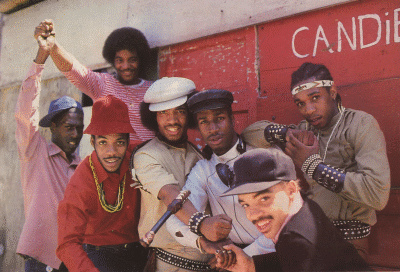
Grandmaster Flash and the Furious Five

Lawrence also paints a vivid picture of the diverse dancefloors of The Roxy, Danceteria, Paradise Garage, Mudd Club and Canal Zone, where on any given night you could see people doing martial arts moves, magic tricks or even aerobics (yes, apparently early ’80s NY also foresaw that cultural boom which hit big later in the decade).

Many rare and previously unpublished photos are included, and Lawrence also gets his hands on many interesting artefacts from the era such as Kraftwerk and Bambaataa full DJ setlists from The Ritz in 1981.

But all good things must come to an end, and ‘Life And Death On The New York Dance Floor’ doesn’t scrimp on the full details of how Reaganomics, gentrification, corporate intrusion and the spread of AIDS decimated the scene.

The book is a great achievement by Lawrence, with a level of detail and seriousness befitting a Professor of Cultural Studies but also large doses of fun and gossip befitting a good-time era and its fascinating protagonists.

‘Life And Death On The New York Dance Floor 1980-1983’ is published by Duke University Press.

Book Review: More Songwriters On Songwriting by Paul Zollo

51o7o-ad4l-_sx329_bo1204203200_For students of songwriting, there’s been an embarrassment of riches on the book front recently – in the last few years we’ve had the groundbreaking ‘Isle Of Noises’, entertaining ‘Complicated Game’, and lengthy autobiographies by the likes of Elvis Costello, Bruce Springsteen, Robbie Robertson, Chrissie Hynde, Neil Young, Brian Wilson and Phil Collins.

And now here comes Paul Zollo’s ‘More Songwriters On Songwriting’, the weighty sequel to his landmark 1991 volume, comprising new, indepth interviews with famous composers from the worlds of pop, rock, country, R’n’B and jazz.

When the book catches fire, tasty anecdotes come thick and fast: Kenny Gamble delivers a powerful statement on his hopes for America’s future; Joe Jackson discusses his love of Duke Ellington and Steely Dan; Bryan Ferry reveals that the lyrics for ‘Avalon’ (the song) were written in no less than four different countries.

Elvis Costello talks about trying (and failing) to collaborate with legendary lyricist Sammy Cahn; Rickie Lee Jones discusses how caring for her sick mother reignited her music mojo; Chrissie Hynde describes in visceral detail how her views on animal rights inform her songwriting.

Ringo talks about how George helped him write ‘Octopus’s Garden’; Dave Stewart recalls the thrill of writing ‘Sweet Dreams (Are Made Of This)’ with Annie Lennox in double-quick time; James Taylor waxes lyrical about Paul McCartney; Don McLean reveals the unusual inspiration behind ‘American Pie’.

And that’s just scratching the surface. Zollo always knows the right questions to ask and the conversations flow unpredictably. Highly recommended.

‘More Songwriters On Songwriting’ is published by Da Capo Press.

Book Review: Walls Come Tumbling Down by Daniel Rachel

walls come tumblingDaniel Rachel’s excellent new book focuses on the links between music and politics in the 1980s.

Ostensibly an oral history of three epochal movements of the era – Rock Against Racism, 2 Tone and Red Wedge – ‘Walls Come Tumbling Down’ shows how these campaigns politicised a whole generation.

Fresh from his fine ‘Isle Of Noises’ tome which interviewed key British songwriters, Rachel opens his contacts book again to get telling contributions from Pauline Black, Dennis Bovell, Billy Bragg, Lloyd Cole, Elvis Costello, Jerry Dammers, Andy Gill, Junior Giscombe, Paul Heaton, Linton Kwesi Johnson, Tracey Thorn, Tom Robinson, Paul Simonon, Paul Weller and many more. There are also rare or never-before-published photos of the era by the likes of Pennie Smith, Jill Furmanovsky and Kevin Cummins.

The story starts on 5 August 1976 when Eric Clapton used a notorious Birmingham Odeon gig to lambast the audience, calling for ‘w*gs’ and ‘P*kis’ to ‘leave the country’ and pledging his support for Enoch Powell, the Conservative MP who eight years earlier had made the infamous ‘Rivers Of Blood’ speech.

Clapton’s shocking proclamations sparked the Rock Against Racism movement, a campaign also inflamed by David Bowie’s comments to Playboy magazine concerning Hitler and the rise of fascism.

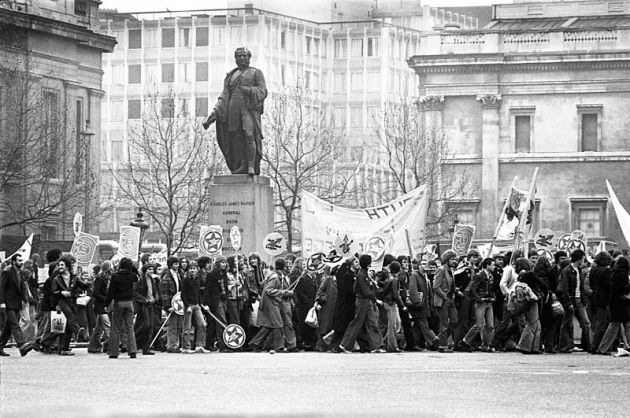
Rock Against Racism march, Trafalgar Square, April 1978

Rock Against Racism march, Trafalgar Square, April 1978

This troubling era is picked over in immense detail, with various jaw-dropping artefacts: Clapton’s handwritten ‘apology’ letter to Sounds magazine is printed in full, and there’s also an extremely rare photo of Bowie’s ‘Nazi salute’ at Victoria station in May 1976 (as well as a new-to-this-writer explanation/apology from Bowie). Black musicians and music-biz legends also comment with great candour about life in the UK during this period.

3-september-20162c-walls-come-tumbling-down-billy-bragg-in-conversation-with-author2c-daniel-rachel-40-people27s-history-museum-image-red-wedge5b45d

The 2 Tone movement attacked racism at its source while many artists under that umbrella also supported the Campaign For Nuclear Disarmament and Rock Against Sexism.

When Margaret Thatcher swept to a second term of office in 1983, bolstered by the Falklands War, a new pacifism emerged, typified by tracks like Elvis Costello’s ‘Shipbuilding’ and Heaven 17’s ‘(We Don’t Need This) Fascist Groove Thang’.

Later, as the miners’ strike took hold and Thatcher’s assault on socialism gathered pace, Paul Weller and Billy Bragg formed the Red Wedge movement which focused its attentions on ousting her in the 1987 General Election. It wasn’t to be, of course – although she did resign in December 1990.

The final section of ‘Walls Come Tumbling Down’ focuses on Dammers and various accomplices’ efforts to raise public awareness about the banned ANC, with high-profile singles and the famous 1988 Nelson Mandela 70th birthday tribute at Wembley Stadium, followed by his eventual freeing from jail on 11 February 1990.

Full of juicy details, potent memories of a far more passionate and politically-engaged era of pop music, and gripping, sometimes moving testimonies, this fascinating book outlines a period when youth culture demanded a voice.

‘Walls Come Tumbling Down’ is published by Picador.

Julian Cope: Full-On

julian_cope

What I knew of Julian Cope pre-2016:

1. He was the singer in early-’80s pop band The Teardrop Explodes.
2. He was a solo artist later in the decade and had some decent hits like ‘World Shut Your Mouth’, ‘Trampolene’ and ‘Charlotte Anne’.
3. He is interested in paganism and various esoterica.
4. He has published a few well-regarded memoirs.

Well, that’s a start. But suddenly everything’s going Cope-crazy round my gaff. For starters, I recently read one of said memoirs ‘Head-On/Repossessed’ after coming across it in my local library, a hilarious, unhinged, Withnailesque account of a singer’s journey through the 1980s pop firmament.

Here’s a slightly-edited excerpt, an account of Cope’s first acid-assisted appearance on ‘Top Of The Pops’ alongside the other Explodes including arch nemesis/keyboardist Dave Balfe.

By the time we reached the BBC TV Centre in London, everyone was f***ed up. We seethed out of the car and moved as one gibbering person towards the dressing room. Tony Hadley (of Spandau Ballet) walked elegantly down the corridor.

‘Hey, there’s Spandoo!’, cried Balfe, and I danced around the singer, psychotically friendly and encouraging.

We piled into the dressing room. Waiting around was not a drag. We got to see Toyah lisp her way through some piece of kack and we got to dance on the stage during our rehearsals. The acid made us happy and nice. We gushed around the place like inbreds at a New England dinner party.

Then we were on. Suddenly the song (‘Reward’) sounded like a massive hit. ‘Top Of The Pops’, man. It’s total bullshit. But it’s brilliant. I loved it. Let’s be huge.

Afterwards, we partied at some club, as you do. Women were nice to me. Men complimented me. I just sat there drooling all night…

A few months later, Cope finds himself invited back to the ‘TOTP’ studios to perform ‘Passionate Friend’ for the 1981 Christmas special. He comes across another of his pop contemporaries:

A group called Bucks Fizz were doing their thing on the other side of the studio. I watched, fascinated. I felt sucked into their scene. God, they were brilliant. I wanted to be in Bucks Fizz…

‘Head-On’ continues very much in this vein, and it’s superb. ‘Repossessed’ concerns Cope’s life and solo career later in the ’80s. It begins with him surveying the wreckage of The Teardrop Explodes:

Here was I, struck down with shamanistic depression, while Balfe had immediately gone off and set up a new label called Food Records, with the cynical, f***-you-up-the-ass ’80s motto: LET US PREY!

F***, man, you invented the ’80s. Learn from your mistakes, you gormless, bug-eyed bushbaby! You’ve preyed on everyone these past years – d’ you have to make such a Thatcherite celebration of it, you unmystical f***er?

If there’s a better put-down in music-biography history, I’ve yet to read it. And then I had a vague recollection of Cope making a memorable appearance on a great programme from the late ’80s called ‘Star Test’ (though, perhaps tellingly, it’s not mentioned in ‘Repossessed’).

Finally, one last recent Cope discovery, fascinating and entertaining, creating lots of food for thought and travel tips. You certainly couldn’t call him an unmystical f***er.

(PS: Julian and Spinal Tap’s David St Hubbins: separated at birth?)