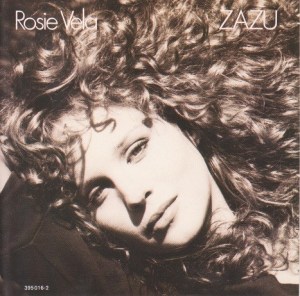
Rosie Vela: Zazu @ 40 (And Being A Steely Dan Fan In The 1980s)

‘Models who make records usually should not but I’ll make an exception for Rosie Vela’, began Max Bell’s four-star review of Zazu in the January 1987 edition of Q magazine.

In general, us Brits liked Zazu (peaking at #20 and going silver), the album released 40 years ago this month which reunited the Steely Dan troika of Donald Fagen, Walter Becker and Gary Katz for the first time in nearly six years.

It was weird being a Steely Dan fan during the 1980s. Your correspondent got in around 1984, obsessed with his dad’s Steely Dan Greatest Hits cassette and Aja vinyl, and by 1986 was a megafan who’d only just twigged that Gaucho had been released a full six years earlier.

We were excited when Becker produced China Crisis, but apart from The Nightfly, Fagen seemed to have gone AWOL (he later admitted that he ‘came apart like a cheap suit’ during the decade).

But imagine our surprise when Zazu was advertised in the first issue of Q magazine, and then Rosie was interviewed in issue four.

I probably bought Zazu on the strength of the ‘Magic Smile’ single around January 1987 (but have just checked and no longer own it on any format…).

Texas-born Roseanne Vela had been a first-call model in the late ‘70s and briefly appeared in Michael Cimino’s ‘Heaven’s Gate’, all the while working on her own demos. Jerry Moss at A&M loved them and enlisted Joe Jackson to produce her debut album (he subsequently pulled out).

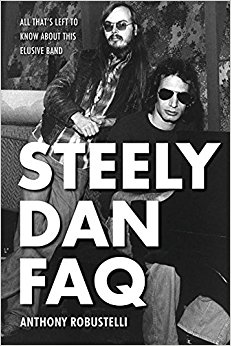
You can read more about Vela and the background to Zazu in Anthony Robustelli’s book ‘Steely Dan FAQ’, but for our purposes: is it easy to hear why Fagen, Katz and Becker was so drawn to the project?

Not really. But the positive things first:

With her husky voice and sometimes through-composed songs with odd chord movement, she offered something completely different to other mid-‘80s female singer/songwriters.

‘Magic Smile’ still sounds great (#27 in the UK) and ‘Boxs’ is good too. It’s very surprising that ‘Fool’s Paradise’ wasn’t a single though. It sounds like the nearest thing to a hit with its synth lick reminiscent of ‘A Hazy Shade of Winter’.

Fagen plays a nice little intro to ‘Interlude’, and Becker doubles his solo on guitar, a cool touch (Becker also plays the weird little synth additions to ‘Tonto’).

But there’s lots of bad too.

Katz helms a surprisingly cold album which leads a little too heavily on Rick Derringer’s lead guitar, some non-more-‘80s snare drum sounds and way too much DX7 from Fagen. With hindsight, maybe Jackson’s more organic approach would have worked better (Becker’s better still).

‘Sunday’, ‘Taxi’, ‘2nd Emotion’ and ‘Tonto’ are totally unmemorable songs. The closing, almost-gothic title track could have been good though with some more real instruments.

In general Katz renders some superb musicians – Tony Levin, Jimmy Haslip, Jim Keltner – pretty anonymous. In some ways Zazu is the ultimate 1986 album (Robustelli compares it to Gaucho and Aja in ‘Steely Dan FAQ’ – it’s impossible to hear that).

The cover art and photo are poor too – whose idea was it to portray this gorgeous woman in black and white?

Vela did ‘Magic Smile’ on Letterman – a brave performance that didn’t quite work. The album and single completely flopped in the USA.

But of course the main thing about Zazu is that it got Becker and Fagen back together again. Next up for Fagen was the ‘Century’s End’ single and The New York Rock and Soul Revue, both interesting. Kamikiriad was just around the corner.
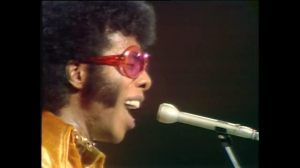
In Memoriam: movingtheriver salutes the fallen of 2025

Sly Stone

Anthony Jackson

Jack DeJohnette

Al Foster (drummer with Miles Davis/Sonny Rollins/Herbie Hancock etc.)

Chris Hill (DJ and member of the so-called ‘Funk Mafia’)

David ‘Syd’ Lawrence (cricketer)

Wayne Larkins (cricketer)

Bertrand Blier (film director/writer)

Dave Bargeron (trombonist with Jaco Pastorius Big Band, Carla Bley, George Russell, Steely Dan etc.)

Jamie Muir (King Crimson percussionist)

Alf Clausen (‘Moonlighting’/’Fame’/’Ferris Bueller’/’Naked Gun’ soundtrack composer)

Michal Urbaniak (violinist with Miles Davis/Lenny White/Jaco Pastorius etc.)

Antony Price (designer for Bryan Ferry, Robert Palmer, David Bowie etc.)

Luis Jardim (Seal/Annie Lennox/FGTH/Grace Jones/George Michael percussionist and, according to Steve Lipson, he also played bass on ‘Slave To The Rhythm’…)

Hermeto Pascoal

Damien Thomas (‘Twins Of Evil’/’Tenko’/’Shogun’/’Pirates’ actor and movingtheriver’s uncle)

Jellybean Johnson (drummer and guitarist with The Time/The Family/Janet Jackson etc.)

Nicky Katt (‘Dazed And Confused’/’Insomnia’ actor)

Roy Ayers

Tony Roberts (‘Annie Hall’/’Play It Again Sam’/’Hannah And Her Sisters’/’Serpico’ actor)

Andy Bey

Tony Slattery

Rob Reiner

Richard Darbyshire (Living In A Box co-founder/vocalist/songwriter)

Clem Burke

Chris Rea

Diane Keaton

Martin Parr (photographer)

Patricia Routledge

Sheila Jordan

Peter Jason (‘They Live’/’Prince Of Darkness’/’In The Mouth Of Madness’ actor)

Brigitte Bardot

Dave Ball (Soft Cell keyboardist/co-founder)

James Prime (keyboardist with Deacon Blue/John Martyn)

Robin Smith (cricketer)

Joan Plowright

Lalo Schifrin

Sly Stone

Rick Buckler (Jam drummer)

David Thomas (Pere Ubu frontman)

Sam Moore (Sam & Dave)

Mike Ratledge (Soft Machine co-founder)

Diane Ladd

Pauline Collins

Eddie Palmieri

D’Angelo

Biddy Baxter (‘Blue Peter’ editor)

Chuck Mangione

Steve Cropper

George Wendt (Norm in ‘Cheers’)

David Lynch

Gene Hackman

Brian Wilson

Andy Peebles (radio presenter and writer, the last Brit to interview John Lennon)

Terence Stamp

Chris Jasper (Isley-Jasper-Isley keyboardist/songwriter and solo artist)

Phil Upchurch

Alex Wheatle (writer, activist and London legend)

Roberta Flack

Prunella Scales

Claudia Cardinale

Marilyn Mazur (percussionst/vocalist with Miles Davis/Jan Garbarek/Wayne Shorter etc.)

Flaco Jimenez (accordionist with Ry Cooder/Bob Dylan)

Drew Zingg (guitarist with Donald Fagen/Boz Scaggs/David Sanborn/Marcus Miller)

Barry McIlheney (Smash Hits/Q/Empire writer)

Simon House (Bowie/Thomas Dolby/Japan/Hawkwind violinist)

Rick Derringer

Dill Katz (bassist with Barbara Thompson’s Paraphernalia/District Six/Ian Carr’s Nucleus)

Henry Jaglom (film director)

John Robertson (footballer)

Ed Williams (‘Ted Olson’ in ‘Police Squad’ and the ‘Naked Gun’ movies)

Harold ‘Dickie’ Bird (cricket umpire)

Roy Estrada (Little Feat/Mothers Of Invention bassist)

Wishing all movingtheriver.com readers a happy and healthy 2026, with loads of cash.

Book Review: Steely Dan FAQ by Anthony Robustelli

The general consensus seems to be that there’s relatively little published analysis of Steely’s work. But is that accurate?

Brian Sweet’s ‘Reelin’ In The Years’ was uncritical but biographically exhaustive; Don Breithaupt’s Aja book was excellent on The Dan’s musical methods; while ‘Revolution In The Head’ author Ian MacDonald wrote briefly but evocatively about Gaucho, included in his gripping ‘The People’s Music’ collection.

And then of course there are the intriguing, sometimes amusing ‘geek’ websites Fever Dreams and The Steely Dan Dictionary.

So it seems there’s actually quite a lot out there, but all the same I was intrigued when ‘Steely Dan FAQ (All That’s Left To Know About This Elusive Band)’ appeared recently. Is there anything left to ‘know’?

The first thing to say about the book is that it’s hard to know exactly which ‘frequently asked questions’ it’s answering – it’s structured more in the style of Omnibus Press’s old ‘Complete Guides’ series, with chapters on individual albums containing summaries of each song.

Then there are some extra sections dealing with Steely’s early days, their concert history, session players and solo projects. But, despite its rigid structure and a lack of any input from the two protagonists, ‘Steely FAQ’ comes up with some nice surprises.

Robustelli is particularly good on Dylan and The Beatles’ influence on Becker and Fagen’s songs. There’s the odd musical detail which hits the spot (during ‘Show Biz Kids’, I’d never noticed that guitarist Rick Derringer references Elliott Randall’s famous ‘Reelin’ In The Years’ solo after the ‘They got the Steely Dan t-shirts’ line) and there are some excellent, rare photos throughout.

Steely in all their scuzzy glory circa 1973. From left: Jim Hodder, Walter Becker, Denny Dias, Jeff ‘Skunk’ Baxter, Donald Fagen

The book is good too on the recent history of the Dan (though musically it’s an era I generally struggle with), with everything you’d ever need to know about the albums and tours since the 1990s.

There’s also a great chapter on cover versions, many of which I’d never heard (including Earl Klugh, The Pointer Sisters, Howard Jones, Dave Valentin, Grover Washington Jr. – approach them at your peril…).

On the minus side, musical/lyrical analysis is often scant and/or inaccurate – Michael Omartian’s solo piano outro on ‘Throw Back The Little Ones’ is described as ‘discordant’; the song ‘Pretzel Logic’ is summarised as ‘their first shuffle’ (what about ‘Reelin’ and ‘Bodhisattva’?) and the tutti line that kicks off ‘Parker’s Band’ is falsely characterised as a ‘dissonant chord’.

It’s weird too that Robustelli doesn’t mention the websites listed above and pretty much ignores their (sometimes) excellent lyrical analysis in his song summaries.

But, in the end, the success of such a book is measured by whether it takes you back to the music with a fresh ear; ‘Steely Dan FAQ’ certainly does that, despite its shortcomings and rather matter-of-fact style. It’s well worth chucking into your holiday bag this summer.

‘Steely Dan FAQ’ is published by Backbeat Books.