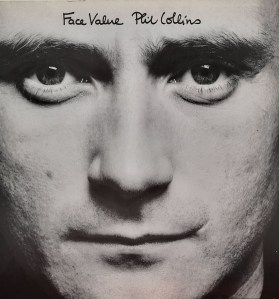
Producer Steve Lillywhite recently named Phil Collins as the best drummer he’s ever worked with, pretty high praise considering Lillywhite has also shared studios with Simon Phillips, Carter Beauford, Mel Gaynor, Mark Brzezicki, Jerry Marotta and Stewart Copeland.
And Phil’s excellent drums were all over his seriously impressive (and very long for 1981, clocking in at over 47 minutes) debut solo album Face Value, released 45 years ago this month, and a record that has fascinated this writer since the age of eight.
But by 1981 Phil had nothing to prove from a drumming perspective. It was the quality of the material and arrangements that bowled people over. And yet Face Value is so much part of the furniture these days that it’s easy to forget just how expertly crafted it is.
Many of the album’s songs started life as primitive home demos, featuring rhythm box, piano and vocals, Collins having a lot of time on his hands after separating from his first wife (‘I Missed Again’ was originally a mid-tempo shuffle with the working title of ‘I Miss You Babe’).
A few other tracks were developed in the studio with various muso friends, including L Shankar on violin, Eric Clapton and ex-Weather Report bassist Alphonso Johnson, and then there were the two famous cover versions (three if you count Phil’s almost-silent rendering of ‘Over The Rainbow’ at the end – the very first ‘secret’ track?).
The resulting material was an embarrassment of riches. Phil threw everything but the kitchen sink at Face Value: singer-songwriter balladry, Motown, Earth, Wind & Fire, jazz/rock, Beatles beats. Even a touch of Barry White (but no prog…). And all of it pretty much works.
He took full advantage of Townhouse Studios’ famous stone-clad drum room and the superb technical skills and easygoing manner of co-producer Hugh Padgham.
‘In The Air Tonight’ arguably changed the music business forever (as, arguably, did the cover – was this the first album that had the artist’s handwriting on the front?). Had there ever been a quieter album opener? Or UK #2 single (#19 in the States)?
Just a spectral Roland CR-78 rhythm box playing a loose approximation of Phil’s beat from Peter Gabriel’s ‘Intruder’ (and at exactly the same tempo) and a few synth chords (starting in D-minor, the saddest of all keys…). And then the massively compressed, mid-song fill is always louder than you think it’ll be.
In fact, compared to modern ‘pop’ music, the whole album has an enormous amount of space. Even the silence between each track (apart from the mid-record medley) seems unusually elongated and very deliberate, possibly because of the huge variety of musical styles.
Atlantic (Phil’s label in the US) boss Ahmet Ertegun said something interesting about ‘In The Air’: for years afterwards, it was always his go-to track for demonstrating a sure-fire hit – rather an extraordinary statement, when you think about it.
Phil was also becoming a more-than-useful pianist – check out his lovely voicings on ‘Hand In Hand’ and impressive rhythm playing (just the black keys!) on ‘Droned’.
The success of Face Value was a huge gamechanger for his Genesis colleagues. The ‘funny guy’ behind the kit who had always felt a bit like an outsider was now calling the shots. Newfound respect from Messrs. Rutherford and Banks. There would be no more drummer jokes.
The album revolutionised Virgin Records too. Its massive success (UK #1, US #7) was almost as seismic as Mike Oldfield’s Tubular Bells had been five years before, ushering in the label’s mega-selling pop era of Culture Club, Human League et al.
‘Phil and Peter Gabriel are delightful people. Nothing’s too much trouble for them and it’s also true that because they’d both bother to go into the office to see everyone, the staff would work their balls off for them.’ Richard Branson, 1999
If Phil’s solo career had only ever consisted of Face Value, his legacy would have been assured. (In fact many, including this writer, believe he hasn’t produced much solo stuff of worth since…)
(Postscript: my 1980s WEA CD sounds great but is apparently a bootleg, with a few funny misspellings inside the inlay card – ‘Sharokav’ on violin – and a weird Eric Clapton pseudonym: ‘Joe Partridge’…)
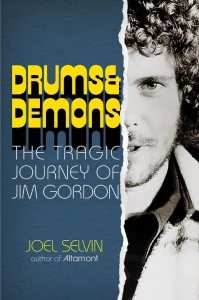
Pop quiz: what do the following tracks have in common? Beach Boys’ ‘Good Vibrations’, Derek and the Dominos’ ‘Layla’, Steely Dan’s ‘Rikki Don’t Lose That Number’, Frank Zappa’s ‘Apostrophe’, Minnie Riperton’s ‘Inside My Love’, The Incredible Bongo Band’s ‘Apache’ and Carly Simon’s ‘You’re So Vain’.
They all feature drummer/percussionist Jim Gordon, who between the mid-‘60s and mid-‘70s was probably the most recorded and celebrated studio drummer in the world (declaring an interest here too: movingtheriver basically learned how to play drums by copying Gordon’s playing on Steely’s Pretzel Logic).
He brought pinpoint time-keeping, smooth grooves, razor-sharp song sense and technical mastery to the kit, but was also a deeply troubled individual whose schizophrenia – exacerbated by drug and alcohol issues – ultimately led to a tragic and shocking crime. He was incarcerated for murdering his mother on 3 June 1983, and died in prison during 2023.
But how did this good-looking, popular, all-American kid end this way? As experienced rock journo and author of ‘Altamont’, ‘Monterey Pop’ and ‘Sly and the Family Stone: The Oral History’, Joel Selvin is perfectly placed to tell this dark tale, and he honours both Gordon’s victim(s) and the drummer himself with a sober, unflinching account.
With the counsel of Gordon’s friends, family members and associates, Slavin outlines his meteoric rise to the top of the music business, the first half of the book featuring entertaining, detailed accounts of work with various Beatles, the Everly Brothers, Joe Cocker, Frank Zappa, Brian Wilson, Jackson Browne and Carly Simon. (The section on Gordon’s tenure with Eric Clapton is particularly illuminating and shocking – the guitarist does not come out well at all…)
The second half descends into very murky waters. There’s shocking evidence of Gordon’s physical abuse of singer/songwriter Rita Coolidge (and his and Clapton’s refusal to give her songwriter credit for ‘Layla’) and great detail about his struggles to get help for schizophrenia and addiction problems.
In fact ‘Drums & Demons’ is an absolute eye-opener with regard to schizophrenia, the voices inside Gordon’s head (tragically, mostly his mother’s) apparently denying him food, amongst other things, and moderating all aspects of his lifestyle.
And if Selvin never quite technically explains why Gordon was such a drum hero (Jim Keltner, Andy Newmark and Jeff Porcaro were huge fans/advocates), the passion for his subject and respect for the drum community as a whole come through loud and clear.
‘Drums & Demons’ joins Bill Milkowski’s ‘Jaco’ and Rob Chapman’s ‘Syd Barrett: A Very Irregular Head’ in the upper echelons of books about gifted, unwell musicians finding themselves alone when the circus has left town. It also perfectly outlines the boom and bust of the studio session scene.
Although at times a difficult, disturbing read, it’s gripping and slickly-written, and highly recommended.
Mel Gaynor spent almost 30 years playing superb drums with Simple Minds in studios, stadiums and sports halls across the globe.
But it’s also oft-forgotten that he was also one of the key British session drummers of the 1980s, working with Joan Armatrading, Elton John, Heaven 17, Pretenders, Kirsty MacColl and others (and, in a 1992 Sunday Times poll, was named the world’s best rock drummer by Stewart Copeland, no less).
So it’s always interesting seeing such behemoths of the drums in tiny venues, often un-mic’d and playing small kits. And they don’t come much more intimate or friendlier than the 606 – though the club always has excellent acoustics.
Gaynor’s latest live project eschews the heavy rock of last year’s Come With Mealbum and returns him to the fusion and jazz/funk of his youth (he started his career playing with Britfunk legends Central Line), alongside pianist John Watson, who has also worked with Sister Sledge, Imagination and Mica Paris, and impressive young bassist Issy Brown. On this gig, they were also joined by MOBO and Mercury-winning saxophonist Denys Baptiste – a real coup.
A fit, healthy and happy-looking Gaynor settled behind the kit with no fuss and counted off ‘Got The Message’, a Crusaders-style, medium-tempo slow-burner, with Baptiste outlining a pretty melody and Brown digging in with excellent tone and judicious use of his low B string. Gaynor was the epitome of taste and groove here, but still found time for one explosive ‘Alive And Kicking’-style snare fill towards the end.
Denys Baptiste, Issy Brown and Mel Gaynor @ the 606
‘Beyond The Stars’, touchingly dedicated by Gaynor to his late father, started with an African-tinged 6/4 drum loop, before settling into another pretty, gentle tune with a touch of Jason Rebello’s writing about it.
‘Preludio’, written by Watson, chugged along with a nice Morrissey-Mullen-style samba groove, and became a feature for Baptiste’s tenor, wittily quoting Dennis Edwards’ ‘Don’t Look Any Further’, with which it shared a chord sequence.
Baptiste also elevated ‘Zeta’ – apparently Gaynor’s manager’s favourite tune. The saxophonist can do it all, from Grover Washington Jr. soul to sixteenth-note meltdown, Michael Brecker-style. It was nice to hear Watson lay out for a while too, then return to trade spicy fours with Baptiste. Gaynor also raised the volume level by about 25%, suddenly shifting into fifth gear with some terrific Tony Williams-style fills around the toms.
This was not an evening of cutting-edge jazz/rock, with not a broken beat nor drum-and-bass groove in sight, nor was it volatile fusion in the Mahavishnu or Lifetime mold. But if Mel’s music leans more towards the softer style of the late 1970s/early 1980s, from Average White Band to The Crusaders via Incognito and Morrissey-Mullen, it’s no worse for that.
And the set showed Gaynor to be an excellent ‘pocket’ drummer, with much power in reserve. But then you already knew that from his work with Simple Minds.
When you think of 1980s pop music, which drum sounds come to mind?
They’re probably pretty loud and the infamous gated snare possibly looms large: ‘Let’s Dance’, ‘In The Air Tonight’, ‘Hey Mickey’, ‘Uptown Girl’, ‘A Town Called Malice’, ‘Born In The USA’.
But there’s a whole alternative world of 1980s hits where the drummer played very quietly, with brushes rather than sticks. Stuff like Buddy Holly’s ‘Raining In My Heart’, The Beatles’ ‘When I’m 64’ and Lou Reed’s ‘Walk On The Wild Side’ probably laid down the gauntlet, but you can’t imagine any producers or focus groups demanding that the drummer play brushes to create a hit (and when was the last hit that featured brushes?).
Here are some classic 1980s singles that somehow got away with it (all chart placings from the UK).
10. Echo & the Bunnymen: ‘Killing Moon’
Powered by Pete de Freitas’s subtle and unexpected brushwork, the classic single got all the way to #9 in early 1984.
9. George Michael: ‘Kissing A Fool’
The seventh and final single from Faith, written back in 1984, reached the top 20 and was initially mooted to be the title track of that 1987 album. Session player Ian Thomas, soon to play with everyone from Robbie Williams to Scott Walker, overdubbed some brushes on the snare after first recording a pass with sticks.
8. The Cure: ‘The Lovecats’
This stand-alone single was also the band’s first top ten hit, peaking at #7 in October 1983. Drummer Andy Anderson began his career with Hawkwind’s Nik Turner and Steve Hillage, then ended up on Robert Smith and Steve Severin’s The Glove side project. He found himself recording this song in Paris then joined the band for a year, playing on 1984 album The Top and playing brushes on another B-side, ‘Speak My Language’. He then toured with Iggy Pop throughout 1987. Anderson died in 2019.
7. Alison Moyet: ‘That Ole Devil Called Love’
This stand-alone single reached a heady #2 during March 1985, produced by ’18 With A Bullet’ singer Pete Wingfield. But who’s the drummer? Answers on a postcard please.
6. Robert Wyatt: ‘Shipbuilding’
Not much is known about drummer Martin Hughes, but he did a nice job on this classic single which reached #35 in April 1983.
5. Chris Rea: ‘Driving Home For Christmas’
Written in 1978, it was originally intended for Van Morrison. Rea first recorded it as a B-side to the 1986 single ‘Hello Friend’, with drummer Dave Mattacks playing almost with a country feel. But the most famous version features on Rea’s 1988 New Light Through Old Windows compilation album with drums by Martin Ditcham, best known for his percussion work.
4. Chris Isaak: ‘Wicked Game’
Kenney Dale Johnson played some very subtle drums on this classic single released in July 1989, going on to become a huge sleeper hit in the US and UK.
3. Elton John: ‘Blue Eyes’
Recorded at AIR Studios in Montserrat, this touching ballad was the lead-off single from John’s Jump Up! album, reaching the top ten in 1982. The very slow 6/8 groove was beautifully marshalled by Jeff Porcaro. See also Toto’s ‘Don’t Stop Me Now’ and Ray Charles’ ‘Still Crazy After All These Years’ for some classic Porcaro brushwork.
2. Fairground Attraction: ‘Perfect’
It reached UK #1 in May 1988 – is it the only chart-topper to feature a drummer playing brushes? London jazzer Roy Dodds did the honours on this.
1. Rain Tree Crow: ‘Blackwater’
Cheating a bit here. It wasn’t released until 1991 but was recorded in December 1989 at Chateau Miraval in Southern France. It was the reformed Japan’s only single, reaching #62. In the band biography ‘Cries And Whispers’, drummer Steve Jansen makes the remarkable claim that his whole performance was pieced together using samples. Weird…
Any other 1980s hits that feature brushes? Drop us a line below.
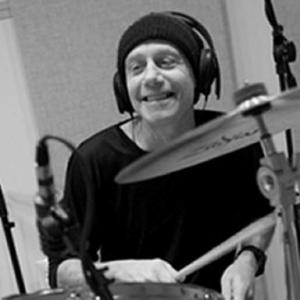
‘No crap beats’ – if that wasn’t on Keith Leblanc’s business card, it should have been.
The man could just sit down at any kit – or program any drum machine – and make it sound rich and swinging, whether he was playing with Tackhead, Seal, Tina Turner, Nine Inch Nails, Depeche Mode, Bomb The Bass, ABC, Sugarhill Gang, Annie Lennox, Mark Stewart or Little Axe.
LeBlanc – who died in April – has to go down as a true beat innovator, embracing and developing drum technology and particularly developing a human/machine interface which always grooved beautifully and didn’t distract from the music.
Along with other key ’80s/’90s drummers Dennis Chambers, Jonathan Moffett, Ricky Wellman and Lenny White, he also had a killer right foot.
He grew up in Bristol, Connecticut, and was inspired to pick up the drum sticks after seeing The Beatles on TV. He was later influenced by what he called ‘pop’ music – James Brown, Cameo, Muscle Shoals, Gap Band, Parliament/Funkadelic – and became the house drummer for Sugar Hill Records in late 1979 and co-founder of grounbreaking funk/industrial/dub/rock outfit Tackhead alongside Skip McDonald, Doug Wimbish and Adrian Sherwood.
LeBlanc also recorded many solo albums, the best of which is probably Time Traveller, and played excellent live jazz/rock with Nikki Yeoh, Jonas Hellborg and Mano Ventura.
It’s sad to think one will never again hear that amazing LeBlanc/Wimbish bass and drums hook-up. Anyone who saw Mark Stewart, Little Axe or Tackhead live will remember how the first few minutes of every gig was usually just the two of them playing together. That lasted right through to the 2021 On-U Records anniversary shindig, though a masked Keith looked very frail.
movingtheriver had the pleasure of interviewing LeBlanc in 2010 for Jazz FM, and revisiting my notebook I found lots of interesting quotes I didn’t use in my original article:
On Sugarhill Records/co-owner Sylvia Robinson:
Sylvia was looking for Skip and Doug but they initially said no because they’d had a bad experience before. I was new to the band but I heard the words ‘recording studio’ and ‘money’ and bugged them until they said yes. The first Sugarhill Gang album was recorded in the Robinsons’ studio (H&L in Englewood Cliffs, New Jersey, down the road from Rudy Van Gelder’s famous studio) which was falling to bits! We’d cut a track on the Friday, drive home to Connecticut and hear it on the radio on the Monday. The whole industry was shaken up when rap started. It took them four years to catch up. But if the Robinsons had done 25% of the right thing, Sugar Hill Records would still be going. They screwed up. It was hard to watch the artists get ripped off and then watch those people flaunt money in front of them. We tried not to write anything because we knew how they were.
On playing live in the studio:
The first rap drummer was a white guy! Back then, playing live in the studio was normal. The arranger Jiggs Chase would get with the rappers, do an arrangement based on what they wanted to use and then give us charts. And then we’d add things. The musical ethic was really good at that time. You had to get it right or there’d be someone else in there recording the next day.
On hip-hop and drum machines:
After ‘Planet Rock’, anyone could make a rap record in their bedroom. When drum machines came out, I saw my job opportunities flying out of the window. They opened the door for everybody to do it. Then it dawned on me what I could program one of those better than any engineer. I did ‘No Sell Out’ just to see what I could do with drum machines.
On George Clinton/P-Funk:
I was offered the gig with Parliament – I asked Bernie Worrell if I should do it and he said, ‘Only if you want to chase the money all night!’
On his imitators:
The Red Hot Chili Peppers ripped us off, especially in the beat department. The drummer was checkin’ me hard!
On Prince:
Prince sabotaged my drum machine at First Avenue in Minneapolis. I was playing along and then the machine stopped and I heard this voice hissing through the monitor: ‘What’s the matter, can’t you keep time?’!
One attributed to legendary London saxophonist/club owner Ronnie Scott particularly sticks in the memory:
‘Dad, I want to be a drummer when I grow up.’
‘Well, make your mind up, son. You can’t do both.’
Though Matt Brennan’s excellent ‘Kick It: A Social History Of The Drum Kit’ commences with a raft of such jibes, it does so only to make a point and might even put pay to them forever. The book puts skin-spankers right at the forefront of modern music and is surely the best PR job for the profession yet to emerge.
Though ostensibly an ‘academic’ work, ‘Kick It’ is anything but stodgy or overly-analytical – rather, it’s an enjoyable, fast-paced, truly internationalist voyage through the evolution of the drum kit and status/profession of the drummer, from slave ships to the modern-day, multi-tasking, technology-savvy ‘beat-maker’, via Congo Square, the swing/bebop revolutions of the 1930s/1940s and advent of the studio player in the 1960s.
‘Kick It’ unflinchingly outlines how racial and cultural stereotypes initially hampered the status of the percussionist in modern industrial societies, but also brilliantly describes the vital role of the multi-faceted, ambidextrous drummer in vaudeville, minstrel and music-hall traditions (drummers were called upon to supply everything from rainfall to thundercracks during live performance).
Accordingly, Brennan also shows how drummers’ demands accelerated technological developments both in kit/cymbal construction and recording techniques, and also how German, Turkish and British manufacturers were arguably just as important as the American companies.
Brennan outlines the careers and styles of such legends as Gene Krupa (who put the tom-tom on the map), Kenny Clarke (who brought the ride cymbal and kick drum into play) and Earl Palmer, who served as a link between ‘jazz’ and ‘pop’ players, ‘swinging’ his rock grooves on records by Fats Domino and Chuck Berry even as pianists and guitarists were moving towards ‘straight eights’.
Brennan also looks at the issue of sexism in the percussion industry, with particular focus on the tragic career of gifted drummer Karen Carpenter.
Later Brennan makes fascinating parallels in the careers and playing styles of first Ringo Starr and Charlie Watts, then, in a moving section, Keith Moon and John Bonham (the latter two dying at the depressingly young age of 32 – Brennan fascinatingly explores how both may have suffered from feelings of inferiority and insecurity, not helped by the attitudes of their bandmates).
‘Kick It’ moves intriguingly into the 1980s, looking at the careers of Billy Cobham, Bill Bruford, Phil Collins, Neil Peart and Steve Gadd, exploring how recording techniques and drum machines revolutionised percussion sounds, and finally comes right up to the present to investigate how sampling and programming have given drummers a whole new lease of life in the streaming era.
A tremendous achievement – both a history lesson and exciting story to boot – ‘Kick It’ had this drummer newly inspired, rushing to his kit with some gusto and not a little pride.
Players will find a host of fascinating photos and stories – the book may also have you questioning everything you ever assumed about the traditional kit – while the general music fan will find an intriguing, fast-paced history of modern music.
Don’t let ‘em ever tell you you’re ‘just’ a drummer…
Could it be that the ’80s spawned more ‘drum-based’ songs than any other music decade?
New recording technology meant that the drums had never been louder and prouder in the mix. Stylistically, influences from ’70s fusion and classic soul/R’n’B were still fresh and relevant.
Hip-hop and go-go brought a funky swing. Metal and punk added a unashamedly aggressive dimension. And let’s not underestimate The Collins Effect: Phil brought a lot of attention to the drums.
Here are 28 notable grooves from the decade. My definition: pieces of music where the drum parts are intrinsic to the architecture of the piece. Eagle-eyed readers will spot lots of shuffles here – fast ones, slow ones, medium ones, half-times. Bernard Purdie and John Bonham’s influences apparently loomed large…
28. Joan Armatrading: ‘The Key’ (1983) Drummer: JERRY MAROTTA
27. Cameo: ‘She’s Strange’ (1984) Drummer: LARRY BLACKMON
26. Japan: ‘Still Life In Mobile Homes’ (1981) Drummer: STEVE JANSEN
25. Lee Ritenour: ‘Road Runner’ (1982) Drummer: HARVEY MASON
How does he find time to fill out the groove with all those 32nd notes on the hi-hats? With such solidity? Only the master knows.
24. Steve Khan: ‘Uncle Roy’ (1983) Drummer: STEVE JORDAN
Apparently Khan’s instruction to Jordan was to play an ‘Elvin Jones type of thing’ on this half-time shuffle. He completely ignored the guitarist and came up with an outrageous groove , turning the snare off, smacking the crash/ride cymbal as if his life depended on it and adding some tasty footwork for good measure.
23. U2: ‘Sunday Bloody Sunday’ (1983) Drummer: LARRY MULLEN JR.
Love or hate the track, it was the beat of choice for air-drumming schoolkids across the land (at least it was at my school). You can even hum it.
22. TONY WILLIAMS: ‘Sister Cheryl’ (1985)
In essence, Tony ‘straightens’ out the jazz swing ride cymbal/hi-hat pattern, adds some snare backbeats and then dials in almost a Latin feel. It’s a revolutionary beat on an album full of them (Foreign Intrigue).
21. Weather Report: ‘Volcano For Hire’ (1982) Drummer: PETER ERSKINE
Maybe Joe Zawinul came up with this pattern, but it’s superbly played and certainly one of the most striking and powerful in WR’s illustrious drumming legacy.
20. INXS: ‘What You Need’ Drummer: JON FARRISS
Fleet-of-foot dancefloor funk/rock smasher from one of the best groove drummers of the ’80s.
19. China Crisis: ‘In Northern Skies’ (1989) Drummer: KEVIN WILKINSON
A different kind of half-time shuffle, with crossed hands, neat ghost notes and a nice tom-tom emphasis on the ‘3’.
18. Prince: ‘Dance On’ (1988) Drummer: SHEILA E
Sheila unleashes her ’70s fusion chops on this curio from Lovesexy. Quite unlike anything else in her or the Purple One’s discography.
17. Joni Mitchell: ‘Be Cool’ (1982) Drummer: JOHN GUERIN
LA session legend Guerin ended his 10-year sideman gig with Joni playing this inspired take on a medium jazz swing. Holding two brushes, one marks out time with triplets and other ‘brushes’ in quintessential jazz style.
16. Level 42: ‘It’s Over’ (1987) Drummer: PHIL GOULD
One of many crafty, original ’80s grooves from the Isle Of Wight sticksman, this one was achieved by playing 16th notes on the hi-hat with both the foot and the hands. On a good system you can really hear the subtleties.
15. Jeff Beck: ‘Space Boogie’ (1980) Drummer: SIMON PHILLIPS
Of course it takes its cue from Billy Cobham’s famous ‘Quadrant 4’ double-bass-plus-ghost-notes shuffle, but Phillips’s beat is in 7/4 and bloody hard to pull off. He maintains the intensity remarkably well and throws in some killer fills.
14. Jeff Beck: ‘Star Cycle’ (1980) Drummer: JAN HAMMER
Another classic from Jeff’s There And Back album, the composer/keyboard player takes the sticks himself for a classic, still-funky, displaced-snare groove. Hammer has always been a superb drummer – check out his First Seven Days album for more evidence.
13. Weather Report: ‘Molasses Run’ (1983) Drummer: OMAR HAKIM
Lots to choose from in Omar’s prestigious ’80s discography but this one sticks out. His beats have a sense of structure befitting a natural songwriter/arranger (which, of course, he is too).
12. Joni Mitchell: ‘My Secret Place’ (1988) Drummer: MANU KATCHE
Kind of a variation on number 8, this cyclical groove almost IS the song.
11. Bennie Wallace: ‘All Night Dance’ (1985) Drummer: BERNARD PURDIE
Another classic from the shuffle master on this track from the saxophonist’s hard-to-find Blue Note album Twilight Time, this managed to incorporate both of Purdie’s trademarks: ghost notes and hi-hat barks.
10. Adam & The Ants: ‘Ant Rap’ (1981) Drummers: CHRIS HUGHES, TERRY LEE MIALL
There are two or three grooves on this and they’re all corkers. The song led to an outbreak of desktop hand-drumming by schoolkids in the early ’80s, driving teachers to distraction.
9. Grace Jones: ‘Warm Leatherette’ (1980) Drummer: SLY DUNBAR
Trust Sly to come up with two such original takes on the shuffle.
8. Paul Simon: ’50 Ways To Leave Your Lover’ (1982) Drummer: STEVE GADD
What a treat to hear and see this classic live version from Central Park, possibly with some tiny deviations from the recorded take. Much imitated, never surpassed. And check out Gadd’s superb extended coda.
7. John Scofield: ‘Blue Matter’ (1986) Drummer: DENNIS CHAMBERS
One of the great beatmakers of the ’80s or any other decade, the Baltimore master busted loose with two classic go-go grooves for the price of one.
6. Van Halen: ‘Hot For Teacher’ (1984) Drummer: ALEX VAN HALEN
Modern Drummer magazine said it best: ‘The song begins with Alex pounding out a fairly complex floor-tom pattern featuring the ever-popular hairta rudiment, played over shuffling double bass drums. Add some tom hits and then a driving ride cymbal, and you’ve got one of the most classic drum tracks of the ’80s—or any decade.’
5. The Police: ‘Murder By Numbers’ (1983) Drummer: STEWART COPELAND
Yet another ingenious variation on the medium jazz swing, Copeland turns 4/4 into 6/8, adds some weird emphases and catches the ear every time.
4. King Crimson: ‘Frame By Frame’ (1981) Drummer: BILL BRUFORD
At Robert Fripp’s prompting, Bruford plays the lion’s share of the beat on one of his Octobans, not the hi-hat. From the classic album Discipline.
3. Chuck Brown & The Soul Searchers: ‘We Need Some Money’ (1985) Drummer: RICKY WELLMAN
The right foot that floored the drumming world.
2. Toto: ‘Rosanna’ (1982) Drummer: JEFF PORCARO
Impossible to leave out this half-time classic. Porcaro fused The Purdie Shuffle with a Bo Diddley beat to create a monster.
1. John Martyn: ‘Pascanel (Get Back Home)’ (1981) Drummer: PHIL COLLINS
Phil came up with numerous cool variations on Harvey Mason’s ‘Chameleon’ beat in the ’80s, but this is my favourite. It’s basically ‘Chameleon’ but with a very groovy triplet figure inserted between the hi-hats and snare. From the classic Glorious Foolalbum.
So here’s the second instalment of essential drum albums from the 1980s (check out part one here), a selection of the decade’s movers and shakers who either pushed the boundaries, flew somewhat under the radar or simply made the music sound better.
19. Chuck Brown And The Soul Searchers: Live ’87 Drummer: Ricky Wellman
Alongside Keith LeBlanc, Jonathan Moffett and Dennis Chambers, Wellman played some of the scariest single bass drum of the decade, laying down the go-go template that would influence everyone from Trevor Horn to Miles Davis (who headhunted Wellman in late 1987).
18. Nik Kershaw: The Riddle (1984) Drummer: Charlie Morgan
Another somewhat underrated Brit sessionman, Morgan does exactly what’s right for the songs with a lot of panache. His ghost-note-inflected grooves on ‘City Of Angels’ and ‘Easy’ are treats for the eardrums.
17. Tackhead: Friendly As A Hand Grenade (1989) Drummer/programming: Keith LeBlanc
Included because of the sheer variety of grooves, both human and machine-generated. Some beats bring to mind the sounds of electro and early hip-hop, but Keith also provides precise, tight, funky grooves on the kit.
16. XTC: English Settlement (1982) Drummer: Terry Chambers
He was not subtle but the unreconstructed Swindon powerhouse could mix it with the best of ’em when it came to rock. Strongly aided by the dream Lillywhite/Padgham production/engineering team, his cavernous grooves always hit the spot. Currently residing in the ‘where are they now’ file (Or is he? Check out the comments section below… Ed.).
15. Power Tools: Strange Meeting (1987) Drummer: Ronald Shannon Jackson
Ex-Ornette/Ayler collaborator and serious Buddhist Shannon Jackson cut a swathe through ’80s drumming with his striking solo albums and occasional projects like this frenetic trio alongside Bill Frisell and future Rollins Band bassist Melvin Gibbs. Free jazz with balls and humour. Play LOUD.
14. Roxy Music: Avalon (1982) Drummer: Andy Newmark
Hard to bet against this masterpiece of tasteful, empathetic song-accompaniment. Even more impressive is the revelation that Newmark was usually the last musician to overdub, replacing a skeletal drum machine part.
13. Nile Rodgers: B Movie Matinee (1985) Programming: Jimmy Bralower
Much-in-demand NYC programmer Bralower wasn’t every drummer’s cup of tea but he came up with many memorable, catchy beats on Nile’s forgotten second solo album. Even classy ballad ‘Wavelength’ chugs along to what can only be described as an electro groove.
12. Yes: Big Generator (1987) Drummer: Alan White
Possessing one of the crispest snare sounds of the decade, White played 4/4 rock with lots of surprises – both listener and band alike have to be on their toes – and conversely also made the most complex arrangements sound completely natural.
11. Grace Jones: Living My Life (1982) Drummer: Sly Dunbar
Sly came up with not one but two classic, much-imitated beats on this album (‘My Jamaican Guy’, ‘Nipple To The Bottle’) and also proved he could play rock with the best of them. Mark Knopfler and Bob Dylan were definitely listening.
10. Mark King: Influences (1984)
We knew he’d started his musical life as a drummer but finally hearing the results of his misspent youth was well worth the wait. He gives his heroes Billy Cobham and Lenny White a serious run for their money on this varied collection, from Level-style funk to Latin-tinged jazz/rock.
9. King Crimson: Discipline (1981) Drummer: Bill Bruford
Impossible to leave out. Aided by Robert Fripp’s ‘rules’, the Surrey sticksman redefined rock drumming for the new decade, adding unusual timbres and taking the emphasis off the hi-hat. He also delivered one of the great over-the-top performances on ‘Indiscipline’.
8. Weather Report: Sportin’ Life (1985) Drummer: Omar Hakim
The fusion supergroup’s penultimate studio album is also one of their best, and Omar is a big reason why. His touch on the hi-hats and ride cymbal is instantly recognisable, and he swings hard on the inspired cover of Marvin Gaye’s ‘What’s Going On’.
7. Stewart Copeland: Rumble Fish (1983)
Not for nothing was the ex-Police man calling himself The Rhythmatist around this time: he hits anything and everything (xylophone, drum kit, marimba, piano, typewriter) to create a colourful, unique soundtrack for Francis Ford Coppola’s black-and-white curio.
6. Sadao Watanabe: Maisha (1985) Drummers: Harvey Mason, John Robinson
A superior example of big-budget ‘smooth jazz’ before it became a cliché, Mason and Robinson split the drum duties and perfectly compliment each other. The latter particularly lets his hair down a bit more than usual, particularly on ‘Paysages’.
5. Simple Minds: Sparkle In The Rain (1984) Drummer: Mel Gaynor
Slinky, powerful grooves from South London’s answer to Omar Hakim. He has the walls of Shepherds Bush’s Townhouse studios shaking with his uber-beats on ‘Up On The Catwalk’, ‘Waterfront’ and ‘C Moon Cry Like A Baby’.
4. Level 42: A Physical Presence (1985) Drummer: Phil Gould
An exciting live performance from one of the great British drummers. His top-of-the-beat feel and crisp sound suggest a mix of Billy Cobham and Bill Bruford, and he could also lay down explosive multi-tom fills to match both of them.
3. Chick Corea Elektric Band: Eye Of The Beholder (1988) Drummer: Dave Weckl
Love or hate Corea’s Scientology-infused, neo-classical jazz/rock, Weckl’s stellar performance on this album was beyond question. He delivered a gorgeous sound, a total mastery of the drum kit and stunning chops when required.
2. Jeff Beck’s Guitar Shop (1989) Drummer: Terry Bozzio
One of the loudest drummers this writer has ever heard in concert (Hammersmith Odeon, December 1989), Bozzio delivered some of the fastest double-bass playing on record (‘Sling Shot’) and also unique takes on reggae (‘Behind The Veil’) and funk (‘Day In The House’).
1. The Clash: Sandinista! (1980) Drummer: Topper Headon
The rebel rockers embraced rockabilly, reggae, dub, calypso, punk and even funk on this ambitious triple album, but they wouldn’t have been able to go there without the versatile London sticksman.
Inspiration was easy to come by; the early ‘80s delivered brilliant drum-centric hits like The Jam’s ‘A Town Called Malice’, Bow Wow Wow’s ‘I Want Candy’, Adam and the Ants’ ‘Ant Rap’ and Phil Collins’ ‘In The Air Tonight’. Drums were sounding like DRUMS again – the days of dead-sounding kits seemed (almost) over.
Exciting fusions were everywhere: avant-gardists combined free-funk and free-jazz; art-popsters brought ideas from minimalism, Africa and the Far East; jazz/rock masters of the 1970s moved into production and arrangement; dub and World music thrived.
Post-punks fused rock and reggae; the ‘Young Lions’ embraced and sometimes extended the drum worlds of Art Blakey, Philly Joe Jones and Max Roach; funk and R’n’B got precise and spicy; metal players took double-kick playing to extraordinary extremes. And of course there was also the sudden development of technology: some drummers shrunk from the challenge, others rose to it.
So, to celebrate movingtheriver.com’s third anniversary, here’s a personal selection of the decade’s finest drum performances, in no particular order.
46. Loose Tubes: Loose Tubes (1985) Drummer: Nic France
France marshals this big band through jazz/rock, Latin and African vibes with a sparky, lively studio sound, something like a Brit version of Dave Weckl.
45. Lee Ritenour: Earth Run (1986) Drummer: Carlos Vega
The album may be the beginning of Ritenour’s descent into bona fide smooth jazz but the best tracks feature brilliant playing by the underrated Vega.
44. Prefab Sprout: Protest Songs (1989) Drummer: Neil Conti
Conti’s classy playing provided a subtle, always stylish counterpoint to Paddy McAloon’s pithy, complex songs about poverty, childhood and the social mores of the early ’80s.
43. Robert Plant: Shaken ‘N’ Stirred (1985) Drummer: Richie Hayward
Little Feat were a tough act to follow from a drumming point of view but Hayward settled into the 1980s with this superb performance, showcasing a bright, expressive style on Plant’s quirky, Peter Gabriel-influenced art-rock.
42. Frank Gambale: Live! (1989) Drummer: Joey Heredia
LA-based Heredia combined slinky funk/fusion, Police-style rock/reggae and Latin grooves to spectacular effect on this classic live album. His sparring with a terrifyingly unhinged Gambale on ‘Credit Reference Blues’ and ‘Touch Of Brazil’ is essential listening.
41. Al Jarreau: L Is For Lover (1986) Drummer: Steve Ferrone
The ex-Average White Band ex-pat Brit takes us on a journey through the art of groove on this nearly-forgotten Nile Rodgers-produced minor classic. He gives James Gadson a run for his money with his killer 16th-note hi-hats, crisp snare and nifty footwork.
40. Eddie Gomez: Mezgo (1986) Drummer: Steve Gadd
On this Japan-only album (which is still waiting for a CD release), Gadd was at his most expressive, navigating the bebop flavours of ‘Puccini’s Walk’ and quirky fusion stylings of ‘Me Two’ with great aplomb. And no one else could have played a samba the way Gadd does on ‘Caribbean Morning’.
39. Miles Davis: We Want Miles! (1982) Drummer: Al Foster
In combination with bassist Marcus Miller, the underrated Foster laid down some highly original rhythm section work on Miles’s only live album of the 1980s. Listening to his ‘bouncing ball’ dynamics on ‘Kix’, you’d swear that the very fabric of time was being messed with.
38. Rockin’ Jimmy & The Brothers Of The Night (1982) Drummer: Chuck DeWalt
Here’s one out of left-field from a Tulsa bar band who I first heard yonks ago on Alexis Korner’s fabled early-’80s Radio One blues show. DeWalt had a Ringo-esque knack for coming up with simple but memorable drum parts, with a great feel and nice use of space.
37. Living Colour: Vivid (1988) Drummer: Will Calhoun
Calhoun’s whip-crack snare and natty ride cymbal/hi-hat combinations knocked a lot of drummers’ socks off in 1988. He was just as comfortable with the half-time, Bonhamesque rock of ‘Cult Of Personality’ as he was with the funk and go-go grooves of ‘Funny Vibe’ and ‘Broken Hearts’.
36. INXS: Kick (1987) Drummer: Jon Farriss
If it’s funky pop you’re after, Farriss is your man. His dynamics, ghost notes and weird accents on ‘New Sensation’ and ‘Need You Tonight’ are worth the price of admission, while ‘Never Tear Us Apart’ sounds a bit like Ringo if he had a few more chops.
35. Hiram Bullock: Give It What U Got (1987) Drummer: Charley Drayton
NYC-native Drayton delivered a cutting snare, subtle cymbal work and exciting two-hi-hat grooves on this impeccable slice of late-’80s funk/fusion. No one else – not even his buddy Steve Jordan – could have done a better job.
34. Sting: …Nothing Like The Sun (1987) Drummer: Manu Katche
Overproduced? It’s a moot point when the playing’s as delicious as this. His independence between kick drum and hi-hat on ‘Rock Steady’ is fairly mind-boggling, while no one apart from Copeland and Colaiuta has perfected the high-speed reggae groove with such aplomb.
33. Narada Michael Walden: Divine Emotions (1988)
The ’70s fusion hero turned ’80s producer extraordinaire still had time to deliver this forgotten classic featuring tasty, tight, propulsive grooves and a return to blazing jazz/rock on the hysterical closer ‘We Still Have A Dream’.
32. John Scofield: Electric Outlet (1984) Drummer: Steve Jordan
The NYC tyro had already turned heads with the Blues Brothers and ‘Saturday Night Live’ bands but this album perfectly captured his more expansive side. Two hi-hats, crisp snare, gorgeous K Zildjians and some spry kick drum work, particularly on ‘Pick Hits’, ‘Big Break’ and the title track.
31. Nik Kershaw: The Works (1989) Drummer: Vinnie Colaiuta
We knew that Vinnie could unleash some jaw-dropping chops, but this album perfectly demonstrates his groove side. Check out how he navigates the 6/4 time of ‘Cowboys And Indians’ and hot-wires mid-tempo rocker ‘Wounded Knee’. And then there’s THAT fill in ‘Don’t Ask Me’…
30. Billy Cobham: Powerplay (1986)
An album that finally captured what it’s like to stand a few feet away from the master, featuring a lovely acoustic drum sound, shorn of any studio effects. There was incredible clarity to his playing even if the material wasn’t quite as strong as on the previous year’s album Warning.
29. Japan: Oil On Canvas (1983) Drummer: Steve Jansen
Jansen was always looking at new ways to play a 4/4 beat and came up with five or six classics on this live retrospective. ‘Visions Of China’, ‘Canton’ and ‘Sons Of Pioneers’ still sound like unique drum statements in the history of recorded music.
28. Stanley Clarke: Rocks, Pebbles And Sand (1980) Drummer: Simon Phillips
Beautifully recorded by Dennis Mackay, his drums have never sounded better or bigger. From the driving rock’n’roll of ‘Danger Street’ to highly technical prog-fusion of ‘She Thought I Was Stanley Clarke’, the London maestro delivered a superb performance throughout.
27. Bireli Lagrene: Foreign Affairs (1988) Drummer: Dennis Chambers
Many to choose from in Dennis’s repertoire but I’ve plumped for this hard-to-find fusion classic. With a fatter snare than usual, he anchors the band beautifully on Weather Report-style jams ‘Josef’ and ‘Senegal’ and unleashes a trademark 6/8 groove and killer solo on the title track.
26. Van Halen: 1984 Drummer: Alex Van Halen
If he had only ever recorded the freaky double-bass workout ‘Hot For Teacher’, his place in the drum pantheon would be assured. But this breakthrough album also featured a host of other treats, not least ‘Jump’, plus the most identifiable snare drum in hard rock.
25. John Abercrombie: Getting There (1987) Drummer: Peter Erskine
Difficult to choose one from possibly the jazz drummer of the decade but I’ve gone for this mid-career classic. Erskine busts out his Elvin Jones chops on ‘Furs On Ice’ and rocks hard on the epic title track which almost approaches avant-rock.
24. John Martyn: Glorious Fool (1981) Drummer: Phil Collins
A fascinating companion piece to Phil’s Face Value and Genesis’s Duke during arguably his best period of drumming. He brings out lots of lovely ghost-noted grooves in the Little Feat style, some brutal rock on ‘Amsterdam’ and even spicy fusion on ‘Didn’t Do That’.
23. China Crisis: Diary Of A Hollow Horse (1989) Drummer: Kevin Wilkinson
Wilkinson was (he sadly took his own life in 1999) kind of an English Jeff Porcaro, a tasty groovemeister who always played exactly what was right for the song – with lots of elan. Check out the subtleties of ‘St Saviour’s Square’, ‘In Northern Skies’ and ‘Red Letter Day’.
22. Toto IV (1982) Drummer: Jeff Porcaro
It would almost be sacrilege not to include this. Some of the greatest rock drumming in history, with feel, finesse, style, a rich, full sound and lovely time-feel (though he famously claimed ‘my time sucks’!).
21. Pat Metheny: 80/81 (1981) Drummer: Jack DeJohnette
DeJohnette was always a class act on ECM’s ’80s projects and he sounds sparkling on this double album. But I include it mainly for his performance on ‘Every Day I Thank You’, goosing saxophonist Michael Brecker into one of his finest sax solos on record.
20. Stanley Clarke Band: Find Out! (1985) Drummer: Rayford Griffin
There are definitely shades of Cobham in his exuberant style (and he set himself up left-handed on a right-handed kit like Billy) but also grooves aplenty on this underrated album. His lopsided funk on ‘Born In The USA’ is balanced out by chops-fests ‘Campo Americano’ and ‘My Life’. This guy has technique to burn but also does what’s right for the song.

 Producer Steve Lillywhite recently named Phil Collins as the best drummer he’s ever worked with, pretty high praise considering Lillywhite has also shared studios with Simon Phillips, Carter Beauford, Mel Gaynor, Mark Brzezicki, Jerry Marotta and Stewart Copeland.
 Pop quiz: what do the following tracks have in common? Beach Boys’ ‘Good Vibrations’, Derek and the Dominos’ ‘Layla’, Steely Dan’s ‘Rikki Don’t Lose That Number’, Frank Zappa’s ‘Apostrophe’, Minnie Riperton’s ‘Inside My Love’, The Incredible Bongo Band’s ‘Apache’ and Carly Simon’s ‘You’re So Vain’.
 Mel Gaynor spent almost 30 years playing superb drums with Simple Minds in studios, stadiums and sports halls across the globe.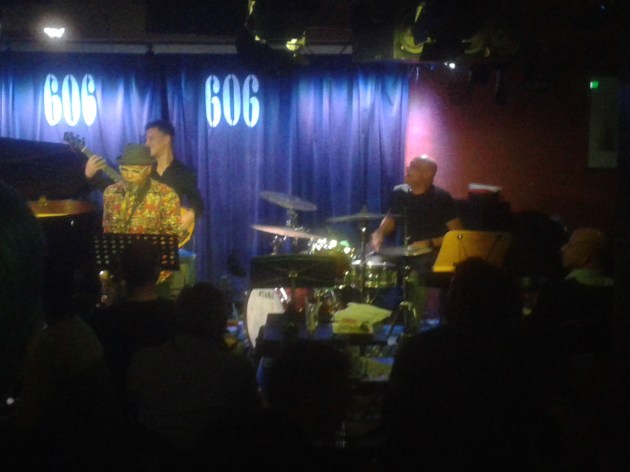

 ‘No crap beats’ – if that wasn’t on Keith Leblanc’s business card, it should have been.


 movingtheriver.com