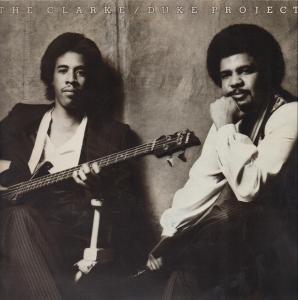
This one really divides people. The Clarke/Duke Project probably could and should have been a lot better given the talent involved and their stellar track record.
But the album shouldn’t be judged by jazz standards – by the early ’80s, these two protagonists of ‘fusion’ realised that jazz/rock had hit a massive dead end.
A fresh approach was called for. Earth, Wind & Fire’s effortless blending of funk, soul, disco, jazz, Latin and rock offered a new direction to all kinds of musicians, including Clarke and Duke.
So, leaving any kind of jazz credibility at the door, our heroes embraced their inner George Clintons, Frank Zappas and Stephen Bishops to make a really weird but occasionally enjoyable album of funk, disco, AOR and cheesy soul balladry (it’s surely up there in the ‘least classifiable albums of the ’80s’ list). In short, this was Stanley and George’s Tin Machine – you were either for or against.
My schoolfriend Seb and I were huge Stanley fans, but even we eyed this with some trepidation when we came across it around 1989. It had a pretty dodgy reputation even by ’80s Stanley standards. It’s certainly neither artists’ best work, but it’s worth a listen.
So, straight in at the deep end. It’s fair to say that most John Coltrane and Dexter Gordon fans will struggle with the ‘Louie Louie’ cover… But Clarke and Duke deliver great solos and the vocal jiving is good value.
Clarke’s ‘I Just Want To Love You’ is a minor disco/soul classic with a great bassline (later appropriated for Kylie’s ‘Spinning Around’). ‘Touch And Go’ is very pretty in a post-‘Sailing’ kind of way while the vapid ‘Sweet Baby’ miraculously delivered a big US hit (#19). The closing ‘Finding My Way’ is effective and quite unique in its way, a kind of pomp-funk/rock epic with a cool descending bridge and interesting structure.
JR Robinson’s ultra-solid, ultra-dry drums are very high in the mix and sometimes feel like they need a bit of air. Clarke impresses with a huge range of basses, guitars, sitars and cellos (and some very Santana-ish Piccolo lead bass playing) while Duke sticks mostly to squelchy synth basslines, acoustic piano and an occasional bit of trademark Mini Moog.
The album sounds very stripped back to modern ears and has a slightly ‘demo’ feel to it, but it was a hit. Two further collaborations followed, lasting into the early ’90s.
One thing’s for sure – Stanley and George were great friends until the latter’s death in 2013, and you can really hear it in the music they made together.
The 1980s were a pretty good time to be a songwriting drummer; Sheila E, Phil Collins and Don Henley all flourished, and probably a few more too.
Not that master Yes/King Crimson sticksman Bill Bruford had any particular desire to match their commercial standing as the decade got underway. He was quite happy gaining harmonic knowledge (with the assistance of keyboardist Dave Stewart), making sizeable contributions to the percussion community and composing incredible pieces of music like ‘Palewell Park’.
In a way, it was the culmination of his work with the Bruford group which had released three studio albums between 1978 and 1980, two featuring the brilliant Allan Holdsworth on guitar.
Palewell Park, East Sheen, London
This track has a special resonance for me as Palewell Park was a childhood hangout, site of many great cricket, tennis and football games as well as a fair few teenage hijinks. Bruford apparently lived nearby during the piece’s recording at Surrey Sound in Leatherhead (also the studio The Police used for their first two albums) and wanted to write an ode to the area.
Someone on YouTube very aptly described ‘Palewell Park’ as ‘a contemporary piece for piano and bass’. It doesn’t fit comfortably into any genre, but it’s a pretty remarkable composition coming from the pen of a ‘drummer’, and one who doesn’t even feature on his own composition (Stewart played the piano).
Jeff Berlin, Jon Clark, Dave Stewart, Bill Bruford in 1980
The 26-year-old Jeff Berlin lays down one of the great pieces of post-Jaco bass playing. With just a touch of chorus pedal, he sticks to the pretty treacherous melody in the first half and then stretches out to play a fantastic solo over the changes, a total lesson in melody construction, with no gimmicks.
Next up for Bill was a reunion with Robert Fripp and one of the great albums of the ’80s, King Crimson’s Discipline.
Any budding sax player of the ’80s had to have been checking out Michael Brecker, devouring his post-Coltrane superchops and forensic exploration of every chord.
Funk and pop fans loved him because he could play absurdly-tight horn arrangements with his trumpet-playing brother Randy and also solo superbly over vamps, finding endless melodic ideas in the simplest two-chord changes.
He was surely the only sax player who could play comfortably with Kenny Wheeler, Parliament and Everything But The Girl. It has to be said that most hardcore jazz purists were intrinsically suspicious of this, but who cares what they think…
Brecker formed Steps Ahead (originally Steps) with fellow New York masters vibraphonist Mike Mainieri and bassist Eddie Gomez, put together initially for the Japanese market. Steve Gadd was their original drummer, replaced in the early ’80s by Weather Report man Peter Erskine.
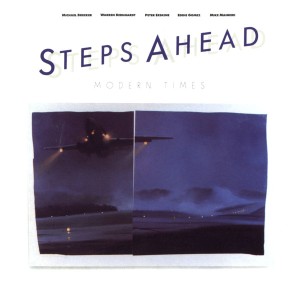
Steps Ahead’s self-titled debut album showcased a mostly-acoustic fusion sound, but the 1984 follow-up Modern Times embraced all sorts of ’80s technology to intriguing effect.
Of course such tinkering opens it up to sounding somewhat dated these days, but at least the album has ambition, quality compositions and the kind of attention to detail that makes it an interesting companion piece to key mid-’80s works like The Flat Earth, Hounds Of Love, Boys And Girls and So.
Opener ‘Safari’ kicks off with a vaguely Caribbean/reggae groove featuring a multitude of synths and sequencers and a tribal, almost Zawinulesque melody. With repeated listens there are many pleasures to be found; Brecker’s typically incisive tenor solo, Erskine’s subtly-building groove work, the slinky bass line which rumbles on throughout.
Equally arresting is pianist Warren Bernhardt’s title track, a modal piece built over another serpentine, sequenced line, developing into a series of lovely vignettes featuring Brecker’s solos and some very Steely Dan-ish chord progressions.
Mainieri’s composition ‘Old Town’ features King Crimson/Peter Gabriel sideman Tony Levin playing some menacing Stick over the sort of exotic, ambient groove Bryan Ferry would utilise on Boys And Girls a year later. And ‘Radio-Active’ taps into some of the World vibes Peter Gabriel investigated throughout the ’80s.
Unfortunately a few tunes let the side down, drifting uncomfortably into smooth jazz territory. Mainieri’s composition ‘Self Portrait’ is almost saved by a lyrical Brecker solo but far too saccharine for my tastes, while Erskine’s ‘Now You Know’ features a melody line (Brecker on soprano) which, though memorable, veers scarily towards Kenny G.
And it has to be said that Eddie Gomez’s role in the band was diminishing very fast, so anonymous is his contribution. He would be gone by the next album Magnetic, replaced by ex-Weather Report man Victor Bailey.
In Modern Times‘ liner notes, Peter Erskine thanks someone for their help with click tracks, and that concept in itself would probably turn off a big section of the ‘jazz’ audience.
But some arresting compositions, tribal grooves and typically tasty Brecker solos ensure that one’s attention never strays for long. Modern Times is a key jazz album of the ’80s, albeit one that would probably have given most of the Young Lions nightmares…
The music biz is littered with successful solo artists who were tempted out from behind the drums.
Marvin Gaye, Teddy Pendergrass, Phil Collins, Karen Carpenter, Dave Grohl, Frank Zappa and Iggy Pop all graduated from the engine room to centre stage.
But while Sheila has never been on that level in terms of record sales or cultural impact (though trumps all of them in terms of drumming chops), her transition from sidewoman to frontwoman led to a couple of really infectious, interesting albums in the mid-’80s.
She had an enviable CV long before going solo, including percussion work with Billy Cobham, Herbie Hancock, Marvin, George Duke and Diana Ross. Prince and Sheila were a similar age and had followed each other’s careers since the late-’70s. When he tasted his first mainstream success and was looking to mentor new artists, she was top of the list.
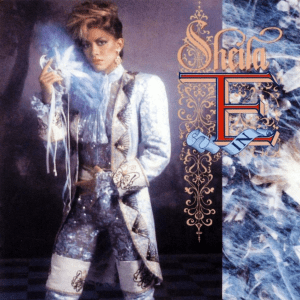
Their first collaboration was the superb B-side ‘Erotic City’, swiftly followed by Sheila’s debut album The Glamorous Life, a hit. But its follow-up,Sheila E In Romance 1600, was a far more expansive and experimental piece, even though recording sessions were squeezed in on days off during the Purple Rain Tour between December 1984 and January 1985.
Despite Sheila’s obvious musical pedigree, Romance 1600‘s liner notes and song credits are misleading – this is a Prince album in all but name. According to biographer Per Nilsen (and as listed at the ASCAP offices), he wrote all the tracks here bar one (kicking Latin/fusion instrumental ‘Merci For The Speed Of A Clown In Summer’) and played all instruments except drums, percussion and sax.
But lucky for us, Romance 1600 was recorded smack-bang in the middle of his golden period and features some of Prince’s finest performances as a musician. His guitar solos on ‘Dear Michelangelo’ and ‘A Love Bizarre’ are simply tremendous, the latter throwing in some ridiculous bass too.
But Sheila also brings out the best in him. There’s much more humour here than on his own albums of the period. She turns in some hilariously hammy vocal performances on ‘Sister Fate’, ‘Toy Box’ and dramatic ballad ‘Bedtime Story’. Sheila and Prince were having a lot of fun and you can hear the results. Sometimes the rushed nature of the recording shows, though – the mix is very murky and the album is short of a few memorable pop hooks.
Prince’s ‘movie’ concept was in full effect here. He was leaving behind the ‘street’ style of Vanity 6/Purple Rain/The Time and embracing a romantic, ‘Amadeus’-influenced image which also crossed over into The Family project and his Parade album.
Thinking of Romance 1600 as a movie also opened up the album musically, allowing Sheila and Prince to embrace jazz (‘Yellow’), fusion, wacky synth-pop (the title track), Latin and even Third Stream. This eclectic outlook was no doubt also influenced by his Revolution bandmates Wendy and Lisa.
Sheila E In Romance 1600 was a reasonable hit, going gold in the US and reaching #50 on the Billboard chart, no doubt helped by the success of the ‘Love Bizarre’ single (US #11). Sheila toured the US for the second time in two years.
She followed up Romance 1600 with a disappointingly bland self-titled album in 1987, which featured far less contribution from Prince. More successfully, she played some fantastic drums on the Sign ‘O’ The Times and Lovesexy tours.
The late ‘80s was a great period for avant-garde guitar playing with the likes of Vernon Reid, Reeves Gabrels, Adrian Belew, Arto Lindsay, Fred Frith, Dave Fiuczynski, Stevie Salas, Sonny Sharrock, Skip McDonald, Robert Quine, Steve Vai and Bill Frisell laying down some seriously mind-bending tones and textures.
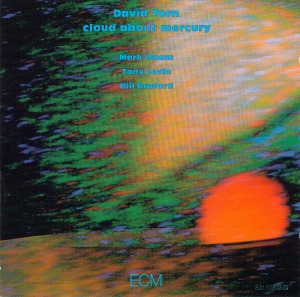
Cloud About Mercury, David Torn’s second ECM solo album, definitely put him into the same league. Though just as influential as many of the aforementioned guitarists, he has never really gained as much of a public profile despite occasional solo albums and stellar sideman work with the likes of David Bowie and David Sylvian.
My dad used to get sent a lot of music for his work and I vaguely remember him passing Cloud About Mercury onto me, knowing I was a big fan of early-’80s King Crimson.
My muso mates and I quickly grew to like the album’s perverse musical concepts and silly song titles. With a superstar avant-rock rhythm section of Bill Bruford and Tony Levin on board, it came on a bit like the follow-up to Crimson’s Three Of A Perfect Pair, but also offered a strikingly original take on jazz/rock.
I recall a contemporary review of Cloud About Mercury in Q magazine which said something like: ‘Torn luxuriates in the silence for a bit…and then goes KRAOOOOOOW!’ But in its louder moments, CAM is definitely one to annoy the neighbours. Torn’s Trans-Trem guitar enables him to create some very novel effects and original lines, with micro-tones and Middle Eastern flavours, and you can really get lost in his ambient loops.
CAM is also a very uncharacteristic ECM album, being much more in-your-face and rockist in its mixing and playing than most of the label’s output. In fact, it’s not really fair to judge it as a ‘jazz’ album at all.
But sometimes Torn seems much happier playing solo or in duet with Isham; his superb rhythm section is underused, and the tunes rely too heavily on one-chord improvisations. Consequently Bruford and Levin sound somewhat muted and can’t quite bring the sort of forward-motion dynamics so crucial to jazz/rock.
Torn toured extensively to promote CAM (but presumably not London or I surely would have been there…) with ex-Japan bass player Mick Karn replacing the unavailable Tony Levin. An excellent decision, both musically and commercially.
The band sounded fantastic and the tunes really came to life. Torn and Isham then accompanied David Sylvian on the ‘In Praise Of Shamen’ world tour which I caught at the Hammersmith Odeon in 1988.
Two quick questions to end, prompted by a discussion with my brother about Torn the other day: why isn’t there any music like this around these days? Or is there?
What are the greatest live albums in music history?
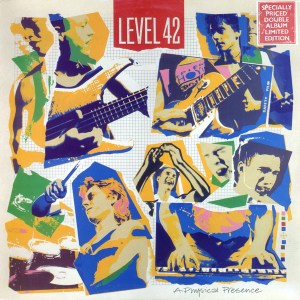
James Brown’s Live At The Apollo. Donny Hathaway’s Live and Bill Withers’ Live At Carnegie Hall might get a mention, but I would make a case for Level’s A Physical Presence too.
Quite simply, this album is the nearest a British band has ever come to the kind of effortless fusion of black music styles achieved by US supergroups such as Weather Report and Earth Wind & Fire. But Level 42 were always a far edgier proposition than those bands, mixing up the funk, world-class musicianship and jazz/rock with an almost punky intensity.
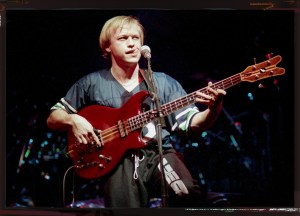
Mark King in 1985
Recorded in March 1985 at such suburban funk meccas as Golddiggers in Chippenham, The Coronet in Woolwich and The Hexagon in Reading, A Physical Presence showed off Level on the cusp of their mainstream pop breakthrough.
But you’d never know it. It’s hard to imagine any other British band before or since attempting the audacious fusion instrumentals ‘Foundation And Empire’ or ’88’.
Police-esque ‘Follow Me’ and driving ‘Chant Has Begun’ hinted at a new rockier direction which was quickly jettisoned when they got back into the studio for World Machine. Mark King’s vocals are punchy, distinct and soulful throughout.
Has there ever been a better British funk/R’n’B rhythm section than Mark King (bass) and Phil Gould (drums)? Bass players beware – this album features a succession of some of the most memorable and inventive B-lines in funk history. Try ‘Eyes Waterfalling’, ‘Kansas City Milkman’ and ‘Turn It On’ for starters.
Phil Gould’s drumming is a perfect combo of groove and chops, whilst somehow also retaining a ‘British’ sound, kind of a mixture of Bill Bruford and Billy Cobham. And keyboardist Mike Lindup gets through so much work that he sometimes sounds like he’s got four hands (with a real Lonnie Liston Smith influence on the Fender Rhodes), and 90% percent of his intricate playing is without the aid of a sequencer.
It’s hard to believe that only 18 months later, after recording commercial breakthroughs World Machine and Running In The Family, the classic Level line-up would splinter for good amidst touring pressures, musical differences and personal issues. But APP is a glorious snapshot of a golden summer and the pinnacle of surely the UK’s greatest ever jazz/funk/pop band.
Some time around the late ’80s, I became a bit disillusioned with the major UK music mags (but continued to love Q).
Their infinite search for ‘coolness’ coincided with my increasing interest in playing bass and guitar, so I started checking out American mags such as Musician, Guitar World and Guitar Player, as well as Guitarist here in the UK.
Their focus seemed to be on the mechanics of/intentions behind making music rather than puking in hotels or haircuts.
I think I first heard guitarist Allan Holdsworth’s name via a Guitar Player cover interview to promote his Secrets album. I hadn’t yet heard a note of his music but his intelligent, exceptionally modest (some would say mordant) approach to playing drew me in, as did his endorsement of sax players (Brecker, Coltrane, Parker) rather than the usual guitar influences.
Also he mentioned that he had been working with drummer Vinnie Colaiuta, another name that I had heard with relation to Frank Zappa but had never really properly investigated. By chance, I came upon Secrets a few months later in a bargain bucket. From the first bar of the opener ‘City Nights’ (a typically nimble salvo around the kit by Vinnie) I was blown away.
Holdsworth’s solo is burning, with loads of notes spraying out everywhere, but it’s also totally devoid of clichés. He repeats the trick all over Secrets, with Vinnie and bassist Jimmy Johnson cajoling him every step of the way.
It’s also refreshing to hear Allan blowing over lots of major chords in ‘Joshua’, the sort of tune which might be a bit soppy in the hands of Metheny or Abercrombie but is transformed into a stunningly fluent series of solos alongside Colaiuta’s brilliantly unhinged accompaniment.
‘Spokes’ is a nicely arranged vehicle for Allan’s nutty synthaxe playing (and some more Vinnie/Jimmy genius) and, on ‘Endomorph’, Holdsworth even comes up with a very moving song inspired by the death of his father with some excellent vocals from Craig Copeland.
Secrets is the one where technology really caught up with his ingenious concepts. All lead guitarists are on an endless search for tone and Allan seems to have found his ideal here. It’s smooth yet fiery and he genuinely achieves the ‘sheets-of-sound’ style of improvising that he so admires in his favourite sax players by utilising incredibly wide intervals (for a guitarist) and legato phrasing.
His playing is as instantly recognisable as Wes, Van Halen or Scofield’s. It’s not easy music, though. But, as he lamented in the interview mentioned above, it’s not that difficult and he always wished it was more popular.
Secrets was the first in a trio of superb solo albums (and some sterling sideman work with Chad Wackerman) which continued with Wardenclyffe Tower in ’92 and Hard Hat Area in ’94, all of which are pretty essential listening if you like his vibe.
Within a year of Secrets coming out, I’d seen Allan live at the Bloomsbury Theatre in London and also checked out his month-long guest spot with Level 42 at Hammersmith Odeon throughout December 1990 (and some brilliant solos on their Guaranteed album). I was becoming a major fan…
It’s not easy to write about an album that’s so much part of your musical DNA that it haunts you in the middle of the night and yet reveals fresh nuances every time you listen to it.
But first of all, I have to declare an interest – Wayne is one of my all-time musical heroes and has been since I was a teenager when his sax playing and compositions with Weather Report and Miles Davis totally bewitched me.
It wouldn’t be an overstatement to say that it took me 20 years to really appreciate Atlantis, and also to realise that it had to be listened to on CD and listened to loud. The recent remaster, as part of Wayne’s Complete Albums Collection, is the best I’ve ever heard it.
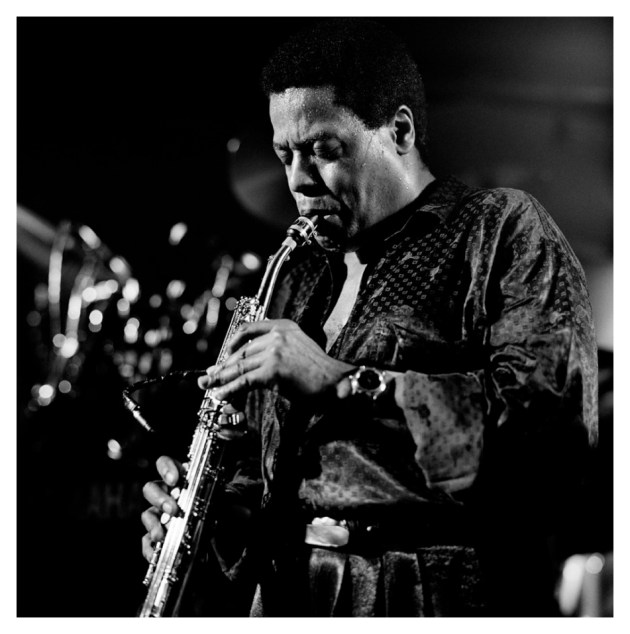
Wayne at The International, Manchester, 1987. Photo by William Ellis
How to describe the magical though totally uncompromising music on Atlantis? Itwas Wayne’s first solo release after the official split of Weather Report and it’s fair to say it wasn’t the album many fans and critics were expecting.
Itsurely remains Wayne’s least understood work. It’s ostensibly an album of through-composed, acoustic ‘fusion’, but that barely covers it. Someone once described it as the soundtrack to an animated children’s book.
Wayne seems to be weaning listeners away from a more bombastic form of jazz/rock towards a new combination of jazz, R’n’B and Third Stream which utilises sophisticated counterpoint and pure composition.
Shorter is the only player who gets any significant solo time. Acoustic piano, flute, vocals and multiple saxes supply the dense, challenging, sometimes dissonant harmonies.
Atlantis could hardly be described as a ‘jazz’ album at all; ensemble work and composition generally override individual expression, and none of the tracks ‘swing’ in a conventional sense. And yet it’s still an utterly melodic set, full of memorable, criss-crossing themes which jostle for your attention. It takes time to work its magic, but work its magic it does.
The phenomenal opener ‘Endangered Species’ (recently massacred by Esperanza Spalding) is somewhat of a ‘sweetener’ at the top of the album, like Sirens luring sailors to their deaths, as Shorter biographer Michelle Mercer noted.
Many people, me included, struggled to get very far past it since the remainder of Atlantis sounded somewhat prim and precious in comparison. I wanted to hear Zawinul and Jaco’s blistering lines, Omar Hakim’s colourful drumming, some virtuosity.
But when I studied Atlantis more closely, there are many subtle displays of instrumental mastery. Ex-Weather Report drummer Alex Acuna plays a blinder throughout, blazing through the outro of ‘Who Goes There’, Larry Klein’s bass playing is nimble and impressive (try playing along to Wayne’s intricate written lines), Michiko Hill’s piano comping is inventive and Wayne plays some fantastic solos, particularly his Rollins-style tenor on calypso-flavoured ‘Criancas’.
I remember seeing Wayne playing much of this music live to a barely-half-full London Shaw Theatre in late 1985 – it seems that audiences, booking agents and press officers alike were finding his post-Weather Report music a hard sell at this point.
Critics were generally puzzled too, although Robert Palmer noted in the New York Times that ‘it’s not an album one should listen to a few times and then knowledgeably evaluate… It is an album to learn from and live with.’
But if Atlantis was misunderstood and less than commercially successful on its original release, it seems to be gaining fans in the 30 years since.
A good yardstick is that several compositions from the album are still regularly played by Shorter’s esteemed current quartet, particularly the title track, an eerie, labyrinthine tango.
‘The Three Marias’, a treacherous tune in 6/4 inspired by press reports of three Portuguese woman being arrested for writing obscene literature, has even been the unlikely recipient of a few cover versions, perhaps most notably (though not wholly effectively) by ex-Police guitarist Andy Summers.
(P.S. I’m taking one mark off for ‘Shere Khan The Tiger’ which was far better rendered on Carlos Santana’s 1980 album The Swing Of Delight, a version whichfeatured Herbie Hancock on piano, Ron Carter on bass and Harvey Mason on drums.)
Drummers and bassists: this album’s for you. And it’s for guitarists, percussionists and fans of great music too.
Put simply, Steve Khan’s hard-to-track-down Casa Loco has enthralled me and a whole generation of jazz and jazz/rock aficionados for over 30 years.
The compositions and performances of guitarist/leader Khan, bassist Anthony Jackson, drummer Steve Jordan and ex-Weather Report percussionist/vocalist Manolo Badrena are unique and unforgettable.
The album is also totally unclassifiable – a ‘fusion’ band playing a blazing surf-rock cover tune (‘Penetration’)? An unhinged Puerto Rican percussionist singing in quasi-Spanish but sounding remarkably like Sting?
Casa Loco is full of such beautiful and unpredictable juxtapositions. And it’s also blessed with Jean-Michel Folon’s eye-catching cover art.
I had previously bought Steve’s 1981 album Eyewitness just on the strength of the Folon cover but was immediately blown away by the all-time-great Jordan/Jackson rhythm section, Khan’s enigmatic, inimitable voicings and Badrena’s inspired percussives. But Casa Loco, the 1983 follow-up, cranked everything up a notch.
Steve Khan, the son of Sinatra/Dean Martin/Doris Day lyricist Sammy Cahn, is one of the most respected guitarists of the ‘fusion’ era. He played on not one but four of the great Steely Dan tunes (‘Peg’, ‘Babylon Sisters’, ‘Gaucho’, ‘Glamour Profession’), contributing to the latter one of the finest guitar solos in the band’s oeuvre, though he has mixed views on the painstaking recording process that led to those landmark pieces.
Check out his great interview with Leo Sidran for more on this and also a good overview of his career in general. But Steve is also one of jazz and fusion’s most erudite and honest figures, revealing (almost) all on his excellent website. He knows where the bodies are buried…
Steve, who recently released a well-received solo album Subtext, spoke with great candour and humour to movingtheriver.com from his New York City base.
Doug Epstein
MP: Casa Loco still sounds fantastic over 30 years on – how important was engineer Doug Epstein in the recording process?
SK: On countless levels, Doug Epstein was huge in all of this. At that time, he was the only person, on the technical side of things, who had participated in every single recording of mine. I owe him so much. He was always full of enthusiasm and energy for whatever it might have been that I was doing, and he encouraged me to do more. Knowing the financial difficulties we were having, he was the first one to offer to try to get the executives at Mediasound Studios to give us a break on the recording costs, and everyone there was wonderful to us. Nothing, of course, was ever free, but they tried their best to help. At the recording end of things, Doug was absolutely fearless. I think that most of the problematic issues came from Steve Jordan’s constantly changing, per tune, hybrid kit of drums: a combination of natural drums and Simmons electronic drums. Then there was Manolo’s amazing percussion set-up which included all his natural and supernatural sounds, plus the electronics emanating from the Syn-cussion that he was using back then. To accommodate all of that on 24-tracks, with one track taken for SMPTE code and another one blank just because of the risk, there were really only 22 tracks available. In the end, Doug had to know where each tune was headed in terms of possible overdubs, vocals, etc. He did all of that. But, it has to be noted, that Steve Jordan – where our mixing process was concerned – was hovering over Doug’s shoulder the entire time, and in many ways Steve is totally responsible for being the protector of Anthony’s bass sound and playing, and for his own drums, of course. Steve’s contributions in this regard were indispensable to the overall sound that you have come to know. Steve was present for the mixes on all three of our recordings together. He had a vision and a sound in mind, and he pushed hard for that. In great part, that’s why he has become an excellent producer himself – he has a great ear for these things.
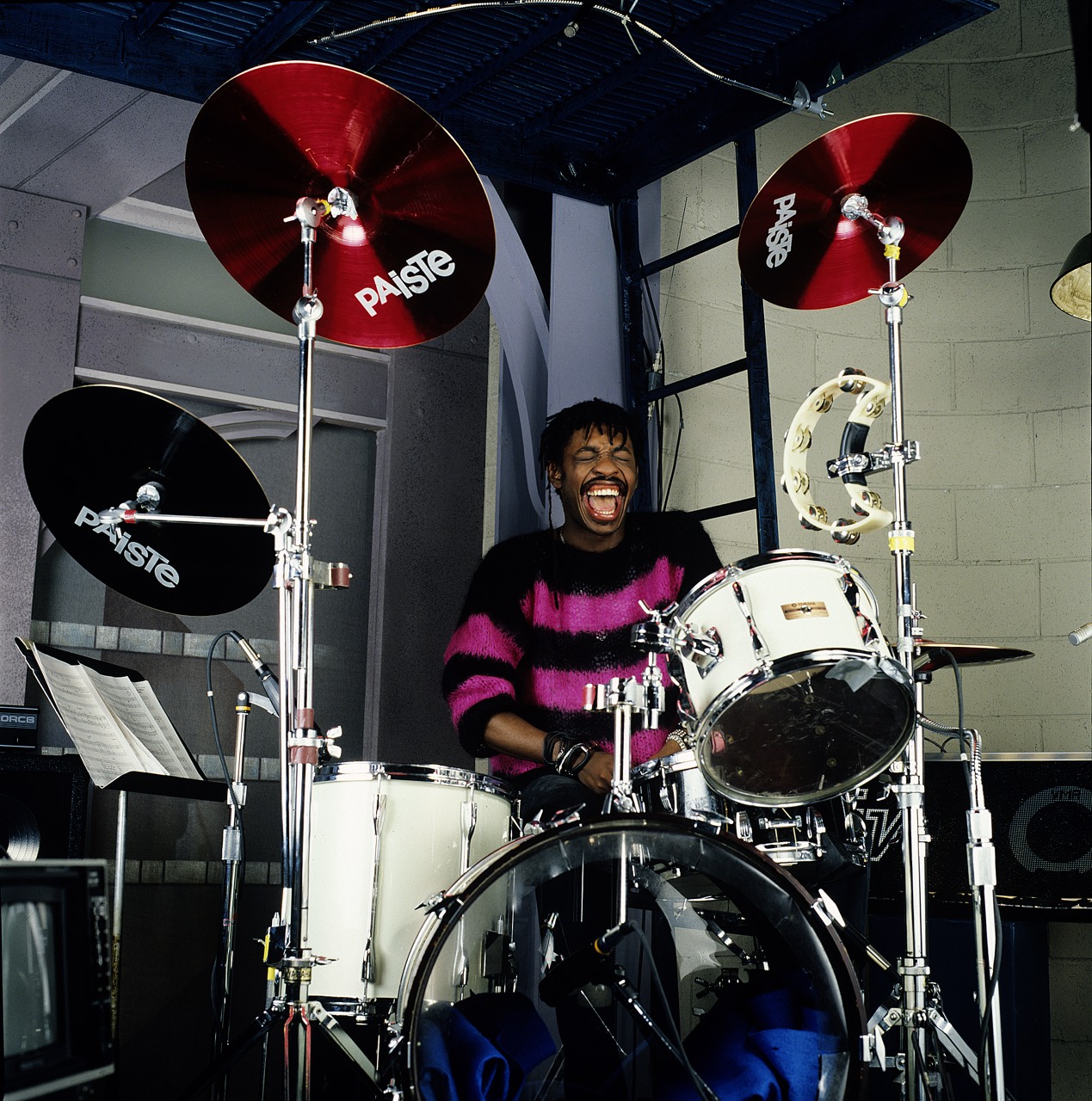
Steve Jordan Photo by Deborah Feingold
There’s a big Police influence on Casa Loco. Who brought that into the band?
I would say that Steve Jordan brought that into the band. I don’t think Anthony had ever heard anything by The Police. The fact that Manolo sounds a bit like Sting at times is just a cosmic accident. It’s not intentional at all. And, of course, 90% of the time Manolo is either singing in Spanish or vocalese, or his own form of gibberish! Recently, the great French jazz journalist Frêdèric Goaty wrote a piece for MUZIQ Magazine about his perceptions of the influence of The Police in contemporary music, and he cited all three of our albums as examples.
Regarding Steve Jordan’s famous drum solo on the title track – how the hell did you and Anthony stay in time when he really starts going out?!
Speaking for myself, it wasn’t easy. Anthony and Steve had a way of stretching the rhythmic boundaries in ways that would often confuse me, and I would get turned around. It was always an exercise in feel and concentration. That day, in the studio, my concentration was at its highest level, because there was no way that I was going to screw something up and ruin Steve Jordan’s incredible drum solo! No f***ing way! It remains one of the great moments on any recording of mine. I think that the complexities of that solo section, which is really a simple Latin tumbao, are demonstrated by the fact that Modern Drummer magazine published a transcription of the drum solo, but with the tumbao completely turned around and written out incorrectly! So, even an educated musician can get screwed-up with that one. I remember once when we were playing at Seventh Avenue South here in New York City, Bob Mintzer, one of the greatest musicians that I’ve ever known, came up to me and said, ‘What the f*** are you guys doing? I can’t ever find one!’ If Bob Mintzer felt that way, I guess there isn’t a much higher compliment. But it was never our intention to play anything that was purposely confusing to anyone.
The structure of ‘Some Sharks’ is incredibly intricate with many repeat signs and tags – were all the guys reading charts while recording this?
At that time, I don’t believe there were any formal charts to any of the tunes. We rehearsed hard and long, and we were prepared. The first lead sheets were done afterwards, I believe. I did them for copyright purposes, nothing more. I remember, when doing that, how astonishing it was to see, on paper, the intricacy of the music that we had created by improvising, and just jamming together pieces of music. It’s possible that I had written out ‘Uncle Roy’ beforehand, but maybe not. It’s hard to remember now. My facualties are not what they once were! But, when I listen to what Steve Jordan contributed to that tune with his unique concepts of beat displacement, it’s remarkable, and when you add in Anthony’s perspective, it makes perfect sense as to why the recordings that we made together between 1981-1983 have influenced bassists and drummers all over the world. Anthony and Steve deserve all of that adoration and more.
‘The Suitcase’ hints at a Discipline-era King Crimson influence – is that accurate?
I have never paid any attention to King Crimson’s music at any time. However, thanks to MTV, I did get to hear ‘Elephant Talk’ and I absolutely loved that tune. I love Adrian Belew and only wish that I could create 5% of the sonic textures that he creates. He is totally unique and brilliant. I admire him a lot.
Why is (great British drummer) Steve Ferrone thanked in the album credits?
To tell you the truth, I have no idea! In those days, we thanked people who stopped by the studio while we were recording, just for their good vibes. It’s also possible that Steve Ferrone lent something, a piece of gear, to Steve Jordan. I just can’t remember. We thanked people who didn’t even exist. For example, at one of our sleep-deprived rehearsals, Steve Jordan was trying to say the name Gore Vidal, and somehow it came out as Gordie Voll, and once he said that, I was rolling on the floor laughing – it was just so silly and funny. So Gordie ended up in the ‘special thanks’ section. I thanked a CNN newswoman, Marcia Ladendorff, who I had a crush on. I thanked an actress that I had a crush on too, Roberta Leighton. I thanked Flippy Hussein, who is not a real person – just a goofy name that the great vibraphonist David Friedman made up one day years before. But most of the names mentioned were people who in some way, shape or form contributed something positive, even if only via their encouragement to the music and the effort to keep going forward.
Jaco
Is there anything else printable you can tell us about Steve Jordan’s crazy house of music (the Casa Loco or ‘crazy house’ of the album title – Ed.) ?
In all honesty, no! Unless someone wants to burn all their bridges behind them, there is a sacred trust that exists between musicians, especially those who are bandmates, or even just work on a special project together. You don’t talk ‘out of school’ about things that you see and hear, sometimes not even after a person has passed away. Those kinds of stories can be hurtful, and even end-up hurting relatives or loved ones. In those days, each of us was going through something difficult in our personal lives, and our behaviour reflected that. Trying to just get together to rehearse for a few hours a couple of days per week was never easy, but we managed. And Steve Jordan’s loft, his home, was a huge part of that. I can only say that all kinds of hysterical shit used to happen there, including people trying to stop by to hang out with us while we were trying to work. Jaco Pastorius was one of them. He used to phone Jordan all the time and beg us to let him come by. We reached a point where we would never answer the phone and never allow anyone in except for the delivery guy who was bringing by Steve Jordan’s breakfast – at 2pm in the afternoon! Does that give you an idea?! No matter what transpired those days were some of the most fun and productive days of my creative life. I have rehearsal cassettes from those times – I used to listen to them every so often – and the constant laughter on those tapes about absolutely nothing is priceless. It was just so damn funny most of the time and exasperating too, at least for me!
Anthony Jackson photo by David Tan
I was astonished to read that the whole album was recorded in just TWO days, quite amazing when you consider the time spent on other albums of the era (Hello Donald and Walter…). How do you explain that? Was it just a case of getting the goods in the shortest possible time with the meter running?
Well, though it is true that the serious content of Casa Loco was recorded during May 21/22 1983 at Mediasound, I didn’t realize that we were going to need a third day just for Manolo Badrena! I actually thought that we could finish a performance of a piece and then he would simply, right then and there, overdub his vocals. I’m speaking about tunes like the title track, ‘Some Sharks’ and ‘The Suitcase’. But what happened really threw me for a loop, because I did not want to spend the money, other than for mixing, to return to the studio just for Manolo. Thinking this way demonstrated my lack of experience and understanding that recording vocals, by anyone, requires a different kind of care and patience. It is something that you have to plan for. I was too worried about spending money for an extra day in the studio! The great lesson in this is always the same: if you begin by being cheap, you will pay for it later! There is, of course, a most wonderful expression for this very thought in Spanish: ‘Lo barato sale caro!’ If you are unwilling to spend money, you will end-up with a lousy or sub-standard sounding recording, and this is something that I never want to be a part of, because you have to live with the results forever. So as the recording unfolded, during ‘Casa Loco’, ‘Penetration’ and ‘Some Sharks’, Manolo actually just sat there and didn’t play a damn thing while Anthony, Steve and I were performing those tunes. At the time, he just motioned wildly to me that he could not hear himself in the headphones. Mediasound had one of the early systems whereby each musician could make his own headphone mix. Each time this happened, we all tried to work harder with Doug to help Manolo get what he wanted and needed. It was so frustrating to have him there and not have him with us making that music. So, in the end, I had to spend the time and money overdubbing him on those tunes. I was furious about this! In sharp contrast to that, if you just listen to what Manolo contributes to ‘Uncle Roy’ – there is not a sound there that was not performed completely live. It is simply brilliant – no one else could have created textures like that. He’s one of the most unique musicians on this earth but not easy to work with. Years later, I learned that it really wasn’t the damn headphones at all; he had been upset that he wasn’t getting paid for the sessions, as if I was pulling a ‘fast one’ on him and secretly hoarding money somewhere. This is, of course, the furthest thing from the truth. We had a number of band meetings during our rehearsals and I clearly explained to everyone that I was paying for the album out of my own pocket, and that after I had recouped my investment in full, if that ever happened, whatever money there was to be had, we would all split it equally four ways. Period! In other words, we were all going to get rich together, or stay exactly as we were, but together. It was certainly my impression that Manolo understood that. Anthony and Steve were on board, as they always were, and I will never ever forget their selflessness when it came to this music. I love them both and I’m deeply indebted to them, forever, no matter what else has happened.
According to your website, you paid for recording costs entirely out of your own pocket – have you managed to recoup some of this over the years? I hope so…
We’ve addressed a portion of this during my answers to some of the other questions. But, the answer is: No! Absolutely not! I believe that, back then, my total investment in making Casa Loco was $17,500. That might not sound like much in 2015, but it felt like a fortune to me, having to go into my personal savings to do this. But that’s how much it meant to me. It was the second time that I had done that, Evidence (1980) being the first. And, it would not be the last; I have done this seven more times since! In the end, I was given advances from Trio Records (Japan) and eventually from Antilles Records (USA) that totalled $11,000, and that’s all that I have ever seen come back to me from this recording. In short, as it has been with all of my self-financed recordings, I will never ever again see that money come back to me. Do I regret it? Of course not. I am, and will always be, exceptionally proud of those recordings because everyone who participated gave something of themselves to do it. I don’t forget those people, those players! Never!
There’s no telling how a jazz musician will react to a bad review, whether from a critic or fellow player.
Some, like Miles Davis, take a – how shall we put it – stoic view, either refusing to read any press or choosing his writer friends very carefully (Leonard Feather, Quincy Troupe).
But for every naysayer, there’s an aggressor; drum master Tony Williams laid into jazz scribe Stanley Crouch for his less-than-flattering comments on Miles’ electric-era music, while Weather Report famously took Downbeat magazine to task for its one-star slagging of 1978 classic Mr Gone.
Though guitarist Mike Stern had studied at the famous Berklee music school in the mid-‘70s and then landed a top gig with jazz/pop supergroup Blood Sweat & Tears, he wasn’t prepared for bandmate Jaco Pastorius’s succinct review of his guitar playing after a dodgy run through Chick Corea’s ‘Spain’ on tour with BS&T one night – ‘Stern, you know that sh*t wasn’t happening at all! You’ve got to learn faster tempos!’
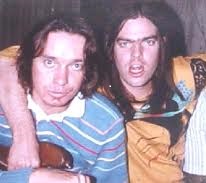
Jaco and Mike, 1980
To his great credit, Stern listened to his friend, learnt the tune note by note and in the process became one of the greatest players of his generation. His slick bebop lines played with a ‘rock’ sound were quite new when he came of age playing with Billy Cobham’s band.
Miles was also listening closely while he was in the early stages of putting together his ‘comeback’ band in early 1981. The story goes that he appeared in the front row of The Bottom Line club in New York City and poached Stern during a break, apparently even calling Cobham off the bandstand in the middle of a tune to issue his intentions!
Stern was then summoned to the Columbia Records studio to record the electrifying half-time strut ‘Fat Time’ (Miles’s nickname for Stern) in one take. The track appeared on the Man With The Horn album and Stern was then invited to go out on the road with Miles.
My dad took me to see Miles at the Hammersmith Odeon in 1982, my first proper gig. I’m sad to say that I don’t recall much about it apart from Miles’s white suit and someone shouting: ‘Turn the trumpet up!’
Dave Liebman, Miles and Mike Stern, 1981. Photo by Julie Coryell
Critics were harsh on Stern, not believing that a chubby, jeans-wearing, long-haired guy playing a white Strat with a fuzzbox could play ‘jazz’, but with hindsight he did a brilliant job of holding down the harmony and delivering powerful, surprising solos in the keyboard-less quintet.
But the demons that haunted some of his early career wouldn’t go away. Stern recently said, ‘I played about two gigs in my life between the ages of 12 and 32 when I was sober’.
Miles even got John Scofield into the band as second guitarist to cover for his increasingly unreliable secret weapon. Stern eventually missed a flight and got the boot, but after a successful spell in rehab returned to play with old friend Michael Brecker and Mike Mainieri’s fusion supergroup Steps Ahead.
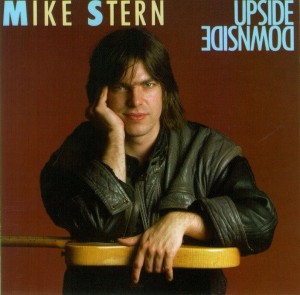
Stern also put together a solo record deal with Atlantic Records and began working on Upside Downside in early 1986 with his late friend and fellow shit-hot guitarist Hiram Bullock in the producer’s chair.
The album is a great excuse for Stern to play the hell out his guitar in a variety of idioms. The uptempo tracks are blessed with typically fiery solos while the ballads beautifully demonstrate Stern’s lyrical side, his Telecaster screaming emotively above Dave Weckl’s subtle drumming and Mark Egan’s springy bass.
Jaco completists will enjoy one of his very last recorded contributions on the raucous ‘Mood Swings’ while saxophonist David Sanborn’s playing on ‘Goodbye Again’ is spine-tingling. But mainly the album is a must for any lover of the guitar. His sound is a little more fluid and widescreen than on recent albums and there’s no-one quite like Stern at the top of his game, a fusion of Charlie Parker and Roy Buchanan.
Mike made two excellent follow-up albums later in the ’80s, Time In Place and Jigsaw, both produced by the fine guitarist Steve Khan. For me, this was Stern’s best era, when his raunchy playing was closer to blues and rock than the lighter Methenyesque jazz and World music vibes of recent times. I also saw him live at the Town and Country Club in 1989, a memorable gig featuring the mind-blowing Dennis Chambers on drums.

 This one really divides people. The Clarke/Duke Project probably could and should have been a lot better given the talent involved and their stellar track record.







 movingtheriver.com