Steve Khan talks about his classic 1983 album ‘Casa Loco’

steve khanDrummers and bassists: this album’s for you. And it’s for guitarists, percussionists and fans of great music too.

Put simply, Steve Khan’s hard-to-track-down Casa Loco has enthralled me and a whole generation of jazz and jazz/rock aficionados for over 30 years.

The compositions and performances of guitarist/leader Khan, bassist Anthony Jackson, drummer Steve Jordan and ex-Weather Report percussionist/vocalist Manolo Badrena are unique and unforgettable.

The album is also totally unclassifiable – a ‘fusion’ band playing a blazing surf-rock cover tune (‘Penetration’)? An unhinged Puerto Rican percussionist singing in quasi-Spanish but sounding remarkably like Sting?

Casa Loco is full of such beautiful and unpredictable juxtapositions. And it’s also blessed with Jean-Michel Folon’s eye-catching cover art.

I had previously bought Steve’s 1981 album Eyewitness just on the strength of the Folon cover but was immediately blown away by the all-time-great Jordan/Jackson rhythm section, Khan’s enigmatic, inimitable voicings and Badrena’s inspired percussives. But Casa Loco, the 1983 follow-up, cranked everything up a notch.

Steve Khan, the son of Sinatra/Dean Martin/Doris Day lyricist Sammy Cahn, is one of the most respected guitarists of the ‘fusion’ era. He played on not one but four of the great Steely Dan tunes (‘Peg’, ‘Babylon Sisters’, ‘Gaucho’, ‘Glamour Profession’), contributing to the latter one of the finest guitar solos in the band’s oeuvre, though he has mixed views on the painstaking recording process that led to those landmark pieces.

Check out his great interview with Leo Sidran for more on this and also a good overview of his career in general. But Steve is also one of jazz and fusion’s most erudite and honest figures, revealing (almost) all on his excellent website. He knows where the bodies are buried…

Steve, who recently released a well-received solo album Subtext, spoke with great candour and humour to movingtheriver.com from his New York City base.

Doug Epstein

Doug Epstein

MP: Casa Loco still sounds fantastic over 30 years on – how important was engineer Doug Epstein in the recording process?

SK: On countless levels, Doug Epstein was huge in all of this. At that time, he was the only person, on the technical side of things, who had participated in every single recording of mine. I owe him so much. He was always full of enthusiasm and energy for whatever it might have been that I was doing, and he encouraged me to do more. Knowing the financial difficulties we were having, he was the first one to offer to try to get the executives at Mediasound Studios to give us a break on the recording costs, and everyone there was wonderful to us. Nothing, of course, was ever free, but they tried their best to help. At the recording end of things, Doug was absolutely fearless. I think that most of the problematic issues came from Steve Jordan’s constantly changing, per tune, hybrid kit of drums: a combination of natural drums and Simmons electronic drums. Then there was Manolo’s amazing percussion set-up which included all his natural and supernatural sounds, plus the electronics emanating from the Syn-cussion that he was using back then. To accommodate all of that on 24-tracks, with one track taken for SMPTE code and another one blank just because of the risk, there were really only 22 tracks available. In the end, Doug had to know where each tune was headed in terms of possible overdubs, vocals, etc. He did all of that. But, it has to be noted, that Steve Jordan – where our mixing process was concerned – was hovering over Doug’s shoulder the entire time, and in many ways Steve is totally responsible for being the protector of Anthony’s bass sound and playing, and for his own drums, of course. Steve’s contributions in this regard were indispensable to the overall sound that you have come to know. Steve was present for the mixes on all three of our recordings together. He had a vision and a sound in mind, and he pushed hard for that. In great part, that’s why he has become an excellent producer himself – he has a great ear for these things.
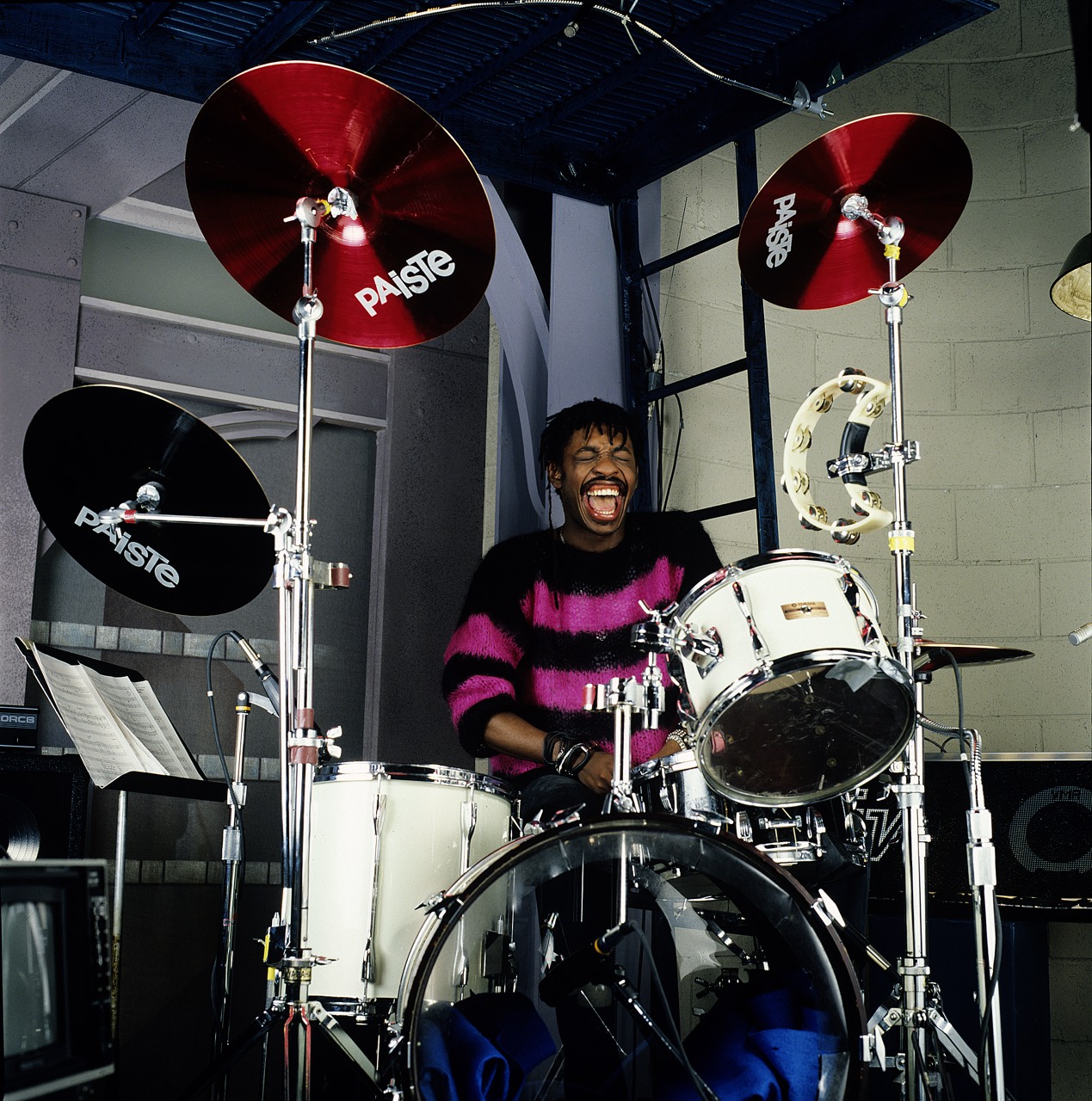
Steve Jordan Photo by Deborah Feingold

Steve Jordan
Photo by Deborah Feingold

There’s a big Police influence on Casa Loco. Who brought that into the band?

I would say that Steve Jordan brought that into the band. I don’t think Anthony had ever heard anything by The Police. The fact that Manolo sounds a bit like Sting at times is just a cosmic accident. It’s not intentional at all. And, of course, 90% of the time Manolo is either singing in Spanish or vocalese, or his own form of gibberish! Recently, the great French jazz journalist Frêdèric Goaty wrote a piece for MUZIQ Magazine about his perceptions of the influence of The Police in contemporary music, and he cited all three of our albums as examples.

Regarding Steve Jordan’s famous drum solo on the title track – how the hell did you and Anthony stay in time when he really starts going out?!

Speaking for myself, it wasn’t easy. Anthony and Steve had a way of stretching the rhythmic boundaries in ways that would often confuse me, and I would get turned around. It was always an exercise in feel and concentration. That day, in the studio, my concentration was at its highest level, because there was no way that I was going to screw something up and ruin Steve Jordan’s incredible drum solo! No f***ing way! It remains one of the great moments on any recording of mine. I think that the complexities of that solo section, which is really a simple Latin tumbao, are demonstrated by the fact that Modern Drummer magazine published a transcription of the drum solo, but with the tumbao completely turned around and written out incorrectly! So, even an educated musician can get screwed-up with that one. I remember once when we were playing at Seventh Avenue South here in New York City, Bob Mintzer, one of the greatest musicians that I’ve ever known, came up to me and said, ‘What the f*** are you guys doing? I can’t ever find one!’ If Bob Mintzer felt that way, I guess there isn’t a much higher compliment. But it was never our intention to play anything that was purposely confusing to anyone.

The structure of ‘Some Sharks’ is incredibly intricate with many repeat signs and tags – were all the guys reading charts while recording this?

At that time, I don’t believe there were any formal charts to any of the tunes. We rehearsed hard and long, and we were prepared. The first lead sheets were done afterwards, I believe. I did them for copyright purposes, nothing more. I remember, when doing that, how astonishing it was to see, on paper, the intricacy of the music that we had created by improvising, and just jamming together pieces of music. It’s possible that I had written out ‘Uncle Roy’ beforehand, but maybe not. It’s hard to remember now. My facualties are not what they once were! But, when I listen to what Steve Jordan contributed to that tune with his unique concepts of beat displacement, it’s remarkable, and when you add in Anthony’s perspective, it makes perfect sense as to why the recordings that we made together between 1981-1983 have influenced bassists and drummers all over the world. Anthony and Steve deserve all of that adoration and more.

‘The Suitcase’ hints at a Discipline-era King Crimson influence – is that accurate?

I have never paid any attention to King Crimson’s music at any time. However, thanks to MTV, I did get to hear ‘Elephant Talk’ and I absolutely loved that tune. I love Adrian Belew and only wish that I could create 5% of the sonic textures that he creates. He is totally unique and brilliant. I admire him a lot.

Why is (great British drummer) Steve Ferrone thanked in the album credits?

To tell you the truth, I have no idea! In those days, we thanked people who stopped by the studio while we were recording, just for their good vibes. It’s also possible that Steve Ferrone lent something, a piece of gear, to Steve Jordan. I just can’t remember. We thanked people who didn’t even exist. For example, at one of our sleep-deprived rehearsals, Steve Jordan was trying to say the name Gore Vidal, and somehow it came out as Gordie Voll, and once he said that, I was rolling on the floor laughing – it was just so silly and funny. So Gordie ended up in the ‘special thanks’ section. I thanked a CNN newswoman, Marcia Ladendorff, who I had a crush on. I thanked an actress that I had a crush on too, Roberta Leighton. I thanked Flippy Hussein, who is not a real person – just a goofy name that the great vibraphonist David Friedman made up one day years before. But most of the names mentioned were people who in some way, shape or form contributed something positive, even if only via their encouragement to the music and the effort to keep going forward.

Jaco

Jaco

Is there anything else printable you can tell us about Steve Jordan’s crazy house of music (the Casa Loco or ‘crazy house’ of the album title – Ed.) ?

In all honesty, no! Unless someone wants to burn all their bridges behind them, there is a sacred trust that exists between musicians, especially those who are bandmates, or even just work on a special project together. You don’t talk ‘out of school’ about things that you see and hear, sometimes not even after a person has passed away. Those kinds of stories can be hurtful, and even end-up hurting relatives or loved ones. In those days, each of us was going through something difficult in our personal lives, and our behaviour reflected that. Trying to just get together to rehearse for a few hours a couple of days per week was never easy, but we managed. And Steve Jordan’s loft, his home, was a huge part of that. I can only say that all kinds of hysterical shit used to happen there, including people trying to stop by to hang out with us while we were trying to work. Jaco Pastorius was one of them. He used to phone Jordan all the time and beg us to let him come by. We reached a point where we would never answer the phone and never allow anyone in except for the delivery guy who was bringing by Steve Jordan’s breakfast – at 2pm in the afternoon! Does that give you an idea?! No matter what transpired those days were some of the most fun and productive days of my creative life. I have rehearsal cassettes from those times – I used to listen to them every so often – and the constant laughter on those tapes about absolutely nothing is priceless. It was just so damn funny most of the time and exasperating too, at least for me!
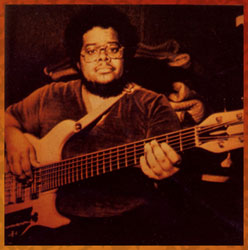
Anthony Jackson photo by David Tan

Anthony Jackson
photo by David Tan

I was astonished to read that the whole album was recorded in just TWO days, quite amazing when you consider the time spent on other albums of the era (Hello Donald and Walter…). How do you explain that? Was it just a case of getting the goods in the shortest possible time with the meter running?

Well, though it is true that the serious content of Casa Loco was recorded during May 21/22 1983 at Mediasound, I didn’t realize that we were going to need a third day just for Manolo Badrena! I actually thought that we could finish a performance of a piece and then he would simply, right then and there, overdub his vocals. I’m speaking about tunes like the title track, ‘Some Sharks’ and ‘The Suitcase’. But what happened really threw me for a loop, because I did not want to spend the money, other than for mixing, to return to the studio just for Manolo. Thinking this way demonstrated my lack of experience and understanding that recording vocals, by anyone, requires a different kind of care and patience. It is something that you have to plan for. I was too worried about spending money for an extra day in the studio! The great lesson in this is always the same: if you begin by being cheap, you will pay for it later! There is, of course, a most wonderful expression for this very thought in Spanish: ‘Lo barato sale caro!’ If you are unwilling to spend money, you will end-up with a lousy or sub-standard sounding recording, and this is something that I never want to be a part of, because you have to live with the results forever. So as the recording unfolded, during ‘Casa Loco’, ‘Penetration’ and ‘Some Sharks’, Manolo actually just sat there and didn’t play a damn thing while Anthony, Steve and I were performing those tunes. At the time, he just motioned wildly to me that he could not hear himself in the headphones. Mediasound had one of the early systems whereby each musician could make his own headphone mix. Each time this happened, we all tried to work harder with Doug to help Manolo get what he wanted and needed. It was so frustrating to have him there and not have him with us making that music. So, in the end, I had to spend the time and money overdubbing him on those tunes. I was furious about this! In sharp contrast to that, if you just listen to what Manolo contributes to ‘Uncle Roy’ – there is not a sound there that was not performed completely live. It is simply brilliant – no one else could have created textures like that. He’s one of the most unique musicians on this earth but not easy to work with. Years later, I learned that it really wasn’t the damn headphones at all; he had been upset that he wasn’t getting paid for the sessions, as if I was pulling a ‘fast one’ on him and secretly hoarding money somewhere. This is, of course, the furthest thing from the truth. We had a number of band meetings during our rehearsals and I clearly explained to everyone that I was paying for the album out of my own pocket, and that after I had recouped my investment in full, if that ever happened, whatever money there was to be had, we would all split it equally four ways. Period! In other words, we were all going to get rich together, or stay exactly as we were, but together. It was certainly my impression that Manolo understood that. Anthony and Steve were on board, as they always were, and I will never ever forget their selflessness when it came to this music. I love them both and I’m deeply indebted to them, forever, no matter what else has happened.


According to your website, you paid for recording costs entirely out of your own pocket – have you managed to recoup some of this over the years? I hope so…

We’ve addressed a portion of this during my answers to some of the other questions. But, the answer is: No! Absolutely not! I believe that, back then, my total investment in making Casa Loco was $17,500. That might not sound like much in 2015, but it felt like a fortune to me, having to go into my personal savings to do this. But that’s how much it meant to me. It was the second time that I had done that, Evidence (1980) being the first. And, it would not be the last; I have done this seven more times since! In the end, I was given advances from Trio Records (Japan) and eventually from Antilles Records (USA) that totalled $11,000, and that’s all that I have ever seen come back to me from this recording. In short, as it has been with all of my self-financed recordings, I will never ever again see that money come back to me. Do I regret it? Of course not. I am, and will always be, exceptionally proud of those recordings because everyone who participated gave something of themselves to do it. I don’t forget those people, those players! Never!

Thank you, Steve.
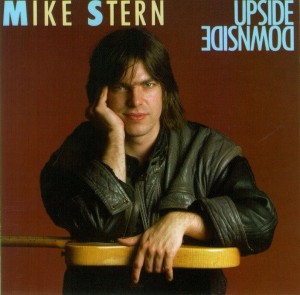
Mike Stern: Upside Downside

mike stern

There’s no telling how a jazz musician will react to a bad review, whether from a critic or fellow player.

Some, like Miles Davis, take a – how shall we put it – stoic view, either refusing to read any press or choosing his writer friends very carefully (Leonard Feather, Quincy Troupe).

But for every naysayer, there’s an aggressor; drum master Tony Williams laid into jazz scribe Stanley Crouch for his less-than-flattering comments on Miles’ electric-era music, while Weather Report famously took Downbeat magazine to task for its one-star slagging of 1978 classic Mr Gone.

Though guitarist Mike Stern had studied at the famous Berklee music school in the mid-‘70s and then landed a top gig with jazz/pop supergroup Blood Sweat & Tears, he wasn’t prepared for bandmate Jaco Pastorius’s succinct review of his guitar playing after a dodgy run through Chick Corea’s ‘Spain’ on tour with BS&T one night – ‘Stern, you know that sh*t wasn’t happening at all! You’ve got to learn faster tempos!’

Jaco and Mike, 1980

Jaco and Mike, 1980

To his great credit, Stern listened to his friend, learnt the tune note by note and in the process became one of the greatest players of his generation. His slick bebop lines played with a ‘rock’ sound were quite new when he came of age playing with Billy Cobham’s band.

Miles was also listening closely while he was in the early stages of putting together his ‘comeback’ band in early 1981. The story goes that he appeared in the front row of The Bottom Line club in New York City and poached Stern during a break, apparently even calling Cobham off the bandstand in the middle of a tune to issue his intentions!

Stern was then summoned to the Columbia Records studio to record the electrifying half-time strut ‘Fat Time’ (Miles’s nickname for Stern) in one take. The track appeared on the Man With The Horn album and Stern was then invited to go out on the road with Miles.

My dad took me to see Miles at the Hammersmith Odeon in 1982, my first proper gig. I’m sad to say that I don’t recall much about it apart from Miles’s white suit and someone shouting: ‘Turn the trumpet up!’

Dave Liebman, Miles and Mike Stern, 1981. Photo by Julie Coryell

Dave Liebman, Miles and Mike Stern, 1981. Photo by Julie Coryell

Critics were harsh on Stern, not believing that a chubby, jeans-wearing, long-haired guy playing a white Strat with a fuzzbox could play ‘jazz’, but with hindsight he did a brilliant job of holding down the harmony and delivering powerful, surprising solos in the keyboard-less quintet.

But the demons that haunted some of his early career wouldn’t go away. Stern recently said, ‘I played about two gigs in my life between the ages of 12 and 32 when I was sober’.

Miles even got John Scofield into the band as second guitarist to cover for his increasingly unreliable secret weapon. Stern eventually missed a flight and got the boot, but after a successful spell in rehab returned to play with old friend Michael Brecker and Mike Mainieri’s fusion supergroup Steps Ahead.

Stern also put together a solo record deal with Atlantic Records and began working on Upside Downside in early 1986 with his late friend and fellow shit-hot guitarist Hiram Bullock in the producer’s chair.

The album is a great excuse for Stern to play the hell out his guitar in a variety of idioms. The uptempo tracks are blessed with typically fiery solos while the ballads beautifully demonstrate Stern’s lyrical side, his Telecaster screaming emotively above Dave Weckl’s subtle drumming and Mark Egan’s springy bass.

Jaco completists will enjoy one of his very last recorded contributions on the raucous ‘Mood Swings’ while saxophonist David Sanborn’s playing on ‘Goodbye Again’ is spine-tingling. But mainly the album is a must for any lover of the guitar. His sound is a little more fluid and widescreen than on recent albums and there’s no-one quite like Stern at the top of his game, a fusion of Charlie Parker and Roy Buchanan.

Mike made two excellent follow-up albums later in the ’80s, Time In Place and Jigsaw, both produced by the fine guitarist Steve Khan. For me, this was Stern’s best era, when his raunchy playing was closer to blues and rock than the lighter Methenyesque jazz and World music vibes of recent times. I also saw him live at the Town and Country Club in 1989, a memorable gig featuring the mind-blowing Dennis Chambers on drums.

Further reading: ‘The Extraordinary And Tragic Life Of Jaco Pastorius’ by Bill Milkowski

Lyle Mays: Street Dreams

lyle maysI was a fan of most things jazz/rock as a teenager, scuttling off to HMV or Virgin in central London to buy the latest John McLaughlin, Mike Stern, Steps Ahead, John Scofield, Bireli Lagrene or Miles.

Whilst Pat Metheny was never a favourite, I dug American Garage and 80/81, and always had a soft spot for Lyle Mays’ keyboard playing. His 1987 debut album featured a fantastic band (Bill Frisell, Marc Johnson, Billy Drewes, Alex Acuna and Nana Vasconcelos) and promised a lot for the future.

1988’s Street Dreams didn’t disappoint. It is to some extent a big-budget ‘vanity project’, full of guest appearances and experiments, but it’s all the better for that and virtually impossible to categorise. Recorded exclusively at the Power Station in New York, Street Dreams has the range and ambition of some key pop albums of the era. It also for the most part avoids the new-age sentimentality that Metheny is sometimes prone to.

Street Dreams was a real Walkman album, creating a movie in one’s mind. To this day, I seldom listen to a tune in separation; I have to check out the whole thing in one sitting. ‘Feet First’ sounds like an outtake from Donald Fagen’s Nightfly with the vocals taken off (and features some classic Steve Gadd); ‘August’ and ‘Hangtime’ are superb tone poems featuring tasteful work from Frisell, Johnson and Peter Erskine.

‘Before You Go’ is space-age muzak with sprawling orchestrations out of the Claus Ogerman book, and ‘Possible Straight’ is cracking big-band jazz with some great drumming by Steve Jordan.

The title track is just bonkers and has to be heard to be believed. It takes in elements of prog rock, minimalism (with its Reich-influenced marimba), New Age textures and a playful, Hermeto Pascoal-style Latin workout with Mays’ piano at its most Keith Jarrett-like.

Compared to the sterility of most major-label jazz releases these days, Street Dreams still sounds pretty fresh, even if it is a touch lighter than what passes for jazz/rock in 2015.

Weather Report: Sportin’ Life 30 Years Old Today

weather report

Sportin’ Life represented the second career peak for Weather Report after Heavy Weather.

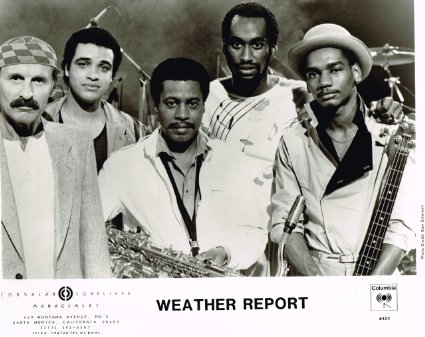
Featuring the incredible rhythm section of Victor Bailey on bass and Omar Hakim on drums, the band’s penultimate album showcased a line-up that had been building up a real head-of-steam since their debut on 1983’s Procession.

It’s not clear whether Zawinul named the album after the character in Gershwin’s Porgy And Bess but it wouldn’t be a surprise. The vitality of the music on offer here belies the fact that co-leaders Joe Zawinul and Wayne Shorter were aged 53 and 52 respectively when it was recorded.

Hakim was playing with David Bowie, Sting and Dire Straits while making this album, and he brought undeniable star quality to Weather Report.

weather report

Zawinul, Cinelu, Shorter, Hakim and Bailey

Sportin’ Life blew my mind when it came out in ’85. I was already a huge fan of Jaco-era Weather Report and could hear how their music had influenced my other favourites Level 42, Sting and Joni Mitchell, but this was something else altogether. And to say my drumming was influenced by Omar’s playing would be a gross understatement.

While Zawinul is very much in charge on Sportin’ Life (‘Hot Cargo’, ‘Indiscretions’ and ‘Ice Pick Willy’ are basically solo pieces), Wayne has returned to his best form, ex-Miles percussionist Mino Cinelu gets a lot of space and sounds as inventive as ever and Hakim has become a beautifully tasteful drummer. Bobby McFerrin and two other vocalists also contribute intriguing musical colours.

‘Corner Pocket’ may be the best-ever Weather Report album-opener, and that’s saying something. Over a superb drums-and-bass groove (possibly influenced by Trouble Funk/Chuck Brown?), Zawinul delivers a typically arresting, swinging melody and unhinged synth solo. The rhythm section gear-change when Shorter tears into his tenor break is perfectly judged.

‘Face On The Barroom Floor’ is a wonderfully enigmatic Shorter ballad featuring possibly the composer’s finest soprano playing on a Weather Report album. He lets rip here with some impassioned blowing over Zawinul’s moody synths with an uncharacteristically wide vibrato reminiscent of Sidney Bechet.

omarhakim550

The cover of ‘What’s Going On’ is funny and touching with Omar’s delicious half-time shuffle deftly moving between sticks and brushes.

Cinelu’s delightfully Santanaesque ‘Confians’ closes with another joyous Shorter soprano solo, one of his most resplendent in latter-period Weather Report.

It’s a shame there wasn’t much of an American audience for this kind of jazz in ’85, especially since Sportin’ Life represented a new high for Weather Report.

Unfortunately the band didn’t tour the album – their last major tour came around the release of ’84’s Domino Theory. I saw them at the Dominion Theatre in London and vividly recall the intense interplay between Zawinul and Hakim.

Shorter and Zawinul would soon go their separate ways but not before leaving us with this last classic. Dig it.


John McLaughlin & Mahavishnu: Adventures In Radioland

john mclaughlin

I first heard brilliant English guitarist John McLaughlin on record as a very impressionable 15-year-old when stumbling across the unsettling, brilliant ‘Dance Of Maya’, by his Mahavishnu Orchestra. I was instantly excited and intrigued.

But Adventures In Radiolandthe second album from the ’80s reincarnation of Mahavishnu, was released in probably the least-heralded era of John’s music, a time when jazz and fusion seemed to be going in diametrically opposite directions and decent record deals were hard to come by.

john mclaughlin

With hindsight, it seems the mid-’80s popularity of Pat Metheny was having a huge influence on many instrumentalists and John was no exception; the decade was full of guitarists utilising synthesizer technology and looking to Brazilian songforms for inspiration (an obvious example is Al Di Meola’s Soaring Through A Dream).

But McLaughlin’s take on Metheny was far more raunchy, rooted in bebop and the blues (though the bridge of ‘Floriannapolis’ sounds suspiciously like Metheny’s ‘James’). And what a shocking record Adventures In Radioland was coming from a mainstream jazz artist, a two-finger-salute to the Young Lions neo-bop boom represented by the Marsalis brothers et al.

John seemed to be going out of his way to annoy the jazz purists but in doing so produced some material of worth. Like some of the best fusion music of the ’80s, its deceptively slick production obscures some pretty radical improvisations.

Is the album title wishful thinking? Is this John’s idea of ‘smooth jazz’, designed for radio play? If so, he must be living in a parallel universe because this is one of the weirdest albums of his career.

But, as he said himself in a 1996 interview with Guitar Player magazine, ‘Without madness or fantasy, music’s boring’. This album sure ain’t boring, especially if you’re a guitar fan, but devotees of The Inner Mountain Flame may struggle a bit…

John McLaughlin and Jonas Hellborg

John McLaughlin and Jonas Hellborg

Opener ‘The Wait’ luxuriates in pleasant synth washes and a gorgeous chord sequence for a while before McLaughlin grabs the Les Paul and unleashes one of his most intense solos over quite a funky little R’n’B bass vamp.

‘The Wall Will Fall’ fuses a gargantuan blues riff with nutty Simmonds drums fills, and McLaughlin’s furious solo over high-speed bebop changes is both funny and exhilarating.

‘Florianapolis’ initially steers dangerously towards Metheny territory with its breezy, major-chord cod-Latin groove and nasty DX7 synth sounds. But before you know it, McLaughlin has ripped into an absolutely outstanding acoustic solo, full of rhythmic/melodic risk-taking.

‘Jozy’ is a dramatic, swinging tribute to Joe Zawinul, beautifully marshalled by drummer Danny Gottlieb with some outstanding fretless bass work from Jonas Hellborg. ‘Gotta Dance’ comes on like a fusion Mr Bungle, rattling through mellow acoustic guitar, big-band jazz, Mark King-style slap bass and industrial drums all in the space of four minutes.

‘Half Man Half Cookie’ is even weirder, a kind of post-Scritti Politti pop/funk groove interrupted by yet another incongruous big-band interlude from a multi-tracked (or sampled?) Evans.

But your proclivity for this album will probably be based on your acceptance of the mid-’80s Big Drum Sound. It certainly features some absolutely superb music. McLaughlin regrouped after Adventures and played the nylon-string acoustic exclusively for a few years – make of that what you will.

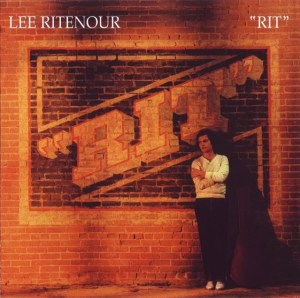
Lee Ritenour: Rit

LeeRitenour Rit-Front

In the mid-’80s, artists such as The Rippingtons and Spyro Gyra took the classic fusion sound, sweetened it, added touches of light gospel and soul and repackaged it as yuppiefied chill-out music, jazz for people who hate jazz. And they made a killing.

But a different kind of ‘smooth jazz’ had emerged a decade before, in the late ’70s and early ’80s, a mixture of AOR, jazz harmony, classic fusion and Yacht Rock. It was the soundtrack for driving West on Sunset, decadent, expensive-sounding music full of dreamy Fender Rhodes playing and tasty grooves.

Musicians and arrangers such as Johnny Mandel, Jerry Hey, Tom Scott, Jeff Porcaro, Larry Carlton, Abraham Laboriel, Quincy Jones, George Benson, David Sanborn, Harvey Mason, Jay Graydon and David Foster thrived in this era when state-of-the-art production fused with jazz-tinged songwriting to create the missing link between Steely Dan and Earth, Wind & Fire.


The unofficial headquarters of the sound was The Baked Potato, a nightclub in Studio City, LA, and one of the key musicians was guitarist Lee Ritenour (ironically one of the figureheads of the late-’80s Smooth Jazz scene proper).

His 1981 album Rit is a classic of its kind alongside George Benson’s Give Me The Night, Larry Carlton’s Friends, David Sanborn’s Hideaway, Casino Lights, Randy Crawford’s Secret Combination and Steely’s Gaucho.

This sort of music was America when I was 13 or 14. In my daydreams, I was scooting along the West Coast in a Pontiac, top down, loud music playing, palm trees – you know the drill. Had I been watching too much ‘Knight Rider’ and ‘Moonlighting’ and listening to too much Steely Dan? Quite possibly…

Although early Ritenour albums had been tricksy fusion, more in line with what George Duke or Alphonso Johnson were doing, Rit saw him concentrate on collaborations with gifted Stevie-meets-Fagen vocalist/songwriter Eric Tagg.

To this writer’s ears, George Michael very definitely checked out Mr Tagg. The track ‘Is It You’ got to #15 in the singles charts and features one of the great middle-eights of the era:

Drum fans will enjoy Rit too; the great Jeff Porcaro plays a blinding shuffle on ‘Mr Briefcase’ (another single from the album) and produces a classic rock performance on ‘Good Question’.

MTV broadcast the videos of ‘Mr Briefcase’ and ‘Is It You’ during its first day on air (1 August 1981), When things get too mellow, Ritenour always seems to know when to insert a spicy solo (in the days when he delivered high-octane jazz/rock playing a la Santana or Larry Carlton).

The instrumentals are an appealing mixture of early ’80s technology (Linn LM-1 abundant) and the sparky funk of Abe Laboriel’s bass playing and Don Grusin’s soulful Fender Rhodes.

And Jerry Hey’s horn arrangements are instantly recognisable and a great addition. I don’t think it’s an exaggeration to say that Rit was an influence on Thriller (compare Rit’s ‘Just Tell Me Pretty Lieswith Jacko’s ‘Baby Be Mine’and various other Quincy productions later in the decade.

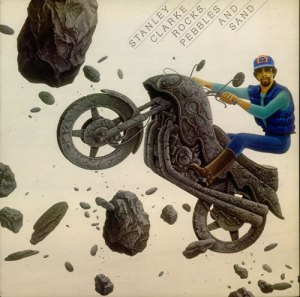
Stanley Clarke: Rocks, Pebbles And Sand

Stanley-Clarke-Rocks-Pebbles-And-543879

In 1979, Stanley recorded the sprawling double I Wanna Play For You which had some brilliant moments but also veered uncomfortably towards disco.

It also featured some outrageous live recordings which suggested he was going in a more ‘rock’ direction, mainly thanks to the sonic possibilities opened up by putting his Piccolo bass (tuned a fifth higher than a standard bass, A to C rather than E to G) through various effects pedals (see correction in the comments section below).

But how would Stanley start off the ’80s? On Rocks, Pebbles and Sand, he thankfully pushed the rock and prog-fusion rather than disco. It also really helps that it sounds very much like a ‘band’ project, apart from funk curio ‘We Supply’ which belongs on a different album altogether.

And what a band it is – Simon Phillips on drums, Charles Icarus Johnson on guitars and Steve Bach on keys. Phillips in particular is a perfect foil for Clarke with his meaty grooves and superchops. Though he was obviously coming from Billy Cobham with his prodigious double-bass playing, expansive tom fills and open-handed style (see below), his grooving on ‘Story of a Man and a Woman Part 2’ is just perfect.

Rocks, Pebbles and Sand‘s opener ‘Danger Street’ sounds like Stanley has been listening to The Who and Van Halen with its big drums, raucous guitar and gargantuan riff. Subtle it ain’t (and one can take or leave Stanley’s vocals), but it really works, mainly due to the mastering and mix – Rocks is one of the best-sounding albums of the era alongside Steely’s Gaucho, Lee Ritenour’s Rit and Zappa’s Sheik Yerbouti.

The duet vocals on ‘Underestimation’, ‘You/Me Together’ and ‘A Story of a Man and a Woman’ might put some people off, but isn’t that female voice familiar? A glance at the liner notes reveals a credit for one ‘Marcy Levy’ on vocals. It turns out to be none other than Marcella Detroit of Shakespeare’s Sister fame, an LA session singer in another life who had recorded and toured extensively with Eric Clapton (co-writing ‘Lay Down Sally’) before working with Stanley.

The funk/disco track ‘We Supply’ sticks out like a sore thumb but features a superb bassline from Louis Johnson and a hilarious spoken word intro from album engineer Dennis MacKay, proclaiming, ‘We supply all your funky needs!’ in the poshest voice you’ve ever heard. Git down and boogie with Dennis…

Stanley had a mixed ’80s to say the least, with a fair few misses but some big hits as well. Rocks is definitely one.


Level 42’s Mark King talks about his ‘Influences’

Mark_King_-_Influences

EXCLUSIVE! Level 42’s Mark King speaks to movingtheriver.com about his classic solo album Influences, released by Polydor in July 1984.

MP: Can you just briefly summarise the story behind Influences? Was it your idea or did Polydor come to you?

MK: I was signed to Polydor Records via Level 42 and had a young, heavily-pregnant wife and needed to buy somewhere to live. This was back in 1981 I hasten to add, so Influences showing up in 1984 was really down to my tardiness in addressing the fact that I had taken the advance (£5,000) and, apart from delivering a single ‘Freedom‘, had somehow neglected to fulfil my contractual obligations! Polydor were actually very sweet about it and just before the agreement was due to expire gently reminded me that I needed to deliver an album.

You’ve talked about having loads of ideas in the tank for the album but how did you piece them all together on ‘The Essential’? Did you have to demo all the different sections before recording?

I may have exaggerated the ‘loads of ideas in the tank’ bit, but when push came to shove I booked a few days at Chipping Norton Studio and dived in. The opening piece ‘The Essential’ began on the studio Hammond B3 which Mike Vernon informed me had been used on the Focus album Moving Waves. I’m no keyboard player, but I fired her up and just hit the notes. Next I programmed the drum machine with a pattern so I could lay down some bass and guitar, and the riff and melodies just wrote themselves really. I was jamming with myself I guess, ha! Anyway, that’s how all the sections came to be, and in the twinkling of an eye I was 20 minutes into the album.

What was it like getting back into drumming again for the album? ‘There Is A Dog’ is an amazing tour-de-force.

Ta. I never stopped drumming, that’s what I love to do!

Did you put your bass and guitar parts down with a drum machine first and then overdub your drums? Or did you record your drums first?

I laid the bass and drum box down first. I had an Oberheim DMX drum machine that sounded awful but was a great writing tool because you could programme some pretty accurate drum parts that were in time! You have to remember that these were early days in digital technology, so ears weren’t so tuned in to accurate tempo, but I loved the idea of being able to f*ck about all over the groove and lean on the drum box because it had the time nailed. I laid the drums down next, Gretsch incidentally. Speaking of time, the guy with the greatest meter I know is Gary Husband. He IS a human machine… The guy is a phenomenon with tempo. Never shifts. The Level 42 track ‘Take Care Of Yourself’ was a first take at The Summerhouse Studio played on some Ddrums. That is AWESOME! The great Bill Cobham quote sings to mind: ‘You are either in time or you are out of time.’ I’m usually out.

How did you come to work with producer Jerry Boys? ‘The Essential’ features some really effective edits and cross-fades between the different sections.

Jerry was a good friend and had engineered some Level 42 stuff, which is how we had met of course, and Polydor were keen for me to involve a third party to keep an eye on me as I was three years overdue already, so Jerry was the perfect choice. A really good engineer, plus I respected his opinions. I probably did a lot of the edits myself. I certainly did for the Level 42 stuff.

How did Drummie from Aswad come to play on ‘Clocks Go Forward’? That track has a lovely feel.

Aswad were working in the studio next door and I bumped into Drummie in the corridor. I had just been running over the parts for ‘Clock Go Forward’ with Mike Lindup so I had no hesitation in inviting Drummie in to play with us. The Gretsch kit I had hired had only just shown up in the studio, and there was no stool…aaaargh! But this didn’t faze Drummie at all; he just pulled up a plastic studio chair and got stuck in. The studio floor was highly-polished parquet and it was quite funny watching him sliding around as he played, hahaha! The song is called ‘Clocks Go Forward’ because that was the day we recorded it on.

You play some great lead guitar on Influences – who are your favourite players apart from John McLaughlin?

Cheers. I love JM of course, but Clapton, Hendrix, Gary Moore and Bill Connors are all in there somewhere. So many, really. I love Al Holdsworth too and working with him on Guaranteed was a real privilege.

You played a lot of Influences at an amazing Ronnie Scott’s gig a few years ago – what was it like playing it live?

A lot of fun actually. I was so chuffed at how the guys were able to recreate the sounds for me. Nathan (King) in particular was fantastic on all the guitar parts. It didn’t feel like we were playing music from nearly 30 years before, and having not listened to any of it since then I was quite proud of what I had created way back when.

Thanks, Mark!

Find out much more about Mark and Level 42 at level42.com

More about my history with Influences below.

mark king

Some of these basses and guitars were used during the making of ‘Influences’…

Even though I’d been a huge Level 42 fan from the day I bought A Physical Presence in 1985, I didn’t even know Influences existed until two or three years after its initial release. I came upon a cassette copy in a ramshackle shop near the Swanage seafront while on a family summer holiday. It would be an understatement to say I couldn’t get it onto the hi-fi quickly enough.

And it didn’t disappoint. The sharp crack of the snare drum on opener ‘The Essential’ led me to believe that Level’s Phil Gould was behind the kit. But a quick look at the album credits blew my mind: Mark was playing all the drums, guitars and bass? Yep. Influences takes the ‘one-man-band’ ethos and runs with it. Not for a second does one rue the lack of a conventional band; this music swings, snaps, crackles and pops.

With a few decades’ more listening experience, I now hear some of the ingredients that went into the Influences brew – Chick Corea’s Latin excursions, Spectrum-era Billy Cobham, Mahavishnu and also Stanley Clarke’s mind-bending prog/fusion – but Mark’s musical voice also comes through loud and clear. ‘There Is A Dog’ could almost have graced Return to Forever’s Light As a Feather album. ‘Clocks Go Forward’ and ‘Picture On The Wall’ are in a Level style and wouldn’t have sounded out of place on True Colours or Standing In The Light.

To date, Mark has not returned to such unhinged jazz/rock outside of the Level 42 ‘day job’ (apart from a fabulous gig at Ronnie Scott’s in 2012), but this is one of the great British fusion albums, or fusion albums period. Influences also deserves a place alongside Innervisions, Lewis Taylor’s self-titled debut and Prince’s Sign O’ The Times in the pantheon of great one-man-band albums.