The Cult Movie Club: Seems Like Old Times (1980)

It seems a bit weird to describe ‘Seems Like Old Times’ as a cult movie when everything about it screams ‘Hollywood’: co-stars Chevy Chase and Goldie Hawn, screenwriter Neil Simon, ‘Mary Tyler Moore’/’Cosby Show’ director Jay Sandrich, Columbia Pictures (this was one of the first movies they made after the David Begelman embezzlement scandal).
But it’s a cult movie in that it now seems completely forgotten. I probably would never have come across it unless I’d happened upon it on TV one afternoon.

I stuck it on a VHS and wish I still had it, because it’s one of Chevy’s funniest films and an interesting companion piece to ‘Caddyshack’. 1980 was a good year for Steely Dan’s first drummer.

‘Seems Like Old Times’ is clearly modelled on the great Hollywood screwball comedies of the ’30s and ’40s. Even the title comes from a popular song written in 1945 (sung by Diane Keaton in ‘Annie Hall’).

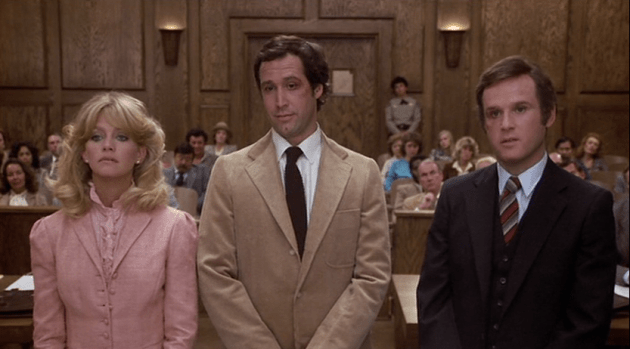
Chase stars as a falsely-accused bankrobber who takes refuge at his ex-wife’s Beverly Hills ranch. There are ‘unresolved issues’ in their relationship, not to mention the suspicions of Hawn’s new husband Charles Grodin. The sparks fly and the one-liners come thick and fast.

Hawn, Chase and Grodin

Chase channels Cary Grant at his zaniest, Hawn is fairly adorable and has some great comic moments, and they have a decent chemistry. Grodin (who I was amazed to read was Razzie-nominated for this performance) excels in the role he always seems to play, a control freak seemingly on the edge of a nervous breakdown, while Robert Guillaume and Harold Gould lampoon the Reaganite elite almost as effectively as Ted Knight in ‘Caddyshack’.

Simon writes loads of memorable secondary characters too: TK Carter is funny as Chester (though the part wouldn’t win any ‘woke’ points these days) and Yvonne Wilder is great as Mexican maid Aurora (ditto). The locations are gorgeous, with a striking helicopter shot over the opening credits along the Southern California coast.

I love Marvin Hamlisch’s theme tune too, sounding a bit like Herb Alpert jamming with Billy Joel (with Marcus Miller on bass?). And the cheap, slushy, ridiculous last five minutes get me every time.

‘Seems Like Old Times’ is a film that you can just let wash over you – you’re in the hands of experts. Indeed it sometimes feels a bit too professional. It was a reasonable hit but proved a bit of a career dead end for Chase, who pretty much eschewed the ‘romantic lead’ pictures from here on in. A shame. His dead-eyed buffoonery and surprisingly subtle charm take him and the film a long way.

The Cult Movie Club: Moviedrome

Watching ‘Halloween 2’ (1981) on the big screen the other night brought back lots of memories.
Apart from generating a few more good scares than I was expecting, it also reminded me of the very real excitement of the late-night cult movie. ‘Moviedrome’ wasn’t a cult movie but a series of cult movies transmitted on Sunday nights by the Beeb between 1988 and 2000.

Pre-internet, there was a real curiosity to this collection of lost classics. Your parents had gone to bed. It was just you and the TV. What forbidden wonders were about to be unfurled. ‘Moviedrome’ was initially presented by director Alex Cox (‘Sid And Nancy’, ‘Walker’, ‘Repo Man’), and just a glance at the running order of the first two series should excite movie fans of a certain hue:

1988:

The Wicker Man
Electra Glide in Blue
Diva
Razorback
Big Wednesday
Fat City
The Last Picture Show
Barbarella
The Hired Hand
Johnny Guitar
The Parallax View
The Long Hair of Death
Invasion of the Body Snatchers (1956)
The Fly (1958)
One From The Heart
The Man Who Fell To Earth
The Good, The Bad and The Ugly
One-Eyed Jacks

1989:

The Man With The X-Ray Eyes
Jabberwocky
D.O.A.
The Thing From Another World
The Incredible Shrinking Man
California Dolls
THX 1138
Stardust Memories
Night of the Comet
The Grissom Gang
The Big Carnival (Ace in the Hole)
Alphaville
Two-Lane Blacktop
Trancers
The Buddy Holly Story
Five Easy Pieces
Sweet Smell of Success
Sunset Boulevard

Many of these films are etched upon my brain 30 years on, particularly ‘THX 1138’, ‘Electra Glide In Blue’,  ‘The Man With X-Ray Eyes’, (‘Pluck it out! Pluck it out!’), ‘Five Easy Pieces’ and ‘The Parallax View’.

In later series, they showed uncut UK premieres of ‘Bad Timing’, ‘Scarface’ and ‘Pulp Fiction’, amongst others. Checking in to watch ‘Moviedrome’ on a Sunday night gave you the feeling that you were a member of a very small but select club.

Cox’s introductions were highly original bits of film criticism in themselves, with his arch sense of irony and keen eye for detail (bit-part actors, weird editing, striking set design). He even had the audacity to present his own movie ‘Walker’ during the series.

Later Mark Cousins brought a more serious tone, an intriguing accent and also some intelligent, subtle analyses. Watching a few of these intros just make me want to watch the movies again. If only there was such a widely-seen yet distinctly ‘cult’ film club as ‘Moviedrome’ these days.

The Cult Movie Club: Driving Me Crazy (1988)

In the ’70s and ’80s, documentarian Nick Broomfield’s focus was mainly on societal concerns – the British class system (‘Proud To Be British’), urban decay (‘Behind The Rent Strike’), juvenile delinquency (‘Tattooed Tears’) the US Army (‘Soldier Girls’), legalised prostitution (‘Chicken Ranch’). All are superb and worth seeking out.
But 1988’s ‘Driving Me Crazy’ marked a lightening of tone and the birth of Broomfield’s post-modern style, where he became a ‘character’ in the film – and, it has to be said, often an irritant.

The movie came about when the financiers of big-budget, all-black musical ‘Body And Soul’ – booked for a six-month run in Munich – sought out Broomfield to make a ‘Fame’-style documentary about the extended rehearsal process in New York. All well and good, thought Broomfield. It was a chance to extend his range and do something different, a little more light-hearted.

But then it all went pear-shaped. The financiers reduced the documentary budget from $1.6 million to $300,000. They also wanted to incorporate a ‘fictional’ element into the film, with writer Joe Hindy and his agent playing themselves. Egos ran wild and sensibilities were messed with.

Broomfield considered bailing but decided to hang around and document the resulting drama. So ‘Driving Me Crazy’ became a film about not being able to make a film, in the tradition of ‘Waiting For Fidel’. The good news is that it’s one of the funniest but also most awkward movies of Broomfield’s career. ‘Body And Soul’ choreographers George Faison/Mercedes Ellington and assistant director Howard Porter don’t take kindly to the film crew and give them hell.

Broomfield almost becomes persona non grata. Though this must have sometimes been painful, he almost seems to relish it. He also flirts outrageously with the PA of show producer Andre Heller and there are uncomfortable suggestions of racism from some of the suits.

But Broomfield and his DoP Rob Levi also document some stunning rehearsal footage. There are memorable jazz, hip-hop, soul and doo-wop performances and beautiful images of late ’80s New York, with shades of ‘Fatal Attraction’ and ‘9 1/2 Weeks’. There’s a particularly notable panoramic cityscape shot towards the end, soundtracked by one of many fractious but funny Broomfield phone calls.

Entertaining, unsettling and sometimes exhilarating, the oft-neglected ‘Driving Me Crazy’ is well worth another look.

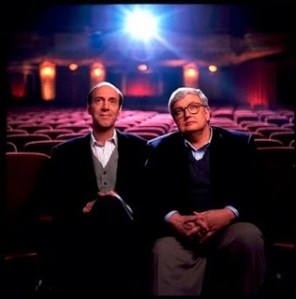
Siskel & Ebert: The Worst Of 1987

Given the precarious state of movie criticism (and movies?) these days, it’s a treat to check out the intelligent, measured and authoritative work of these two gentlemen.
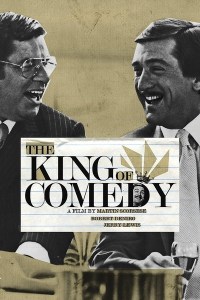
Probably best known for their ‘thumbs up/thumbs down’ schtick, I’ve recently become fairly addicted to Siskel and Ebert’s deceptively laidback presenting styles and incisive comments.

They called it exactly as they saw it, and you never feel there is any kind of corporate skullduggery going on in the background. And they certainly didn’t always agree on stuff; their exchanges could get pretty fruity.

Gene Siskel died in 1999 and Roger Ebert in 2013. They started out as rivals, writing for competing Chicago papers (the Sun Times and Tribune) in the early 1970s, but were brought together for the small screen when PBS devised a new movie review show in 1975. Its popularity quickly increased and it received national syndication in 1982.

As well as reviewing all the current releases, Siskel and Ebert also presented in-depth investigations on movie controversies of the early ’80s (video nasties and slasher movies) and weren’t afraid to get moral on our asses.

But I initially zeroed in on this ‘worst of 1987′ list. Let’s go back almost 30 years to the day and check out a very tasty list of ill-conceived star vehicles (sorry about the picture quality). I want to see all of ’em. Especially the Stallone arm-wrestling flick.

The Cult Movie Club: The King Of Comedy (1982)

Looking at the trailer and publicity for James Franco’s Tommy Wiseau biopic ‘The Disaster Artist’, it’s hard to ignore the ‘King Of Comedy’ comparisons. 
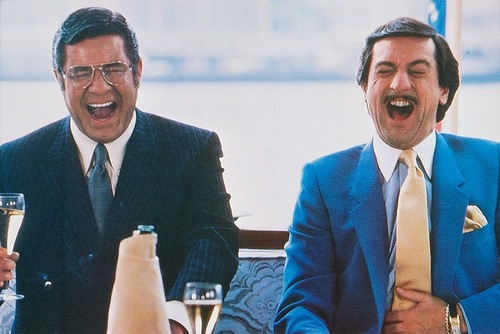
Featuring Robert De Niro’s fascinating and detailed turn as anti-hero Rupert Pupkin, Martin Scorsese’s classic black comedy was released 35 years ago today.

If Wiseau didn’t actually exist, Hollywood would probably have to invent him. Recent American cinema is full of Wiseaus and Pupkins – desperate characters, probably a few cards short of a full deck, who will do almost anything to make it.

Pupkin passive-aggressively stalks celebrities for their autographs, but then comes to believe that he is owed a shot at fame. Talk-show host Jerry Langford (Jerry Lewis) is his passport to success – Pupkin and disturbed rich-girl Masha, brilliant played by Sandra Bernhard, kidnap him. Pupkin then demands the opening monologue on Langford’s nightly TV show.

Jerry Lewis and Robert De Niro in character

If ‘The King Of Comedy’ had been made today, it would probably be hailed as a modern classic, a fable for our times, a coruscating attack on narcissism, celebrity culture and unchecked ambition.

It’s ‘Nightcrawler’ meets ‘Curb Your Enthusiasm’. But it stiffed on its original release (not helped by a substandard trailer – see below), grossing barely $3 million against a $19 million budget.

The studio didn’t know how to market it, trying to sell it as a knockabout comedy. Scorsese sensed the bad vibes gathering around the film long before it was released, telling writer Peter Biskind, ‘A close friend of mine told me “The buzz is bad.” I hate that. When the buzz is bad, people don’t want to be associated with the picture. But they were right – the film was a bomb. It’s called “The King Of Comedy”, it’s Jerry Lewis, and it’s not a comedy. Already it’s a problem…’

Yes, it sometimes feels like a succession of skits strung together, almost in the style of Brian De Palma’s early films ‘Greetings’ and ‘Hi Mom’. And it would be nice to get a bit more access to Pupkin and Masha’s backgrounds.

But Scorsese, Lewis, De Niro and Bernhard, working instinctively from ex-Newsweek film critic’s Paul D Zimmerman’s slight but intriguing story, create something toxic and completely memorable.

Scorsese fills the screen with significant minor characters, mainly playing themselves and recruited from the ‘real’ TV world, and he obviously has deep respect for Lewis and all he stands for (though has less respect for the all-pervading, gossipy influence of TV culture).

Bernhard, prodded by De Niro, is superb, given free rein by Scorsese to improvise freely: ‘I cover the waterfront, remember that!’ she bawls at Pupkin, just before one of the director’s typically bracing cuts.

There are many excruciating moments: Pupkin’s arrival at the Langford house (De Niro apparently screamed antisemitic abuse at Lewis to elicit the correct level of outrage in his response to having his golf game interrupted) and Masha’s ‘seduction’ of Langford. Is his violence towards her ‘justified’?

And then there’s Pupkin’s monologue, shown in one long take with no cutaways – Scorsese and De Niro dare us to laugh at this schmuck, and it’s unsettling when one or two of his gags hit the spot.

‘The King Of Comedy’ is the De Niro/Scorsese collaboration I return to the most. Nobody gets killed, but a lot of people get hurt. Very hurt indeed.

And it bears repeated viewings: recently I noticed an intruder in the restaurant scene where Pupkin tries to persuade his ‘girlfriend’ Rita to accompany him to Langford’s. Check him out. He’s behind Pupkin, mocking him throughout. I take it he’s supposed to stand in for the entire film-going audience.

David Bowie in Alan Clarke’s ‘Baal’ (1982)

Alan Clarke’s films generally go straight into the ‘once seen, never forgotten’ file.
Features such as ‘Scum’ and ‘Rita, Sue And Bob Too’ courted huge controversy while his groundbreaking TV work including ‘The Firm’, ‘Psy Warriors’, ‘Elephant’, ‘Road’ and ‘Made In Britain’ shone a light on the darker corners of the Thatcher years to devastating effect.

Those films and many others adorn the superb new BFI box set ‘Disruption’ which gathers all his television work made between 1978 and 1989 – including David Bowie’s remarkable turn as Baal, Bertolt Brecht’s anti-hero, adapted by Clarke and John Willett from the 1918 play.

Though it wasn’t exactly a frequently-performed work, British theatre audiences were treated to a Peter O’Toole star turn during the early 1960s, just after the actor’s Oscar-winning appearance in ‘Lawrence Of Arabia’.

For some reason, ‘Baal’ was scarcely mentioned in Bowie obituaries as one of his more successful screen performances, a serious oversight. Bravely broadcast by BBC One at 9:25pm on Sunday 2 March 1982 (cosy Sunday night viewing it wasn’t), it was filmed at Television Centre (W12 8QT!) during the summer of 1981, just after Bowie had recorded ‘Under Pressure’ with Queen.

According to producer Louis Marks, Bowie jumped at the chance to portray the ultimate street punk, and was already a fan of Clarke’s work. He was also reportedly completely undemanding, modest and eager to please on set, requesting only a car and bodyguard and receiving the standard BBC fee.

Bowie could also hardly look less ‘star-like’ in ‘Baal’, with his battered teeth, dark eyes, ratty beard, grimy face and dishevelled clothes; he completely embodies the role of the amoral troubadour. Clarke captures him mostly in long shot with very lengthy takes in the classic alienating Expressionist style, but the camera positively adores Bowie’s Baal with his alligator grin, dangerous sexuality and moments of sudden violence.

He also delivers several plainsong ballads straight to camera in strident, superb voice, accompanying himself on banjo. The subsequent Baal EP, re-recorded at Hansa Studios with added instrumentation, even got to #29 in the UK singles chart, Bowie’s last release for RCA.

‘Baal’ makes for fascinating viewing these days and you only wish the Beeb would take such chances again. Critics of the time were pretty scathing about Bowie’s performance but their comments make for fairly amusing reading these days.

It’s scarcely believable to think that only a year after ‘Baal’ was broadcast, Bowie was rocking the zoot suit and peroxide blond quiff for the Let’s Dance media offensive. It’s also virtually impossible to think of another star of such magnitude who would dare take on such a bleak, singular project. A true artist.

Further reading: ‘Alan Clarke’ edited by Richard Kelly

Wanna See Something Really Scary? Two Takes On ‘The Twilight Zone’

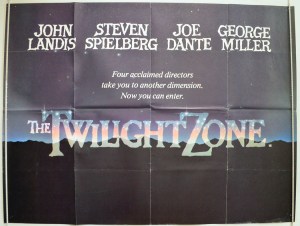
‘Wanna see something really scary?’ Day Aykroyd’s ‘Twilight Zone: The Movie’ catchphrase was an open invitation to me back in 1983.

I had just seen John Landis’s ‘Thriller’ video, George Romero’s ‘Creepshow’ and John Carpenter’s ‘Halloween’ and was rapidly becoming a ‘confirmed ghost story and horror film addict’, as Jack calls Wendy in ‘The Shining’.

‘Twilight Zone: The Movie’ was briefly a big VHS hit in my house. Though these days it looks like a bit of a misfire (decent Joe Dante and George Miller sections, less-than-decent Spielberg and Landis), I mainly loved the flavour of the 1983 movie’s Landis-directed-and-scripted opening and closing tags.

I can still randomly remember chunks of dialogue, especially Albert Brooks’ little ad-libbed songs (‘Look at those two apes/This must be where they live’ etc…).

Then my recent Cassette Revisitation Program brought round The Manhattan Transfer’s ‘Twilight Zone’, recorded a couple of years before the movie was released. Jay Graydon and Alan Paul adapt the original source music (either composed by Bernard Herrmann or Marius Constant, depending on which websites you trust…) with aplomb.

Though the track comes a bit too close to disco for my liking, I was knocked out by Janis Siegel’s lead vocal; her phrasing and enunciation are really something.

And what a band: Graydon on guitar, Jai Winding on keys and Toto in the engine room. Graydon’s stunning harmonized solo should possibly have been in my ‘wackiest guitar solos of the 1980s’ list and Winding lays down some excellent Fagen-esque keys.

I like the lyric too: ‘Unpretentious girl from Memphis/Saw the future through her third eye…’ Throw in a spot-on impression of Rod Serling (or is it actually Rod?) and you’ve got a great tribute song. Released as a single in June 1980, it made #25 in the UK and #30 in the US.

But anyway, where were we? Back to the movie. ‘Happy’ Halloween, heh-heh-heh…

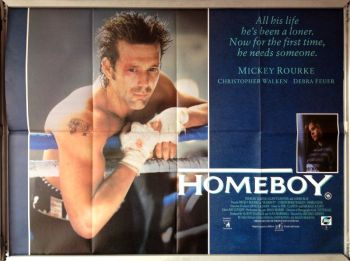
The Crap Movie Club: Homeboy (1988)

One of the pleasures of reading Bob Dylan’s ‘Chronicles’ is following his trains of thought wherever they go, however obtuse.

Possibly the most random is a mention of Mickey Rourke’s performance in the actor’s self-penned, almost totally forgotten 1988 film ‘Homeboy’, seen by Bob during the difficult Oh Mercy sessions:

‘He could break your heart with a look. The movie traveled to the moon every time he came onto the screen. Nobody could hold a candle to him. He was just there, didn’t have to say hello or goodbye.’

I’m a huge Mickey apologist, but I think Bob was way off the beam here. ‘Homeboy’ is irredeemable. It also signalled the beginning of Rourke’s 20-year slump.

Clearly a ‘vanity project’ for our star (he started writing it during the ‘Heaven’s Gate’ shoot in 1980), it’s the film where Mickey started to believe his own hype and play the sort of parts which echoed how badly he obviously felt about the movie business.

‘Homeboy’ is a weirdly masochistic (at times reminiscent of Brando’s similar explorations in that area), relentlessly downbeat, funereally-paced, vaguely camp melodrama.

The ‘plot’, such as it is, is almost identical to that of ‘The Wrestler’, the 2008 comeback that won Mickey his first Oscar.

He plays Johnny Walker, a punch-drunk, third-division-south pugilist reduced to hawking his wares around Asbury Park for a few bucks with his portly coach in tow.

Possibly Mickey’s character is supposed to have endured some kind of stroke, because he spends the whole film squeaking out of the side of his mouth, rendering his sparse dialogue almost inaudible.

Christopher Walken appears intermittently as the dodgy agent who wants Johnny’s assistance with a jewellery heist. Modelling a succession of deafening suits, he chews up the scenery a couple of times, dances a bit, sings a bit, clearly knowing this film is a heap of sh*t.

At times amusing but not enough to rescue the movie, it’s a dry run for his superior turns in ‘King Of New York’ and ‘Wild Side’.

Poor Debra Feuer – Mickey’s wife at the time – underwhelms in the almost non-existent role of Johnny’s love interest. Eric Clapton phones in an always-too-loud soundtrack, obviously tossed off during yet another Albert Hall run, adding a few tired licks but mainly employing bassist Nathan East to improvise some fairly half-baked solo cues.

Director Michael Seresin, previously the cinematographer on ‘Angel Heart’ (and recently one of the Harry Potter films), can’t seem to rustle up any convincing or memorable scenes. The final effect is sub-Golan-Globus.

Rourke has one great moment towards the end of the film though, possibly the one Dylan picked up on, where he peers up at his coach and tearfully asks (with shades of Brando again), ‘You think I coulda been good?’ But it’s too little too late. ‘Homeboy’ should probably have stayed in Development Hell.

Jerry Lewis (1926-2017)

Jerry’s recent death seems to have been rather passed over by the media.

He was a massive comedy hero of this writer in the late 1980s. In those days, you could turn on terrestrial TV of an afternoon and stumble across one of his movies.

My dad first introduced me to ‘The Disorderly Orderly’, his Frank Tashlin-directed 1964 hit, and I was a fan from then on (though even my teenage self quickly twigged that the quality of his ‘solo’ films trailed off pretty rapidly after that).

I loved the improvisatory schtick, lack of ‘character’ guff (though sentimentality was never far away), his verbal tics and physical manifestations. I also spotted some connections to other favourites of mine in the ’80s: the early films of Woody Allen, Chevy Chase, Martin Short, Tom Hanks, Steve Martin and, a bit later, Jim Carrey.

So here are a few routines – mostly music-related – from those movies watched in the ’80s that have stuck in my head, by way of tribute.

‘Cinderfella’ (1960)

‘The Errand Boy’ (1961)

‘Who’s Minding The Store’ (1963)

‘The Nutty Professor’ (1963)

‘The Disorderly Orderly’ (1964)

‘The Family Jewels’ (1965)

‘The King Of Comedy’ (1982)

The Cult Movie Club: Southern Comfort (1981)

After the extended prologue, when Ry Cooder’s swampy blues riff slides in over a glorious widescreen shot of the Louisiana bayou, you know you’re watching a classic of its kind.

To this day, co-writer/director Walter Hill claims that the superb ‘Southern Comfort’ doesn’t directly allude to the Vietnam War, but it’s hard to conclude otherwise.

Set in 1973, his film concerns a motley group of weekend National Guardsmen whose sojourn into Cajun country (with the promise of prostitutes at the end of the road) turns into a desperate fight for survival when a foolish prank leaves them at the mercy of some particularly vengeful locals.

Hill prefers to call it a ‘displaced Western’, a film about escalating moral dilemmas in unfamiliar surroundings. That rings true too, but watching it again after ten years or so, it’s hard not to compare it to John Carpenter’s ‘The Thing’, another all-male classic about creeping, self-defeating paranoia, fudged leadership and dodgy group-think.

‘Southern Comfort’ might also be described as ‘The Warriors’ meets ‘Deliverance’. It’s that good. This is a pre-irony, pre-CGI action movie, where men are men, decisions have consequences and vengeance is swift and fairly brutal.

The action sequences are gripping, though never tawdry, and look extremely punishing for the cast – there’s a particularly realistic dog attack and a memorable quicksand incident. Apparently the shoot was long, cold and difficult, with camera tripods frequently sinking into the bayou.

The dialogue is fast and loose – the brain has to be in gear to pick up all the political/ethical nuances that fly by – and the acting styles deceptively ‘naturalistic’.

Keith Carradine and Powers Boothe are superb as the reluctant heroes who must overcome their basically apolitical stances to become men of action and moral choice.

Carradine in particular makes for a fascinating action-man (according to Hill, his character is a ‘Southern aristocrat’). The secondary cast of mainly unknowns (the ever-excellent Peter Coyote aside) is also superb.

But ‘Southern Comfort’ was a commercial dud on its 1981 release. Maybe, like ‘The Thing’, it’s far too stark a vision. But it certainly it spawned some new movie clichés and looks like an influence on many ’80s movies from ‘Aliens’ to ‘Predator’.

It’s also a fascinating watch these days considering the state of the US – the film’s message seems to be that peace is impossible while there remain so many internal divisions and prejudices.