Flicking through Grace’s well-received memoir recently, I noticed that she rates Inside Story as her favourite album – pretty surprising considering the likes of Nightclubbing and Living My Life nestling in her discography.
But close reading of the small print reveals why it’s her most personal project – she co-wrote every track (with ex-Camera Club/’Slave To The Rhythm’ co-writer Bruce Woolley) and also co-produced the album with Nile Rodgers.
And while hardly a classic, Inside Story‘s a much more wholehearted and successful record than the previous year’s Slave To The Rhythm.
It seems pretty inevitable that Nile would end up collaborating with Grace. They were long-time acquaintances on the NY party scene since the Studio 54 days. On paper, he would seem the perfect fit for her, though she barely gets a mention in his excellent memoir ‘Le Freak’ (though he has promised a sequel which will presumably feature her a lot more).
Inside Story‘s lead-off single ‘I’m Not Perfect (But I’m Perfect For You)’ surprisingly didn’t make much impact on the US or UK charts but was a minor hit all over Europe. Its Keith Haring-directed video is particularly striking though, featuring cameos from Andy Warhol and a load of other NY art figures, and there was also an interesting 12″ mix by early house pioneer Larry Levan.
The album is great when it sticks to short, sharp, frivolous pop tunes but comes a bit unstuck when going for something more ambitious.
‘White Collar Crime’ is very much the son of ‘Slave To The Rhythm’, sneaking in a few of that song’s chords and an almost identical two-note verse, but it’s let down by asthmatic synths, a puny drum machine and Nile’s sketchy bass playing, though Lenny Pickett’s punchy horn arrangement is a winner.
The title track is weirdly reminiscent of Leonard Cohen’s ’80s output while ‘Victor Should Have Been A Jazz Musician’ is possibly the standout, namechecking Nina Simone and featuring some lovely Wes Montgomery-style guitar from Rodgers.
Inside Story‘s rhythm section sounds in general are slightly disappointing – Rodgers’ guitar is too low in the mix and a Linn machine takes care of all the drum parts. This suits the mechanized grooves of ‘Barefoot In Beverly Hills’ (almost an example of early house music), ‘Party Girl’ and ‘Scary But Fun’.
But the jazzier tracks are crying out for a real drummer. I wonder why Nile didn’t enlist the services of Mr Steve Ferrone, seeing as they’d recently worked together to superb effect on Al Jarreau’s L Is For Lover and Duran Duran’s Notorious.
Inside Story was not a hit, reaching only #61 in the UK album chart and #81 in the US. It’s unlikely to ever get the re-release/remaster treatment, but sounds pretty good these days.
The 1980s spewed out a lot of cool baritone vocalists: Ian McCulloch, Ben V-P, Matt Johnson, James Grant, Nick Cave, Edwyn Collins, David Sylvian…
The list goes on. But one name that doesn’t exactly trip off the tongue is Hipsway’s Grahame Skinner, possibly because the Glaswegian band’s tenure was so short, consisting of just two studio albums and a few tours including a high-profile jaunt with Simple Minds.
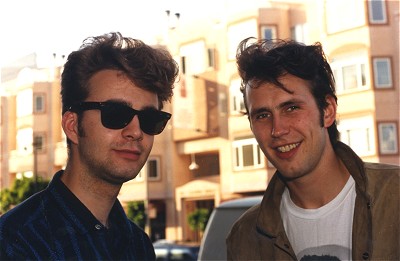
Hipsway’s Pim Jones and Grahame Skinner
A shiny new re-release of Hipsway’s 1986 debut album, complete with B-sides, outtakes, remixes and excellent Skinner liner notes, shows why they were briefly one of the most highly-regarded Scottish acts of their day, during a golden period for Caledonian pop.
It also shows Skinner to be one of the most distinctive vocalists of the era, apparently an influence on everyone from Mansun’s Paul Draper to Marti Pellow.
Hipsway’s star shone briefly but brightly, with one UK (#17) and US (#19) hit ‘The Honeythief’, a track that still sounds like a classic ’80s floorfiller. The accompanying debut album just sneaked into the US top 60 but was a bigger hit in the UK, reaching #42 and staying in the chart for 23 weeks.
‘The Honeythief’ still stands up 30 years on, but does the rest of the album? Yes and no. With producers Paul Staveley O’Duffy (Swing Out Sister, Was Not Was, Lewis Taylor, Amy Winehouse) and Gary Langan (ABC, Art Of Noise) onboard, a slick, pristine mix and selection of solid, attractive grooves are guaranteed. The wider problem is memorable hooks.
The good stuff first: ‘Long White Car’ is a richly-chorded, jazzy bossa-nova which sounds like a hit even now (it only got to #55 on initial release). The excellent ‘Broken Years’ ends with Skinner quoting from Talking Heads’ ‘This Must Be The Place (Naive Melody)’ while ‘Forbidden’ initially comes on like something akin to Frankie Goes To Hollywood on downers before breaking out into an unexpectedly resplendent pure-pop chorus.
‘Ask The Lord’ is also initially attractive and distinctive but lacks the killer hook that might have made it a hit. ‘Bad Thing Longing’, ‘Tinder’ and ‘Upon A Thread’ borrow Roxy Music’s Avalon template with their swooning synths and intricate bass/drums/percussion, but they are decidedly flimsy songs.
But overall this is an impressive debut album of funky mid-’80s pop and it’s worth a reappraisal.
The rather despairing NME headline during October 1986 said it all: ‘When The Little Girls Have All Grown Up…’
After releasing two albums in the space of barely six months, Kershaw took his time over the third. He settled in to North London’s Swanyard Studios for most of 1986 to work on the self-produced Radio Musicola, employing the cream of the English session scene (The Kick Horns, Charlie Morgan, Mark Brzezicki, Wix, Andy Richards, Simon Phillips etc).
Yes, Musicola was Kershaw’s chance to take on the Trevor Horns of this world and deliver a big-budget, endlessly-fussed-over studio ‘project’… Perhaps unsurprisingly, given his meteoric rise to fame, the main themes of the album are press intrusion and tabloid sensationalism.
And, in a neat irony, the rise of technology-led, assembly-line music was also in Kershaw’s sights, despite Musicola making liberal use of all the latest sampling and synthesizer technology. So let’s get Musicola‘s duff tracks out the way first – ‘What The Papers Say’, ‘Nobody Knows’ and ‘Running Scared’ are jarringly overproduced, though the latter had real potential.
But there are loads of treats elsewhere – ‘Life Goes On’ is a musically-rich, very pretty ballad with swooning chord changes and fine vocals from Kershaw. ‘LABATYD’ is pure class, a half-time shuffle with tasty Mark Brzezicki drums, an excellent Kick Horn arrangement and soaring synth by either Wix or Andy Richards.
The title track blew a lot of musicians’ minds back in 1986. It really was state-of-the art and still sounds pretty novel today, as striking as the title track of Level 42’s World Machine a year before. I remember eagerly tuning in to ‘The Tube’ to see Kershaw performing the song live. You can hear a lot of the ‘little girls’ turning off their TVs as he lays into the opening guitar solo…
‘Don’t Let Me Out Of My Cage’ is pretty damn ambitious fare for a pop album, a fast swing number featuring some cracking Phillips drums and effective close-harmony backing vox from Mrs Kershaw (Sheri). The excellent ‘James Cagney’ chugs along with a Level 42 groove (and features an interesting ‘New Man’ lyric) and great Felix Krish bass part that sounds uncannily like Mr King.
‘When a Heart Beats’, an excellent, intricate slice of pop/prog in the It Bites mould, gave Kershaw his last top 40 chart appearance (peaking at a disappointing #27) when it was released in November 1985.
The closing ‘Violet To Blue’ is possibly Kershaw’s finest and most ambitious recording to date, featuring some rousing vocals from the London Community Gospel Choir and superb, driving drum work from Phillips (much imitated in my music room back in the day).
An interesting album which clearly fell between the stools of art and commerce, Radio Musicola reached a barely believable #46 in the UK album chart, just over a year after Kershaw had played Live Aid. It disappeared without trace in the US.
The little girls had definitely grown up. Or maybe it was the new haircut. But 18 months is a long time to leave between albums when you’re hot, though Kershaw didn’t seem bothered about his new ‘selective’ popularity; in fact, he seemed genuinely relieved, but wondered how MCA were going to sell him now that he was focused on being a musician rather than a pop star.
Despite the poor album sales, Kershaw embarked on a sold-out UK tour in early 1987 including three nights at London’s Town & Country Club. And he would be back once more before the ’80s were out to deliver perhaps his finest solo album to date.
Recorded at Utopia Studios, Woodstock, upstate New York
UK album chart position: #90 (!)
US album chart position: #70 (!)
Terry-Thomas in ‘School For Scoundrels’
Side One:
1. ‘Summer’s Cauldron’
Andy Partridge (composer): ‘Something about the words reminded me of Dylan Thomas. Not that I’m saying I’m a Dylan Thomas. More of a Terry-Thomas, really…’
2. ‘Grass’
Colin Moulding (composer): ‘A lot of people think the song’s about marijuana – it isn’t. Todd said: “Don’t sing so deep. You sound like a bit of a molester.” So I just did the Bowie thing and added an octave above it…’
3. ‘The Meeting Place’
Moulding: ‘Because the riff was a bit like “Postman Pat”, we were just figures on a Toytown landscape viewed from above. It was me meeting her (future wife Carol) at the gates for a sandwich in The Beehive pub, embroidered with the suggestion of a lunchtime quickie…’
4. ‘That’s Really Super, Supergirl’
Partridge: ‘I’d go into his (guitarist Dave Gregory) little room, smelling of aftershave and guitar wax and dead mice, and he’d be rehearsing this solo over and over again. I can still see him playing it. I remember when we were recording the song that Todd was trying to master it on keyboard, and Dave whispered to me, “He’s got the chords wrong!” He thought the chords were major, and they’re not. I was hearing it a lot more clangorous…’
5. ‘Ballet For A Rainy Day’ (Partridge)
6. ‘1000 Umbrellas’
Partridge: ‘There was very little time to do the strings. They had one run-through and then recorded it. Their balls were on the line but they turned in a pretty fine performance…’
7. ‘Season Cycle’
Partridge: ‘I felt that I had maybe laid the ghost of Ray Davies ‘fore me and written a song that could stand up against “Shangri-La” or even, dare I suggest, “Autumn Almanac”.’
Side Two:
8. ‘Earn Enough For Us’ (Partridge)
9. ‘Big Day’
Moulding: ‘I’d been messing around with the chords of Labi Siffre’s “It Must Be Love” and, with a little moving around, it became this sort of fanfare to a big event, a ticker-tape parade for a big day.’
10. ‘Another Satellite’
Partridge: ‘I regret writing it because things turned out so marvellously with the person (Erica Wexler) it’s all about. The story had a happy ending because Erica and I finally got to express the emotional bond that was always there.’
11. ‘Mermaid Smiled’ (Partridge)
12. ‘The Man Who Sailed Around His Soul’
Partridge: ‘It just says you’re born, you live and you die. Why look for the meaning of life when all there is is death and decay? Todd said, “Let’s do a John Barry thing” and, literally overnight, came up with his arrangement with brass and flutes. It’s bang on. Cod spy music.’
13. ‘Dying’ (Moulding)
It frightens me when you come to mind The day you dropped in the shopping line And my heart beats faster when I think of all the signs, all the signs When they carried you out your mouth was open wide The cat went astray and the dog did pine for days and days And I felt so guilty when we played you up When you were ill, so ill What sticks in my mind is the sweet jar on the sideboard
And your multicoulored tea cozy What sticks in my mind is the dew drop hanging off your nose Shrivelled up and blue And I’m getting older, too But I don’t want to die like you
14. ‘Sacrificial Bonfire’
Moulding: ‘There was a touch of “The Sorcerer’s Apprentice” and a bit of Arthur Brown’s “Fire” in it, I suppose. But I wasn’t moralising. It was just that this was an evil piece of music and good would triumph over it. (The strings) were a bit too Vivaldi for me, but it had to go somewhere, I suppose…’
It’s well known that FGTH’s deal with ZTT was one of the worst recording contracts in pop history (outlined in embarrassing detail in vocalist Holly Johnson’s ‘A Bone In My Flute’ autobiography).
But the band were already starting to show signs of subordination by late 1984 – they refused to record the Velvet Underground’s ‘Heroin’ as the B-side to ‘The Power Of Love’, part of ZTT ideas man Paul Morley’s bizarre plan* to get the label’s acts to write a history of pop through cover versions.
FGTH also scuppered ZTT’s plan for them to star in a sci-fi movie which was to be scripted by Martin Amis and directed by Nicolas Roeg (actually, that sounds brilliant…).
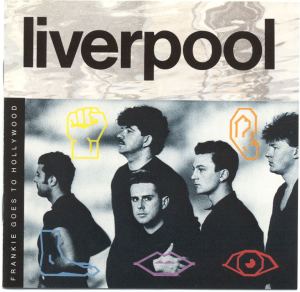
The band then insisted that they actually play on their second album Liverpool rather than let session players lay down the basic tracks, a request that seems to have been granted. Guest players this time were few and far-between, and it’s quite hard to identify Trevor Rabin, Steve Howe and Lol Creme.
Sensing trouble, Trevor Horn took the role of ‘executive producer’ and passed production duties over to the gifted Stephen Lipson, who clearly had his work cut out. A schism was opening up between Holly Johnson and the rest of the band, or ‘The Lads’, as he dubbed them (Lipson discusses the making of Liverpool in this excellent podcast).
Tensions were also running high in the UK – by mid 1986, unemployment had topped three million and anti-Thatcher feeling had reached its peak. Oxford University refused her an honorary degree. So the frivolity and epicurean excesses of Welcome To The Pleasuredome were definitely out.
Holly Johnson and Paul Rutherford
Still, Liverpool is a sumptuous-sounding album, with immense care taken over recording, mixing and mastering – apparently to the tune of a whopping £760,000.
It stands up pretty well today especially if taken as a separate entity to Pleasuredome, even if the songs – not surprisingly – are not as memorable as the debut’s.
Lipson pulls out all the stops, playing some superb fuzz-toned lead guitar, particularly on ‘Maximum Joy’ and ‘Rage Hard’, and piecing together an album of musically-rich, prog-influenced hard rock.
Synth players Andy Richards and Peter-John Vettese contribute intriguing intros and outros, often involving backing vocalist Betsy Cook too.
And though Liverpool is obviously a more ‘serious’ album than Frankie’s debut, there are still amusing spoken-word inserts in broad Scouse (‘In the common age of automation, where people might eventually work ten or twenty hours a week, man for the first time will be forced to confront himself with the true spiritual problems of livin”!).
‘Warriors Of The Wasteland’, ‘Rage Hard’ and ‘Kill The Pain’ are tough techno-rock tracks which wouldn’t have sounded out of place on It Bites’ debut album. ‘Rage Hard’ was also subjected to a fantastically overblown extended mix featuring Pamela Stephenson (doing her best Thatcher impersonation?) taking us on a tour of the 12” single.
‘Maximum Joy’ is superb; pure ZTT bliss, while ‘Lunar Bay’ is also brilliant, balls-out prog/pop in the style of Propaganda’s A Secret Wish.
‘For Heaven’s Sake’ is a completely barmy anti-Thatcher ballad (‘She should buy us all a drink’) in queasy 6/8 time, featuring a melody that wouldn’t be out of place in a classic Broadway musical, some Native American chanting by Holly and a weird music-hall middle section.
‘Is Anybody Out There’ is a fitting end to Frankie’s recording career, a majestic, distinctly Suede-like ballad (the guitar solo is totally Bernard Butler) with some beautiful Holly vocals and a subtle Richard Niles string arrangement.
The album was not a commercial disaster, reaching #5 in the UK album chart and the top 10 in many other European countries, but a disappointing #88 in the US. And Thatcher still had four years left in Downing Street.
*Morley’s influence was apparently running amok, evidenced by Liverpool‘s fairly ridiculous liner notes (‘Best wishes to Stan Boardman’) and a choice of album title that suggested he was pretty certain the band would soon be returning to their hometown, banished from pop’s high table. Holly apparently hated the title…
Recorded at Genetic Sound Studios, Reading, Berkshire, UK
UK album chart position: #1
US album chart position: #3
Singles released: ‘The Sound Of The Crowd’ (UK #12)
‘Love Action (I Believe In Love)’ (UK #3)
‘Open Your Heart’ (UK #6)
‘Don’t You Want Me’ (UK #1, US #1)
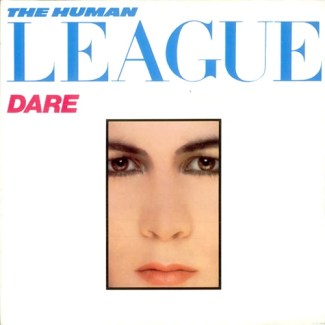
Phil Oakey (vocals/co-composer): ‘Martin really knew what pop was. He could take your mad sounds and make them pop. I still reckon “The Sound Of The Crowd” is one of the maddest songs that’s ever got in the Top 20. “Love Action” hasn’t got a proper chorus. I remember smashing the phone after I was told “Don’t You Want Me” was number 1 in America. It’s so much to live up to. Everyone and their grandma knows about you so no one wants to wear your badges any more…’
Martin Rushent: ‘To a large extent, I was their band. I was certainly their drummer because I programmed all the rhythms and made all the decisions about the grooves. I learned a lot from working with the arranger Johnny Harris. He was bandleader for all the show singers like Petula Clark, Tom Jones and Shirley Bassey. I learned about voicing instruments and how the most important element of music is silence. If you listen to Dare, there’s lots of space in the songs and lots of little parts and you can sing them all…’
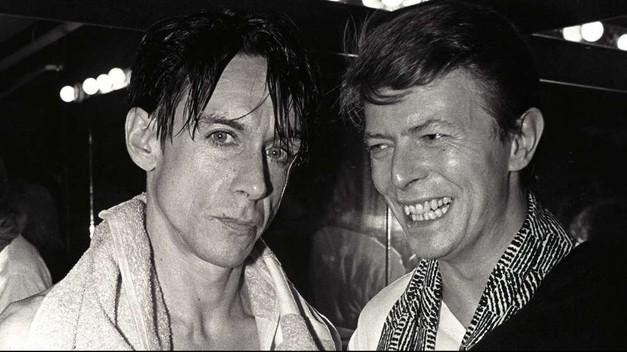
While David Bowie was turning in one of his finest live performances of the 1980s at Live Aid, his good friend Jim Osterberg AKA Iggy Pop was ensconced in LA, writing songs with ex-Sex Pistol Steve Jones.
Bowie’s use of six Iggy lyrics on the Let’s Dance and Tonight albums had given Osterberg enough royalties to buy some much-needed thinking time after a disastrous run of early ’80s solo albums and the termination of his Arista record contract.
Iggy and Jones came up with nine new songs, three of which – ‘Fire Girl’, ‘Winners And Losers’ and ‘Cry For Love’ – would make it onto Blah-Blah-Blah (though they were clearly inferior to the Bowie/Iggy material).
The latter lyric especially had opened up a new vulnerability in Iggy’s writing. He later said: ‘Just expressing that openness frightened me. I didn’t want to admit I was in need of basic affection.’ Yes, Iggy was now singing boy/girl songs – love songs.
Bowie hooked up with Iggy in late 1985 to hear some of the new stuff. He was impressed. He suggested they co-write some more uptempo material and also offered to produce, apparently telling Iggy: ‘I can make this as commercial as hell.’
They disappeared off to David’s holiday home in Mustique with their respective girlfriends, then undertook a lengthy skiing holiday in Gstaad, taking a four-track tape machine with them. Mountain Studios, owned by Queen and scene of the ‘Under Pressure’ recording, was booked for April 1986, and co-producer/tech guru David Richards came onboard for the sessions too.
Bowie recruited a crack band for Blah-Blah-Blah – Kevin Armstrong played guitar (joined by Steve Jones on one track), fresh from being David’s musical director at Live Aid and doing sessions for Prefab Sprout, Propaganda and Alien Sex Fiend!
Gifted Swiss multi-instrumentalist Erdil Kizilcay, who had worked on the Let’s Dance demos and also epic soundtrack single ‘When The Wind Blows’, played (excellent) bass and shared live drums with the Linn machine borrowed from Queen’s Roger Taylor. Bowie played most of the keyboards.
David was apparently workmanlike and professional in the studio, ticking off daily tasks on a notepad with lots of nervous energy. He was focused on helping his friend to the very best of his ability. ‘He’d be chucking down the coffee and fags, and it would be pretty neurotic and manic around him’, said Armstrong.
But Bowie was also a typically shrewd people-watcher – he apparently wrote the first verse of ‘Shades’ after watching Iggy give his girlfriend Suchi a gift, turning it around to make the guy the grateful, humble recipient.
Blah-Blah-Blah features Iggy’s best singing on record. He has developed a gloriously dark croon and finally has the right material to showcase it. ‘Winners And Losers’ particularly shows off his improved vocal range.
It’s also a very funny album. Bowie and Iggy clearly had a great laugh writing these songs, with some preposterous couplets thrown in, especially on ‘Isolation’ (‘I need some lovin’ like a body needs a soul/I need some lovin’ like a fastball needs control, here I am!‘).
‘Baby It Can’t Fail’ features some of the best opening lines in 1980s rock: ‘You have loved me with energy/Backed up hard work and guts!‘ Iggy’s committed delivery always prompts a smile.
There’s some excellent, genuinely uplifting material in the shape of ‘Shades’, ‘Isolation’ (with gorgeous Bowie backing vocals) and ‘Hideaway’.
The title track is a sample-heavy curio in the style of Sigue Sigue Sputnik’s ‘Love Missile F1-11’ (which Bowie later covered) with amusing ‘geeky’ vocal stylings by Iggy and some wilfully-gormless lyrics (‘Shimon Peres, whatcha gonna do?/I’m from Detroit’ etc etc).
‘Little Miss Emperor’ tellingly quotes Allen Ginsberg and features a classic Bowie piano flourish in the ‘Absolute Beginners’/’Life On Mars’ style. Blah-Blah-Blah even spawned Iggy’s first UK singles chart showing (#10) with ‘Real Wild Child’, a cover of Australian rock’n’roller Johnny O’Keefe’s only hit.
Promotional duties led to a very memorable appearance on the regional British kids’ TV show ‘Number 73’ wherein Iggy decided to simulate sexual relations with an oversized teddy bear.
Apparently Richard Branson heard an early pressing of Blah-Blah-Blah and phoned Iggy personally to invite him to Virgin Records. But he eventually went with A&M and delivered a reasonable hit for the company; the album went gold in Canada and made a decent dent in both the UK and US charts.
So is Blah-Blah-Blah the best Bowie-related album of the ’80s? It’s certainly up there. Older Iggy fans may have been shocked by the ‘poppy’ nature of some of the material, but there’s always an edge.
The album was also arguably an influence on bands like The Mission, Sisters Of Mercy and Miss World with its monolithic drum programming, deep vocals and anthemic songcraft.
To a certain extent, Bowie tried to repeat the formula on his own decidedly patchy Never Let Me Down album, but the news was better for Iggy; he embarked on a ten-month world tour, laying off the booze and drugs for the entirety.
For the band, however, it was a different story – apparently Kevin Armstrong and drummer Gavin Harrison were in a pretty terrible state by the time they got home to London in summer 1987.
But Bowie had done it again – he’d helped kickstart Iggy’s career for the fourth time and delivered probably the commercial apex of his solo work; Blah-Blah-Blah is definitely due a critical reappraisal.
Further reading: ‘Open Up And Bleed’ by Paul Trynka
Recently, I was honoured to be asked by photographer William Ellis to contribute to his One LP project where he asks musicians, writers and music business figures to speak about the album that has been most important to them.
Here’s what I said about Gone To Earth (with a few edits):
I was given the album by my parents on my 14th birthday. I had heard the single ‘Taking The Veil’ a few weeks before and it had struck me immediately as something I needed to check out. Concurrently, I was getting into Japan, Sylvian’s band from the early ’80s.
But Gone To Earth had a whole new influence: ECM-style jazz. Kenny Wheeler plays some beautiful solos, John Taylor features strongly on piano, and Harry Beckett blows all over ‘Wave’. Back in the mid-’80s, pop music embraced jazz with ease, but now it seems like the two worlds have completely diverged. Sylvian combines both elements really nicely.
When I delved deeper into Sylvian’s lyrics, I realised that they could be related to romantic affairs – there was a ‘pop’ element to them – but they could also be spiritual in nature, about ‘the other’ in general, touching on religious ideas, metaphysical ideas. That concept has fascinated me as I’ve got older.
Side two of Gone To Earth is completely instrumental. Sylvian loathed the term ‘new age’ and instead produced ambient music which was more environmental, geared towards self-reflection and an appreciation of nature. He once said, ‘If I didn’t live in a city, I wouldn’t need to make this music.’
On ‘The Healing Place’, German artist Joseph Beuys speaks about his vision of art. Another track features Robert Graves reciting his poem ‘The Foreboding’. The voice of JG Bennett makes a few appearances, familiar from Fripp’s Exposure.
And then, of course, there’s Sylvian’s voice. I think of it as an instrument. Some people find him a bit doomy, depressing, po-faced, but I’m always inspired by his melodies. He’s also a great, natural musician, very underrated/understated on keyboards and guitar.
The story goes that Virgin didn’t want to fund the second instrumental side. You can imagine, can’t you? They said, ‘This pop singer’s trying to an album of instrumentals? What’s going on?’, even though Bowie had done it ten years before. In this fascinating interview from 1986, Sylvian explains that he had to work on side two in his ‘spare’ time, away from Virgin’s watchful eye. I’m glad he did.
Musically, the album is also a guitarists’ dream: Robert Fripp, Phil Palmer, Bill Nelson and Sylvian himself contribute memorable, considered work. Nelson in particular is a revelation. Sylvian gives him space to sculpt and layer his parts, and he delivers some brilliant solos. BJ Cole adds some dreamy pedal steel.
In 1988, I saw Sylvian at the Hammersmith Odeon with a great band featuring Mark Isham on trumpet, David Torn on guitar and Steve Jansen on drums. It was tremendously exciting; there was a kind of ‘goth’ element at the gig which surprised me and lots of young women screaming for Sylvian!
He was still holding onto his ‘pop’ status – it’s no mean feat for an 80-minute, half-instrumental album to reach 24 in the charts. It was a time when pop music had a lot more mystique; you had to scan The Face, Wire, NME or Melody Maker to glean any snippets of information about artists of Sylvian’s calibre.
Every time I listen to Gone To Earth, I notice something new. It’s such a layered, beautiful piece of music, almost always to be enjoyed in one sitting, and it came out during an incredibly fertile period for Sylvian – the 1984-1987 run of Brilliant Trees, Gone To Earth and Secrets Of The Beehive surely matches any other artist in ’80s music…
Madchester aside, the late-’80s may be the least-heralded period of British pop, but the era also produced a surprising amount of intelligent, original bands that arguably never got their commercial due: Love And Money, Danny Wilson, The Bible, The Lilac Time, It Bites, Stump…
The list of ‘under-achievers’ is long and varied. But one name often forgotten is How We Live.
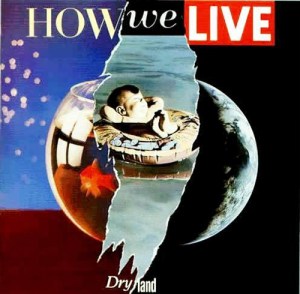
Most famous for featuring a pre-Marillion Steve Hogarth on vocals and keyboards, the band emerged from the ashes of new-wave popsters The Europeans to release their one and only album Dry Land in 1987.
Originally appearing on CBS offshoot Portrait Records but now given a shiny new remaster by Esoteric/Cherry Red, the album certainly ticks lots of ‘quality 1980s pop’ boxes: it was recorded at Crescent Studios in Bath with XTC/Peter Gabriel producer David Lord and The The/Deacon Blue engineer Warne Livesey, and features Tears For Fears’ drummer Manny Elias on a few tracks. Peter Gabriel and XTC get a thank-you on the inside cover.
Colin Woore and Steve Hogarth
Malcolm Dome’s incisive liner notes for this re-release outline the record-company shenanigans which dramatically shortened How We Live’s lifespan, whilst also acknowledging how Hogarth and fellow ex-European Colin Woore’s songwriting was very much informed by the other quality British pop of the time – Talk Talk, David Sylvian, Gabriel, Hue & Cry (Hogarth apparently being a big fan of Pat Kane’s vocals), Kate Bush.
And while it’s tempting to view Dry Land as the prelude to Marillion’s second phase, it’s pretty clear that Hogarth already had an extremely strong presence as a singer, songwriter and keyboard player long before he joined the Brit-prog behemoths.
Dry Land‘s opening 1-2-3 of ‘Working Girl’, ‘All The Time In The World’ and the title track (latter taken into the top 40 by Marillion) is pure dream-pop bliss. The latter benefits from a dramatic string arrangement, missing from the Marillion version, though connoisseurs might rue the big snare-drum sound.
‘Working Girl’ is simply a classic, with a haunting verse and swooning, truly uplifting chorus. How that and ‘All The Time’ didn’t crack the top 40 is still a mystery, though, according to manager Mark Thompson, CBS were spending most of their time and money trying to break Deacon Blue during this period.
Whilst the rest of Dry Land can’t quite maintain the quality of the first three tracks, there are plenty of other pleasures: ‘Games In Germany’ is a fine fusion of late-’80s PiL and Season’s End-era Marillion, a crashing new-wave groove with a fabulous, wrong-footing chorus.
Classy ballad ‘Lost At Sea’ is somewhat reminiscent of David Sylvian’s work of the same period, while ‘In The City’ takes a left turn into jazzy pop with great aplomb; its shimmering synths, swinging groove and catchy trumpet melody bring to mind such late-’80s movie soundtracks as ‘The Big Blue’ and ‘Betty Blue’.
‘India’ is unfortunately a bit more Chris De Burgh than It Bites, though Dave ‘Taif’ Ball’s elegant fretless bass impresses, as it does throughout Dry Land. ‘The Rainbow Room’ is perhaps the most ‘prog’ track on the album, powered along by an intricate keyboard sequence and guitar motif.
Unfortunately Dry Land was a dead end for How We Live – it stalled outside the top 40, and, although there were some big gigs including a Munich show on the same bill as Eurythmics and Tina Turner in front of 100,000 people, they called it a day in late 1987.
Hogarth was enquiring about becoming a milkman when he heard from his publisher that Marillion had been in touch. He was back in business, and remains so to this day. But Dry Land is a fascinating and worthwhile precursor.
Here’s another key exhibit to support the motion ‘1981: The Greatest Ever Pop Year’.
When three caulkheads – bassist/vocalist Mark King and brothers Phil (drums) and Boon Gould (guitar) – hooked up with keyboardist/vocalist Mike Lindup in London, they were fairly speedily signed to indie label Elite Records.
After adding their ‘fifth member’ Wally Badarou – who had just begun his epochal keyboard work with Grace Jones – they released the ‘Love Meeting Love’ 12” single in the summer of 1980.
It got the attention of Polydor, who speedily re-released it and then the follow-up ‘Flying On The Wings Of Love’. Both stalled outside the UK top 40 but there was suddenly a massive industry buzz about this band.
At this stage in their career, Level 42 were very much lumped in with the new wave of Brit-funk and jazz/funk bands, leading to an instant following, lots of noisy club gigs and many a provincial Soul Weekender alongside ‘Funk Mafia’ DJs with nicknames like Froggie and Wolfie.
None of this harmed Level’s popularity, though in truth they had little in common with the dancefloor scene – their sound was a much edgier proposition, with more guitar, a distinct jazz/rock influence and a punky energy.
As one fan apparently commented to Boon after a November 1980 all-dayer supporting Shakatak: ‘We didn’t expect Status Quo’. No matter – Polydor signed them to a five-year deal soon after that gig.
Legendary Bluesbreakers/Fleetwood Mac producer Mike Vernon was chosen to helm their debut album – Mark King was apparently most impressed that he had worked on Focus’s Moving Waves. Vernon turned out to be a superb choice.
They all convened first at the very haunted Vineyard Studios in South-East London (later owned by Stock, Aitken and Waterman) to record ‘Love Games’. It gave them their first hit in March 1981, scraping into the UK singles chart at number 39, and leading to their first appearance on ‘Top Of The Pops’.
But these guys lived and breathed music. Though songwriting didn’t come particularly easy early on in their career, there was an infectious, thrilling, percussive propulsion to their sound. It helped that they were all drummers (with the exception of Boon Gould).
Obvious influences such as Return To Forever, Herbie Hancock, John McLaughlin and Stanley Clarke merged with less obvious ones like Yes and Fairport Convention (mainly Phil Gould’s passions) to produce a very tasty brew, naturally easy on the ear. And after barely a year of singing, Mark King’s vocals were even starting to match his prodigious talent on the bass.
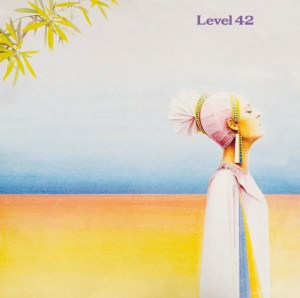
Level 42 presents a great variety of material littered with intricate, memorable arrangements. Wally Badarou’s mastery shines through throughout the album but especially on ’43’ – on the right channel, he sprinkles in shards of Prophet 5 synth, almost taking on the role of rhythm guitarist.
‘Why Are You Leaving’ is a superb quiet-storm ballad, not unlike something George Benson might have come up with in the Breezin’ era. Stanley Clarke is a towering influence – ‘Heathrow’ nicks the ‘Lopsy Lu’ shuffle (and also features a fantastic Gary Barnacle electric sax solo) while ‘Dune Tune’ paraphrases ‘Desert Song’ from Clarke’s classic School Days album. Phil Gould’s sparkling glockenspiel solo on ‘Starchild’ emphasises how versatile the band really were.
Level 42 is also a decidedly more lush and expensive-sounding album than any other ‘Brit-funk’ band managed to produce.
The evidence is Slipstream, a compilation which featured the band’s ‘Turn It On’ alongside other contemporary bands such as Light Of The World, Freeez, Morrissey Mullen and Incognito. The Level track sticks out a mile.
Level 42 reached #20 in the UK album chart, apparently a pleasant surprise to Polydor. Two UK tours followed in quick succession before they embarked on a seven-date German trip supporting The Police, which, by all accounts, didn’t go particularly well.
During one gig, a firecracker was hurled in the general direction of Mark King, lodging itself between his bass and elbow. Looking down, he recoiled from the mic in horror, believing he had been shot.
Despite Level 42‘s solid chart placing, there was still uncertainty about the future of the band – King was headhunted by Jeff Beck for a possible power trio with Simon Phillips on drums, and a few jam sessions ensued. Also, Barnacle’s band Leisure Process had recruited Mark and Phil for their upcoming album and there was talk of the them making the permanent switch.
Thankfully, neither project materialised – one of the great bands of the 1980s were back in business.





 Virgin Records, released 16 October 1981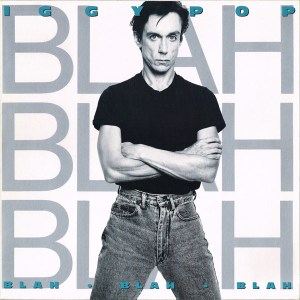




 movingtheriver.com