Singles Released:
‘Let’s Dance’ (#1)
‘China Girl’ (#2)
‘Modern Love’ (#2)
‘Cat People (Putting Out Fire)’ (#26)
Bowie on Let’s Dance: ‘At the time, it was not mainstream. It was virtually a new kind of hybrid, using blues-rock guitar against a dance format. There wasn’t anything else that really quite sounded like that at the time. So it only seems commercial in hindsight because it sold so many. It was great in its way, but it put me in a real corner in that it fucked with my integrity! It was a good record, but it was only meant as a one-off project. I had every intention of continuing to do some unusual material after that. But the success of that record really forced me, in a way, to continue the beast. It was my own doing, of course, but I felt, after a few years, that I had gotten stuck…’
The ’80s were positively dripping with fine debut albums but equally cursed with a lot of substandard sophomore efforts.
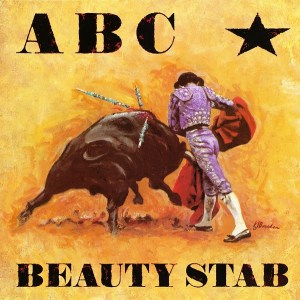
As the music biz cliché goes, you have your whole life to come up with your first album but only six months to make the followup. ABC could hardly have got it more right with their 1982 debut Lexicon Of Love, a ravishing collection of string-drenched, post-disco torch songs, but they came seriously unstuck with Beauty Stab a year later.
Seen as ‘ABC go heavy metal’ by much of the music press at the time of release, these days Beauty Stab just sounds like a pretty tuneless but beautifully-produced rock/pop album with the odd ‘political’ lyric and barmy moment thrown in (the jazz-waltz interludes in ‘Love’s A Dangerous Language’, cacophonous finale to ‘That Was Then’, atonal strings that kidnap ‘Bite The Hand’, Martin Fry’s rhyming couplets throughout…).
Though not exactly heavy metal, the guitar playing is pretty unreconstructed throughout and seems to be searching in vain for some Fripp-style insanity. And the album is thankfully graced with Roxy/Lennon/Sly drummer Andy Newmark, whose playing is lovely, especially on the very Avalonesque ‘If I Ever Thought You’d Be Lonely’. Co-producer and future Art Of Noise member Gary Langan does a great job too, in the main eschewing ‘80s production values in favour of a dry, ballsy mix and some strikingly original touches.
The problem is, for all its undoubted craftsmanship, amusing lyrics and faux grittiness, the album is short on memorable choruses. ‘Hey Citizen’, ‘King Money’ and ‘Power Of Persuasion’ have classic ABC hooks but fail to deliver catchy B-sections.
A quick survey of the track titles and it’s almost impossible to remember a chorus, save the opening ‘That Was Then…’, and that spells trouble. Unsurprisingly the album works best when the guitars simmer down a bit and Fry’s vocals take centre stage, as on ‘By Default By Design’ and fine state-of-the-nation closer ‘United Kingdom’.
Commercially, Beauty Stab was not an outright disaster, reaching #12 in the UK album chart and selling over 100,000 copies, but it was a big disappointment after such a successful debut. Acclaimed music writer Simon Reynolds even went as far as to call it ‘one of the great career-sabotage LPs in pop history’.
In late-1983, Britain was turning its back on back on guitars and kitchen-sink lyrics; glamour and fun were back in, typified by Wham!, Howard Jones, Culture Club, Spandau Ballet, Duran Duran, even Bowie – all of whom cashed in on the vibe and musical exuberance of Lexicon Of Love. At the end of the year, Fry famously burnt his gold suit in protest.
Circa 1988, my schoolmate Seb stuck a few tracks from The Flat Earth (possibly ‘Screen Kiss’ and ‘Mulu’) at the end of the Lovesexy tape he did for me.
I was smitten – I needed as much music as possible by this guy. I’ve since bought the albums several times on various formats.
On Earth, Dolby deliberately downplays the ‘zany’ image and creates an atmospheric, beautifully arranged, largely introspective collection.
He covers various styles (funk, lounge jazz, synth rock, World), mastering all with an incredible consistency of mood, production and songwriting.
My mates and I also loved his habit of incorporating seemingly-random clips of audio into/between his songs, like the spoken word outbursts from the likes of Robyn Hitchcock.
The title track came from an unused jam originally intended for Malcolm McLaren’s Trevor Horn-produced Duck Rock album. Its lilting South African melody (reminiscent of ‘Obtala’ from Duck Rock) and confessional lyrics signalled a new maturity in Dolby’s style, continuing with the majestic ‘Screen Kiss’ featuring excellent, much imitated fretless bass work from Matthew Seligman.
Techno-rocker ‘White City’ should be covered by someone. Dolby himself masters the art of the cover version with his take on Dan Hicks’s ‘I Scare Myself’ featuring a gorgeous muted trumpet solo by guitarist Kevin Armstrong who, according to Dolby’s liner notes, had never played the instrument before the recording.
And the album closer ‘Hyperactive’ (originally written for Michael Jackson, fact fans) is actually a bit out-of-place on the largely downbeat Earth but it’s a fun, funky, irresistible little pop song, perfect to send you out into the night with a smile.
Dolby is a brilliant painter of pictures with sound, relentlessly using audio fragments to augment melodic and lyrical ideas (check out the extraordinary tree-falling which pops up throughout the title track and also the typewriters which pepper ‘Dissidents’).
But these songs would also work beautifully played with just an acoustic piano accompaniment, as his recent solo tours have demonstrated.
Of course, over here in Blighty, the music press were a bit suspicious of Dolby’s technical mastery and obvious musicianship, though The Flat Earth reached a respectable #14 in the UK album chart, #35 in the US.
Dolby followed up The Flat Earth by playing keyboards with David Bowie at Live Aid (alongside Seligman and Armstrong), forming occasional project Dolby’s Cube with George Clinton, Lene Lovich and the Brecker Brothers and producing both Prefab Sprout’s triumphant Steve McQueen and Joni Mitchell’s underrated Dog Eat Dog.
Phonogram/Mercury Records, released 25 February 1985
Recorded at The Wool Hall, Beckington, Somerset, and the Hammersmith Odeon, London
Produced by Chris Hughes
Peaked at #2 in the UK album chart
Remained in the UK Top 10 for over six months and the Top 40 for over a year
Reached #1 in the US album charts
Bassist/singer/co-writer Curt Smith explained the album’s title in a 1985 interview:
“The title was my idea. It’s a bit perverse but then you’ve got to understand our sense of humour. The ‘Big Chair’ idea is from this brilliant film called Sybil about a girl with 16 different personalities. She’d been tortured incredibly by her mother as a child and the only place she felt safe, the only time she could really be herself was when she was sitting in her analyst’s chair. She felt safe, comfortable and wasn’t using her different faces as a defence. It’s kind of an ‘up yours’ to the English music press who really fucked us up for a while. This is us now – and they can’t get at us anymore…”
In the slipstream of Live Aid, when Stock, Aitken and Waterman ruled the charts, house and techno were warming up and ‘indie’ (Housemartins, Smiths, Cure) was thriving, this gifted pop/prog four-piece from Cumbria crept under the radar and even managed to secure a big hit with their second single ‘Calling All The Heroes’.
It Bites blended their influences – Gabriel-era Genesis, Weather Report, Yes, Japan, Level 42, Steve Arrington, George Benson – superbly, creating an excellent debut and minor hit album.
My mate Nige and I loved The Big Lad. The soundtrack to our after-school games of pool would either be Sting’s Bring On The Night or this, and I quickly grew to love its pristine production, challenging song structures, brilliant guitar playing and cool chord sequences.
As a teenager, I’d listen to it on my Walkman very loudly while studying David O’Connor’s superb, enigmatic cover art or reading Stephen King’s Christine… What larks.
Singer/guitarist Francis Dunnery once labelled The Big Lad ‘nutter’s music’, an apt description when you listen to songs like ‘Turn Me Loose’ and ‘I Got You’ which are almost pop but then pull the carpet from under your feet with bizarre, brilliant, extravagant middle sections and Dunnery’s off-mic vocal histrionics.
Producer Alan Shacklock – once the guitarist in Babe Ruth and future helmer of Chesney Hawkes’ ‘The One And Only’ – delivers a vibrant, state-of-the-’80s sound, with huge, gated drums and punchy bass.
It Bites’ early career as a souped-up pop covers band served them well – melody and groove are their priorities, and of course they were always a superb live act too.
Dunnery was (and is) also a very underrated Brit guitar hero whose playing could consistently deliver the sound of surprise with fluid legato, furious speed picking, dissonant intervals and whammy-bar abandon.
His solo on ‘You’ll Never Go To Heaven’ is a thrilling marriage of Allan Holdsworth and John McLaughlin and one of the great bits of over-the-top playing in Brit Rock.
He also delivered marvellously insane breaks on the Michael Jackson-meets-Duran Duran ‘Wanna Shout’ and barmy soft-rock ballad ‘Cold, Tired and Hungry’. Also worth checking out is B-side ‘Strange But True’ which, in its full version, becomes a vehicle for Dunnery’s increasingly demented solos.
‘Calling All The Heroes’ is actually a pretty good distillation of It Bites’ sound with Bob Dalton’s ingenious ‘reverse’ tom fills, Dunnery’s excellent melodies, John Beck’s intricate keyboards and Dick Nolan’s super-tight bass playing.
It was their only big hit though; other singles ‘All In Red’ and ‘Whole New World’ were catchy pop tunes with interesting instrumental flourishes and inventive vocal harmonies but neither troubled the charts.
The music magazines of the time generally ignored It Bites. If they did get a mention, it was generally to mock their unfashionably-superb musicianship or lack of London street-cred.
I remember Dunnery making an emotional pre-song announcement onstage at a London Astoria gig in 1988 lambasting the ‘trendy’ music press.
The Big Lad wasn’t a huge hit but did just well enough, peaking at #35 in the UK. It Bites were up and running and their best was yet to come.
Hardcore fans alert: a very nice person has posted all the Big Lad demos on YouTube.
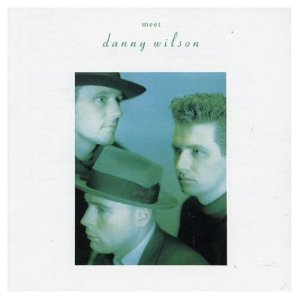
I came across a review of Meet Danny Wilson in Q magazine which drew comparisons between Gary Clark’s voice and Donald Fagen of Steely Dan’s (spot-on).
That was enough incentive for a massive Steely fan like me to check it out. I wasn’t disappointed. Meet Danny is one of the most arresting, original debut albums of the ’80s, and it stands up extremely well today.
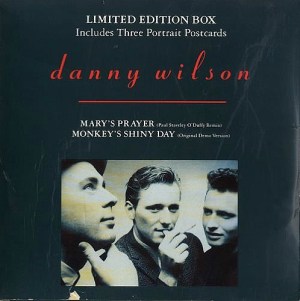
I would annoy my school friends bigging up the album and trying to get it played during art lessons – to no avail. U2, Simple Minds, The The, Fleetwood Mac and INXS couldn’t be usurped. But my enthusiasm was slightly justified when the gorgeous ‘Mary’s Prayer’ was finally a big hit at the third attempt (UK number 3, US number 23).
Danny Wilson shared a love of jazz, the Great American Songbook and Steely Dan with contemporaries Hue and Cry, Swing Out Sister, Sade and various other late-’80s acts, but (fortunately?) Meet Danny Wilson doesn’t sound remotely like any of them.
Gary graciously answered my questions in the middle of a very busy period of travelling, writing and recording. We talked about the inspiration behind the timeless ‘Mary’s Prayer’ single, hanging out with Billy Mackenzie, the golden age of Virgin Records and busking on transatlantic flights…
MP: Could you give a quick summary of how you started making music as Danny Wilson with your brother Kit (keyboards) and Ged Grimes (bass)?
GC: Ged was at school with me and clearly one of the most talented kids so we naturally gravitated towards each other and stayed together from the school band stage all the way through to Danny Wilson. Kit is my younger brother. When Ged and I returned from London we wanted to re-think the band and Kit, in our absence, had grown into a formidable musician, writer and singer so he was a natural choice to bring onboard.
What were the musical influences that went into the pot for Meet Danny Wilson? Any contemporary mid-’80s artists?
Well, I really found my voice as a writer when I stopped trying to sound contemporary. Ged and I spent three years in London living in a squat, gigging and trying to get a record deal and it seemed like the labels wanted us to sound like what was already on the radio at that time. If you can remember radio in 1984/85, everything was super- polished, super-quantised and very synthesised. Even guitars all tended to be layered in multi-effects. I very consciously decided to go in the opposite direction and return to my musical roots; all the music I loved was devastatingly unfashionable at the time. Off the top of my head, the main influences for that album were not contemporary at all: Sinatra, Bacharach and David, Jimmy Webb, Becker and Fagen, Tom Waits, a little bit of Hall and Oates, heavy dollops of the Great American Songbook and a ton of soundtrack records.
How did Danny write songs? Were all the tracks co-written or did you provide the blueprints?
I wrote all of the songs on that album and they were all written and mostly demoed prior to recording. The only exception I recall is finishing ‘Five Friendly Aliens’ at the piano in Puk studios after we’d started recording the rest of the album.
How did you come to be signed to Virgin? Were you fans of the label beforehand?
We played a gig in a bar in Edinburgh and a music journalist called Bob Flynn was there. He wrote a review in NME that literally changed our lives. The review was so good and the band were so unknown that the record labels who had systematically rejected us only months before were calling Bob asking how they could get in touch with the band. We had really served our time in the trenches live and in the studio so we were really ready for it when it came. The next gig we did in Edinburgh was packed and half of the audience were A&R and publishers from London. We literally had the choice of every major label and almost signed to Warners. In the end, a mixture of Virgin’s reputation as an artistic label, their sheer passion for the music and their willingness to give us complete artistic control won the day.
Can you remember your inspiration for ‘Mary’s Prayer’ and where you wrote it?
Yes, I wrote it in the squat in London quite a few years before it was released. My friend, the songwriter Ali Thomson, loaned me a Roland Juno 60 synth and I just switched on the first preset and immediately played the verse chords without thinking (they’re all white notes!). The melody and a large chunk of the first verse lyric came to me instantly. I liked it but couldn’t get a chorus that did the verse justice and it took about another year of me coming back to it until I finally hit on the chorus.
How did you come to include Lester Bowie’s Brass Fantasy on the album? Definitely not an obvious choice of special guests! Weren’t they signed to Virgin at the time?
They were signed to ECM. The Virgin connection came later through us. Howard Gray (later of Apollo 440) was producing the first half of our album at Puk. They had an incredible system in there and we liked to blast records on the big speakers at the start of the day and at the end of the night with some fine Elephant beers for refreshment. Digital was in its infancy and ECM were making some of the first records that could be legally labelled ‘DDD’ which meant ‘recorded, mixed and mastered without leaving the digital domain’. Howard played us Lester’s ‘I Only Have Eyes For You’ one of those nights as an example of how great this process could sound and we all fell instantly head over heels in love. By sheer mind-bending coincidence, we saw that Lester Bowie’s Brass Fantasy were playing Copenhagen when we were still in Denmark. We went to the gig, one of the greatest live shows I have ever seen, and accosted Lester afterwards. It’s a little-known fact that because of budget restrictions, Ged, Kit and I busked our fare on a very early Virgin Atlantic flight to New York so we could be there for the sessions! Pre-9/11, of course… But we actually got free flights for entertaining the passengers in mid-air.
Your amazing vocal on ‘You Remain An Angel’ always reminded me of The Associates’ Billy Mackenzie – were you a fan and did you know him at all?
Well, thank you. I’m a huge fan of Billy’s work but I can honestly say that The Associates were nowhere near my mind when we did that song. There is a B-side called ‘Living To Learn‘ that has a huge Associates influence. Billy and I are from the same home town, Dundee in Scotland, and I got to know him a little. We would all hang out at a place called Fat Sam’s cocktail bar where they played great music and had great live acts passing through. We saw some amazing bands in their infancy back then. Billy was always so wonderful, charming and encouraging to me.
Meet Danny Wilson has a really pleasing mix of acoustic instrumentation and late-’80s technology – was there any pressure to be ‘produced’ and make a very modern-sounding record? I have a B-side version of ‘Aberdeen’ that was subtitled something like ‘The Way It Should Have Been‘…
No. Virgin were great like that. I think they understood that we had just as much chance commercially by being true to ourselves as we would have had conforming to some blueprint of what radio sounds like. I wish that vision was more prevalent in the music business today. I will say that although we used the most up-to-date technology available at the time, we didn’t use it to sound modern but to get what was in our heads onto the recording. On ‘Aberdeen’, for instance, we used a Fairlight to get the trumpet and string sounds but the production is probably more ’60s in tone than ’80s. That B-side was an interesting one; we had made a very early stripped back Portastudio demo of that song before the album and it had a certain beatboxy charm that we all kind of harked back to. The tape was lost so that B-side was our attempt to recreate that vibe. Never a great idea!
How do you feel about Meet Danny Wilson and its place in the 1980s musical landscape now?
I feel pretty much the same as at the time. It’s very me, very honest, very heartfelt and, just like me, doesn’t fit in anywhere. Exactly what we were going for, I suppose.
What are you working on at the moment?
I’m always writing and recording with other artists. That’s what I do these days and have a whole heap of stuff in the pipeline but aside from that I’ve just written the music with John Carney (Once, Begin Again) for his next movie (‘Sing Street’) which I’m very, very excited about. As it happens, he got in touch with me because Meet Danny Wilson was a record his brother had turned him onto as a young kid growing up in Dublin in the ’80s. That neatly brings this interview to a lovely, rounded conclusion so I’d better shut up now!
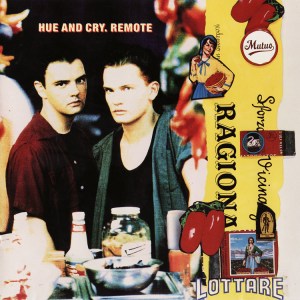
Just for a few years at the end of the ‘80s, Hue and Cry bothered the charts with a classy fusion of pop, jazz and Latin.
Singer/co-composer Pat Kane said at the time that they wanted to create a musical mix of Scritti and Sinatra; they almost pulled it off with the excellent Remote, released in December 1988.
They also pulled off the Steely Dan-ish trick of singing about subjects which might seem unsuitable in a pop context (domestic violence on ‘Looking For Linda’, corporate sexism on ‘Dollar William’, Latin-American poverty on ‘Three Foot Blasts Of Fire’, the dawning of the Web on ‘The Only Thing More Powerful Than The Boss’).
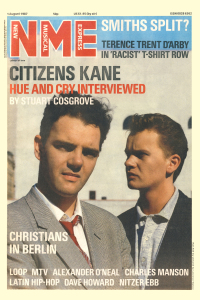
And yet something about Hue and Cry seriously wound people up. When they emerged on the scene in 1987, they rode a wave of goodwill thanks to their clean-cut looks, anti-Thatcher politics and dynamic ‘Labour of Love’ single.
But by the time of Remote, the tide was turning. Hue and Cry’s relatively soft, ‘aspirational’ sound was anathema in the bombastic late-’80s. It was too jazz for the yuppies and too pop for the jazz revivalists.
Maybe the fact that they’re brothers never helped too – The Proclaimers were the more acceptable face of Celtic brotherhood, more meat-and-potatoes, more reliably blue-collar.
In 1995, Q Magazine wrote a cruel but witty hatchet piece about them entitled Britain’s Most Hated Band, offering them ‘a crisp tenner’ to split up (it didn’t do the trick…). Whatever. I love this album. Recording Remote in New York gave the Kanes access to some amazing guest musicians – Ron Carter and Michael Brecker play beautifully on the very pretty ‘Where We Wish To Remain’, and Pat’s excellent vocals demonstrate a big Mel Torme influence.
The prime NYC rhythm section of Wayne Braithwate and Dennis Chambers supplies a 24-carat groove on ‘Three Foot Blasts’. ‘Sweet Invisibility’ puts a fantastically exciting Latin horn arrangement right upfront in the mix, beating David Byrne at his own game.
‘Guy On The Wall’ is a witty portrait of a perpetual party wallflower set against a ‘Word Up’ groove and brilliant Salsa horn arrangement. Bassist Will Lee delivers beautifully measured performances on ‘Ordinary Angel’, ‘Dollar William’ and ‘Looking For Linda’, offering a subtle commentary on the songs back in the days when a musical performance was supposed to have some narrative development and couldn’t just be ‘cut and pasted’ together.
It’s quite funny to hear legendary jazz trumpeter Jon Faddis play a stratospheric solo on the otherwise very soppy ‘Violently’ (though Michael Brecker very controversially ‘fixed’ his solo – see below…) Pat Kane sings well throughout the album, with great phrasing, inventive ad-libs and excellent melodies.
But YouTube live footage from the Remote era hasn’t aged well and demonstrates why they were such a Marmite band, all cheap suits and wacky horn sections. I saw them at the Hammersmith Odeon in 1989 and struggle to remember anything about the gig.
Even they seemed to sense which way the wind was blowing; they disappeared for far too long after Remote, issuing the stripped-down Bitter Suite live EP and disappointingly brittle Stars Crash Down in 1991. The momentum and recording budget had gone.
But because in the main they lent towards jazz and Latin rather than funk and soul, they avoided the all-too-audible mistakes of contemporaries like The Blow Monkeys, Style Council, Climie Fisher and Johnny Hates Jazz. A great video has emerged of the boys discussing the making of the album:
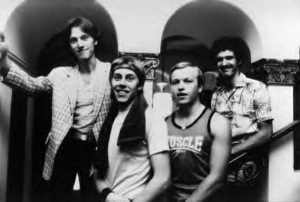
Boon Gould, Phil Gould, Mark King, Mike Lindup, London 1982
I first became aware of the legendary jazz/funk/pop band Level 42 in January 1983 when I saw them on ‘Top Of The Pops’ miming to their hit single ‘The Chinese Way’.
I was just another young music fan and burgeoning drummer enjoying the Second Golden Age of British Pop, but this was different: the band was tight, soulful, and yet somehow otherworldly.
And their musicianship was superior to other chart acts of the day. For a few years, they were my band.
Cut to 2000. I was embarking on a career as a session drummer. However, all the gigs I’d been offered had been with sub-Stone Roses indie bands or smooth jazz acts. Then I saw an ad in Loot magazine: ‘Drummer Wanted for Level 42 tribute band. Call Nick on…’ My mind started racing. This was the dream gig.
I rang Nick – playing the ‘role’ of famous bassist/vocalist Mark King – immediately. I managed to impress him by mentioning that it would be fun to play ‘The Return Of The Handsome Rugged Man’, an obscure B-side that sounded like Jeff Beck jamming with Weather Report.
Nick had also recruited Peter, a keyboard player, and the three of us met for a drink, sharing Level 42 stories and trivia. These were the halcyon days. We were all buoyed by a shared love of the band’s music.
Nick was an amiable, meat-and-potatoes kind of guy. He did have a passing resemblance to Mark King, but also had the rather distressing habit of calling all the drummers he had ever worked with ‘w*nkers’…
The first few rehearsals went well. Nick was a capable bass player and, vocally, a passable Mark King impersonator. Peter did a good job of aping the band’s trademark keyboard sounds. I was trying to replicate Phil Gould’s drum parts to the letter and doing a reasonable job. We named ourselves Level It Up, a pun on the band’s 1983 hit ‘The Sun Goes Down (Living It Up)’.
After only a few rehearsals, Peter got us a gig at a Level 42 convention in a huge hotel off the A303. We were nowhere near ready to be playing live, but felt we might recruit a much-needed guitarist and backing vocalist at the venue.
The initial omens were not good – I had contracted laryngitis the day before the gig. By the time we arrived at the hotel, I was almost incapable of speech.
I looked at the live stage and immediately noticed something: no drums. Suddenly two assistants appeared and an Ikea-like structure was erected next to the keyboard rig: the dreaded, electronic V-Drums, with all of their naff connotations to the ‘boooo!’ sounds heard on terrible disco records. I had never played them before in my life, and the chances of Phil Gould ever playing them were miniscule.
We were told we would be playing at 9pm. I peered at the clock. It was 4pm. Somehow we got through the afternoon with regular toilet breaks and watching bass players trying to play exactly like Mark King in a soundalike competition.
Suddenly the raffle was over and we were on. I sat behind the V-drums tentatively and peered out into the crowd. There was silent expectation. Opening number ‘Almost There’ went by without any big hitches. There was even an enthusiastic reception at the end. They knew we were trying our best.
‘Out Of Sight, Out Of Mind’, conversely, was an unmitigated disaster. My V-drums started faltering halfway through the track and suddenly cut out completely. Had someone pulled the plug?
The stage manager rushed on to fiddle with the wiring while I tried to hide behind the keyboards. ‘It’s never happened before,’ he growled, throwing me an angry glance as the small crowd chatted amongst themselves. My throat tightened painfully as I tried to respond.
A dilapidated acoustic kit was summoned from an anteroom and hastily set up. We resumed playing but the thrill had gone and we couldn’t recover. This was the first real omen that our little tribute band was heading for the skids but I still didn’t heed the warnings.
Nick’s sister sang with us for a rare gig at his local and we got someone in to play guitar – he papered over the cracks for a while, but wasn’t the main problem.
The problem was that my relationship with Nick was starting to echo the real, troubled relationship between the people we were ‘impersonating’ in the tribute band – Phil Gould and Mark King – whose falling out precipitated the breakup of the original Level 42 lineup.
Was life imitating art? Maybe all tribute bands eventually start to ape their heroes in ways other than musical. Maybe it’s a kind of self-fulfilling prophecy. If you spend many hours in a rehearsal room trying to copy another band’s music with all the management skills and forced intimacy that entails, do you naturally take on the roles that characterised the original band?
All I knew was that whereas I once looked forward to rehearsals, now I dreaded them. That’s when reality finally kicked in. It was time to leave the cut-throat world of the tribute band.
Sure, we’d ridden on the crest of a wave for a while, but let’s face it, the odds were stacked against us. Yes, we might have played The Railway Tavern in Andover once a month, The Green Man in Guildford now and again, The Old Red Lion in Carshalton if there was a last-minute opening.
But the phone wasn’t ringing, and, anyway, as I found out later, there was already a Level 40-Who doing that circuit.
‘Level 42: Every Album, Every Song’ by Matt Phillips is out now.
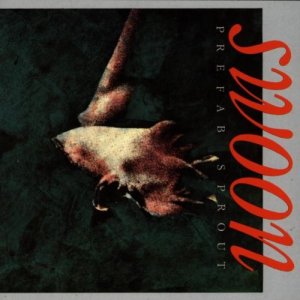
Perhaps like a lot of Prefab fans, I came to Swoon some time after I’d bought and fallen in love with the later albums Steve McQueen, Protest Songs, From Langley Park to Memphis and Jordan The Comeback.
The dry, Thomas Dolby-less production came as a bit of a shock at the time but Swoon stands up pretty well today. Though some critics have compared it to Steely Dan, my contemporary reference points would be Lloyd Cole, The Smiths, Aztec Camera and Songs To Remember-era Scritti, though it’s basically impossible to locate Prefab’s influences.
It’s tempting to say that Swoon – released in March 1984 – sounds like the epitome of an ‘indie’ record, 1980s style, with its stripped-back production values and jagged edges. Prefab singer/songwriter Paddy McAloon recently told The Guardian that he thinks of it as more akin to Captain Beefheart, nicknaming the album ‘Sprout Mask Replica’!
Swoon definitely still sounds very much like a debut album; it’s perky, eager to please, naive, studenty. McAloon’s vocals occasionally resemble the ramblings of a slightly squiffy, randy teenager. But the album’s adolescent in a really good way with its literary flights of fancy, indulgent ruminations on romantic love and lots of audacious melodic flourishes.
It sounds almost like rock, with solid 4/4 drums, always-inventive bass from Paddy’s brother Martin and ‘girlie’ backing vocals from Wendy Smith, and yet it resolutely refuses to ‘rock out’ with not a single power chord or jangly electric guitar in the mix.
Instead, the intrepid layering of synths and acoustic guitars (utilised to far greater effect on Steve McQueen and Jordan) probes the songs’ pressure points. And Smith’s pristine vocals give the music an enigmatic, otherworldly flavour.
Lyrically, Swoon reminds me of Joyce’s ‘Ulysses’; a survey of a young man’s hopes, dreams and romantic/professional disappointments. From a songwriting perspective, the words presumably came before the music, resembling stream-of-consciousness prose rather than traditional verse/chorus songcraft. Novelist/essayist Dave Eggers wrote a great piece about how much he was influenced by this golden generation of literate British songwriters.
As befitting a band from the North East, work (and the lack of it) is a recurring theme, particularly on ‘I Never Play Basketball Now’ and the extraordinary ‘Technique’. ‘Couldn’t Bear To Be Special’ is a classic Prefab ballad (though surely never the right choice for second single) and seems to offer a truly original take on the doomed love affair – the narrator simply doesn’t feel worthy to deserve the attentions of another. Very Nick Hornby-esque.
Future producer Thomas Dolby has talked about the shock of hearing ‘Don’t Sing’ when he was a guest reviewer on the Radio 1 ‘Round Table’ show.
‘Cruel’ is still a delicious piece of pop/bossa nova, more than a decade before the likes of Belle and Sebastian mined similar ground. Some of Paddy’s chords are gorgeous on this. Lyrically it’s original too, an expression of lust and affection from someone who is desperately afraid of offending his ‘enlightened’ paramour. A very modern love song. It was once covered by Elvis Costello.
Oh – and don’t forget to read the funny mock liner notes penned by McAloon in the guise of an over-exuberant music scribe.

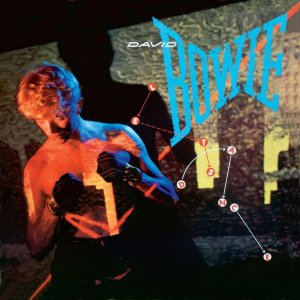 EMI America, released 14 April 1983

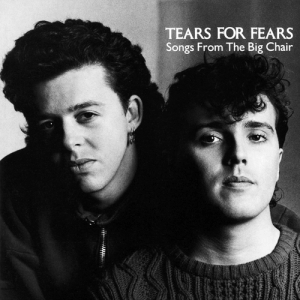 Phonogram/Mercury Records, released 25 February 1985


 movingtheriver.com