I don’t recall seeing this excellent band on TV or hearing them on the radio back in 1989/1990.
To this day, I don’t really know what they look like and don’t want to know. Though their debut single ‘Can’t Be Sure’ was released in January 1989 and reached just #45 in the singles charts, it ended the year as number one in John Peel’s Festive Fifty. The track also has a weird prog connection – it was (excellently) co-produced by Ray Shulman, a founding member of Gentle Giant.
‘Can’t Be Sure’ and its attendant classic album Reading, Writing And Arithmeticnow seem redolent of a far gentler time, an era of hope and innocence, pre-Grunge and Britpop. For that reason, along with the Cocteaus’ Heaven Or Las Vegas, they’re quite hard to listen to now but no less powerful. The Sundays were also arguably a very influential band on many inferior acts (The Cranberries, The Corrs etc etc).
Most music fans of a certain age probably had their favourite ‘Walkman albums’, those cassettes that worked perfectly on headphones, revealing intricacies (weird panning effects, funky little motifs, stereo drum kits) rarely noticed when played on normal speakers.
As much as I had loved Joni Mitchell’s music ever since my dad played me ‘Chinese Cafe (Unchained Melody)’ in 1983, I’d never have predicted that the superb Dog Eat Dog – released on 30 October 1985 – would turn into one of my top headphone albums.
A clue, of course, was the presence of Thomas Dolby as co-producer and keyboard player, master of quirky soundscapes and synth textures.
Though initially he might seem a weird choice of collaborator, with hindsight it’s not that much of a surprise that Joni and co-producer/bassist/hubbie Larry Klein should enlist his services.
Joni admitted in contemporary interviews that she ‘could use a hit’. But they didn’t get along particularly well in the studio, Dolby not enamouring himself to her by blithely calling her ‘Joan’ between takes.
But the Englishman contributes a lot to Dog Eat Dog – interesting audio effects like Wayne Shorter’s sampled soprano throughout ‘Lucky Girl’, beats, dub textures here and there (‘Shiny Toys’) and of course the odd spoken word intrusion (maybe it was his idea to use Rod Steiger on ‘Tax Free’?).
One of the key aspects of Dog Eat Dog is Joni’s anger at the state of the world, both lyrically and vocally. Her cover pose says it all – throwing her hands up in the air with indignation and/or helplessness.
As she puts it, the album is a portrait of ‘a culture in decline’. She takes aim at TV evangelists, consumerism, lawyers, yuppies and Reaganites with equal candour, letting fly with an F-bomb on the superb ‘Tax Free’.
The album also features some of Joni’s strongest singing on record. Her melodies are sometimes resplendent too, particularly on the title track and ‘Lucky Girl’.
It’s also interesting to hear her trying out a slightly more minimalist lyric-writing approach on ‘Fiction’ and ‘Tax Free’, marrying her short, sharp lines to Klein’s music.
‘Good Friends’, initially a brooding piano ballad in demo form, kicks the album off in fine style, an AOR classic with more interesting chord changes than the usual and a typically distinctive guest spot from Michael McDonald.
It was a bold though unsuccessful attempt at a hit, far too good for the charts. Joni even sung it live on ‘Wogan’ with a McDonald impersonator!
The elegant, stately ‘Impossible Dreamer’ is described by Joni as ‘a tribute to Martin Luther King, John Lennon, and Robert Kennedy – all those who gave us hope and were killed for it.’ It also features some sparkling soprano sax from Wayne Shorter.
Master drummer Vinnie Colaiuta is mainly reduced to providing drum samples for Dolby, though plays some lovely stuff on ‘Shiny Toys’, the second single from the album and subject to a great 12″ mix by Francis Kevorkian.
The ’80s weren’t particularly easy on Joni and her contemporaries Don Henley, Neil Young, Bob Dylan, Linda Ronstadt and Robbie Robertson.
As she put it, ‘I made four albums for Geffen. For one reason or another, they were viewed as being out of sync with the ’80s. But I was out of sync with the ’80s. Thank God! To be in sync with these times, in my opinion, was to be degenerating both morally and artistically. Materialism became a virtue; greed was hip.’
A lot of people would probably have liked her to carry on making Blue for the rest of the ’70s and ’80s, but she was moving on. Every album was different and this may be the one most in need of critical reassessment.
As a young band starting out in the ’80s, your ideal career trajectory would probably go something like this: Get together with a few mates, start rehearsing, get the gear in a van, tour the nation’s toilets, slowly build your audience, get a manager, get the record deal, release your debut, get on ‘Top Of The Pops’ and then hope you’ve got a career.
But it’s one of the rules of pop that some folks can’t handle fame when it hits. To paraphrase Bill Bruford: first you cope with failure, then you cope with success.
From Syd Barrett through Ian Curtis to Billy Mackenzie (is it mainly a British thing?), there are always artists who have bailed out when the constant routine of promotion and miming to the hit single becomes too much like a regular job.
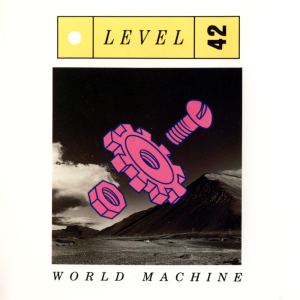
The syndrome even affected pop/jazz/funk heroes Level 42, who in 1985 produced arguably their finest album in World Machine, though lost half their original line-up in the process including one of the finest-ever British drummers.
The band’s popularity had been steadily building throughout the ’80s. Though their live following had always been strong and they always had hits, the singles usually seemed like happy accidents – ‘Sun Goes Down (Living It Up)’, ‘Chinese Way’ and ‘Hot Water’ were all last-minute album additions based on studio jams.
Now their record label Polydor wanted a more concerted assault on the singles charts and a more current sound, and to that end outstanding bassist/vocalist Mark King took much more of a lead than before.
Alongside co-producer/keys man Wally Badarou, the band laid down the most cohesive, streamlined collection of songs in their career thus far with two or three obvious singles at demo stage (though not a view apparently shared by then manager John Gould whose negative reaction to the new songs contributed to him being given the push in a heated band meeting).
Not everyone in the band was happy with this brave new musical direction either. Main lyricist and drummer Phil Gould (brother of ex-manager John and guitarist Boon) had always peppered Level 42’s songs with allusions to psychology, science fiction and esoteric spirituality, drawing on writers like Arthur Koestler, Hermann Hesse and EM Forster, but by early 1985 the pressure was on to deliver boy/girl songs with universal themes.
In an excellent recent interview, Phil has talked about Polydor wanting the band to do party anthems like ‘Let’s Groove’ and suggesting they do a cover version of ‘Nature Boy’. He struggled against this direction, rightly surmising that they would quickly become typecast as a clichéd Brit-funk band.
Though he did eventually tone down the lyrical imagery a bit on World Machine, he still smuggled in some depth and despair to songs such as the title track, ‘Physical Presence’, ‘Leaving Me Now’ and ‘Coup D’Etat’.
Oh yes – the music. One of the great pleasures of World Machine is its consistency of tone; you can drop the needle anywhere and hear the quality. Engineer Julian Mendelsohn is a big contributor to that.
The band had mastered the kind of half-time funk groove which had frequently littered their earlier work, and the style reached its apogee here with bassists and drummers rushing off to play along to ‘Good Man In A Storm’ (why has it never been played live?), ‘A Physical Presence’, ‘Leaving Me Now’, ‘Dream Crazy’ and ‘It’s Not The Same For Us’ (which was initially going to be a Mark King lead vocal as revealed on this amusing demo).
But the sequence-heavy nature of some other tracks (particularly the title track, ‘Something About You’ and ‘I Sleep On My Heart’) also aroused some musical differences in the band. It’s intriguing to imagine what these songs would have sounded like shorn of their ‘hi-tech’ elements.
Level 42 had secured several hits before, but ‘Something About You’ was the real breakthrough. Incredibly, it reached #7 in the US singles chart, perhaps inspired by a really good accompanying video.
World Machine delivered, both commercially and artistically. It reached #3 in the UK album chart, staying in the top 100 for 72 weeks. I saw the band at the Hammersmith Odeon on the – as usual – completely sold-out UK tour. They later went off to the US to tour with Madonna and Steve Winwood. The brothers Phil and Boon Gould left the band soon after recording the follow-up Running In The Family and the classic line-up was no more.
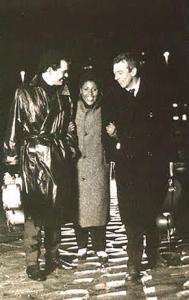
Simon Booth, Juliet Roberts and Larry Stabbins of Working Week
I’ve just had the pleasure of writing the liner notes to a really good new live album by Working Week, possibly the premier jazz/pop band of the 1980s.
It got me thinking about why jazz has totally disappeared from the charts and why the first half of the ’80s seemed the perfect time for jazz and pop to co-exist, especially in the UK.
Here an excerpt from the notes:
‘Does jazz go into pop? Judging by the current music scene, the answer would appear to be an unequivocal ‘no’, but, for a golden period in the early-to-mid ’80s, it seemed as if the two styles could happily co-exist.
Artists like David Sylvian, John Martyn, Hue and Cry, Elvis Costello, Kate Bush, The Rolling Stones, Sting, Danny Wilson, Swing Out Sister, Joe Jackson and Everything But The Girl smuggled some cool chords into the charts introduced the pop audience to players of the calibre of Kenny Wheeler, Harry Beckett, Lester Bowie, Michael Brecker, Ronnie Scott, Eberhard Weber, Sonny Rollins, Guy Barker, Kenny Kirkland and Branford Marsalis.
Sade, Carmel, The Style Council and Matt Bianco’s fusion of jazz and pop wasn’t everyone’s cup of tea but all of them had big hits. The Stranglers’ ‘Golden Brown’ was a jazz waltz (with a few bars of 4/4 thrown in) which got to number one!
The advertising and TV industries played ball and a full-scale jazz ‘revival’ was underway, documented in classic 1986 documentary ’10 Days That Shook Soho’. Courtney Pine and Miles Davis shared space on the UK album chart, Wynton Marsalis made the cover of Time and you could even catch Loose Tubes, Tommy Chase and Andy Sheppard on primetime terrestrial TV.
DJs Paul Murphy, Baz Fe Jazz, Patrick Forge and Gilles Peterson packed out Camden’s Dingwalls and the Electric Ballroom and young hepcats were dancing to Cannonball Adderley, Roy Ayers, Donald Byrd, Art Blakey and Lee Morgan.
Dancers at Dingwalls, London, 1988
Though older British jazzers such as Stan Tracey, Keith Tippett and Mike Westbrook (and some younger ones too) naturally viewed this latest revival with some suspicion, at least it was a relief from the extremely precarious ’70s when rock, funk and fusion almost subsumed jazz.
The old guard hung on, gigging in the back rooms of pubs, picking up occasional free improve shows in Europe or moonlighting in West End pit orchestras. But then punk came along, and it affected more than just disenfranchised young rock fans – its DIY ethos breathed new life into jazz too. Bands like Rip Rig + Panic and Pigbag made huge strides in engaging a youthful, receptive audience. Pigbag even made it onto ‘Top Of The Pops’…twice!
But it was Working Week, co-founded in 1983 by saxophonist Larry Stabbins and guitarist Simon Booth, who really typified the successful fusion of jazz and pop in mid-‘80s. Formed in 1983 from the ashes of jazz/post-punk outfit Weekend (whose ‘The View From Her Room‘ was a confirmed early-’80s club classic), initially Working Week was almost the de facto house band for the emerging scene, with the infectiously exuberant IDJ dancers often joining them onstage.
Robert Wyatt and Tracey Thorn duetted on classic single ‘Venceremos – We Will Win’ which briefly made an appearance on the UK singles chart in late 1984. The accompanying album Working Nights, featuring other Brit jazz legends Guy Barker, Harry Beckett and Annie Whitehead and produced by Sade’s regular helmer Robin Millar, reached a sprightly number 23 in the UK album chart soon after…’
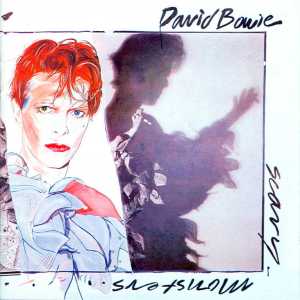
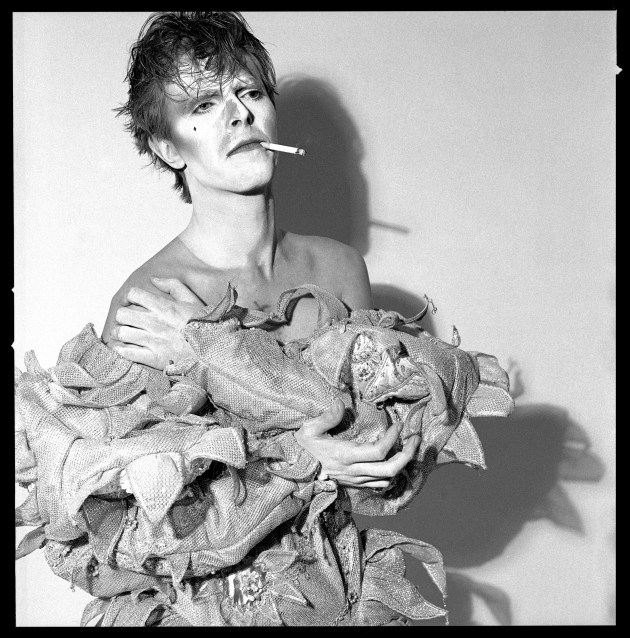
‘Albums of the ’80s’ lists are all the rage these days. Scary Monsters (And Super Creeps) would easily be in the movingtheriver top ten. It might even be in my top one.
It’s a timeless, masterful work which, for me, can only ever be consumed in its totality. It’s also the collection that all subsequent Bowie albums have been measured against. I would put it over and above Low, Ziggy Stardust and Hunky Dory for its sheer consistency.
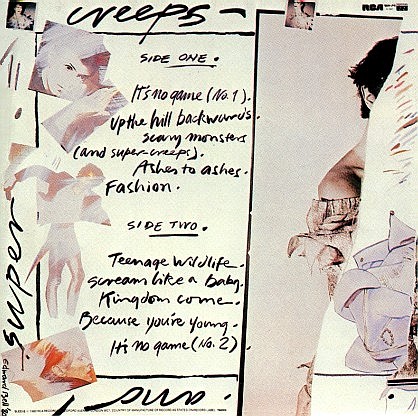
Here’s my case for the defence, track by track:
1. It’s No Game (Part 1)
I’ve previously written about this being one of the great ’80s album intros. Vocally, Bowie channels John Lydon and Peter Hammill to deliver a New York/New Wave anti-fascist tirade that ranks among his great performances. Producer Tony Visconti ‘f***s with the fabric of time’ to create a cavernous, Eventide-drenched mix and guitarist Robert Fripp delivers one of his most unhinged statements. Avant-rock heaven. Adapted from Bowie’s early demo ‘Tired Of My Life‘.
2. Up The Hill Backwards
A brilliant treatise on press intrusion and the wretchedness of celeb culture inspired by Bowie’s ‘dealings’ with the press during his failing marriage, with an ingenious central image of paparazza snapping away at their prey as they shuffle ‘up the hill backwards’. Endlessly catchy with a beautifully-realised unison vocal – the only track in the Bowie canon which doesn’t feature his solo singing.
3. Scary Monsters
Bowie revisits his finest Mockney accent to deliver a bleak, blanked-out, darkly funny tale of semi-stalking. There’s more Phil Spector-style brilliance from Visconti and another Fripp masterclass in balls-out guitar playing. The only minor criticism is that it possibly goes on for about a minute too long.
4. Ashes To Ashes
An instant classic with a very Bowie mix of child-like innocence and creeping malevolence as the hopelessly drug-addicted, world-weary Major Tom drifts off into the ether. Effortlessly superb songcraft with three or four memorable sections, boundary-pushing lyrics (‘Visions of Jap girls in synthesis’!) and a myriad of majestic hooks.
5. Fashion
The lameness of the style wars is in Bowie’s sights this time as he almost mumbles the ironic verse lyrics over a tough New York disco/funk/rock groove. And there’s more barking mad Fripp soloing. Danceable, amusing, timeless. Originally titled ‘Jamaica’ in demo form.
6. Teenage Wildlife
Initially coming across as slightly lumpy and leaden, the track builds and builds in intensity to deliver a powerful message to Bowie’s ‘mythical younger brother’ about keeping a sense of perspective as one gets older. His patented ‘histrionic’ vocal style is superbly realised and drummer Dennis Davis holds it all together with aplomb. Originally titled ‘It Happens Every Day’ in demo form.
7. Scream Like A Baby
Spooky dystopian fable about a future society’s outlawing of homosexuality and other ‘deviant’ behaviour. Bowie’s ingenious stuttering provoked many a schoolyard titter and the weird vocal doppler effects are perfectly realised. Revamped from the Bowie-written/produced ‘I Am A Laser‘ originally recorded by Ava Cherry/The Astronettes.
8. Kingdom Come
A superb cover of a track from Tom Verlaine’s debut album, Phil Spector is the obvious influence again with Davis’s booming, overdubbed tom fills and some anthemic, reverb-drenched backing vocals. Majestic, powerful, intriguing. Verlaine was apparently supposed to play guest guitar throughout the album but bowed out at the eleventh hour.
9. Because You’re Young
An ‘advice’ song to his son, Bowie offers the lessons he has learnt and looks back with great poignancy and not a little sarcasm on his carefree, youthful days. Peter Townshend strums along (apparently he arrived at the studio drunk and ready to party, but was stunned to find Visconti and Bowie sitting quietly at the recording desk like ‘two sober, little old men’!) and Bowie delivers a superb, kaleidoscopic lead/backing vocal combo.
10. It’s No Game (Part Two)
Carlos Alomar’s masterly rhythm guitar anchors this reprise, with Bowie doing his best Iggy croon and offering up images of world poverty, media saturation and dunderheaded political/cultural strategies. We hear the multitrack tape spool off its reels at the very end to close one of the great albums of the ’80s or any other decade.
The music biz is littered with successful solo artists who were tempted out from behind the drums.
Marvin Gaye, Teddy Pendergrass, Phil Collins, Karen Carpenter, Dave Grohl, Frank Zappa and Iggy Pop all graduated from the engine room to centre stage.
But while Sheila has never been on that level in terms of record sales or cultural impact (though trumps all of them in terms of drumming chops), her transition from sidewoman to frontwoman led to a couple of really infectious, interesting albums in the mid-’80s.
She had an enviable CV long before going solo, including percussion work with Billy Cobham, Herbie Hancock, Marvin, George Duke and Diana Ross.
Prince and Sheila were a similar age and had followed each other’s careers since the late-’70s. When he tasted his first mainstream success and was looking to mentor new artists, she was top of the list.
Their first collaboration was the superb B-side ‘Erotic City’, swiftly followed by Sheila’s debut album The Glamorous Life, a hit.
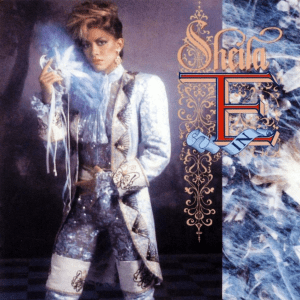
But its follow-up,Sheila E In Romance 1600, was a far more expansive and experimental piece, even though recording sessions were squeezed in on days off during the Purple Rain Tour between December 1984 and January 1985.
Despite Sheila’s obvious musical pedigree, Romance 1600‘s liner notes and song credits are misleading – this is a Prince album in all but name.
According to biographer Per Nilsen (and as listed at the ASCAP offices), he wrote all the tracks here bar one (kicking Latin/fusion instrumental ‘Merci For The Speed Of A Clown In Summer’) and played all instruments except drums, percussion and sax.
But lucky for us, Romance 1600 was recorded smack-bang in the middle of his golden period and features some of Prince’s finest performances as a musician. His guitar solos on ‘Dear Michelangelo’ and ‘A Love Bizarre’ are simply tremendous, the latter throwing in some ridiculous bass too.
But Sheila also brings out the best in him. There’s much more humour here than on his own albums of the period. She turns in some hilariously hammy vocal performances on ‘Sister Fate’, ‘Toy Box’ and dramatic ballad ‘Bedtime Story’.
Sheila and Prince were having a lot of fun and you can hear the results. Sometimes the rushed nature of the recording shows, though – the mix is very murky and the album is short of a few memorable pop hooks.
Prince’s ‘movie’ concept was in full effect here. He was leaving behind the ‘street’ style of Vanity 6/Purple Rain/The Time and embracing a romantic, ‘Amadeus’-influenced image which also crossed over into The Family project and his Parade album.
Thinking of Romance 1600 as a movie also opened up the album musically, allowing Sheila and Prince to embrace jazz (‘Yellow’), fusion, wacky synth-pop (the title track), Latin and even Third Stream.
Sheila E In Romance 1600 was a reasonable hit, going gold in the US and reaching #50 on the Billboard chart, no doubt helped by the success of the ‘Love Bizarre’ single (US #11). Sheila toured the US for the second time in two years.
She followed up Romance 1600 with a disappointingly bland self-titled album in 1987, which featured far less contribution from Prince. More successfully, she played some fantastic drums on the Sign ‘O’ The Times and Lovesexy tours.
Prefab go Pop. There are big-name guest spots (Stevie Wonder, Pete Townshend), gospel choirs, an orchestra and Deacon Blue’s producer.
The lengthy recording period and increased budget certainly paid off; synths and strings glisten, Paddy McAloon and Wendy Smith sound like they’re singing in the room with you and one can hear every nuance of Neil Conti’s tasty drumming.
Steve McQueen producer Thomas Dolby could only find the time to oversee four out of the ten tracks; of these, only ‘Knock On Wood’ sounds like trademark TD. Apparently, once McAloon learned that Dolby would be unavailable for much of the recording, he flirted with the idea of using a different producer for each song. The notion was quickly abandoned but it reinforced the idea that this would be Paddy’s most collaborative project so far.
At the time of its release, Paddy publicly declared that he hated the sound of records being made in the late ’80s and in response seems to have looked for songwriting inspiration from pre-rock’n’roll forms – Gershwin, Berlin, Cole Porter, Broadway musicals (he also later said that he was slightly obsessed by Barbra Streisand’s The Broadway Album around this time).
Paddy had also by now made big strides in his keyboard playing, writing all but two FromLangley Park tracks on piano. Consequently, his melodies are daring and original, but there’s arguably a fair degree of musical ‘schmaltz’ in the arrangements too, particularly on ‘Hey Manhattan’, ‘Nightingales’, ‘Nancy’ and ‘The Venus of the Soup Kitchen’, but it’s Stephen Sondheim schmaltz rather than Disney schmaltz. The wonderful ‘Nightingales’ sounds like the score from some kind of futuristic Broadway musical.
CBS obviously had high hopes for the album and their faith was paid off in the shape of a hit single, ‘King of Rock & Roll’, and one near-hit, ‘Cars And Girls’, though one wonders how McAloon views those now – I’ll wager with a degree of sheepishness. But I remember being extremely excited to see the video for ‘Cars And Girls’ popping up on ‘The Chart Show’.
Listening back after all this time, it’s From Langley‘s minor, more understated tracks that really stand the test of time. ‘Knock On Wood’ and ‘Enchanted’ could have come from Steve McQueen.
The former features a simple, unusually direct lyric from Paddy over a surreal, subtle pot-pourri of percussion and synth effects from Dolby. One wonders what McAloon’s demo sounded like. It’s slight and simple but no worse for that.
‘Nancy’ is gorgeous, a ‘Brief Encounter’esque tale of unrequited romance in the workplace, possibly inspired by McAloon’s relationship with his fellow Sprout (it doesn’t take a huge effort to imagine the word ‘Wendy’ in place of ‘Nancy’).
‘I Remember That’ sees McAloon in full-on crooner mode, emoting over MOR strings and weirdly-stilted gospel backing vocals. Paddy pokes fun at Springsteen’s obsessions on ‘Cars And Girls’, but then hilariously attempts a four-on-the-floor, Springsteenish rocker ‘The Golden Calf’ which doesn’t quite come off.
It’s hard to overstate the weirdness of the closing ‘Venus Of The Soup Kitchen’, a collision of slick Steely Dan drums, wonky Farfisa organ, distinctly-unfunky vocals from the Andrae Crouch singers and some amusing cocktail guitar from McAloon, coming over like a Ken Loach tale told in Broadway-musical style. For better or worse, there’s nothing else remotely like it in the Prefab output.
So, an important, big-selling album for Prefab (reaching #5 in the UK album charts) and another hugely impressive chunk of songwriting from McAloon. He was in a bullish mood, talking to the media about chart placings and competing with Michael Jackson and Prince, and his purple patch led to an even more cogent and powerful piece of work in the extraordinary Jordan The Comeback.
I’m certainly not alone in finding the seaside very evocative of childhood memories and, in turn, musical revelations gone by.
Walking on Devon’s Slapton Sands recently, I was taken back to family holidays at St Margaret’s Bay, a little village atop the famous White Cliffs of Dover on the English Channel.
Armed with my Walkman, I’d take off towards the creepy, deserted air-raid shelters, then scramble up the steep chalk track to enjoy the huge expanse of sea in all directions and the French coast in the distance.
The two tracks most redolent of that time – and two which somehow seem to capture something about the English fascination with all things nautical – are Kate Bush’s ‘And Dream Of Sheep’ and Peter Gabriel/Robert Fripp’s ‘Here Comes The Flood’. They are almost indistinguishable to me and will forever be connected to that coastline and the seaside in general.
Gabriel’s sea song was originally recorded for his 1976 debut album in a bombastic style. But in 1978, he laid down a much gentler, far superior piano/vocal version, to which Fripp later added Frippertronics and a spoken-word segment from his spiritual guide/Gurdjieff-protegee JG Bennett (who also turned up on David Sylvian’s Gone To Earth).
Gabriel’s lyric seems to point towards the inhabitants of an island (England?) joining forces (telepathically?) to save themselves from a pending (apocalyptic?) tsunami. In doing so, the islanders taken on mystical, extra-sensory powers.
There are shades of the Genesis track ‘Supper’s Ready’, with its epic tale of good versus evil, and also elements of the research into ESP that Gabriel was apparently doing at the time.
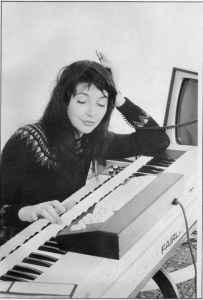
Bush’s sea song kicks off the extraordinary Ninth Wave suite (and uses very similar chords to ‘Here Comes The Flood’: C#min, A and B) taking up the entire second side of her classic 1985 album Hounds Of Love. We are thrust unceremoniously into a psychic association with a female protagonist who finds herself in the middle of the sea after a shipwreck. Echoes of past/present obsessions, loves and losses float to the surface of her mind (including the Radio 4 Shipping Forecast), ostensibly to keep her awake so that she doesn’t drown.
The conclusion of the song cycle suggests that she’s now at peace and in a far more positive state of mind, either in death or safe at shore.
What are the greatest live albums in music history?
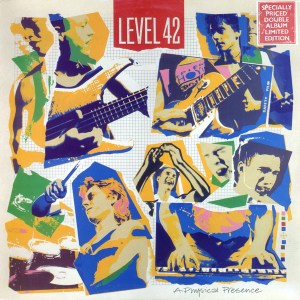
James Brown’s Live At The Apollo. Donny Hathaway’s Live and Bill Withers’ Live At Carnegie Hall might get a mention, but I would make a case for Level’s A Physical Presence too.
Quite simply, this album is the nearest a British band has ever come to the kind of effortless fusion of black music styles achieved by US supergroups such as Weather Report and Earth Wind & Fire. But Level 42 were always a far edgier proposition than those bands, mixing up the funk, world-class musicianship and jazz/rock with an almost punky intensity.
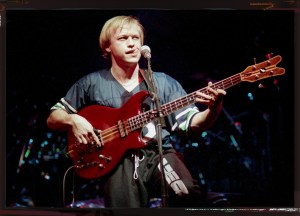
Mark King in 1985
Recorded in March 1985 at such suburban funk meccas as Golddiggers in Chippenham, The Coronet in Woolwich and The Hexagon in Reading, A Physical Presence showed off Level on the cusp of their mainstream pop breakthrough.
But you’d never know it. It’s hard to imagine any other British band before or since attempting the audacious fusion instrumentals ‘Foundation And Empire’ or ’88’.
Police-esque ‘Follow Me’ and driving ‘Chant Has Begun’ hinted at a new rockier direction which was quickly jettisoned when they got back into the studio for World Machine. Mark King’s vocals are punchy, distinct and soulful throughout.
Has there ever been a better British funk/R’n’B rhythm section than Mark King (bass) and Phil Gould (drums)? Bass players beware – this album features a succession of some of the most memorable and inventive B-lines in funk history. Try ‘Eyes Waterfalling’, ‘Kansas City Milkman’ and ‘Turn It On’ for starters.
Phil Gould’s drumming is a perfect combo of groove and chops, whilst somehow also retaining a ‘British’ sound, kind of a mixture of Bill Bruford and Billy Cobham. And keyboardist Mike Lindup gets through so much work that he sometimes sounds like he’s got four hands (with a real Lonnie Liston Smith influence on the Fender Rhodes), and 90% percent of his intricate playing is without the aid of a sequencer.
It’s hard to believe that only 18 months later, after recording commercial breakthroughs World Machine and Running In The Family, the classic Level line-up would splinter for good amidst touring pressures, musical differences and personal issues. But APP is a glorious snapshot of a golden summer and the pinnacle of surely the UK’s greatest ever jazz/funk/pop band.
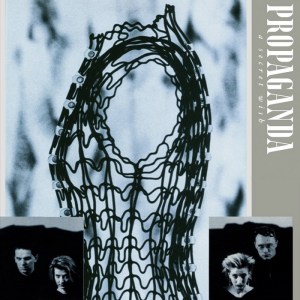
To many fans, A Secret Wish represents the peak of ’80s pop.
The glamorous though mysterious project was a flawed masterpiece but also the beginning of the end for big-budget, endlessly-fussed-over ‘concept’ albums.
It doesn’t really sound much like much else around in mid-’85 (though Pet Shop Boys and a-Ha were definitely listening), nor is it particularly similar to other ZTT releases or Propaganda’s subsequent albums.
A large part of the mystique is provided by Stephen Lipson’s pristine, widescreen production (Trevor Horn only produced ‘Dr Mabuse’), as well as his formidable mixing and guitar work (check out the extended mix of ‘Duel’).
Claudia Brucken’s lead vocals are original and Suzanne Freytag’s spoken-word interludes carry unmistakable echoes of Nico (emphasised by their seriously weird ‘Femme Fatale’ cover from the album sessions).
Yes guitarist Steve Howe contributes a nifty solo to ‘The Murder Of Love’ and David Sylvian has a hand in writing the lovely synth melody of ‘p:Machinery’.
But man of the match is ZTT house keyboardist Peter-John Vettese, purveyor of doomy soundscapes and intriguing chord voicings.
Josef K’s post-punk classic ‘Sorry For Laughing’ is reinvented as a Wagnerian synth-pop anthem and there aren’t many more epic album openers than the majestic ‘Dream Within A Dream’.
Paul Morley, ZTT marketing/content man and former husband of Claudia Brucken, has talked about Trevor Horn and David Sylvian’s involvement in A Secret Wish:
‘When Trevor pulled out of producing them, I actually asked David Sylvian. While he was thinking about it, he came up with the ghostly top line of ‘P:Machinery’ – the music, if you like – and a gorgeous watery slowed down version of ‘Duel’, but he decided against producing them, and it stayed within the Sarm (London recording studio owned by ZTT label owners Trevor Horn and Jill Sinclair) pop factory. Actually, another sign of the split between sensibilities at the label: I asked David Sylvian to produce Propaganda and Jill approached Stock Aitken and Waterman!’
A Secret Wish wasn’t a huge hit and surely didn’t make back its sizeable recording costs, reaching just #16 in the UK album chart, but the singles ‘Duel’ and ‘p:Machinery’ both made the top 30.
The band picked up the first-class rhythm section of ex-Simple Minds pair Derek Forbes on bass and Brian McGee on drums and toured the album extensively. I very clearly remember this performance on the BBC music show ‘Whistle Test’ in late 1985. Happy days:


 Most music fans of a certain age probably had their favourite ‘Walkman albums’, those cassettes that worked perfectly on headphones, revealing intricacies (weird panning effects, funky little motifs, stereo drum kits) rarely noticed when played on normal speakers.


 I’m certainly not alone in finding the seaside very evocative of childhood memories and, in turn, musical revelations gone by.