The Samantha Fox/Mick Fleetwood BRIT Awards Fiasco: 35 Years On

Memorable for all the wrong reasons, the 1989 BRIT awards, broadcast live 35 years ago this month, has long gone down as one of the most shambolic, embarrassing  TV shows ever.

It took place at the Royal Albert Hall during the Jason/Kylie/Rick Astley/Brother Beyond/Bros-inspired pop peak of the late 1980s, less than six months after the first Smash Hits Poll Winners Party at the same venue. Madchester was just around the corner but it seemed like another world.

Cool Britannia this wasn’t. Firstly, there was the the two presenters (wasn’t Phillip Schofield available?). Apart from anything else, Fox is 5’1” and Mick 6’6”. Then there was their extremely unnatural, awkward presentation styles, though, to this day, Fox swears that the autocue was broken.

Various bad-tempered Stones came and went, Boy George was introduced as The Four Tops, Tina Turner and Annie Lennox looked desperately awkward, other ‘dignitaries’ were wheeled out and MPs were booed.

Rounding things off perfectly, Cliff Richard was then given a Lifetime Achievement Award and delivered a brilliantly sniffy speech for the plebs. All in all, it’s no surprise that this was the last time the BRITS went out live on TV for 18 years…


Culture Club: ‘Karma Chameleon’ Hits US #1 40 Years Ago Today

The Second British Invasion hit its imperial phase 40 years ago today, a week after Newsweek had put Annie Lennox and Boy George on its cover.
Off the back of Eurythmics’ ‘Sweet Dreams’ hitting #1 in the US during September 1983, ‘Here Comes The Rain Again’ peaked at #4 at the beginning of February 1984.

In the same week, Culture Club’s ‘Karma Chameleon’ hit #1, their only American chart-topper to date. The band then won Best New Artist at the 1984 Grammy Awards on 28 February, Boy George giving one of the most famous music-award thank-yous of all time:

Regarding the Newsweek photoshoot, George later reported in his autobiography ‘Take It Like A Man’: ‘I heard Annie telling the make-up artist Lynne Easton not to make her look like Boy George. Annie was my female counterpart, the tomboy to my tomgirl. I enjoyed the irony of my being photographed with her; I was the fan made good, even if she didn’t want Boy George eyebrows.’

Both Culture Club and Eurythmics then toured the US during April 1984, the latter enjoying a famous residency at The Ritz in New York City. Did you see either of them live in ’84? Let us know your memories below.

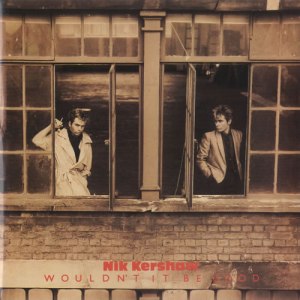
Nik Kershaw: Wouldn’t It Be Good @ 40

Bristol-born, Ipswich-raised Nik Kershaw had a spiffing 1984 – no other solo artist spent more time on the UK singles charts during the year.

‘Wouldn’t It Be Good’, released 40 years ago this weekend (on the same day as Echo & The Bunnymen’s ‘The Killing Moon’) and reaching #4, was his second single – ‘I Won’t Let The Sun Go Down On Me’ initially flopped in September 1983.

‘Wouldn’t It Be Good’ was predominantly recorded at Sarm East studios on Osborn Street, Aldgate (don’t look for it – it’s not there any more). Peter Collins produced soon after helming Musical Youth’s ‘Pass The Dutchie’ and Tracy Ullman’s solo output (he later worked with Rush, Alice Cooper and Queensryche). The song’s original title was ‘Wouldn’t It Be Nice’ – Collins demanded a better word than ‘nice’.

It’s a great single, the beginning of movingtheriver’s love affair with Kershaw’s music, and its ominous lyrics have the slight whiff of ‘In The Air Tonight’ about them, as well as a subtle social conscience. I also always liked the weird emphases he placed on some words/syllables – ‘You must be JOKING/You don’t know A thing about it/You got no probLEM‘ etc…

I distinctly remember watching him perform the song on ‘Top Of The Pops’ for the first time – who was this tramp on telly, with the snood and fingerless gloves? My parents liked the track too, which was a bit disarming.

The song’s overdriven guitars were layered/overdubbed, Brian May-style (best heard on the 12” remix), and their major-seventh chords create some strange timbres. Its structure is seriously weird too – the second chorus comes right at the end, after a lengthy guitar/horn solo. The delayed gratification is clever and totally outside the norm.

The video was directed by Storm Thorgersen, mostly filmed in a large, disused building opposite Buckingham Palace, apart from a bit at the Mullard Radio Astronomy Observatory in Cambridge. An extremely odd cover version features on the ‘Pretty In Pink’ movie soundtrack. Nik fluffed the words at Live Aid but hardly anyone noticed.

Happy birthday to another classic single from 1984.

Big Country: ‘Wonderland’ Kicks Off One Of The Greatest Ever Pop Years

Big Country kicked off 1984 – one of the greatest ever pop years – with their between-album, standalone A-side ‘Wonderland’. It reached #8, their second most successful single in the UK.
Also 40 years ago this week, Radio 1 DJ Mike Read ‘banned’ Frankie Goes To Hollywood’s ‘Relax’ and the Second British Invasion was sweeping the States, led by Eurythmics, Duran Duran, Culture Club, A Flock Of Seagulls and The Police (a remarkable Hot 100 chart of April 1984 featured 40% British acts).

Meanwhile, Big Music of a distinctly Celtic hue was sweeping the UK: The Waterboys, Simple Minds, U2, Echo & The Bunnymen and Big Country. They made ‘elemental’ music, as the cliché goes, with lots of space and lyrics about wars, work, glaciers, mountains, seas and skies.

You could make the case that Big Country were the best musicians of the lot (see the live clip below). And they had an extraordinary run of singles success between 1983 and 1986 – after their debut (‘Harvest Home’) missed the top 40, all the next ten reached the top 30. They also made some serious inroads into the US market.

Tommy Vance liked ‘Wonderland’, reviewing it in Kerrang! magazine thus: ‘Should be heard by anyone who likes fine music. I’m a real fan of Steve Lillywhite’s productions and he’s done a superb job here. The guitar sound is good and the drumming superb.’ Indeedy.

Ver Country’s second album Steeltown (sans ‘Wonderland’) emerged in October 1984 and went to #1 in the UK. Cool times.

PS. RIP the terrific Annie Nightingale.

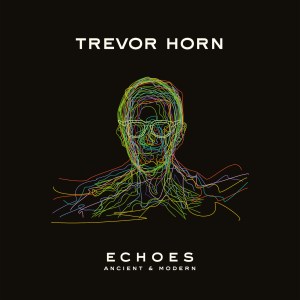
Trevor Horn: Echoes – Ancient & Modern

Over the next few weeks movingtheriver will look at new albums by two giants of 1980s music – Trevor Horn and Peter Gabriel (despite the fact that both arguably stopped being crucial pop forces around 1993 or 1994 – but then pop also probably stopped being crucial around then too, sometime between the first Suede album and the first ‘farewell’ Faith No More LP…)

First up, Uncle Trevor. The superstar producer and one of the architects of 1980s music revisits some of that decade’s key songs with guest vocalists on Echoes. But alarm bells have been ringing in recent interviews where he has mentioned that it’s these songs’ lyrical content that most interests him.

And, sadly, coming from a man who was responsible for some of the best grooves of the 80s and most provocative musical pranks, Echoes is desperate not to offend and a big disappointment. Fair enough, though – the guy is 74 years old, and who knows that sort of record company pressure has come from his new paymasters Deutsche Grammophon who aren’t exactly known for their ‘challenging’ pop albums.

Seal is a brilliant interpreter of the modern pop song and initially his version of Joe Jackson’s ‘Steppin’ Out’ works a treat. But the reformatted chords and bossa-nova feel are seriously skew-whiff, despite a nice (uncredited) trumpet solo. Horn’s collaboration with Michael Buble surely can’t be far off.

‘Slave To The Rhythm’ is reinvented as a piano ballad (for the second time, after Horn/Rumer’s weird 2019 effort), with a few strange new chords and an almost comically stiff groove, and the song just can’t take the strain despite a committed vocal from Lady Blackbird.

Marc Almond is in good voice but his ‘Love Is A Battlefield’ foregrounds a horrid little Euro-disco groove. Meanwhile Iggy makes ‘Personal Jesus’ halfway passable despite an incredibly polite blues setting. It could have worked with the right band.

Steve Hogarth’s ‘Drive’ could have worked too (and if only Horn had produced Marillion circa 1993) but it misses the whole point of The Cars’ original – the dichotomy between the dark lyrics and bittersweet harmony/melody, with liberal use of major-7th chords. Why not a classic soaring Horn swoon-fest along the lines of Seal’s ‘Crazy’?

The key of ‘Owner Of A Lonely Heart’ has been changed to accommodate Rick Astley’s smooth mid-range vocals and he does a passable job but, again, the groove and arrangement are simplistic and not a little irritating.

Toyah is let loose on ‘Relax’ – again, it could and should have worked. But Horn inexplicably reimagines the song as a slow, painstakingly robotic groove with a toe-curlingly reverent recitation of the lyrics. Is it supposed to be funny?

Elsewhere there are versions of ‘White Wedding’, ‘Smells Like Teen Spirit’ and Kendrick Lamar’s ‘Swimming Pools’ which barely register. Horn’s own vocal on ‘Avalon’ is absolutely fine though, despite the on-the-nose arrangement.

So it’s sad to report that Echoes is rather joyless pop. Most of it might suffice as the soundtrack for ‘Broadchurch’ or a Christmas TV ad but generally it just made me yearn for the originals. One is also desperate for a vocalist with a bit more edge – shame Holly Johnson, Claudia Brucken or even Glenn Gregory couldn’t be persuaded to do a twirl.

Michael Jackson’s ‘Thriller’ Video Premiere: 40 Years Ago Today

‘”Thriller” made MTV. “Thriller” created the home video business. “Thriller” created so many things.’
John Landis

It’s hard to overestimate the cultural impact of the ‘Thriller’ video. Frequently parodied but still an entertaining, powerful watch today, it premiered on Channel 4 in the UK during a special late-night edition of ‘The Tube’ just before midnight on Friday 2 December 1983.

This writer was reluctantly given permission to stay up and watch it. It was one of the most exciting things I’d ever seen on TV, and also one of the scariest… Here’s how the special ended:

But let’s rewind to July 1983. The Police’s Synchronicity had just bumped Jackson’s Thriller album off the top of the Billboard charts.

Jackson’s label Epic quickly formulated a plan to reinstate Thriller, reluctantly suggesting that its title track be released as a single (executives reportedly believed it to be a ‘novelty’ record!).

The catalyst for the groundbreaking video, which was part-financed by MTV, was Jackson phoning director John Landis in August 1983.

He professed his love for Landis’s ‘An American Werewolf In London’, told him about the impending single release of ‘Thriller’ and then uttered the immortal words: ‘Can I turn into a monster?’

The rest is history. The video helped double Thriller’s album sales almost overnight, arguably broke down racial barriers in popular entertainment and helped raised the music-video format into a serious art-form.

It also has to be said: it’s probably the last time Michael seemed relatively ‘normal’ (though his line ‘I’m not like other guys’ still raises a titter…).

‘The only video we ever paid for was ‘Thriller’. We were playing it every hour, and announcing when it would next air. It brought people to MTV for the first time, and it made them stay and watch it again and again. Now everybody was into MTV.’
Bob Pittman, MTV executive

‘When MTV started, it wanted nothing to do with Black artists. I thought, Wow, are we gonna miss out on this? But then I gave them ‘All Night Long’ after Michael had broken down the door. And from then on I was on MTV.’
Lionel Richie

‘Michael Jackson had taken hold of the video form and shown everyone what you’re supposed to do with it. We all thought: Oh, OK – dancing!’
Rick Springfield

All quotes are taken from the excellent ‘I Want My MTV’.

Check out Anthony Marinelli’s YouTube channel for lots of great muso stuff on the making of the Thriller album.

Agnetha Faltskog: The Heat Is On

One of the many pleasures of listening to the Forgotten 80s radio show is hearing a hit of which you have absolutely no memory whatsoever.

A classic example came on the air a few weekends ago. The intro featured a ramshackle, lumbering, almost-reggae groove with party voices, sleazy horns and a good bass player (revealed when listening on a decent system, but it’s almost impossible to find out which musicians played on the single) before a strident, excellent, slightly familiar voice took centre stage.

Eddi Reader? Basia? Debbie Harry? Lene Lovich? Wrong, wrong, wrong, wrong. I was gobsmacked to hear that it was actually the first solo single by Agnetha Faltskog of ABBA, released just over 40 years ago (her bandmate Frida had just had her own hit, ‘I Know There’s Something’s Going On’, produced by Phil Collins).

‘The Heat Is On’ got to #1 in Sweden, Denmark, Norway, Finland, and Belgium, #2 in The Netherlands and Germany, #29 in the USA and #35 in the UK.

The incredibly catchy number turns out to be a cover of a 1979 near-hit by Australian singer Noosha Fox. Written by Florrie Palmer and Tony Ashton, it was also massacred by Manfred Mann’s Earth Band in 1980 in a truly screwed up version retitled ‘On The Run’.

But back to Agnetha. Her version of ‘The Heat Is On’ was produced by Mike Chapman, on a particularly hot streak in early 1983 having just helmed Blondie’s biggest albums and Altered Images’ classic single ‘Don’t Talk To Me About Love’.

Faltskog’s accompanying album Wrap Your Arms Around Me is not so great but has apparently sold approximately 1.5 million copies worldwide to date (her second solo album, 1985’s Eyes Of A Woman, was produced by 10cc’s Eric Stewart). She has also been the subject of a BBC Four documentary (a dubious honour?) in the UK.

Now, got to get this damn song out of my head – almost an impossible task once heard a few times…

Level 42: Rockpalast 40 Years On

It’s not surprising that a lot of Level 42 fans cite 1983 as the peak of the band’s career.

Messrs. King, Lindup, Gould and Gould had just released their first UK top 10 album Standing In The Light (and arguably their greatest single ‘The Sun Goes Down’) but were still very much holding on to their jazz/funk/rock roots, despite Polydor Records wanting more hits and less instrumentals.

The band were also still very much an in-your-face live act in 1983, a year off adding sequencers, drum machines and a much more commercial sheen to their sound. They toured Standing extensively during the autumn, including a dynamite show filmed 40 years ago today in Bochum, Germany, recently released on DVD.

It’s Exhibit A for those who love the early days of the band. And, for Level fans like movingtheriver who only came onboard around 1985, discovering the broadcast was gold dust. Also it’s not every day you see a bass player laying down deliciously funky lines while dancing like Max Wall (at around 4:30 below) and telling the fans to ‘Clap, you sods!’.

It’s interesting though that Mark King himself to this day strongly questions the live potency of the band during this era. In the March 1992 issue of Bass Player magazine, he came out with all guns blazing, discussing their November 1983 ‘Whistle Test On The Road’ appearance at the Brixton Ace (now the Academy):

‘I dug up an old one of us doing a live BBC programme… I thought, “Oh yeah, they were the good old days”. So I put on the video – and it was crap. The audience were fine, the lights were fine, the sound was fine. The band was crap. It was just so unsure, so uncertain…’

So which Level do you prefer? The choice is yours… In any case, it’s exciting to report that they’re currently in the middle of a UK tour celebrating 40 years of ‘The Sun Goes Down’.

Further reading: ‘Level 42: Every Album, Every Song’.

Then Jerico: Now That’s What I Call…Not Bad

Of course it was just teenage aggro/jealousy, but my schoolmates and I were always a bit suspicious of those late-‘80s pop acts who were much fancied by our female friends: Morten Harket, Richard Marx, Jason Donovan, the Goss brothers, Marti Pellow, Nathan out of Brother Beyond, those blokes from Big Fun.

But Mark Shaw of Then Jerico was probably their favourite, instantly putting his band’s music into the dumper, even though we probably all had a soft spot for their 1987 hit ‘The Motive’.

Listening back now on a good system, it’s a superb-sounding single – impactful, clean and shiny, with great instrument separation. It typified late-1980s British pop/rock helmed by excellent producers who had learnt their trade in the golden age of commercial recording studios, people like Tim Palmer, Rhett Davies, Peter Henderson, Andy Richards, Jon Kelly, Rick Nowels, Mike Shipley, Bruce Lampcov, Peter Collins, Julian Mendelsohn, Gary Langan et al.

Of course Trevor Horn was an overarching influence, representing the gold standard. It Bites’ Francis Dunnery mocked ‘Big Area’ (see below) producer Langan (collaborator with Horn on Yes’s 90215, Malcolm McLaren’s Duck Rock and FGTH) in a 2021 interview for PROG magazine: ‘Everyone who had ever walked past Horn was given a record to produce. I think Trevor’s milkman produced Then Jerico and had a hit!’

Yes, there was a fair amount of turd-polishing but these producers inspired the late-1980s rock comeback, generating hits for Breathe, Fuzzbox, Cutting Crew, Paul Young, Love & Money, Deacon Blue, Killing Joke, All About Eve, The Mission.

And Then Jerico. Maybe they were actually pretty good. Their best songs – ‘Sugar Box’, ‘The Motive’, ‘Big Area’ – marry a sort of U2/Simple Minds/Tears For Fears ‘thing’ with Shaw’s tremulous vocals to strirring effect, something akin to the sound of falling in love. When any of them come onto ‘Forgotten 80s’, it’s impossible to turn off. Though one is still slightly reticent about checking out a whole album in one sitting.

And guess what – Shaw has reformed the band, and they’re touring extensively this year. And he has rather a juicy/chequered recent past to tell of too.


XTC: Mummer 40 Years On

There can’t be many more pleasurable summer activities than reclining in an English garden.

But XTC’s chief songwriter/vocalist Andy Partridge cut somewhat of a sad figure during May and June 1982 as he sat hunched over his acoustic guitar, working on new compositions, detoxing from Valium addiction and contemplating the end of his concert career.

Still, those songs were some of his best ever. But they appeared on an extremely inconsistent album called Mummer, named for the silent actors (keeping ‘mum’) who travelled around 18th century Britain and Ireland, released 40 years ago this week and very nearly titled Fruits Fallen From God’s Garden.

Japan (Tin Drum) producer Steve Nye was summoned for the project, recorded at Martin Rushent’s Genetic Studios and The Manor – a strange choice. He is good with the close-mic’d, dry-sounding, beautifully recorded acoustic-based tracks but not the heavier ones which were later remixed by Phil Thornalley, while the legendary Alex Sadkin redid ‘Wonderland’.

But Nye had his work cut out – the album is schizophrenic to say the least. The best songs sound like a decent band playing pretty much live in the studio – ‘Love On A Farmboy’s Wages’ (has there been a better English pop song about poverty?), ‘Great Fire’, ‘Ladybird’ (Andy discusses his jazzier influences in this great video), ‘Me And The Wind’. All wonderful. Dave Gregory is coming into his own with superb contributions on guitar and keyboards.

But the worst songs are rhythmically plodding – it’s understandable that Andy was trying to get away from 4/4 rock drums but ended up with too many cyclical grooves (putting pay to Terry Chambers’ tenure on the kit) – and melodically extremely challenging. Colin Moulding is not in great writing form either, ‘Wonderland’ excepted, though that too might have benefitted from a simpler treatment.

Mummer was initially rejected by Virgin A&R agent Jeremy Lascelles, who demanded another single. The excellent ‘Great Fire’ was Andy’s last-minute response, produced by Haircut 100 helmer Bob Sargeant, but it disappeared without trace – Radio 1 reportedly played it only once!

Along with The Big Express, Mummer was XTC’s worst selling album, reaching a barely believable #51 in the UK album charts and doing little business elsewhere, just over a year after ‘Senses Working Overtime’. It has to be said it was also not served well by its awful cover. But it features plenty of great music.

Further reading: ‘XTC Song Stories’ by Neville Farmer